Favorskii rearrangement
• The Favorskii rearrangement is a
rearrangement of cyclopropanones and α-
halo ketones, which leads to carboxylic acids,
or carboxylic acid derivatives
• In the case of cyclic α-halo ketones, the
Favorskii rearrangement constitutes a ring
contraction
continued
• This rearrangement takes place in the
presence of a base, sometimes hydroxide, to
yield a carboxylic acid,
• but most of the time either an alkoxide base
or an amine to yield an ester or an amide,
respectively
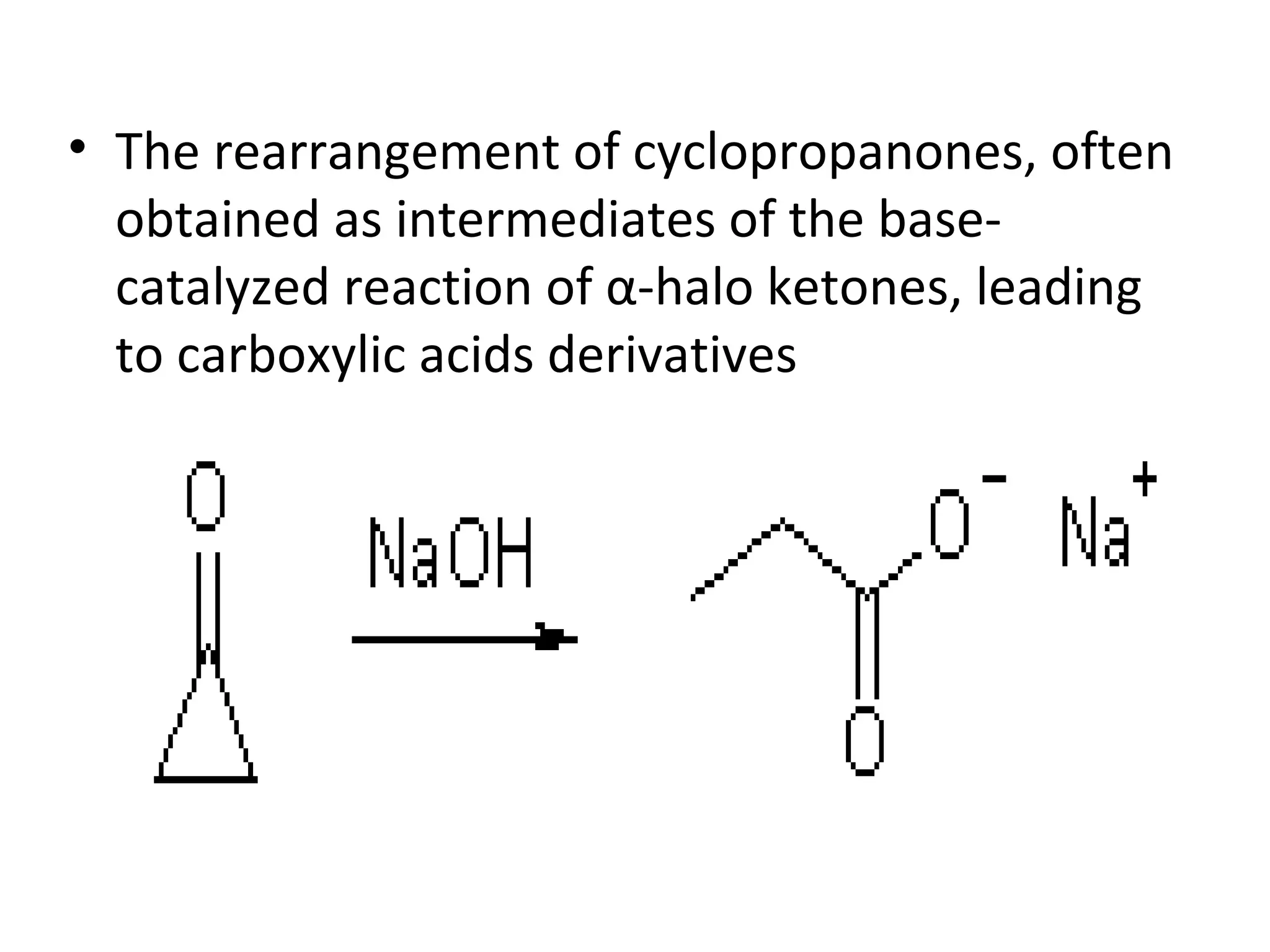
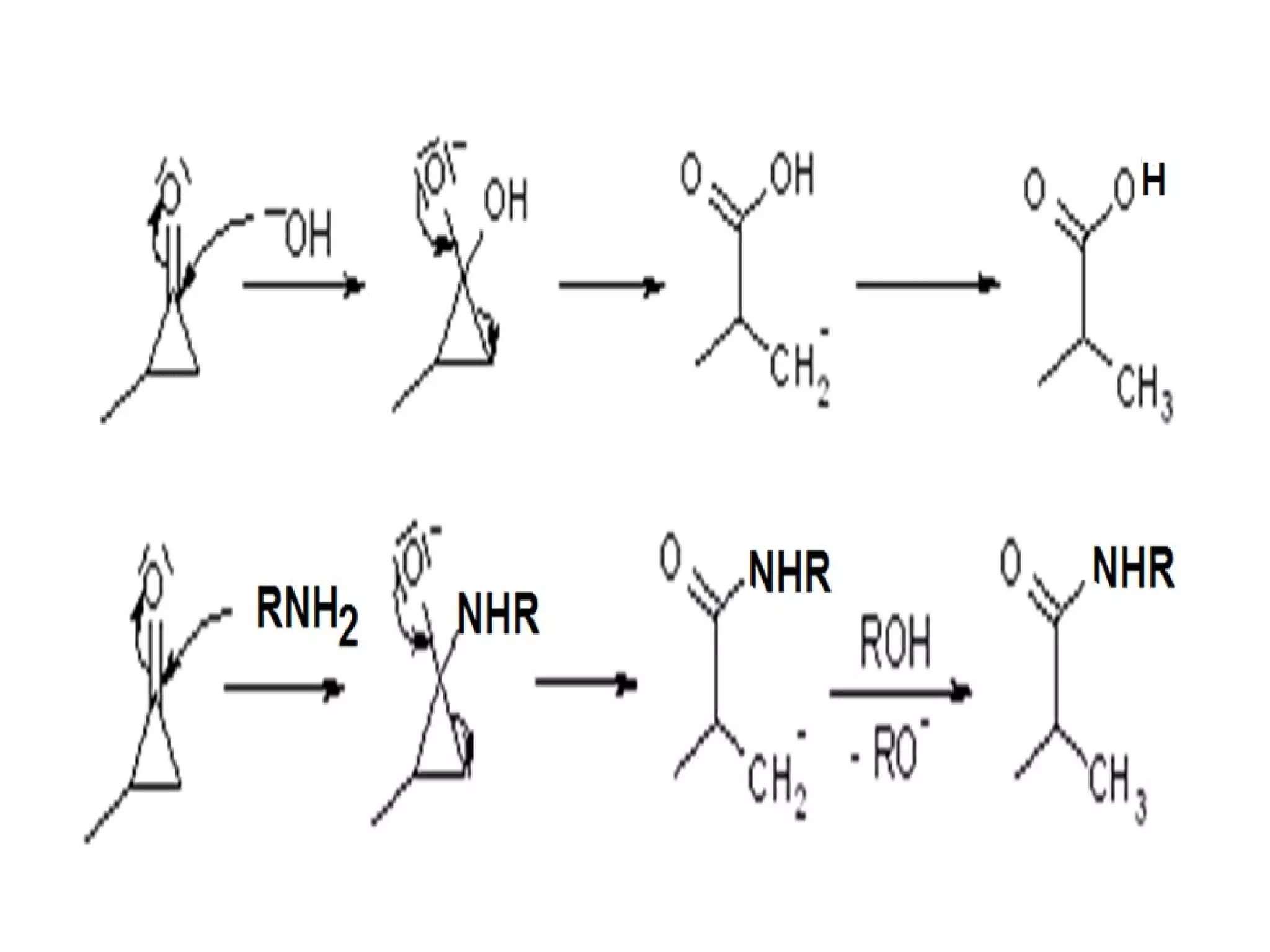
• The rearrangement of cyclopropanones, often
obtained as intermediates of the base-
catalyzed reaction of α-halo ketones, leading
to carboxylic acids derivatives
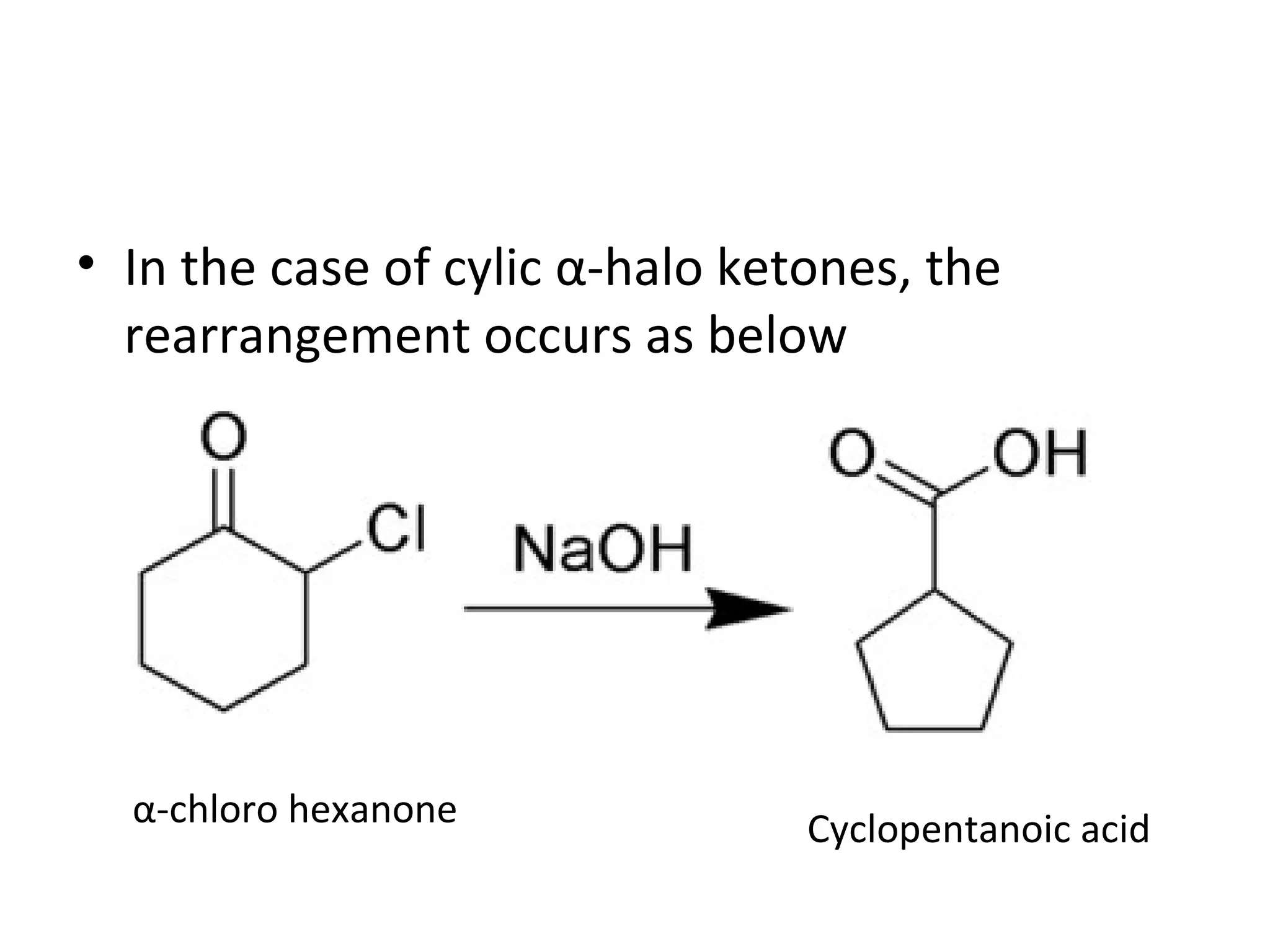
• In the case of cylic α-halo ketones, the
rearrangement occurs as below
α-chloro hexanone Cyclopentanoic acid
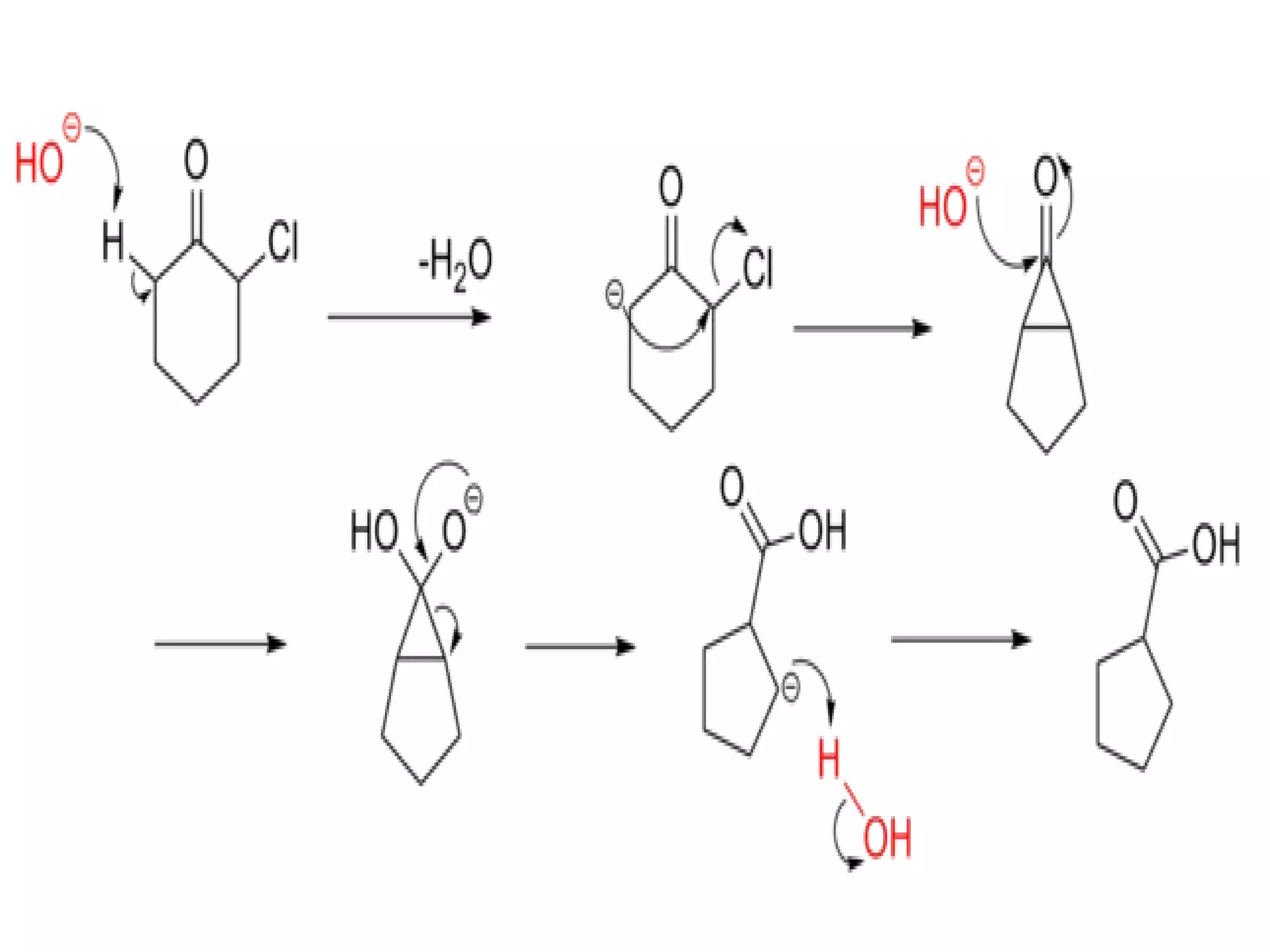
Reaction mechanism
• The reaction mechanism is thought to involve
the formation of an
1- Enolate on the side of the ketone that is away
from the chlorine atom
• Then enolate cyclizes to a cyclopropanone
intermediate
• Afterwards, it is attacked by hydroxide,
nucleophile
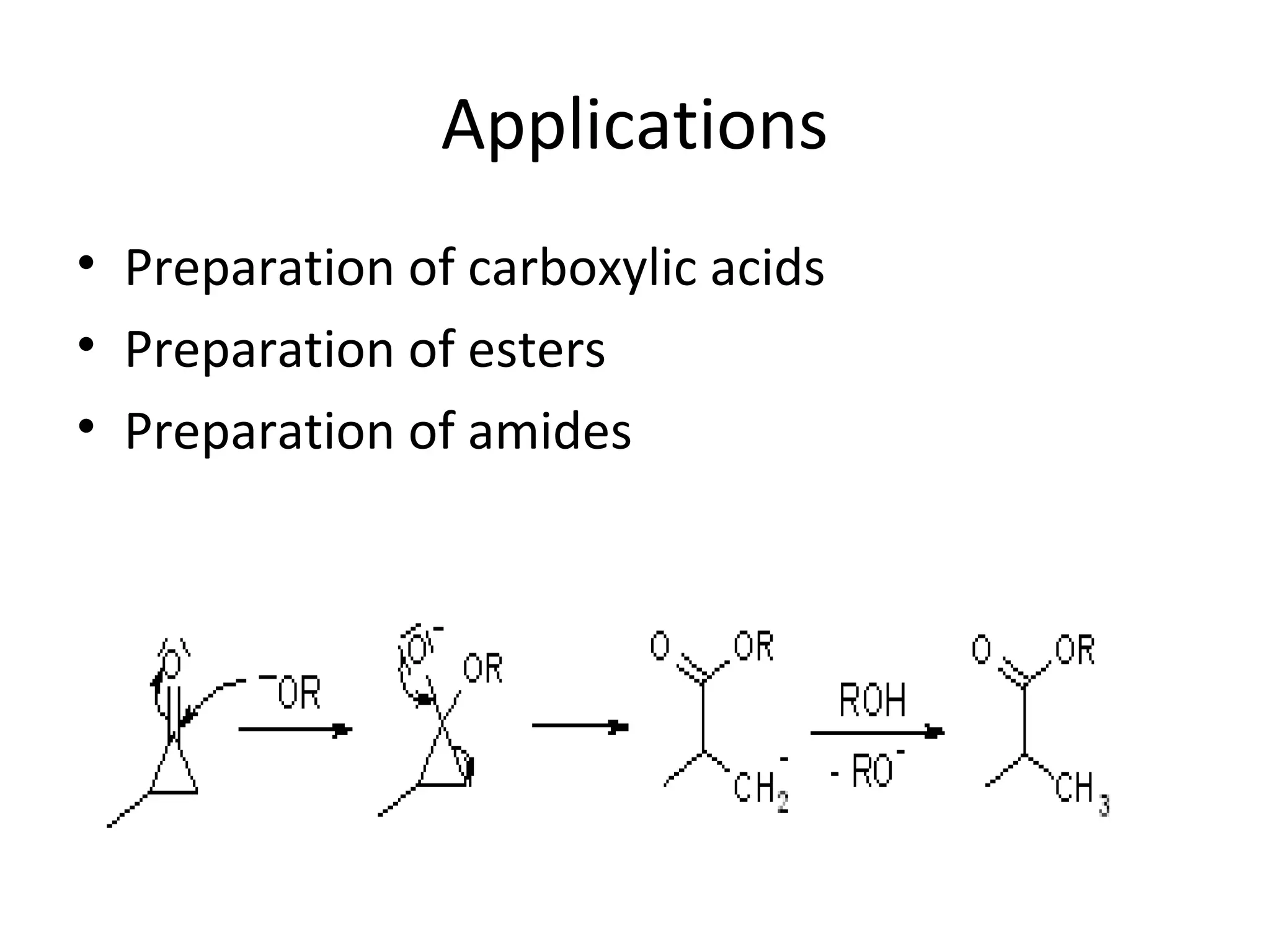
• Usage of alkaoxide such as sodium
methoxide, instead of sodium
hydroxide, yields the ring-contracted
ester product
Applications
• Preparation of carboxylic acids
• Preparation of esters
• Preparation of amides
Favorskii rearrangement----Sir Khalid (Organic)

Favorskii rearrangement----Sir Khalid (Organic)

  • 1.
    Favorskii rearrangement • TheFavorskii rearrangement is a rearrangement of cyclopropanones and α- halo ketones, which leads to carboxylic acids, or carboxylic acid derivatives • In the case of cyclic α-halo ketones, the Favorskii rearrangement constitutes a ring contraction
  • 2.
    continued • This rearrangementtakes place in the presence of a base, sometimes hydroxide, to yield a carboxylic acid, • but most of the time either an alkoxide base or an amine to yield an ester or an amide, respectively
  • 3.
    • The rearrangementof cyclopropanones, often obtained as intermediates of the base- catalyzed reaction of α-halo ketones, leading to carboxylic acids derivatives
  • 4.
    • In thecase of cylic α-halo ketones, the rearrangement occurs as below α-chloro hexanone Cyclopentanoic acid
  • 5.
    Reaction mechanism • Thereaction mechanism is thought to involve the formation of an 1- Enolate on the side of the ketone that is away from the chlorine atom • Then enolate cyclizes to a cyclopropanone intermediate • Afterwards, it is attacked by hydroxide, nucleophile
  • 7.
    • Usage ofalkaoxide such as sodium methoxide, instead of sodium hydroxide, yields the ring-contracted ester product
  • 8.
    Applications • Preparation ofcarboxylic acids • Preparation of esters • Preparation of amides