Important Inorganic Compound
1
UNIT TWO
INORGANIC COMPOUNDS
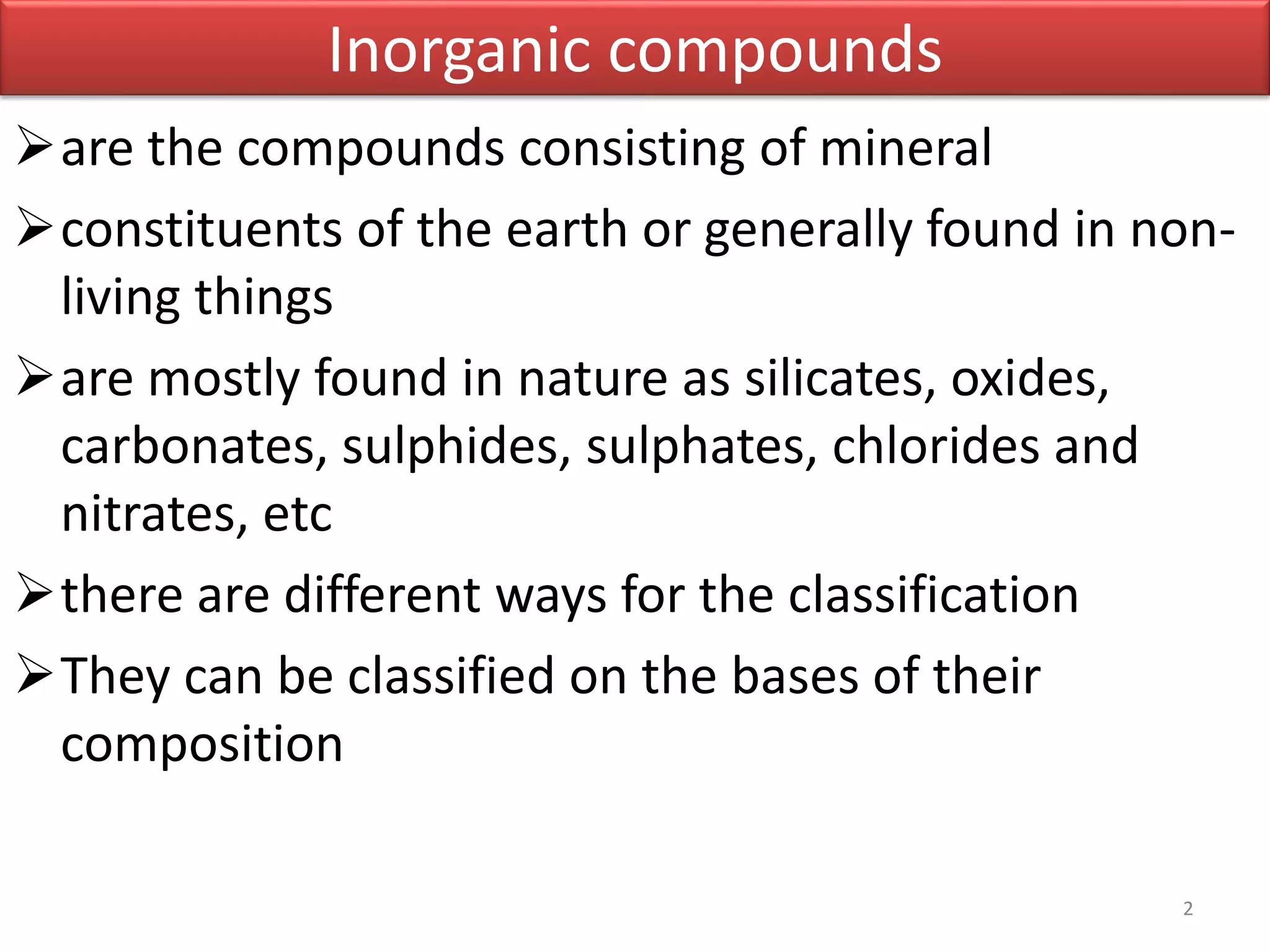
are the compounds consisting of mineral constituents of the earth or
generally found in non-living things.
Although, carbon dioxide, carbon monoxide, carbonates and hydrogen
carbonates are carbon containing compounds inorganic compound.
are mostly found in nature as silicates, oxides, carbonates, sulphides,
sulphates, chlorides and nitrates, etc.
Inorganic compounds
are the compounds consisting of mineral
constituents of the earth or generally found in non-
living things
are mostly found in nature as silicates, oxides,
carbonates, sulphides, sulphates, chlorides and
nitrates, etc
there are different ways for the classification
They can be classified on the bases of their
composition
2
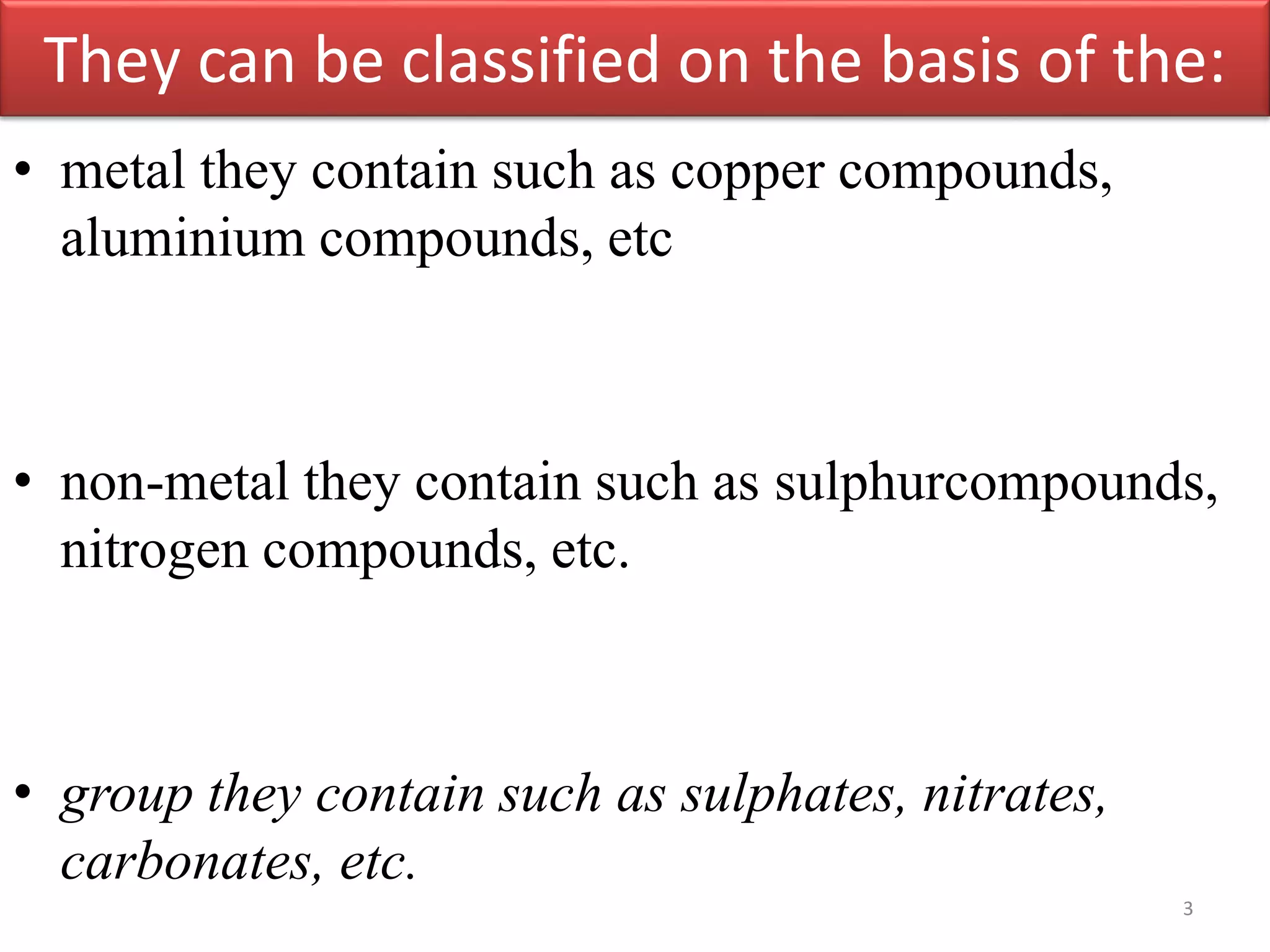
They can be classified on the basis of the:
• metal they contain such as copper compounds,
aluminium compounds, etc
• non-metal they contain such as sulphurcompounds,
nitrogen compounds, etc.
• group they contain such as sulphates, nitrates,
carbonates, etc.
3
OXIDES
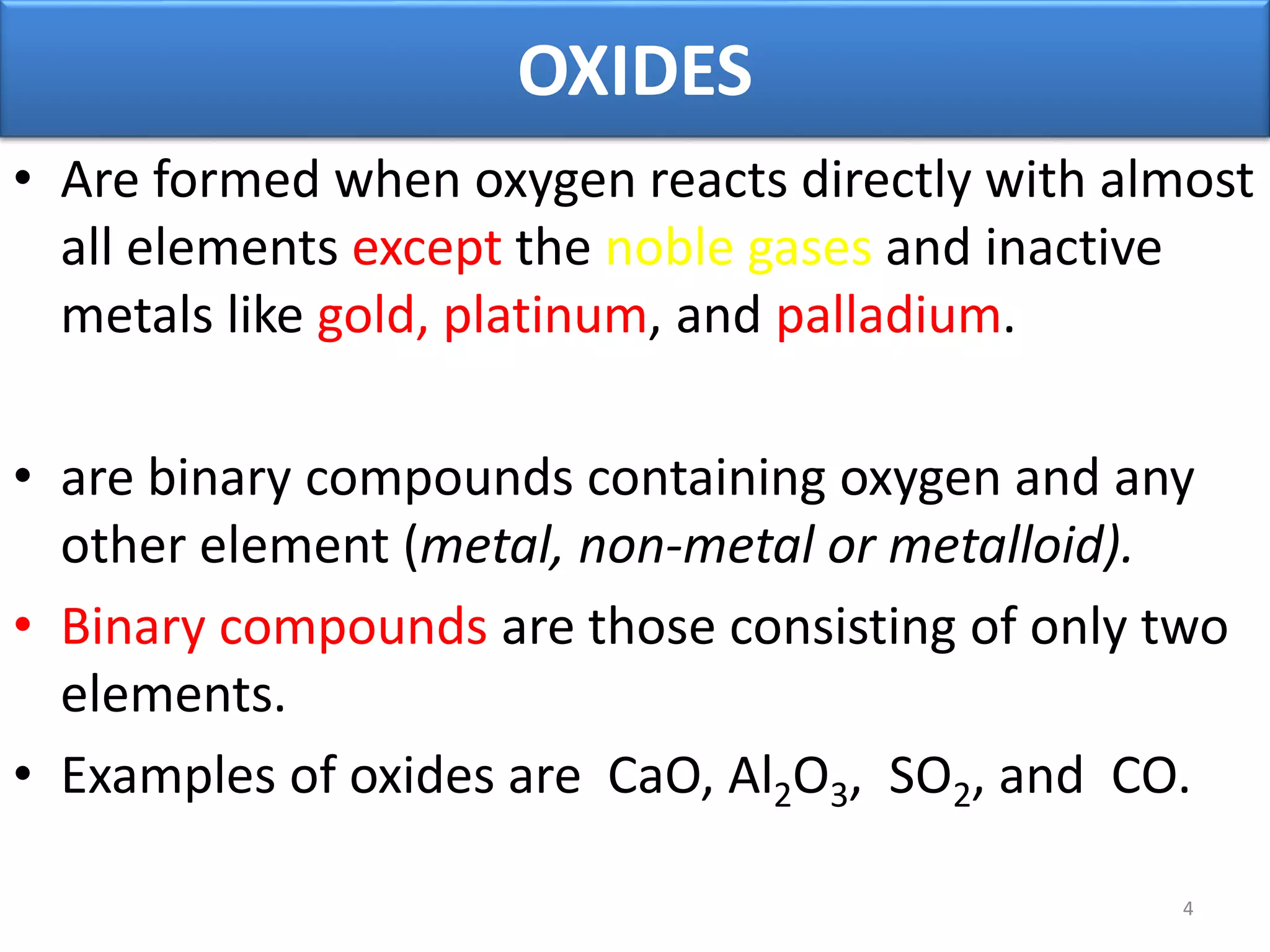
• Are formed when oxygen reacts directly with almost
all elements except the noble gases and inactive
metals like gold, platinum, and palladium.
• are binary compounds containing oxygen and any
other element (metal, non-metal or metalloid).
• Binary compounds are those consisting of only two
elements.
• Examples of oxides are CaO, Al2O3, SO2, and CO.
4
CLASSIFICATION OF OXIDES INTO DIFFERENT GROUPS
• they are classified based on their Chemical
behaviour
ACIDIC OXIDES
BASIC OXIDES
AMPHOTERIC OXIDES
NEUTRAL OXIDES, AND
PEROXIDES
5
A.ACIDIC OXIDES
• are the oxides formed by the chemical combination
of oxygen with non-metals.
• are non-metal oxides.
• are also called acid anhydrides(means acid without
water).
• Examples carbon dioxide, CO2, NO2, and SO2.
• Note that all non-metal oxides are not necessarily
acidic oxides
• example, CO, and N2O,are non-metal oxides, but
they are neutral oxides
6
Chemical Properties of Acidic Oxides
1. Acidic oxides (acid anhydrides) dissolve in water to form acidic solution (acid).
Acid anhydride + water → Acid
2. Acidic oxides react with basic or metallic oxides to form salt.
Acidic oxide + Basic oxide → Salt
3. Acidic oxides react with bases to form salt and water. This reaction is
called neutralization reaction.
Acidic oxide + Base → Salt + Water
7
B. BASIC OXIDES
Are those that dissolve in water and react with it to form basic or
alkaline solutions are called basic anhydrides
There are metallic oxides which have basic properties but are
insoluble in water.
These oxides react with acids to give salt and water.
NOTE;all metal oxides are not necessarily basic oxides; for
example and ZnO are amphoteric oxides
The oxides of active metals, group IA and heavier members of
group IIA, dissolve in water and readily form bases
8
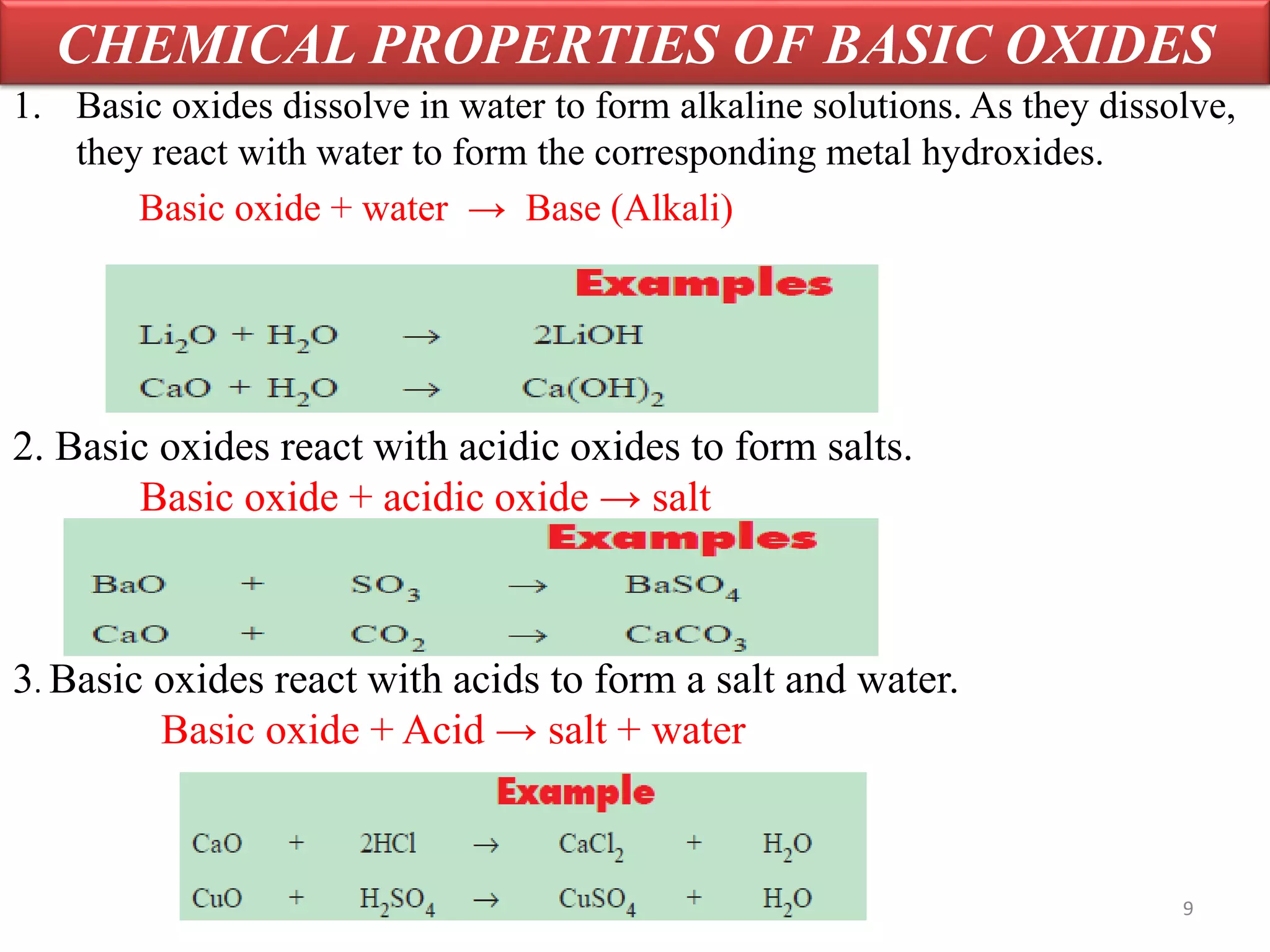
CHEMICAL PROPERTIES OF BASIC OXIDES
1. Basic oxides dissolve in water to form alkaline solutions. As they dissolve,
they react with water to form the corresponding metal hydroxides.
Basic oxide + water → Base (Alkali)
2. Basic oxides react with acidic oxides to form salts.
Basic oxide + acidic oxide → salt
3. Basic oxides react with acids to form a salt and water.
Basic oxide + Acid → salt + water
9
INDICATORS
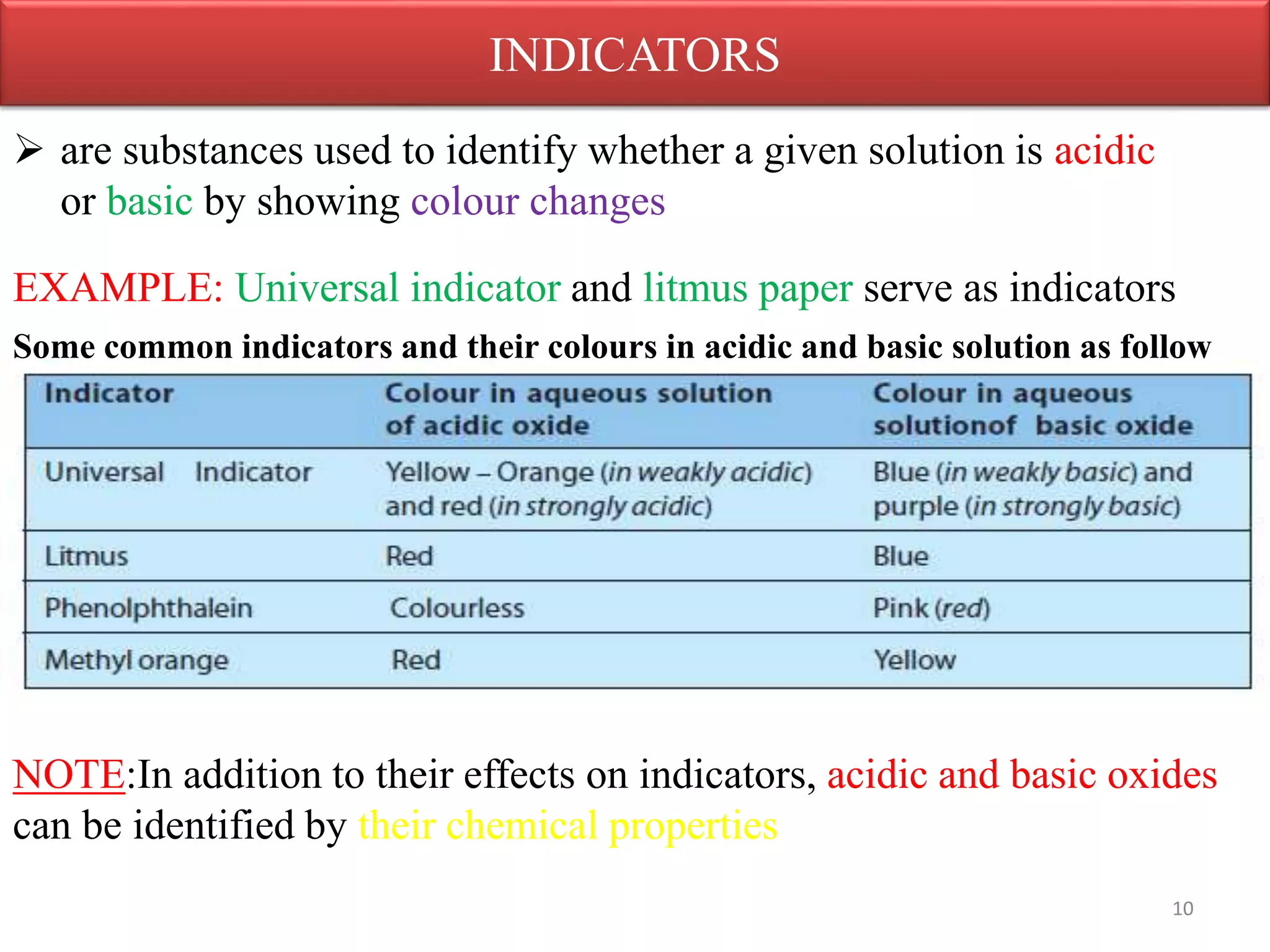
 are substances used to identify whether a given solution is acidic
or basic by showing colour changes
EXAMPLE: Universal indicator and litmus paper serve as indicators
Some common indicators and their colours in acidic and basic solution as follow
NOTE:In addition to their effects on indicators, acidic and basic oxides
can be identified by their chemical properties
10
C. AMPHOTERIC OXIDES
 are oxides which exhibit both acidic and basic properties
In their reaction with acids, they behave as bases and, in their reaction
with bases they act as acids.
examples of amphoteric oxides are ZnO, PbO, PbO2, SnO, and SnO2
NOTE; acidic oxides, basic oxides and amphoteric oxides are salt-
forming oxides.
11
D. NEUTRAL OXIDES
are react neither with acids nor with bases to form salt and
water.
12
 do not show basic and acidic properties
are very few in number
Examples of neutral oxides are
 water, H2O,
carbon monoxide, CO,
dinitrogen monoxide, N2O, and
 nitrogen monoxide, NO..
E. PEROXIDES
13
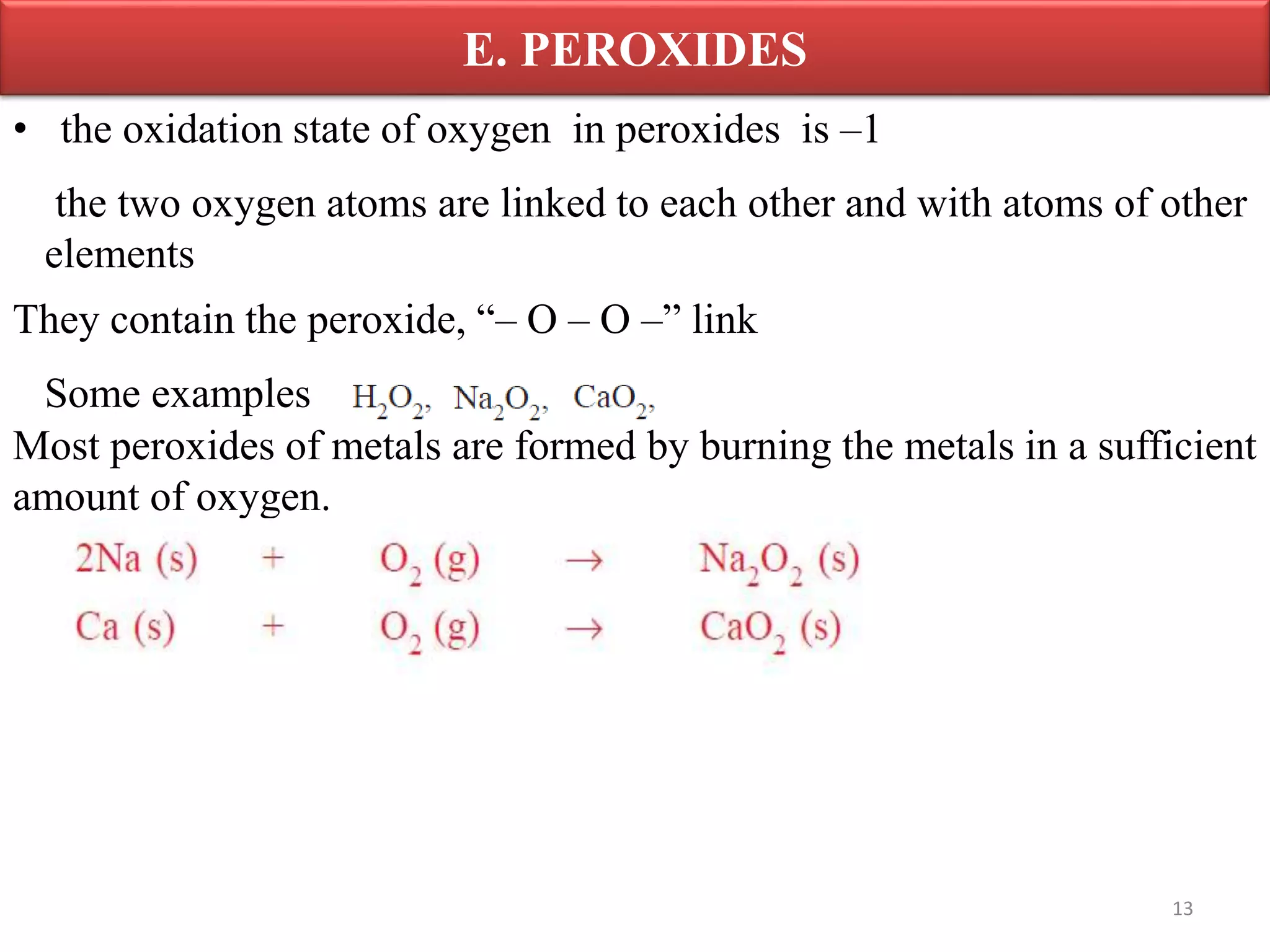
• the oxidation state of oxygen in peroxides is –1
the two oxygen atoms are linked to each other and with atoms of other
elements
They contain the peroxide, “– O – O –” link
Some examples
Most peroxides of metals are formed by burning the metals in a sufficient
amount of oxygen.
CHEMICAL PROPERTIES OF PEROXIDES
• Some of the chemical properties of peroxides include:
14
A. Peroxides are powerful oxidizing agents;
they react with different substances by losing oxygen.
B. Peroxides react with aqueous acids to form hydrogen peroxide.
HYDROGEN PEROXIDE
• The structure of the hydrogen peroxide molecule is:
15
decomposes to release oxygen
is a strong oxidizing agent
Its oxidizing power is responsible for its effectiveness as an antiseptic for mouthwash
and cleansing wounds.
It is also used as a bleaching agent.
is added to a coloured dye, the molecule responsible for the colour will oxidize and so
the colour will disappear.
For example, if hydrogen peroxide is added to a black dye (paint) that contains lead
sulphide, PbS, the black colour turns white.
This is due to the oxidation of PbS to PbSO4.
The equation for this process is:

OXIDE in chemistry

  • 1.
    Important Inorganic Compound 1 UNITTWO INORGANIC COMPOUNDS are the compounds consisting of mineral constituents of the earth or generally found in non-living things. Although, carbon dioxide, carbon monoxide, carbonates and hydrogen carbonates are carbon containing compounds inorganic compound. are mostly found in nature as silicates, oxides, carbonates, sulphides, sulphates, chlorides and nitrates, etc.
  • 2.
    Inorganic compounds are thecompounds consisting of mineral constituents of the earth or generally found in non- living things are mostly found in nature as silicates, oxides, carbonates, sulphides, sulphates, chlorides and nitrates, etc there are different ways for the classification They can be classified on the bases of their composition 2
  • 3.
    They can beclassified on the basis of the: • metal they contain such as copper compounds, aluminium compounds, etc • non-metal they contain such as sulphurcompounds, nitrogen compounds, etc. • group they contain such as sulphates, nitrates, carbonates, etc. 3
  • 4.
    OXIDES • Are formedwhen oxygen reacts directly with almost all elements except the noble gases and inactive metals like gold, platinum, and palladium. • are binary compounds containing oxygen and any other element (metal, non-metal or metalloid). • Binary compounds are those consisting of only two elements. • Examples of oxides are CaO, Al2O3, SO2, and CO. 4
  • 5.
    CLASSIFICATION OF OXIDESINTO DIFFERENT GROUPS • they are classified based on their Chemical behaviour ACIDIC OXIDES BASIC OXIDES AMPHOTERIC OXIDES NEUTRAL OXIDES, AND PEROXIDES 5
  • 6.
    A.ACIDIC OXIDES • arethe oxides formed by the chemical combination of oxygen with non-metals. • are non-metal oxides. • are also called acid anhydrides(means acid without water). • Examples carbon dioxide, CO2, NO2, and SO2. • Note that all non-metal oxides are not necessarily acidic oxides • example, CO, and N2O,are non-metal oxides, but they are neutral oxides 6
  • 7.
    Chemical Properties ofAcidic Oxides 1. Acidic oxides (acid anhydrides) dissolve in water to form acidic solution (acid). Acid anhydride + water → Acid 2. Acidic oxides react with basic or metallic oxides to form salt. Acidic oxide + Basic oxide → Salt 3. Acidic oxides react with bases to form salt and water. This reaction is called neutralization reaction. Acidic oxide + Base → Salt + Water 7
  • 8.
    B. BASIC OXIDES Arethose that dissolve in water and react with it to form basic or alkaline solutions are called basic anhydrides There are metallic oxides which have basic properties but are insoluble in water. These oxides react with acids to give salt and water. NOTE;all metal oxides are not necessarily basic oxides; for example and ZnO are amphoteric oxides The oxides of active metals, group IA and heavier members of group IIA, dissolve in water and readily form bases 8
  • 9.
    CHEMICAL PROPERTIES OFBASIC OXIDES 1. Basic oxides dissolve in water to form alkaline solutions. As they dissolve, they react with water to form the corresponding metal hydroxides. Basic oxide + water → Base (Alkali) 2. Basic oxides react with acidic oxides to form salts. Basic oxide + acidic oxide → salt 3. Basic oxides react with acids to form a salt and water. Basic oxide + Acid → salt + water 9
  • 10.
    INDICATORS  are substancesused to identify whether a given solution is acidic or basic by showing colour changes EXAMPLE: Universal indicator and litmus paper serve as indicators Some common indicators and their colours in acidic and basic solution as follow NOTE:In addition to their effects on indicators, acidic and basic oxides can be identified by their chemical properties 10
  • 11.
    C. AMPHOTERIC OXIDES are oxides which exhibit both acidic and basic properties In their reaction with acids, they behave as bases and, in their reaction with bases they act as acids. examples of amphoteric oxides are ZnO, PbO, PbO2, SnO, and SnO2 NOTE; acidic oxides, basic oxides and amphoteric oxides are salt- forming oxides. 11
  • 12.
    D. NEUTRAL OXIDES arereact neither with acids nor with bases to form salt and water. 12  do not show basic and acidic properties are very few in number Examples of neutral oxides are  water, H2O, carbon monoxide, CO, dinitrogen monoxide, N2O, and  nitrogen monoxide, NO..
  • 13.
    E. PEROXIDES 13 • theoxidation state of oxygen in peroxides is –1 the two oxygen atoms are linked to each other and with atoms of other elements They contain the peroxide, “– O – O –” link Some examples Most peroxides of metals are formed by burning the metals in a sufficient amount of oxygen.
  • 14.
    CHEMICAL PROPERTIES OFPEROXIDES • Some of the chemical properties of peroxides include: 14 A. Peroxides are powerful oxidizing agents; they react with different substances by losing oxygen. B. Peroxides react with aqueous acids to form hydrogen peroxide.
  • 15.
    HYDROGEN PEROXIDE • Thestructure of the hydrogen peroxide molecule is: 15 decomposes to release oxygen is a strong oxidizing agent Its oxidizing power is responsible for its effectiveness as an antiseptic for mouthwash and cleansing wounds. It is also used as a bleaching agent. is added to a coloured dye, the molecule responsible for the colour will oxidize and so the colour will disappear. For example, if hydrogen peroxide is added to a black dye (paint) that contains lead sulphide, PbS, the black colour turns white. This is due to the oxidation of PbS to PbSO4. The equation for this process is: