What is an oxide?
•An oxide is a compound of oxygen and
another element.
• There are four types of oxides:
- acidic oxides
- basic oxides
- amphoteric oxides
- neutral oxides
Acidic Oxides
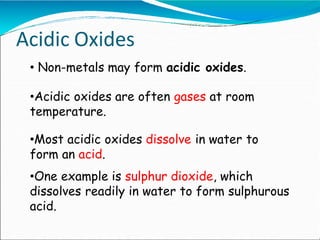
• Non-metals may form acidic oxides.
•Acidic oxides are often gases at room
temperature.
•Most acidic oxides dissolve in water to
form an acid.
•One example is sulphur dioxide, which
dissolves readily in water to form sulphurous
acid.
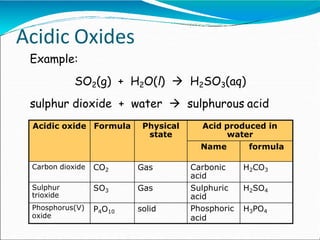
Acidic oxide Formula Physical
state
Acid produced in
water
Name formula
Carbon dioxide CO2 Gas Carbonic
acid
H2CO3
Sulphur
trioxide
SO3 Gas Sulphuric
acid
H2SO4
Phosphorus(V)
oxide
P4O10 solid Phosphoric
acid
H3PO4
Example:
SO2(g) + H2O(l)  H2SO3(aq)
sulphur dioxide + water  sulphurous acid
Acidic Oxides
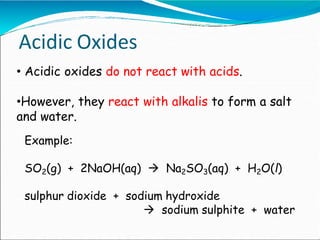
• Acidic oxides do not react with acids.
•However, they react with alkalis to form a salt
and water.
Example:
SO2(g) + 2NaOH(aq)  Na2SO3(aq) + H2O(l)
sulphur dioxide + sodium hydroxide
 sodium sulphite + water
Acidic Oxides
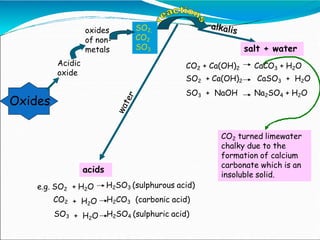
Oxides
Acidic
oxide
oxides
of non-
metals
SO2,
CO2
SO3
acids
e.g. SO2
CO2
SO3
+ H2O
+ H2O
+ H2O
H2SO3 (sulphurous acid)
H2CO3 (carbonic acid)
H2SO4 (sulphuric acid)
salt + water
CO2 + Ca(OH)2 CaCO3 + H2O
SO2 + Ca(OH)2
SO3 + NaOH
CaSO3 + H2O
Na2SO4 + H2O
CO2 turned limewater
chalky due to the
formation of calcium
carbonate which is an
insoluble solid.
Basic Oxides
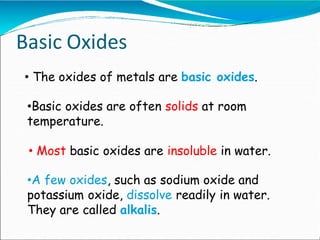
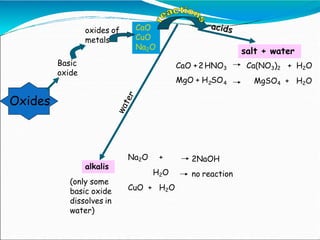
• The oxides of metals are basic oxides.
•Basic oxides are often solids at room
temperature.
• Most basic oxides are insoluble in water.
•A few oxides, such as sodium oxide and
potassium oxide, dissolve readily in water.
They are called alkalis.
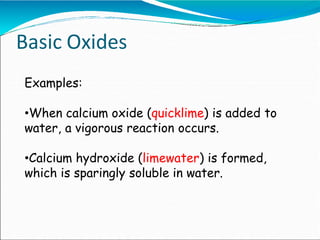
Examples:
•When calcium oxide (quicklime) is added to
water, a vigorous reaction occurs.
•Calcium hydroxide (limewater) is formed,
which is sparingly soluble in water.
Basic Oxides
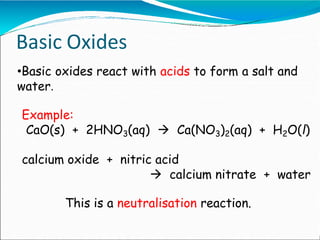
•Basic oxides react with acids to form a salt and
water.
Example:
CaO(s) + 2HNO3(aq)  Ca(NO3)2(aq) + H2O(l)
calcium oxide + nitric acid
 calcium nitrate + water
This is a neutralisation reaction.
Basic Oxides
Oxides
Basic
oxide
oxides of
metals
CaO
CuO
Na2O
salt + water
MgO + H SO
2 4
alkalis
(only some
basic oxide
dissolves in
water)
Na2O +
H2O
CuO + H2O
2NaOH
no reaction
Ca(NO3)2 + H2O
MgSO4 + H2O
CaO +2HNO3
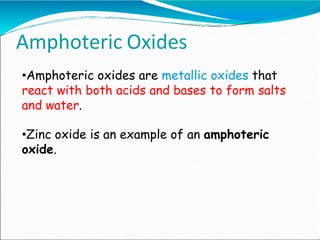
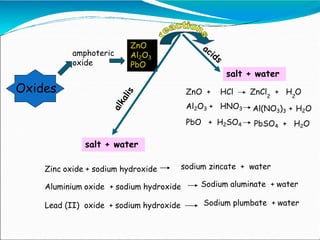
•Amphoteric oxides are metallic oxides that
react with both acids and bases to form salts
and water.
•Zinc oxide is an example of an amphoteric
oxide.
Amphoteric Oxides
Amphoteric Oxides
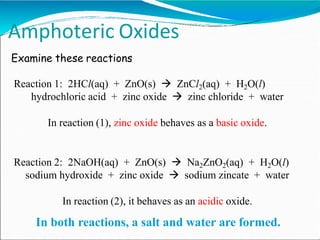
Examine these reactions
Reaction 1: 2HCl(aq) + ZnO(s)  ZnCl2(aq) + H2O(l)
hydrochloric acid + zinc oxide  zinc chloride + water
In reaction (1), zinc oxide behaves as a basic oxide.
Reaction 2: 2NaOH(aq) + ZnO(s)  Na2ZnO2(aq) + H2O(l)
sodium hydroxide + zinc oxide  sodium zincate + water
In reaction (2), it behaves as an acidic oxide.
In both reactions, a salt and water are formed.
Oxides
amphoteric
oxide
ZnO
Al2O3
PbO
salt + water
salt + water
PbO + H2SO4
2 2
Al(NO3)3 + H2O
ZnO + 2 HCl ZnCl + H O
Al2O3 +3 HNO3
PbSO4 + H2O
Zinc oxide + sodium hydroxide
Aluminium oxide + sodium hydroxide
Lead (II) oxide + sodium hydroxide
Sodium aluminate + water
Sodium plumbate + water
sodium zincate + water
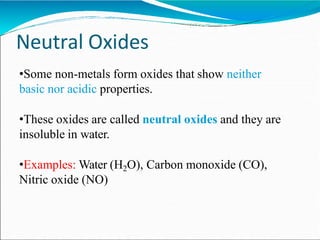
Neutral Oxides
•Some non-metals form oxides that show neither
basic nor acidic properties.
•These oxides are called neutral oxides and they are
insoluble in water.
•Examples: Water (H2O), Carbon monoxide (CO),
Nitric oxide (NO)
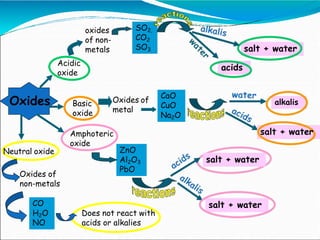
Oxides
Acidic
oxide
oxides
of non-
metals
SO2,
CO2
SO3
acids
salt + water
Basic
oxide
Oxides of
metal
alkalis
salt + water
CaO
CuO
Na2O
Amphoteric
oxide
ZnO
Al2O3
PbO
salt + water
salt + water
Neutral oxide
Oxides of
non-metals
Does not react with
acids or alkalies
CO
H2O
NO

typesofoxides-220803084117-a54c0175.pptx

  • 2.
    What is anoxide? •An oxide is a compound of oxygen and another element. • There are four types of oxides: - acidic oxides - basic oxides - amphoteric oxides - neutral oxides
  • 3.
    Acidic Oxides • Non-metalsmay form acidic oxides. •Acidic oxides are often gases at room temperature. •Most acidic oxides dissolve in water to form an acid. •One example is sulphur dioxide, which dissolves readily in water to form sulphurous acid.
  • 4.
    Acidic oxide FormulaPhysical state Acid produced in water Name formula Carbon dioxide CO2 Gas Carbonic acid H2CO3 Sulphur trioxide SO3 Gas Sulphuric acid H2SO4 Phosphorus(V) oxide P4O10 solid Phosphoric acid H3PO4 Example: SO2(g) + H2O(l)  H2SO3(aq) sulphur dioxide + water  sulphurous acid Acidic Oxides
  • 5.
    • Acidic oxidesdo not react with acids. •However, they react with alkalis to form a salt and water. Example: SO2(g) + 2NaOH(aq)  Na2SO3(aq) + H2O(l) sulphur dioxide + sodium hydroxide  sodium sulphite + water Acidic Oxides
  • 6.
    Oxides Acidic oxide oxides of non- metals SO2, CO2 SO3 acids e.g. SO2 CO2 SO3 +H2O + H2O + H2O H2SO3 (sulphurous acid) H2CO3 (carbonic acid) H2SO4 (sulphuric acid) salt + water CO2 + Ca(OH)2 CaCO3 + H2O SO2 + Ca(OH)2 SO3 + NaOH CaSO3 + H2O Na2SO4 + H2O CO2 turned limewater chalky due to the formation of calcium carbonate which is an insoluble solid.
  • 7.
    Basic Oxides • Theoxides of metals are basic oxides. •Basic oxides are often solids at room temperature. • Most basic oxides are insoluble in water. •A few oxides, such as sodium oxide and potassium oxide, dissolve readily in water. They are called alkalis.
  • 8.
    Examples: •When calcium oxide(quicklime) is added to water, a vigorous reaction occurs. •Calcium hydroxide (limewater) is formed, which is sparingly soluble in water. Basic Oxides
  • 9.
    •Basic oxides reactwith acids to form a salt and water. Example: CaO(s) + 2HNO3(aq)  Ca(NO3)2(aq) + H2O(l) calcium oxide + nitric acid  calcium nitrate + water This is a neutralisation reaction. Basic Oxides
  • 10.
    Oxides Basic oxide oxides of metals CaO CuO Na2O salt +water MgO + H SO 2 4 alkalis (only some basic oxide dissolves in water) Na2O + H2O CuO + H2O 2NaOH no reaction Ca(NO3)2 + H2O MgSO4 + H2O CaO +2HNO3
  • 11.
    •Amphoteric oxides aremetallic oxides that react with both acids and bases to form salts and water. •Zinc oxide is an example of an amphoteric oxide. Amphoteric Oxides
  • 12.
    Amphoteric Oxides Examine thesereactions Reaction 1: 2HCl(aq) + ZnO(s)  ZnCl2(aq) + H2O(l) hydrochloric acid + zinc oxide  zinc chloride + water In reaction (1), zinc oxide behaves as a basic oxide. Reaction 2: 2NaOH(aq) + ZnO(s)  Na2ZnO2(aq) + H2O(l) sodium hydroxide + zinc oxide  sodium zincate + water In reaction (2), it behaves as an acidic oxide. In both reactions, a salt and water are formed.
  • 13.
    Oxides amphoteric oxide ZnO Al2O3 PbO salt + water salt+ water PbO + H2SO4 2 2 Al(NO3)3 + H2O ZnO + 2 HCl ZnCl + H O Al2O3 +3 HNO3 PbSO4 + H2O Zinc oxide + sodium hydroxide Aluminium oxide + sodium hydroxide Lead (II) oxide + sodium hydroxide Sodium aluminate + water Sodium plumbate + water sodium zincate + water
  • 14.
    Neutral Oxides •Some non-metalsform oxides that show neither basic nor acidic properties. •These oxides are called neutral oxides and they are insoluble in water. •Examples: Water (H2O), Carbon monoxide (CO), Nitric oxide (NO)
  • 15.
    Oxides Acidic oxide oxides of non- metals SO2, CO2 SO3 acids salt +water Basic oxide Oxides of metal alkalis salt + water CaO CuO Na2O Amphoteric oxide ZnO Al2O3 PbO salt + water salt + water Neutral oxide Oxides of non-metals Does not react with acids or alkalies CO H2O NO