By:- Abhishek Kumar
WHAT IS CHEMISTRY?
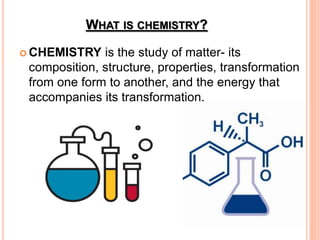
 CHEMISTRY is the study of matter- its
composition, structure, properties, transformation
from one form to another, and the energy that
accompanies its transformation.
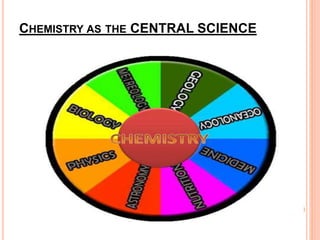
CHEMISTRY AS THE CENTRAL SCIENCE
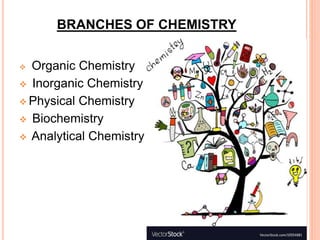
BRANCHES OF CHEMISTRY
 Organic Chemistry
 Inorganic Chemistry
 Physical Chemistry
 Biochemistry
 Analytical Chemistry
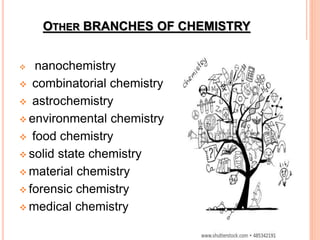
OTHER BRANCHES OF CHEMISTRY
 nanochemistry
 combinatorial chemistry
 astrochemistry
 environmental chemistry
 food chemistry
 solid state chemistry
 material chemistry
 forensic chemistry
 medical chemistry
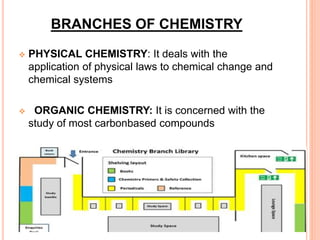
BRANCHES OF CHEMISTRY
 PHYSICAL CHEMISTRY: It deals with the
application of physical laws to chemical change and
chemical systems
 ORGANIC CHEMISTRY: It is concerned with the
study of most carbonbased compounds
CONT…
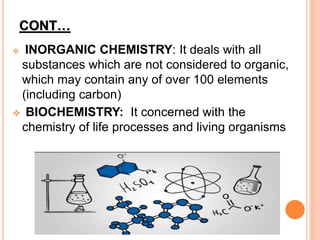
 INORGANIC CHEMISTRY: It deals with all
substances which are not considered to organic,
which may contain any of over 100 elements
(including carbon)
 BIOCHEMISTRY: It concerned with the
chemistry of life processes and living organisms
CONTS..
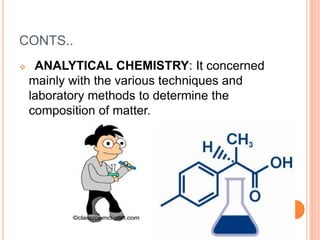
 ANALYTICAL CHEMISTRY: It concerned
mainly with the various techniques and
laboratory methods to determine the
composition of matter.
IMPORTANCE OF CHEMISTRY
 Take a good look at the thing around you.
What do you see?
 Think about your personal and school
things?
 What have you eaten this breakfast?
 These and more are products of chemistry.
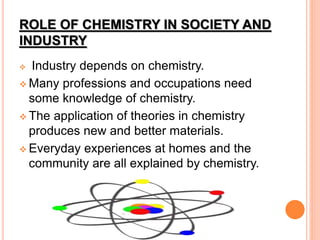
ROLE OF CHEMISTRY IN SOCIETY AND
INDUSTRY
 Industry depends on chemistry.
 Many professions and occupations need
some knowledge of chemistry.
 The application of theories in chemistry
produces new and better materials.
 Everyday experiences at homes and the
community are all explained by chemistry.
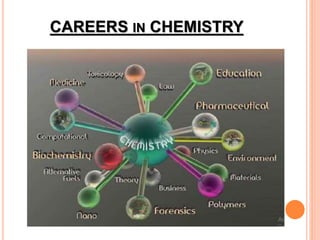
CAREERS IN CHEMISTRY
THANKU

Presentation chemistry

  • 1.
  • 2.
    WHAT IS CHEMISTRY? CHEMISTRY is the study of matter- its composition, structure, properties, transformation from one form to another, and the energy that accompanies its transformation.
  • 3.
    CHEMISTRY AS THECENTRAL SCIENCE
  • 4.
    BRANCHES OF CHEMISTRY Organic Chemistry  Inorganic Chemistry  Physical Chemistry  Biochemistry  Analytical Chemistry
  • 5.
    OTHER BRANCHES OFCHEMISTRY  nanochemistry  combinatorial chemistry  astrochemistry  environmental chemistry  food chemistry  solid state chemistry  material chemistry  forensic chemistry  medical chemistry
  • 6.
    BRANCHES OF CHEMISTRY PHYSICAL CHEMISTRY: It deals with the application of physical laws to chemical change and chemical systems  ORGANIC CHEMISTRY: It is concerned with the study of most carbonbased compounds
  • 7.
    CONT…  INORGANIC CHEMISTRY:It deals with all substances which are not considered to organic, which may contain any of over 100 elements (including carbon)  BIOCHEMISTRY: It concerned with the chemistry of life processes and living organisms
  • 8.
    CONTS..  ANALYTICAL CHEMISTRY:It concerned mainly with the various techniques and laboratory methods to determine the composition of matter.
  • 9.
    IMPORTANCE OF CHEMISTRY Take a good look at the thing around you. What do you see?  Think about your personal and school things?  What have you eaten this breakfast?  These and more are products of chemistry.
  • 10.
    ROLE OF CHEMISTRYIN SOCIETY AND INDUSTRY  Industry depends on chemistry.  Many professions and occupations need some knowledge of chemistry.  The application of theories in chemistry produces new and better materials.  Everyday experiences at homes and the community are all explained by chemistry.
  • 11.
  • 12.