Mr. Manikandan.T,
RN., RM., M.Sc(N)., D.C.A .,(Ph.D)
Assistant Professor,
Dept. of Medical Surgical Nursing,
VMCON, Puducherry.
DEFINITION
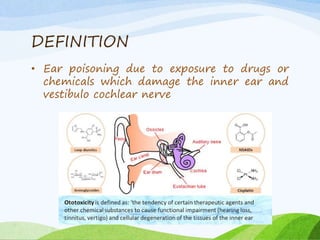
• Ear poisoning due to exposure to drugs or
chemicals which damage the inner ear and
vestibulo cochlear nerve
CAUSES
• Quinine and salicylates: tinnitus and hearing loss may
occur due to effect of this drugs
• Aminoglycosides: streptomycin – balance& hearing
• Loop diuretics: permanent sensori neural hearing loss
• Antiepiletics: vestibular disorder
• Betablockers: deafness
• Chemicals: mercury, CO, Carbondisulphide
CLINICAL FEATURES
• Tinnitus
• Imbalance
• Vertigo
• Hearing loss
DIAGNOSIS
• H/C
• P/E
• Electrocochleography (abbreviated ECochG or
ECOG) is a technique of recording electrical
potentials generated in the inner ear and
auditory nerve in response to sound stimulation,
using an electrode placed in the ear canal or
tympanic membrane.
• Electronystagmography
• Auditory brainstem response
MANAGEMENT
• Limit use of ototoxic drugs
• Periodic ophthalmic/ audiometric
examination
• Hearing aids for hearing loss
• vestibular exercises
• Treat the underlying causes

Ototoxicity

  • 1.
    Mr. Manikandan.T, RN., RM.,M.Sc(N)., D.C.A .,(Ph.D) Assistant Professor, Dept. of Medical Surgical Nursing, VMCON, Puducherry.
  • 2.
    DEFINITION • Ear poisoningdue to exposure to drugs or chemicals which damage the inner ear and vestibulo cochlear nerve
  • 3.
    CAUSES • Quinine andsalicylates: tinnitus and hearing loss may occur due to effect of this drugs • Aminoglycosides: streptomycin – balance& hearing • Loop diuretics: permanent sensori neural hearing loss • Antiepiletics: vestibular disorder • Betablockers: deafness • Chemicals: mercury, CO, Carbondisulphide
  • 4.
    CLINICAL FEATURES • Tinnitus •Imbalance • Vertigo • Hearing loss
  • 5.
    DIAGNOSIS • H/C • P/E •Electrocochleography (abbreviated ECochG or ECOG) is a technique of recording electrical potentials generated in the inner ear and auditory nerve in response to sound stimulation, using an electrode placed in the ear canal or tympanic membrane. • Electronystagmography • Auditory brainstem response
  • 6.
    MANAGEMENT • Limit useof ototoxic drugs • Periodic ophthalmic/ audiometric examination • Hearing aids for hearing loss • vestibular exercises • Treat the underlying causes