OTOTOXICITY
Presented by:
Taiwo Ifedolapo E
100400
INTRODUCTION
• Ototoxicity is defined as damage to the inner
ear after exposure to a toxic agent
• Any drug with the potential to cause toxic
reactions to structures of the inner ear,
including the cochlea, vestibule, semicircular
canals, and otoliths is considered OTOTOXIC.
• The ototoxicity could either be;
I. Cochleotoxicity
II. Vestibulotoxicity
• Various drugs and chemicals can damage the
inner ear and cause; sensorineural hearing
loss, tinnitus and some times vertigo
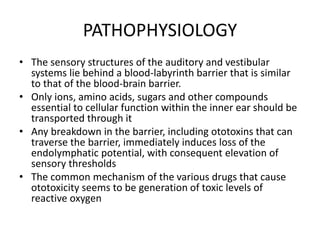
PATHOPHYSIOLOGY
• The sensory structures of the auditory and vestibular
systems lie behind a blood-labyrinth barrier that is similar
to that of the blood-brain barrier.
• Only ions, amino acids, sugars and other compounds
essential to cellular function within the inner ear should be
transported through it
• Any breakdown in the barrier, including ototoxins that can
traverse the barrier, immediately induces loss of the
endolymphatic potential, with consequent elevation of
sensory thresholds
• The common mechanism of the various drugs that cause
ototoxicity seems to be generation of toxic levels of
reactive oxygen
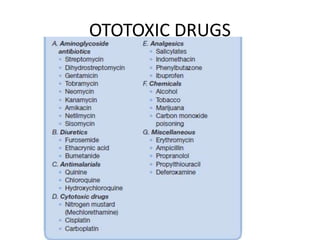
OTOTOXIC DRUGS
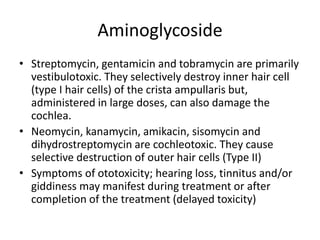
Aminoglycoside
• Streptomycin, gentamicin and tobramycin are primarily
vestibulotoxic. They selectively destroy inner hair cell
(type I hair cells) of the crista ampullaris but,
administered in large doses, can also damage the
cochlea.
• Neomycin, kanamycin, amikacin, sisomycin and
dihydrostreptomycin are cochleotoxic. They cause
selective destruction of outer hair cells (Type II)
• Symptoms of ototoxicity; hearing loss, tinnitus and/or
giddiness may manifest during treatment or after
completion of the treatment (delayed toxicity)
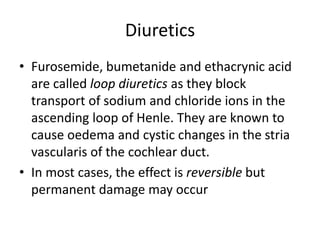
Diuretics
• Furosemide, bumetanide and ethacrynic acid
are called loop diuretics as they block
transport of sodium and chloride ions in the
ascending loop of Henle. They are known to
cause oedema and cystic changes in the stria
vascularis of the cochlear duct.
• In most cases, the effect is reversible but
permanent damage may occur
Salicylate
• Symptoms of salicylate ototoxicity are tinnitus
and bilateral sensorineural hearing loss
particularly affecting higher frequencies
• Hearing loss due to salicylates is reversible
after the drug is discontinued
Quinine
• Ototoxic symptoms due to quinine are tinnitus and
sensorineural hearing loss, both of which are
reversible. Higher doses may cause permanent loss.
• The symptoms generally appear with prolonged
medication but may occur with smaller doses in those
who are susceptible
• Ototoxic effects of quinine are due to vasoconstriction
in the small vessels of the cochlea and stria vascularis.
• Congenital deafness and hypoplasia of cochlea have
been reported in children whose mothers received this
drug during the first trimester of pregnancy
Cytotoxic drugs
• Nitrogen mustard, cisplatin and carboplatin
can cause cochlear damage. They affect the
outer hair cells of the cochlea.
• Toxicity that relates to cisplatin is mostly
cochlear, and causes high-frequency hearing
loss due to damage to the outer hair cells in
the organ of Corti
Management
A. Cochleotoxicity
• Discontinuation or reduction of dose of
ototic drug
• Hearing aid
• Cochlear implant
• Assistive technology
B. Vestibulotoxicity
• Vestibular rehabilitation therapy (VRT)
Conclusion
• Various drugs can result in hearing loss, which
may or may not be reversible. Certain
mechanisms are responsible for the hearing
loss, which can either be cochleo- or
vestibulotoxic.
• Cochlear and vestibular deficits can also result
in social, emotional and vocational problems.
Therefore, early detection of ototoxicinduced
hearing loss is essential for patients
•THANKS

ototoxicity

  • 1.
  • 2.
    INTRODUCTION • Ototoxicity isdefined as damage to the inner ear after exposure to a toxic agent • Any drug with the potential to cause toxic reactions to structures of the inner ear, including the cochlea, vestibule, semicircular canals, and otoliths is considered OTOTOXIC.
  • 3.
    • The ototoxicitycould either be; I. Cochleotoxicity II. Vestibulotoxicity • Various drugs and chemicals can damage the inner ear and cause; sensorineural hearing loss, tinnitus and some times vertigo
  • 4.
    PATHOPHYSIOLOGY • The sensorystructures of the auditory and vestibular systems lie behind a blood-labyrinth barrier that is similar to that of the blood-brain barrier. • Only ions, amino acids, sugars and other compounds essential to cellular function within the inner ear should be transported through it • Any breakdown in the barrier, including ototoxins that can traverse the barrier, immediately induces loss of the endolymphatic potential, with consequent elevation of sensory thresholds • The common mechanism of the various drugs that cause ototoxicity seems to be generation of toxic levels of reactive oxygen
  • 5.
  • 6.
    Aminoglycoside • Streptomycin, gentamicinand tobramycin are primarily vestibulotoxic. They selectively destroy inner hair cell (type I hair cells) of the crista ampullaris but, administered in large doses, can also damage the cochlea. • Neomycin, kanamycin, amikacin, sisomycin and dihydrostreptomycin are cochleotoxic. They cause selective destruction of outer hair cells (Type II) • Symptoms of ototoxicity; hearing loss, tinnitus and/or giddiness may manifest during treatment or after completion of the treatment (delayed toxicity)
  • 7.
    Diuretics • Furosemide, bumetanideand ethacrynic acid are called loop diuretics as they block transport of sodium and chloride ions in the ascending loop of Henle. They are known to cause oedema and cystic changes in the stria vascularis of the cochlear duct. • In most cases, the effect is reversible but permanent damage may occur
  • 8.
    Salicylate • Symptoms ofsalicylate ototoxicity are tinnitus and bilateral sensorineural hearing loss particularly affecting higher frequencies • Hearing loss due to salicylates is reversible after the drug is discontinued
  • 9.
    Quinine • Ototoxic symptomsdue to quinine are tinnitus and sensorineural hearing loss, both of which are reversible. Higher doses may cause permanent loss. • The symptoms generally appear with prolonged medication but may occur with smaller doses in those who are susceptible • Ototoxic effects of quinine are due to vasoconstriction in the small vessels of the cochlea and stria vascularis. • Congenital deafness and hypoplasia of cochlea have been reported in children whose mothers received this drug during the first trimester of pregnancy
  • 10.
    Cytotoxic drugs • Nitrogenmustard, cisplatin and carboplatin can cause cochlear damage. They affect the outer hair cells of the cochlea. • Toxicity that relates to cisplatin is mostly cochlear, and causes high-frequency hearing loss due to damage to the outer hair cells in the organ of Corti
  • 11.
    Management A. Cochleotoxicity • Discontinuationor reduction of dose of ototic drug • Hearing aid • Cochlear implant • Assistive technology B. Vestibulotoxicity • Vestibular rehabilitation therapy (VRT)
  • 12.
    Conclusion • Various drugscan result in hearing loss, which may or may not be reversible. Certain mechanisms are responsible for the hearing loss, which can either be cochleo- or vestibulotoxic. • Cochlear and vestibular deficits can also result in social, emotional and vocational problems. Therefore, early detection of ototoxicinduced hearing loss is essential for patients
  • 13.