OTOTOXICITY
Dr. Ghulam Saqulain
Head Of Department of ENT
Capital Hospital
Close to 200 prescription and OTC medications have
ototoxic potential.
“Drug-induced hearing loss accounts for most cases of
preventable hearing loss worldwide”
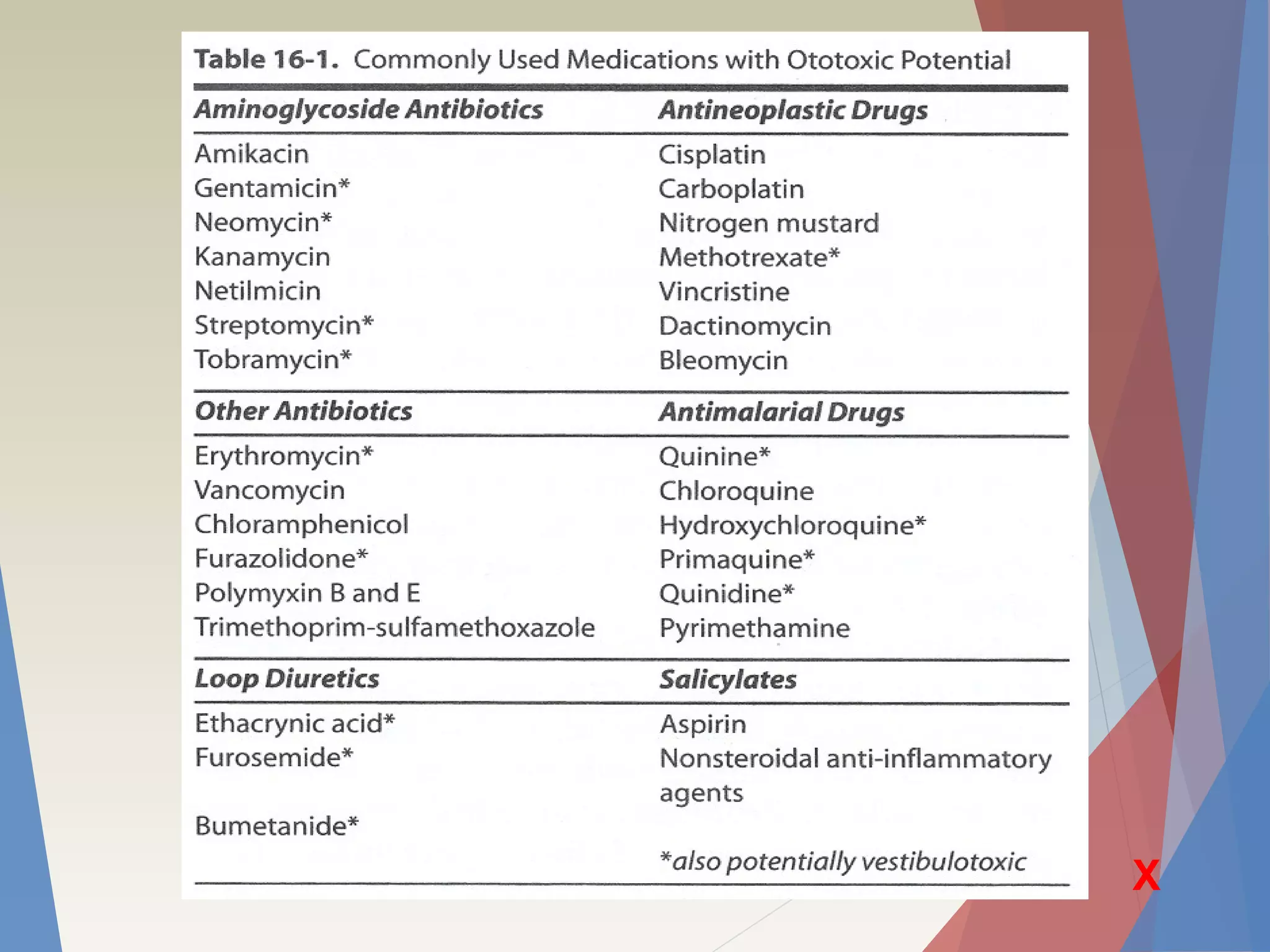
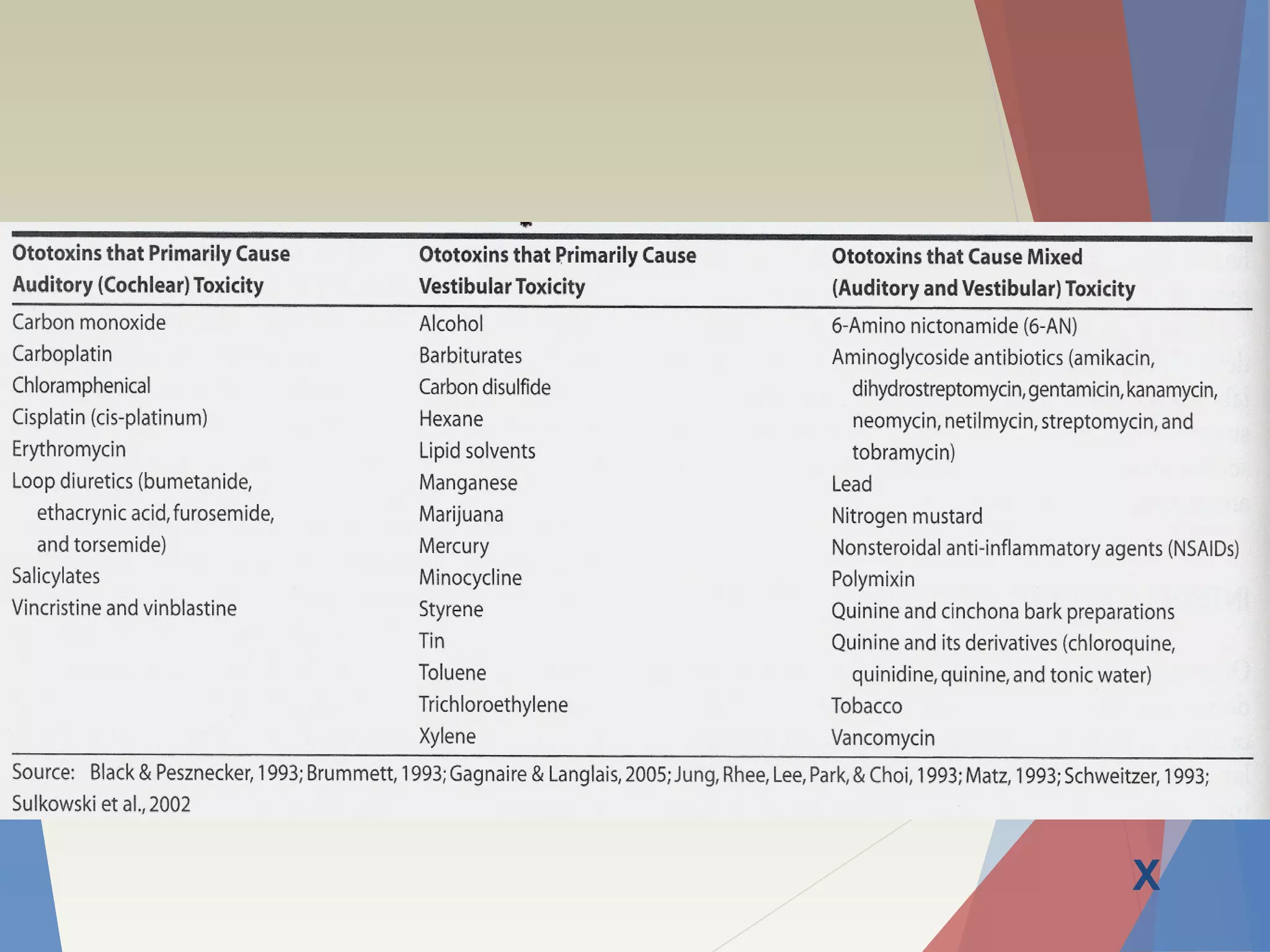
Two categories of medications that have the greatest
potential for permanent changes in hearing and or
balance are:
 aminoglycosides and
 anti-neoplastic agents.
Others Are:
 Diuretic- furosemide, ethacrynic acid
 Salicylate-aspirin
 antimalarial drug- quinine
X
X
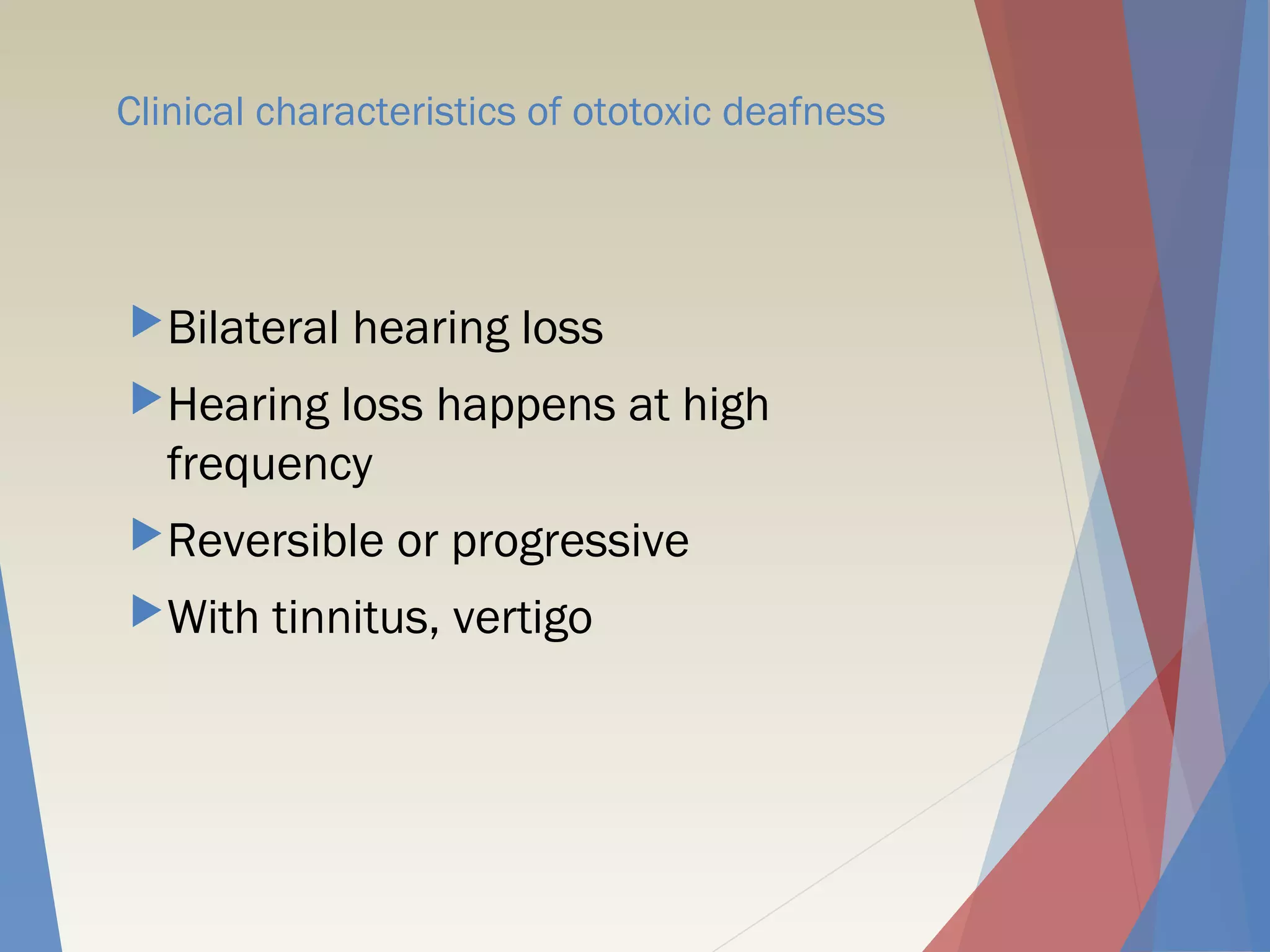
Clinical characteristics of ototoxic deafness
Bilateral hearing loss
Hearing loss happens at high
frequency
Reversible or progressive
With tinnitus, vertigo
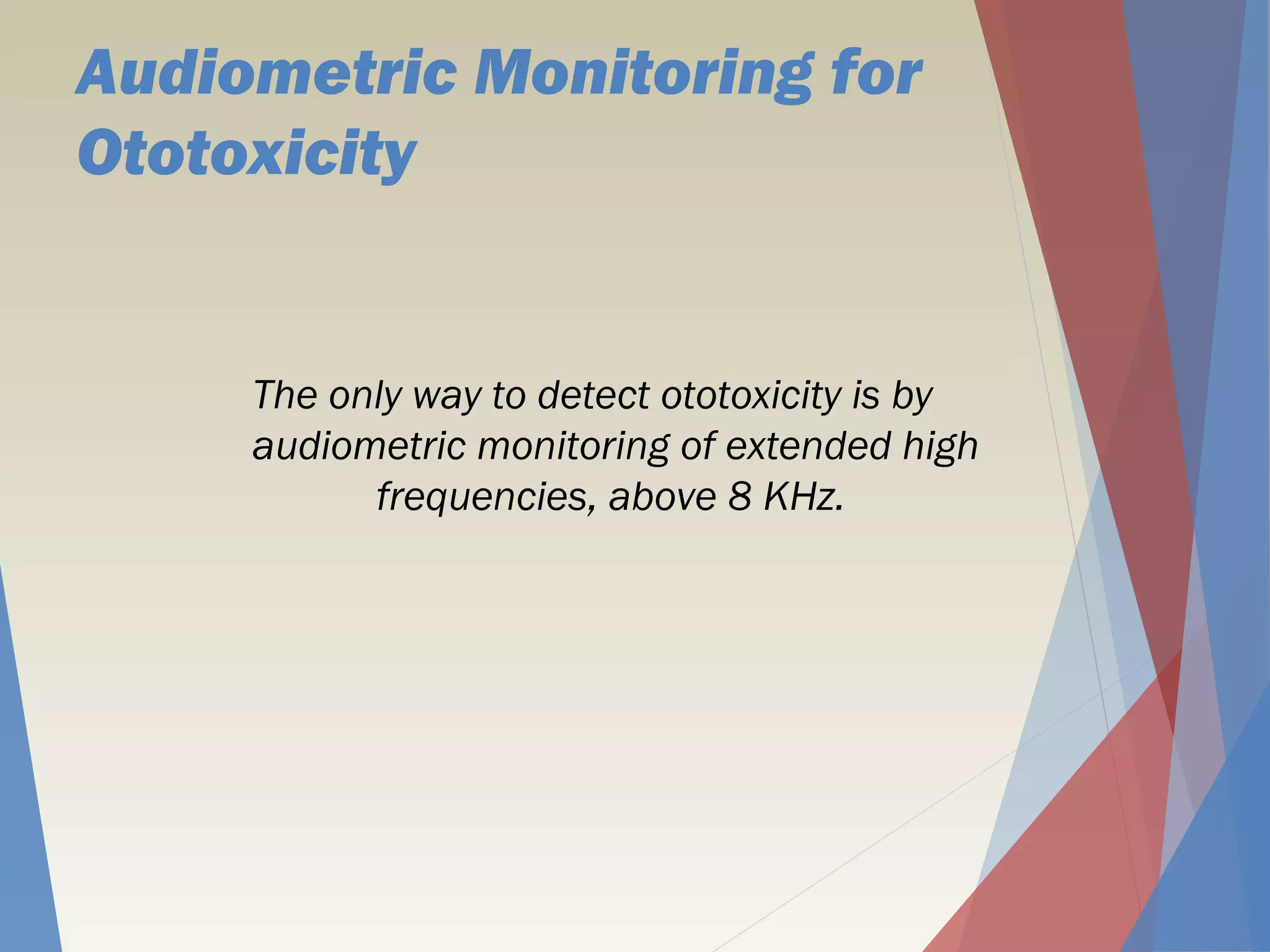
Audiometric Monitoring for
Ototoxicity
The only way to detect ototoxicity is by
audiometric monitoring of extended high
frequencies, above 8 KHz.
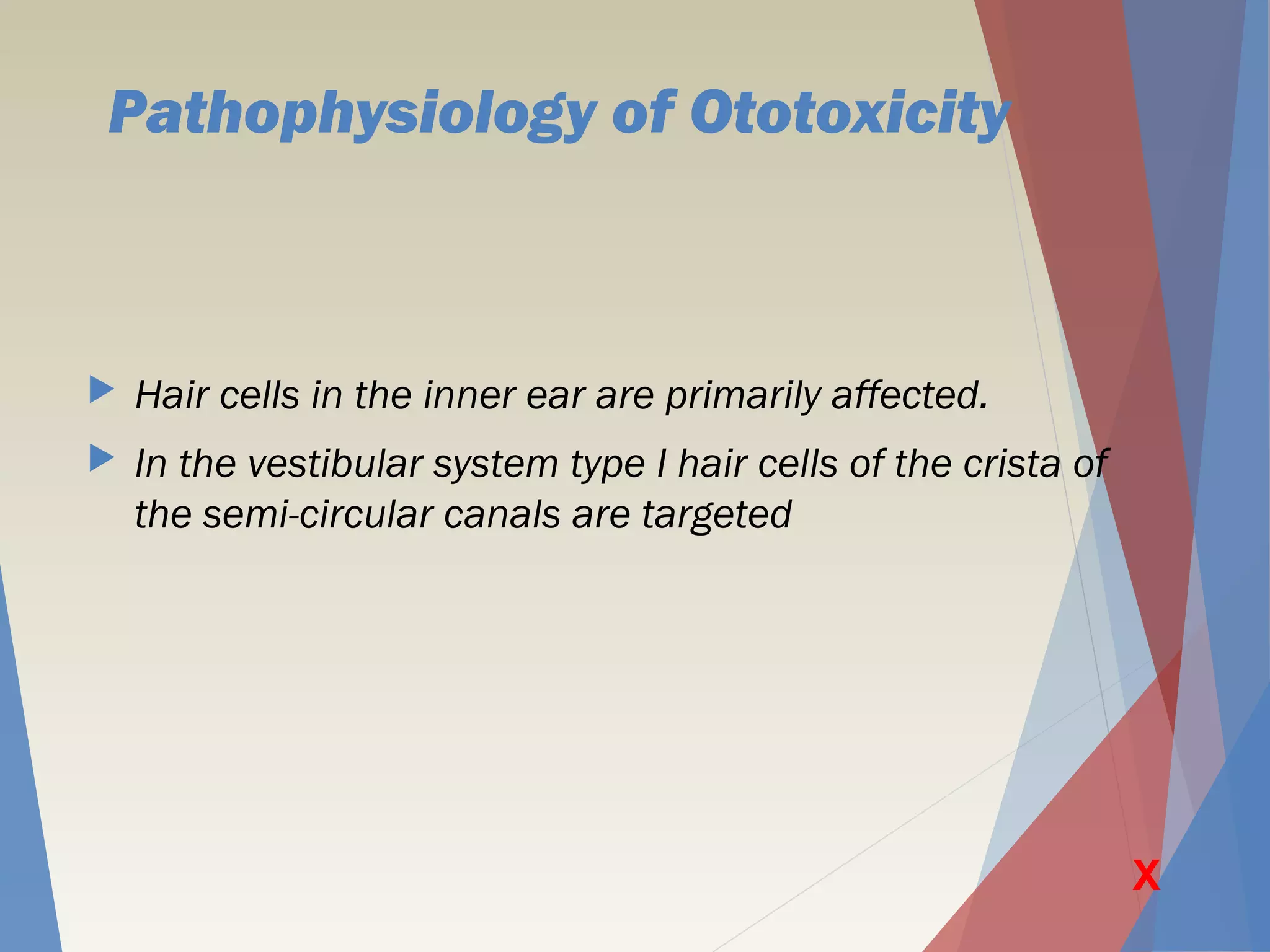
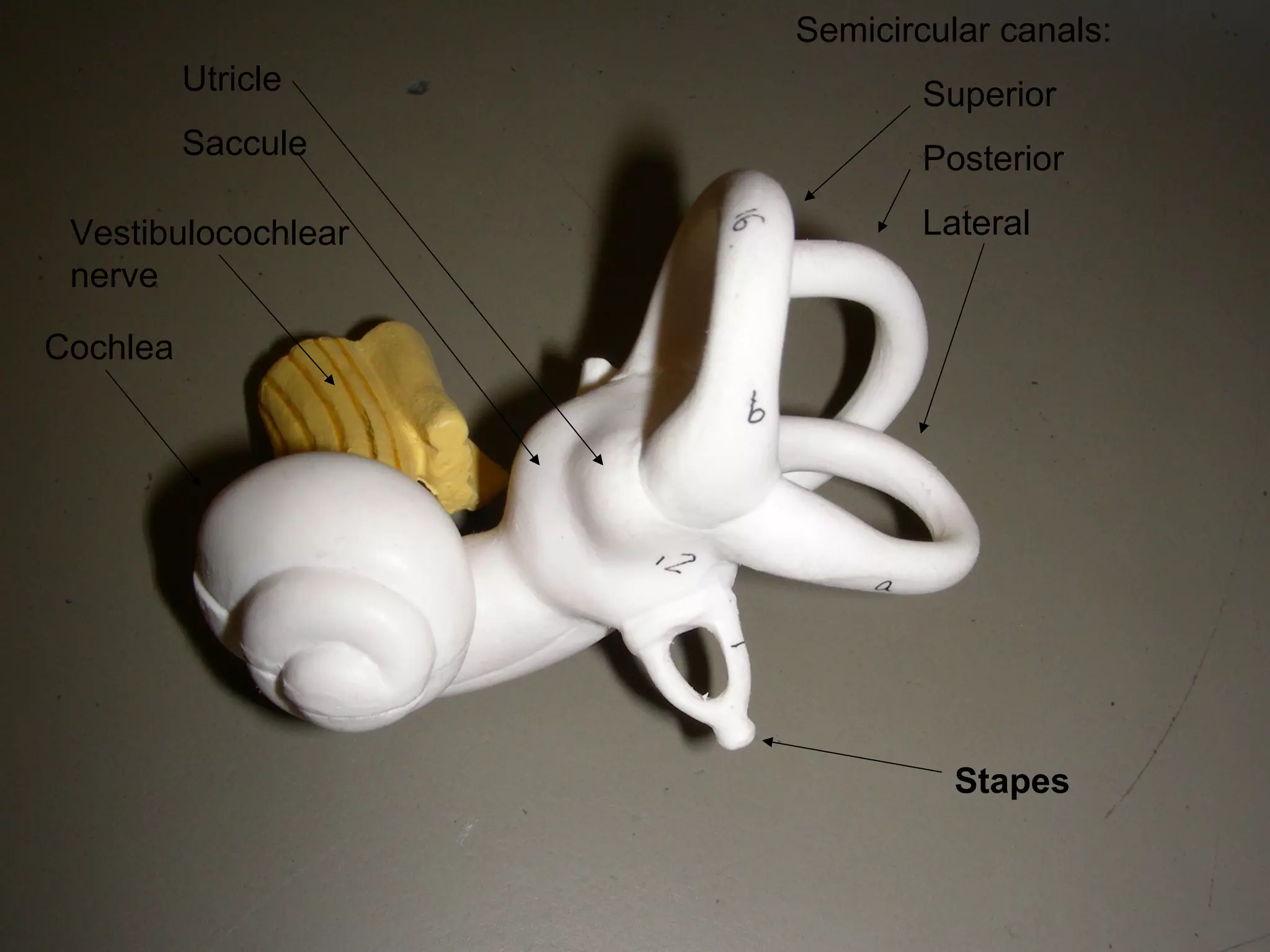
Pathophysiology of Ototoxicity
 Hair cells in the inner ear are primarily affected.
 In the vestibular system type I hair cells of the crista of
the semi-circular canals are targeted
X
Semicircular canals:
Superior
Posterior
Lateral
Utricle
Saccule
Cochlea
Stapes
Vestibulocochlear
nerve
X
X
Incidence of aminoglycoside
Ototoxicity
 Incidence
 ranges 20-33% for commonly used
aminoglycosides while
 balance is affected in 18% of cases.
Risk Factors
 Long term treatment i.e. TB patients
 Impaired renal function – increases drug half-life
 Concomitant use of loop diuretics
 Genetic – mitochondrial mutations (1555 mutation)
Aminoglycoside Ototoxicity
 Streptomycin was the first aminoglycosides
antibiotic and the first drug effective against
TB.
 Discovered by Selman Waksman et al in 1944.
 Adverse side effects on the kidney and inner
ear (vestibular toxicity) were reported in 1945
Aminoglycoside Ototoxicity
 In the last 20 years the use of aminoglycosides
has declined in industrial societies
 In developing countries, their effectiveness and low
cost make them popular.
 They are often sold OTC and are the most
commonly used antibiotics worldwide.
X
Aminoglycoside Ototoxicity
 With the resurgence of drug resistant TB, there is
renewed interest in aminoglycosides specifically
streptomycin and amikacin/ kanamycin as part of
the World Health Organization recommended multi
drug regimen.
X
Effect of Aminoglycosides on
Auditory/Vestibular Functions
 Studies of human temporal bones and experimental
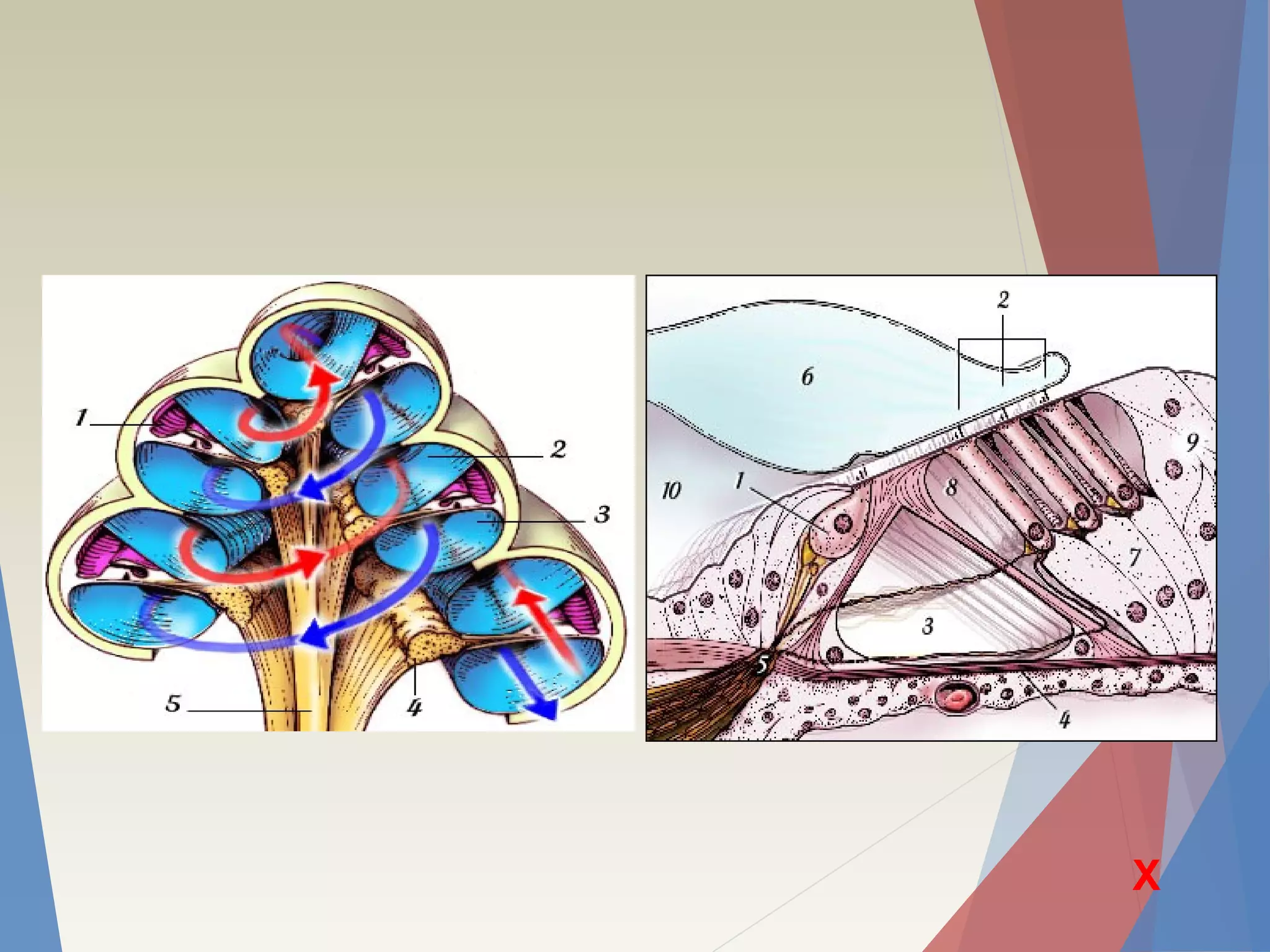
animals show inner ear hair cells are the first to be
affected followed by outer hair cells..
 Outer hair cells are targeted in the cochlea extending
from base to apex.
 Results in high frequency hearing loss which can
extend to frequencies important to understanding
speech.
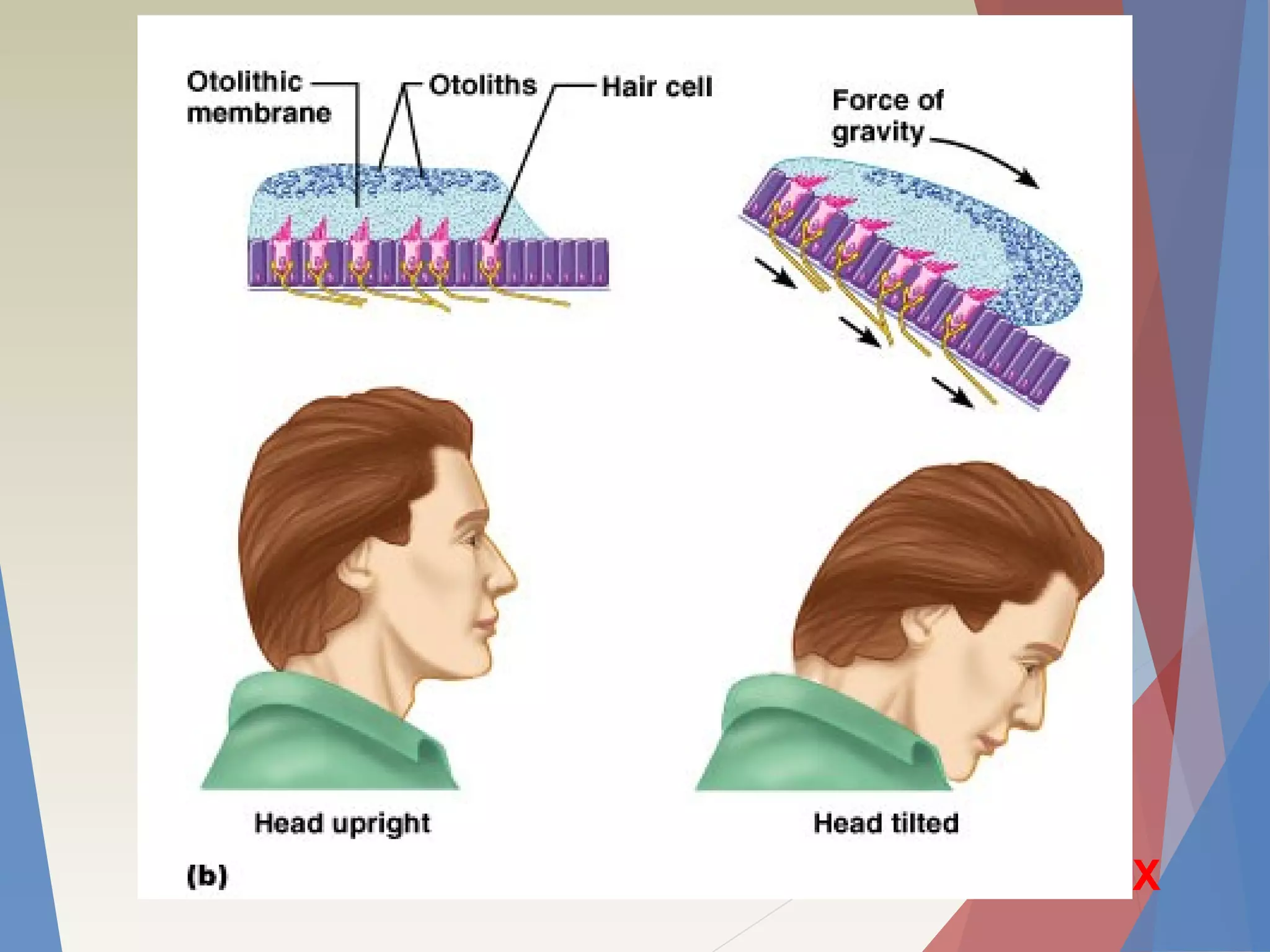
 In the vestibular system, its primary effect is loss of
vestibular hair cells in the semi circular canals and
Utricular macula.
 This leads to oscillopsia resulting in postural instability and
risk of fall.
 It was once believed that maintaining peak and trough
serum levels of a drug would mitigate ototoxic effects.
 Current evidence shows this not to be the case at least for
vestibular toxicity.
 Gentamycin and streptomycin are considered
more vestibulotoxic.
 Amikacin and Neomycin are considered more
cochleo-toxic.
Pharmokinetics
 Presence of the drug does not necessarily cause
toxicity
 Concentration of the drug in the inner ear does not
exceed the serum level
 Half life in cochlear tissue has been measured to
exceed one month
 Traces can be detected up to 6 months following the
end of treatment.
Mechanisms of Aminoglycoside
Ototoxicity
 Reactive Oxygen Species (ROS) formation appears to be
key.
 Reactive oxygen species (ROS) are chemically reactive
molecules containing oxygen. Examples include oxygen 
ions and peroxides. ROS are formed as a natural byproduct
of the normal metabolism of oxygen
 Depletion of anti oxidant Glutathione (GSH) enhances
ototoxicity while dietary supplementation inhibits toxicity.
Is Aminoglycoside ototoxicity preventable?
 Medications showing promise are d-
methiomine and salicylate.
 Two issues need to be solved before
protective treatment can be considered.
 Effective drug levels must be maintained.
 Drug must not interfere with the anti-
bacterial activity of the aminoglycosides.
X
 One clinical study found aspirin was protective
reducing incidence of hearing loss by 75%.
Sha, S. H. , Qui, J. H. & Schacht, J. (2006) Aspirin to prevent gentamicin-
induced hearing loss. New England Journal of Medicine, 354, 1856-7.
X
Chemotheraputic Agents &
Ototoxicity - Cisplatin
 Introduced in the 1970s and is effective against
germ cell, ovarian, endometrial, cervical, urothelial,
head and neck, brain and lung cancers.
 Highest ototoxic potential and is the most ototoxic
drug in clinical use.
 Symptoms of ototoxicity begin with tinnitus and high
frequency hearing loss.
 Incidence of hearing loss has been reported at
11-91% with an overall incidence of 69%.
 In patients with head and neck cancer treated
with Cisplatin, about 50% develop hearing loss.
Risk Factors for Cisplatin
Ototoxicity
 Intravenous bolus administration or high cumulative
dose
 Young children, under 5 years, or older > 46 years
 Renal insufficiency
 Prior cranial irradiation
 Co-administration of vincristin
X
 The best predictor of cisplatin ototoxicity is
cumulative dose.
 The critical dose is 3-4 mg/Kg body weight.
 Ototoxicity increased dramatically when the total
cumulative dose exceeds 400 mg/m2
X
Characteristics of Cisplatin
Ototoxicity
 Bilateral and permanent. High frequencies affected
first.
 It can occur suddenly. Speech discrimination may be
markedly affected.
Mechanisms of Cisplatin
Ototoxicity
 Hearing loss affected by free radical formation and
anti-oxidant inhibition.
 Formation of reactive oxygen radicals produces
glutathione depletion in the cochlea and lipid
peroxidation.
 Induced apoptosis in hair cells causing permanent
hearing loss.
Carboplatin
 Introduced due to its lower nephrotoxicity than
cisplatin.
 It is used to treat small cell lung cancer, ovarian
and head and neck cancers.
 carboplatin is less toxic than cisplatin but higher
doses of carboplatin are used increasing ototoxicity
OTOTOXIC MONITORING
 Ototoxicity is determined by establishing baseline
hearing test data ideally prior to treatment including
testing at high frequencies.
 Results are compared to serial audiograms allowing
the patient to serve as their own control.
 The highest frequencies measuring 100 dB or less
are monitored with testing ideally occurring just prior
to each chemotherapeutic dose
 Monitoring 1-2 times per week for patients receiving
ototoxic antibiotics.
 Post treatment evaluations are conducted as soon as
possible after dispensing the drug and repeated at 1,
3 and 6 month post treatment.
 The customized test protocol is called the Sensitive
Range for Ototoxicity, or SRO and differs for each
patient.
 It consists of the highest frequencies with thresholds
100 dB or better followed by the next six lower
frequencies.
 The SRO is established during baseline testing prior to
ototoxic drug administration.
Summary
 Audiometric monitoring using the patient’s own
extended high frequency thresholds as a control, is
the most sensitive method to detect ototoxicity.
 The test is easily tolerated
 High frequency hearing is affected first
 Speech perception can degrade if hearing loss
extends below 8KHz.

Lecture 06 ototoxicity

  • 1.
    OTOTOXICITY Dr. Ghulam Saqulain HeadOf Department of ENT Capital Hospital
  • 2.
    Close to 200prescription and OTC medications have ototoxic potential. “Drug-induced hearing loss accounts for most cases of preventable hearing loss worldwide”
  • 3.
    Two categories ofmedications that have the greatest potential for permanent changes in hearing and or balance are:  aminoglycosides and  anti-neoplastic agents. Others Are:  Diuretic- furosemide, ethacrynic acid  Salicylate-aspirin  antimalarial drug- quinine
  • 4.
  • 5.
  • 6.
    Clinical characteristics ofototoxic deafness Bilateral hearing loss Hearing loss happens at high frequency Reversible or progressive With tinnitus, vertigo
  • 7.
    Audiometric Monitoring for Ototoxicity Theonly way to detect ototoxicity is by audiometric monitoring of extended high frequencies, above 8 KHz.
  • 8.
    Pathophysiology of Ototoxicity Hair cells in the inner ear are primarily affected.  In the vestibular system type I hair cells of the crista of the semi-circular canals are targeted X
  • 9.
  • 10.
  • 11.
  • 12.
    Incidence of aminoglycoside Ototoxicity Incidence  ranges 20-33% for commonly used aminoglycosides while  balance is affected in 18% of cases.
  • 13.
    Risk Factors  Longterm treatment i.e. TB patients  Impaired renal function – increases drug half-life  Concomitant use of loop diuretics  Genetic – mitochondrial mutations (1555 mutation)
  • 14.
    Aminoglycoside Ototoxicity  Streptomycinwas the first aminoglycosides antibiotic and the first drug effective against TB.  Discovered by Selman Waksman et al in 1944.  Adverse side effects on the kidney and inner ear (vestibular toxicity) were reported in 1945
  • 15.
    Aminoglycoside Ototoxicity  Inthe last 20 years the use of aminoglycosides has declined in industrial societies  In developing countries, their effectiveness and low cost make them popular.  They are often sold OTC and are the most commonly used antibiotics worldwide. X
  • 16.
    Aminoglycoside Ototoxicity  Withthe resurgence of drug resistant TB, there is renewed interest in aminoglycosides specifically streptomycin and amikacin/ kanamycin as part of the World Health Organization recommended multi drug regimen. X
  • 17.
    Effect of Aminoglycosideson Auditory/Vestibular Functions  Studies of human temporal bones and experimental animals show inner ear hair cells are the first to be affected followed by outer hair cells..  Outer hair cells are targeted in the cochlea extending from base to apex.  Results in high frequency hearing loss which can extend to frequencies important to understanding speech.
  • 18.
     In thevestibular system, its primary effect is loss of vestibular hair cells in the semi circular canals and Utricular macula.  This leads to oscillopsia resulting in postural instability and risk of fall.  It was once believed that maintaining peak and trough serum levels of a drug would mitigate ototoxic effects.  Current evidence shows this not to be the case at least for vestibular toxicity.
  • 19.
     Gentamycin andstreptomycin are considered more vestibulotoxic.  Amikacin and Neomycin are considered more cochleo-toxic.
  • 20.
    Pharmokinetics  Presence ofthe drug does not necessarily cause toxicity  Concentration of the drug in the inner ear does not exceed the serum level  Half life in cochlear tissue has been measured to exceed one month  Traces can be detected up to 6 months following the end of treatment.
  • 21.
    Mechanisms of Aminoglycoside Ototoxicity Reactive Oxygen Species (ROS) formation appears to be key.  Reactive oxygen species (ROS) are chemically reactive molecules containing oxygen. Examples include oxygen  ions and peroxides. ROS are formed as a natural byproduct of the normal metabolism of oxygen  Depletion of anti oxidant Glutathione (GSH) enhances ototoxicity while dietary supplementation inhibits toxicity.
  • 22.
    Is Aminoglycoside ototoxicitypreventable?  Medications showing promise are d- methiomine and salicylate.  Two issues need to be solved before protective treatment can be considered.  Effective drug levels must be maintained.  Drug must not interfere with the anti- bacterial activity of the aminoglycosides. X
  • 23.
     One clinicalstudy found aspirin was protective reducing incidence of hearing loss by 75%. Sha, S. H. , Qui, J. H. & Schacht, J. (2006) Aspirin to prevent gentamicin- induced hearing loss. New England Journal of Medicine, 354, 1856-7. X
  • 24.
    Chemotheraputic Agents & Ototoxicity- Cisplatin  Introduced in the 1970s and is effective against germ cell, ovarian, endometrial, cervical, urothelial, head and neck, brain and lung cancers.  Highest ototoxic potential and is the most ototoxic drug in clinical use.  Symptoms of ototoxicity begin with tinnitus and high frequency hearing loss.
  • 25.
     Incidence ofhearing loss has been reported at 11-91% with an overall incidence of 69%.  In patients with head and neck cancer treated with Cisplatin, about 50% develop hearing loss.
  • 26.
    Risk Factors forCisplatin Ototoxicity  Intravenous bolus administration or high cumulative dose  Young children, under 5 years, or older > 46 years  Renal insufficiency  Prior cranial irradiation  Co-administration of vincristin X
  • 27.
     The bestpredictor of cisplatin ototoxicity is cumulative dose.  The critical dose is 3-4 mg/Kg body weight.  Ototoxicity increased dramatically when the total cumulative dose exceeds 400 mg/m2 X
  • 28.
    Characteristics of Cisplatin Ototoxicity Bilateral and permanent. High frequencies affected first.  It can occur suddenly. Speech discrimination may be markedly affected.
  • 29.
    Mechanisms of Cisplatin Ototoxicity Hearing loss affected by free radical formation and anti-oxidant inhibition.  Formation of reactive oxygen radicals produces glutathione depletion in the cochlea and lipid peroxidation.  Induced apoptosis in hair cells causing permanent hearing loss.
  • 30.
    Carboplatin  Introduced dueto its lower nephrotoxicity than cisplatin.  It is used to treat small cell lung cancer, ovarian and head and neck cancers.  carboplatin is less toxic than cisplatin but higher doses of carboplatin are used increasing ototoxicity
  • 31.
    OTOTOXIC MONITORING  Ototoxicityis determined by establishing baseline hearing test data ideally prior to treatment including testing at high frequencies.  Results are compared to serial audiograms allowing the patient to serve as their own control.
  • 32.
     The highestfrequencies measuring 100 dB or less are monitored with testing ideally occurring just prior to each chemotherapeutic dose  Monitoring 1-2 times per week for patients receiving ototoxic antibiotics.  Post treatment evaluations are conducted as soon as possible after dispensing the drug and repeated at 1, 3 and 6 month post treatment.
  • 33.
     The customizedtest protocol is called the Sensitive Range for Ototoxicity, or SRO and differs for each patient.  It consists of the highest frequencies with thresholds 100 dB or better followed by the next six lower frequencies.  The SRO is established during baseline testing prior to ototoxic drug administration.
  • 34.
    Summary  Audiometric monitoringusing the patient’s own extended high frequency thresholds as a control, is the most sensitive method to detect ototoxicity.  The test is easily tolerated  High frequency hearing is affected first  Speech perception can degrade if hearing loss extends below 8KHz.

Editor's Notes

  • #3 The changes can be temporary or permanent. (p.231)
  • #4 Ototoxic incidence is dependent on drug dosage, patient factors and concomitant ototoxic medication administration.
  • #5 p. 231
  • #6 For this presentation, we will concentrate on drugs that are primarily cochleotoxic although as you can see from the slide , some drugs also produce permanent changes in vestibular function leading to debilitating conditions affecting stability and risk of falling. (p.
  • #8 Without monitoring, ototoxic hearing loss may go unnoticed until hearing loss affects the ability to understand speech.
  • #9 Outer hair cells are important because they amplify soft sounds and help with frequency (pitch) sensitivity. Without them, sounds must be much louder to be perceived.
  • #13 Most standard audio tests are done at frequencies up to 8K. This leaves the early ototoxic effect undetected above this frequency. (p. 167)
  • #14 Patients with the 1555 mutation have increased toxicity to the cochlea from aminoglycocide. Profound deafness can occur after one injection of an aminoclycoside. (p.169)
  • #15 (p.164)
  • #16 (p.164)
  • #17 (p.164)
  • #18 (p.165)
  • #20 There are however no hard and fast rules and all aminoglycosides may affect either the vestibular system, cochlear or both. (p.166)
  • #21  This may explain the enhanced sensitivity of patients getting a second round of treatment. (p. 168)  
  • #22 (p.169)
  • #23 In the case of salicylate there was no negative influence on efficacy of the aminoglycocide. (p.170)
  • #24 (p.171)
  • #26 (p.141)
  • #27 (p.142)
  • #28 (p.143)
  • #29 71% of cisplatin hearing loss was detected first in frequency of 8000 Hz or above. (p.144). High frequency testing is the hallmark of the ototoxic monitoring program which will be discussed later.
  • #30 (p.144)
  • #32 These results are tabulated in graphical form to track changes from baseline
  • #35 Questions???