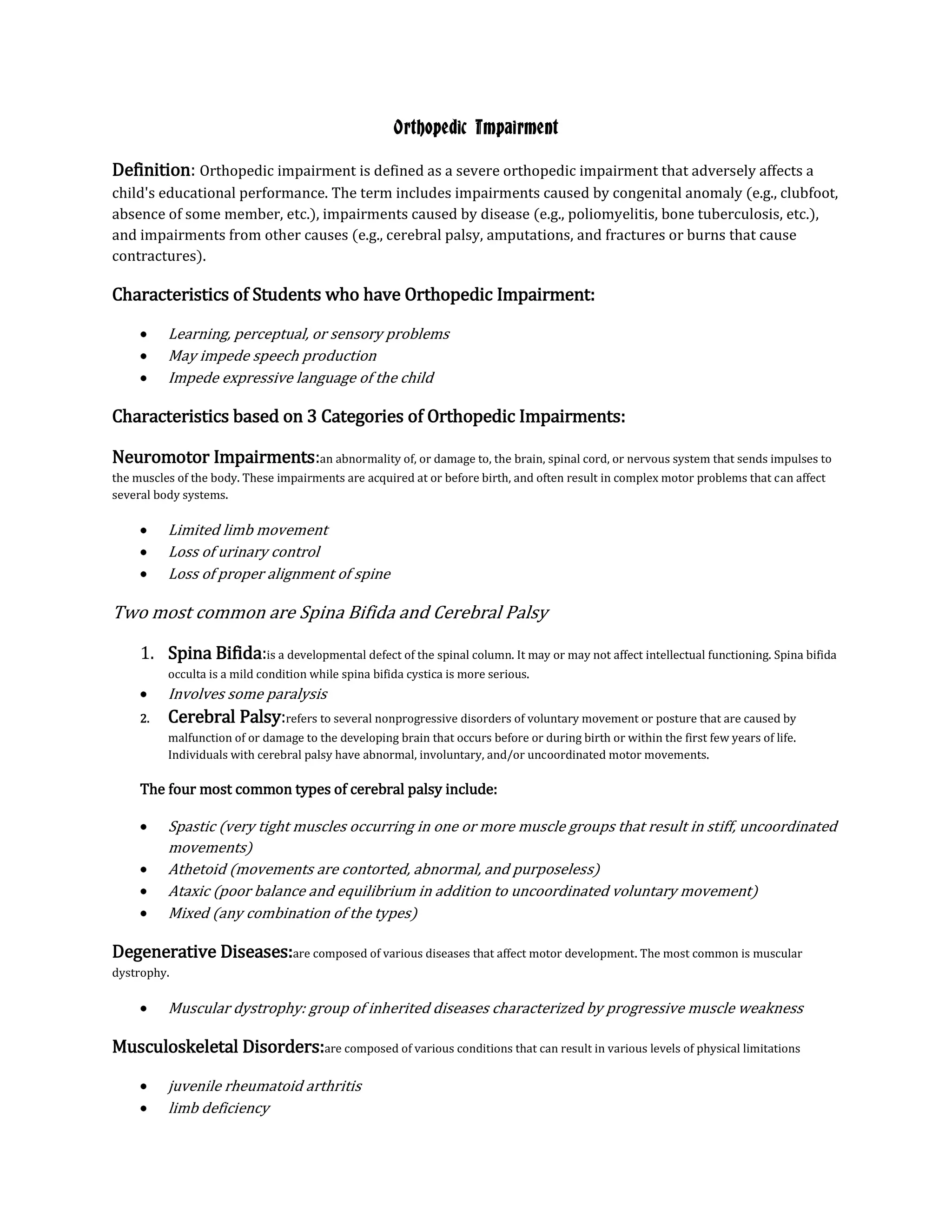
The document defines orthopedic impairment as a physical disability that negatively impacts educational performance, including congenital anomalies, diseases, and injuries causing limited movement. Students with orthopedic impairments may have learning, sensory, speech, or language problems. There are three categories: neuromotor impairments involving the brain or nervous system like cerebral palsy and spina bifida; degenerative diseases like muscular dystrophy; and musculoskeletal disorders like arthritis. Teachers should provide specialized seating, focus on motor skills, and ensure assistive technology and accommodations for each student's needs according to their IEP. Physical, occupational, and speech therapists can help address motor, functional, and communication challenges.



![Child special needs 1 [compatibility mode]](https://cdn.slidesharecdn.com/ss_thumbnails/childspecialneeds1compatibilitymode-110912174329-phpapp02-thumbnail.jpg?width=640&height=640&fit=bounds)


![Deaf blindness[1]](https://cdn.slidesharecdn.com/ss_thumbnails/deaf-blindness1-121124210043-phpapp01-thumbnail.jpg?width=640&height=640&fit=bounds)


