• Iesha Collins
• “A severe orthopedic impairment that adversely
affects a child’s educational performance. The term
includes impairments caused by a congenital anomaly,
impairments caused by disease, impairments from
other causes (cerebral Palsy, amputations, and
fractures or burn that that cause contractures).”
• OI is a very diverse disability category
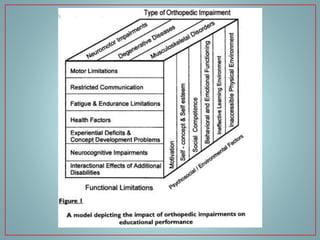
• Encompasses: neuromotor impairments, Degenerative diseases,
musculoskeletal disorders
• Students may also have other disabilities other than an
orthopedic impairment
• Range of intellectual abilities: gifted
profound intellectual
disability
• Students are usually identified as having and orthopedic
impairment by doctor.
• If teacher notices any signs of a student having orthopedic
impairments they student must have a medical examination
• If student has an orthopedic impairment, the planning team
decides if it effects student education adversily.
• Motor limitations: have trouble manipulating standard classroom
equipment
• Restricted communication: inability to ask questions
• Fatigue and endurance: effort it takes to move
• Health factors
• Experimental deficits and concept development problems: Lack
common experiences with others
• Neurocognitive impairments
• Nonverbal reading approach: designed to teach internal
speech
• Highly positive learning environment
• High expectations
• Responsive to student
• Peer teaching/cooperative learning
• Reliable means of response:
• Promote participation
• TouchMath
• Oregon Trail: interactive game
•
•
•
•
•
•
•

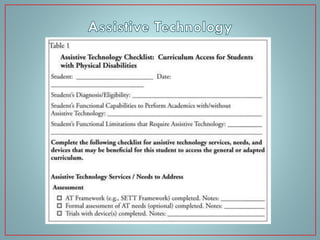
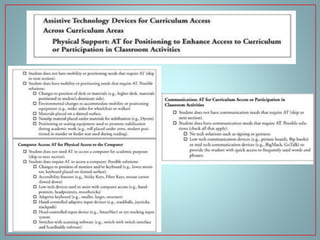
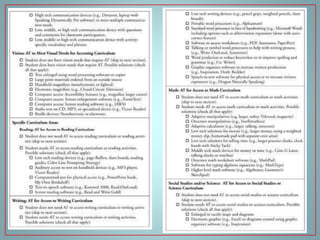
Assistive Technology
Augmentative communication
Mobility skills
Social skills
Self-advocacy
Vocational skills
Leisure skills
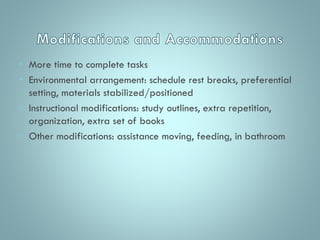
• More time to complete tasks
• Environmental arrangement: schedule rest breaks, preferential
setting, materials stabilized/positioned
• Instructional modifications: study outlines, extra repetition,
organization, extra set of books
• Other modifications: assistance moving, feeding, in bathroom
• Education for all handicapped children act 1975
• Must receive services that will facilitate instructional program

• NASPE: physical educated person
•
•
•
•
•

Learned the necessary skill to perform a variety of physical activity
Is physically fit
Regularly participates in physical activity
Understands benefits of regular participation in physical activity
Values physical activity for enjoyment and healthful lifestyle.
•
•
•
•

Models after general education program
Provide challenges not frustration
Encourage cooperative learning
Must meet all students needs.
•
•
•
•
•

Sequence tasks
Modifying facilities
Time adjustment
Modify rules
Modify equipment
Best, S., Heller, K., & Bigge, J. (2005). Teaching individuals with physical or multiple
disabilities. Upper Saddle River, N.J. : Pearson/Merrill Prentice Hall, 2005.
Coleman, M. (2011). Successful Implementation of Assistive Technology to Promote Access to
Curriculum and Instruction for Students with Physical Disabilities. Physical Disabilities:
Education And Related Services, 30-2, 2-22. Retrieved from
http://web.utk.edu/~dphmd/DPHMD_Journal.html
Eminović, F., Pacić, S., Nikić, R., & Nedović, G. (2009). Importance of Using Orthopedic
Applicances in Physical Education in Process of Inclusive Education of Children with
Motoric Disabilities. Acta Kinesiologica, 95-98, 3-2. Retrieved from
http://www.actakin.com/
Heller, K., Swinehart-Jones, D. (2003). Supporting the Educational Needs of Students with
Orthopedic Impairments. Physical Disabilities. Education And Related Services 22, no.
1: 3-24. Retrieved from http://web.utk.edu/~dphmd/DPHMD_Journal.html
National Dissemenation Center for Children with Disabilities (March 2012). Categories of
Disability Under IDEA. Retrieved from: http://nichcy.org/disability/categories
Pizzi, J. (2008). Challenges of Children with Physical Disabilities. InSight: Rivier Academic
Journal, 4(1), 1.

Orthopedic impairment presentation

  • 1.
  • 2.
    • “A severeorthopedic impairment that adversely affects a child’s educational performance. The term includes impairments caused by a congenital anomaly, impairments caused by disease, impairments from other causes (cerebral Palsy, amputations, and fractures or burn that that cause contractures).”
  • 3.
    • OI isa very diverse disability category • Encompasses: neuromotor impairments, Degenerative diseases, musculoskeletal disorders • Students may also have other disabilities other than an orthopedic impairment • Range of intellectual abilities: gifted profound intellectual disability
  • 4.
    • Students areusually identified as having and orthopedic impairment by doctor. • If teacher notices any signs of a student having orthopedic impairments they student must have a medical examination • If student has an orthopedic impairment, the planning team decides if it effects student education adversily.
  • 5.
    • Motor limitations:have trouble manipulating standard classroom equipment • Restricted communication: inability to ask questions • Fatigue and endurance: effort it takes to move • Health factors • Experimental deficits and concept development problems: Lack common experiences with others • Neurocognitive impairments
  • 7.
    • Nonverbal readingapproach: designed to teach internal speech • Highly positive learning environment • High expectations • Responsive to student • Peer teaching/cooperative learning • Reliable means of response: • Promote participation • TouchMath • Oregon Trail: interactive game
  • 8.
    • • • • • • • Assistive Technology Augmentative communication Mobilityskills Social skills Self-advocacy Vocational skills Leisure skills
  • 9.
    • More timeto complete tasks • Environmental arrangement: schedule rest breaks, preferential setting, materials stabilized/positioned • Instructional modifications: study outlines, extra repetition, organization, extra set of books • Other modifications: assistance moving, feeding, in bathroom
  • 14.
    • Education forall handicapped children act 1975 • Must receive services that will facilitate instructional program • NASPE: physical educated person • • • • • Learned the necessary skill to perform a variety of physical activity Is physically fit Regularly participates in physical activity Understands benefits of regular participation in physical activity Values physical activity for enjoyment and healthful lifestyle.
  • 15.
    • • • • Models after generaleducation program Provide challenges not frustration Encourage cooperative learning Must meet all students needs.
  • 16.
    • • • • • Sequence tasks Modifying facilities Timeadjustment Modify rules Modify equipment
  • 17.
    Best, S., Heller,K., & Bigge, J. (2005). Teaching individuals with physical or multiple disabilities. Upper Saddle River, N.J. : Pearson/Merrill Prentice Hall, 2005. Coleman, M. (2011). Successful Implementation of Assistive Technology to Promote Access to Curriculum and Instruction for Students with Physical Disabilities. Physical Disabilities: Education And Related Services, 30-2, 2-22. Retrieved from http://web.utk.edu/~dphmd/DPHMD_Journal.html Eminović, F., Pacić, S., Nikić, R., & Nedović, G. (2009). Importance of Using Orthopedic Applicances in Physical Education in Process of Inclusive Education of Children with Motoric Disabilities. Acta Kinesiologica, 95-98, 3-2. Retrieved from http://www.actakin.com/ Heller, K., Swinehart-Jones, D. (2003). Supporting the Educational Needs of Students with Orthopedic Impairments. Physical Disabilities. Education And Related Services 22, no. 1: 3-24. Retrieved from http://web.utk.edu/~dphmd/DPHMD_Journal.html National Dissemenation Center for Children with Disabilities (March 2012). Categories of Disability Under IDEA. Retrieved from: http://nichcy.org/disability/categories Pizzi, J. (2008). Challenges of Children with Physical Disabilities. InSight: Rivier Academic Journal, 4(1), 1.