
Organization Study
Hewlett – Packard
Fabiha Juveria
Bangalore University
COMPANY PROFILE
Overview
• Hewlett-Packard Co. (HP) is a provider of information technology (IT)
products, software, solutions and services.
• HP produces printers, digital cameras and servers, provides IT and
consulting services, and makes networking products and software to tie
everything together.
• Its service portfolio includes enterprise IT infrastructure
solutions, technology support, maintenance
services, outsourcing, integration and consulting services.
• HP’s customer portfolio ranges from individuals to small, medium, and large
enterprises.
• The company also offers a set of managed services, providing a cross-
section of broader infrastructure services for smaller discrete engagements.
• It conducts business operations in 170 countries across
Americas, Europe, Middle East, and Asia-Pacific regions.
• HP is headquartered in Palo Alto, California, US.
HP India
• HP came to India in 1988. HP India has a presence in over 350 cities in the
country
• The HP - Compaq merger in 2002 created the largest PC company in India
with revenues of Rs. 35 billion and a combined 17% market share in India
• In March 2009, HP launched the ‘HP Software University’ (HPSU) in
partnership with Indian Institute of Hardware Technology (IIHT).
• The Indian entities of Hewlett Packard Co are:
– HP India Sales Private Limited for sales and marketing operations
– Global e – Business Operations Private Limited for transaction processing
– HP India Software Operations Pvt. Ltd. for software development and sales
– HP Labs India - for innovation & to provide breakthrough technology for the
rapidly growing emerging markets worldwide.
– HP Consumer Contact Centre - Technical Support Contact Centre
– HP Global Soft Ltd -HP Services global delivery operations in India for Application
Services, IT Infrastructure and Technology services.
Corporate Objectives
 Customer loyalty
 Profit
 Growth
 Market leadership
 Commitment to employees
 Leadership capability
 Global citizenship
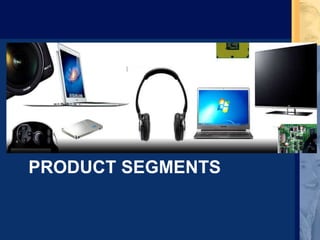
PRODUCT SEGMENTS
Segments
Its operations are organized into 7 segments:
– The Personal Systems Group (PSG),
– Services,
– The Imaging and Printing Group (IPG),
– Enterprise Servers, Storage and Networking (ESSN),
– HP Software,
– HP Financial Services (HPFS) and
– Corporate Investments.
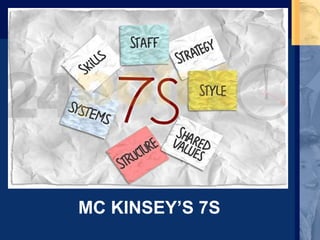
MC KINSEY’S 7S
HP and 7s
• Strategy
– Consumer Focus
– Market Focus
– Segment Focus
– Dual-Brand Marketing Strategy
– Significant investment in R&D
– Globalization
• System: EMEA Business Management System.
• Skills: Technical and Interpersonal
• Staff: 350000 people from more than 160 countries.
• Style: ‘THE HP WAY’ which according to David Packard means
‘managing by walking around.’
HP and 7s
• Shared Values
– Passion for customers
– Trust and respect for individuals
– Achievement and contribution
– Results through teamwork
– Speed and agility
– Meaningful innovation
– Uncompromising integrity
• Structure
– On the basis of area of activity: EMEA
– On the basis of product:
• The Personal Systems Group (PSG),
• Services,
• The Imaging and Printing Group (IPG),
• Enterprise Servers, Storage and Networking (ESSN),
• HP Software,
• HP Financial Services (HPFS) and
• Corporate Investments.
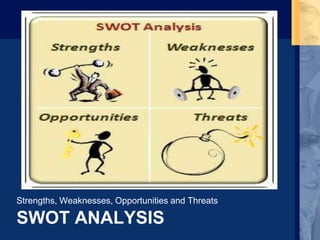
SWOT ANALYSIS
Strengths, Weaknesses, Opportunities and Threats
Weaknesses
• Strong Market Position
• Prominent Brand Name Recognition
• Successful Strategic Acquisitions
• Expertise
Strengths
• Weak Market Segment Integration
• Inventory risk
Opportunities
• Expanding presence in cloud computing market
• Expanding portfolio of imaging and printing solutions
• HP has launched several retail photo printing
solutions and services
• Miniaturization market
• Component Production
Threats
• Projected decreases in the IT markets
• Hyper-competitive environment
Findings
• The key focus of HP is customer satisfaction.
• Innovation is an element of HP’s culture.
• HP has expertise in the Imaging and Printing segment and
has made continuous efforts to keep up with changing
technologies.
• The management at HP follows an open culture and hence
the practice of calling each other by their first names.
• The merger with Compaq failed due to challenges for
product line integration and reorganization.
Suggestions
• HP must update its website to provide troubleshooting tips for common
problems online. Also the online payment module must be made more
efficient.
• Efforts must be directed towards clearing the air about various
controversies that HP is embroiled in and work towards being in the news
for the right reasons.
• Focus towards the development of industry specific solutions that will
strengthen HP’s ability to offer greater value and satisfaction.
• Pursue technologies to develop molecular scale technologies and better
display solutions.
• There is a huge market for cloud computing solutions. HP can tap this
market by developing efficient protocols.
• HP should continue development of webOS. The software platform has the
ability to improve applications and web services for the next generation
devices.
• Develop agile technologies to be able to meet changing market demands
and work environment.
Thank You

Organization Study at HP

  • 1.
    Organization Study Hewlett –Packard Fabiha Juveria Bangalore University
  • 2.
  • 3.
    Overview • Hewlett-Packard Co.(HP) is a provider of information technology (IT) products, software, solutions and services. • HP produces printers, digital cameras and servers, provides IT and consulting services, and makes networking products and software to tie everything together. • Its service portfolio includes enterprise IT infrastructure solutions, technology support, maintenance services, outsourcing, integration and consulting services. • HP’s customer portfolio ranges from individuals to small, medium, and large enterprises. • The company also offers a set of managed services, providing a cross- section of broader infrastructure services for smaller discrete engagements. • It conducts business operations in 170 countries across Americas, Europe, Middle East, and Asia-Pacific regions. • HP is headquartered in Palo Alto, California, US.
  • 4.
    HP India • HPcame to India in 1988. HP India has a presence in over 350 cities in the country • The HP - Compaq merger in 2002 created the largest PC company in India with revenues of Rs. 35 billion and a combined 17% market share in India • In March 2009, HP launched the ‘HP Software University’ (HPSU) in partnership with Indian Institute of Hardware Technology (IIHT). • The Indian entities of Hewlett Packard Co are: – HP India Sales Private Limited for sales and marketing operations – Global e – Business Operations Private Limited for transaction processing – HP India Software Operations Pvt. Ltd. for software development and sales – HP Labs India - for innovation & to provide breakthrough technology for the rapidly growing emerging markets worldwide. – HP Consumer Contact Centre - Technical Support Contact Centre – HP Global Soft Ltd -HP Services global delivery operations in India for Application Services, IT Infrastructure and Technology services.
  • 5.
    Corporate Objectives  Customerloyalty  Profit  Growth  Market leadership  Commitment to employees  Leadership capability  Global citizenship
  • 6.
  • 7.
    Segments Its operations areorganized into 7 segments: – The Personal Systems Group (PSG), – Services, – The Imaging and Printing Group (IPG), – Enterprise Servers, Storage and Networking (ESSN), – HP Software, – HP Financial Services (HPFS) and – Corporate Investments.
  • 8.
  • 9.
    HP and 7s •Strategy – Consumer Focus – Market Focus – Segment Focus – Dual-Brand Marketing Strategy – Significant investment in R&D – Globalization • System: EMEA Business Management System. • Skills: Technical and Interpersonal • Staff: 350000 people from more than 160 countries. • Style: ‘THE HP WAY’ which according to David Packard means ‘managing by walking around.’
  • 10.
    HP and 7s •Shared Values – Passion for customers – Trust and respect for individuals – Achievement and contribution – Results through teamwork – Speed and agility – Meaningful innovation – Uncompromising integrity • Structure – On the basis of area of activity: EMEA – On the basis of product: • The Personal Systems Group (PSG), • Services, • The Imaging and Printing Group (IPG), • Enterprise Servers, Storage and Networking (ESSN), • HP Software, • HP Financial Services (HPFS) and • Corporate Investments.
  • 11.
    SWOT ANALYSIS Strengths, Weaknesses,Opportunities and Threats
  • 12.
    Weaknesses • Strong MarketPosition • Prominent Brand Name Recognition • Successful Strategic Acquisitions • Expertise Strengths • Weak Market Segment Integration • Inventory risk
  • 13.
    Opportunities • Expanding presencein cloud computing market • Expanding portfolio of imaging and printing solutions • HP has launched several retail photo printing solutions and services • Miniaturization market • Component Production Threats • Projected decreases in the IT markets • Hyper-competitive environment
  • 14.
    Findings • The keyfocus of HP is customer satisfaction. • Innovation is an element of HP’s culture. • HP has expertise in the Imaging and Printing segment and has made continuous efforts to keep up with changing technologies. • The management at HP follows an open culture and hence the practice of calling each other by their first names. • The merger with Compaq failed due to challenges for product line integration and reorganization.
  • 15.
    Suggestions • HP mustupdate its website to provide troubleshooting tips for common problems online. Also the online payment module must be made more efficient. • Efforts must be directed towards clearing the air about various controversies that HP is embroiled in and work towards being in the news for the right reasons. • Focus towards the development of industry specific solutions that will strengthen HP’s ability to offer greater value and satisfaction. • Pursue technologies to develop molecular scale technologies and better display solutions. • There is a huge market for cloud computing solutions. HP can tap this market by developing efficient protocols. • HP should continue development of webOS. The software platform has the ability to improve applications and web services for the next generation devices. • Develop agile technologies to be able to meet changing market demands and work environment.
  • 16.

Editor's Notes

  • #5 which was more than double of the nearest competitor HCL Info systems at eight per cent.
  • #15 However