ORCHIECTOMY
Presented by----
Mrs. Usha Rani Kandula,
MSc.Nursing, Assistant professor,
Department of Adult Health Nursing,
College of Health Sciences,
Arsi University, Asella, Ethiopia.
ORCHITIS
-Orchitis refers to
-an acute inflammation of the testis.
-In orchitis, the testis is painful, tender,
and swollen.
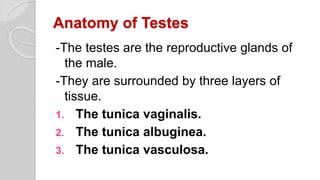
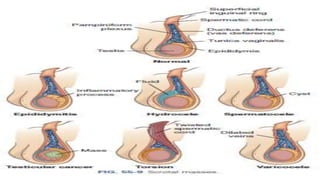
Anatomy of Testes
-The testes are the reproductive glands of
the male.
-They are surrounded by three layers of
tissue.
1. The tunica vaginalis.
2. The tunica albuginea.
3. The tunica vasculosa.
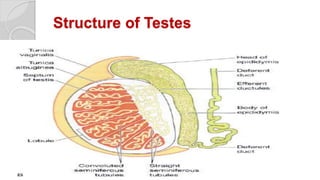
Structure of Testes
 -It generally occurs after an episode of
bacterial or viral infection such as
 -mumps,
 -pneumonia,
 -tuberculosis, or
 -syphilis.
-It can also be a side effect of
-epididymitis,
-prostatectomy,
-trauma,
-infectious of the testis ,
-influenza,
-catheterization,
or complicated UTI.
Mumps orchitis
-Mumps orchitis is a condition contributing to
infertility that could be avoided by
childhood vaccination against mumps.
Management of Orchitis
-Treatment involves the use of antibiotics
(if the organism is known),
-pain medications,
-or bed rest with the scrotum elevated on an
ice pack.
Orchiectomy Procedure
 -An orchiectomy is surgery done to
remove one or both of your testicles.
 -It's commonly performed to treat or
prevent prostate cancer from spreading.
Bilateral orchiectomy
-A bilateral orchiectomy may be performed in
patients with prostatic cancer to alter the
hormonal environment.
Psychologic preparation of the
patient
-Psychologic preparation is important to help
the patient accept the sterilization and the
other body changes.
Performing bilateral oblique
incisions.
-In this procedure,
-bilateral oblique incisions in the inguinal
canals extend into the upper anterior
surface of the scrotum over the testes.
Removal of Testis
 -The testes are removed from the scrotum
after ligation of the spermatic cords at the
external or internal inguinal rings.
Implantation of Silicone rubber
prostheses
-Silicone rubber prostheses may be
implanted in the scrotal sac to improve
aesthetic appearance,
-which helps with the psychologic
rehabilitation of the patient.
Unilateral orchiectomy
-The removal of one testis
(unilateral orchiectomy) does not sterilize the
patient.
-This procedure may be indicated after
traumatic injury or infection,
-but it is more commonly performed to
remove a tumor.
Observation of histologic findings
-Accurate histologic findings and clinical
evaluations of the type of tumor and stage
of disease are mandatory for determining
the appropriate therapy.
Performing Radiology
investigations
 -CTScan
 Lymphangio-graphy or lympho-scintigraphy
are valuable diagnostic tools.
Unilateral radical orchiectomy
-Unilateral radical orchiectomy via
-an inguinal incision may be followed by
-radiation or
-chemotherapy and
-retroperitoneal lymph node dissection.
Ligation of spermatic cord and Vas
deferens
 -The spermatic cord and vas deferens are
ligated and divided separately at the
internal ring so these structures can be
identified if further dissection is needed for
metastatic disease.
 Thanking you.

Orchiectomy

  • 1.
    ORCHIECTOMY Presented by---- Mrs. UshaRani Kandula, MSc.Nursing, Assistant professor, Department of Adult Health Nursing, College of Health Sciences, Arsi University, Asella, Ethiopia.
  • 2.
    ORCHITIS -Orchitis refers to -anacute inflammation of the testis. -In orchitis, the testis is painful, tender, and swollen.
  • 3.
    Anatomy of Testes -Thetestes are the reproductive glands of the male. -They are surrounded by three layers of tissue. 1. The tunica vaginalis. 2. The tunica albuginea. 3. The tunica vasculosa.
  • 4.
  • 6.
     -It generallyoccurs after an episode of bacterial or viral infection such as  -mumps,  -pneumonia,  -tuberculosis, or  -syphilis.
  • 7.
    -It can alsobe a side effect of -epididymitis, -prostatectomy, -trauma, -infectious of the testis , -influenza, -catheterization, or complicated UTI.
  • 8.
    Mumps orchitis -Mumps orchitisis a condition contributing to infertility that could be avoided by childhood vaccination against mumps.
  • 9.
    Management of Orchitis -Treatmentinvolves the use of antibiotics (if the organism is known), -pain medications, -or bed rest with the scrotum elevated on an ice pack.
  • 10.
    Orchiectomy Procedure  -Anorchiectomy is surgery done to remove one or both of your testicles.  -It's commonly performed to treat or prevent prostate cancer from spreading.
  • 11.
    Bilateral orchiectomy -A bilateralorchiectomy may be performed in patients with prostatic cancer to alter the hormonal environment.
  • 12.
    Psychologic preparation ofthe patient -Psychologic preparation is important to help the patient accept the sterilization and the other body changes.
  • 13.
    Performing bilateral oblique incisions. -Inthis procedure, -bilateral oblique incisions in the inguinal canals extend into the upper anterior surface of the scrotum over the testes.
  • 14.
    Removal of Testis -The testes are removed from the scrotum after ligation of the spermatic cords at the external or internal inguinal rings.
  • 15.
    Implantation of Siliconerubber prostheses -Silicone rubber prostheses may be implanted in the scrotal sac to improve aesthetic appearance, -which helps with the psychologic rehabilitation of the patient.
  • 16.
    Unilateral orchiectomy -The removalof one testis (unilateral orchiectomy) does not sterilize the patient. -This procedure may be indicated after traumatic injury or infection, -but it is more commonly performed to remove a tumor.
  • 17.
    Observation of histologicfindings -Accurate histologic findings and clinical evaluations of the type of tumor and stage of disease are mandatory for determining the appropriate therapy.
  • 18.
    Performing Radiology investigations  -CTScan Lymphangio-graphy or lympho-scintigraphy are valuable diagnostic tools.
  • 19.
    Unilateral radical orchiectomy -Unilateralradical orchiectomy via -an inguinal incision may be followed by -radiation or -chemotherapy and -retroperitoneal lymph node dissection.
  • 20.
    Ligation of spermaticcord and Vas deferens  -The spermatic cord and vas deferens are ligated and divided separately at the internal ring so these structures can be identified if further dissection is needed for metastatic disease.  Thanking you.