Basics Of Open HeartBasics Of Open Heart
SurgerySurgery
Soumya Ranjan Parida
Requirements of SurgeryRequirements of Surgery
part to be operated should be
Still
‘Dry’
Relaxed
only a dead heart is still, dry
and relaxed
Basic Steps of OHSBasic Steps of OHS
Opening of the chest
Cannulate & connect the pt to CPB after
heparinisation – ‘total’ CPB
 Cool the patient
Cross clamp aorta and stop the heart by
delivering cardioplegia
Open the heart - perform intracardiac
operation
Close cardiotomies - deair the heart
Declamp aorta , give rest to the heart , Off
CPB
Reverse Heparin with Protamine
Close the chest by keeping drains
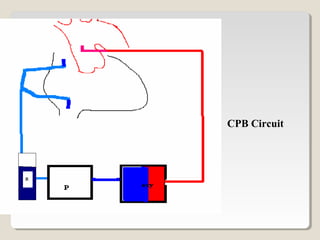
CPB Circuit
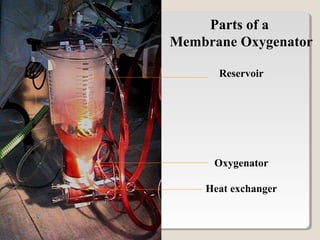
Parts of a
Membrane Oxygenator
Reservoir
Oxygenator
Heat exchanger
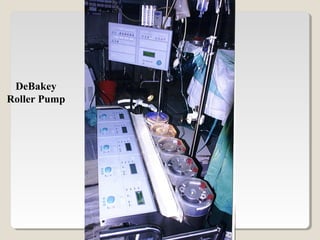
DeBakey
Roller Pump
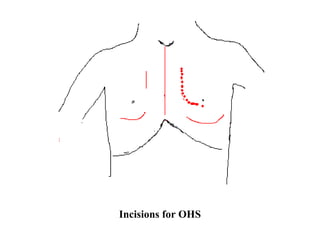
Incisions for OHS
Median sternotomyMedian sternotomy
advantagesadvantages
Access for any cardiac operation
Any cardiac complication can be managed
No separate incision for cannulation
Cannulae under view
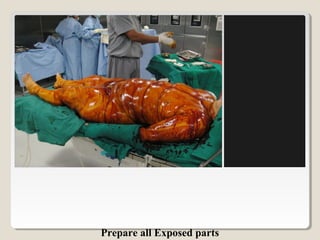
Prepare all Exposed parts
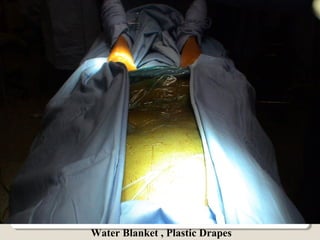
Water Blanket , Plastic Drapes
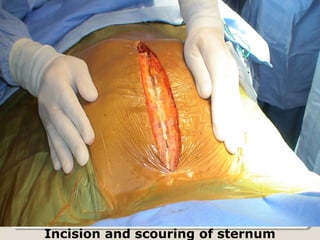
Incision and scouring of sternum
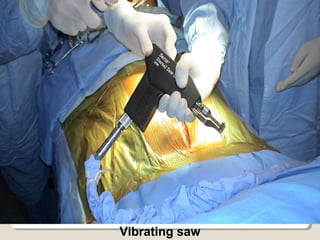
Vibrating saw
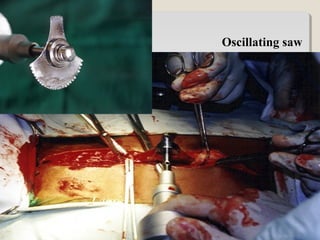
Oscillating saw
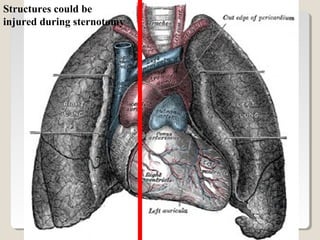
Structures could be
injured during sternotomy
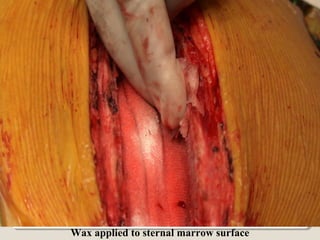
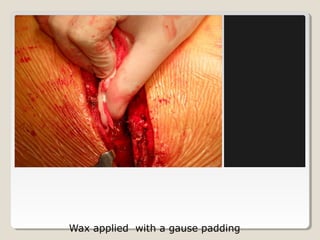
Wax applied to sternal marrow surface
Wax applied with a gause padding
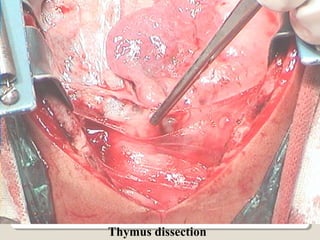
Thymus dissection
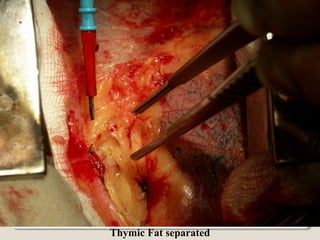
Thymic Fat separated
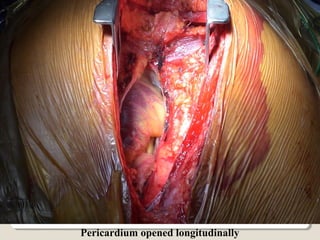
Pericardium opened longitudinally
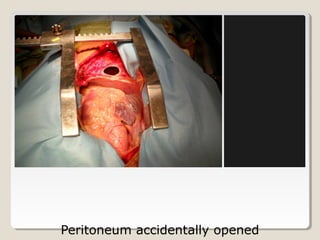
Peritoneum accidentally opened
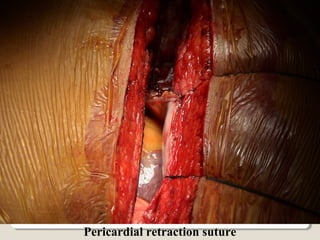
Pericardial retraction suture
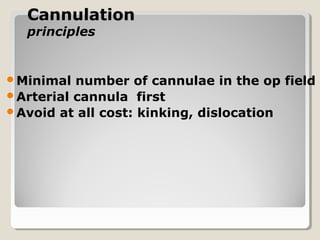
CannulationCannulation
principlesprinciples
Minimal number of cannulae in the op field
Arterial cannula first
Avoid at all cost: kinking, dislocation
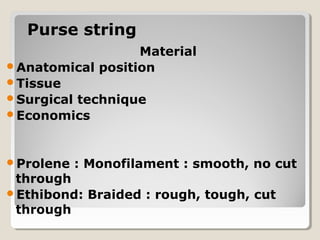
Purse stringPurse string
Material
Anatomical position
Tissue
Surgical technique
Economics
Prolene : Monofilament : smooth, no cut
through
Ethibond: Braided : rough, tough, cut
through
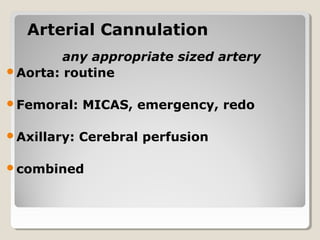
Arterial CannulationArterial Cannulation
any appropriate sized artery
Aorta: routine
Femoral: MICAS, emergency, redo
Axillary: Cerebral perfusion
combined
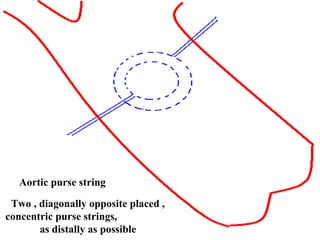
Aortic purse string
Two , diagonally opposite placed ,
concentric purse strings,
as distally as possible
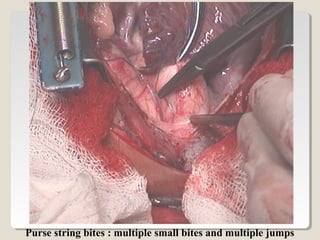
Purse string bites : multiple small bites and multiple jumps
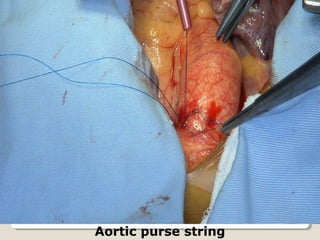
Aortic purse string
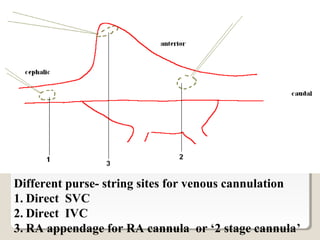
Different purse- string sites for venous cannulation
1. Direct SVC
2. Direct IVC
3. RA appendage for RA cannula or ‘2 stage cannula’
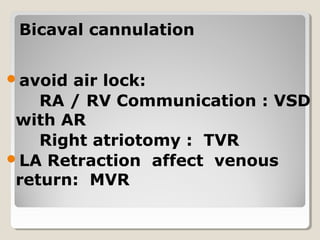
Bicaval cannulationBicaval cannulation
avoid air lock:
RA / RV Communication : VSD
with AR
Right atriotomy : TVR
LA Retraction affect venous
return: MVR
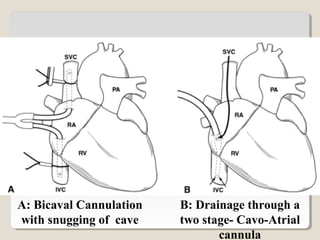
A: Bicaval Cannulation
with snugging of cave
B: Drainage through a
two stage- Cavo-Atrial
cannula
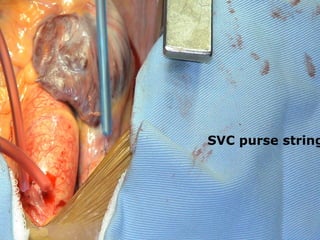
SVC purse string
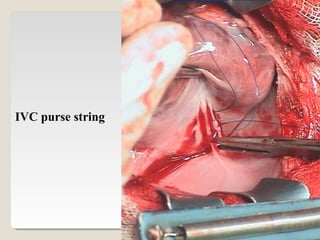
IVC purse string
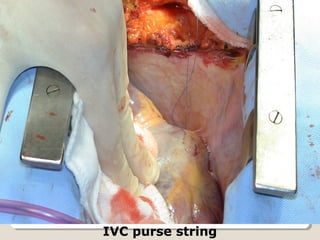
IVC purse string
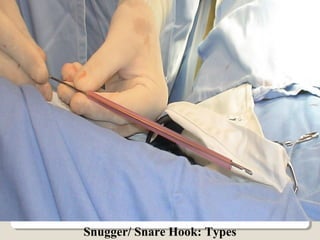
Snugger/ Snare Hook: Types
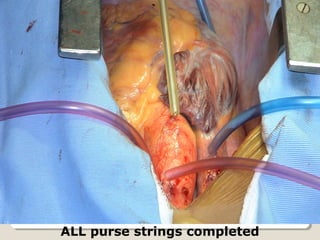
ALL purse strings completed
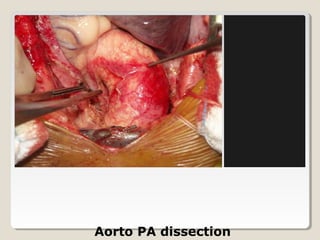
Aorto PA dissection
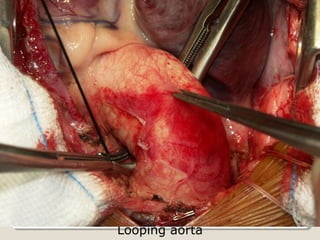
Looping aorta
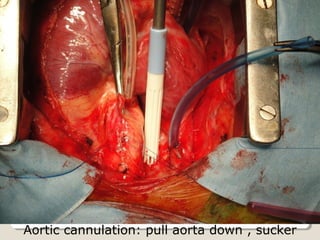
Aortic cannulation: pull aorta down , sucker
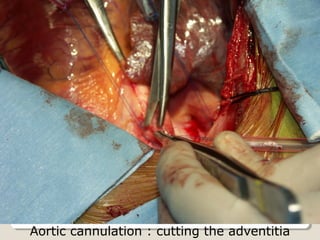
Aortic cannulation : cutting the adventitia
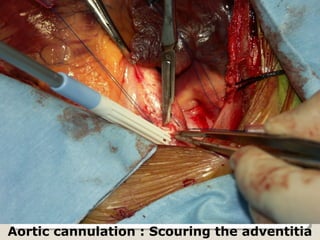
Aortic cannulation : Scouring the adventitia
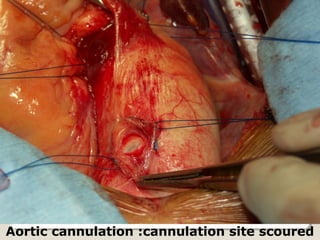
Aortic cannulation :cannulation site scoured
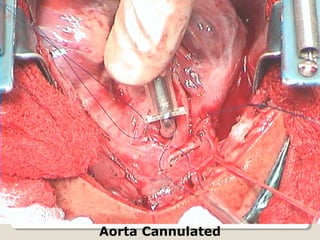
Aorta Cannulated
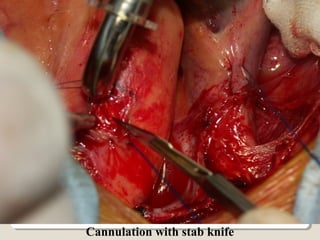
Cannulation with stab knife
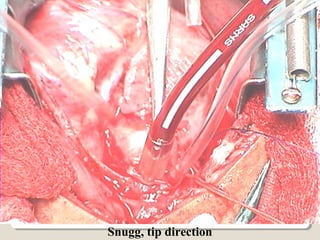
Snugg, tip direction
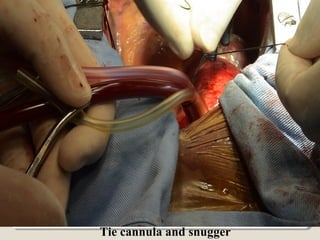
Tie cannula and snugger
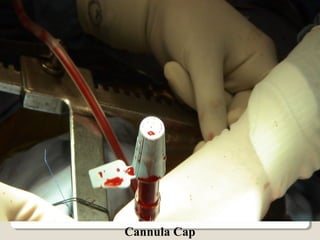
Cannula Cap
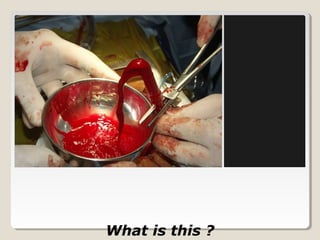
What is this ?
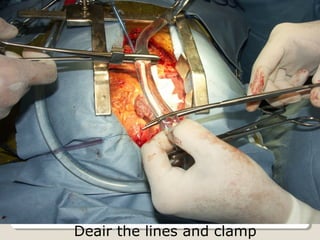
Deair the lines and clamp
Priming SolutionPriming Solution
Fluid initially added to CPB circuitry
Type : Crystalloid ( Ringer )
Colloid Albumen, Plasma ,
Blood
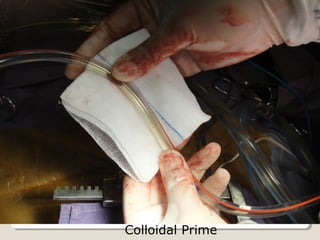
Colloidal Prime
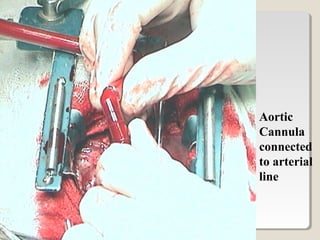
Aortic
Cannula
connected
to arterial
line
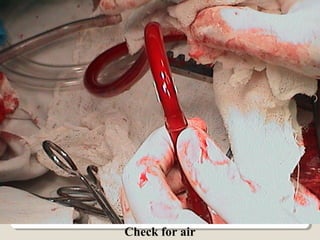
Check for air
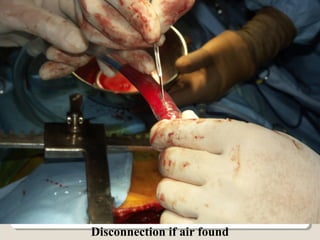
Disconnection if air found
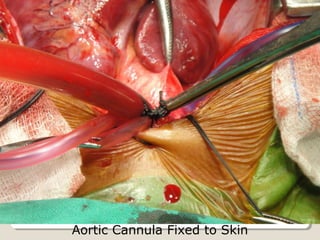
Aortic Cannula Fixed to Skin
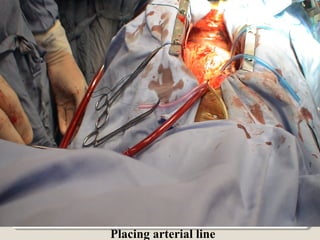
Placing arterial line
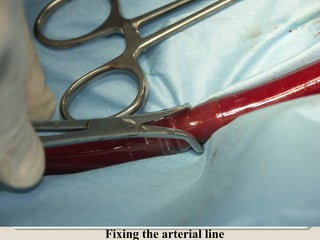
Fixing the arterial line
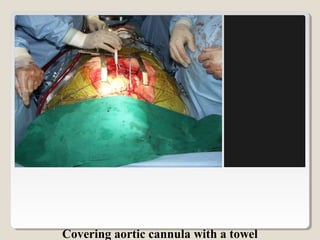
Covering aortic cannula with a towel
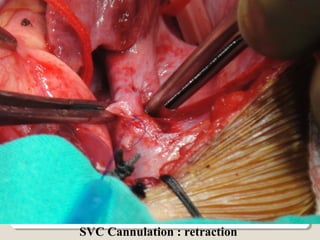
SVC Cannulation : retraction
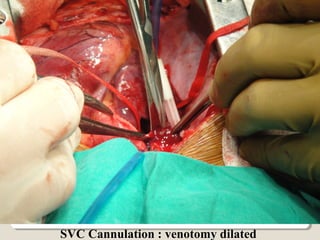
SVC Cannulation : venotomy dilated
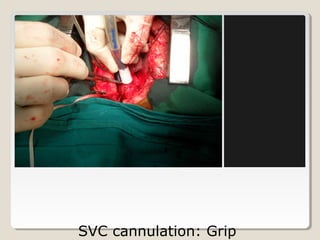
SVC cannulation: Grip
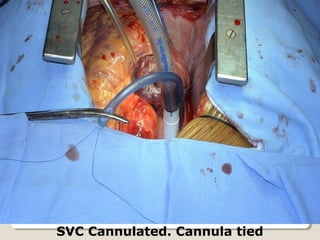
SVC Cannulated. Cannula tied
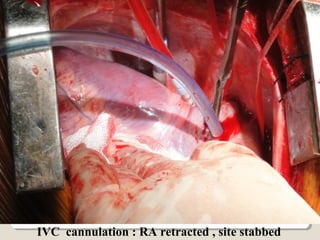
IVC cannulation : RA retracted , site stabbed
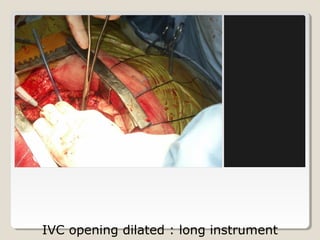
IVC opening dilated : long instrument
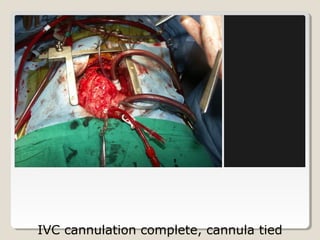
IVC cannulation complete, cannula tied
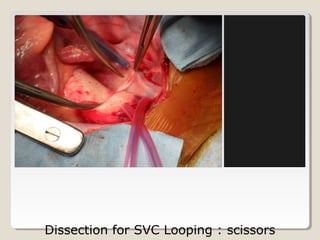
Dissection for SVC Looping : scissors
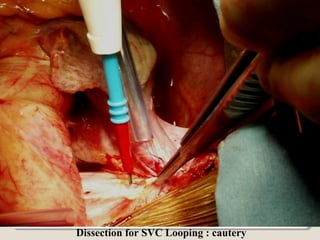
Dissection for SVC Looping : cautery
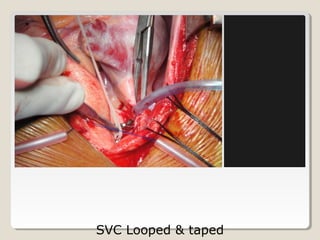
SVC Looped & taped
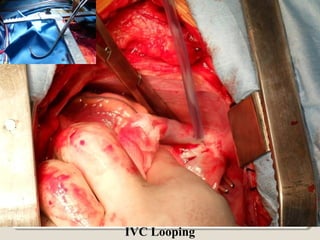
IVC Looping
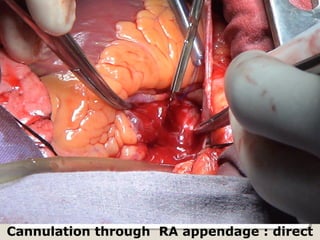
Cannulation through RA appendage : direct
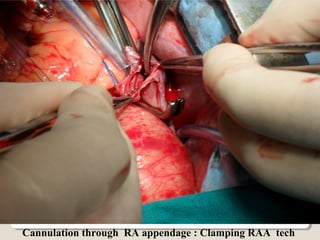
Cannulation through RA appendage : Clamping RAA tech
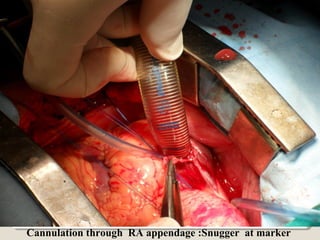
Cannulation through RA appendage :Snugger at marker
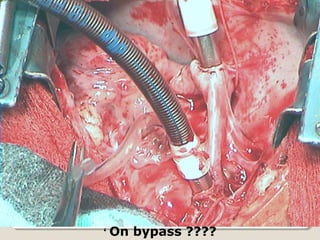
‘ On bypass ????
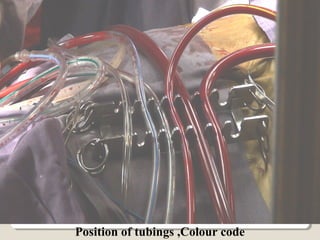
Position of tubings ,Colour code
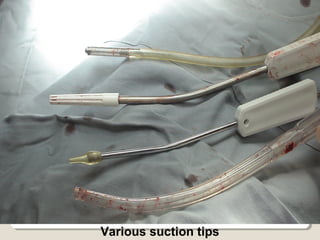
Various suction tips
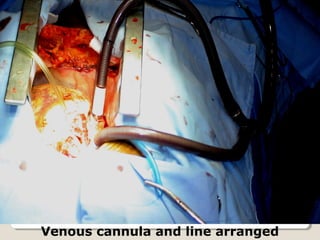
Venous cannula and line arranged
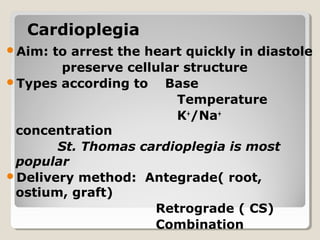
CardioplegiaCardioplegia
Aim: to arrest the heart quickly in diastole
preserve cellular structure
Types according to Base
Temperature
K+
/Na+
concentration
St. Thomas cardioplegia is most
popular
Delivery method: Antegrade( root,
ostium, graft)
Retrograde ( CS)
Combination
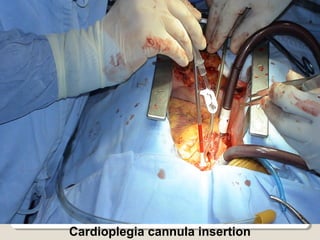
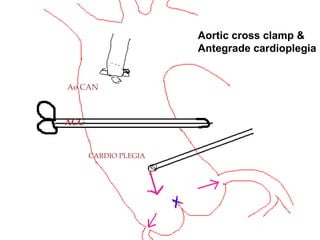
Cardioplegia cannula insertion
ACC
Ao CAN
CARDIO PLEGIA
Aortic cross clamp &
Antegrade cardioplegia
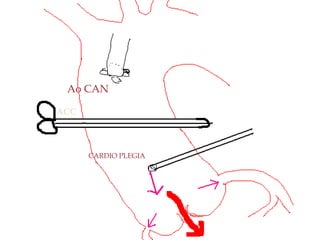
ACC
Ao CAN
CARDIO PLEGIA
Problem with
regurgitant aortic
valve
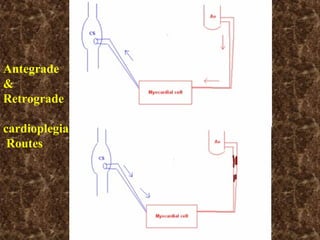
Antegrade
&
Retrograde
cardioplegia
Routes
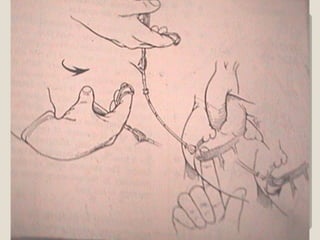
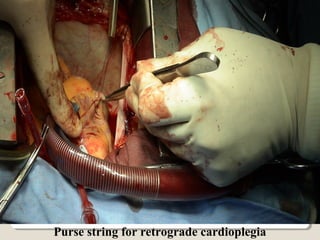
Purse string for retrograde cardioplegia
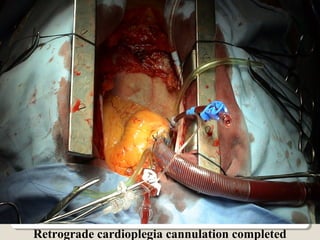
Retrograde cardioplegia cannulation completed
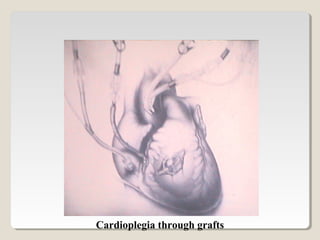
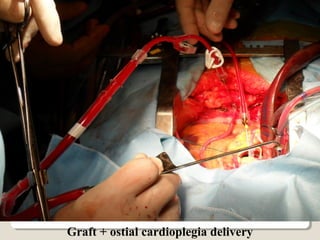
Cardioplegia through grafts
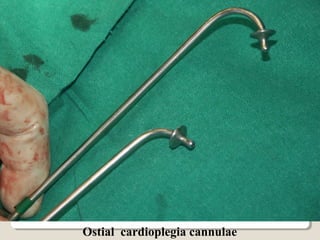
Ostial cardioplegia cannulae
Graft + ostial cardioplegia delivery
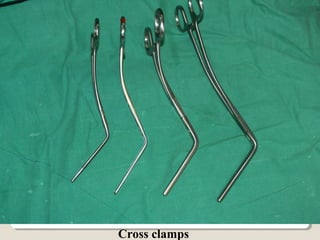
Cross clamps
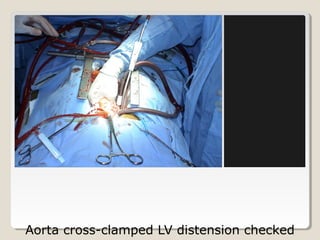
Aorta cross-clamped LV distension checked
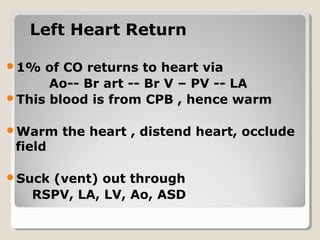
Left Heart ReturnLeft Heart Return
1% of CO returns to heart via
Ao-- Br art -- Br V – PV -- LA
This blood is from CPB , hence warm
Warm the heart , distend heart, occlude
field
Suck (vent) out through
RSPV, LA, LV, Ao, ASD
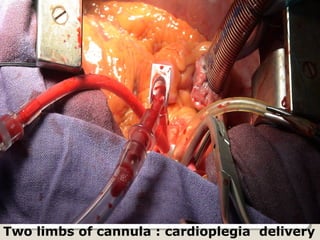
Two limbs of cannula : cardioplegia delivery
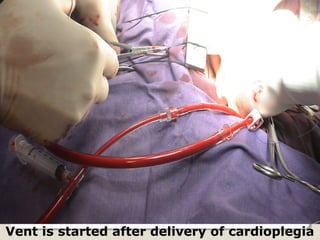
Vent is started after delivery of cardioplegia
CardiotomyCardiotomy
principlesprinciples
AS FAR AS POSSIBLE….
small incisions
RA, LA, Ao, PA opened
RV: if required, infundibulum
opened
LV : is rarely ‘opened’
avoid damaging arteries/
conduction tissue
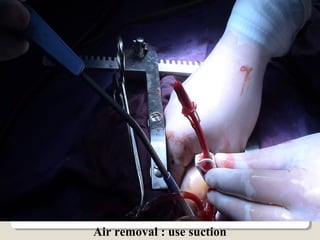
Air removal : use suction
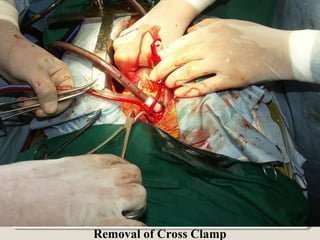
Removal of Cross Clamp
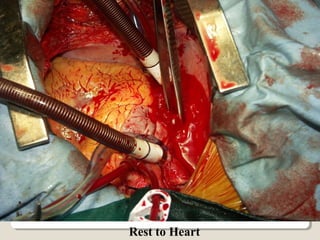
Rest to Heart
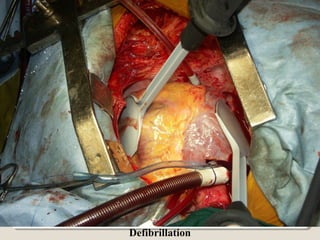
Defibrillation
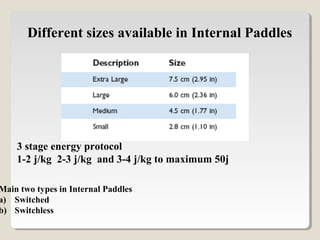
Different sizes available in Internal Paddles
Main two types in Internal Paddles
a) Switched
b) Switchless
3 stage energy protocol
1-2 j/kg 2-3 j/kg and 3-4 j/kg to maximum 50j
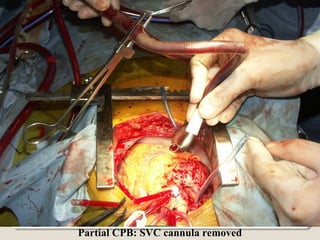
Partial CPB: SVC cannula removed
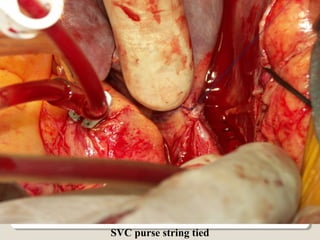
SVC purse string tied
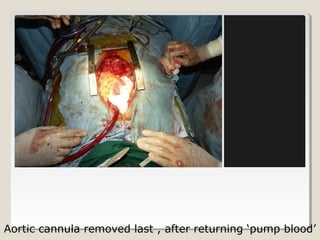
Aortic cannula removed last , after returning ‘pump blood’
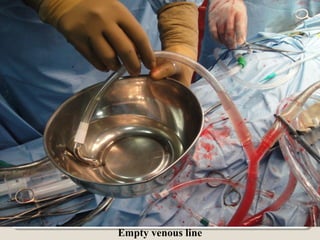
Empty venous line
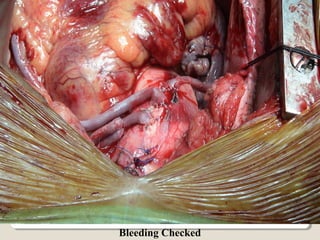
Bleeding Checked
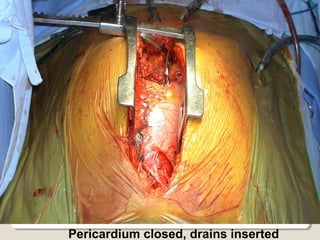
Pericardium closed, drains inserted
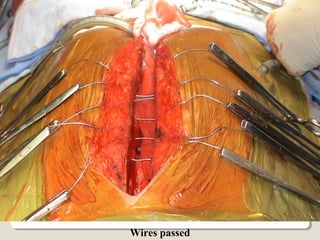
Wires passed
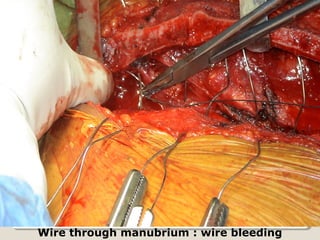
Wire through manubrium : wire bleeding
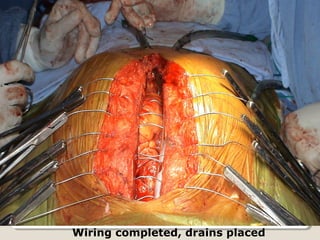
Wiring completed, drains placed
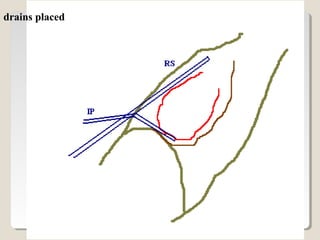
drains placed
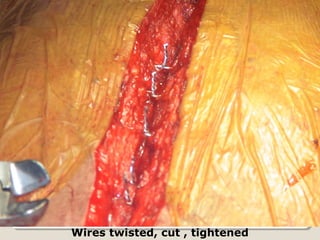
Wires twisted, cut , tightened
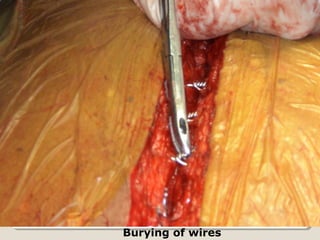
Burying of wires
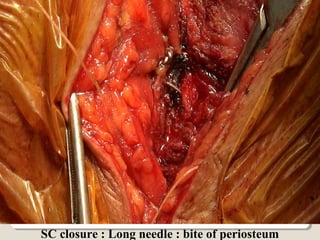
SC closure : Long needle : bite of periosteum
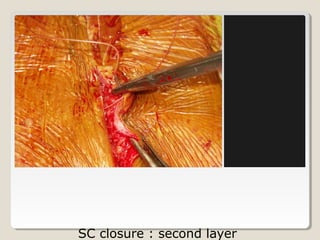
SC closure : second layer
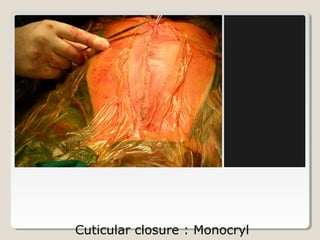
Cuticular closure : Monocryl
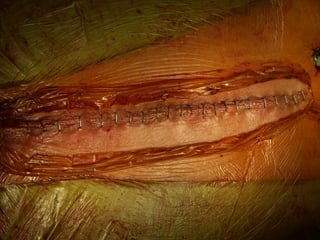
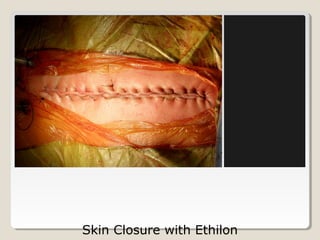
Skin Closure with Ethilon
Concept of Off Pump SurgeryConcept of Off Pump Surgery
Ill effects of CPB : on ALL organs
Coronary arteries are superficial
vessels
Development of accessorial
equipment

Open heart surgery