Cardiac Surgery   Wejdan Khater, RN, PhD  NUR 415- Spring 2008 Jordan University of science and technology
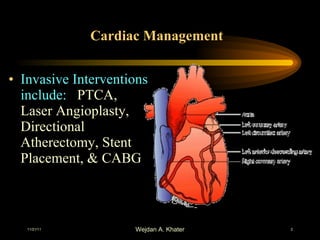
Cardiac Management Invasive Interventions include:  PTCA, Laser Angioplasty, Directional Atherectomy, Stent Placement, & CABG
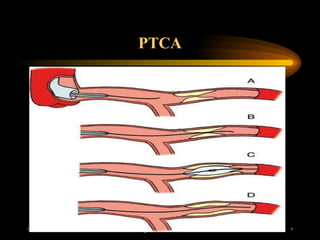
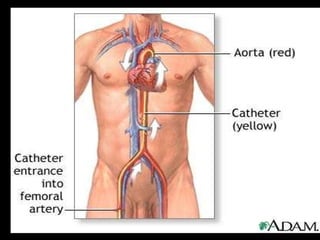
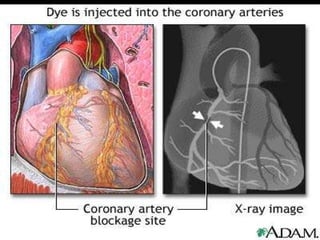
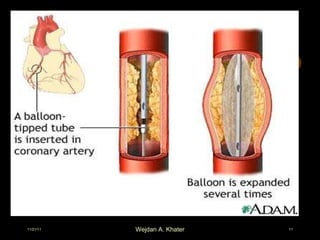
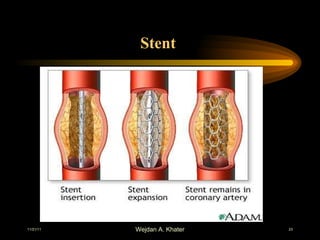
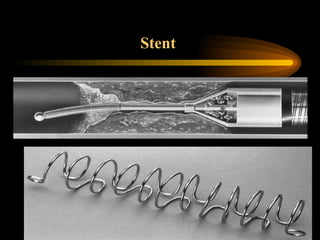
Percutaneous Transluminal  Coronary Angioplasty A balloon tipped catheter is inserted into narrowed coronary arteries and is inflated at the narrowed areas in order to widen the artery and remove the plaque. Stents: A device called a stent may be placed. A stent is a latticed (network/web), metal scaffold that is placed within the coronary artery to keep the vessel open. Patient is admitted in the same day of the procedure.
Percutaneous Transluminal  Coronary Angioplasty  [PTCA] Indications for PTCA: Alleviate angina pectoris  unrelieved by medical treatment Reduce the risk for MI Acute MI Persistent chest pain (angina)  Pts with lesions >70% stenosis placing large areas of heart At risk for ischemia
Percutaneous Transluminal  Coronary Angioplasty  [PTCA] Indications for PTCA: Patients with surgical risk factors (elderly, poor LV Funx., sever underlying diseases). Blockage of one or more  coronary arteries (Multivessel occlusion) Residual obstruction in a  coronary artery during or after a heart attack   Recurrent  stenosis and graft closure of coronary disease for  patients underwent CABG.
Percutaneous Transluminal  Coronary Angioplasty  [PTCA] CONTRAINDICATIONS Patients with left main CAD.  Mild stenosis less than 50%
PTCA


GOALS OF PTCA Improve blood flow to myocardium-” cracking” the atheroma PTCA done in cardiac catherization lab . Several inflations & balloon sizes may be required to achieve desired goal, usually defined as less <20% residual stenosis Advantages of PTCA Performed under local anesthesia Provides alternative to surgery Eliminates recovery from thoracotomy surgery Pt is ambulatory within 24hrs LOS 1-3 Days vs 5-7 post CABG
Pre-procedure preparations  Lab tests Cardiac enzymes PT, PTT Electrolytes (K+) Creatinine & BUN Well hydrated patient before procedure
Pre-Procedure Preparations  Preoperative Medications   24 hours before the procedure: patient is placed on Aspirin 325 mg x 1/day Nitroglycerine and Ca++ blockers x 3/day is prescribed to prevent vasospasm Hold anticoagulant drugs if taken (like warfarin). metformin (antidaibetic agent) should be discontinued.
Pre-Procedure Preparations  Surgical standby Food and fluid are restricted 6 to 8 hours before the test. health care provider should explain the procedure and its risks.  A witnessed, signed consent for the procedure is required. Allergic history: to seafood, if the pt had a bad reaction to contrast material in the past
PTCA -Intra procedure  The patient is anticoagulated with 5000-10000 U of heparin bolus to prevent clot formation on the catheter system. Bolus dose of heparin (2000-5000 U) may be needed to maintain ACT (Activated Clotting Time) level of 250-300 seconds. Monitor patient anticoagulant status ACT is monitored at baseline, 5 minutes after heparin bolus, and every 30 minutes after for the duration of the procedure.
PTCA -Intra procedure  The nurse must recognize signs and symptoms of contrast sensitivity, such as urticaria, blushing, anxiety, nausea, and laryngospasm.
PTCA –post procedure  Bed rest 4-6 hours after sheaths removed (sheaths removed 3-4 hours after procedure). Maintain leg in strait position Avoid flexing or bending leg at hip level Avoid vigorous use of abdominal muscles (coughing, sneezing). Monitor ECG, VS, LOC Neurovascular check below catheter insertion site (color, sensation, pulses).
PTCA –post procedure  Monitor sheath insertion site for bleeding (apply 5 lb sand bag, suture, collagen plugs). Monitor for signs of angina (chest pain) recurs. If vasospasm occur, administer vasodilators (nitro., isosorbide, nifidipine sublingual) Patient sent home with Aspirin, Ca++ blockers, & lipolytic drugs Perform treadmill stress test 6 weeks after procedure and compare to the one before the PTCA. Repeat the test at 6 months and 1 year.
COMPLICATIONS PTCA Hematoma at insertion site Pseudoaneurysms Embolism Hypersensitivity to Dye Re-stenosis, immediately or 3-6 mo’s Dysrhythmias Vessel rupture, need for emergent CABG Angina, MI, and Vasospasm Abrupt closure of dilated segment. Coronary artery dissection Travel of stent
OTHER INTERVENTIONAL CARDIAC PROCEDURES Laser Angioplasty- uses pulsed laser energy to vaporize plaque & reopen blocked arteries Coronary Atherectomy -involves widening of artery lumen by removing atherosclerotic plaque. Directional catheter is a device that shaves the plaque off vessel walls by means of a rotary cutting head, retaining the fragments in the device’s housing & removing them from vessel.
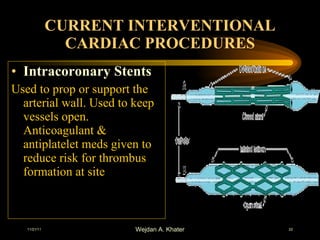
CURRENT INTERVENTIONAL CARDIAC PROCEDURES Intracoronary Stents Used to prop or support the arterial wall. Used to keep vessels open. Anticoagulant & antiplatelet meds given to reduce risk for thrombus formation at site
Stent
Stent
Coronary Artery Revascularization Bypass:  CABG Procedure   CANDIDATES  FOR CABG PRE-OP, INTRA -OP,  & POST-OP CARE COMPLICATIONS
What is Open Heart Surgery?  It isn’t just CABG Valve replacement VSD Ascending Thoracic Aneurysm Repair Left Ventricular aneurysm repair Surgery to relieve hypertrophy in CMPs All need to be on the Cardio-pulmonary pump in the OR
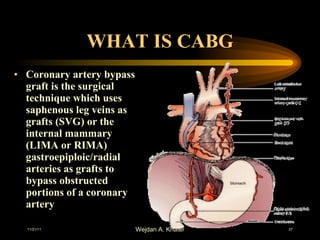
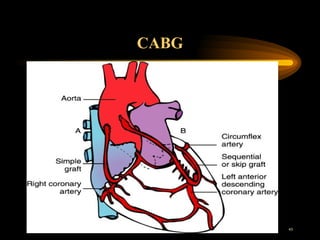
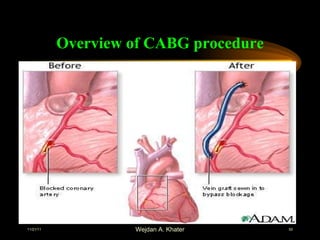
WHAT IS CABG Coronary artery bypass graft is the surgical technique which uses saphenous leg veins as grafts (SVG) or the internal mammary (LIMA or RIMA) gastroepiploic/radial arteries as grafts to bypass obstructed portions of a coronary artery
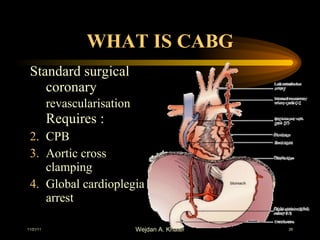
WHAT IS CABG Standard surgical coronary  revascularisation  Requires :  CPB Aortic cross clamping Global cardioplegia arrest
WHO NEEDS CABG??  CONDITIONS THAT NEED CORONARY REVASCULARIZATION : Stable angina but meds not controlling pain, pt has   function Non-successful PTCA with evolving MI Unstable angina A positive exercise tolerance test [treadmill], & lesions or blockage that cannot be treated by PTCA Exercise induced ventricular arrhythmias due to myocardial ischemia A Left Main Coronary lesion or blockage of more than 60% (50%) Single or double vessel disease with type B or C lesions
WHO NEEDS CABG??  CONDITIONS THAT NEED CORONARY REVASCULARIZATION : Three vessel CAD (70% stenosis)  with depressed left ventricular function or two vessel CAD with proximal LAD involvement.  In randomized trials, patients with three vessel and depressed LV function showed survival benefit with CABG compared to medical tx.  Operative mortality increases when EF is less than 30%.    Other:  post infarct angina, thrombosis after PTCA
AHA/AC AHA/ACC Definition of Classes for Various Conditions C Definition of C  AHA/ACC Definition of Classes for Various Conditions Class I --Conditions for which there is evidence and/or general agreement that a given procedure or treatment is useful and effective. Class II --Conditions for which there is conflicting evidence and/or a divergence of opinion about the usefulness or efficacy of a procedure. Class IIa --The weight of evidence/opinion is in favor of usefulness/efficacy. Class IIb --Usefulness/efficacy is less well established by evidence/opinion. Class III --Conditions for which there is evidence and/or general agreement that the procedure/treatment is not useful/effective and, in some cases, may be harmful.
ACC/AHA Guidelines for Coronary Artery Bypass Graft Surgery In Asymptomatic or Mild Angina Class I  1. Significant left main coronary artery stenosis. 2. Left main equivalent: significant ( 70%) stenosis of the proximal LAD and proximal left circumflex artery. 3. Three-vessel disease. (Survival benefit is greater in patients with abnormal LV function; e.g., EF <0.50.) Class IIa  Proximal LAD stenosis with 1- or 2-vessel disease.*   Class IIb  One- or 2-vessel disease not involving the proximal LAD.
EMERGENCY VS ELECTIVE CABG The outcomes of the CABG are very dependent on the pre-op conditions!! Emergency cases come from the cath lab with death of tissue & many anticoagulants on board Elective cases come from home NPO & prepared
RISK FACTORS FOR CABG Age :pts over 70 are at a slightly higher risk for complications Gender – women have a slightly higher risk Previous heart surgery – puts a person at higher risk Having another serious medical condition such as diabetes, peripheral vascular disease, kidney disease or lung disease Current Hemodynamic status Concurrent medical conditions especially DM & COPD
CABG Native vessels  Saphenous vein  Internal mammary artery  Off–pump CABG In many ways, off- pump bypass (or op – CABG ) is similar to conventional bypass surgery . The main difference lies in the fact that  a heart – lung machine is not used to employ cardiopulmonary bypass during the operation .   Transmyocardial laser revascularization
Pre-operative  ECG Laboratory (CBC, BUN, ABGs, PT, PTT) Preop. Teaching Familiarize patient to the ICU by touring the ICU unit Place A-line, Foley cath., thermodilution pulmonary artery.
PRE-OP NURSING CARE Teaching: what this procedure will do for the patient’s pathology- it is not a cure cough, deep breath, splint incision what the all the tubes do: chest, swan, Foley, ET, leads wound care- legs and sternum, possible complications of osteomyelitis of the sternum
PRE-OP NURSING CARE Teaching: Meds: effects of Nitro, dopamine, dobutamine & pain meds Anticipate mood changes or depression, anxiety, & forgetfulness *new push to do CABG off the pump Pre-op risk factor modification Need for continuation of cardiotonic meds to prevent ischemia prior CABG Re-hydration may be necessary, if on chronic diuretics
TEACHING NEEDS OF THE “REDO” It is a common misconception that patients who have already had CABG and need a “redo” do not need pre-op education- “they already know what will come.” Recent nursing research shows these patients have the same learning needs as the first timers.  These same patients had a special interest in knowing who the health care workers were & what they would be doing for the patient
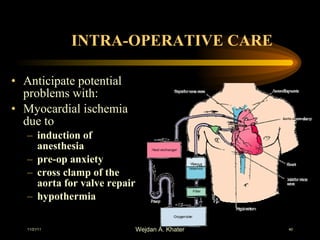
INTRA-OPERATIVE CARE Anticipate potential problems with: Myocardial ischemia due to induction of anesthesia pre-op anxiety cross clamp of the aorta for valve repair hypothermia
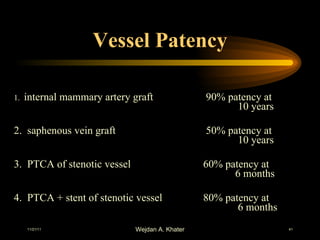
Vessel Patency 1.  internal mammary artery graft 90% patency at  10 years 2.  saphenous vein graft 50% patency at  10 years 3.  PTCA of stenotic vessel   60% patency at    6 months 4.  PTCA + stent of stenotic vessel   80% patency at    6 months
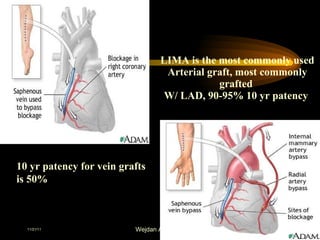
LIMA is the most commonly used Arterial graft, most commonly grafted  W/ LAD, 90-95% 10 yr patency   10 yr patency for vein grafts is 50%
CABG
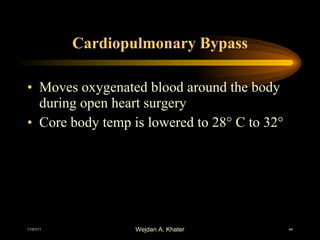
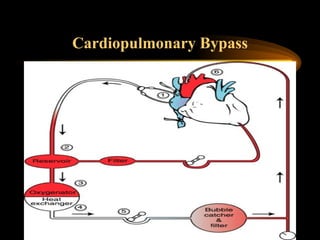
Cardiopulmonary Bypass Moves oxygenated blood around the body during open heart surgery Core body temp is lowered to 28° C to 32°
Cardiopulmonary Bypass
Cardiopulmonary Bypass Complications Arrhythmias Fluid resuscitation  Decreased cardiac contractility  Control of blood pressure Respiratory problems  Postoperative bleeding
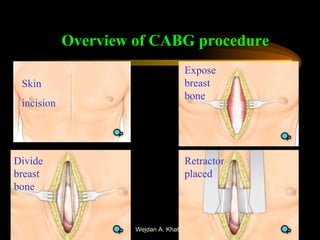
Overview of CABG procedure Skin  incision Expose breast bone Divide breast bone Retractor placed
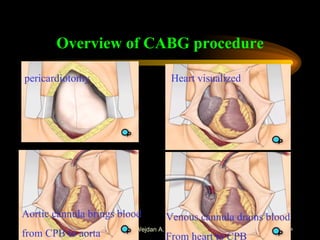
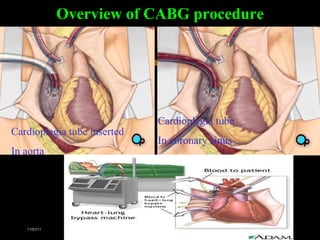
Overview of CABG procedure pericardiotomy Heart visualized Aortic cannula brings blood  from CPB to aorta Venous cannula drains blood From heart to CPB
Overview of CABG procedure Cardioplegia tube inserted In aorta Cardioplegia tube In coronary sinus
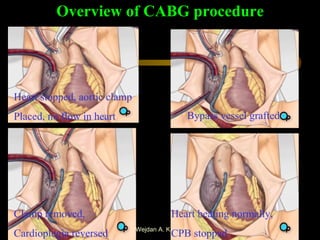
Overview of CABG procedure Heart stopped, aortic clamp Placed, no flow in heart Bypass vessel grafted Clamp removed,  Cardioplegia reversed Heart beating normally, CPB stopped
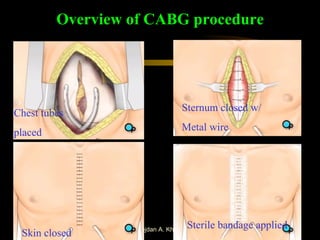
Overview of CABG procedure Chest tubes placed Sternum closed w/ Metal wire Skin closed Sterile bandage applied
Overview of CABG procedure
NURSING DIAGNOSIS   INTRAOPERATIVELY FOR CABG High risk for injury r/t surgical position High risk for infection r/t surgical disruption of tissues Knowledge deficit r/t perioperative events High risk for impaired tissue integrity related to bypass pump and hypothermia   Decreased cardiac output r/t to mechanical  factors (altered preload, afterload, contractility, and HR)
POST-OP NURSING CARE FOR CABG INITIAL PRIORITIES Patient is Admitted to the ICU first 24-72 hours. Monitor 12-lead ECG Maintain oxygenation, pulse Ox. Monitor hemodynamic pressures/stability Obtain Co, CI Monitor chest tubes drainage (amount color, flow, air leak) Chest radiology (x-ray to monitor chest tubes placement and pulmonary congestion if any).
POST-OP NURSING CARE FOR CABG INITIAL PRIORITIES Use of clinical pathways NOC, ND--NIC Complications-Prevention & Early Recognition Family information needs Pain control esp the elderly
Clinical Pathways LOS for uncomplicated CABG is 9.8 days- try to have patient home in 4 days Areas of progression Activity Nutrition Elimination Meds Nursing interventions
Initial Priorities cont. Clarify drug drips, & obtain hemodynamic pressures record chest tube drainage, connect to suction, if ordered measure urine output hourly connect bladder probe clarify MD orders
Collaborative Management Resp. therapy for vents, IPPB,  PT, PRN Pharmacy on drips Cardiac Rehab for discharge Social Service for placement
Initial Priorities cont. Rewarm the patient obtain CXR, ABG’s, electrolytes, & coag studies CXR gives baseline on heart size, ET tube, pneumo, NG tube, PA catheter, & pulmonary vasculartity
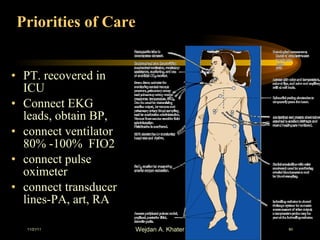
Priorities of Care PT. recovered in ICU  Connect EKG leads, obtain BP,  connect ventilator 80% -100%  FIO2 connect pulse oximeter connect transducer lines-PA, art, RA
COMPLICATIONS OF CABG :  Early PO Period Low CO syndrome,  2L/m/m2--  caused by hypovolemia, acidosis, AMI, CHF, drugs, such as Inderal, mediastinal tamponade, incr. SVR Systemic HTN, & Cardiac arrhythmias Microemboli to lungs, heart, brain , & kidneys It is now the routine to do a carotid duplex before elective CABG to see if carotids have plaque or narrowing, & many CABG’s now include carotid endarterectomy to prevent CVA Fever Electrolyte imbalances Depression or confusion, agitation & disorientation DIC, ARDS.
Complications :  Hypothermia Hypothermia Common complication Assess T 0  by pulmonary artery or tympanic membrane T 0  in ICU Rectal T 0  does  NOT  correlate to core T 0  until 8 hours after surgery  Prevent Shivering.  Monitor for T 0  overshoot
Complications :  Bleeding PO blood loss not to exceed 300cc/hr (200) in first several hours.  After several hours should slow to 150-200 cc/hr.The average total loss is 1 liter. Use the auto transfuser on chest tube drainage to re infuse  Possible bleed sites leg  & chest wounds cardiac tamponade- heart is compressed by blood in the mediastinal.  The heart is unable to fill adequately causing low CO and Hypotension
Complications  Systemic Inflammatory Response Syndrome (SIRS) Fever, tachycardia, tachypnea, increased WBCs Steroids before surgery Pain at surgery site, leg, neck and back Sever first 3-4 days post surgery Differentiate angina from incisional pain Morphine, Fentanyl, Hydromorphone (Dilaudid), NSAID (Toradol) PCA pumps Alternative therapies
Complications of CABG:  Late Postoperative Period Wound Infection Hepatitis Pancreatitis [early or late] Post-pericardiotomy syndrome Systemic arterial emboli & infective endocarditis, with valvular surgeries Occlusion of graft
Complications of CABG Complications include 2-5% reoperation for bleeding, up to 75% transient impairment of intellectual function, 1-5% stroke rate, 40% early (2-3d) atrial fibrillation and 1% bradyarrhythmia requiring permanent pacemaker. The incidence of sternal wound infections is increased when both internal mammary arteries are used. There is an 8-12% early saphenous vein graft occlusion rate.
Prevention of CABG Complications Preventing Cardiovascular Complications Volume resuscitation: Fluids (NS, hyperosmolar fluid (3% NS), Blood) Maintain hemodynamic parameters (CVP, PAWP, CI) Assess extremities and peripheral pulses Monitor for Dysrhythmias Antiarhythmic drugs Monitor K, Mg
Prevention of CABG Complications Preventing Cardiovascular Complications   ( Continued) Improving cardiac contractility Volume resuscitation Drugs; sympathomemetic (epinephrine, doputamine, milrinone) IABP Controlling BP: Maintain MAP > 70 mm Hg or SBP > 120 mm Hg Reduce afterload by medications (nitroprusside, ACE inhibitors, nitroglycerine, hydrralazine)
Prevention of CABG Complications Preventing Pulmonary Complications Monitor O 2  Sat., ABG, O 2  delivery (starting 40%-50%), PEEP (5-10 mmHg), Mode (Assisted, SIMV, CPAP), tidal volume, end -tidal  Co 2 . Intensive use of IS, ambulation, monitor breath sounds Preventing Neurological Complications: Patient is allowed to wake up as soon as possible If unable to clear narcotics, Naloxone is used to reverse narcotics. Assess LOC (motor & sensory) CT & MRI
Prevention of CABG Complications Preventing Renal complications Preventing GI complications Preventing Endocrine complications Preventing Infection
Nursing Diagnosis Impaired gas exchange r/t ventilation/perfusion mismatching or intrapulmonary shunting,  cardiopulmonary bypass, anesthesia, poor chest expansion, atelectasis, retained secretions Ineffective airway clearance r/t excessive secretions of abnormal viscosity of mucus Fluid volume deficit r/t loss in OR
Nursing Diagnosis Decreased Cardiac Output related to  Changes in LV preload, afterload, and contractility  Cardiac dysrhythmias Decreased Tissue Perfusion related to  Cardiopulmonary bypass, decreased CO, hypotension
Nursing Diagnosis Risk for infection r/t invasive catheter, surg. Wds. Acute pain r/t transmission and perception of cutaneous visceral, muscular, or ischemic pain  [ Gerontological Consider.] Knowledge deficit r/t risk factor modification, discharge regime
Nursing Diagnosis Risk for Fluid Volume Deficit related to abnormal bleeding  Impaired Comfort related to endotracheal tube, surgical incision, chest tubes, rib spreading  Anxiety related to fear of death, ICU environment
HEART TRANSPLANTATION INDICATIONS End Stage Coronary Artery Disease;  Valvular Disease Congenital Heart Abnormalities; Cardiomyopathy GENERAL CRITERIA: A life expectancy of only 6-12 months because of end-stage cardiac disease.  Ages neonatal-65yr old Absence of chemical dependence Familial or social support Commitment of lifelong medical regimen & follow-up Many centers grade the severity of heart failure by NY Heart Association Functional classification of HD.
IABP increase myocardial oxygen supply (coronary blood flow) & decrease myocardial oxygen demand by decreasing afterload  Secondary: improvement of cardiac output (CO), ejection fraction (EF), increase of coronary perfusion pressure and systemic perfusion, pulmonary capillary wedge pressure and systemic vascular resistance  supplementing cardiac output by 20 - 30 %
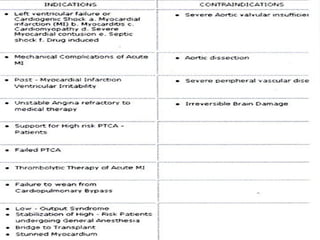
IABP Indications   Cardiac failure after a cardiac surgical procedure Refractory angina despite maximal medical management Perioperative treatment of complications due to myocardial infarction Failed PTCA As a bridge to cardiac transplantation
IABP Indications  Prophylactic use prior to cardiac surgery in patients with: Left main disease Unstable angina Poor left ventricular function Severe aortic stenosis
IABP
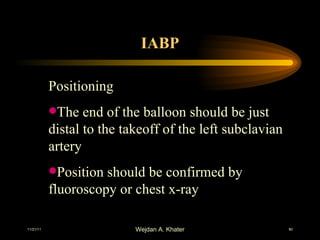
IABP Positioning  The end of the balloon should be just distal to the takeoff of the left subclavian artery Position should be confirmed by fluoroscopy or chest x-ray
IAPB
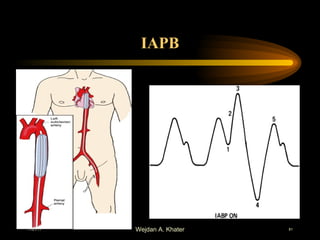
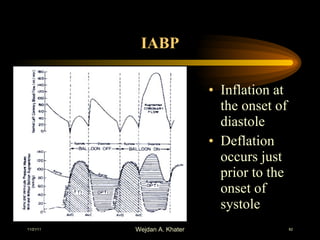
IABP Inflation at the onset of diastole  Deflation occurs just prior to the onset of systole
IABP Trigger: patient’s ECG signal, patient’s arterial waveform or intrinsic pump rate The most common method:  triggering    R wave of the patient’s ECG signal balloon inflation    start in the middle of the T wave balloon deflate    prior to the ending QRS complex  Balloon synchronization:  starts usually at a beat ratio of 1:2
IABP inflation is too early or deflation too late: results in an increase in afterload ventricular emptying is incomplete inflation is too late or deflation is too early: diastolic augmentation is suboptimal
Weaning of IABP/ Decreasing inotropic support Decreasing pump ratio weaning from the IABP: gradually decreasing the balloon augmentation ratio under control of hemodynamic stability  Decrease assist ratio from 1:1 to 1:2 and so on until minimum assist ratio is achieved The first decrease in assist should be maintained for up to 4-6 hours (minimum 30 minutes) After appropriate observation at 1:8 counterpulsation, the balloon pump is removed.
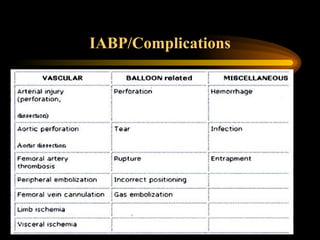
IABP/complications  Limb ischemia Thrombosis Emboli Bleeding and insertion site Groin hematomas Aortic perforation and/or dissection Renal failure and bowel ischemia Neurological complications including paraplegia Heparin induced thrombocytopenia Infection
IABP/Complications
IABP Removal Discontinue heparin six hours prior Check platelets and coagulation factors Deflate the balloon Apply manual pressure above and below IABP insertion site Remove and alternate pressure to expel any clots Apply constant pressure to the insertion site for a minimum of 30 minutes Check distal pulses frequently

Cardiac surgery and ptca

  • 1.
    Cardiac Surgery Wejdan Khater, RN, PhD NUR 415- Spring 2008 Jordan University of science and technology
  • 2.
    Cardiac Management InvasiveInterventions include: PTCA, Laser Angioplasty, Directional Atherectomy, Stent Placement, & CABG
  • 3.
    Percutaneous Transluminal Coronary Angioplasty A balloon tipped catheter is inserted into narrowed coronary arteries and is inflated at the narrowed areas in order to widen the artery and remove the plaque. Stents: A device called a stent may be placed. A stent is a latticed (network/web), metal scaffold that is placed within the coronary artery to keep the vessel open. Patient is admitted in the same day of the procedure.
  • 4.
    Percutaneous Transluminal Coronary Angioplasty [PTCA] Indications for PTCA: Alleviate angina pectoris unrelieved by medical treatment Reduce the risk for MI Acute MI Persistent chest pain (angina) Pts with lesions >70% stenosis placing large areas of heart At risk for ischemia
  • 5.
    Percutaneous Transluminal Coronary Angioplasty [PTCA] Indications for PTCA: Patients with surgical risk factors (elderly, poor LV Funx., sever underlying diseases). Blockage of one or more coronary arteries (Multivessel occlusion) Residual obstruction in a coronary artery during or after a heart attack Recurrent stenosis and graft closure of coronary disease for patients underwent CABG.
  • 6.
    Percutaneous Transluminal Coronary Angioplasty [PTCA] CONTRAINDICATIONS Patients with left main CAD. Mild stenosis less than 50%
  • 7.
  • 8.
  • 9.
  • 10.
  • 11.
  • 12.
    GOALS OF PTCAImprove blood flow to myocardium-” cracking” the atheroma PTCA done in cardiac catherization lab . Several inflations & balloon sizes may be required to achieve desired goal, usually defined as less <20% residual stenosis Advantages of PTCA Performed under local anesthesia Provides alternative to surgery Eliminates recovery from thoracotomy surgery Pt is ambulatory within 24hrs LOS 1-3 Days vs 5-7 post CABG
  • 13.
    Pre-procedure preparations Lab tests Cardiac enzymes PT, PTT Electrolytes (K+) Creatinine & BUN Well hydrated patient before procedure
  • 14.
    Pre-Procedure Preparations Preoperative Medications 24 hours before the procedure: patient is placed on Aspirin 325 mg x 1/day Nitroglycerine and Ca++ blockers x 3/day is prescribed to prevent vasospasm Hold anticoagulant drugs if taken (like warfarin). metformin (antidaibetic agent) should be discontinued.
  • 15.
    Pre-Procedure Preparations Surgical standby Food and fluid are restricted 6 to 8 hours before the test. health care provider should explain the procedure and its risks. A witnessed, signed consent for the procedure is required. Allergic history: to seafood, if the pt had a bad reaction to contrast material in the past
  • 16.
    PTCA -Intra procedure The patient is anticoagulated with 5000-10000 U of heparin bolus to prevent clot formation on the catheter system. Bolus dose of heparin (2000-5000 U) may be needed to maintain ACT (Activated Clotting Time) level of 250-300 seconds. Monitor patient anticoagulant status ACT is monitored at baseline, 5 minutes after heparin bolus, and every 30 minutes after for the duration of the procedure.
  • 17.
    PTCA -Intra procedure The nurse must recognize signs and symptoms of contrast sensitivity, such as urticaria, blushing, anxiety, nausea, and laryngospasm.
  • 18.
    PTCA –post procedure Bed rest 4-6 hours after sheaths removed (sheaths removed 3-4 hours after procedure). Maintain leg in strait position Avoid flexing or bending leg at hip level Avoid vigorous use of abdominal muscles (coughing, sneezing). Monitor ECG, VS, LOC Neurovascular check below catheter insertion site (color, sensation, pulses).
  • 19.
    PTCA –post procedure Monitor sheath insertion site for bleeding (apply 5 lb sand bag, suture, collagen plugs). Monitor for signs of angina (chest pain) recurs. If vasospasm occur, administer vasodilators (nitro., isosorbide, nifidipine sublingual) Patient sent home with Aspirin, Ca++ blockers, & lipolytic drugs Perform treadmill stress test 6 weeks after procedure and compare to the one before the PTCA. Repeat the test at 6 months and 1 year.
  • 20.
    COMPLICATIONS PTCA Hematomaat insertion site Pseudoaneurysms Embolism Hypersensitivity to Dye Re-stenosis, immediately or 3-6 mo’s Dysrhythmias Vessel rupture, need for emergent CABG Angina, MI, and Vasospasm Abrupt closure of dilated segment. Coronary artery dissection Travel of stent
  • 21.
    OTHER INTERVENTIONAL CARDIACPROCEDURES Laser Angioplasty- uses pulsed laser energy to vaporize plaque & reopen blocked arteries Coronary Atherectomy -involves widening of artery lumen by removing atherosclerotic plaque. Directional catheter is a device that shaves the plaque off vessel walls by means of a rotary cutting head, retaining the fragments in the device’s housing & removing them from vessel.
  • 22.
    CURRENT INTERVENTIONAL CARDIACPROCEDURES Intracoronary Stents Used to prop or support the arterial wall. Used to keep vessels open. Anticoagulant & antiplatelet meds given to reduce risk for thrombus formation at site
  • 23.
  • 24.
  • 25.
    Coronary Artery RevascularizationBypass: CABG Procedure CANDIDATES FOR CABG PRE-OP, INTRA -OP, & POST-OP CARE COMPLICATIONS
  • 26.
    What is OpenHeart Surgery? It isn’t just CABG Valve replacement VSD Ascending Thoracic Aneurysm Repair Left Ventricular aneurysm repair Surgery to relieve hypertrophy in CMPs All need to be on the Cardio-pulmonary pump in the OR
  • 27.
    WHAT IS CABGCoronary artery bypass graft is the surgical technique which uses saphenous leg veins as grafts (SVG) or the internal mammary (LIMA or RIMA) gastroepiploic/radial arteries as grafts to bypass obstructed portions of a coronary artery
  • 28.
    WHAT IS CABGStandard surgical coronary revascularisation Requires : CPB Aortic cross clamping Global cardioplegia arrest
  • 29.
    WHO NEEDS CABG?? CONDITIONS THAT NEED CORONARY REVASCULARIZATION : Stable angina but meds not controlling pain, pt has  function Non-successful PTCA with evolving MI Unstable angina A positive exercise tolerance test [treadmill], & lesions or blockage that cannot be treated by PTCA Exercise induced ventricular arrhythmias due to myocardial ischemia A Left Main Coronary lesion or blockage of more than 60% (50%) Single or double vessel disease with type B or C lesions
  • 30.
    WHO NEEDS CABG?? CONDITIONS THAT NEED CORONARY REVASCULARIZATION : Three vessel CAD (70% stenosis) with depressed left ventricular function or two vessel CAD with proximal LAD involvement. In randomized trials, patients with three vessel and depressed LV function showed survival benefit with CABG compared to medical tx. Operative mortality increases when EF is less than 30%.   Other: post infarct angina, thrombosis after PTCA
  • 31.
    AHA/AC AHA/ACC Definitionof Classes for Various Conditions C Definition of C AHA/ACC Definition of Classes for Various Conditions Class I --Conditions for which there is evidence and/or general agreement that a given procedure or treatment is useful and effective. Class II --Conditions for which there is conflicting evidence and/or a divergence of opinion about the usefulness or efficacy of a procedure. Class IIa --The weight of evidence/opinion is in favor of usefulness/efficacy. Class IIb --Usefulness/efficacy is less well established by evidence/opinion. Class III --Conditions for which there is evidence and/or general agreement that the procedure/treatment is not useful/effective and, in some cases, may be harmful.
  • 32.
    ACC/AHA Guidelines forCoronary Artery Bypass Graft Surgery In Asymptomatic or Mild Angina Class I 1. Significant left main coronary artery stenosis. 2. Left main equivalent: significant ( 70%) stenosis of the proximal LAD and proximal left circumflex artery. 3. Three-vessel disease. (Survival benefit is greater in patients with abnormal LV function; e.g., EF <0.50.) Class IIa Proximal LAD stenosis with 1- or 2-vessel disease.* Class IIb One- or 2-vessel disease not involving the proximal LAD.
  • 33.
    EMERGENCY VS ELECTIVECABG The outcomes of the CABG are very dependent on the pre-op conditions!! Emergency cases come from the cath lab with death of tissue & many anticoagulants on board Elective cases come from home NPO & prepared
  • 34.
    RISK FACTORS FORCABG Age :pts over 70 are at a slightly higher risk for complications Gender – women have a slightly higher risk Previous heart surgery – puts a person at higher risk Having another serious medical condition such as diabetes, peripheral vascular disease, kidney disease or lung disease Current Hemodynamic status Concurrent medical conditions especially DM & COPD
  • 35.
    CABG Native vessels Saphenous vein Internal mammary artery Off–pump CABG In many ways, off- pump bypass (or op – CABG ) is similar to conventional bypass surgery . The main difference lies in the fact that a heart – lung machine is not used to employ cardiopulmonary bypass during the operation . Transmyocardial laser revascularization
  • 36.
    Pre-operative ECGLaboratory (CBC, BUN, ABGs, PT, PTT) Preop. Teaching Familiarize patient to the ICU by touring the ICU unit Place A-line, Foley cath., thermodilution pulmonary artery.
  • 37.
    PRE-OP NURSING CARETeaching: what this procedure will do for the patient’s pathology- it is not a cure cough, deep breath, splint incision what the all the tubes do: chest, swan, Foley, ET, leads wound care- legs and sternum, possible complications of osteomyelitis of the sternum
  • 38.
    PRE-OP NURSING CARETeaching: Meds: effects of Nitro, dopamine, dobutamine & pain meds Anticipate mood changes or depression, anxiety, & forgetfulness *new push to do CABG off the pump Pre-op risk factor modification Need for continuation of cardiotonic meds to prevent ischemia prior CABG Re-hydration may be necessary, if on chronic diuretics
  • 39.
    TEACHING NEEDS OFTHE “REDO” It is a common misconception that patients who have already had CABG and need a “redo” do not need pre-op education- “they already know what will come.” Recent nursing research shows these patients have the same learning needs as the first timers. These same patients had a special interest in knowing who the health care workers were & what they would be doing for the patient
  • 40.
    INTRA-OPERATIVE CARE Anticipatepotential problems with: Myocardial ischemia due to induction of anesthesia pre-op anxiety cross clamp of the aorta for valve repair hypothermia
  • 41.
    Vessel Patency 1. internal mammary artery graft 90% patency at 10 years 2. saphenous vein graft 50% patency at 10 years 3. PTCA of stenotic vessel 60% patency at 6 months 4. PTCA + stent of stenotic vessel 80% patency at 6 months
  • 42.
    LIMA is themost commonly used Arterial graft, most commonly grafted W/ LAD, 90-95% 10 yr patency 10 yr patency for vein grafts is 50%
  • 43.
  • 44.
    Cardiopulmonary Bypass Movesoxygenated blood around the body during open heart surgery Core body temp is lowered to 28° C to 32°
  • 45.
  • 46.
    Cardiopulmonary Bypass ComplicationsArrhythmias Fluid resuscitation Decreased cardiac contractility Control of blood pressure Respiratory problems Postoperative bleeding
  • 47.
    Overview of CABGprocedure Skin incision Expose breast bone Divide breast bone Retractor placed
  • 48.
    Overview of CABGprocedure pericardiotomy Heart visualized Aortic cannula brings blood from CPB to aorta Venous cannula drains blood From heart to CPB
  • 49.
    Overview of CABGprocedure Cardioplegia tube inserted In aorta Cardioplegia tube In coronary sinus
  • 50.
    Overview of CABGprocedure Heart stopped, aortic clamp Placed, no flow in heart Bypass vessel grafted Clamp removed, Cardioplegia reversed Heart beating normally, CPB stopped
  • 51.
    Overview of CABGprocedure Chest tubes placed Sternum closed w/ Metal wire Skin closed Sterile bandage applied
  • 52.
  • 53.
    NURSING DIAGNOSIS INTRAOPERATIVELY FOR CABG High risk for injury r/t surgical position High risk for infection r/t surgical disruption of tissues Knowledge deficit r/t perioperative events High risk for impaired tissue integrity related to bypass pump and hypothermia Decreased cardiac output r/t to mechanical factors (altered preload, afterload, contractility, and HR)
  • 54.
    POST-OP NURSING CAREFOR CABG INITIAL PRIORITIES Patient is Admitted to the ICU first 24-72 hours. Monitor 12-lead ECG Maintain oxygenation, pulse Ox. Monitor hemodynamic pressures/stability Obtain Co, CI Monitor chest tubes drainage (amount color, flow, air leak) Chest radiology (x-ray to monitor chest tubes placement and pulmonary congestion if any).
  • 55.
    POST-OP NURSING CAREFOR CABG INITIAL PRIORITIES Use of clinical pathways NOC, ND--NIC Complications-Prevention & Early Recognition Family information needs Pain control esp the elderly
  • 56.
    Clinical Pathways LOSfor uncomplicated CABG is 9.8 days- try to have patient home in 4 days Areas of progression Activity Nutrition Elimination Meds Nursing interventions
  • 57.
    Initial Priorities cont.Clarify drug drips, & obtain hemodynamic pressures record chest tube drainage, connect to suction, if ordered measure urine output hourly connect bladder probe clarify MD orders
  • 58.
    Collaborative Management Resp.therapy for vents, IPPB, PT, PRN Pharmacy on drips Cardiac Rehab for discharge Social Service for placement
  • 59.
    Initial Priorities cont.Rewarm the patient obtain CXR, ABG’s, electrolytes, & coag studies CXR gives baseline on heart size, ET tube, pneumo, NG tube, PA catheter, & pulmonary vasculartity
  • 60.
    Priorities of CarePT. recovered in ICU Connect EKG leads, obtain BP, connect ventilator 80% -100% FIO2 connect pulse oximeter connect transducer lines-PA, art, RA
  • 61.
    COMPLICATIONS OF CABG: Early PO Period Low CO syndrome, 2L/m/m2-- caused by hypovolemia, acidosis, AMI, CHF, drugs, such as Inderal, mediastinal tamponade, incr. SVR Systemic HTN, & Cardiac arrhythmias Microemboli to lungs, heart, brain , & kidneys It is now the routine to do a carotid duplex before elective CABG to see if carotids have plaque or narrowing, & many CABG’s now include carotid endarterectomy to prevent CVA Fever Electrolyte imbalances Depression or confusion, agitation & disorientation DIC, ARDS.
  • 62.
    Complications : Hypothermia Hypothermia Common complication Assess T 0 by pulmonary artery or tympanic membrane T 0 in ICU Rectal T 0 does NOT correlate to core T 0 until 8 hours after surgery Prevent Shivering. Monitor for T 0 overshoot
  • 63.
    Complications : Bleeding PO blood loss not to exceed 300cc/hr (200) in first several hours. After several hours should slow to 150-200 cc/hr.The average total loss is 1 liter. Use the auto transfuser on chest tube drainage to re infuse Possible bleed sites leg & chest wounds cardiac tamponade- heart is compressed by blood in the mediastinal. The heart is unable to fill adequately causing low CO and Hypotension
  • 64.
    Complications SystemicInflammatory Response Syndrome (SIRS) Fever, tachycardia, tachypnea, increased WBCs Steroids before surgery Pain at surgery site, leg, neck and back Sever first 3-4 days post surgery Differentiate angina from incisional pain Morphine, Fentanyl, Hydromorphone (Dilaudid), NSAID (Toradol) PCA pumps Alternative therapies
  • 65.
    Complications of CABG: Late Postoperative Period Wound Infection Hepatitis Pancreatitis [early or late] Post-pericardiotomy syndrome Systemic arterial emboli & infective endocarditis, with valvular surgeries Occlusion of graft
  • 66.
    Complications of CABGComplications include 2-5% reoperation for bleeding, up to 75% transient impairment of intellectual function, 1-5% stroke rate, 40% early (2-3d) atrial fibrillation and 1% bradyarrhythmia requiring permanent pacemaker. The incidence of sternal wound infections is increased when both internal mammary arteries are used. There is an 8-12% early saphenous vein graft occlusion rate.
  • 67.
    Prevention of CABGComplications Preventing Cardiovascular Complications Volume resuscitation: Fluids (NS, hyperosmolar fluid (3% NS), Blood) Maintain hemodynamic parameters (CVP, PAWP, CI) Assess extremities and peripheral pulses Monitor for Dysrhythmias Antiarhythmic drugs Monitor K, Mg
  • 68.
    Prevention of CABGComplications Preventing Cardiovascular Complications ( Continued) Improving cardiac contractility Volume resuscitation Drugs; sympathomemetic (epinephrine, doputamine, milrinone) IABP Controlling BP: Maintain MAP > 70 mm Hg or SBP > 120 mm Hg Reduce afterload by medications (nitroprusside, ACE inhibitors, nitroglycerine, hydrralazine)
  • 69.
    Prevention of CABGComplications Preventing Pulmonary Complications Monitor O 2 Sat., ABG, O 2 delivery (starting 40%-50%), PEEP (5-10 mmHg), Mode (Assisted, SIMV, CPAP), tidal volume, end -tidal Co 2 . Intensive use of IS, ambulation, monitor breath sounds Preventing Neurological Complications: Patient is allowed to wake up as soon as possible If unable to clear narcotics, Naloxone is used to reverse narcotics. Assess LOC (motor & sensory) CT & MRI
  • 70.
    Prevention of CABGComplications Preventing Renal complications Preventing GI complications Preventing Endocrine complications Preventing Infection
  • 71.
    Nursing Diagnosis Impairedgas exchange r/t ventilation/perfusion mismatching or intrapulmonary shunting, cardiopulmonary bypass, anesthesia, poor chest expansion, atelectasis, retained secretions Ineffective airway clearance r/t excessive secretions of abnormal viscosity of mucus Fluid volume deficit r/t loss in OR
  • 72.
    Nursing Diagnosis DecreasedCardiac Output related to Changes in LV preload, afterload, and contractility Cardiac dysrhythmias Decreased Tissue Perfusion related to Cardiopulmonary bypass, decreased CO, hypotension
  • 73.
    Nursing Diagnosis Riskfor infection r/t invasive catheter, surg. Wds. Acute pain r/t transmission and perception of cutaneous visceral, muscular, or ischemic pain [ Gerontological Consider.] Knowledge deficit r/t risk factor modification, discharge regime
  • 74.
    Nursing Diagnosis Riskfor Fluid Volume Deficit related to abnormal bleeding Impaired Comfort related to endotracheal tube, surgical incision, chest tubes, rib spreading Anxiety related to fear of death, ICU environment
  • 75.
    HEART TRANSPLANTATION INDICATIONSEnd Stage Coronary Artery Disease; Valvular Disease Congenital Heart Abnormalities; Cardiomyopathy GENERAL CRITERIA: A life expectancy of only 6-12 months because of end-stage cardiac disease. Ages neonatal-65yr old Absence of chemical dependence Familial or social support Commitment of lifelong medical regimen & follow-up Many centers grade the severity of heart failure by NY Heart Association Functional classification of HD.
  • 76.
    IABP increase myocardialoxygen supply (coronary blood flow) & decrease myocardial oxygen demand by decreasing afterload Secondary: improvement of cardiac output (CO), ejection fraction (EF), increase of coronary perfusion pressure and systemic perfusion, pulmonary capillary wedge pressure and systemic vascular resistance supplementing cardiac output by 20 - 30 %
  • 77.
    IABP Indications Cardiac failure after a cardiac surgical procedure Refractory angina despite maximal medical management Perioperative treatment of complications due to myocardial infarction Failed PTCA As a bridge to cardiac transplantation
  • 78.
    IABP Indications Prophylactic use prior to cardiac surgery in patients with: Left main disease Unstable angina Poor left ventricular function Severe aortic stenosis
  • 79.
  • 80.
    IABP Positioning The end of the balloon should be just distal to the takeoff of the left subclavian artery Position should be confirmed by fluoroscopy or chest x-ray
  • 81.
  • 82.
    IABP Inflation atthe onset of diastole Deflation occurs just prior to the onset of systole
  • 83.
    IABP Trigger: patient’sECG signal, patient’s arterial waveform or intrinsic pump rate The most common method: triggering  R wave of the patient’s ECG signal balloon inflation  start in the middle of the T wave balloon deflate  prior to the ending QRS complex Balloon synchronization: starts usually at a beat ratio of 1:2
  • 84.
    IABP inflation istoo early or deflation too late: results in an increase in afterload ventricular emptying is incomplete inflation is too late or deflation is too early: diastolic augmentation is suboptimal
  • 85.
    Weaning of IABP/Decreasing inotropic support Decreasing pump ratio weaning from the IABP: gradually decreasing the balloon augmentation ratio under control of hemodynamic stability Decrease assist ratio from 1:1 to 1:2 and so on until minimum assist ratio is achieved The first decrease in assist should be maintained for up to 4-6 hours (minimum 30 minutes) After appropriate observation at 1:8 counterpulsation, the balloon pump is removed.
  • 86.
    IABP/complications Limbischemia Thrombosis Emboli Bleeding and insertion site Groin hematomas Aortic perforation and/or dissection Renal failure and bowel ischemia Neurological complications including paraplegia Heparin induced thrombocytopenia Infection
  • 87.
  • 88.
    IABP Removal Discontinueheparin six hours prior Check platelets and coagulation factors Deflate the balloon Apply manual pressure above and below IABP insertion site Remove and alternate pressure to expel any clots Apply constant pressure to the insertion site for a minimum of 30 minutes Check distal pulses frequently