Cardio Pulmonary Bypass
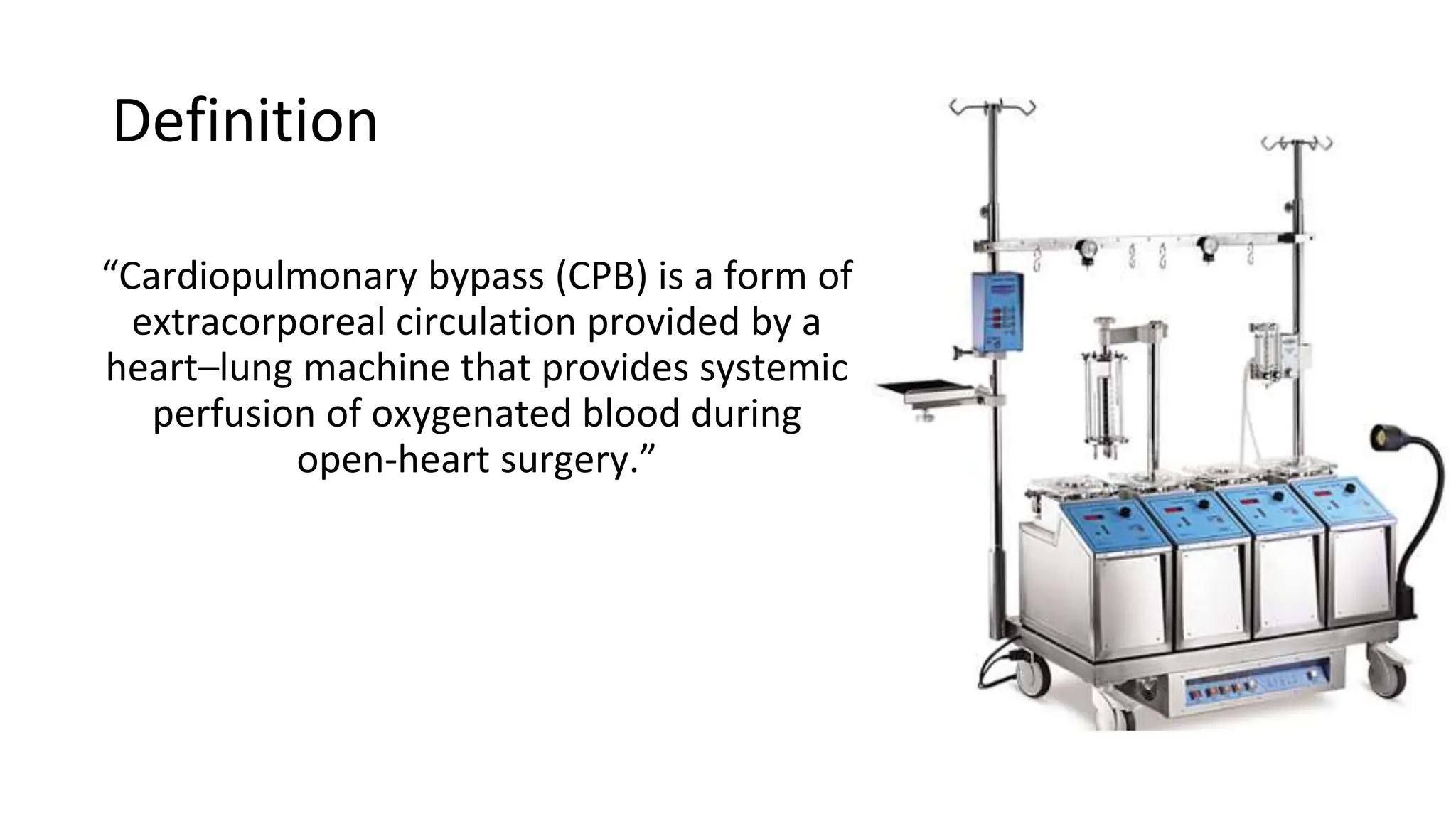
Definition
“Cardiopulmonary bypass (CPB) is a form of
extracorporeal circulation provided by a
heart–lung machine that provides systemic
perfusion of oxygenated blood during
open‐heart surgery.”
Introduction
• Extracorporeal circuit to oxygenated systemic blood flow to replace
heart and lung
• Main function
• Oxygenation
• Perfusion
• Temperature control
• Autologous re-transfusion
• Achieve physiological heart and lung function mechanically
• Provide 60-80% resting CO
Mechanical principal
Risk of Complication
• Blood Cascades Activation
1. Coagulation
2. Complement
3. Systemic inflammatory response
• Hemolysis
• Endothelial-based reaction
• Platelet adhesion
• Aggregation
• Activation (and leucocyte adhesion)
• Inflammatory response
Bojar, R. (2011). Manual of perioperative care in adult cardiac surgery 5th edition. USA: Wiley-Blackwell.
Complication
• Neurocognitive impairment
• Pulmonary dysfunction
• Renal impairment
• Myocardial reperfusion damage
• Generalized capillary leakage
• Low Cardiac Output Syndrome
Avoid complication
• Membrane oxygenator usage
• Biocompatible circuits
• Centrifugal pumps
• Steroids
• Minimal red cell transfusion
• Minimal cardiotomy suction usage
Bojar, R. (2011). Manual of perioperative care in adult cardiac surgery 5th edition. USA: Wiley-Blackwell.
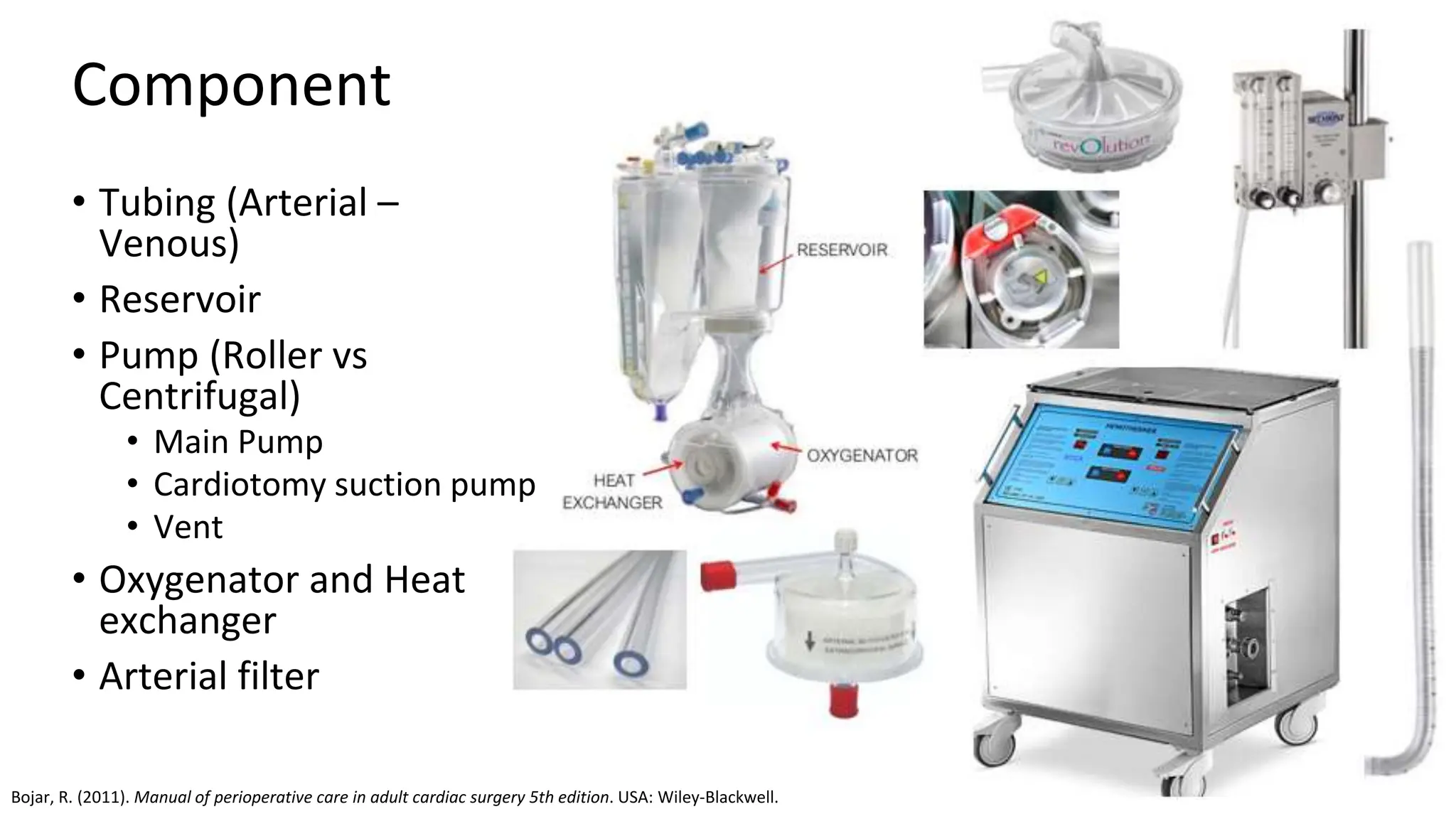
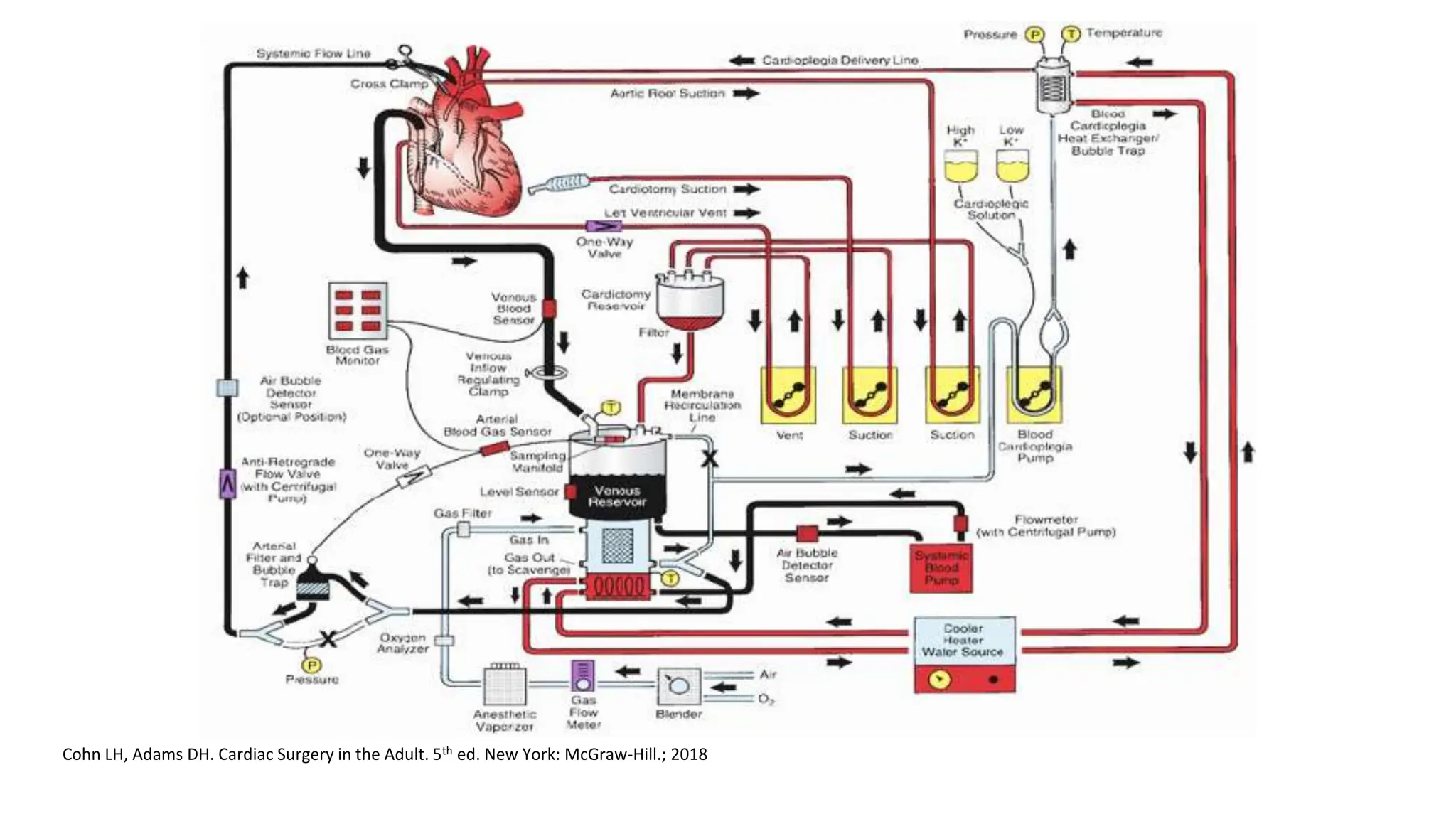
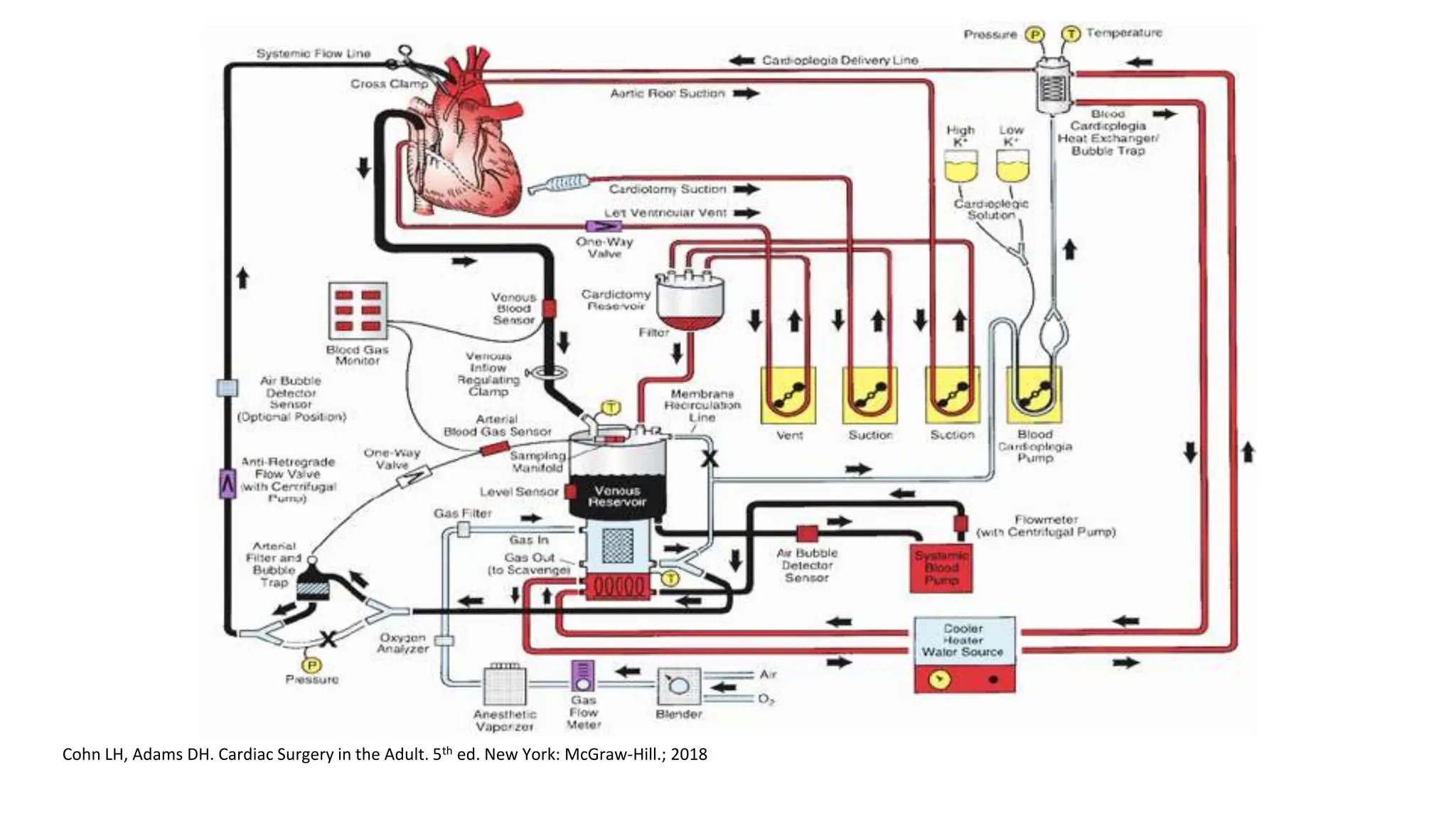
Component
• Tubing (Arterial –
Venous)
• Reservoir
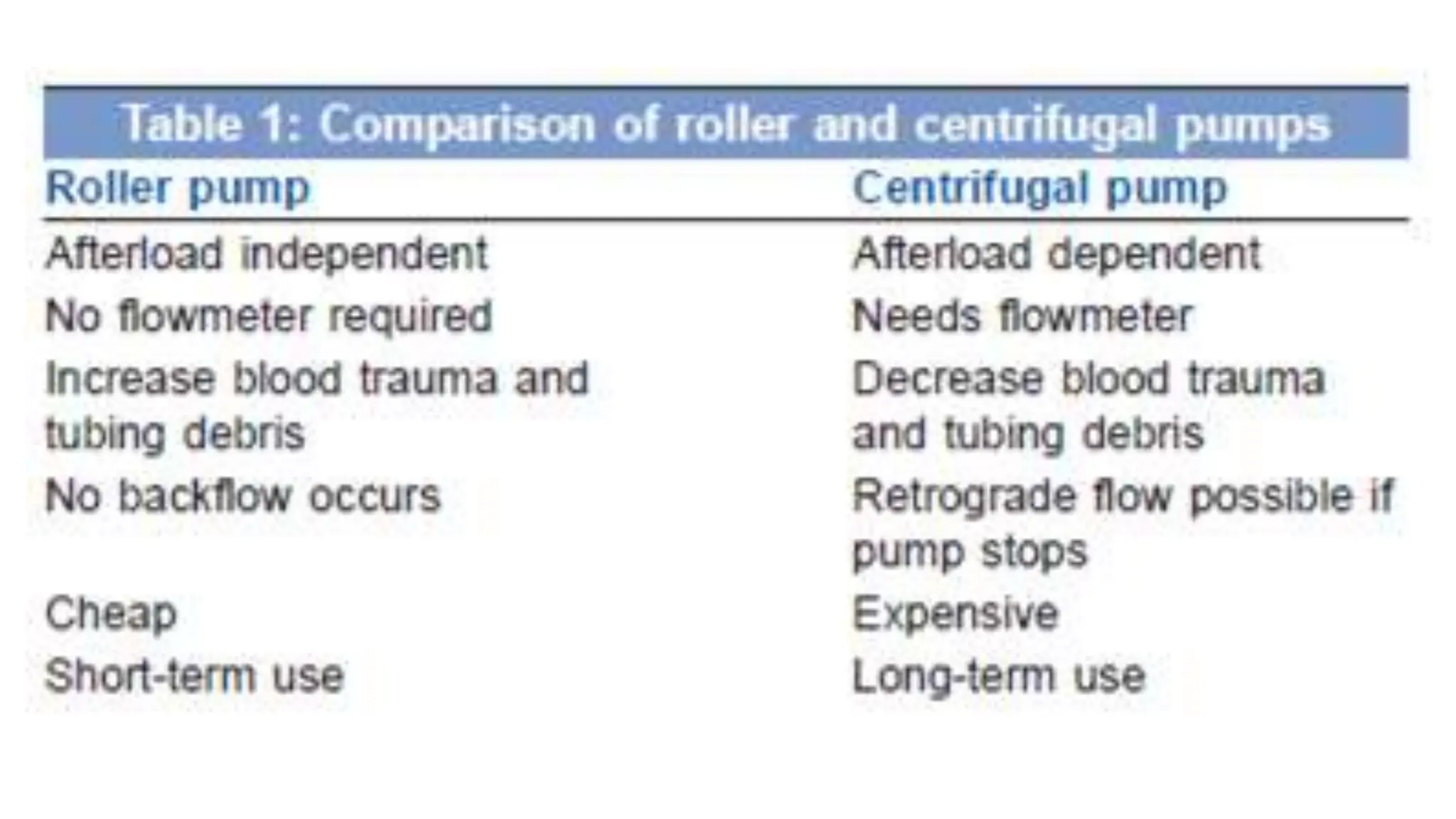
• Pump (Roller vs
Centrifugal)
• Main Pump
• Cardiotomy suction pump
• Vent
• Oxygenator and Heat
exchanger
• Arterial filter
Bojar, R. (2011). Manual of perioperative care in adult cardiac surgery 5th edition. USA: Wiley-Blackwell.
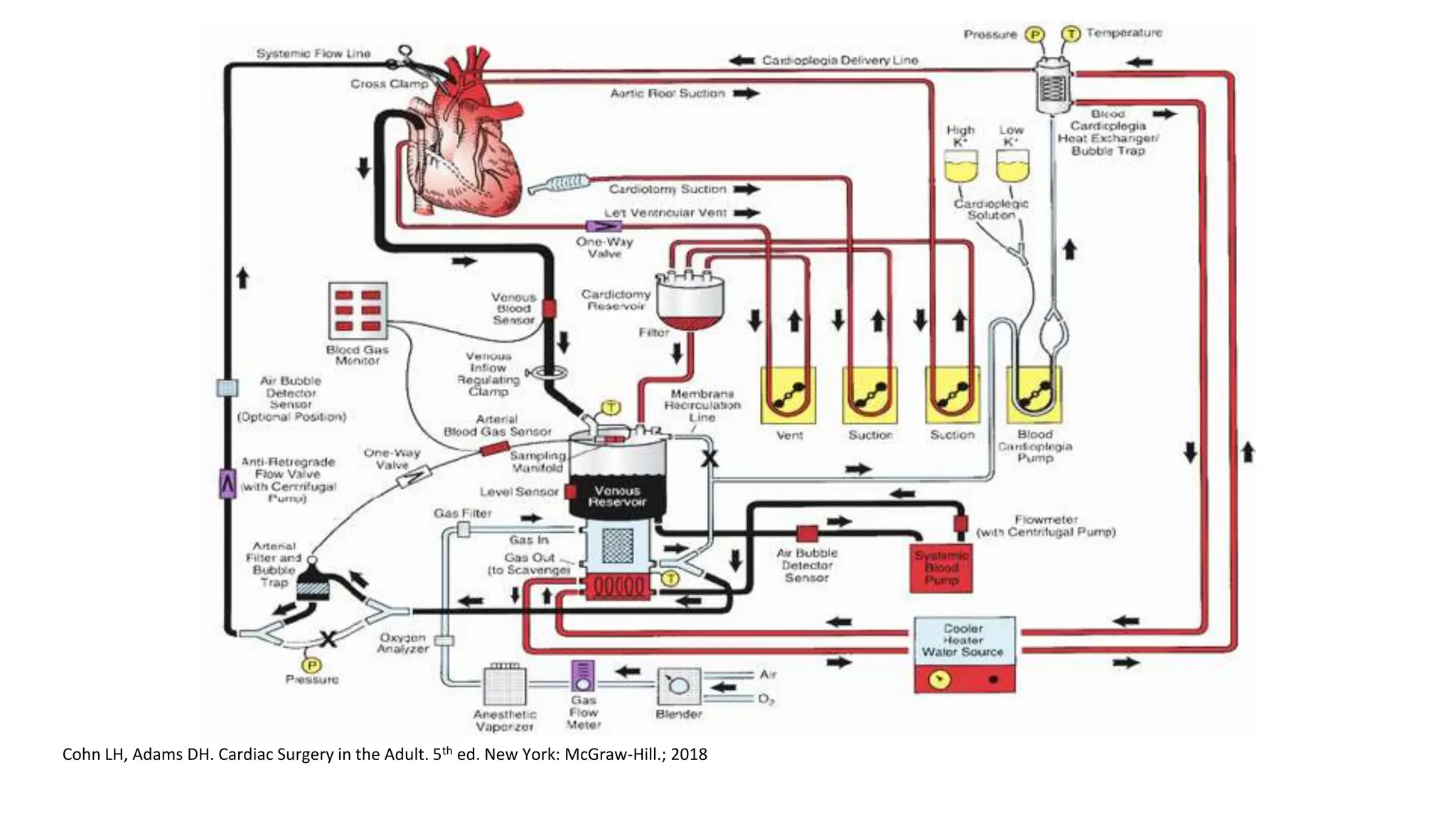
Cohn LH, Adams DH. Cardiac Surgery in the Adult. 5th ed. New York: McGraw-Hill.; 2018
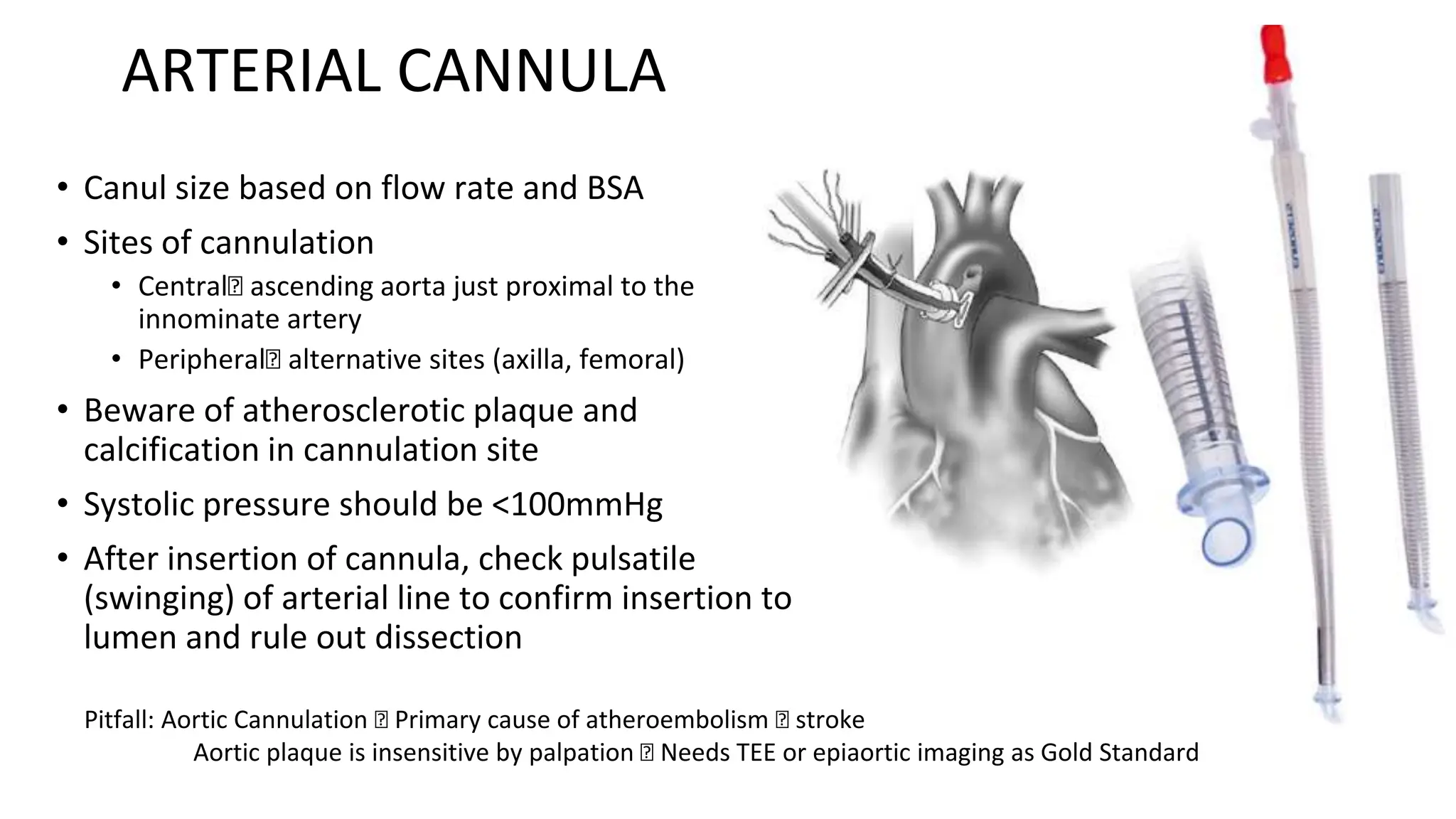
ARTERIAL CANNULA
• Canul size based on flow rate and BSA
• Sites of cannulation
• Central🡪 ascending aorta just proximal to the
innominate artery
• Peripheral🡪 alternative sites (axilla, femoral)
• Beware of atherosclerotic plaque and
calcification in cannulation site
• Systolic pressure should be <100mmHg
• After insertion of cannula, check pulsatile
(swinging) of arterial line to confirm insertion to
lumen and rule out dissection
Pitfall: Aortic Cannulation 🡪 Primary cause of atheroembolism 🡪 stroke
Aortic plaque is insensitive by palpation 🡪 Needs TEE or epiaortic imaging as Gold Standard
• Types:
• Right angled 🡪 prevent perforating posterior
wall of aorta
• Straight 🡪 prevent selective arch vessel
perfusion but could perforate posterior wall
• Beveled tip 🡪 easier insertion, high pressure
gradient at tip
• Diffusion🡪 less pressure gradient, better
perfusion, relative difficult insertion
Ismail A, Ohri S, Miskolczi S. Three-Minute Review: Essentials of Cardiopulmonary Bypass. May 2018. doi:10.25373/ctsnet.6205661.
Venous cannulation
• Methods of cannulation: cavoatrial (two-stage),
bicaval
• Cavoatrial🡪 cannulation via right atrial appendage
• Drainage of right heart
• Can be used for aortic valve or coronary artery surgery
• Bicaval🡪 cannulation on SVC and IVC
• Total CPB🡪 eliminate venous return to RA
• Prevent blood on operation field, and prevent air entry
to system
• Tricuspid valve surgery or mitral valve
Bojar RM. Manual Perioperative Care in Adult Cardiac Surgery. 6th ed. Oxford: Blackwell Publishing; 2020
Chikwe J, Cook DT, Weiss A. Oxford Specialist Handbook of Cardiothoracic Surgery. 2nd ed. Oxford: Oxford University Press; 2013.
Cohn LH, Adams DH. Cardiac Surgery in the Adult. 5th ed. New York: McGraw-Hill.; 2018
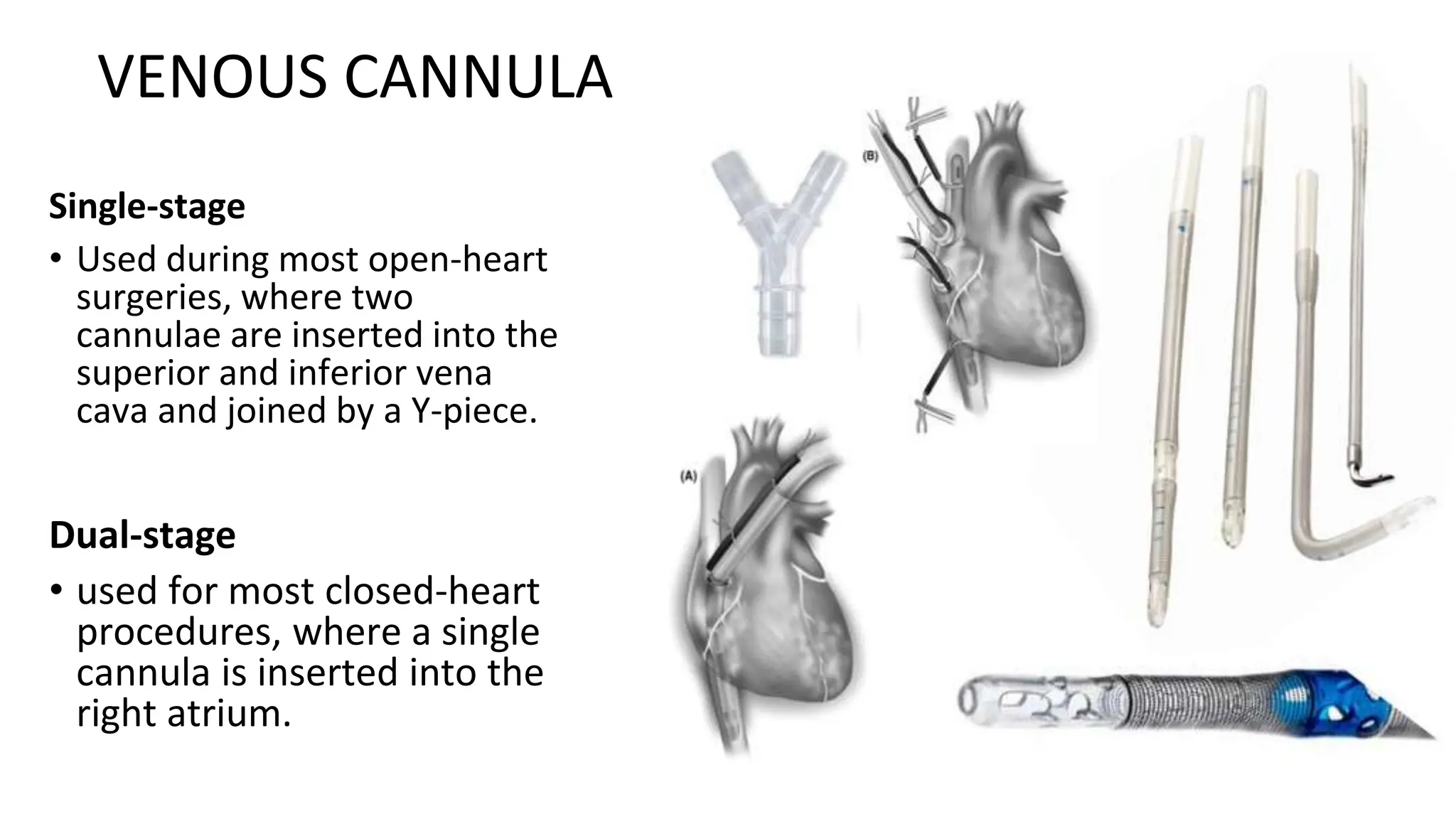
VENOUS CANNULA
Single-stage
• Used during most open-heart
surgeries, where two
cannulae are inserted into the
superior and inferior vena
cava and joined by a Y-piece.
Dual-stage
• used for most closed-heart
procedures, where a single
cannula is inserted into the
right atrium.
▪ Types and Sizes
Bojar RM. Manual Perioperative Care in Adult Cardiac Surgery. 6th ed.
Oxford: Blackwell Publishing; 2020
Cohn LH, Adams DH. Cardiac Surgery in the Adult. 5th ed. New York: McGraw-Hill.; 2018
Venous Line and Cardiotomy Reservoir
• PVC Tubing
• Drain blood from Right Atrium (Unicaval cannulation)
or SVC and IVC (Bicaval Cannulation)
• Gravity dependent or vacuum assisted (max pressure
minus 60 mmHg)
• Venous drainage should be faster than atrial filling 🡪
Emptying atrium
• Reservoir
• A Plastic container with volume measurement
• Placed approximately 50-70cm below the heart
• Open or Closed System
• Should be filled by at least 200 ml 🡪 Waterfall effect
RESERVOIR
Open reservoirs
- Allow passive removal of entrained
venous air along with the option of
applying vacuum to assist drainage.
- More inflammatory reaction
- Contained integrated cardiotomy
and defoaming circuit to process
suctioned blood.
Closed reservoirs
- have a limited volume capacity, but
offer a smaller area of blood
contact with artificial surfaces.
- Less inflammatory reaction
- Need separate circuit for suctioned
blood
• Collecting chamber of blood from the heart
• Placed 50-70 cm below heart 🡪 drainage through gravity
Cohn LH, Adams DH. Cardiac Surgery in the Adult. 5th ed. New York: McGraw-Hill.; 2018
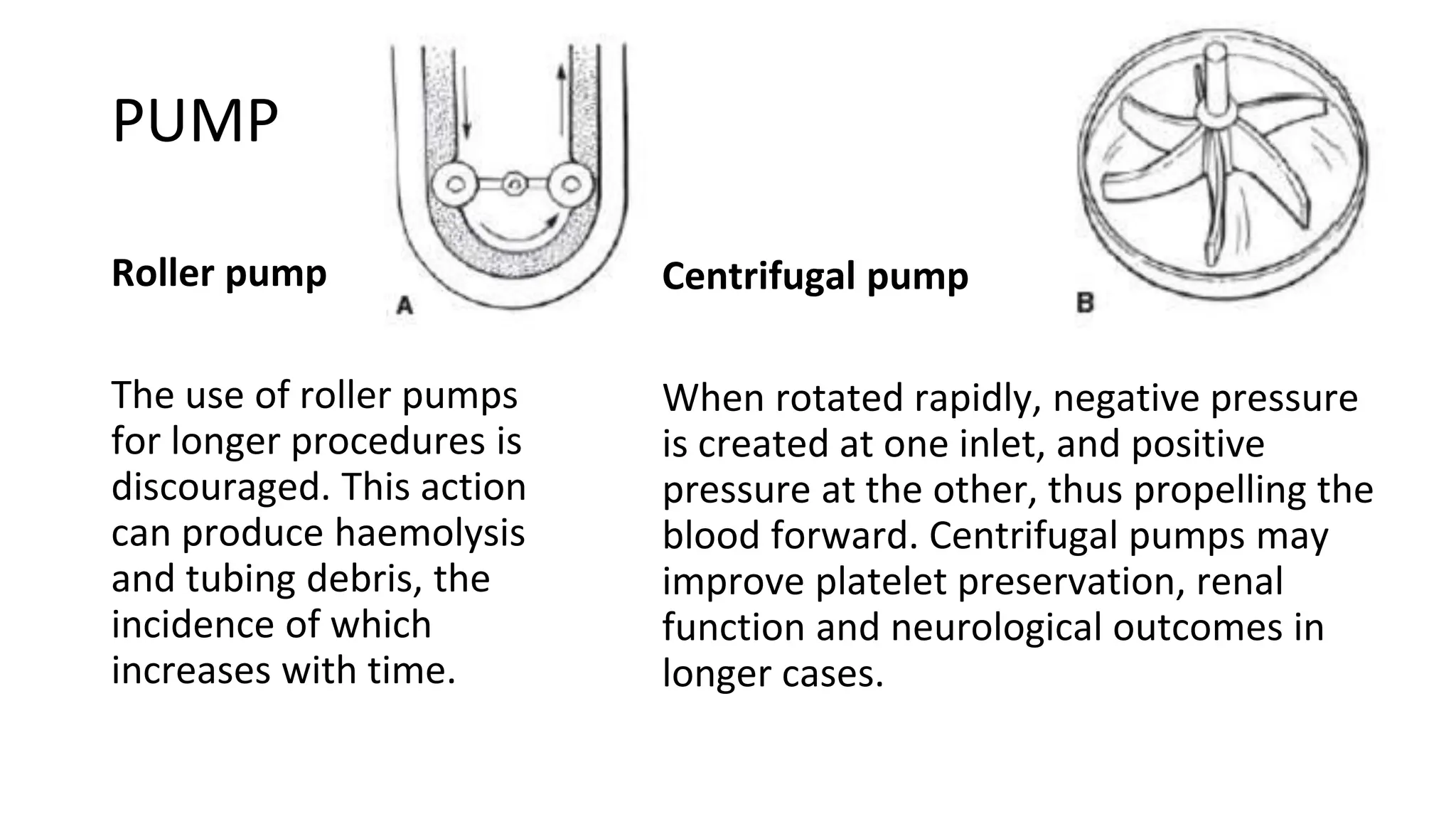
PUMP
Roller pump
The use of roller pumps
for longer procedures is
discouraged. This action
can produce haemolysis
and tubing debris, the
incidence of which
increases with time.
Centrifugal pump
When rotated rapidly, negative pressure
is created at one inlet, and positive
pressure at the other, thus propelling the
blood forward. Centrifugal pumps may
improve platelet preservation, renal
function and neurological outcomes in
longer cases.
Cohn LH, Adams DH. Cardiac Surgery in the Adult. 5th ed. New York: McGraw-Hill.; 2018
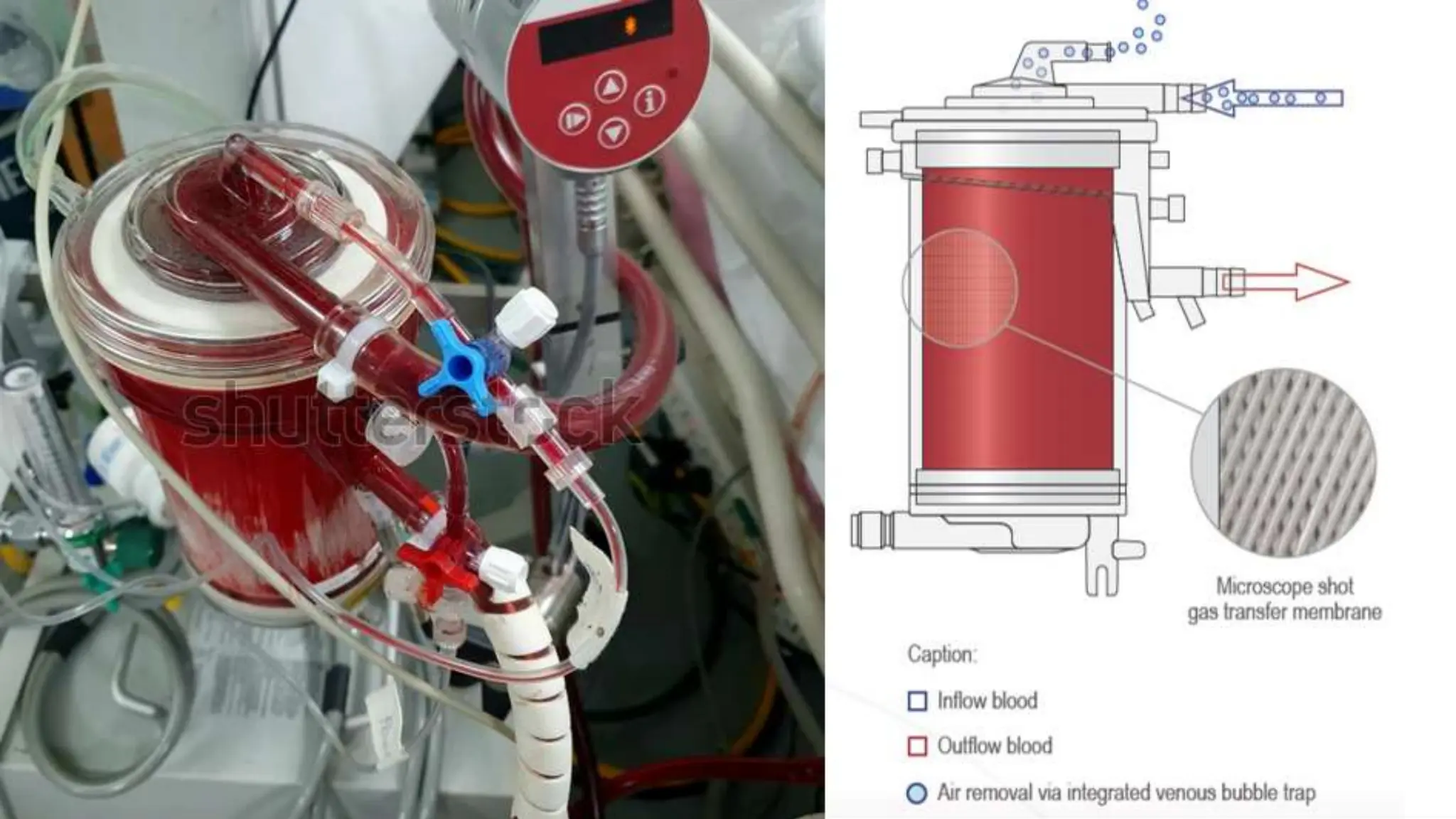
OXYGENATOR & HEAT EXCHANGER
• Membrane oxygenators consist
of hollow microporous
polypropylene fibres (100–200
μm internal diameter). Blood
flows outside the fibre while
gases pass inside the fibre, thus
separating the blood and gas
phases.
• A heat exchanger is
integrated with the
oxygenator and placed
proximal to it to reduce the
release of gaseous emboli
due to alterations in the
temperature of saturated
blood.
Cohn LH, Adams DH. Cardiac Surgery in the Adult. 5th ed. New York: McGraw-Hill.; 2018
Haemofilters
• Haemofilters (haemoconcentrators or
ultrafilters) are utilized in CPB to remove
excess fluid and electrolytes, removes
inflammatory mediators and raise
haematocrit.
• Consist of a hollow-fibre semipermeable
membrane to allow the passage of water
and electrolytes from the blood to a
filtrate compartment.
• Conventional ultrafiltration
(haemoconcentration) and zero balance
ultrafiltration (filtrate replaced with
equal crystalloid volume) can be
performed during CPB
• Modified ultrafiltration (MUF) can be
initiated at the termination of CPB.
• Study by Grist et al in 2011 showed that
typically there is a 5-10% haematocrit
increase and the clotting factors are
concentrated and more effective at
reducing bleeding.
Cohn LH, Adams DH. Cardiac Surgery in the Adult. 5th ed. New York: McGraw-Hill.; 2018
Myocardial Protection
Bloodless, still surgical field
Protect against ischemic and reperfusion injury
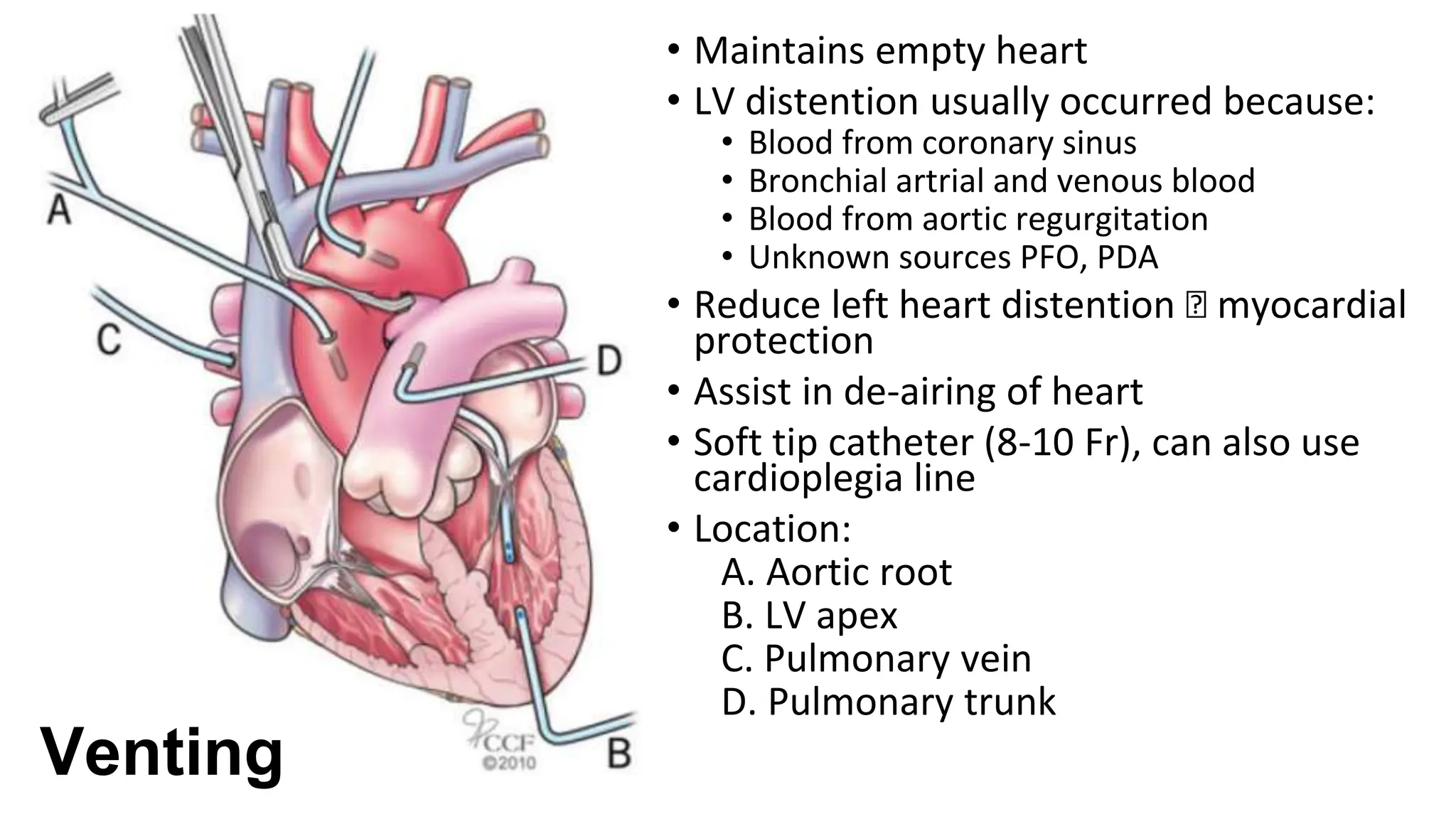
Venting
• Maintains empty heart
• LV distention usually occurred because:
• Blood from coronary sinus
• Bronchial artrial and venous blood
• Blood from aortic regurgitation
• Unknown sources PFO, PDA
• Reduce left heart distention 🡪 myocardial
protection
• Assist in de-airing of heart
• Soft tip catheter (8-10 Fr), can also use
cardioplegia line
• Location:
A. Aortic root
B. LV apex
C. Pulmonary vein
D. Pulmonary trunk
Cannulation for cardioplegia
Bojar RM. Manual Perioperative Care in Adult Cardiac Surgery. 6th ed. Oxford: Blackwell Publishing; 2020
▪ Cardioplegia is a method of myocardial protection
where the heart is perfused with a solution to cause
electromechanical arrest which reduces myocardial
oxygen consumption.
▪ Can be crystalloid (cold) or blood-based (warm or
cold) around 4-37 celcius degree.
▪ Can be given continuously or intermittently.
▪ Potassium-based solutions are commonly used.
▪ Could be :
▪ Antegrade : in aortic root just proximal to the
position of aortic cross clamp
▪ Retrograde : purse string suture in atrial free wall,
cannula in CS
Cardioplegia
• Diastolic arrest solution🡪 reduce oxygen demand
to nearly 90%
• contain + 20-25 mEq/L KCl🡪 reduction of myocardial
membrane potential
• Need maintenance and readministration
every 15-20 minutes with lower mEq
• 2 types: extracellular & intracellular
• Blood cardioplegia🡪 O2, act as natural buffer
agents, antioxidants; more superior for myocardial
protection
• Normothermic🡪 continuous infusion
• Cold cardioplegia🡪 intermittent
• Method:
• Antegrade 🡪 via aortic root flow 250-300mL/min
• Retrograde🡪 insertion to coronary sinus flow
200mL/min
• Induction 20ml/kgBW 🡪 4 mins
• Maintenance 10ml/kgBW 🡪 2 mins
• Usualy 4oC for cold cardioplegia
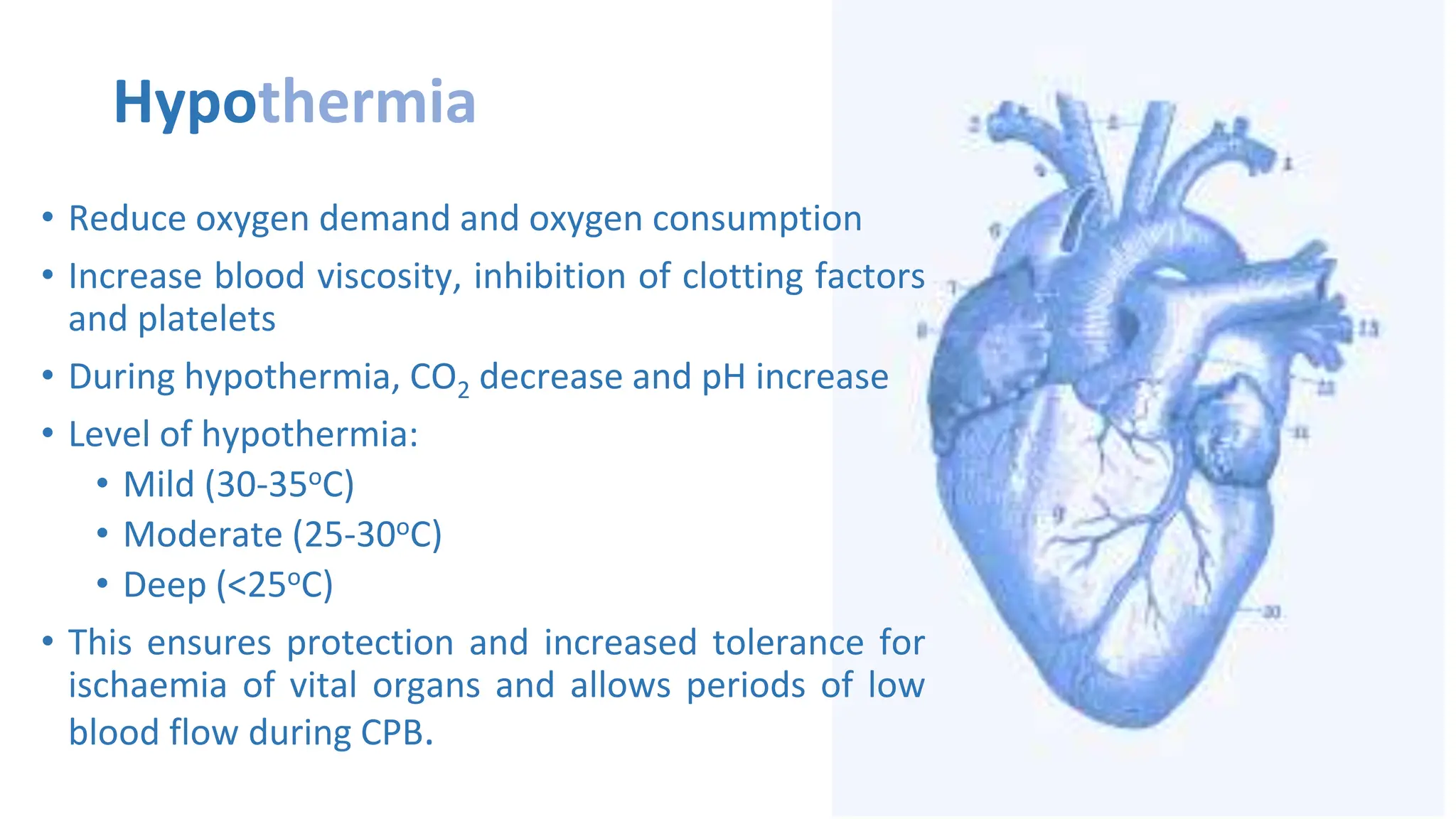
Hypothermia
• Reduce oxygen demand and oxygen consumption
• Increase blood viscosity, inhibition of clotting factors
and platelets
• During hypothermia, CO2 decrease and pH increase
• Level of hypothermia:
• Mild (30-35oC)
• Moderate (25-30oC)
• Deep (<25oC)
• This ensures protection and increased tolerance for
ischaemia of vital organs and allows periods of low
blood flow during CPB.
Conduct and weaning bypass
Initiating bypass
1. Establish circuit : set up, priming, and heparinization
2. Start CPB (on bypass)
3. Evaluate
4. Stop the heart and lung
Ismail A, Ohri S, Miskolczi S. Three-Minute Review: Essentials of Cardiopulmonary Bypass. May 2018. doi:10.25373/ctsnet.6205661.
Initiation – Establish Circuit
• Set Up and Check Patient BSA, CI, and CO conversion
• Priming
• Approximately 1500 ml of Ringer Lactate or Ringerfundin (or NS for CKD pt to reduce K+ load)
• Level the reservoir and de-air the tube (avoid air embolism and air lock)
• Colloid 🡪 Albumin or Mannitol
• Cross-matched blood or Retrograde Autologous Priming (RAP)
• Steroids
• Heparinization
• 10 000 unit for the circuit
• Initial dose 3 – 4 mg/kgBW for the patient
• ACT Target >480 to start fully on CPB; Checked every 30 mins
• Reversed by Protamine administration, dose 1:1 to heparin for pt
• Heparin resistance —> AT III def?? 🡪 hypercoag state. Causes: heparin preop, nitrogylcerin, or high pt
counts. Add 1-2mg/kg BB heparin, Transfusion of FFP (2-4 units) or AT III product (500 IU per vial)
• History of Heparin induced Tormbositopenia —> alternative anticoag: bivalirudin, lepirudin, argatroban
• Occlusion Check
Starting the Bypass
• De-air the line by tapping the connector to dislodge the air bubbles, clamp and
divide arterial and venous line 🡪 ensure pump is off
• Connect arterial cannula to arterial line
• Partial release of cannula to fill it with blood 🡪 de-airing cannula
• Ask perfusionist to flow the line to get rid of air then connect both tubes
• Perfusionist check the swing and pressure of arterial line
• Connect venous cannula to venous line
• Check ACT level if > 400 then remove all clamp
• “GO ON BYPASS”
• Perfusionist will gradually increased flow until 2.2 L/min/m2
• Cooling down temperature until 32oC
• Anaesthesiologist can stop ventilation
Pressure and Flow
• Flow 2.0 - 2.4L/min/m2 normothermia
• 1.7-2.0 low flow 30oC increase myocardial protection
• MAP target 50-70 mmHg
• dropped when cardioplegia administration, rewarming, cardiotomy suction
pumped back
• Higher pressure target in HT or DM due to impaired brain autoregulation
• Use vasoconstrictor but not too much
• Vasoplegia phenomenon in pt using ACE/ARB/Amiodarone/CCB —>
refractory hypotension —> vasopressin/methylene blue
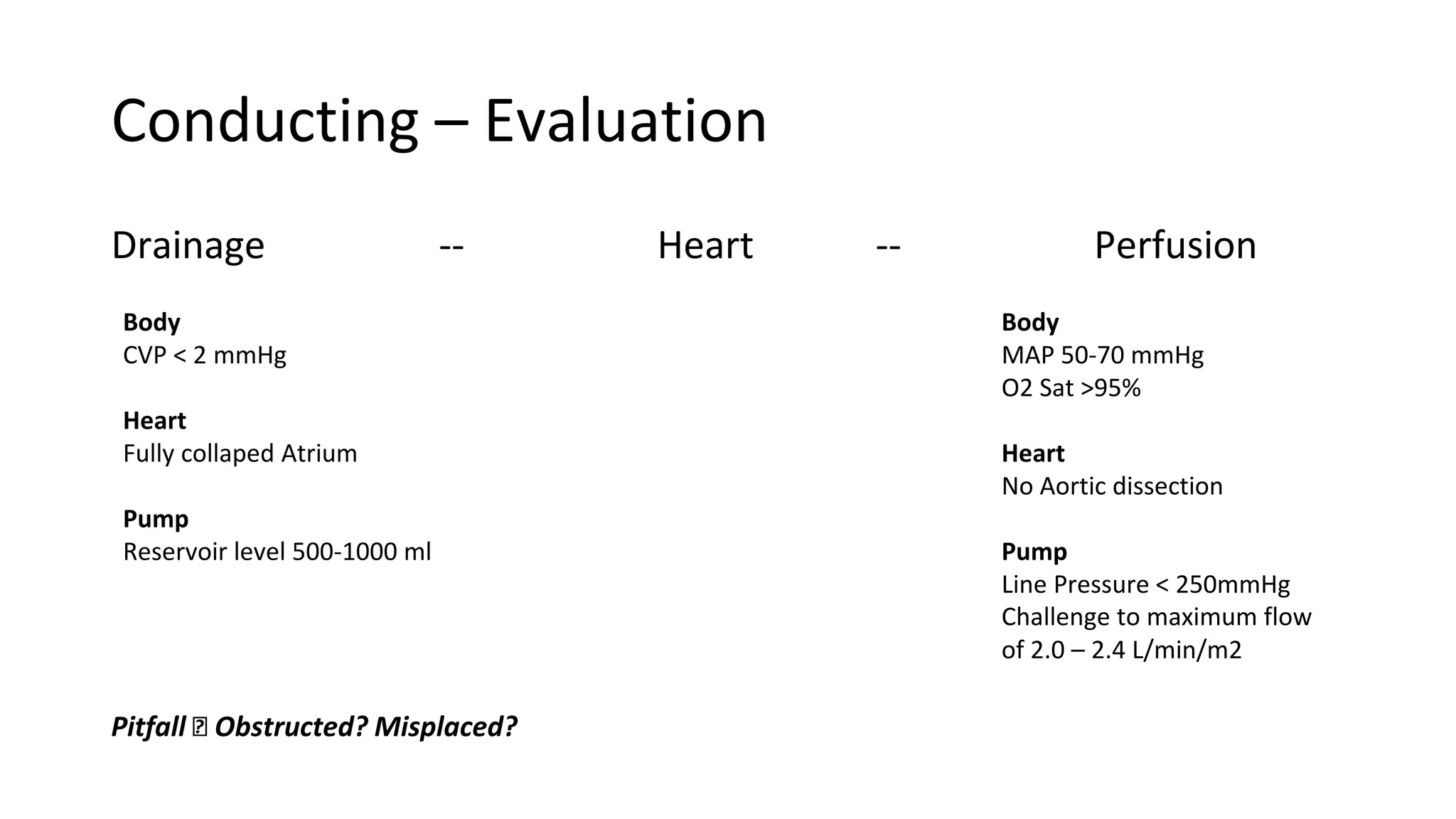
Drainage -- Heart -- Perfusion
Conducting – Evaluation
Pitfall 🡪 Obstructed? Misplaced?
Body
CVP < 2 mmHg
Heart
Fully collaped Atrium
Pump
Reservoir level 500-1000 ml
Body
MAP 50-70 mmHg
O2 Sat >95%
Heart
No Aortic dissection
Pump
Line Pressure < 250mmHg
Challenge to maximum flow
of 2.0 – 2.4 L/min/m2
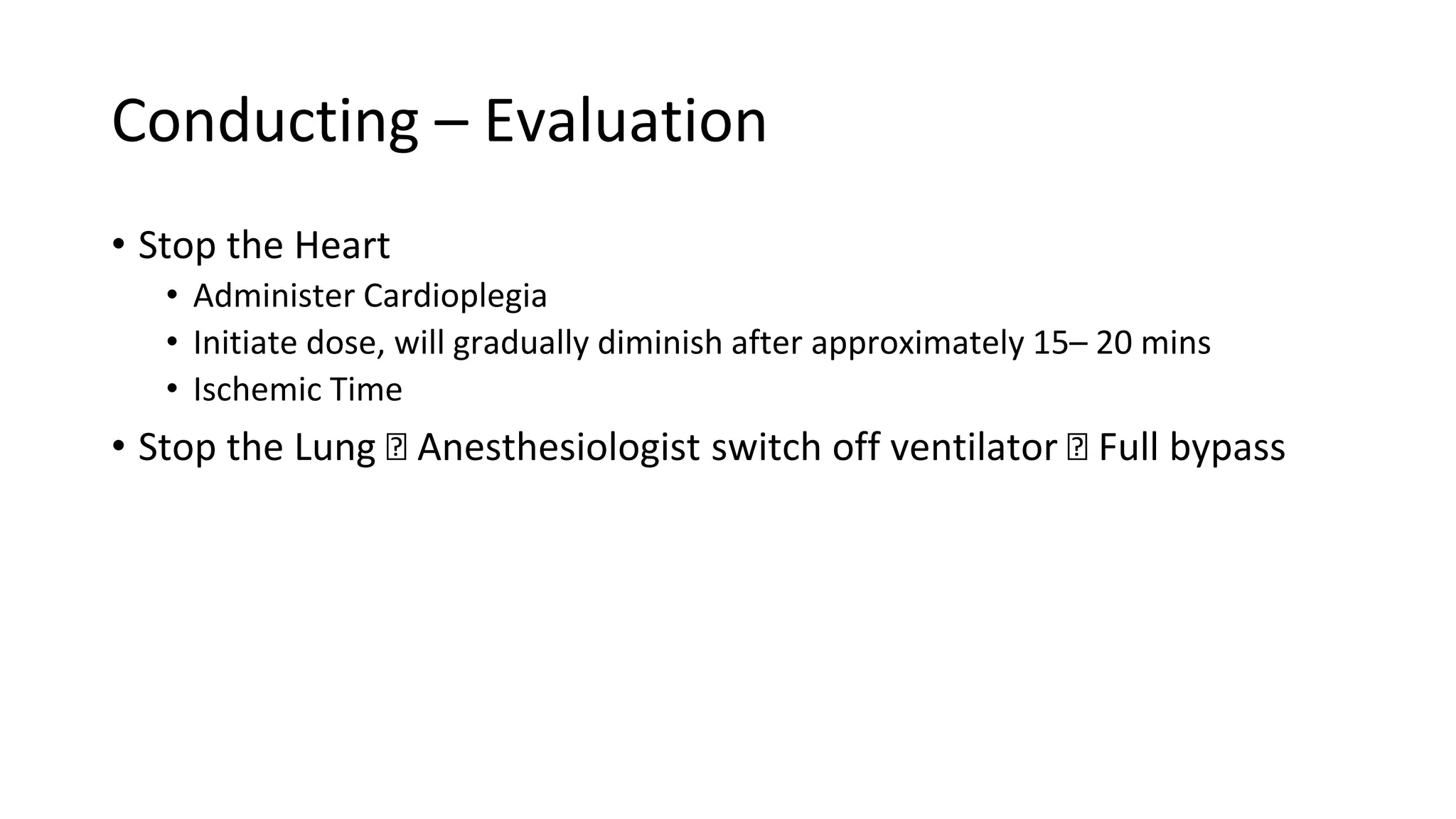
Conducting – Evaluation
• Stop the Heart
• Administer Cardioplegia
• Initiate dose, will gradually diminish after approximately 15– 20 mins
• Ischemic Time
• Stop the Lung 🡪 Anesthesiologist switch off ventilator 🡪 Full bypass
Monitoring during CPB
• Systemic pressure and flow
• Flow at 2.2 – 2.4 L/min/m2 at normothermic; can be reduced to 1.5-1.7
L/min/m2 for moderate hypothermia
• Reduce flow if distention occur and reposition venous cannula
• Maintain systemic pressure at + 50 mmHg
• Increase flow during rewarming 🡪 increased metabolism and oxygen
demand
• Arterial oxygen
• Maintain PaO2 at 150-200mmHg🡪 adjustment by FiO2
• Venous oxygen 65% ensure adequate oxygenation
• Can also assessed by base deficit or lactic acid level
• Glucose level 🡪 <180mmHg; high glucose may aggravate neurological injury
During Bypass
EVALUATE
- ACT
- ABG and electrolyte
- PaO2 150 – 200 mmHg
- SvO2 >70%
- Lactic Acid Level
- GDS <180 mg/dL
- MAP 50 – 70 mmHg
- Body Temp
• Mild (30-35oC)
• Moderate (25-30oC)
• Deep (<25oC)
Bojar RM. Manual Perioperative Care in Adult Cardiac Surgery. 5th ed. Oxford: Blackwell Publishing; 2011
Chikwe J, Cook DT, Weiss A. Oxford Specialist Handbook of Cardiothoracic Surgery. 2nd ed. Oxford: Oxford University Press; 2013.
CONDUCT
WEANING
ESTABLISHED THE CIRCUITS
DISMANTLED THE CIRCUITS
STOP THE HEART AND LUNGS
RESTART THE HEART AND
LUNGS
ON BY PASS
CHECK PARAMETERS
CHECK PARAMETERS
OFF BY PASS
Weaning – Evaluation
• No condition require CPB
• Graft failure
• Valve failure
• Well de-aired
• Normal body Temp
• Normal ABG, K+, and O2
• Satisfactory Pressure and Oxygenation/Ventilation
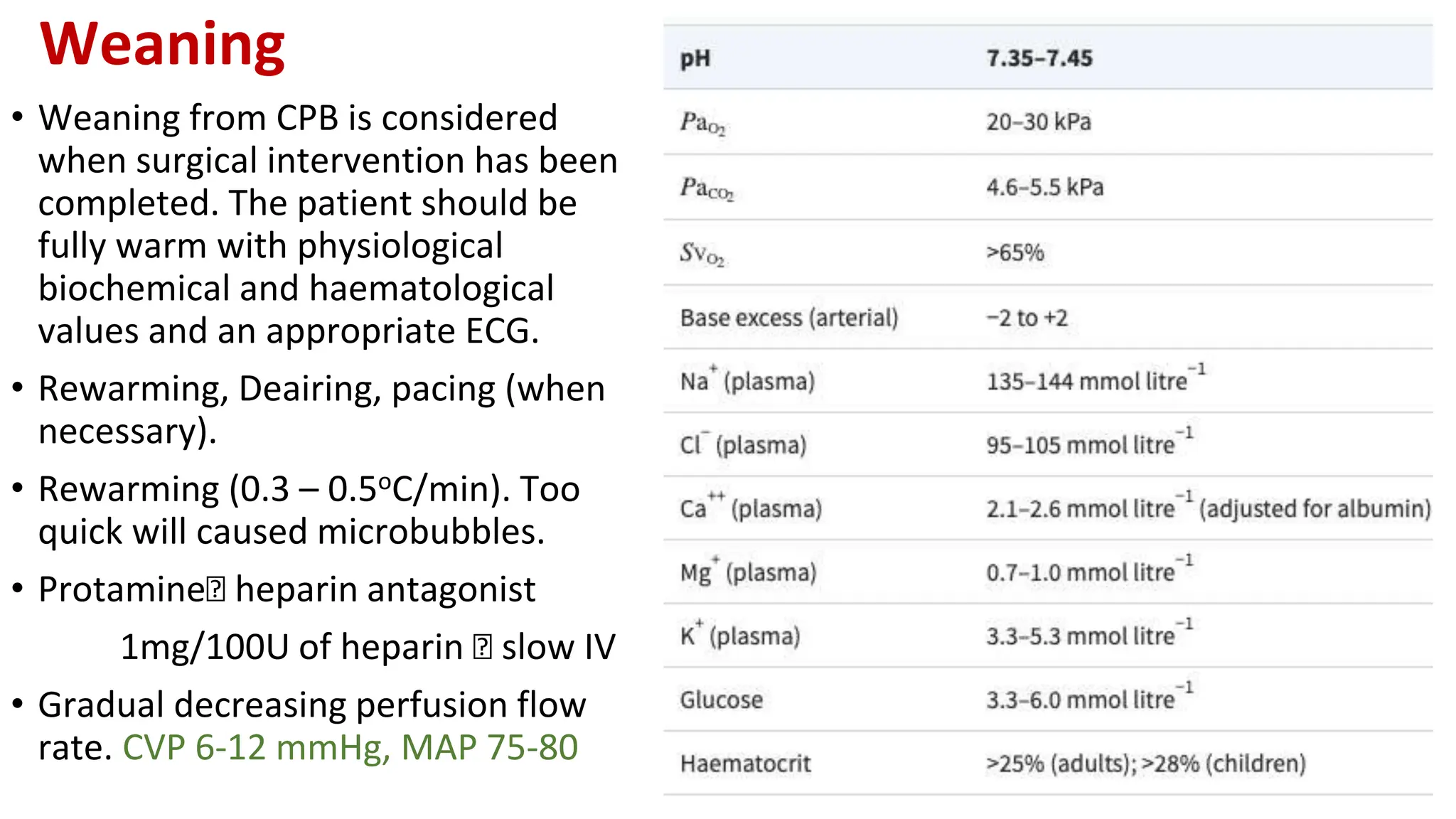
Weaning
• Weaning from CPB is considered
when surgical intervention has been
completed. The patient should be
fully warm with physiological
biochemical and haematological
values and an appropriate ECG.
• Rewarming, Deairing, pacing (when
necessary).
• Rewarming (0.3 – 0.5oC/min). Too
quick will caused microbubbles.
• Protamine🡪 heparin antagonist
1mg/100U of heparin 🡪 slow IV
• Gradual decreasing perfusion flow
rate. CVP 6-12 mmHg, MAP 75-80
De-airing the heart
• Ask perfusionist to fill the heart, partial
clamp of venous line
• Vent aortic root
• Manually blow the lung to dispel air
• Agitate the heart to dislodge air
(LA, RV, aorta). LV vent at 300mL/min.
• Patient head-down
• Reduce flow when aortic clamp is
released and continue LV vent
• Removed LV vent when lung is inflated,
CVP slowly increased
• Shake LV gently, defib if heart is not
beating
• Heart begin to eject, reduce CPB flow
1. Venous Cannula Out 🡪 Pursed string stitch
2. Aortic Root Vent Out
3. Aortic Cannula 🡪 After protamine and good parameter achieved
Precaution of protamine reaction (Horrow Classification)
• I: hypotension from rapid administration.
• II: anaphylactic reactions.
• III: catastrophic pulmonary vasoconstriction.
Weaning – Dismantle Circuits
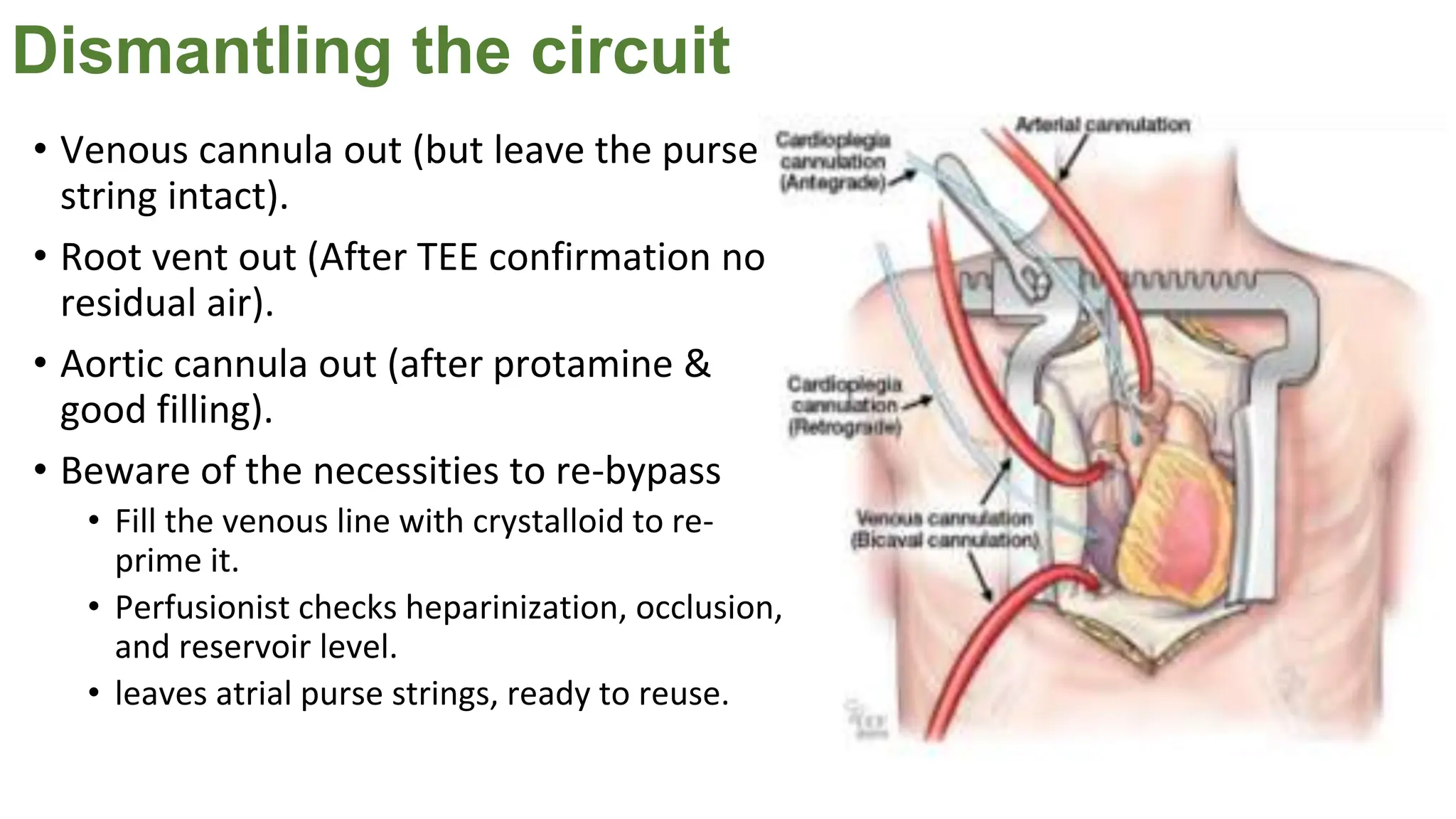
Dismantling the circuit
• Venous cannula out (but leave the purse
string intact).
• Root vent out (After TEE confirmation no
residual air).
• Aortic cannula out (after protamine &
good filling).
• Beware of the necessities to re-bypass
• Fill the venous line with crystalloid to re-
prime it.
• Perfusionist checks heparinization, occlusion,
and reservoir level.
• leaves atrial purse strings, ready to reuse.
References
• Bojar RM. Manual Perioperative Care in Adult Cardiac Surgery. 5th ed. Oxford: Blackwell Publishing; 2011
• Sarkar M, Prabhu V. Basics of cardiopulmonary bypass. Indian J Anaesth 2017;61:760-7.
• Mavroudis C, Backer C. Pediatric Cardiac Surgery. 4th ed. Oxford: Blackwell Publishing.; 2013
• Gravlee, G., Davis, R., Hammon, J. and Kussman, B. (2016). Cardiopulmonary bypass and mechanical
circulatory support. Philadelphia: Wolters Kluwer.
• Cohn LH, Adams DH. Cardiac Surgery in the Adult. 5th ed. New York: McGraw-Hill.; 2018
• Kouchokos NT, Blackstone EH, Hanley FL, Kirklin JK. Kirklin Barrat-Boyes Cardiac Surgery. 4th ed.
Philadelphia: Elsevier Saunders; 2013.
• Machin D, Allsager C. Principles of cardiopulmonary bypass. Continuing Education in Anaesthesia Critical
Care & Pain. 2006;6(5):176-81.
• Ismail A, Ohri S, Miskolczi S. Three-Minute Review: Essentials of Cardiopulmonary Bypass. May 2018.
doi:10.25373/ctsnet.6205661.
• Ismail A, Miskolczi SY. Cardiopulmonary Bypass. [Updated 2019 Feb 24]. In: StatPearls [Internet].
Treasure Island (FL): StatPearls Publishing; 2020 Jan-. Available from:
https://www.ncbi.nlm.nih.gov/books/NBK482190/
THANK YOU

Cardio-Pulmonary Bypass: A Brief Overview

  • 1.
  • 2.
    Definition “Cardiopulmonary bypass (CPB)is a form of extracorporeal circulation provided by a heart–lung machine that provides systemic perfusion of oxygenated blood during open‐heart surgery.”
  • 3.
    Introduction • Extracorporeal circuitto oxygenated systemic blood flow to replace heart and lung • Main function • Oxygenation • Perfusion • Temperature control • Autologous re-transfusion • Achieve physiological heart and lung function mechanically • Provide 60-80% resting CO
  • 4.
  • 5.
    Risk of Complication •Blood Cascades Activation 1. Coagulation 2. Complement 3. Systemic inflammatory response • Hemolysis • Endothelial-based reaction • Platelet adhesion • Aggregation • Activation (and leucocyte adhesion) • Inflammatory response Bojar, R. (2011). Manual of perioperative care in adult cardiac surgery 5th edition. USA: Wiley-Blackwell.
  • 6.
    Complication • Neurocognitive impairment •Pulmonary dysfunction • Renal impairment • Myocardial reperfusion damage • Generalized capillary leakage • Low Cardiac Output Syndrome
  • 7.
    Avoid complication • Membraneoxygenator usage • Biocompatible circuits • Centrifugal pumps • Steroids • Minimal red cell transfusion • Minimal cardiotomy suction usage Bojar, R. (2011). Manual of perioperative care in adult cardiac surgery 5th edition. USA: Wiley-Blackwell.
  • 8.
    Component • Tubing (Arterial– Venous) • Reservoir • Pump (Roller vs Centrifugal) • Main Pump • Cardiotomy suction pump • Vent • Oxygenator and Heat exchanger • Arterial filter Bojar, R. (2011). Manual of perioperative care in adult cardiac surgery 5th edition. USA: Wiley-Blackwell.
  • 9.
    Cohn LH, AdamsDH. Cardiac Surgery in the Adult. 5th ed. New York: McGraw-Hill.; 2018
  • 11.
    ARTERIAL CANNULA • Canulsize based on flow rate and BSA • Sites of cannulation • Central🡪 ascending aorta just proximal to the innominate artery • Peripheral🡪 alternative sites (axilla, femoral) • Beware of atherosclerotic plaque and calcification in cannulation site • Systolic pressure should be <100mmHg • After insertion of cannula, check pulsatile (swinging) of arterial line to confirm insertion to lumen and rule out dissection Pitfall: Aortic Cannulation 🡪 Primary cause of atheroembolism 🡪 stroke Aortic plaque is insensitive by palpation 🡪 Needs TEE or epiaortic imaging as Gold Standard
  • 12.
    • Types: • Rightangled 🡪 prevent perforating posterior wall of aorta • Straight 🡪 prevent selective arch vessel perfusion but could perforate posterior wall • Beveled tip 🡪 easier insertion, high pressure gradient at tip • Diffusion🡪 less pressure gradient, better perfusion, relative difficult insertion Ismail A, Ohri S, Miskolczi S. Three-Minute Review: Essentials of Cardiopulmonary Bypass. May 2018. doi:10.25373/ctsnet.6205661.
  • 13.
    Venous cannulation • Methodsof cannulation: cavoatrial (two-stage), bicaval • Cavoatrial🡪 cannulation via right atrial appendage • Drainage of right heart • Can be used for aortic valve or coronary artery surgery • Bicaval🡪 cannulation on SVC and IVC • Total CPB🡪 eliminate venous return to RA • Prevent blood on operation field, and prevent air entry to system • Tricuspid valve surgery or mitral valve Bojar RM. Manual Perioperative Care in Adult Cardiac Surgery. 6th ed. Oxford: Blackwell Publishing; 2020 Chikwe J, Cook DT, Weiss A. Oxford Specialist Handbook of Cardiothoracic Surgery. 2nd ed. Oxford: Oxford University Press; 2013. Cohn LH, Adams DH. Cardiac Surgery in the Adult. 5th ed. New York: McGraw-Hill.; 2018
  • 14.
    VENOUS CANNULA Single-stage • Usedduring most open-heart surgeries, where two cannulae are inserted into the superior and inferior vena cava and joined by a Y-piece. Dual-stage • used for most closed-heart procedures, where a single cannula is inserted into the right atrium.
  • 15.
    ▪ Types andSizes Bojar RM. Manual Perioperative Care in Adult Cardiac Surgery. 6th ed. Oxford: Blackwell Publishing; 2020
  • 16.
    Cohn LH, AdamsDH. Cardiac Surgery in the Adult. 5th ed. New York: McGraw-Hill.; 2018
  • 17.
    Venous Line andCardiotomy Reservoir • PVC Tubing • Drain blood from Right Atrium (Unicaval cannulation) or SVC and IVC (Bicaval Cannulation) • Gravity dependent or vacuum assisted (max pressure minus 60 mmHg) • Venous drainage should be faster than atrial filling 🡪 Emptying atrium • Reservoir • A Plastic container with volume measurement • Placed approximately 50-70cm below the heart • Open or Closed System • Should be filled by at least 200 ml 🡪 Waterfall effect
  • 18.
    RESERVOIR Open reservoirs - Allowpassive removal of entrained venous air along with the option of applying vacuum to assist drainage. - More inflammatory reaction - Contained integrated cardiotomy and defoaming circuit to process suctioned blood. Closed reservoirs - have a limited volume capacity, but offer a smaller area of blood contact with artificial surfaces. - Less inflammatory reaction - Need separate circuit for suctioned blood • Collecting chamber of blood from the heart • Placed 50-70 cm below heart 🡪 drainage through gravity
  • 19.
    Cohn LH, AdamsDH. Cardiac Surgery in the Adult. 5th ed. New York: McGraw-Hill.; 2018
  • 20.
    PUMP Roller pump The useof roller pumps for longer procedures is discouraged. This action can produce haemolysis and tubing debris, the incidence of which increases with time. Centrifugal pump When rotated rapidly, negative pressure is created at one inlet, and positive pressure at the other, thus propelling the blood forward. Centrifugal pumps may improve platelet preservation, renal function and neurological outcomes in longer cases.
  • 22.
    Cohn LH, AdamsDH. Cardiac Surgery in the Adult. 5th ed. New York: McGraw-Hill.; 2018
  • 23.
    OXYGENATOR & HEATEXCHANGER • Membrane oxygenators consist of hollow microporous polypropylene fibres (100–200 μm internal diameter). Blood flows outside the fibre while gases pass inside the fibre, thus separating the blood and gas phases. • A heat exchanger is integrated with the oxygenator and placed proximal to it to reduce the release of gaseous emboli due to alterations in the temperature of saturated blood.
  • 25.
    Cohn LH, AdamsDH. Cardiac Surgery in the Adult. 5th ed. New York: McGraw-Hill.; 2018
  • 26.
    Haemofilters • Haemofilters (haemoconcentratorsor ultrafilters) are utilized in CPB to remove excess fluid and electrolytes, removes inflammatory mediators and raise haematocrit. • Consist of a hollow-fibre semipermeable membrane to allow the passage of water and electrolytes from the blood to a filtrate compartment. • Conventional ultrafiltration (haemoconcentration) and zero balance ultrafiltration (filtrate replaced with equal crystalloid volume) can be performed during CPB • Modified ultrafiltration (MUF) can be initiated at the termination of CPB. • Study by Grist et al in 2011 showed that typically there is a 5-10% haematocrit increase and the clotting factors are concentrated and more effective at reducing bleeding.
  • 27.
    Cohn LH, AdamsDH. Cardiac Surgery in the Adult. 5th ed. New York: McGraw-Hill.; 2018
  • 28.
    Myocardial Protection Bloodless, stillsurgical field Protect against ischemic and reperfusion injury
  • 29.
    Venting • Maintains emptyheart • LV distention usually occurred because: • Blood from coronary sinus • Bronchial artrial and venous blood • Blood from aortic regurgitation • Unknown sources PFO, PDA • Reduce left heart distention 🡪 myocardial protection • Assist in de-airing of heart • Soft tip catheter (8-10 Fr), can also use cardioplegia line • Location: A. Aortic root B. LV apex C. Pulmonary vein D. Pulmonary trunk
  • 30.
    Cannulation for cardioplegia BojarRM. Manual Perioperative Care in Adult Cardiac Surgery. 6th ed. Oxford: Blackwell Publishing; 2020 ▪ Cardioplegia is a method of myocardial protection where the heart is perfused with a solution to cause electromechanical arrest which reduces myocardial oxygen consumption. ▪ Can be crystalloid (cold) or blood-based (warm or cold) around 4-37 celcius degree. ▪ Can be given continuously or intermittently. ▪ Potassium-based solutions are commonly used. ▪ Could be : ▪ Antegrade : in aortic root just proximal to the position of aortic cross clamp ▪ Retrograde : purse string suture in atrial free wall, cannula in CS
  • 31.
    Cardioplegia • Diastolic arrestsolution🡪 reduce oxygen demand to nearly 90% • contain + 20-25 mEq/L KCl🡪 reduction of myocardial membrane potential • Need maintenance and readministration every 15-20 minutes with lower mEq • 2 types: extracellular & intracellular • Blood cardioplegia🡪 O2, act as natural buffer agents, antioxidants; more superior for myocardial protection • Normothermic🡪 continuous infusion • Cold cardioplegia🡪 intermittent • Method: • Antegrade 🡪 via aortic root flow 250-300mL/min • Retrograde🡪 insertion to coronary sinus flow 200mL/min • Induction 20ml/kgBW 🡪 4 mins • Maintenance 10ml/kgBW 🡪 2 mins • Usualy 4oC for cold cardioplegia
  • 32.
    Hypothermia • Reduce oxygendemand and oxygen consumption • Increase blood viscosity, inhibition of clotting factors and platelets • During hypothermia, CO2 decrease and pH increase • Level of hypothermia: • Mild (30-35oC) • Moderate (25-30oC) • Deep (<25oC) • This ensures protection and increased tolerance for ischaemia of vital organs and allows periods of low blood flow during CPB.
  • 33.
  • 34.
    Initiating bypass 1. Establishcircuit : set up, priming, and heparinization 2. Start CPB (on bypass) 3. Evaluate 4. Stop the heart and lung Ismail A, Ohri S, Miskolczi S. Three-Minute Review: Essentials of Cardiopulmonary Bypass. May 2018. doi:10.25373/ctsnet.6205661.
  • 35.
    Initiation – EstablishCircuit • Set Up and Check Patient BSA, CI, and CO conversion • Priming • Approximately 1500 ml of Ringer Lactate or Ringerfundin (or NS for CKD pt to reduce K+ load) • Level the reservoir and de-air the tube (avoid air embolism and air lock) • Colloid 🡪 Albumin or Mannitol • Cross-matched blood or Retrograde Autologous Priming (RAP) • Steroids • Heparinization • 10 000 unit for the circuit • Initial dose 3 – 4 mg/kgBW for the patient • ACT Target >480 to start fully on CPB; Checked every 30 mins • Reversed by Protamine administration, dose 1:1 to heparin for pt • Heparin resistance —> AT III def?? 🡪 hypercoag state. Causes: heparin preop, nitrogylcerin, or high pt counts. Add 1-2mg/kg BB heparin, Transfusion of FFP (2-4 units) or AT III product (500 IU per vial) • History of Heparin induced Tormbositopenia —> alternative anticoag: bivalirudin, lepirudin, argatroban • Occlusion Check
  • 36.
    Starting the Bypass •De-air the line by tapping the connector to dislodge the air bubbles, clamp and divide arterial and venous line 🡪 ensure pump is off • Connect arterial cannula to arterial line • Partial release of cannula to fill it with blood 🡪 de-airing cannula • Ask perfusionist to flow the line to get rid of air then connect both tubes • Perfusionist check the swing and pressure of arterial line • Connect venous cannula to venous line • Check ACT level if > 400 then remove all clamp • “GO ON BYPASS” • Perfusionist will gradually increased flow until 2.2 L/min/m2 • Cooling down temperature until 32oC • Anaesthesiologist can stop ventilation
  • 37.
    Pressure and Flow •Flow 2.0 - 2.4L/min/m2 normothermia • 1.7-2.0 low flow 30oC increase myocardial protection • MAP target 50-70 mmHg • dropped when cardioplegia administration, rewarming, cardiotomy suction pumped back • Higher pressure target in HT or DM due to impaired brain autoregulation • Use vasoconstrictor but not too much • Vasoplegia phenomenon in pt using ACE/ARB/Amiodarone/CCB —> refractory hypotension —> vasopressin/methylene blue
  • 38.
    Drainage -- Heart-- Perfusion Conducting – Evaluation Pitfall 🡪 Obstructed? Misplaced? Body CVP < 2 mmHg Heart Fully collaped Atrium Pump Reservoir level 500-1000 ml Body MAP 50-70 mmHg O2 Sat >95% Heart No Aortic dissection Pump Line Pressure < 250mmHg Challenge to maximum flow of 2.0 – 2.4 L/min/m2
  • 39.
    Conducting – Evaluation •Stop the Heart • Administer Cardioplegia • Initiate dose, will gradually diminish after approximately 15– 20 mins • Ischemic Time • Stop the Lung 🡪 Anesthesiologist switch off ventilator 🡪 Full bypass
  • 40.
    Monitoring during CPB •Systemic pressure and flow • Flow at 2.2 – 2.4 L/min/m2 at normothermic; can be reduced to 1.5-1.7 L/min/m2 for moderate hypothermia • Reduce flow if distention occur and reposition venous cannula • Maintain systemic pressure at + 50 mmHg • Increase flow during rewarming 🡪 increased metabolism and oxygen demand • Arterial oxygen • Maintain PaO2 at 150-200mmHg🡪 adjustment by FiO2 • Venous oxygen 65% ensure adequate oxygenation • Can also assessed by base deficit or lactic acid level • Glucose level 🡪 <180mmHg; high glucose may aggravate neurological injury
  • 41.
    During Bypass EVALUATE - ACT -ABG and electrolyte - PaO2 150 – 200 mmHg - SvO2 >70% - Lactic Acid Level - GDS <180 mg/dL - MAP 50 – 70 mmHg - Body Temp • Mild (30-35oC) • Moderate (25-30oC) • Deep (<25oC) Bojar RM. Manual Perioperative Care in Adult Cardiac Surgery. 5th ed. Oxford: Blackwell Publishing; 2011 Chikwe J, Cook DT, Weiss A. Oxford Specialist Handbook of Cardiothoracic Surgery. 2nd ed. Oxford: Oxford University Press; 2013.
  • 42.
    CONDUCT WEANING ESTABLISHED THE CIRCUITS DISMANTLEDTHE CIRCUITS STOP THE HEART AND LUNGS RESTART THE HEART AND LUNGS ON BY PASS CHECK PARAMETERS CHECK PARAMETERS OFF BY PASS
  • 43.
    Weaning – Evaluation •No condition require CPB • Graft failure • Valve failure • Well de-aired • Normal body Temp • Normal ABG, K+, and O2 • Satisfactory Pressure and Oxygenation/Ventilation
  • 44.
    Weaning • Weaning fromCPB is considered when surgical intervention has been completed. The patient should be fully warm with physiological biochemical and haematological values and an appropriate ECG. • Rewarming, Deairing, pacing (when necessary). • Rewarming (0.3 – 0.5oC/min). Too quick will caused microbubbles. • Protamine🡪 heparin antagonist 1mg/100U of heparin 🡪 slow IV • Gradual decreasing perfusion flow rate. CVP 6-12 mmHg, MAP 75-80
  • 45.
    De-airing the heart •Ask perfusionist to fill the heart, partial clamp of venous line • Vent aortic root • Manually blow the lung to dispel air • Agitate the heart to dislodge air (LA, RV, aorta). LV vent at 300mL/min. • Patient head-down • Reduce flow when aortic clamp is released and continue LV vent • Removed LV vent when lung is inflated, CVP slowly increased • Shake LV gently, defib if heart is not beating • Heart begin to eject, reduce CPB flow
  • 46.
    1. Venous CannulaOut 🡪 Pursed string stitch 2. Aortic Root Vent Out 3. Aortic Cannula 🡪 After protamine and good parameter achieved Precaution of protamine reaction (Horrow Classification) • I: hypotension from rapid administration. • II: anaphylactic reactions. • III: catastrophic pulmonary vasoconstriction. Weaning – Dismantle Circuits
  • 47.
    Dismantling the circuit •Venous cannula out (but leave the purse string intact). • Root vent out (After TEE confirmation no residual air). • Aortic cannula out (after protamine & good filling). • Beware of the necessities to re-bypass • Fill the venous line with crystalloid to re- prime it. • Perfusionist checks heparinization, occlusion, and reservoir level. • leaves atrial purse strings, ready to reuse.
  • 48.
    References • Bojar RM.Manual Perioperative Care in Adult Cardiac Surgery. 5th ed. Oxford: Blackwell Publishing; 2011 • Sarkar M, Prabhu V. Basics of cardiopulmonary bypass. Indian J Anaesth 2017;61:760-7. • Mavroudis C, Backer C. Pediatric Cardiac Surgery. 4th ed. Oxford: Blackwell Publishing.; 2013 • Gravlee, G., Davis, R., Hammon, J. and Kussman, B. (2016). Cardiopulmonary bypass and mechanical circulatory support. Philadelphia: Wolters Kluwer. • Cohn LH, Adams DH. Cardiac Surgery in the Adult. 5th ed. New York: McGraw-Hill.; 2018 • Kouchokos NT, Blackstone EH, Hanley FL, Kirklin JK. Kirklin Barrat-Boyes Cardiac Surgery. 4th ed. Philadelphia: Elsevier Saunders; 2013. • Machin D, Allsager C. Principles of cardiopulmonary bypass. Continuing Education in Anaesthesia Critical Care & Pain. 2006;6(5):176-81. • Ismail A, Ohri S, Miskolczi S. Three-Minute Review: Essentials of Cardiopulmonary Bypass. May 2018. doi:10.25373/ctsnet.6205661. • Ismail A, Miskolczi SY. Cardiopulmonary Bypass. [Updated 2019 Feb 24]. In: StatPearls [Internet]. Treasure Island (FL): StatPearls Publishing; 2020 Jan-. Available from: https://www.ncbi.nlm.nih.gov/books/NBK482190/
  • 49.