Setting the Scene 
School Libraries 
Public Libraries 
Academic Libraries 
Discussion 
Open Access (OA) 
Ina Smith 
LIASA Pre-Conference Workshop 
22 September 2014
Introduction 
Setting the Scene
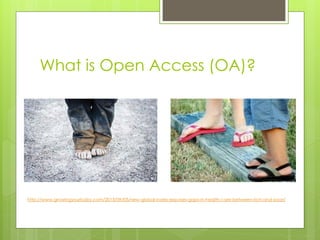
What is Open Access (OA)? 
http://www.growingyourbaby.com/2013/09/05/new-global-index-exposes-gaps-in-health-care-between-rich-and-poor/
Open Access defined … 
“By Open Access, we mean the free, immediate, availability on the public Internet of those works which scholars give to the world without expectation of payment – permitting any user to read, download, copy, distribute, print, search or link to the full text of these articles, crawl them for indexing, pass them as data to software or use them for any other lawful purpose.” 
Timeline (1990 - ): http://legacy.earlham.edu/~peters/fos/timeline.htm 
Source: http://www.sparc.arl.org/resources/open-access/why-oa
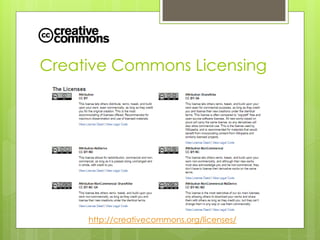
Creative Commons Licensing 
http://creativecommons.org/licenses/
Traditional library 
Building containing information resources 
Information sources in print format 
Open 6 days a week, limited hours 
Users (downloaders) 
Collection development 
Acquisition, processing, storage, indexing, organising 
One user, one source 
Currency of publications 
Challenges e.g. lost & damaged copies 
Costs associated with print 
Physical space 
Geographical areas 
And more …
Library in the digital age 
World Wide Web containing information resources 
Information sources in digital format 
Open 24/7 
Users (downloaders) & Contributors (uploaders) 
All users can help build collection 
E-Acquisition, processing, storage, indexing, organising 
Once source, many users 
Currency of online resources 
Challenges e.g. username & password, downtime 
Subscription costs 
Virtual space 
Global 
And more …
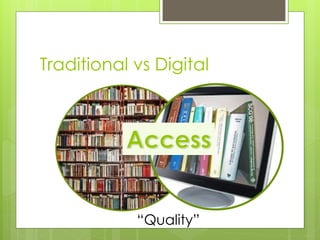
Traditional vs Digital 
“Quality”
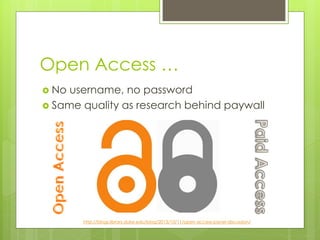
Open Access … 
No username, no password 
Same quality as research behind paywall 
http://blogs.library.duke.edu/blog/2013/10/11/open-access-panel-discussion/
Why “Open” Access? 
Research is expensive – funded with tax payers’ money 
Publishing research on WWW comes at minimal cost 
Open access accelerates pace of scientific discovery, encourage innovation, enrich education, stimulate economy – to improve public good … 
http://www.sparc.arl.org/resources/open-access/why-oa
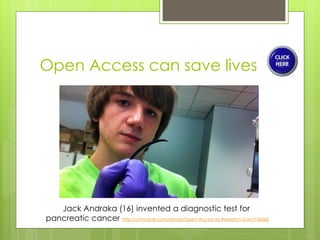
Open Access can save lives 
Jack Andraka (16) invented a diagnostic test for 
pancreatic cancer http://chronicle.com/article/Open-Access-to-Research-Can/136065
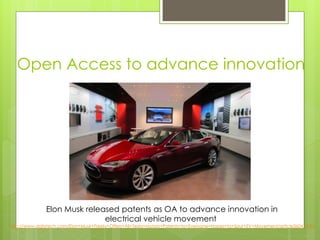
Open Access to advance innovation 
Elon Musk released patents as OA to advance innovation in electrical vehicle movement http://www.dailytech.com/Elon+Musk+Freely+Offers+All+Tesla+Motors+Patents+to+Everyone+Hopes+to+Spur+EV+Movement/article36047.htm
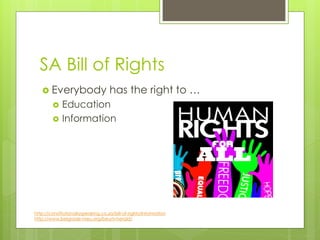
SA Bill of Rights 
Everybody has the right to … 
Education 
Information 
http://constitutionallyspeaking.co.za/bill-of-rights/Infomration http://www.belgrade-meu.org/beum-herald/
Human Development Index (HDI) 
Summary measure for assessing long-term progress in three basic dimensions of human development: 
access to knowledge 
decent standard of living 
long and healthy life 
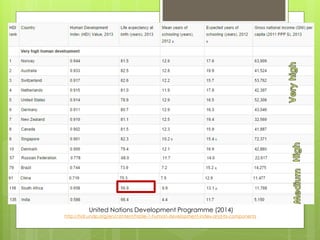
HDI high, longer life expectancy … 
more aware of health, 
better informed, better educated, better lifestyle
United Nations Development Programme (2014) 
http://hdr.undp.org/en/content/table-1-human-development-index-and-its-components
Information needs 
Start a private company 
Pet care 
News from all over the world 
Find a hotel, directions, how to get there 
Medical diagnosis 
Play an instrument 
Law e.g. wrongful dismissal 
Find a house 
Telephone directory
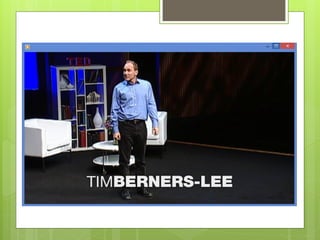
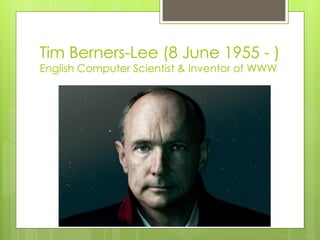
Tim Berners-Lee (8 June 1955 - ) English Computer Scientist & Inventor of WWW
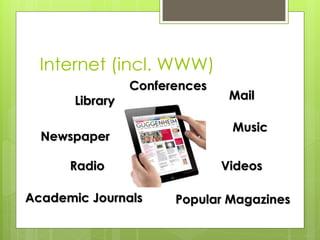
Internet (incl. WWW) 
Library 
Newspaper 
Radio 
Videos 
Music 
Mail 
Popular Magazines 
Conferences 
Academic Journals
Internet (incl. WWW) (1991) 
"The WorldWideWeb (WWW) project aims to allow all links to be made to any information anywhere. [...] The WWW project was started to allow high energy physicists to share data, news, and documentation. We are very interested in spreading the web to other areas, and having gateway servers for other data. Collaborators welcome!" 
—from Tim Berners-Lee's first message
Tim Berners-Lee 25 years later 
“Very soon, millions more sensors, appliances and other devices large and small will take the web to new places. The potential excites me and concerns me at the same time -- that makes the web worth our ongoing stewardship. We must build and defend it now so that those who come to it later will be able to create things that we cannot ourselves imagine. 
I believe that the future of the web is under threat from some governments that may abuse their powers, some businesses that may try to undermine the open market, and from criminal activity. ” 
http://www.wired.co.uk/magazine/archive/2014/03/web-at-25/tim-berners-lee
“The good news is that the web has openness and flexibility woven into its fabric. The protocols and programming languages under the hood -- including URLs, HTTP, HTML, JavaScript and many others -- have nearly all been designed for evolution, so we can upgrade them as new needs, new devices and new business models expose current limitations.” 
http://www.wired.co.uk/magazine/archive/2014/03/web-at-25/tim-berners-lee
“Open platforms let users choose which software to install. The open-data movement seeks to boost governments' economic efficiency, knowledge and public trust by liberating people's data. Like decentralisation, openness empowers people, contributing to the innovation that produces economic and social gains.” 
http://www.wired.co.uk/magazine/archive/2014/03/web-at-25/tim-berners-lee
“It seems unthinkable that the web is already 25 years old, and many of us can barely imagine life without it. We all helped to build this, and the web's future still depends on us. All of us must use our creativity, skills and experience to make it better: more powerful, more safe, more fair and more open.” 
http://www.wired.co.uk/magazine/archive/2014/03/web-at-25/tim-berners-lee
“Let us choose …the Web We Want, and thus, the World We Want.” 
Tim Berners-Lee
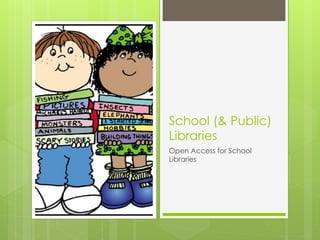
School (& Public) Libraries 
Open Access for School Libraries
Role of school library 
Help learners to … 
Develop critical thinking skills 
Foster innovation, inquiry, curiosity 
Find answers – solve problems 
Evaluate information 
Construct new knowledge 
Different learners, different needs 
Needs of facilitators/teachers
Benefits of OA 
Find quality & relevant literature 
Contributes to core mission of advancing knowledge 
Democratizes access across all institutions – regardless of budget/size 
Enriches quality of education 
Ensures access to all learners need to know, rather what school can afford 
Contributes to better-educated workforce 
Self-learning & citizen scientists 
http://www.sparc.arl.org/resources/open-access/why-oa
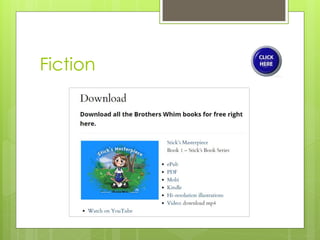
Fiction
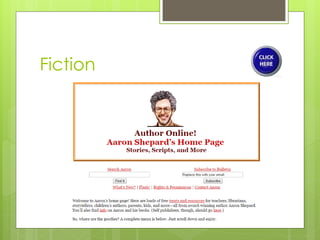
Fiction
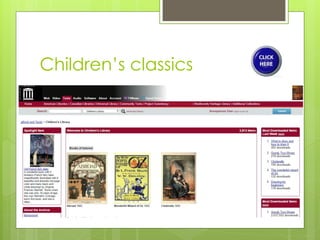
Children’s classics
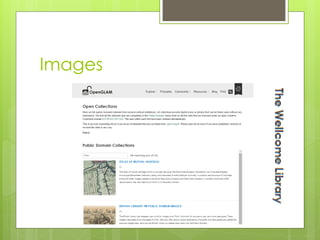
Images
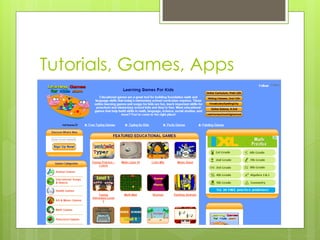
Tutorials, Games, Apps
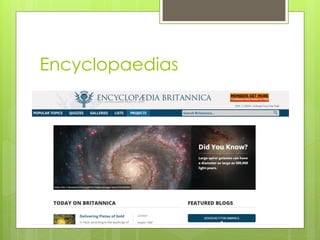
Encyclopaedias
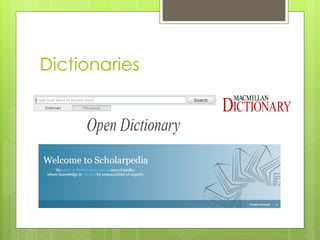
Dictionaries
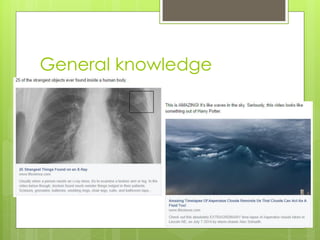
General knowledge
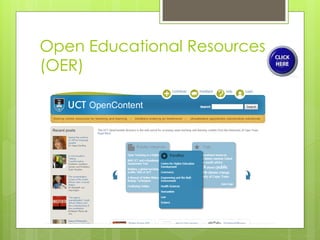
Open Educational Resources (OERs) 
Learning and teaching materials, freely available online for anyone to use 
http://www.jisc.ac.uk/publications/programmerelated/2013/Openeducationalresources.aspx 
http://teacherswithoutborders.org/resource/open-education-libraries
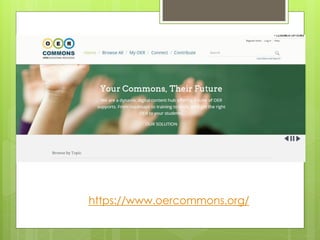
https://www.oercommons.org/
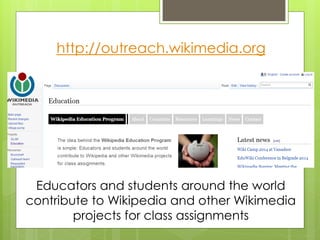
Educators and students around the world contribute to Wikipedia and other Wikimedia projects for class assignments 
http://outreach.wikimedia.org
School libraries promoting OA 
Repository of learning & teaching material (OER) 
Repository of test and exam papers 
Repository of school photos, documentation, newspaper clippings 
Web page/blog with useful links for teachers & learners 
Network internationally 
Join existing projects 
Awareness – OER’s 
Open Access Week 
And more ….
Public Libraries 
Open Access for Public Libraries
Role of public library 
Users – children, adults, business, and more 
Welcoming community space 
Lifelong learning 
Adult education & literacy 
Help build a democratic society 
Help rate quality resources 
Collaborate with other institutions, schools, businesses 
More diverse needs
Benefits of OA 
Research funded with tax payers money … therefore public has a right to free access 
Access to info on health, energy, environment, and other areas of broad interest 
Creates better educated population – higher HDI – longer life expectancy 
Encourages support of scientific enterprise and engagement in citizen science 
New opportunities, new skills – self empowerment 
http://www.sparc.arl.org/resources/open-access/why-oa
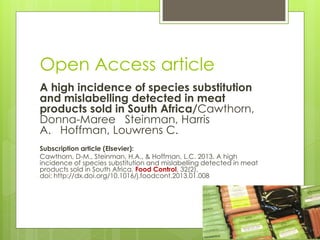
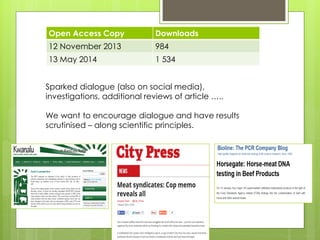
Open Access article 
A high incidence of species substitution and mislabelling detected in meat products sold in South Africa/Cawthorn, Donna-Maree Steinman, Harris A. Hoffman, Louwrens C. 
Subscription article (Elsevier): 
Cawthorn, D-M., Steinman, H.A., & Hoffman, L.C. 2013. A high incidence of species substitution and mislabelling detected in meat products sold in South Africa. Food Control, 32(2), doi: http://dx.doi.org/10.1016/j.foodcont.2013.01.008
Open Access Copy 
Downloads 
12 November 2013 
984 
13 May 2014 
1 534 
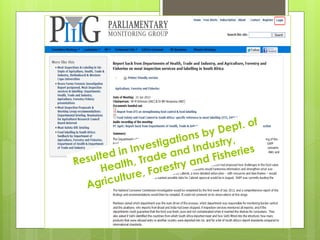
Sparked dialogue (also on social media), investigations, additional reviews of article ….. 
We want to encourage dialogue and have results scrutinised – along scientific principles.
MOOCs 
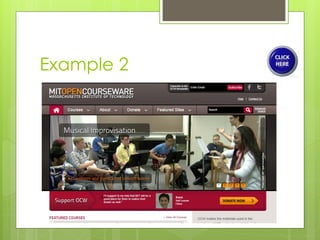
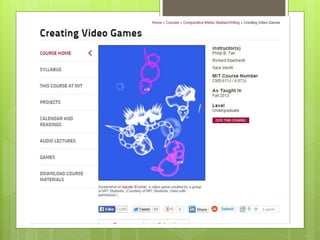
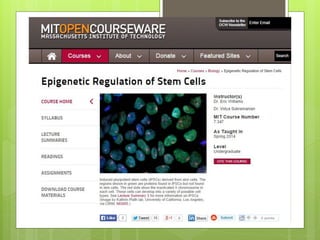
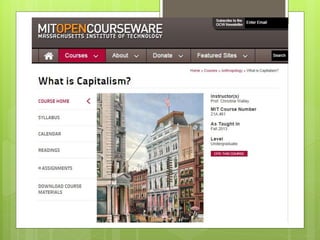
“A massive open online course (MOOC) is an online course aimed at unlimited participation and open access via the web. In addition to traditional course materials such as videos, readings, and problem sets, MOOCs provide interactive user forums that help build a community for students, professors, and teaching assistants (TAs). MOOCs are a recent development in distance education which began to emerge in 2012.” 
http://en.wikipedia.org/wiki/Massive_open_online_course
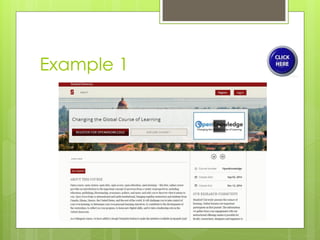
Example 1
Example 2
Public libraries promoting OA 
Collaborate with school & academic libraries 
Repository of community information 
Promote OA resources 
Web page/blog with useful links for users 
Join existing projects 
Awareness – MOOCs 
Unemployment … new skills 
Open Access Week 
And more ….
Academic Libraries 
Open Access for Academic Libraries
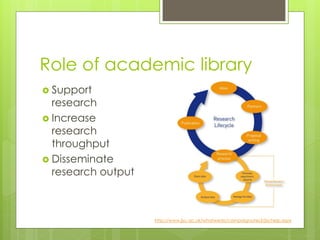
Role of academic library 
Support research 
Increase research throughput 
Disseminate research output 
http://www.jisc.ac.uk/whatwedo/campaigns/res3/jischelp.aspx
Benefits of OA 
Increases readers’ ability to find & use relevant literature 
Increases the visibility, readership and impact of author’s works 
Creates new avenues for discovery in digital environment 
Enhances interdisciplinary research 
Accelerates the pace of research, discovery and innovation 
http://www.sparc.arl.org/resources/open-access/why-oa
Benefits - Funders 
Leverages return on research investment 
Creates tool to manage research portfolio 
Avoids funding duplicative research 
Creates transparency 
Encourages greater interaction with results of funded research 
http://www.sparc.arl.org/resources/open-access/why-oa
Open Access Publishing 
Articles are free to all interested readers, and the publishers place no financial or copyright barriers between the readers and the article 
Directory of Open Access Journals http://doaj.org/ 
http://www.sparc.arl.org/resources/open-access/why-oa
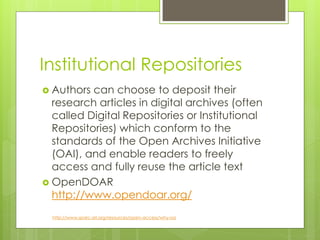
Institutional Repositories 
Authors can choose to deposit their research articles in digital archives (often called Digital Repositories or Institutional Repositories) which conform to the standards of the Open Archives Initiative (OAI), and enable readers to freely access and fully reuse the article text 
OpenDOAR http://www.opendoar.org/ 
http://www.sparc.arl.org/resources/open-access/why-oa
Open Educational Resources (OER)
Effectively Managed Author Rights 
As the authors of a research paper, you have ability to ensure that your article can be accessed and used by the widest possible audience. Tools such as Addenda to traditional Copyright Transfer Forms are readily available, proven resources that can help you understand open licenses, and to publish your articles under full Open Access conditions 
SPARC Authors Rights http://www.sparc.arl.org/resources/authors/addendum 
http://www.sparc.arl.org/resources/open-access/why-oa
Open Access policies 
Institutions that support research, from public and private research funders to higher education institutions, can implement effective policies that that support making Open Access to scholarly research articles the default mode for their researchers 
National http://www.sparc.arl.org/advocacy/national 
Funders http://www.sherpa.ac.uk/juliet/index.php?la= en&mode=simple&page=browse 
http://www.sparc.arl.org/resources/open-access/why-oa
Open Source Software 
Computer software with its source code made available with a license in which the copyright holder provides the rights to study, change and distribute the software to anyone and for any purpose 
Open source software (OSS) is very often developed in a public, collaborative manner 
Open-source software is the most prominent example of open-source development and often compared to (technically defined) user- generated content or (legally defined) open- content movements
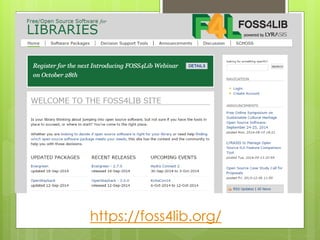
https://foss4lib.org/
Open Data 
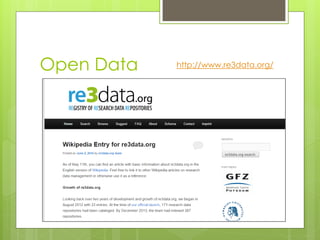
http://www.re3data.org/
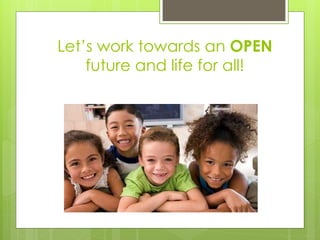
Let’s work towards an OPEN future and life for all!
“Let us choose …the Web We Want, and thus, the World We Want.” 
Tim Berners-Lee
Attribution-ShareAlike CC BY-SA This license lets others remix, tweak, and build upon your work even for commercial purposes, as long as they credit you and license their new creations under the identical terms.

Open Access (OA) - Introduction

  • 1.
    Setting the Scene School Libraries Public Libraries Academic Libraries Discussion Open Access (OA) Ina Smith LIASA Pre-Conference Workshop 22 September 2014
  • 2.
  • 3.
    What is OpenAccess (OA)? http://www.growingyourbaby.com/2013/09/05/new-global-index-exposes-gaps-in-health-care-between-rich-and-poor/
  • 4.
    Open Access defined… “By Open Access, we mean the free, immediate, availability on the public Internet of those works which scholars give to the world without expectation of payment – permitting any user to read, download, copy, distribute, print, search or link to the full text of these articles, crawl them for indexing, pass them as data to software or use them for any other lawful purpose.” Timeline (1990 - ): http://legacy.earlham.edu/~peters/fos/timeline.htm Source: http://www.sparc.arl.org/resources/open-access/why-oa
  • 5.
    Creative Commons Licensing http://creativecommons.org/licenses/
  • 6.
    Traditional library Buildingcontaining information resources Information sources in print format Open 6 days a week, limited hours Users (downloaders) Collection development Acquisition, processing, storage, indexing, organising One user, one source Currency of publications Challenges e.g. lost & damaged copies Costs associated with print Physical space Geographical areas And more …
  • 7.
    Library in thedigital age World Wide Web containing information resources Information sources in digital format Open 24/7 Users (downloaders) & Contributors (uploaders) All users can help build collection E-Acquisition, processing, storage, indexing, organising Once source, many users Currency of online resources Challenges e.g. username & password, downtime Subscription costs Virtual space Global And more …
  • 8.
    Traditional vs Digital “Quality”
  • 9.
    Open Access … No username, no password Same quality as research behind paywall http://blogs.library.duke.edu/blog/2013/10/11/open-access-panel-discussion/
  • 10.
    Why “Open” Access? Research is expensive – funded with tax payers’ money Publishing research on WWW comes at minimal cost Open access accelerates pace of scientific discovery, encourage innovation, enrich education, stimulate economy – to improve public good … http://www.sparc.arl.org/resources/open-access/why-oa
  • 11.
    Open Access cansave lives Jack Andraka (16) invented a diagnostic test for pancreatic cancer http://chronicle.com/article/Open-Access-to-Research-Can/136065
  • 12.
    Open Access toadvance innovation Elon Musk released patents as OA to advance innovation in electrical vehicle movement http://www.dailytech.com/Elon+Musk+Freely+Offers+All+Tesla+Motors+Patents+to+Everyone+Hopes+to+Spur+EV+Movement/article36047.htm
  • 13.
    SA Bill ofRights Everybody has the right to … Education Information http://constitutionallyspeaking.co.za/bill-of-rights/Infomration http://www.belgrade-meu.org/beum-herald/
  • 14.
    Human Development Index(HDI) Summary measure for assessing long-term progress in three basic dimensions of human development: access to knowledge decent standard of living long and healthy life HDI high, longer life expectancy … more aware of health, better informed, better educated, better lifestyle
  • 15.
    United Nations DevelopmentProgramme (2014) http://hdr.undp.org/en/content/table-1-human-development-index-and-its-components
  • 16.
    Information needs Starta private company Pet care News from all over the world Find a hotel, directions, how to get there Medical diagnosis Play an instrument Law e.g. wrongful dismissal Find a house Telephone directory
  • 17.
    Tim Berners-Lee (8June 1955 - ) English Computer Scientist & Inventor of WWW
  • 18.
    Internet (incl. WWW) Library Newspaper Radio Videos Music Mail Popular Magazines Conferences Academic Journals
  • 19.
    Internet (incl. WWW)(1991) "The WorldWideWeb (WWW) project aims to allow all links to be made to any information anywhere. [...] The WWW project was started to allow high energy physicists to share data, news, and documentation. We are very interested in spreading the web to other areas, and having gateway servers for other data. Collaborators welcome!" —from Tim Berners-Lee's first message
  • 20.
    Tim Berners-Lee 25years later “Very soon, millions more sensors, appliances and other devices large and small will take the web to new places. The potential excites me and concerns me at the same time -- that makes the web worth our ongoing stewardship. We must build and defend it now so that those who come to it later will be able to create things that we cannot ourselves imagine. I believe that the future of the web is under threat from some governments that may abuse their powers, some businesses that may try to undermine the open market, and from criminal activity. ” http://www.wired.co.uk/magazine/archive/2014/03/web-at-25/tim-berners-lee
  • 21.
    “The good newsis that the web has openness and flexibility woven into its fabric. The protocols and programming languages under the hood -- including URLs, HTTP, HTML, JavaScript and many others -- have nearly all been designed for evolution, so we can upgrade them as new needs, new devices and new business models expose current limitations.” http://www.wired.co.uk/magazine/archive/2014/03/web-at-25/tim-berners-lee
  • 22.
    “Open platforms letusers choose which software to install. The open-data movement seeks to boost governments' economic efficiency, knowledge and public trust by liberating people's data. Like decentralisation, openness empowers people, contributing to the innovation that produces economic and social gains.” http://www.wired.co.uk/magazine/archive/2014/03/web-at-25/tim-berners-lee
  • 23.
    “It seems unthinkablethat the web is already 25 years old, and many of us can barely imagine life without it. We all helped to build this, and the web's future still depends on us. All of us must use our creativity, skills and experience to make it better: more powerful, more safe, more fair and more open.” http://www.wired.co.uk/magazine/archive/2014/03/web-at-25/tim-berners-lee
  • 24.
    “Let us choose…the Web We Want, and thus, the World We Want.” Tim Berners-Lee
  • 25.
    School (& Public)Libraries Open Access for School Libraries
  • 26.
    Role of schoollibrary Help learners to … Develop critical thinking skills Foster innovation, inquiry, curiosity Find answers – solve problems Evaluate information Construct new knowledge Different learners, different needs Needs of facilitators/teachers
  • 27.
    Benefits of OA Find quality & relevant literature Contributes to core mission of advancing knowledge Democratizes access across all institutions – regardless of budget/size Enriches quality of education Ensures access to all learners need to know, rather what school can afford Contributes to better-educated workforce Self-learning & citizen scientists http://www.sparc.arl.org/resources/open-access/why-oa
  • 28.
  • 29.
  • 30.
  • 31.
  • 32.
  • 33.
  • 34.
  • 35.
  • 36.
    Open Educational Resources(OERs) Learning and teaching materials, freely available online for anyone to use http://www.jisc.ac.uk/publications/programmerelated/2013/Openeducationalresources.aspx http://teacherswithoutborders.org/resource/open-education-libraries
  • 37.
  • 38.
    Educators and studentsaround the world contribute to Wikipedia and other Wikimedia projects for class assignments http://outreach.wikimedia.org
  • 39.
    School libraries promotingOA Repository of learning & teaching material (OER) Repository of test and exam papers Repository of school photos, documentation, newspaper clippings Web page/blog with useful links for teachers & learners Network internationally Join existing projects Awareness – OER’s Open Access Week And more ….
  • 40.
    Public Libraries OpenAccess for Public Libraries
  • 41.
    Role of publiclibrary Users – children, adults, business, and more Welcoming community space Lifelong learning Adult education & literacy Help build a democratic society Help rate quality resources Collaborate with other institutions, schools, businesses More diverse needs
  • 42.
    Benefits of OA Research funded with tax payers money … therefore public has a right to free access Access to info on health, energy, environment, and other areas of broad interest Creates better educated population – higher HDI – longer life expectancy Encourages support of scientific enterprise and engagement in citizen science New opportunities, new skills – self empowerment http://www.sparc.arl.org/resources/open-access/why-oa
  • 43.
    Open Access article A high incidence of species substitution and mislabelling detected in meat products sold in South Africa/Cawthorn, Donna-Maree Steinman, Harris A. Hoffman, Louwrens C. Subscription article (Elsevier): Cawthorn, D-M., Steinman, H.A., & Hoffman, L.C. 2013. A high incidence of species substitution and mislabelling detected in meat products sold in South Africa. Food Control, 32(2), doi: http://dx.doi.org/10.1016/j.foodcont.2013.01.008
  • 44.
    Open Access Copy Downloads 12 November 2013 984 13 May 2014 1 534 Sparked dialogue (also on social media), investigations, additional reviews of article ….. We want to encourage dialogue and have results scrutinised – along scientific principles.
  • 46.
    MOOCs “A massiveopen online course (MOOC) is an online course aimed at unlimited participation and open access via the web. In addition to traditional course materials such as videos, readings, and problem sets, MOOCs provide interactive user forums that help build a community for students, professors, and teaching assistants (TAs). MOOCs are a recent development in distance education which began to emerge in 2012.” http://en.wikipedia.org/wiki/Massive_open_online_course
  • 47.
  • 48.
  • 52.
    Public libraries promotingOA Collaborate with school & academic libraries Repository of community information Promote OA resources Web page/blog with useful links for users Join existing projects Awareness – MOOCs Unemployment … new skills Open Access Week And more ….
  • 53.
    Academic Libraries OpenAccess for Academic Libraries
  • 54.
    Role of academiclibrary Support research Increase research throughput Disseminate research output http://www.jisc.ac.uk/whatwedo/campaigns/res3/jischelp.aspx
  • 55.
    Benefits of OA Increases readers’ ability to find & use relevant literature Increases the visibility, readership and impact of author’s works Creates new avenues for discovery in digital environment Enhances interdisciplinary research Accelerates the pace of research, discovery and innovation http://www.sparc.arl.org/resources/open-access/why-oa
  • 56.
    Benefits - Funders Leverages return on research investment Creates tool to manage research portfolio Avoids funding duplicative research Creates transparency Encourages greater interaction with results of funded research http://www.sparc.arl.org/resources/open-access/why-oa
  • 57.
    Open Access Publishing Articles are free to all interested readers, and the publishers place no financial or copyright barriers between the readers and the article Directory of Open Access Journals http://doaj.org/ http://www.sparc.arl.org/resources/open-access/why-oa
  • 58.
    Institutional Repositories Authorscan choose to deposit their research articles in digital archives (often called Digital Repositories or Institutional Repositories) which conform to the standards of the Open Archives Initiative (OAI), and enable readers to freely access and fully reuse the article text OpenDOAR http://www.opendoar.org/ http://www.sparc.arl.org/resources/open-access/why-oa
  • 59.
  • 60.
    Effectively Managed AuthorRights As the authors of a research paper, you have ability to ensure that your article can be accessed and used by the widest possible audience. Tools such as Addenda to traditional Copyright Transfer Forms are readily available, proven resources that can help you understand open licenses, and to publish your articles under full Open Access conditions SPARC Authors Rights http://www.sparc.arl.org/resources/authors/addendum http://www.sparc.arl.org/resources/open-access/why-oa
  • 61.
    Open Access policies Institutions that support research, from public and private research funders to higher education institutions, can implement effective policies that that support making Open Access to scholarly research articles the default mode for their researchers National http://www.sparc.arl.org/advocacy/national Funders http://www.sherpa.ac.uk/juliet/index.php?la= en&mode=simple&page=browse http://www.sparc.arl.org/resources/open-access/why-oa
  • 62.
    Open Source Software Computer software with its source code made available with a license in which the copyright holder provides the rights to study, change and distribute the software to anyone and for any purpose Open source software (OSS) is very often developed in a public, collaborative manner Open-source software is the most prominent example of open-source development and often compared to (technically defined) user- generated content or (legally defined) open- content movements
  • 63.
  • 64.
  • 66.
    Let’s work towardsan OPEN future and life for all!
  • 67.
    “Let us choose…the Web We Want, and thus, the World We Want.” Tim Berners-Lee
  • 68.
    Attribution-ShareAlike CC BY-SAThis license lets others remix, tweak, and build upon your work even for commercial purposes, as long as they credit you and license their new creations under the identical terms.