




1
Criteria for a trusted
institutional repository
Ina Smith
30 March 2016
Presented during the IR Workshop
University of Pretoria
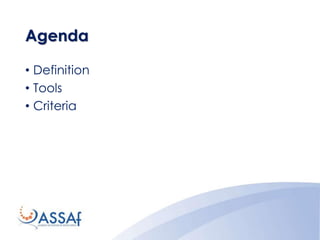
Agenda
• Definition
• Tools
• Criteria
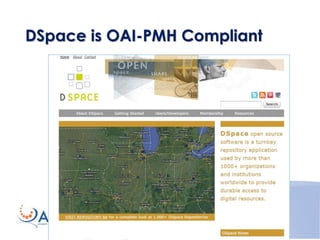
DSpace is OAI-PMH Compliant
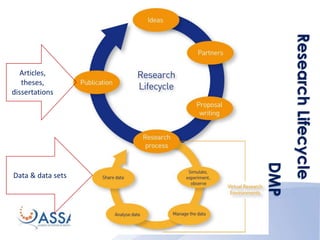
Articles,
theses,
dissertations
Data & data sets
ResearchLifecycle
DMP
What is a trusted institutional repository?
(1)
“A trusted digital repository is one whose
mission is to provide reliable, long‐term
access to managed digital resources to its
designated community, now and in the
future.”
(RLG‐OCLC Report 2002)
What is a trusted institutional repository?
(2)
• Accepts responsibility for long‐term
maintenance of digital resources
• Organizational system that supports long
term viability of repository & digital material
• Demonstrates fiscal responsibility &
sustainability
• Applies commonly accepted conventions &
standards to ensure ongoing management,
access, security
What is a trusted institutional repository?
(3)
• Regularly evaluates/audits the system
(internal)
• Implement policies, practices, performances
that can be audited and measured
• Well managed
Methodologies (1)
• OAIS Reference Model (ISO)
• Trusted digital repositories: attributes and
responsibilities (RLG/OCLC) (2002)
• An audit checklist for the certification of
trusted digital repositories (RLG-NARA) (2005)
• Trustworthy Repositories Audit and
Certification: Criteria & Checklist (TRAC)
(CRL) (2007)
Methodologies (2)
• Data Seal of Approval (DANS) (2008)
• DIN 31644 Information and documentation –
Criteria for trustworthy digital archives
(German Standards Committee) (2008)
• Audit and certification of trustworthy digital
repositories (Consultative Committee for
Space Data Systems) (2011)
• ISO 16363 Audit and Certification of
Trustworthy Digital Repositories (2012)
Methodologies (3)
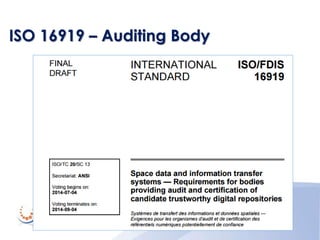
• ISO 16919 Requirements for Bodies Providing
Audit and Certification of Candidate
Trustworthy Digital Repositories
• Expected outcome: development of
approved audit & certification bodies in
countries
European Framework for Audit &
Certification
• Tiered approach to certification
• Data Seal of Approval: entry-level self-assessment
and peer review
• DIN 31644 or ISO 16363: extensive self-assessment
(internal audit)
• ISO 16363: full scale external audit
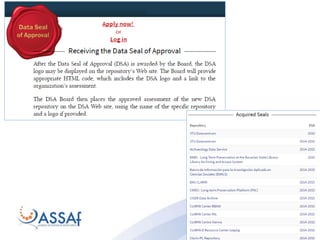
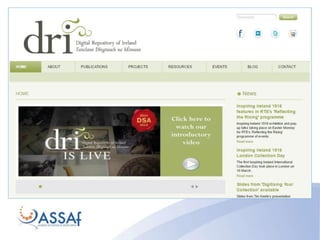
Data Seal of Approval
http://www.datasealofapproval.org/en/assessment/
• 16 guidelines based on criteria:
• Data can be found on Internet
• Data accessible
• Data in usable format
• Data reliable
• Data identified in a unique & persistent way so
that it can be referred to
What is the ISO 16363 Standard?
• Suite of standards, national & international
level
• Demonstrate trustworthy & responsible data
management, stewardship
• Provide direction to repositories
• Demonstrates
• Adherence to quality & consistency
• Respect for data integrity
• Commitment to long-term preservation & access
What is an ISO 16363 Audit?
• Internal audit (self-assessment): Preparation
by repository – ISO 16363 metrics
• External audit: Site visit by audit team
• Formal report to repository
• Certification of repository as OAIS Compliant
• Maintain certification over time
Preparing for an ISO 16363 self-
assessment
• Excel spread sheet:
http://wiki.lib.sun.ac.za/index.php/SUNScholar/Au
dit
• Assess repository in terms of:
• Organisational infrastructure
• Digital object management
• Infrastructure and security risk management
Organisational Infrastructure (1)
• IR has defined goals for selection of digital
material
• Accepts responsibility to preserve digital
material over long-term
• Known defined community for whom access
& ability to interpret digital materials will be
provided
• Legal & contractual rules between data
creators & IR
Organisational Infrastructure (2)
• Sufficient organizational structures:
personnel, finance, long-term planning,
continuity of service
• Processes & responsibilities are defined &
documented
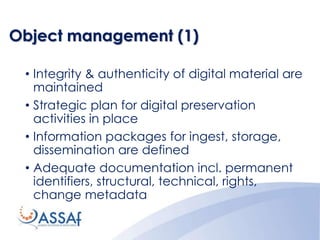
Object management (1)
• Integrity & authenticity of digital material are
maintained
• Strategic plan for digital preservation
activities in place
• Information packages for ingest, storage,
dissemination are defined
• Adequate documentation incl. permanent
identifiers, structural, technical, rights,
change metadata
Object management (2)
• Digital material & related metadata
packaged together for permanent
preservation
Infrastructure & security
• IT infrastructure secure
ISO 16919 – Auditing Body
Other auditing & certification systems
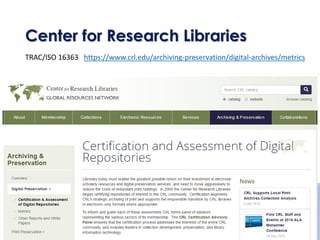
Center for Research Libraries
TRAC/ISO 16363 https://www.crl.edu/archiving-preservation/digital-archives/metrics
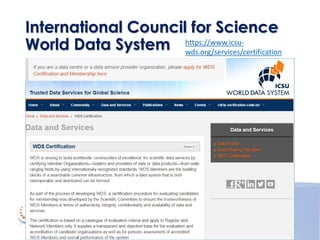
International Council for Science
World Data System https://www.icsu-
wds.org/services/certification
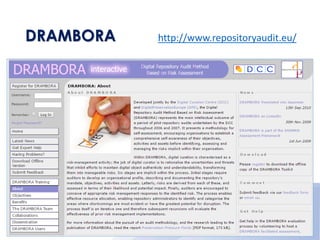
DRAMBORA http://www.repositoryaudit.eu/
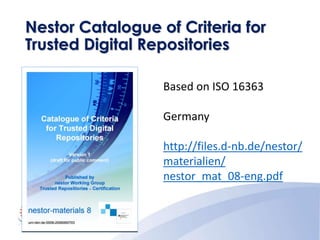
Nestor Catalogue of Criteria for
Trusted Digital Repositories
Based on ISO 16363
Germany
http://files.d-nb.de/nestor/
materialien/
nestor_mat_08-eng.pdf
Other
• Digital Asset Assessment Tool (DAAT) Project
‐ file format testing (UK)
• DINI certification criteria ‐ Deutsche Initiative
für Netzwerkinformation (German Initiative
for Networked Information)
• Long Term Digital Preservation (LTDP)
Automated Assessment – maturity level (IBM)
• Moims‐rac (MOIMS‐Repository Audit and
Certification)
Principles - Trusted IR (1)
• Commitment to continuous maintenance of
digital objects
• Demonstrates organisation fitness to fulfil
commitment (financial, staffing, processes)
• Acquires and maintains requisite contractual
and legal rights and fulfills responsibilities
• Has an effective and efficient policy
framework
Source: https://www.crl.edu/archiving-preservation/digital-archives/metrics-
assessing-and-certifying/core-re
Principles – Trusted IR (2)
• Acquires and ingests digital objects based upon
stated criteria that correspond to its commitments
and capabilities
• Maintains/ensures the integrity, authenticity and
usability of digital objects it holds over time
• Creates and maintains requisite metadata about
actions taken on digital objects during preservation
as well as about the relevant production, access
support, and usage process contexts before
preservation
Source: https://www.crl.edu/archiving-preservation/digital-archives/metrics-
assessing-and-certifying/core-re
Principles – Trusted IR (3)
• Fulfills requisite dissemination requirements
• Has a strategic program for preservation planning
and action
• Has technical infrastructure adequate to continuing
maintenance and security of its digital objects
Source: https://www.crl.edu/archiving-preservation/digital-archives/metrics-
assessing-and-certifying/core-re
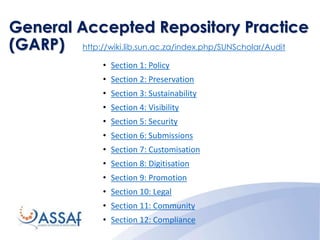
General Accepted Repository Practice
(GARP) http://wiki.lib.sun.ac.za/index.php/SUNScholar/Audit
• Section 1: Policy
• Section 2: Preservation
• Section 3: Sustainability
• Section 4: Visibility
• Section 5: Security
• Section 6: Submissions
• Section 7: Customisation
• Section 8: Digitisation
• Section 9: Promotion
• Section 10: Legal
• Section 11: Community
• Section 12: Compliance
34
Harvesters & harvesting for
institutional repositories
Ina Smith
30 March 2016
Presented during the IR Workshop
University of Pretoria
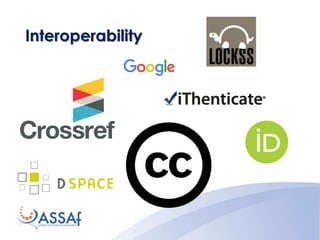
To increase visibility, IR must be OAI-PMH compliant and apply
correct metadata for harvesters to recognize …
Interoperability
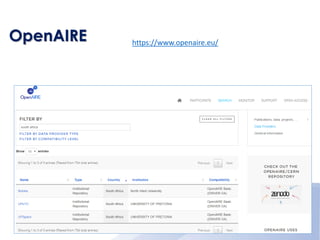
OpenAIRE https://www.openaire.eu/
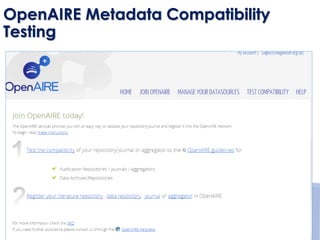
OpenAIRE Metadata Compatibility
Testing
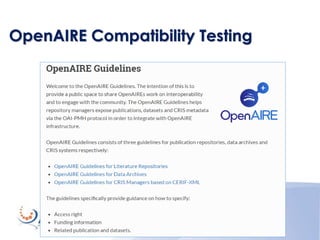
OpenAIRE Compatibility Testing
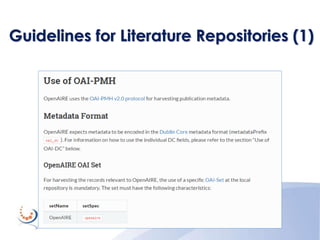
Guidelines for Literature Repositories (1)
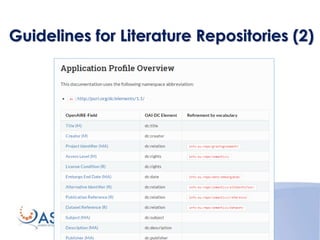
Guidelines for Literature Repositories (2)
Guidelines for Literature Repositories (3)
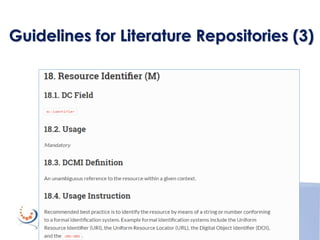
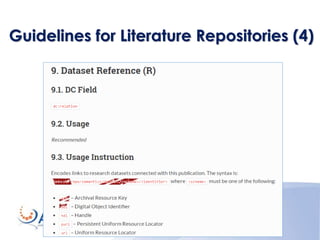
Guidelines for Literature Repositories (4)
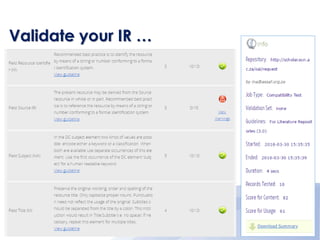
Validate your IR …
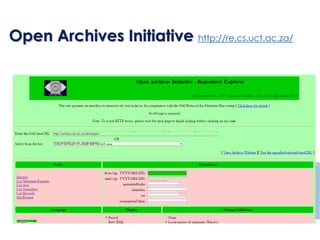
Open Archives Initiative http://re.cs.uct.ac.za/
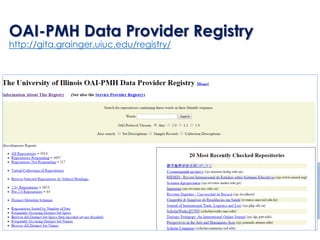
OAI-PMH Data Provider Registry
http://gita.grainger.uiuc.edu/registry/
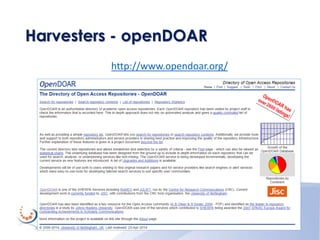
Harvesters - openDOAR
http://www.opendoar.org/
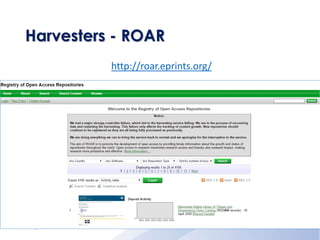
Harvesters - ROAR
http://roar.eprints.org/
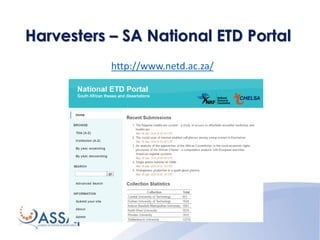
Harvesters – SA National ETD Portal
http://www.netd.ac.za/
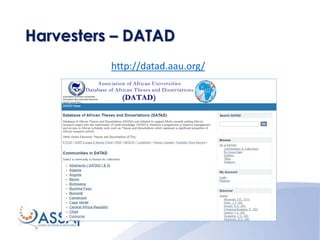
Harvesters – DATAD
http://datad.aau.org/
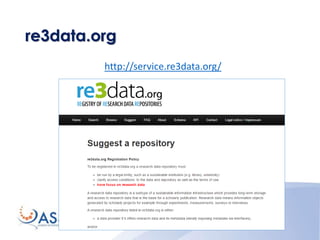
re3data.org
http://service.re3data.org/
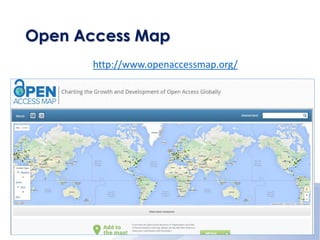
Open Access Map
http://www.openaccessmap.org/
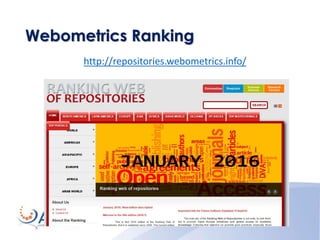
Webometrics Ranking
http://repositories.webometrics.info/
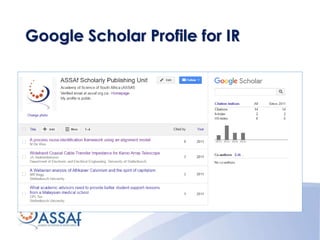
Google Scholar Profile for IR
Next ….
• Web page for IR with supporting information
• Data Seal of Approval
• ISO 16363 Self-Assessment
• ISO 16363 External Audit by NRF/CODATA,
other SA auditing body (ISO 16919)?
Thank you!
Ina Smith
SciELO Planning Manager, ASSAf
ina@assaf.org.za

Criteria for a trusted institutional repository

  • 1.
    1 Criteria for atrusted institutional repository Ina Smith 30 March 2016 Presented during the IR Workshop University of Pretoria
  • 2.
  • 3.
  • 4.
  • 5.
    What is atrusted institutional repository? (1) “A trusted digital repository is one whose mission is to provide reliable, long‐term access to managed digital resources to its designated community, now and in the future.” (RLG‐OCLC Report 2002)
  • 6.
    What is atrusted institutional repository? (2) • Accepts responsibility for long‐term maintenance of digital resources • Organizational system that supports long term viability of repository & digital material • Demonstrates fiscal responsibility & sustainability • Applies commonly accepted conventions & standards to ensure ongoing management, access, security
  • 7.
    What is atrusted institutional repository? (3) • Regularly evaluates/audits the system (internal) • Implement policies, practices, performances that can be audited and measured • Well managed
  • 8.
    Methodologies (1) • OAISReference Model (ISO) • Trusted digital repositories: attributes and responsibilities (RLG/OCLC) (2002) • An audit checklist for the certification of trusted digital repositories (RLG-NARA) (2005) • Trustworthy Repositories Audit and Certification: Criteria & Checklist (TRAC) (CRL) (2007)
  • 9.
    Methodologies (2) • DataSeal of Approval (DANS) (2008) • DIN 31644 Information and documentation – Criteria for trustworthy digital archives (German Standards Committee) (2008) • Audit and certification of trustworthy digital repositories (Consultative Committee for Space Data Systems) (2011) • ISO 16363 Audit and Certification of Trustworthy Digital Repositories (2012)
  • 10.
    Methodologies (3) • ISO16919 Requirements for Bodies Providing Audit and Certification of Candidate Trustworthy Digital Repositories • Expected outcome: development of approved audit & certification bodies in countries
  • 11.
    European Framework forAudit & Certification • Tiered approach to certification • Data Seal of Approval: entry-level self-assessment and peer review • DIN 31644 or ISO 16363: extensive self-assessment (internal audit) • ISO 16363: full scale external audit
  • 12.
    Data Seal ofApproval http://www.datasealofapproval.org/en/assessment/ • 16 guidelines based on criteria: • Data can be found on Internet • Data accessible • Data in usable format • Data reliable • Data identified in a unique & persistent way so that it can be referred to
  • 15.
    What is theISO 16363 Standard? • Suite of standards, national & international level • Demonstrate trustworthy & responsible data management, stewardship • Provide direction to repositories • Demonstrates • Adherence to quality & consistency • Respect for data integrity • Commitment to long-term preservation & access
  • 16.
    What is anISO 16363 Audit? • Internal audit (self-assessment): Preparation by repository – ISO 16363 metrics • External audit: Site visit by audit team • Formal report to repository • Certification of repository as OAIS Compliant • Maintain certification over time
  • 17.
    Preparing for anISO 16363 self- assessment • Excel spread sheet: http://wiki.lib.sun.ac.za/index.php/SUNScholar/Au dit • Assess repository in terms of: • Organisational infrastructure • Digital object management • Infrastructure and security risk management
  • 18.
    Organisational Infrastructure (1) •IR has defined goals for selection of digital material • Accepts responsibility to preserve digital material over long-term • Known defined community for whom access & ability to interpret digital materials will be provided • Legal & contractual rules between data creators & IR
  • 19.
    Organisational Infrastructure (2) •Sufficient organizational structures: personnel, finance, long-term planning, continuity of service • Processes & responsibilities are defined & documented
  • 20.
    Object management (1) •Integrity & authenticity of digital material are maintained • Strategic plan for digital preservation activities in place • Information packages for ingest, storage, dissemination are defined • Adequate documentation incl. permanent identifiers, structural, technical, rights, change metadata
  • 21.
    Object management (2) •Digital material & related metadata packaged together for permanent preservation
  • 22.
    Infrastructure & security •IT infrastructure secure
  • 23.
    ISO 16919 –Auditing Body
  • 24.
    Other auditing &certification systems
  • 25.
    Center for ResearchLibraries TRAC/ISO 16363 https://www.crl.edu/archiving-preservation/digital-archives/metrics
  • 26.
    International Council forScience World Data System https://www.icsu- wds.org/services/certification
  • 27.
  • 28.
    Nestor Catalogue ofCriteria for Trusted Digital Repositories Based on ISO 16363 Germany http://files.d-nb.de/nestor/ materialien/ nestor_mat_08-eng.pdf
  • 29.
    Other • Digital AssetAssessment Tool (DAAT) Project ‐ file format testing (UK) • DINI certification criteria ‐ Deutsche Initiative für Netzwerkinformation (German Initiative for Networked Information) • Long Term Digital Preservation (LTDP) Automated Assessment – maturity level (IBM) • Moims‐rac (MOIMS‐Repository Audit and Certification)
  • 30.
    Principles - TrustedIR (1) • Commitment to continuous maintenance of digital objects • Demonstrates organisation fitness to fulfil commitment (financial, staffing, processes) • Acquires and maintains requisite contractual and legal rights and fulfills responsibilities • Has an effective and efficient policy framework Source: https://www.crl.edu/archiving-preservation/digital-archives/metrics- assessing-and-certifying/core-re
  • 31.
    Principles – TrustedIR (2) • Acquires and ingests digital objects based upon stated criteria that correspond to its commitments and capabilities • Maintains/ensures the integrity, authenticity and usability of digital objects it holds over time • Creates and maintains requisite metadata about actions taken on digital objects during preservation as well as about the relevant production, access support, and usage process contexts before preservation Source: https://www.crl.edu/archiving-preservation/digital-archives/metrics- assessing-and-certifying/core-re
  • 32.
    Principles – TrustedIR (3) • Fulfills requisite dissemination requirements • Has a strategic program for preservation planning and action • Has technical infrastructure adequate to continuing maintenance and security of its digital objects Source: https://www.crl.edu/archiving-preservation/digital-archives/metrics- assessing-and-certifying/core-re
  • 33.
    General Accepted RepositoryPractice (GARP) http://wiki.lib.sun.ac.za/index.php/SUNScholar/Audit • Section 1: Policy • Section 2: Preservation • Section 3: Sustainability • Section 4: Visibility • Section 5: Security • Section 6: Submissions • Section 7: Customisation • Section 8: Digitisation • Section 9: Promotion • Section 10: Legal • Section 11: Community • Section 12: Compliance
  • 34.
    34 Harvesters & harvestingfor institutional repositories Ina Smith 30 March 2016 Presented during the IR Workshop University of Pretoria
  • 37.
    To increase visibility,IR must be OAI-PMH compliant and apply correct metadata for harvesters to recognize …
  • 38.
  • 39.
  • 40.
  • 41.
  • 42.
    Guidelines for LiteratureRepositories (1)
  • 43.
    Guidelines for LiteratureRepositories (2)
  • 44.
    Guidelines for LiteratureRepositories (3)
  • 45.
    Guidelines for LiteratureRepositories (4)
  • 46.
  • 47.
    Open Archives Initiativehttp://re.cs.uct.ac.za/
  • 48.
    OAI-PMH Data ProviderRegistry http://gita.grainger.uiuc.edu/registry/
  • 49.
  • 50.
  • 51.
    Harvesters – SANational ETD Portal http://www.netd.ac.za/
  • 52.
  • 53.
  • 54.
  • 55.
  • 56.
  • 57.
    Next …. • Webpage for IR with supporting information • Data Seal of Approval • ISO 16363 Self-Assessment • ISO 16363 External Audit by NRF/CODATA, other SA auditing body (ISO 16919)?
  • 58.
    Thank you! Ina Smith SciELOPlanning Manager, ASSAf ina@assaf.org.za