elearning: promises and practices Peter Tittenberger Learning Technologies Centre University of Manitoba October, 2008
Change pressures  information growth open movement student habits How does education respond?  values of formal education the role of  elearning
The world is flat The world is flat …
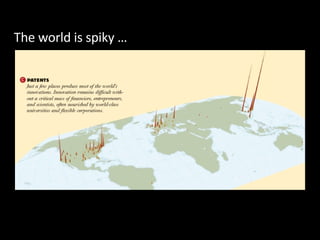
The world is flat The world is spiky …
Information growth Change pressure 1. Growth of information .
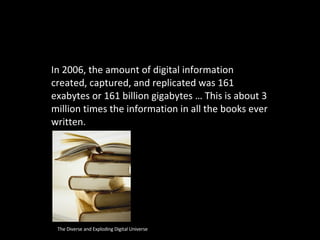
Information growth In 2006, the amount of digital information created, captured, and replicated was 161 exabytes or 161 billion gigabytes … This is about 3 million times the information in all the books ever written. The Diverse and Exploding Digital Universe
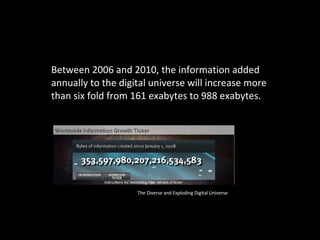
Information growth Between 2006 and 2010, the information added annually to the digital universe will increase more than six fold from 161 exabytes to 988 exabytes. The Diverse and Exploding Digital Universe
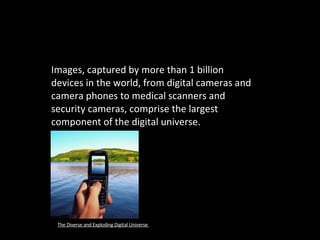
Information growth Images, captured by more than 1 billion devices in the world, from digital cameras and camera phones to medical scanners and security cameras, comprise the largest component of the digital universe. The Diverse and Exploding Digital Universe
Information growth Chevron's CIO says his company accumulates data at the rate of 2 terabytes – 17,592,000,000,000 bits – a day. The Diverse and Exploding Digital Universe
More than 3,000 new books are published . . . Karl Fisch http://thefischbowl.blogspot.com/2006/08/did-you-know.html
daily . Karl Fisch http://thefischbowl.blogspot.com/2006/08/did-you-know.html
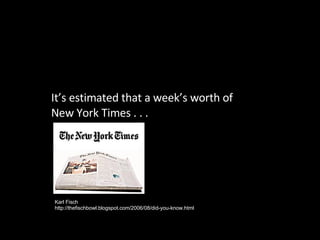
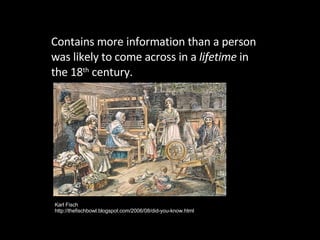
It’s estimated that a week’s worth of New York Times . . . Karl Fisch http://thefischbowl.blogspot.com/2006/08/did-you-know.html
Contains more information than a person was likely to come across in a  lifetime  in the 18 th  century. Karl Fisch http://thefischbowl.blogspot.com/2006/08/did-you-know.html
The amount of new technical information is doubling every 2 years. Karl Fisch http://thefischbowl.blogspot.com/2006/08/did-you-know.html
It’s predicted to double every 72 hours by 2010. Karl Fisch http://thefischbowl.blogspot.com/2006/08/did-you-know.html
more predictions
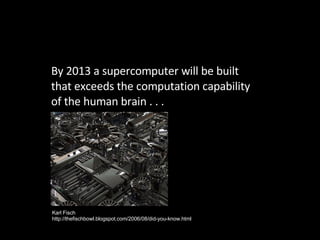
By 2013 a supercomputer will be built that exceeds the computation capability of the human brain . . . Karl Fisch http://thefischbowl.blogspot.com/2006/08/did-you-know.html
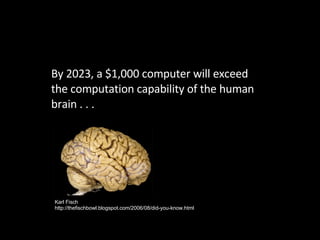
By 2023, a $1,000 computer will exceed the computation capability of the human brain . . . Karl Fisch http://thefischbowl.blogspot.com/2006/08/did-you-know.html
And while technical predictions further out than about 15 years are hard to do . . . Karl Fisch http://thefischbowl.blogspot.com/2006/08/did-you-know.html
Predictions are that by 2049 a $1,000 computer will exceed the computational capabilities of the  human race . Karl Fisch http://thefischbowl.blogspot.com/2006/08/did-you-know.html
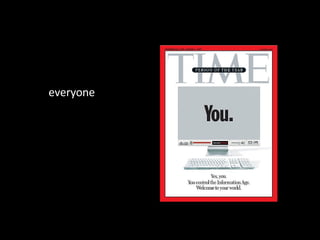
Who is producing all this information?
everyone
What’s happening? This information growth is leading to …
What’s happening? Decentralization Democratization Changing notion of what it means to know Continual suspended certainty Chaotic (diverse, messy and unbounded)
What’s happening? characteristics at odds with formal education which likes learning to be …
What’s happening? Controlled Authoritative Certain Linear Neat and bounded
Change pressure 2. The open movement.
“…  information wants to be free …” Stewart Brand, 1984
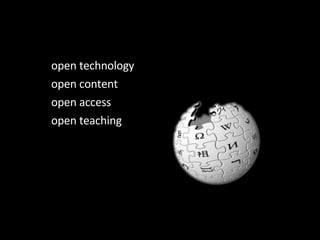
open technology open content  open access open teaching
open technology Linux (OS) Apache (web server) mySQL (database) Moodle, Sakai (LMS) Wordpress (blogs) Drupal (CMS) Mediawiki (wikis) Open Journal Systems (publishing) DimDim (web conferencing) Etc…
free supporting software Firefox (browser) Thunderbird (email) Skype (VOIP) OpenOffice  Audacity (audio) Etc…
free web services Blogs (blogger.com) Google groups Image sharing (Flickr) Video (youtube) Bookmarking (delicious) Wikis (pbwiki) Webconferencing (wiziq) RSS readers (Pageflakes) Presentations (slideshare) 75,000,000 photos
open content Open Educational Resources (OER) are teaching, learning, and research resources that reside in the public domain or have been released under an intellectual property license that permits their  free use or re-purposing  by others.
open content Open educational resources include full courses, course materials, modules, textbooks, streaming videos, tests, software, and any other tools, materials, or techniques used to support access to knowledge.
open educational resources “ shifting faculty perspectives from  this courseware is mine to this courseware is for (open) mining.”
open educational resources The Cape Town Open Education Declaration “ everyone should have the freedom to use, customize, improve and redistribute educational resources without constraint.” October 1, 2008 171 organizations and 1680 individuals signed
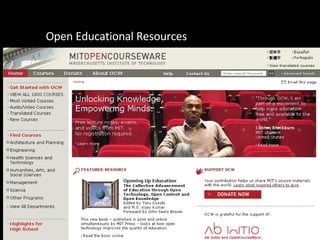
Open Educational Resources MIT Open CourseWare project
open educational resources OpenCourseware Consortium Over 200 HE institutions OpenLearn (Open University) Internet Archive OER initiatives Hewlett Packard Rice Connexions UNESCO OECD Curriki Merlot Creative Commons
open access 25,000 peer-reviewed journals published worldwide 2.5 million articles per year Most universities subscribe to only a small set of these
 
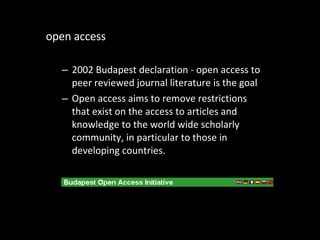
open access 2002 Budapest declaration - open access to peer reviewed journal literature is the goal Open access aims to remove restrictions that exist on the access to articles and knowledge to the world wide scholarly community, in particular to those in developing countries.
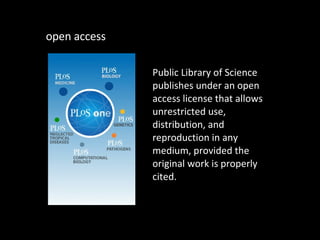
open access Public Library of Science publishes under an open access license that allows unrestricted use, distribution, and reproduction in any medium, provided the original work is properly cited.
open access "Harvard University's Faculty of Arts and Sciences adopted the world's 38th Green Open Access Self-Archiving Mandate"
open access "The objective of the Harvard mandate is to provide Open Access (OA) to its own scholarly article output. This objective is accomplished by making those articles freely accessible on the web by depositing them in a Harvard OA Institutional Repository."
open teaching David Wiley taught an online course at Utah State University last fall and let anyone fully participate 5 students, joined 15 who had registered, and got a ‘home-made certificate’ from Dr. Wiley.
open teaching 200 students informally followed a course by Alec Couros, information and communication technology coordinator for the School of Education at the University of Regina, in Saskatchewan.
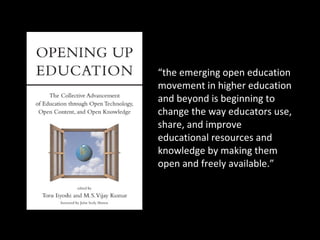
“ the emerging open education movement in higher education and beyond is beginning to change the way educators use, share, and improve educational resources and knowledge by making them open and freely available.”
Change pressure 3. Changing student habits, expectations, attitudes and abilities.
Today’s student…
A child born in 1990, now entering university,  has not known a world without the Internet.
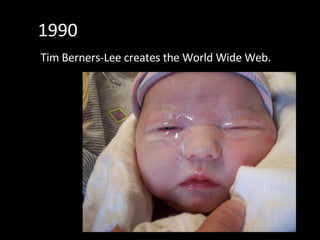
1990 Tim Berners-Lee creates the World Wide Web.
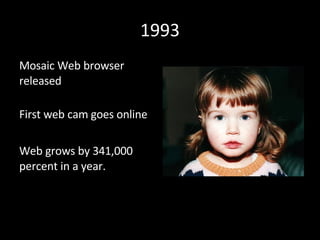
1993 Mosaic Web browser released First web cam goes online Web grows by 341,000 percent in a year.
1994 Precursor to Yahoo goes online Netscape browser released
1995 Amazon.com launched RealAudio, audio streaming technology, developed  Traditional online dial-up systems (Compuserve, America Online, Prodigy) begin to provide Internet access  eBay founded as Auctionweb
1996 The WWW browser war, fought primarily between Netscape and Microsoft 342,081 websites (August) Hotmail launched
1997 Term weblog, later shortened to blog, coined
1998 Google opens its first office in a garage
1999 MMORG Everquest released Napster launched MySpace launched
2000 Nearly 20 million websites online (August) Dot com bubble bursts
2001 Wikipedia founded Pope John Paul II sends an email
2003 iTunes launched
2004 Mozilla Firefox open source browser released Facebook launched
2005 Youtube launched Web 2.0 defined by Tim O’Reilly
2006 Estimated 92 million websites online Google acquires YouTube for $US1.65 billion
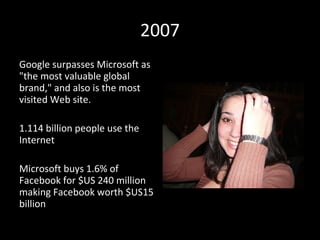
2007 Google surpasses Microsoft as "the most valuable global brand," and also is the most visited Web site. 1.114 billion people use the Internet  Microsoft buys 1.6% of Facebook for $US 240 million   making Facebook worth $US15 billion
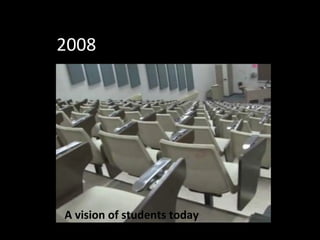
2008 A vision of students today
habits are changing
A spring 2007 survey and interviews with 27,846 freshman, senior, and community college students at 103 American higher education institutions indicated:   The ECAR Study of Undergraduate Students and Information Technology, 2007
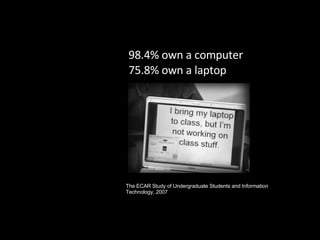
98.4% own a computer  75.8% own a laptop The ECAR Study of Undergraduate Students and Information Technology, 2007
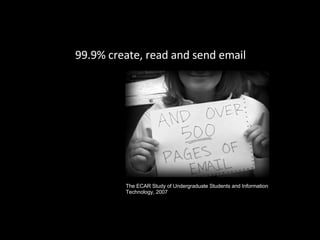
99.9% create, read and send email The ECAR Study of Undergraduate Students and Information Technology, 2007
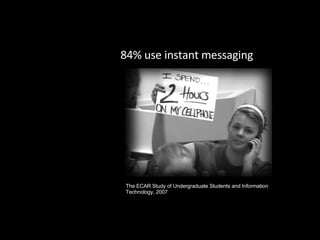
84% use instant messaging The ECAR Study of Undergraduate Students and Information Technology, 2007
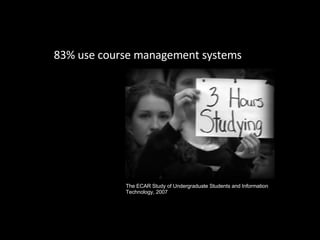
83% use course management systems The ECAR Study of Undergraduate Students and Information Technology, 2007
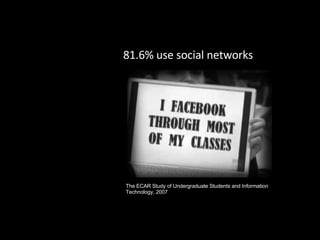
81.6% use social networks The ECAR Study of Undergraduate Students and Information Technology, 2007
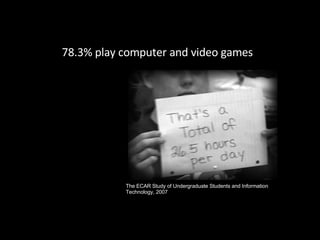
78.3% play computer and video games The ECAR Study of Undergraduate Students and Information Technology, 2007
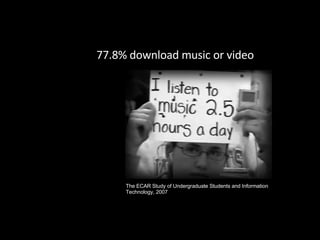
77.8% download music or video The ECAR Study of Undergraduate Students and Information Technology, 2007
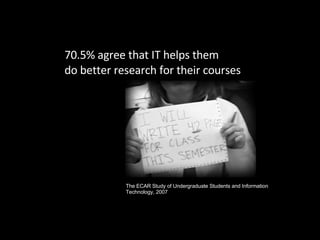
70.5% agree that IT helps them  do better research for their courses The ECAR Study of Undergraduate Students and Information Technology, 2007
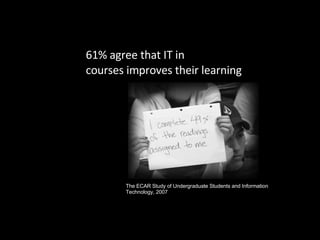
61% agree that IT in  courses improves their learning The ECAR Study of Undergraduate Students and Information Technology, 2007
Today’s undergraduate student spends an average of 18 hours per week online The ECAR Study of Undergraduate Students and Information Technology, 2007
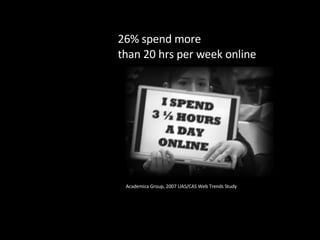
26% spend more  than 20 hrs per week online Academica Group, 2007 UAS/CAS Web Trends Study
They are the first generation to grow up with the Internet – pervasive, always-on, and now … mobile.
with the WWW – whatever, whenever, wherever.
expectations are changing
immersed in a cloud of information and services
students expect access to information and friends anywhere and anytime
ubiquitous infinite bandwidth
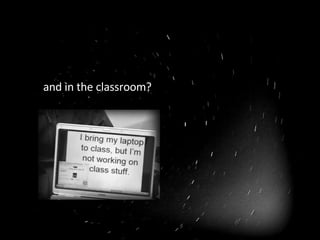
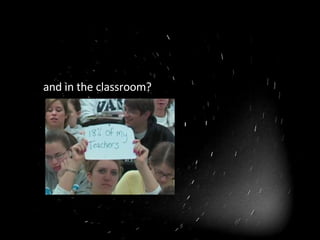
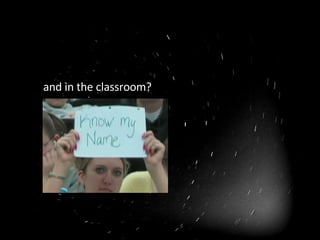
and in the classroom?
attitudes are changing
The Web has shifted from being a medium, in which information is transmitted and consumed, into being a platform, in which content is created, shared, remixed, repurposed, and passed along.  Stephen Downes
the emergence of Web 2.0 is not a technological revolution, it is a social revolution  Stephen Downes
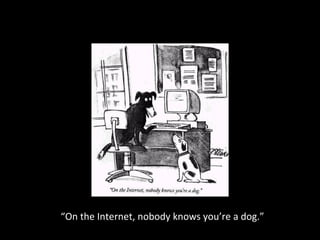
“ On the Internet, nobody knows you’re a dog.”
today’s student switches contexts quickly (multitasks?)
today’s student jumps into new areas (doesn’t read the manual)
today’s student is cynical
today’s student does not respect authority
today’s student is inherently collaborative
If habits, expectations and attitudes are changing are abilities changing as well?
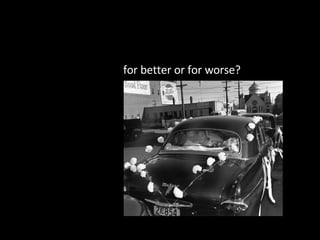
for better or for worse?
technology is making us smarter
What is surprising perhaps is … the sophisticated ways in which they are finding and synthesizing information and integrating across multiple sources of data. JISC LXP Student experiences of technologies Draft final report Gráinne Conole, Maarten de Laat, Teresa Dillon and Jonathan Darby 1The Open University, 2Exeter University, 3Polar Produce http://www.jisc.ac.uk/media/documents/programmes/elearningpedagogy/lxpprojectfinalreportdec06.pdf
…  there is strong evidence of peer support and peer community, resonant with the rhetoric inherent in the idea of social networking and the world of Web 2.0. JISC LXP Student experiences of technologies Draft final report Gráinne Conole, Maarten de Laat, Teresa Dillon and Jonathan Darby 1The Open University, 2Exeter University, 3Polar Produce http://www.jisc.ac.uk/media/documents/programmes/elearningpedagogy/lxpprojectfinalreportdec06.pdf
 
“ popular culture has, on average, grown more complex and intellectually challenging over the past thirty years." Steven Berlin Johnson
In the US, IQ scores have risen about 3 points per decade since 1940 Mark Bauerlein
technology is making us dumber
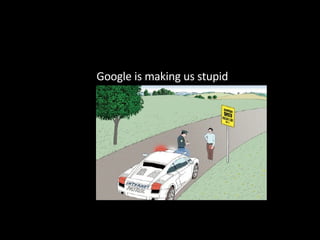
Google is making us stupid
Over the past few years I’ve had an uncomfortable sense that someone, or something, has been tinkering with my brain, remapping the neural circuitry, reprogramming the memory.
My mind isn’t going—so far as I can tell—but it’s changing.
I’m not thinking the way I used to think. I can feel it most strongly when I’m reading.
Immersing myself in a book or a lengthy article used to be easy. My mind would get caught up in the narrative or the turns of the argument, and I’d spend hours strolling through long stretches of prose.
That’s rarely the case anymore.
Now my concentration often starts to drift after two or three pages.
I get fidgety,
lose the thread
begin looking for something else to do.
I feel as if I’m always dragging my wayward brain back to the text.
The deep reading that used to come naturally
has become a struggle.
I get fidgety,
lose the thread
begin looking for something else to do.
I feel as if I’m always dragging my wayward brain back to the text.
The deep reading that used to come naturally
has become a struggle.
I get fidgety
lose the thread
I get fidgety
Or . . . technology is making us smarter
“ Students are demonstrating new skills in terms of harnessing the potential of technologies for their learning. These include new forms of evaluation skills and strategies ( searching, restructuring, validating), which enable them to critique and make critical decisions about a variety of sources and content.” JISC LXO: Student experiences of technologies
“ The use of these tools is changing the way we gather, use and create knowledge. There is a shift in the basic skills with a  shift from lower to higher levels of Blooms taxonomy , necessary to make sense of their complex technologically enriched learning environment.” JISC LXO: Student experiences of technologies
Or . . . technology is making us dumber
 
Decrease in verbal-linguistic and logical mathematical intelligence. Increase in spatial intelligence. Mark Bauerlein, The Dumbest Generation
“ The simple fact is that kids aren't reading, aren't engaging in wider cultural experiences, aren't developing broad horizons of interest or knowledge. And so, they are not building the cognitive frameworks they require for a flourishing life” Mark Nichols
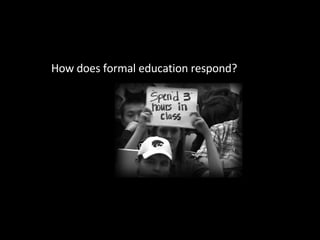
What formal education does How does formal education respond?
“ in school they are expected to submit to a pedagogic regime that is fundamentally premised on the transmission and testing of decontextualised knowledge and skills, and which is dominated by “old generation” technologies (Web 1.0) underpinned by a radically different philosophy and a different set of affordances.” Learning from digital natives: bridging formal and informal learning
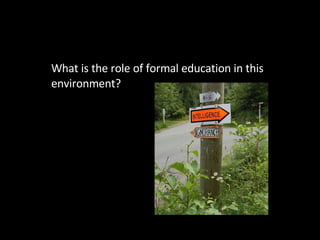
What formal education does What is the role of formal education in this environment?
What formal education does What value does it add?
cognitive growth conceptual maturity the development of reasoning exposure to alternatives The promise – the values of a formal education
Formal education puts boundaries on knowledge – courses circumscribe what has to be learned.  The practice
Formal education defines outcomes – programs extract meaningful chunks (courses) and sequence them The practice
Provides structure and discipline– through place/space/time (both physical and virtual) The practice
Provides access to experts, mentors, guides (both human and technological) The practice
Provides access to learning resources - libraries, studios and labs. The practice
Provides a narrative of coherence. The practice
“ Formal and informal learning have been viewed as competing paradigms, however, students are increasingly adopting the tools and strategies for informal learning within formalised educational settings.” "a widening of the gap between the culture of the educational institutions and the culture of learners' lives outside school" (p.4)
What formal education does is elearning a solution?
What formal education does can it close the gap?
What formal education does can it  adopt the tools and strategies used by students for informal learning within formalised educational settings?
What formal education does a definition of elearning …
“ Electronic learning (or e-Learning or eLearning) is a type of education where the medium of instruction is computer technology. No in-person interaction may take place in some instances.” http://en.wikipedia.org/wiki/E-learning
elearning is pedagogy empowered by technology . Mark Nichols ,
elearning is as varied as the pedagogies and technologies that facilitate it. Mark Nichols ,
Almost all current university level courses have an elearning component
From the simplest … a traditional face to face course  augmented  with email communication between instructor and students and/or students to students
To a  blended  course… where  traditional learning activities are moved online (e.g. bulletin board discussion, simulation, or online test) with a reduction in face to face contact time.
To an  online  course . . . where all content, communication, interaction and assessment are delivered through technology.
distance learning is not necessarily elearning .
online learning is a type of elearning .
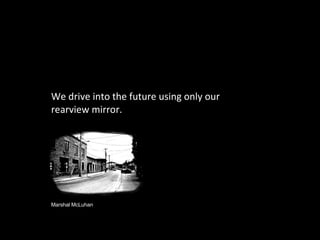
We drive into the future using only our rearview mirror. Marshal McLuhan
We use new tools to do the work of the old. Marshal McLuhan
Powerpoint, audio, video, podcasts, simulations to augment lectures
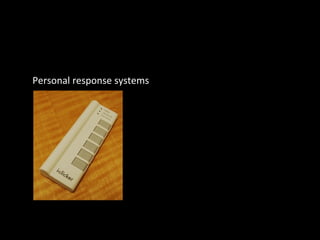
Personal response systems
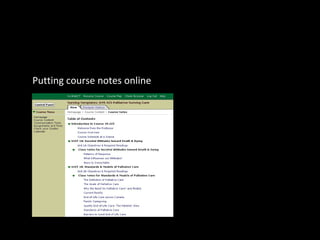
Putting course notes online
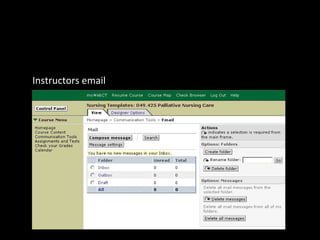
Instructors email
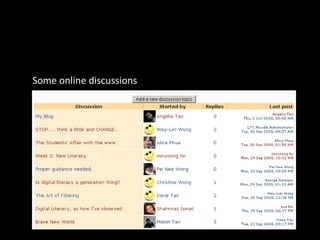
Some online discussions
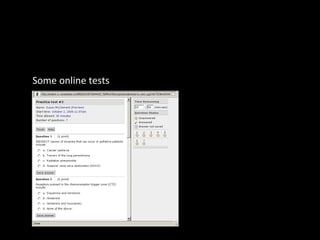
Some online tests
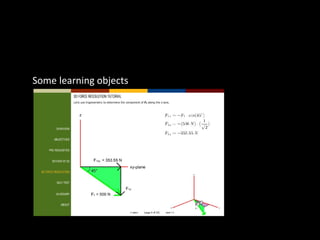
Some learning objects
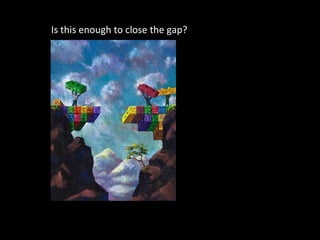
Is this enough to close the gap?
Or do we need to change our approach to teaching and learning?
Or do we need to change our approach to ownership and authority?
Or do we need to change our approach to command and control?
and take steps
to address the new habits, attitudes, expectations and abilities of students
to rethink authority, control and teaching and learning strategies in a networked world.
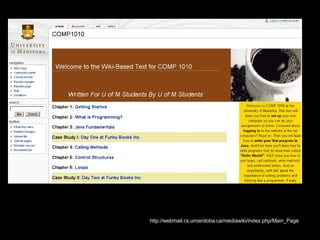
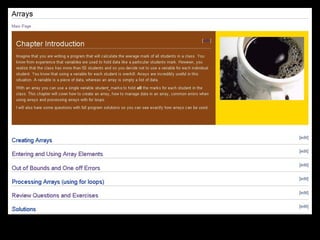
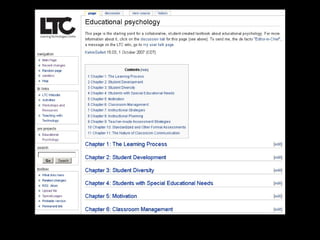
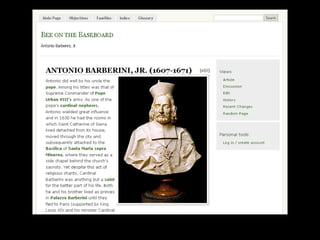
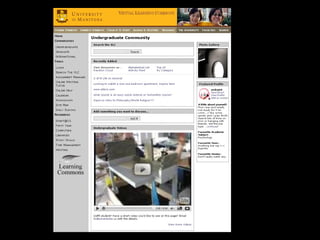
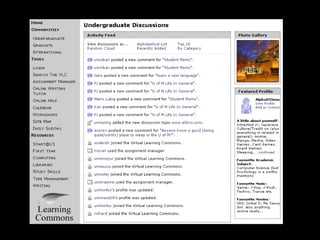
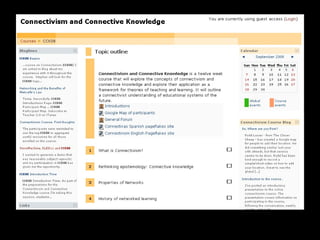
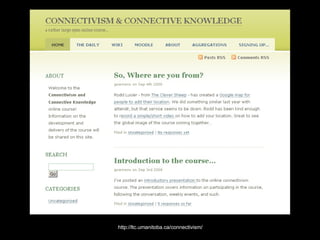
to try collaboration and open access through a social networking site, wiki projects, new partnerships for online courses and a massively open online course (MOOC)
http://webmail.cs.umanitoba.ca/mediawiki/index.php/Main_Page


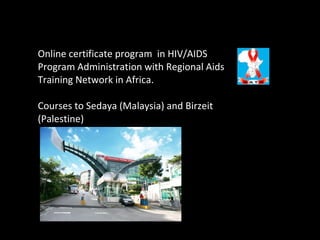
Online certificate program  in HIV/AIDS Program Administration with Regional Aids Training Network in Africa. Courses to Sedaya (Malaysia) and Birzeit (Palestine)
Open teaching
 
http://ltc.umanitoba.ca/connectivism/
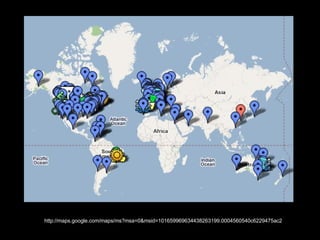
http://maps.google.com/maps/ms?msa=0&msid=101659969634438263199.0004560540c6229475ac2
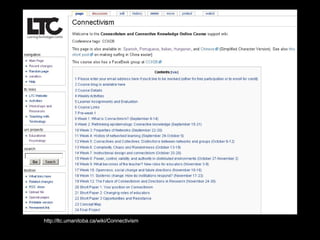
http://ltc.umanitoba.ca/wiki/Connectivism
Thank you! Peter Tittenberger 474-7230 [email_address] umanitoba.ca/learning_technologies

IACE-T Presentation

  • 1.
    elearning: promises andpractices Peter Tittenberger Learning Technologies Centre University of Manitoba October, 2008
  • 2.
    Change pressures information growth open movement student habits How does education respond? values of formal education the role of elearning
  • 3.
    The world isflat The world is flat …
  • 4.
    The world isflat The world is spiky …
  • 5.
    Information growth Changepressure 1. Growth of information .
  • 6.
    Information growth In2006, the amount of digital information created, captured, and replicated was 161 exabytes or 161 billion gigabytes … This is about 3 million times the information in all the books ever written. The Diverse and Exploding Digital Universe
  • 7.
    Information growth Between2006 and 2010, the information added annually to the digital universe will increase more than six fold from 161 exabytes to 988 exabytes. The Diverse and Exploding Digital Universe
  • 8.
    Information growth Images,captured by more than 1 billion devices in the world, from digital cameras and camera phones to medical scanners and security cameras, comprise the largest component of the digital universe. The Diverse and Exploding Digital Universe
  • 9.
    Information growth Chevron'sCIO says his company accumulates data at the rate of 2 terabytes – 17,592,000,000,000 bits – a day. The Diverse and Exploding Digital Universe
  • 10.
    More than 3,000new books are published . . . Karl Fisch http://thefischbowl.blogspot.com/2006/08/did-you-know.html
  • 11.
    daily . KarlFisch http://thefischbowl.blogspot.com/2006/08/did-you-know.html
  • 12.
    It’s estimated thata week’s worth of New York Times . . . Karl Fisch http://thefischbowl.blogspot.com/2006/08/did-you-know.html
  • 13.
    Contains more informationthan a person was likely to come across in a lifetime in the 18 th century. Karl Fisch http://thefischbowl.blogspot.com/2006/08/did-you-know.html
  • 14.
    The amount ofnew technical information is doubling every 2 years. Karl Fisch http://thefischbowl.blogspot.com/2006/08/did-you-know.html
  • 15.
    It’s predicted todouble every 72 hours by 2010. Karl Fisch http://thefischbowl.blogspot.com/2006/08/did-you-know.html
  • 16.
  • 17.
    By 2013 asupercomputer will be built that exceeds the computation capability of the human brain . . . Karl Fisch http://thefischbowl.blogspot.com/2006/08/did-you-know.html
  • 18.
    By 2023, a$1,000 computer will exceed the computation capability of the human brain . . . Karl Fisch http://thefischbowl.blogspot.com/2006/08/did-you-know.html
  • 19.
    And while technicalpredictions further out than about 15 years are hard to do . . . Karl Fisch http://thefischbowl.blogspot.com/2006/08/did-you-know.html
  • 20.
    Predictions are thatby 2049 a $1,000 computer will exceed the computational capabilities of the human race . Karl Fisch http://thefischbowl.blogspot.com/2006/08/did-you-know.html
  • 21.
    Who is producingall this information?
  • 22.
  • 23.
    What’s happening? Thisinformation growth is leading to …
  • 24.
    What’s happening? DecentralizationDemocratization Changing notion of what it means to know Continual suspended certainty Chaotic (diverse, messy and unbounded)
  • 25.
    What’s happening? characteristicsat odds with formal education which likes learning to be …
  • 26.
    What’s happening? ControlledAuthoritative Certain Linear Neat and bounded
  • 27.
    Change pressure 2.The open movement.
  • 28.
    “… informationwants to be free …” Stewart Brand, 1984
  • 29.
    open technology opencontent open access open teaching
  • 30.
    open technology Linux(OS) Apache (web server) mySQL (database) Moodle, Sakai (LMS) Wordpress (blogs) Drupal (CMS) Mediawiki (wikis) Open Journal Systems (publishing) DimDim (web conferencing) Etc…
  • 31.
    free supporting softwareFirefox (browser) Thunderbird (email) Skype (VOIP) OpenOffice Audacity (audio) Etc…
  • 32.
    free web servicesBlogs (blogger.com) Google groups Image sharing (Flickr) Video (youtube) Bookmarking (delicious) Wikis (pbwiki) Webconferencing (wiziq) RSS readers (Pageflakes) Presentations (slideshare) 75,000,000 photos
  • 33.
    open content OpenEducational Resources (OER) are teaching, learning, and research resources that reside in the public domain or have been released under an intellectual property license that permits their free use or re-purposing by others.
  • 34.
    open content Openeducational resources include full courses, course materials, modules, textbooks, streaming videos, tests, software, and any other tools, materials, or techniques used to support access to knowledge.
  • 35.
    open educational resources“ shifting faculty perspectives from this courseware is mine to this courseware is for (open) mining.”
  • 36.
    open educational resourcesThe Cape Town Open Education Declaration “ everyone should have the freedom to use, customize, improve and redistribute educational resources without constraint.” October 1, 2008 171 organizations and 1680 individuals signed
  • 37.
    Open Educational ResourcesMIT Open CourseWare project
  • 38.
    open educational resourcesOpenCourseware Consortium Over 200 HE institutions OpenLearn (Open University) Internet Archive OER initiatives Hewlett Packard Rice Connexions UNESCO OECD Curriki Merlot Creative Commons
  • 39.
    open access 25,000peer-reviewed journals published worldwide 2.5 million articles per year Most universities subscribe to only a small set of these
  • 40.
  • 41.
    open access 2002Budapest declaration - open access to peer reviewed journal literature is the goal Open access aims to remove restrictions that exist on the access to articles and knowledge to the world wide scholarly community, in particular to those in developing countries.
  • 42.
    open access PublicLibrary of Science publishes under an open access license that allows unrestricted use, distribution, and reproduction in any medium, provided the original work is properly cited.
  • 43.
    open access "HarvardUniversity's Faculty of Arts and Sciences adopted the world's 38th Green Open Access Self-Archiving Mandate"
  • 44.
    open access "Theobjective of the Harvard mandate is to provide Open Access (OA) to its own scholarly article output. This objective is accomplished by making those articles freely accessible on the web by depositing them in a Harvard OA Institutional Repository."
  • 45.
    open teaching DavidWiley taught an online course at Utah State University last fall and let anyone fully participate 5 students, joined 15 who had registered, and got a ‘home-made certificate’ from Dr. Wiley.
  • 46.
    open teaching 200students informally followed a course by Alec Couros, information and communication technology coordinator for the School of Education at the University of Regina, in Saskatchewan.
  • 47.
    “ the emergingopen education movement in higher education and beyond is beginning to change the way educators use, share, and improve educational resources and knowledge by making them open and freely available.”
  • 48.
    Change pressure 3.Changing student habits, expectations, attitudes and abilities.
  • 49.
  • 50.
    A child bornin 1990, now entering university, has not known a world without the Internet.
  • 51.
    1990 Tim Berners-Leecreates the World Wide Web.
  • 52.
    1993 Mosaic Webbrowser released First web cam goes online Web grows by 341,000 percent in a year.
  • 53.
    1994 Precursor toYahoo goes online Netscape browser released
  • 54.
    1995 Amazon.com launchedRealAudio, audio streaming technology, developed Traditional online dial-up systems (Compuserve, America Online, Prodigy) begin to provide Internet access eBay founded as Auctionweb
  • 55.
    1996 The WWWbrowser war, fought primarily between Netscape and Microsoft 342,081 websites (August) Hotmail launched
  • 56.
    1997 Term weblog,later shortened to blog, coined
  • 57.
    1998 Google opensits first office in a garage
  • 58.
    1999 MMORG Everquestreleased Napster launched MySpace launched
  • 59.
    2000 Nearly 20million websites online (August) Dot com bubble bursts
  • 60.
    2001 Wikipedia foundedPope John Paul II sends an email
  • 61.
  • 62.
    2004 Mozilla Firefoxopen source browser released Facebook launched
  • 63.
    2005 Youtube launchedWeb 2.0 defined by Tim O’Reilly
  • 64.
    2006 Estimated 92million websites online Google acquires YouTube for $US1.65 billion
  • 65.
    2007 Google surpasses Microsoftas "the most valuable global brand," and also is the most visited Web site. 1.114 billion people use the Internet Microsoft buys 1.6% of Facebook for $US 240 million making Facebook worth $US15 billion
  • 66.
    2008 A visionof students today
  • 67.
  • 68.
    A spring 2007survey and interviews with 27,846 freshman, senior, and community college students at 103 American higher education institutions indicated: The ECAR Study of Undergraduate Students and Information Technology, 2007
  • 69.
    98.4% own acomputer 75.8% own a laptop The ECAR Study of Undergraduate Students and Information Technology, 2007
  • 70.
    99.9% create, readand send email The ECAR Study of Undergraduate Students and Information Technology, 2007
  • 71.
    84% use instantmessaging The ECAR Study of Undergraduate Students and Information Technology, 2007
  • 72.
    83% use coursemanagement systems The ECAR Study of Undergraduate Students and Information Technology, 2007
  • 73.
    81.6% use socialnetworks The ECAR Study of Undergraduate Students and Information Technology, 2007
  • 74.
    78.3% play computerand video games The ECAR Study of Undergraduate Students and Information Technology, 2007
  • 75.
    77.8% download musicor video The ECAR Study of Undergraduate Students and Information Technology, 2007
  • 76.
    70.5% agree thatIT helps them do better research for their courses The ECAR Study of Undergraduate Students and Information Technology, 2007
  • 77.
    61% agree thatIT in courses improves their learning The ECAR Study of Undergraduate Students and Information Technology, 2007
  • 78.
    Today’s undergraduate studentspends an average of 18 hours per week online The ECAR Study of Undergraduate Students and Information Technology, 2007
  • 79.
    26% spend more than 20 hrs per week online Academica Group, 2007 UAS/CAS Web Trends Study
  • 80.
    They are thefirst generation to grow up with the Internet – pervasive, always-on, and now … mobile.
  • 81.
    with the WWW– whatever, whenever, wherever.
  • 82.
  • 83.
    immersed in acloud of information and services
  • 84.
    students expect accessto information and friends anywhere and anytime
  • 85.
  • 86.
    and in theclassroom?
  • 87.
    and in theclassroom?
  • 88.
    and in theclassroom?
  • 89.
  • 90.
    The Web hasshifted from being a medium, in which information is transmitted and consumed, into being a platform, in which content is created, shared, remixed, repurposed, and passed along. Stephen Downes
  • 91.
    the emergence ofWeb 2.0 is not a technological revolution, it is a social revolution Stephen Downes
  • 92.
    “ On theInternet, nobody knows you’re a dog.”
  • 93.
    today’s student switchescontexts quickly (multitasks?)
  • 94.
    today’s student jumpsinto new areas (doesn’t read the manual)
  • 95.
  • 96.
    today’s student doesnot respect authority
  • 97.
    today’s student isinherently collaborative
  • 98.
    If habits, expectationsand attitudes are changing are abilities changing as well?
  • 99.
    for better orfor worse?
  • 100.
  • 101.
    What is surprisingperhaps is … the sophisticated ways in which they are finding and synthesizing information and integrating across multiple sources of data. JISC LXP Student experiences of technologies Draft final report Gráinne Conole, Maarten de Laat, Teresa Dillon and Jonathan Darby 1The Open University, 2Exeter University, 3Polar Produce http://www.jisc.ac.uk/media/documents/programmes/elearningpedagogy/lxpprojectfinalreportdec06.pdf
  • 102.
    … thereis strong evidence of peer support and peer community, resonant with the rhetoric inherent in the idea of social networking and the world of Web 2.0. JISC LXP Student experiences of technologies Draft final report Gráinne Conole, Maarten de Laat, Teresa Dillon and Jonathan Darby 1The Open University, 2Exeter University, 3Polar Produce http://www.jisc.ac.uk/media/documents/programmes/elearningpedagogy/lxpprojectfinalreportdec06.pdf
  • 103.
  • 104.
    “ popular culturehas, on average, grown more complex and intellectually challenging over the past thirty years." Steven Berlin Johnson
  • 105.
    In the US,IQ scores have risen about 3 points per decade since 1940 Mark Bauerlein
  • 106.
  • 107.
  • 108.
    Over the pastfew years I’ve had an uncomfortable sense that someone, or something, has been tinkering with my brain, remapping the neural circuitry, reprogramming the memory.
  • 109.
    My mind isn’tgoing—so far as I can tell—but it’s changing.
  • 110.
    I’m not thinkingthe way I used to think. I can feel it most strongly when I’m reading.
  • 111.
    Immersing myself ina book or a lengthy article used to be easy. My mind would get caught up in the narrative or the turns of the argument, and I’d spend hours strolling through long stretches of prose.
  • 112.
    That’s rarely thecase anymore.
  • 113.
    Now my concentrationoften starts to drift after two or three pages.
  • 114.
  • 115.
  • 116.
    begin looking forsomething else to do.
  • 117.
    I feel asif I’m always dragging my wayward brain back to the text.
  • 118.
    The deep readingthat used to come naturally
  • 119.
    has become astruggle.
  • 120.
  • 121.
  • 122.
    begin looking forsomething else to do.
  • 123.
    I feel asif I’m always dragging my wayward brain back to the text.
  • 124.
    The deep readingthat used to come naturally
  • 125.
    has become astruggle.
  • 126.
  • 127.
  • 128.
  • 129.
    Or . .. technology is making us smarter
  • 130.
    “ Students aredemonstrating new skills in terms of harnessing the potential of technologies for their learning. These include new forms of evaluation skills and strategies ( searching, restructuring, validating), which enable them to critique and make critical decisions about a variety of sources and content.” JISC LXO: Student experiences of technologies
  • 131.
    “ The useof these tools is changing the way we gather, use and create knowledge. There is a shift in the basic skills with a shift from lower to higher levels of Blooms taxonomy , necessary to make sense of their complex technologically enriched learning environment.” JISC LXO: Student experiences of technologies
  • 132.
    Or . .. technology is making us dumber
  • 133.
  • 134.
    Decrease in verbal-linguisticand logical mathematical intelligence. Increase in spatial intelligence. Mark Bauerlein, The Dumbest Generation
  • 135.
    “ The simplefact is that kids aren't reading, aren't engaging in wider cultural experiences, aren't developing broad horizons of interest or knowledge. And so, they are not building the cognitive frameworks they require for a flourishing life” Mark Nichols
  • 136.
    What formal educationdoes How does formal education respond?
  • 137.
    “ in schoolthey are expected to submit to a pedagogic regime that is fundamentally premised on the transmission and testing of decontextualised knowledge and skills, and which is dominated by “old generation” technologies (Web 1.0) underpinned by a radically different philosophy and a different set of affordances.” Learning from digital natives: bridging formal and informal learning
  • 138.
    What formal educationdoes What is the role of formal education in this environment?
  • 139.
    What formal educationdoes What value does it add?
  • 140.
    cognitive growth conceptualmaturity the development of reasoning exposure to alternatives The promise – the values of a formal education
  • 141.
    Formal education putsboundaries on knowledge – courses circumscribe what has to be learned. The practice
  • 142.
    Formal education definesoutcomes – programs extract meaningful chunks (courses) and sequence them The practice
  • 143.
    Provides structure anddiscipline– through place/space/time (both physical and virtual) The practice
  • 144.
    Provides access toexperts, mentors, guides (both human and technological) The practice
  • 145.
    Provides access tolearning resources - libraries, studios and labs. The practice
  • 146.
    Provides a narrativeof coherence. The practice
  • 147.
    “ Formal andinformal learning have been viewed as competing paradigms, however, students are increasingly adopting the tools and strategies for informal learning within formalised educational settings.” "a widening of the gap between the culture of the educational institutions and the culture of learners' lives outside school" (p.4)
  • 148.
    What formal educationdoes is elearning a solution?
  • 149.
    What formal educationdoes can it close the gap?
  • 150.
    What formal educationdoes can it adopt the tools and strategies used by students for informal learning within formalised educational settings?
  • 151.
    What formal educationdoes a definition of elearning …
  • 152.
    “ Electronic learning(or e-Learning or eLearning) is a type of education where the medium of instruction is computer technology. No in-person interaction may take place in some instances.” http://en.wikipedia.org/wiki/E-learning
  • 153.
    elearning is pedagogyempowered by technology . Mark Nichols ,
  • 154.
    elearning is asvaried as the pedagogies and technologies that facilitate it. Mark Nichols ,
  • 155.
    Almost all currentuniversity level courses have an elearning component
  • 156.
    From the simplest… a traditional face to face course augmented with email communication between instructor and students and/or students to students
  • 157.
    To a blended course… where traditional learning activities are moved online (e.g. bulletin board discussion, simulation, or online test) with a reduction in face to face contact time.
  • 158.
    To an online course . . . where all content, communication, interaction and assessment are delivered through technology.
  • 159.
    distance learning isnot necessarily elearning .
  • 160.
    online learning isa type of elearning .
  • 161.
    We drive intothe future using only our rearview mirror. Marshal McLuhan
  • 162.
    We use newtools to do the work of the old. Marshal McLuhan
  • 163.
    Powerpoint, audio, video,podcasts, simulations to augment lectures
  • 164.
  • 165.
  • 166.
  • 167.
  • 168.
  • 169.
  • 170.
    Is this enoughto close the gap?
  • 171.
    Or do weneed to change our approach to teaching and learning?
  • 172.
    Or do weneed to change our approach to ownership and authority?
  • 173.
    Or do weneed to change our approach to command and control?
  • 174.
  • 175.
    to address thenew habits, attitudes, expectations and abilities of students
  • 176.
    to rethink authority,control and teaching and learning strategies in a networked world.
  • 177.
    to try collaborationand open access through a social networking site, wiki projects, new partnerships for online courses and a massively open online course (MOOC)
  • 178.
  • 179.
  • 180.
  • 181.
  • 182.
  • 183.
  • 184.
    Online certificate program in HIV/AIDS Program Administration with Regional Aids Training Network in Africa. Courses to Sedaya (Malaysia) and Birzeit (Palestine)
  • 185.
  • 186.
  • 187.
  • 188.
  • 189.
  • 190.
    Thank you! PeterTittenberger 474-7230 [email_address] umanitoba.ca/learning_technologies