RESEARCH PROBLEM
DR. MAHESWARI JAIKUMAR
maheswarijaikumar2103@gmail.com
INTRODUCTION
• A Research problem is a question
that a researcher wants to
answer or a problem that a
researcher wants to solve.
• A research problem is an issues
or a concern that an investigator
/ researcher presents and
justifies in a research study.
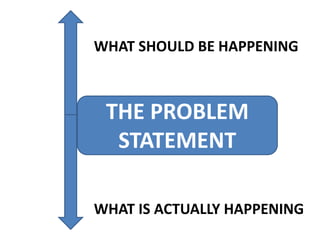
WHAT SHOULD BE HAPPENING
WHAT IS ACTUALLY HAPPENING
THE PROBLEM
STATEMENT
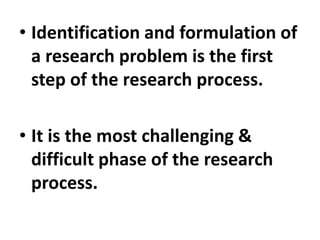
• Identification and formulation of
a research problem is the first
step of the research process.
• It is the most challenging &
difficult phase of the research
process.
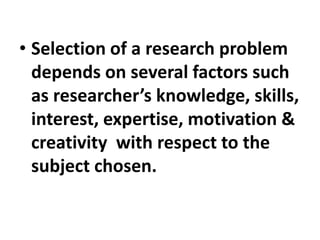
• Selection of a research problem
depends on several factors such
as researcher’s knowledge, skills,
interest, expertise, motivation &
creativity with respect to the
subject chosen.
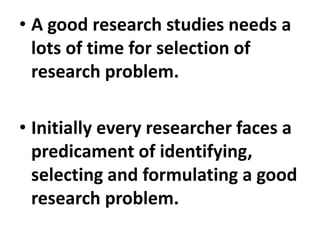
• A good research studies needs a
lots of time for selection of
research problem.
• Initially every researcher faces a
predicament of identifying,
selecting and formulating a good
research problem.
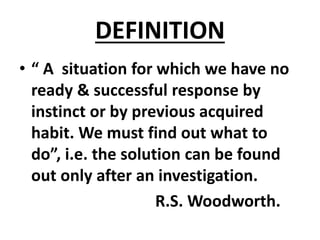
DEFINITION
• “ A situation for which we have no
ready & successful response by
instinct or by previous acquired
habit. We must find out what to
do”, i.e. the solution can be found
out only after an investigation.
R.S. Woodworth.
• In others words, a research
problem is an area of concern
where there is a gap in the
knowledge base needed for
professional practices.
• A research problem and problem
statement are frequently used as
synonyms.
• However there are a lot of
difference between them.
COMPONENTS OF A
RESEARCH PROBLEM
• A research problem has 6
components.
• They are as follows…
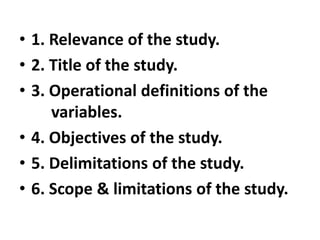
• 1. Relevance of the study.
• 2. Title of the study.
• 3. Operational definitions of the
variables.
• 4. Objectives of the study.
• 5. Delimitations of the study.
• 6. Scope & limitations of the study.
IDENTIFICATION OF RESEARCH
PROBLEM
• Identification of the research
problem is the first step.
• Generally a broad area is selected
and then it is delimited or narrowed
down to a specific one sentence
statement of the problem.
SOURCES OF RESEARCH
PROBLEM
• The common sources of
research problem are as follows.
• 1. Personal experience.
• 2. Practical experience.
• 3. critical appraisal of literature.
• 4.Previous research.
• 5. existing theories.
• 6. Social issues.
• 7. Brainstorming.
• 8. Intuition.
• 9. Folklores.
• 10. Exposure to field situation.
• 11. Consultation with experts.
PERSONAL EXPERIENCE
• Day to day experience of the
researcher serves as a good
source of ideas to formulate
research problem.
• Eg.,
PRACTICAL EXPERIENCE
• Clinical experience provides
nurses ample opportunities foe
problem identification.
• This serves as a source for
identifying research problems.
CRITICAL APPRAISAL OF
LITERATURE
• When one looks at books,
articles, summaries of clinical
issues relating to the subject of
our interest, pertinent questions
may arise.
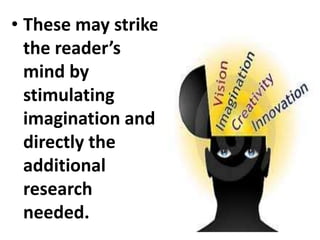
• These may strike
the reader’s
mind by
stimulating
imagination and
directly the
additional
research
needed.
PREVIOUS RESEARCH
• A body of knowledge is
developed on a sound research
finding.
• Usually at the end of the research
problems are suggested based on
the shortcoming of the previous
research, these could be
investigated.
EXISTING THEORIES
• Research is a process of theory
development and theory testing.
• If an existing theory is used in
developing a researchable
problem, a specific statement
from theory must be isolated.
• Generally a part or parts of a
theory are subjected to testing in
a clinical situation.
• The testing of a theory is needed
therefore they serve as a good
source of research problem.
SOCIAL ISUES
• Sometimes issues of global
contemporary or political issues of
relevance are suggested.
• A idea for a research may stem
from a familiarity with social
concerns or controversial social
issues.
BRAINSTORMING
• Brainstorming sessions are good
techniques to find new research
questions.
• Brainstorming refers to
intensified discussions among
interested people of the
profession in order to find more
ideas to formulate a good
research problem.
INTUITION
• Intuitions' are considered good
sources of knowledge as well as
sources to find new research
problems.
• It is believed that reflective mind
is a good source of ideas, which
may be used to find out new and
good research problems.
FOLKLORES
• Common beliefs could be right or
wrong.
• E.g., Studying just before
examination decrease the score.
A researcher can conduct a study
to test this.
EXPOSURE TO FIELD
SITUATIONS
• During field exposure
researchers get a variety of
experiences which may provide
plenty of ideas to formulate
research problems.
CONSULTATIONS WITH
EXPERTS
• Experts are believed to have
sound experience of their
respective field, which may
suggest a significant problem to
be studied.
• In addition experts may help in
finding a current problem of
discipline to be solved which
may serve as a basis for
formulation of research
problem.
THANK YOU

A RESEARCH PROBLEM

  • 1.
    RESEARCH PROBLEM DR. MAHESWARIJAIKUMAR maheswarijaikumar2103@gmail.com
  • 2.
    INTRODUCTION • A Researchproblem is a question that a researcher wants to answer or a problem that a researcher wants to solve.
  • 3.
    • A researchproblem is an issues or a concern that an investigator / researcher presents and justifies in a research study.
  • 4.
    WHAT SHOULD BEHAPPENING WHAT IS ACTUALLY HAPPENING THE PROBLEM STATEMENT
  • 5.
    • Identification andformulation of a research problem is the first step of the research process. • It is the most challenging & difficult phase of the research process.
  • 7.
    • Selection ofa research problem depends on several factors such as researcher’s knowledge, skills, interest, expertise, motivation & creativity with respect to the subject chosen.
  • 8.
    • A goodresearch studies needs a lots of time for selection of research problem. • Initially every researcher faces a predicament of identifying, selecting and formulating a good research problem.
  • 9.
    DEFINITION • “ Asituation for which we have no ready & successful response by instinct or by previous acquired habit. We must find out what to do”, i.e. the solution can be found out only after an investigation. R.S. Woodworth.
  • 10.
    • In otherswords, a research problem is an area of concern where there is a gap in the knowledge base needed for professional practices.
  • 11.
    • A researchproblem and problem statement are frequently used as synonyms. • However there are a lot of difference between them.
  • 13.
    COMPONENTS OF A RESEARCHPROBLEM • A research problem has 6 components. • They are as follows…
  • 14.
    • 1. Relevanceof the study. • 2. Title of the study. • 3. Operational definitions of the variables. • 4. Objectives of the study. • 5. Delimitations of the study. • 6. Scope & limitations of the study.
  • 15.
    IDENTIFICATION OF RESEARCH PROBLEM •Identification of the research problem is the first step. • Generally a broad area is selected and then it is delimited or narrowed down to a specific one sentence statement of the problem.
  • 16.
    SOURCES OF RESEARCH PROBLEM •The common sources of research problem are as follows. • 1. Personal experience. • 2. Practical experience. • 3. critical appraisal of literature.
  • 17.
    • 4.Previous research. •5. existing theories. • 6. Social issues. • 7. Brainstorming. • 8. Intuition. • 9. Folklores. • 10. Exposure to field situation. • 11. Consultation with experts.
  • 18.
    PERSONAL EXPERIENCE • Dayto day experience of the researcher serves as a good source of ideas to formulate research problem. • Eg.,
  • 19.
    PRACTICAL EXPERIENCE • Clinicalexperience provides nurses ample opportunities foe problem identification. • This serves as a source for identifying research problems.
  • 20.
    CRITICAL APPRAISAL OF LITERATURE •When one looks at books, articles, summaries of clinical issues relating to the subject of our interest, pertinent questions may arise.
  • 21.
    • These maystrike the reader’s mind by stimulating imagination and directly the additional research needed.
  • 22.
    PREVIOUS RESEARCH • Abody of knowledge is developed on a sound research finding. • Usually at the end of the research problems are suggested based on the shortcoming of the previous research, these could be investigated.
  • 24.
    EXISTING THEORIES • Researchis a process of theory development and theory testing.
  • 25.
    • If anexisting theory is used in developing a researchable problem, a specific statement from theory must be isolated. • Generally a part or parts of a theory are subjected to testing in a clinical situation.
  • 26.
    • The testingof a theory is needed therefore they serve as a good source of research problem.
  • 27.
    SOCIAL ISUES • Sometimesissues of global contemporary or political issues of relevance are suggested. • A idea for a research may stem from a familiarity with social concerns or controversial social issues.
  • 28.
    BRAINSTORMING • Brainstorming sessionsare good techniques to find new research questions.
  • 29.
    • Brainstorming refersto intensified discussions among interested people of the profession in order to find more ideas to formulate a good research problem.
  • 30.
    INTUITION • Intuitions' areconsidered good sources of knowledge as well as sources to find new research problems.
  • 31.
    • It isbelieved that reflective mind is a good source of ideas, which may be used to find out new and good research problems.
  • 32.
    FOLKLORES • Common beliefscould be right or wrong. • E.g., Studying just before examination decrease the score. A researcher can conduct a study to test this.
  • 33.
    EXPOSURE TO FIELD SITUATIONS •During field exposure researchers get a variety of experiences which may provide plenty of ideas to formulate research problems.
  • 34.
    CONSULTATIONS WITH EXPERTS • Expertsare believed to have sound experience of their respective field, which may suggest a significant problem to be studied.
  • 35.
    • In additionexperts may help in finding a current problem of discipline to be solved which may serve as a basis for formulation of research problem.
  • 36.