Chapter 4: Gene Control of Proteins
• Beadle & Tatum’s “One Gene-One Enzyme Hypothesis”
• Life cycle of Orange Bread Mold (Neurospora crassa)
• Deduction of biochemical pathways using auxotrophic mutants
• Human genetic disorders caused by mutations
• enzyme deficiency disorders
• protein disorders (non-enzyme deficiencies)
• Adaptive and parallel evolution of hemoglobins
1942: George Beadle and Edward Tatum
✓ Studied relationships between genes and enzymes in the haploid
fungus Neurospora crassa (orange bread mold).
✓ Discovered that genes act by regulating definite chemical events.
✓ One Gene-One Enzyme Hypothesis
Each gene controls synthesis/activity of a single enzyme.
Modern formulation:
“one gene-one polypeptide”
Post-modern formulation:
“one gene-multiple gene products plus a lot more”
1958: George Beadle (Cal Tech) & Edward Tatum (Rockefeller Institute)
The Nobel Prize in Physiology or Medicine in
1958 was awarded to George Wells Beadle
and Edward Lawrie Tatum for their discovery
that
genes control individual
steps in metabolism
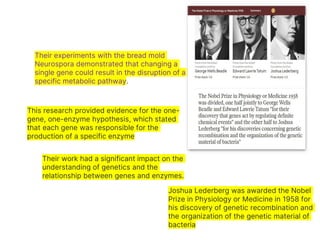
Their experiments with the bread mold
Neurospora demonstrated that changing a
single gene could result in the disruption of a
specific metabolic pathway.
This research provided evidence for the one-
gene, one-enzyme hypothesis, which stated
that each gene was responsible for the
production of a specific enzyme
Their work had a significant impact on the
understanding of genetics and the
relationship between genes and enzymes.
Joshua Lederberg was awarded the Nobel
Prize in Physiology or Medicine in 1958 for
his discovery of genetic recombination and
the organization of the genetic material of
bacteria
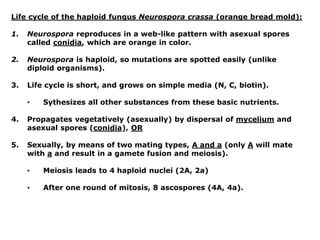
Life cycle of the haploid fungus Neurospora crassa (orange bread mold):
1. Neurospora reproduces in a web-like pattern with asexual spores
called conidia, which are orange in color.
2. Neurospora is haploid, so mutations are spotted easily (unlike
diploid organisms).
3. Life cycle is short, and grows on simple media (N, C, biotin).
• Sythesizes all other substances from these basic nutrients.
4. Propagates vegetatively (asexually) by dispersal of mycelium and
asexual spores (conidia), OR
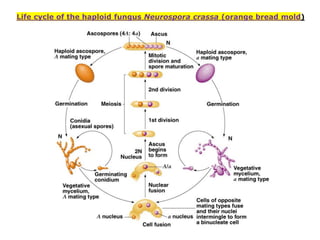
5. Sexually, by means of two mating types, A and a (only A will mate
with a and result in a gamete fusion and meiosis).
• Meiosis leads to 4 haploid nuclei (2A, 2a)
• After one round of mitosis, 8 ascospores (4A, 4a).
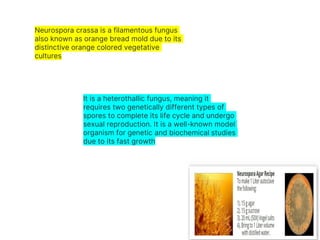
Neurospora crassa is a filamentous fungus
also known as orange bread mold due to its
distinctive orange colored vegetative
cultures
It is a heterothallic fungus, meaning it
requires two genetically different types of
spores to complete its life cycle and undergo
sexual reproduction. It is a well-known model
organism for genetic and biochemical studies
due to its fast growth
Life cycle of the haploid fungus Neurospora crassa (orange bread mold)
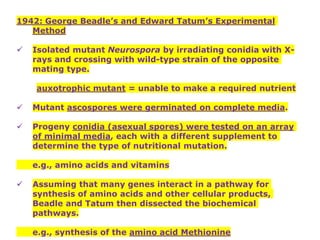
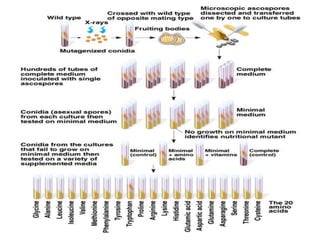
1942: George Beadle’s and Edward Tatum’s Experimental
Method
✓ Isolated mutant Neurospora by irradiating conidia with X-
rays and crossing with wild-type strain of the opposite
mating type.
auxotrophic mutant = unable to make a required nutrient
✓ Mutant ascospores were germinated on complete media.
✓ Progeny conidia (asexual spores) were tested on an array
of minimal media, each with a different supplement to
determine the type of nutritional mutation.
e.g., amino acids and vitamins
✓ Assuming that many genes interact in a pathway for
synthesis of amino acids and other cellular products,
Beadle and Tatum then dissected the biochemical
pathways.
e.g., synthesis of the amino acid Methionine
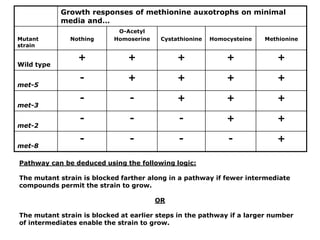
Growth responses of methionine auxotrophs on minimal
media and…
Mutant
strain
Nothing
O-Acetyl
Homoserine Cystathionine Homocysteine Methionine
Wild type
+ + + + +
met-5
- + + + +
met-3
- - + + +
met-2
- - - + +
met-8
- - - - +
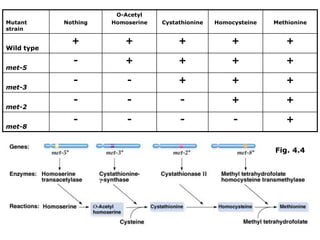
Pathway can be deduced using the following logic:
The mutant strain is blocked farther along in a pathway if fewer intermediate
compounds permit the strain to grow.
OR
The mutant strain is blocked at earlier steps in the pathway if a larger number
of intermediates enable the strain to grow.
Mutant
strain
Nothing
O-Acetyl
Homoserine Cystathionine Homocysteine Methionine
Wild type
+ + + + +
met-5
- + + + +
met-3
- - + + +
met-2
- - - + +
met-8
- - - - +
Fig. 4.4
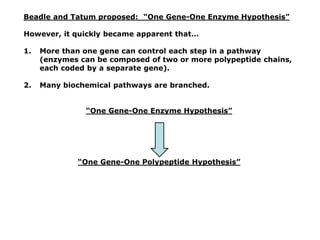
Beadle and Tatum proposed: “One Gene-One Enzyme Hypothesis”
However, it quickly became apparent that…
1. More than one gene can control each step in a pathway
(enzymes can be composed of two or more polypeptide chains,
each coded by a separate gene).
2. Many biochemical pathways are branched.
“One Gene-One Enzyme Hypothesis”
“One Gene-One Polypeptide Hypothesis”
Post-modern formulation:
“One gene-multiple gene products plus a lot more”
One gene can produce many different types of
polypeptides.
Alternative splicing of different exon sequences in different
combinations creates different types of proteins.
These may be tissue specific.
Many different types of gene products are transcribed to
RNA but not translated to protein (e.g., rRNA, tRNA,
snRNA).
Other types of RNA sequences also are important for
development and regulation of gene expression.
Non-coding DNA sequences also function importantly in
gene regulation (e.g., binding sites).
Human genetic disorders with demonstrated enzyme deficiencies:
✓ Effects may be simple or wide-reaching
pleiotropic = wide-reaching
✓ Three common examples:
Phenylketonuria (PKA)
Type I Albinism
Tay-Sachs Disease
✓ Learn more about genetic disorders at NIH’s website:
Online Mendelian Inheritance in Man (OMIM)
http://www3.ncbi.nlm.nih.gov/omim/
***
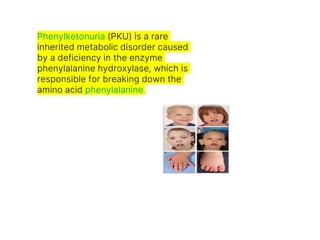
Phenylketonuria (PKU) is a rare
inherited metabolic disorder caused
by a deficiency in the enzyme
phenylalanine hydroxylase, which is
responsible for breaking down the
amino acid phenylalanine.
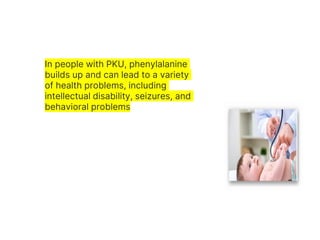
In people with PKU, phenylalanine
builds up and can lead to a variety
of health problems, including
intellectual disability, seizures, and
behavioral problems
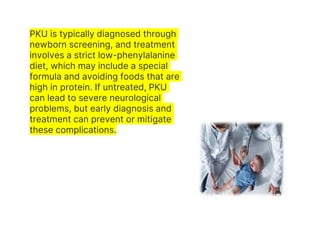
PKU is typically diagnosed through
newborn screening, and treatment
involves a strict low-phenylalanine
diet, which may include a special
formula and avoiding foods that are
high in protein. If untreated, PKU
can lead to severe neurological
problems, but early diagnosis and
treatment can prevent or mitigate
these complications.
Phenylketonuria (PKU, OMIM-261600)
✓ Mutation in the gene for phenylalanine hydroxylase, which prevents the
conversion of phenyalanine to the amino acid tyrosine (phenylalanine is
essential to the human diet).
✓ Homozygous recessive: ~1 in 12,000 Caucasian births on chromosome 12.
✓ Children born with PKU accumulate excess phenyalanine, which is converted to
phenylpyruvic acid.
✓ Results are damage to the nervous system: severe retardation, slow growth
rate, and early death (prior to birth fetus is protected by maternal enzymes).
✓ Pleiotropic effects: tyrosine is required for the production of the hormones
thyroxine and adrenaline and the synthesis of melanin.
✓ Can be managed by controlling dietary intake of phenylalanine beginning at 1-
2 months after birth to ~10 years of age.
✓ Pregnant women with PKU should maintain their diet through pregnancy, or
their children will experience mental retardation independent of their
genotype.
✓ U.S. requires all newborns to be screened for PKU; the Guthrie test
✓ “NutraSweet” contains phenylalanine
Type I Albinism
✓ Mutation affects the gene that codes for tyrosinase, which converts tyrosine to DOPA
(dihydroxyl phenylalanine), a precursor to melanin.
✓ People with albinism produce no melanin.
✓ Homozygous recessive: ~1 in 33,000 Caucasian births and 1
in 28,000 African Americans in the U.S.
✓ No known problems resulting from accumulation of other
precursors in the pathway.
✓ Two other forms of albinism are known (Type II, Type III)
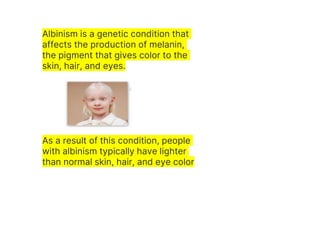
Albinism is a genetic condition that
affects the production of melanin,
the pigment that gives color to the
skin, hair, and eyes.
As a result of this condition, people
with albinism typically have lighter
than normal skin, hair, and eye color
Tay-Sachs Disease
✓ Lysosomal storage disease caused by mutation in a lysosomal enzyme.
✓ Homozygous recessive, occurs on chromosome 15.
✓ Relatively rare, but common (~1 in 3,600) in Central European origin Jews.
✓ Caused by a mutation in the HexA gene, which codes for the enzyme N-
acetylhexosaminidase.
✓ Results in the accumulation of unprocessed gangliosides in brain cells.
(ganglioside = complex glycolipid common in nerve membranes)
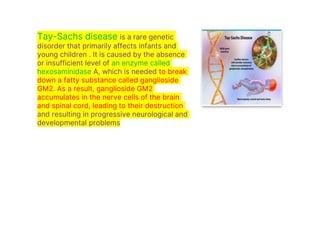
Tay-Sachs disease is a rare genetic
disorder that primarily affects infants and
young children . It is caused by the absence
or insufficient level of an enzyme called
hexosaminidase A, which is needed to break
down a fatty substance called ganglioside
GM2. As a result, ganglioside GM2
accumulates in the nerve cells of the brain
and spinal cord, leading to their destruction
and resulting in progressive neurological and
developmental problems
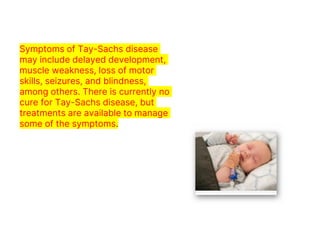
Symptoms of Tay-Sachs disease
may include delayed development,
muscle weakness, loss of motor
skills, seizures, and blindness,
among others. There is currently no
cure for Tay-Sachs disease, but
treatments are available to manage
some of the symptoms.
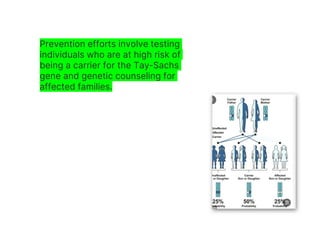
Prevention efforts involve testing
individuals who are at high risk of
being a carrier for the Tay-Sachs
gene and genetic counseling for
affected families.
✓Infants experience unusually acute
reactions to sharp sounds, a spot on the
retina, and rapid neurological
degeneration beginning at one year of
age.
✓Followed by paralysis, loss of hearing,
inability to feed, and death at age 3-4.
✓No cure, but carriers (heterozygotes) can
be detected by genetic screening.
Question: What is a protected
polymorphism?
Most enzymes are proteins, but not all
proteins are enzymes:
Examples of traits and diseases that result
from mutations in genes coding for non-
enzymatic proteins.
✓ Genetics of ABO Blood Groups (trait)
✓ Cystic fibrosis (disease)
✓ Sickle-cell Anemia (disease)
✓ Adaptive and parallel evolution of
hemoglobins
Genetics of the Human ABO Blood Group
✓ ABO blood groups discovered by Karl Landsteiner
early 1900s.
✓ Four phenotypes determined by three alleles, IA, IB, and i.
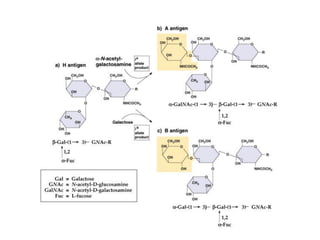
✓ ABO locus produces RBC antigens by adding sugars to
membrane glycolipids using enzymes called
glycosyltransferases.
✓ Most people produce a glycolipid called the H antigen.
✓ Next, depending on allele types, -N-galactosamine is added
to produce either an A antigen or B anitgen.
✓ antigen = any molecule recognized as a foreign by an organism
and stimulates the productions of antibodies.
✓ antibodies = specific molecules that recognize and bind
antigens.
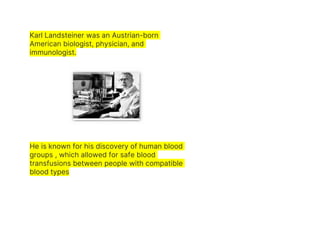
1930: Karl Landsteiner (Rockefeller Institute)
Karl Landsteiner was an Austrian-born
American biologist, physician, and
immunologist.
He is known for his discovery of human blood
groups , which allowed for safe blood
transfusions between people with compatible
blood types
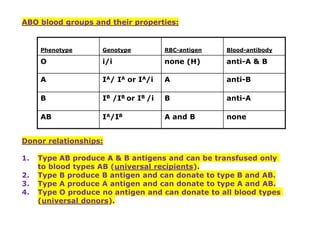
ABO blood groups and their properties:
Phenotype Genotype RBC-antigen Blood-antibody
O i/i none (H) anti-A & B
A IA/ IA or IA/i A anti-B
B IB /IB or IB /i B anti-A
AB IA/IB A and B none
Donor relationships:
1. Type AB produce A & B antigens and can be transfused only
to blood types AB (universal recipients).
2. Type B produce B antigen and can donate to type B and AB.
3. Type A produce A antigen and can donate to type A and AB.
4. Type O produce no antigen and can donate to all blood types
(universal donors).
Cystic fibrosis
✓ Affects the pancreas, lungs, digestive system, and sometimes the vas
deferens in males, resulting in sterility.
✓ Characterized by abnormally viscous mucus and frequent lung
infections.
✓ Life expectancy is generally ~40 years.
✓ Autosomal recessive deletion on chromosome 7, most commonly 3 base
pairs, which occurs in ~1 in 2,000 Caucasians (1 in 23 are carriers).
✓ Three base pair deletion (deletion of a codon) results in the deletion of
an amino acid at an ATP binding site in a membrane transport protein.
✓ CFTR = Cystic Fibrosis Transmembrane Conductance Regulator
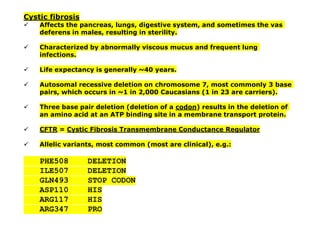
✓ Allelic variants, most common (most are clinical), e.g.:
PHE508 DELETION
ILE507 DELETION
GLN493 STOP CODON
ASP110 HIS
ARG117 HIS
ARG347 PRO
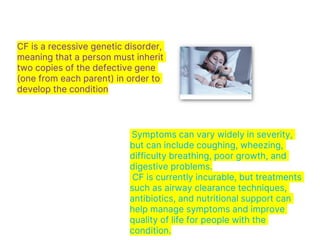
Cystic fibrosis (CF) is a genetic disorder that
primarily affects the lungs , but can also
affect other organs such as the pancreas,
liver, and intestines.
It causes a buildup of thick, sticky mucus in
the airways, which leads to respiratory
infections and other complications
CF is a recessive genetic disorder,
meaning that a person must inherit
two copies of the defective gene
(one from each parent) in order to
develop the condition
Symptoms can vary widely in severity,
but can include coughing, wheezing,
difficulty breathing, poor growth, and
digestive problems.
CF is currently incurable, but treatments
such as airway clearance techniques,
antibiotics, and nutritional support can
help manage symptoms and improve
quality of life for people with the
condition.
Sickle-cell anemia):
✓ First described by J. Herrick (1910): discovered that red
blood cells (RBCs) change shape to form a sickle under
low oxygen pressure.
✓ Sickle-shaped RBCs are fragile and less flexible than
normal RBCs, resulting in anemia, blocking capillaries,
and damaging tissues.
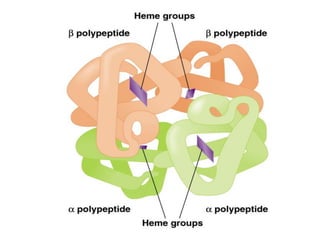
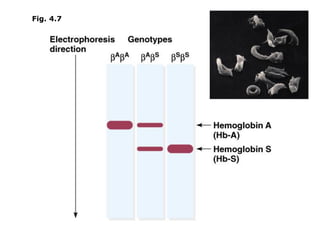
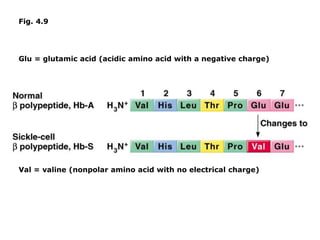
✓ Results from an amino acid substitution in the 6th
amino acid of the  chain of the hemoglobin molecule
(hemoglobins are composed of four polypeptides (2 
and two  chain), each associated with a heme).
Sickle cell anemia is a genetic blood disorder
characterized by abnormal hemoglobin molecules in
red blood cells. Normally, red blood cells are round
and flexible, allowing them to move easily through
blood vessels. However, in sickle cell anemia, the
hemoglobin molecules form into abnormal stiff and
sticky shapes, resulting in red blood cells that are also
stiff and easily
This leads to a reduced ability of the red
blood cells to carry oxygen, resulting in a
range of symptoms such as anaemia, fatigue,
and increased risk of infections, among
others.
Sickle cell anemia is an inherited condition,
meaning it is passed down from parents to
their children. There is no single cure for
sickle cell anemia, but treatments can help
manage symptoms and improve quality of
life.
✓Effects include: damage to the
extremities, heart, lung, brains,
kidney, GI tract, muscles, and joints.
✓Heterozygotes produce both normal
and sickle-shaped RBCs and show a
sickle-cell trait, but it is a much
milder form of the disease.
✓Sickle-cell trait also protects
heterozygotes against malaria (when
the malarial parasite Plasmodium
falciparum infects a sickle-cell, the
RBC and parasite are destroyed,
resulting in a lower parasite count).
✓In tropical Africa, as many as 20-
40% of people are heterozygotes.
Fig. 4.7
Glu = glutamic acid (acidic amino acid with a negative charge)
Val = valine (nonpolar amino acid with no electrical charge)
Fig. 4.9
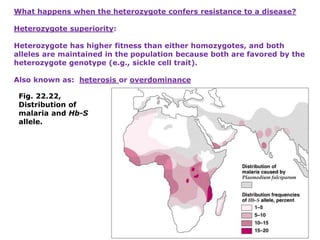
What happens when the heterozygote confers resistance to a disease?
Heterozygote superiority:
Heterozygote has higher fitness than either homozygotes, and both
alleles are maintained in the population because both are favored by the
heterozygote genotype (e.g., sickle cell trait).
Also known as: heterosis or overdominance
Fig. 22.22,
Distribution of
malaria and Hb-S
allele.
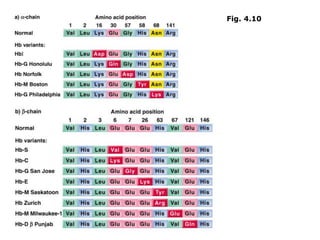
Fig. 4.10a Examples of amino acid substitutions found in 
polypeptides of various
human hemoglobin variants
Fig. 4.10

ONE GENE ONE ENZYME.pdf

  • 1.
    Chapter 4: GeneControl of Proteins • Beadle & Tatum’s “One Gene-One Enzyme Hypothesis” • Life cycle of Orange Bread Mold (Neurospora crassa) • Deduction of biochemical pathways using auxotrophic mutants • Human genetic disorders caused by mutations • enzyme deficiency disorders • protein disorders (non-enzyme deficiencies) • Adaptive and parallel evolution of hemoglobins
  • 2.
    1942: George Beadleand Edward Tatum ✓ Studied relationships between genes and enzymes in the haploid fungus Neurospora crassa (orange bread mold). ✓ Discovered that genes act by regulating definite chemical events. ✓ One Gene-One Enzyme Hypothesis Each gene controls synthesis/activity of a single enzyme. Modern formulation: “one gene-one polypeptide” Post-modern formulation: “one gene-multiple gene products plus a lot more” 1958: George Beadle (Cal Tech) & Edward Tatum (Rockefeller Institute)
  • 3.
    The Nobel Prizein Physiology or Medicine in 1958 was awarded to George Wells Beadle and Edward Lawrie Tatum for their discovery that genes control individual steps in metabolism
  • 4.
    Their experiments withthe bread mold Neurospora demonstrated that changing a single gene could result in the disruption of a specific metabolic pathway. This research provided evidence for the one- gene, one-enzyme hypothesis, which stated that each gene was responsible for the production of a specific enzyme Their work had a significant impact on the understanding of genetics and the relationship between genes and enzymes. Joshua Lederberg was awarded the Nobel Prize in Physiology or Medicine in 1958 for his discovery of genetic recombination and the organization of the genetic material of bacteria
  • 5.
    Life cycle ofthe haploid fungus Neurospora crassa (orange bread mold): 1. Neurospora reproduces in a web-like pattern with asexual spores called conidia, which are orange in color. 2. Neurospora is haploid, so mutations are spotted easily (unlike diploid organisms). 3. Life cycle is short, and grows on simple media (N, C, biotin). • Sythesizes all other substances from these basic nutrients. 4. Propagates vegetatively (asexually) by dispersal of mycelium and asexual spores (conidia), OR 5. Sexually, by means of two mating types, A and a (only A will mate with a and result in a gamete fusion and meiosis). • Meiosis leads to 4 haploid nuclei (2A, 2a) • After one round of mitosis, 8 ascospores (4A, 4a).
  • 6.
    Neurospora crassa isa filamentous fungus also known as orange bread mold due to its distinctive orange colored vegetative cultures It is a heterothallic fungus, meaning it requires two genetically different types of spores to complete its life cycle and undergo sexual reproduction. It is a well-known model organism for genetic and biochemical studies due to its fast growth
  • 7.
    Life cycle ofthe haploid fungus Neurospora crassa (orange bread mold)
  • 8.
    1942: George Beadle’sand Edward Tatum’s Experimental Method ✓ Isolated mutant Neurospora by irradiating conidia with X- rays and crossing with wild-type strain of the opposite mating type. auxotrophic mutant = unable to make a required nutrient ✓ Mutant ascospores were germinated on complete media. ✓ Progeny conidia (asexual spores) were tested on an array of minimal media, each with a different supplement to determine the type of nutritional mutation. e.g., amino acids and vitamins ✓ Assuming that many genes interact in a pathway for synthesis of amino acids and other cellular products, Beadle and Tatum then dissected the biochemical pathways. e.g., synthesis of the amino acid Methionine
  • 10.
    Growth responses ofmethionine auxotrophs on minimal media and… Mutant strain Nothing O-Acetyl Homoserine Cystathionine Homocysteine Methionine Wild type + + + + + met-5 - + + + + met-3 - - + + + met-2 - - - + + met-8 - - - - + Pathway can be deduced using the following logic: The mutant strain is blocked farther along in a pathway if fewer intermediate compounds permit the strain to grow. OR The mutant strain is blocked at earlier steps in the pathway if a larger number of intermediates enable the strain to grow.
  • 11.
    Mutant strain Nothing O-Acetyl Homoserine Cystathionine HomocysteineMethionine Wild type + + + + + met-5 - + + + + met-3 - - + + + met-2 - - - + + met-8 - - - - + Fig. 4.4
  • 12.
    Beadle and Tatumproposed: “One Gene-One Enzyme Hypothesis” However, it quickly became apparent that… 1. More than one gene can control each step in a pathway (enzymes can be composed of two or more polypeptide chains, each coded by a separate gene). 2. Many biochemical pathways are branched. “One Gene-One Enzyme Hypothesis” “One Gene-One Polypeptide Hypothesis”
  • 13.
    Post-modern formulation: “One gene-multiplegene products plus a lot more” One gene can produce many different types of polypeptides. Alternative splicing of different exon sequences in different combinations creates different types of proteins. These may be tissue specific. Many different types of gene products are transcribed to RNA but not translated to protein (e.g., rRNA, tRNA, snRNA). Other types of RNA sequences also are important for development and regulation of gene expression. Non-coding DNA sequences also function importantly in gene regulation (e.g., binding sites).
  • 14.
    Human genetic disorderswith demonstrated enzyme deficiencies: ✓ Effects may be simple or wide-reaching pleiotropic = wide-reaching ✓ Three common examples: Phenylketonuria (PKA) Type I Albinism Tay-Sachs Disease ✓ Learn more about genetic disorders at NIH’s website: Online Mendelian Inheritance in Man (OMIM) http://www3.ncbi.nlm.nih.gov/omim/ ***
  • 15.
    Phenylketonuria (PKU) isa rare inherited metabolic disorder caused by a deficiency in the enzyme phenylalanine hydroxylase, which is responsible for breaking down the amino acid phenylalanine.
  • 16.
    In people withPKU, phenylalanine builds up and can lead to a variety of health problems, including intellectual disability, seizures, and behavioral problems
  • 17.
    PKU is typicallydiagnosed through newborn screening, and treatment involves a strict low-phenylalanine diet, which may include a special formula and avoiding foods that are high in protein. If untreated, PKU can lead to severe neurological problems, but early diagnosis and treatment can prevent or mitigate these complications.
  • 18.
    Phenylketonuria (PKU, OMIM-261600) ✓Mutation in the gene for phenylalanine hydroxylase, which prevents the conversion of phenyalanine to the amino acid tyrosine (phenylalanine is essential to the human diet). ✓ Homozygous recessive: ~1 in 12,000 Caucasian births on chromosome 12. ✓ Children born with PKU accumulate excess phenyalanine, which is converted to phenylpyruvic acid. ✓ Results are damage to the nervous system: severe retardation, slow growth rate, and early death (prior to birth fetus is protected by maternal enzymes). ✓ Pleiotropic effects: tyrosine is required for the production of the hormones thyroxine and adrenaline and the synthesis of melanin. ✓ Can be managed by controlling dietary intake of phenylalanine beginning at 1- 2 months after birth to ~10 years of age. ✓ Pregnant women with PKU should maintain their diet through pregnancy, or their children will experience mental retardation independent of their genotype. ✓ U.S. requires all newborns to be screened for PKU; the Guthrie test ✓ “NutraSweet” contains phenylalanine
  • 19.
    Type I Albinism ✓Mutation affects the gene that codes for tyrosinase, which converts tyrosine to DOPA (dihydroxyl phenylalanine), a precursor to melanin. ✓ People with albinism produce no melanin. ✓ Homozygous recessive: ~1 in 33,000 Caucasian births and 1 in 28,000 African Americans in the U.S. ✓ No known problems resulting from accumulation of other precursors in the pathway. ✓ Two other forms of albinism are known (Type II, Type III)
  • 20.
    Albinism is agenetic condition that affects the production of melanin, the pigment that gives color to the skin, hair, and eyes. As a result of this condition, people with albinism typically have lighter than normal skin, hair, and eye color
  • 21.
    Tay-Sachs Disease ✓ Lysosomalstorage disease caused by mutation in a lysosomal enzyme. ✓ Homozygous recessive, occurs on chromosome 15. ✓ Relatively rare, but common (~1 in 3,600) in Central European origin Jews. ✓ Caused by a mutation in the HexA gene, which codes for the enzyme N- acetylhexosaminidase. ✓ Results in the accumulation of unprocessed gangliosides in brain cells. (ganglioside = complex glycolipid common in nerve membranes)
  • 22.
    Tay-Sachs disease isa rare genetic disorder that primarily affects infants and young children . It is caused by the absence or insufficient level of an enzyme called hexosaminidase A, which is needed to break down a fatty substance called ganglioside GM2. As a result, ganglioside GM2 accumulates in the nerve cells of the brain and spinal cord, leading to their destruction and resulting in progressive neurological and developmental problems
  • 23.
    Symptoms of Tay-Sachsdisease may include delayed development, muscle weakness, loss of motor skills, seizures, and blindness, among others. There is currently no cure for Tay-Sachs disease, but treatments are available to manage some of the symptoms.
  • 24.
    Prevention efforts involvetesting individuals who are at high risk of being a carrier for the Tay-Sachs gene and genetic counseling for affected families.
  • 25.
    ✓Infants experience unusuallyacute reactions to sharp sounds, a spot on the retina, and rapid neurological degeneration beginning at one year of age. ✓Followed by paralysis, loss of hearing, inability to feed, and death at age 3-4. ✓No cure, but carriers (heterozygotes) can be detected by genetic screening. Question: What is a protected polymorphism?
  • 26.
    Most enzymes areproteins, but not all proteins are enzymes: Examples of traits and diseases that result from mutations in genes coding for non- enzymatic proteins. ✓ Genetics of ABO Blood Groups (trait) ✓ Cystic fibrosis (disease) ✓ Sickle-cell Anemia (disease) ✓ Adaptive and parallel evolution of hemoglobins
  • 27.
    Genetics of theHuman ABO Blood Group ✓ ABO blood groups discovered by Karl Landsteiner early 1900s. ✓ Four phenotypes determined by three alleles, IA, IB, and i. ✓ ABO locus produces RBC antigens by adding sugars to membrane glycolipids using enzymes called glycosyltransferases. ✓ Most people produce a glycolipid called the H antigen. ✓ Next, depending on allele types, -N-galactosamine is added to produce either an A antigen or B anitgen. ✓ antigen = any molecule recognized as a foreign by an organism and stimulates the productions of antibodies. ✓ antibodies = specific molecules that recognize and bind antigens. 1930: Karl Landsteiner (Rockefeller Institute)
  • 28.
    Karl Landsteiner wasan Austrian-born American biologist, physician, and immunologist. He is known for his discovery of human blood groups , which allowed for safe blood transfusions between people with compatible blood types
  • 30.
    ABO blood groupsand their properties: Phenotype Genotype RBC-antigen Blood-antibody O i/i none (H) anti-A & B A IA/ IA or IA/i A anti-B B IB /IB or IB /i B anti-A AB IA/IB A and B none Donor relationships: 1. Type AB produce A & B antigens and can be transfused only to blood types AB (universal recipients). 2. Type B produce B antigen and can donate to type B and AB. 3. Type A produce A antigen and can donate to type A and AB. 4. Type O produce no antigen and can donate to all blood types (universal donors).
  • 31.
    Cystic fibrosis ✓ Affectsthe pancreas, lungs, digestive system, and sometimes the vas deferens in males, resulting in sterility. ✓ Characterized by abnormally viscous mucus and frequent lung infections. ✓ Life expectancy is generally ~40 years. ✓ Autosomal recessive deletion on chromosome 7, most commonly 3 base pairs, which occurs in ~1 in 2,000 Caucasians (1 in 23 are carriers). ✓ Three base pair deletion (deletion of a codon) results in the deletion of an amino acid at an ATP binding site in a membrane transport protein. ✓ CFTR = Cystic Fibrosis Transmembrane Conductance Regulator ✓ Allelic variants, most common (most are clinical), e.g.: PHE508 DELETION ILE507 DELETION GLN493 STOP CODON ASP110 HIS ARG117 HIS ARG347 PRO
  • 32.
    Cystic fibrosis (CF)is a genetic disorder that primarily affects the lungs , but can also affect other organs such as the pancreas, liver, and intestines. It causes a buildup of thick, sticky mucus in the airways, which leads to respiratory infections and other complications
  • 33.
    CF is arecessive genetic disorder, meaning that a person must inherit two copies of the defective gene (one from each parent) in order to develop the condition Symptoms can vary widely in severity, but can include coughing, wheezing, difficulty breathing, poor growth, and digestive problems. CF is currently incurable, but treatments such as airway clearance techniques, antibiotics, and nutritional support can help manage symptoms and improve quality of life for people with the condition.
  • 35.
    Sickle-cell anemia): ✓ Firstdescribed by J. Herrick (1910): discovered that red blood cells (RBCs) change shape to form a sickle under low oxygen pressure. ✓ Sickle-shaped RBCs are fragile and less flexible than normal RBCs, resulting in anemia, blocking capillaries, and damaging tissues. ✓ Results from an amino acid substitution in the 6th amino acid of the  chain of the hemoglobin molecule (hemoglobins are composed of four polypeptides (2  and two  chain), each associated with a heme).
  • 36.
    Sickle cell anemiais a genetic blood disorder characterized by abnormal hemoglobin molecules in red blood cells. Normally, red blood cells are round and flexible, allowing them to move easily through blood vessels. However, in sickle cell anemia, the hemoglobin molecules form into abnormal stiff and sticky shapes, resulting in red blood cells that are also stiff and easily
  • 38.
    This leads toa reduced ability of the red blood cells to carry oxygen, resulting in a range of symptoms such as anaemia, fatigue, and increased risk of infections, among others. Sickle cell anemia is an inherited condition, meaning it is passed down from parents to their children. There is no single cure for sickle cell anemia, but treatments can help manage symptoms and improve quality of life.
  • 39.
    ✓Effects include: damageto the extremities, heart, lung, brains, kidney, GI tract, muscles, and joints. ✓Heterozygotes produce both normal and sickle-shaped RBCs and show a sickle-cell trait, but it is a much milder form of the disease. ✓Sickle-cell trait also protects heterozygotes against malaria (when the malarial parasite Plasmodium falciparum infects a sickle-cell, the RBC and parasite are destroyed, resulting in a lower parasite count). ✓In tropical Africa, as many as 20- 40% of people are heterozygotes.
  • 41.
  • 42.
    Glu = glutamicacid (acidic amino acid with a negative charge) Val = valine (nonpolar amino acid with no electrical charge) Fig. 4.9
  • 43.
    What happens whenthe heterozygote confers resistance to a disease? Heterozygote superiority: Heterozygote has higher fitness than either homozygotes, and both alleles are maintained in the population because both are favored by the heterozygote genotype (e.g., sickle cell trait). Also known as: heterosis or overdominance Fig. 22.22, Distribution of malaria and Hb-S allele.
  • 44.
    Fig. 4.10a Examplesof amino acid substitutions found in  polypeptides of various human hemoglobin variants Fig. 4.10