There are several ways to identify
a horse, some permanent and
some temporary.
horse identification 1
Physical markings: The most
common way to identify a horse is
by its physical markings. These
include coat color, facial markings,
leg markings, and body markings.
Coat color is the most basic way to
identify a horse, but there are
many variations of each color.
Facial markings can include stars,
stripes, blazes, and snips.
Leg markings can include socks,
stockings, coronets, pasterns, and
ermines. Body markings can
include sabino, roan, and overo.
horse identification 2
Horse Face Markings
Face markings are identified according to their shape
and location on the horse’s face.
1. Snip:
2. a small white marking on the muzzle, not connected
to any other markings.
3. Stripe:
4. a narrow band of white running up a horse’s face
from the nose to between the eyes.
5. Star:
6. any white marking on the forehead. It could be tiny,
it could be large, or it could be an average size, like
the one shown.
7. Blaze:
8. a white marking wider than a stripe and thinner
than a bald face, not including the horse’s eyes.
9. Bald Face:
10.the most dramatic face marking, covering most of
the face, possibly covering the eyes.
horse identification 3
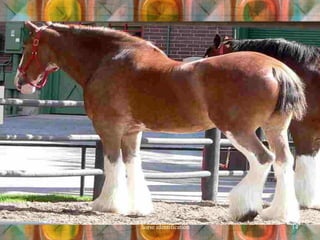
Star: A small white spot on the forehead
horse identification 4
Common facial markings are:
•Blaze: a wide white stripe down the middle of the face.
•Strip, stripe, or race: a narrow white stripe down the middle of the face.
•Bald face: a very wide blaze, extending to or past the eyes. Some, but not
all, bald faced horses also have blue eyes.
•Star: a white marking between or above the eyes. If a stripe or blaze is
present, a star must be significantly wider than the vertical marking to be
designated separately.
•Snip: a white marking on the muzzle, between the nostrils.
Additional terms used to describe facial markings include the following:
•Faint: A small but permanent marking that usually consists of white hairs
without any underlying pink skin.
•Interrupted: A marking, usually a strip or blaze, that is broken and not
solid for the entire length of the face.
•Connected: Occasionally used to describe distinctively different markings
that happen to be joined to one another
•Irregular or crooked: A marking, usually a strip or blaze, that does not
have a more or less straight path.
•Lip markings: have no specialized names, usually are described by
location, such as "lower lip," "chin", etc. Lip markings may indicate
presence of the sabino color pattern.
horse identification 5
horse identification 6
leg markings are usually described by
the highest point of the horse's leg that
is covered by white. As a general rule,
the horse's hoof beneath a white
marking at the coronary line will also be
light-colored ("white"). If a horse has a
partial marking or ermine spots at the
coronary band, the hoof may be both
dark and light, corresponding with the
hair coat immediately above. Where
the leopard gene is present, the hoof
may be striped even if markings are not
visible at the coronary band
horse identification 7
From tallest to shortest, common leg markings are:
1. Stocking: white marking that extends at least
to the bottom of the knee or hock, sometimes
higher.
2. Sock: white marking that extends higher than
the fetlock but not as high as the knee or hock.
This marking is sometimes called a "boot."
3. Fetlock or Sock: white marking that extends
over the fetlock, occasionally called a "boot."
4. Pastern: white marking that extends above the
top of the hoof, but stops below the fetlock.
5. Coronet: white just above the hoof, around
coronary band, usually no more than 1 inch
(2.5 cm) above the hoof.
horse identification 8
white leg markings include:
1. Irregular: A marking within the broad confines of
a given height, but with significantly uneven
edges. Indicated by the highest point of the white.
Most often used to describe certain types of
stockings.
2. Partial: An irregular marking that only extends up
part of the leg to the height indicated, sometimes
with the other side of the leg dark. Usually used
to describe socks and other short markings.
3. "High White:" White stockings that extend above
the knee or hock, sometimes extending past
the stifle onto the flank or belly, considered
characteristic of the sabino color pattern.
horse identification 9
horse identification 10
Apaha mare
horse identification 11
horse identification 12
horse identification 13
horse identification 14
horse identification 15
horse identification 16
horse identification 17
Blaze: A wide white stripe down
the middle of the face.
horse identification 18
Strip: A narrow white stripe down
the middle of the face
horse identification 19
horse identification 20
horse identification 21
horse identification 22
Stockings: White markings that extend up
the leg to the knee or hock
horse identification 23
Coronets: White markings that encircle the hoof
horse identification 24
Pastern Markings: White markings
that appear on the pastern (the
area below the fetlock joint).
horse identification 25
Ermine: A white marking that appears on
the back of the pastern joint
horse identification 26
•Body Markings: Sabino: A roan
pattern with large white patches
on the body
horse identification 27
Roan: A coat color with a mixture
of colored hairs and white hairs.
horse identification 28
Overo: A spotting pattern with white
markings that may have jagged edges
horse identification 29
Snip: A small white spot on the muzzle
horse identification 30
Horse Leg Markings
horse identification 31
Leg markings are identified by how high they extend
up a horse’s leg.
1. Coronet:
2. a thin band of white above a horse’s hoof.
3. Pastern:
4. includes the pastern but doesn’t cover the
fetlock
5. Sock (sometimes called an anklet):
6. includes the fetlock joint
7. Half-stocking (or half-cannon):
8. continues partway up the horse’s cannon bone.
9. Stocking:
10. covers the entire lower leg and sometimes goes
past the knee
horse identification 32
1. Microchipping: Microchipping is a permanent form of
identification that is becoming increasingly popular. A
microchip is a small device that is implanted under the
horse's skin. The microchip contains a unique identification
number that can be used to track down the horse's owner
if it is lost or stolen.
2. Freeze branding: Freeze branding is a permanent form of
identification that involves freezing a design onto the
horse's skin. Freeze branding is less painful than hot
branding, but it can still be uncomfortable for the horse.
3. Hot branding: Hot branding is a permanent form of
identification that involves burning a design onto the
horse's skin. Hot branding is painful for the horse and is no
longer as common as it once was.
horse identification 33
•Registration papers: Registration
papers are a document that
provides information about
1. the horse's breed
2. pedigree
3. and ownership history.
Registration papers can be
helpful for identifying a horse,
but they are not always
foolproof.
horse identification 34

horse-identification. pdf

  • 1.
    There are severalways to identify a horse, some permanent and some temporary. horse identification 1
  • 2.
    Physical markings: Themost common way to identify a horse is by its physical markings. These include coat color, facial markings, leg markings, and body markings. Coat color is the most basic way to identify a horse, but there are many variations of each color. Facial markings can include stars, stripes, blazes, and snips. Leg markings can include socks, stockings, coronets, pasterns, and ermines. Body markings can include sabino, roan, and overo. horse identification 2
  • 3.
    Horse Face Markings Facemarkings are identified according to their shape and location on the horse’s face. 1. Snip: 2. a small white marking on the muzzle, not connected to any other markings. 3. Stripe: 4. a narrow band of white running up a horse’s face from the nose to between the eyes. 5. Star: 6. any white marking on the forehead. It could be tiny, it could be large, or it could be an average size, like the one shown. 7. Blaze: 8. a white marking wider than a stripe and thinner than a bald face, not including the horse’s eyes. 9. Bald Face: 10.the most dramatic face marking, covering most of the face, possibly covering the eyes. horse identification 3
  • 4.
    Star: A smallwhite spot on the forehead horse identification 4
  • 5.
    Common facial markingsare: •Blaze: a wide white stripe down the middle of the face. •Strip, stripe, or race: a narrow white stripe down the middle of the face. •Bald face: a very wide blaze, extending to or past the eyes. Some, but not all, bald faced horses also have blue eyes. •Star: a white marking between or above the eyes. If a stripe or blaze is present, a star must be significantly wider than the vertical marking to be designated separately. •Snip: a white marking on the muzzle, between the nostrils. Additional terms used to describe facial markings include the following: •Faint: A small but permanent marking that usually consists of white hairs without any underlying pink skin. •Interrupted: A marking, usually a strip or blaze, that is broken and not solid for the entire length of the face. •Connected: Occasionally used to describe distinctively different markings that happen to be joined to one another •Irregular or crooked: A marking, usually a strip or blaze, that does not have a more or less straight path. •Lip markings: have no specialized names, usually are described by location, such as "lower lip," "chin", etc. Lip markings may indicate presence of the sabino color pattern. horse identification 5
  • 6.
  • 7.
    leg markings areusually described by the highest point of the horse's leg that is covered by white. As a general rule, the horse's hoof beneath a white marking at the coronary line will also be light-colored ("white"). If a horse has a partial marking or ermine spots at the coronary band, the hoof may be both dark and light, corresponding with the hair coat immediately above. Where the leopard gene is present, the hoof may be striped even if markings are not visible at the coronary band horse identification 7
  • 8.
    From tallest toshortest, common leg markings are: 1. Stocking: white marking that extends at least to the bottom of the knee or hock, sometimes higher. 2. Sock: white marking that extends higher than the fetlock but not as high as the knee or hock. This marking is sometimes called a "boot." 3. Fetlock or Sock: white marking that extends over the fetlock, occasionally called a "boot." 4. Pastern: white marking that extends above the top of the hoof, but stops below the fetlock. 5. Coronet: white just above the hoof, around coronary band, usually no more than 1 inch (2.5 cm) above the hoof. horse identification 8
  • 9.
    white leg markingsinclude: 1. Irregular: A marking within the broad confines of a given height, but with significantly uneven edges. Indicated by the highest point of the white. Most often used to describe certain types of stockings. 2. Partial: An irregular marking that only extends up part of the leg to the height indicated, sometimes with the other side of the leg dark. Usually used to describe socks and other short markings. 3. "High White:" White stockings that extend above the knee or hock, sometimes extending past the stifle onto the flank or belly, considered characteristic of the sabino color pattern. horse identification 9
  • 10.
  • 11.
  • 12.
  • 13.
  • 14.
  • 15.
  • 16.
  • 17.
  • 18.
    Blaze: A widewhite stripe down the middle of the face. horse identification 18
  • 19.
    Strip: A narrowwhite stripe down the middle of the face horse identification 19
  • 20.
  • 21.
  • 22.
  • 23.
    Stockings: White markingsthat extend up the leg to the knee or hock horse identification 23
  • 24.
    Coronets: White markingsthat encircle the hoof horse identification 24
  • 25.
    Pastern Markings: Whitemarkings that appear on the pastern (the area below the fetlock joint). horse identification 25
  • 26.
    Ermine: A whitemarking that appears on the back of the pastern joint horse identification 26
  • 27.
    •Body Markings: Sabino:A roan pattern with large white patches on the body horse identification 27
  • 28.
    Roan: A coatcolor with a mixture of colored hairs and white hairs. horse identification 28
  • 29.
    Overo: A spottingpattern with white markings that may have jagged edges horse identification 29
  • 30.
    Snip: A smallwhite spot on the muzzle horse identification 30
  • 31.
    Horse Leg Markings horseidentification 31
  • 32.
    Leg markings areidentified by how high they extend up a horse’s leg. 1. Coronet: 2. a thin band of white above a horse’s hoof. 3. Pastern: 4. includes the pastern but doesn’t cover the fetlock 5. Sock (sometimes called an anklet): 6. includes the fetlock joint 7. Half-stocking (or half-cannon): 8. continues partway up the horse’s cannon bone. 9. Stocking: 10. covers the entire lower leg and sometimes goes past the knee horse identification 32
  • 33.
    1. Microchipping: Microchippingis a permanent form of identification that is becoming increasingly popular. A microchip is a small device that is implanted under the horse's skin. The microchip contains a unique identification number that can be used to track down the horse's owner if it is lost or stolen. 2. Freeze branding: Freeze branding is a permanent form of identification that involves freezing a design onto the horse's skin. Freeze branding is less painful than hot branding, but it can still be uncomfortable for the horse. 3. Hot branding: Hot branding is a permanent form of identification that involves burning a design onto the horse's skin. Hot branding is painful for the horse and is no longer as common as it once was. horse identification 33
  • 34.
    •Registration papers: Registration papersare a document that provides information about 1. the horse's breed 2. pedigree 3. and ownership history. Registration papers can be helpful for identifying a horse, but they are not always foolproof. horse identification 34