Content:
 Introduction.
 Inborn errors of metabolism in man.
 Phenyketonuriya.
 Alkaptonuriya.
 Albinism.
 Goitrous creatinism.
 Eye transplantation in drosophila.
 Bio chemical mutation in neurospora.
 One gene one enzyme hypothesis.
Introduction
BIO CHEMICAL GENETICS IS A BRANCH OF GENETICS
AT A BIOCHEMICAL LEVEL AND IN WHICH THE
RELATIONSHIP OF GENE AND THEIR CONTROL OVER
THE FUNCTION OF AN ENZYME IS OBSERVED.
The Foundation bio Chemical Genetics was laid by Sir
Archibald Edward Garrod in 1902 was english Physician .he
studied Gene action in men.
G.W,Beadle and E.L. Tatum [both Nobel Prize winners in1958]
was proposed in 1941 a concept called ONE GENE ONE
ENZYME HYPOTHESIS.
Beadle and Ephrussi in1957 studied metabolic pathway for
Eye Colour in Drosophila.
Phenylketonuria
Autosomal recessive metabolic genetic
disorder
Mutation in the gene for phenylalanine
hydroxylase(PAH).
When PAH activity is reduced,
phenylalanine accumulates and is
converted into phenylpyruvic
acid(phenylketone), which can be detected
in the urine.
Phenyl nine Phenylpyruvic acid
PAH (After mutation in
Overview
 This disease caused by due to mutation in
recessive gene CC.
 Located on 12th chromosome.
 PKU is rare – it is estimated to affect 1 in
every 10,000 babies.
SYMPTOMS
 Most babies with phenylketonuria appear
healthy at birth.
 If it isn't treated, damage to the brain and
nervous system can lead to:
1. Learning disabilities
 2. behavioural difficulties
 3. Pale skin colour
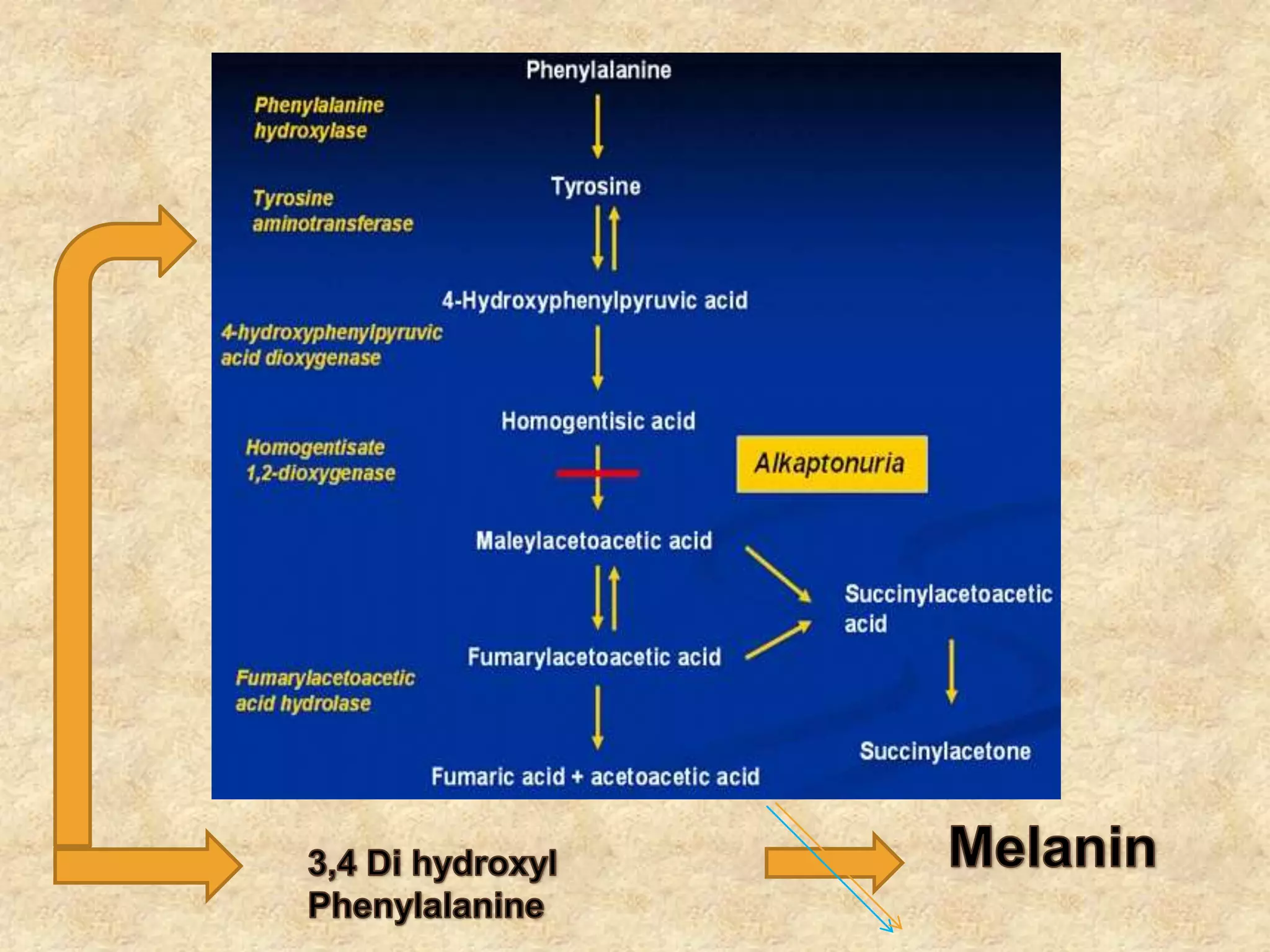
Alkaptonuriya
 Also called black urine disease
 Is an inherited genetic disorder of
phenylalanine and tyrosine metabolism.
 This condition is rare, affecting 1 in 250,000
to 1 million people worldwide. Alkaptonuriya
is more common in certain areas of Slovakia
(where it has an incidence of about 1 in
19,000 people) and in the Dominican
Republic.
 Mutations in the HGD gene
SYMPTOMS
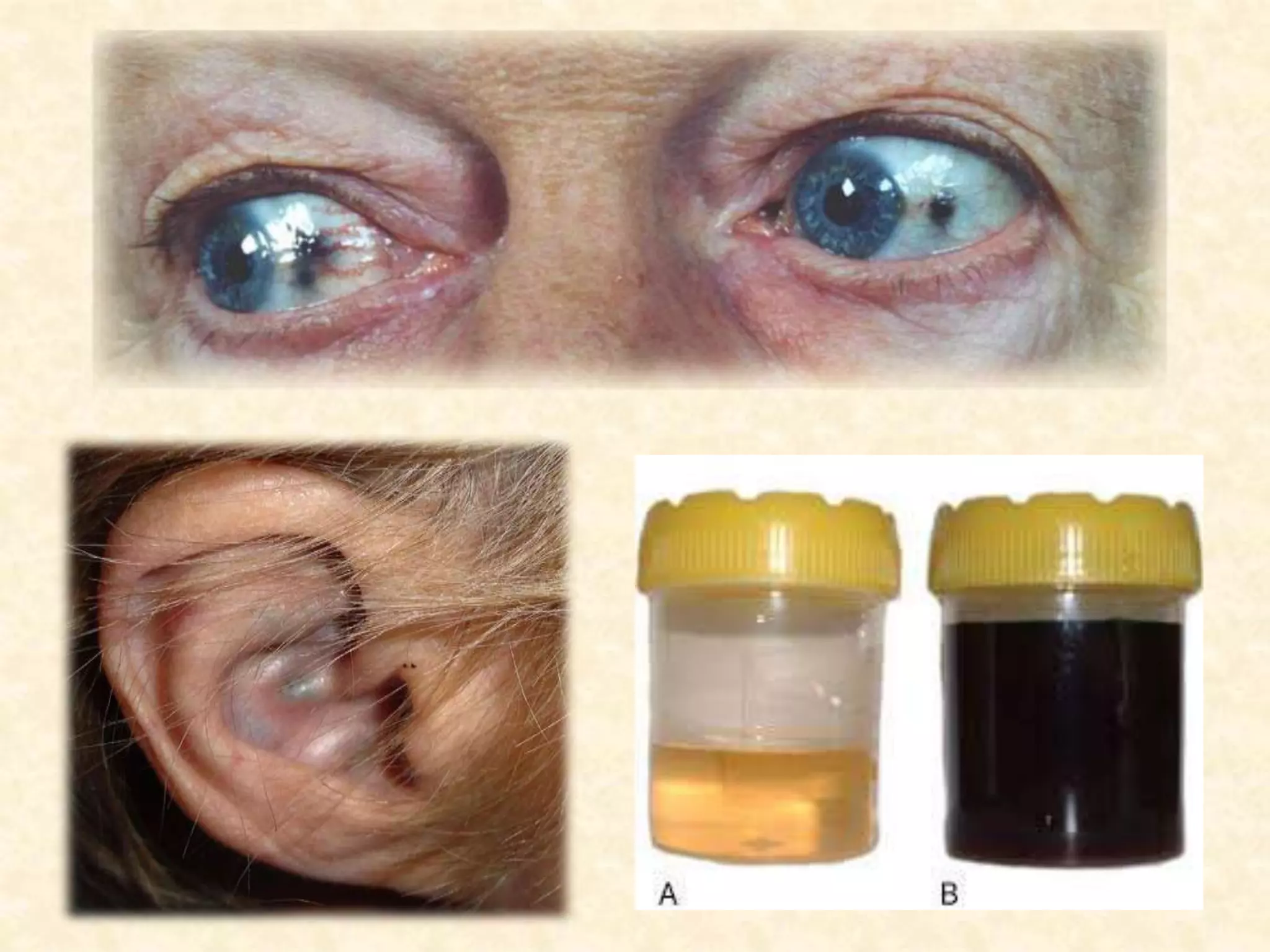
 The urine of person suffering from this disease
turns black on exposser to air.
 Arthritis (especially of the spine) that gets worse
over time.
 Darkening of the ear.
 Dark spots on the white of the eye (sclera) and
cornea.
ALBINISM
 Albinism is caused by a genetic lack of
melanin
 Melanin is synthesized from the amino acid
tyrosine.
 Tyrosine's breaks down tyrosine.
 People with albinism have been passed
down a nonfunctional tyrosine's allele, which
does not allow them to produce melanin.
GOITRUS CRETINISM
1. This disease is characterized by
several mental and physical retardation
and hypertrophy of THYROID GLAND.
2. IN normal person tyrosine is
converted into thyroid hormone are
essential for normal human metabolism
and responsible for normal physical and
mental growth mutation at gene CC.
Gene Action in Drosophila | Biochemical
Genetics
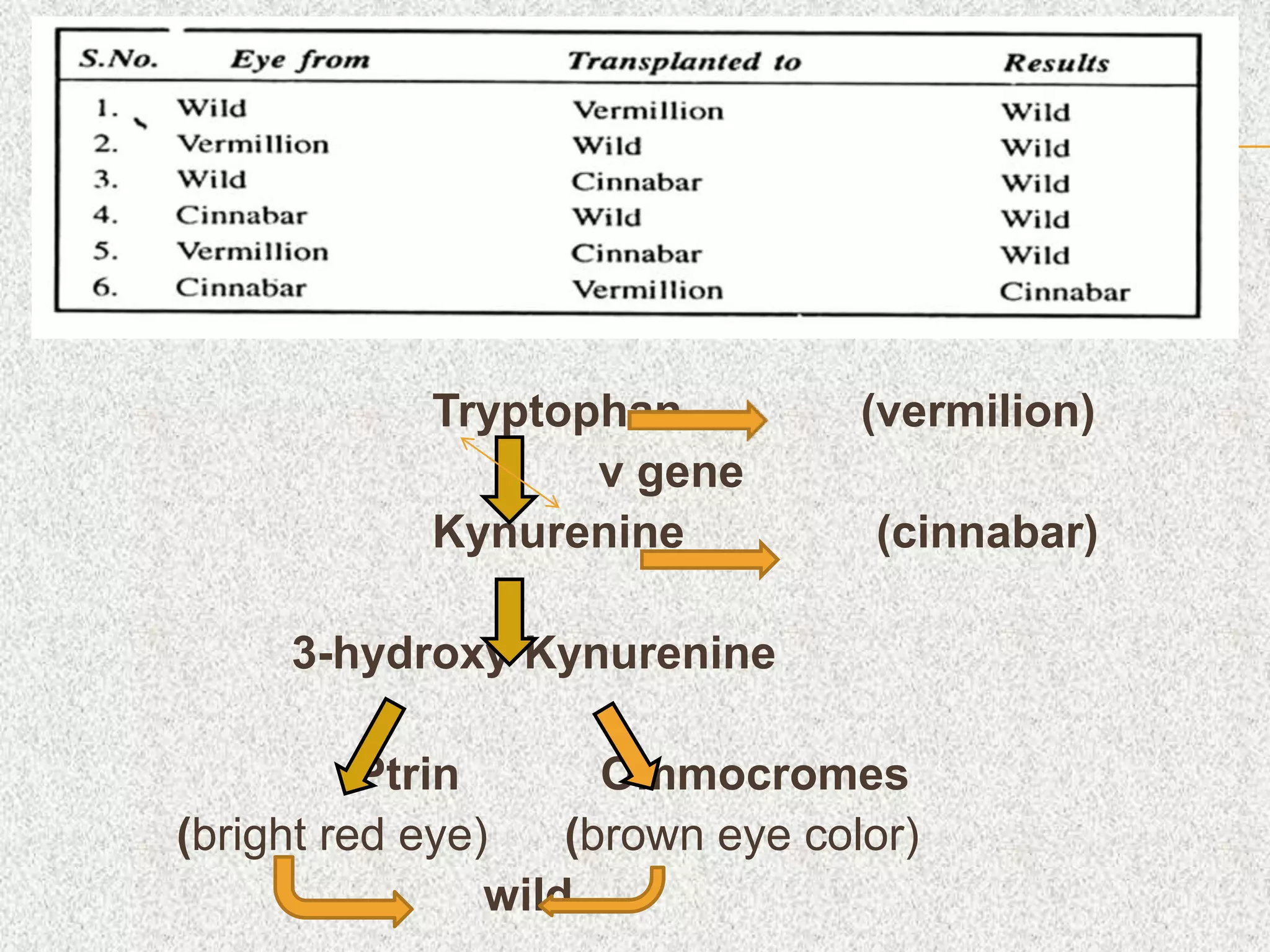
 Beadle and Ephrussi (1937) studied metabolic pathway for
eye color in Drosophila.
 The transmitted embryonic eye primordial from one
flies to other flies at larval stage and result were
analyzed in adult (abdomen).
 The reciprocal crosses of eye transplanted was
done among viz. wild, vermillion and cinnabar.
 In all cases transmitted eye were developed into
wild eye or normal eye.
 But when cinnabar eye was transplanted into
vermilion larva to its abdomen which result
cinnabar eye color.
Tryptophan (vermilion)
v gene
Kynurenine (cinnabar)
3-hydroxy Kynurenine
Ptrin Ommocromes
(bright red eye) (brown eye color)
wild
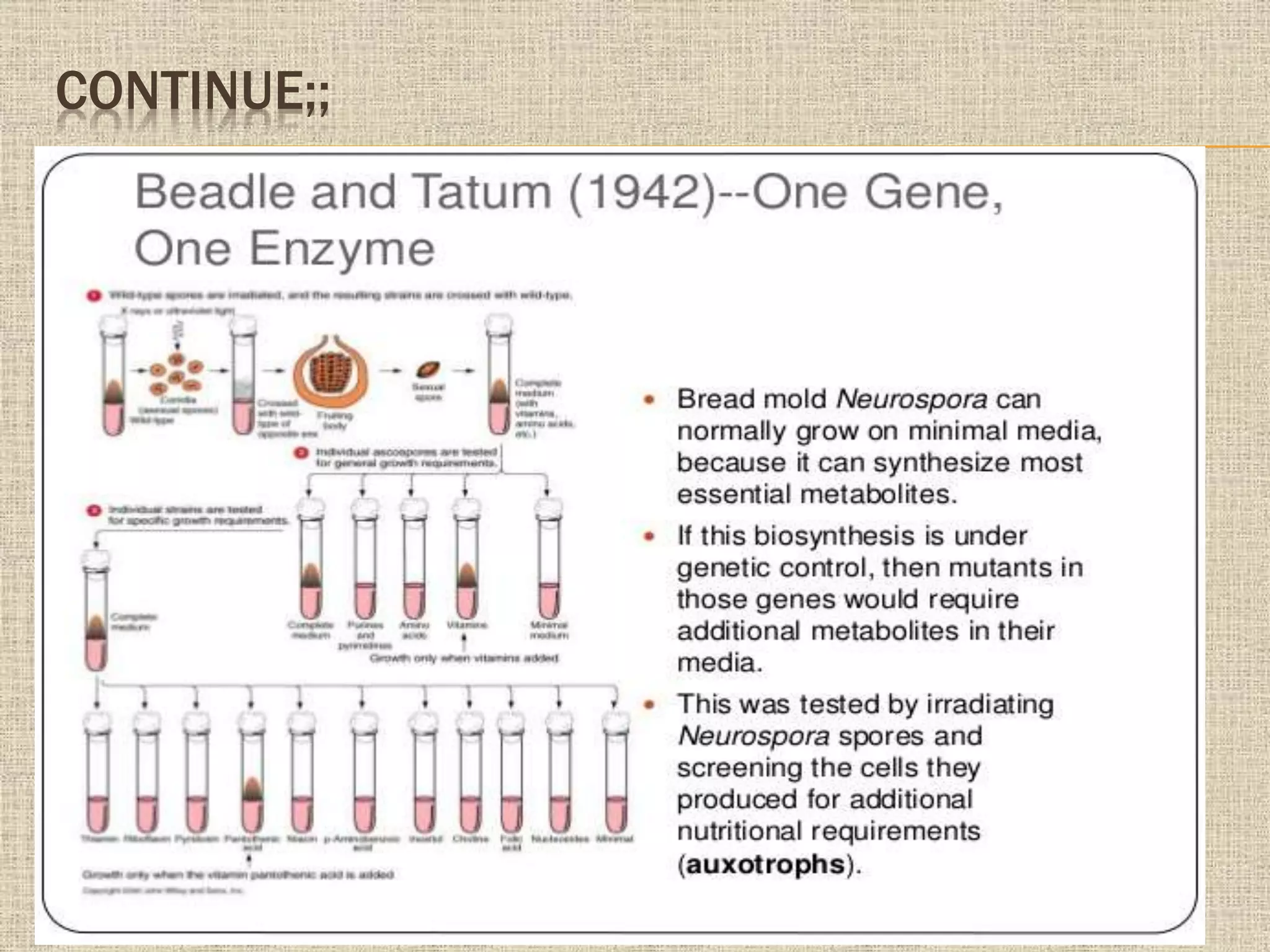
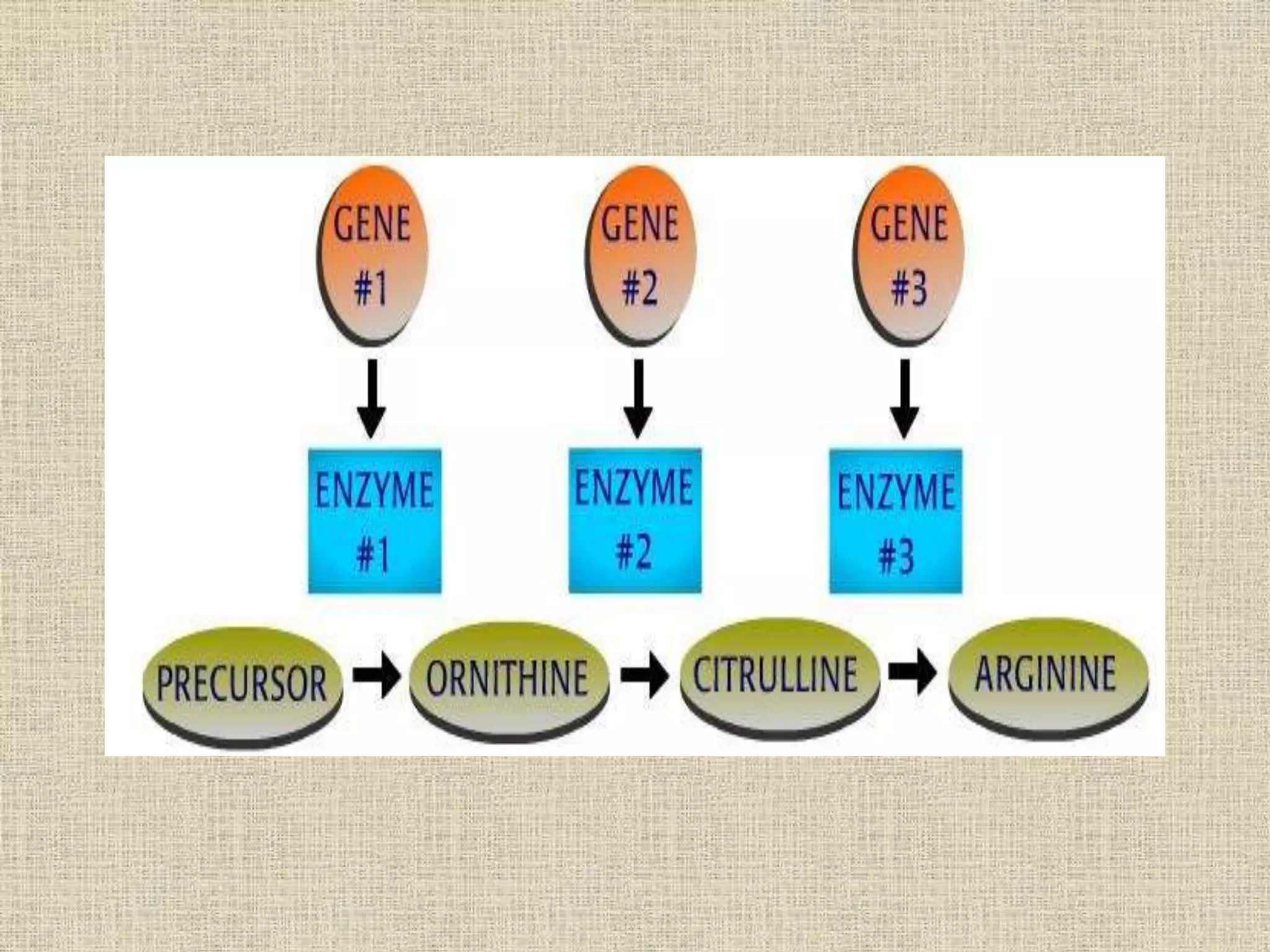
Biochemical Pathway in Neurospora
Beadle and Tatum studied biosynthetic
pathway of arginine in Neurospora. They
reported that biosynthesis of arginine involves
several sequential steps and each step is
controlled by specific enzyme. The end product
of one biochemical reaction serves as a
precursor for the next.
CONTINUE;;
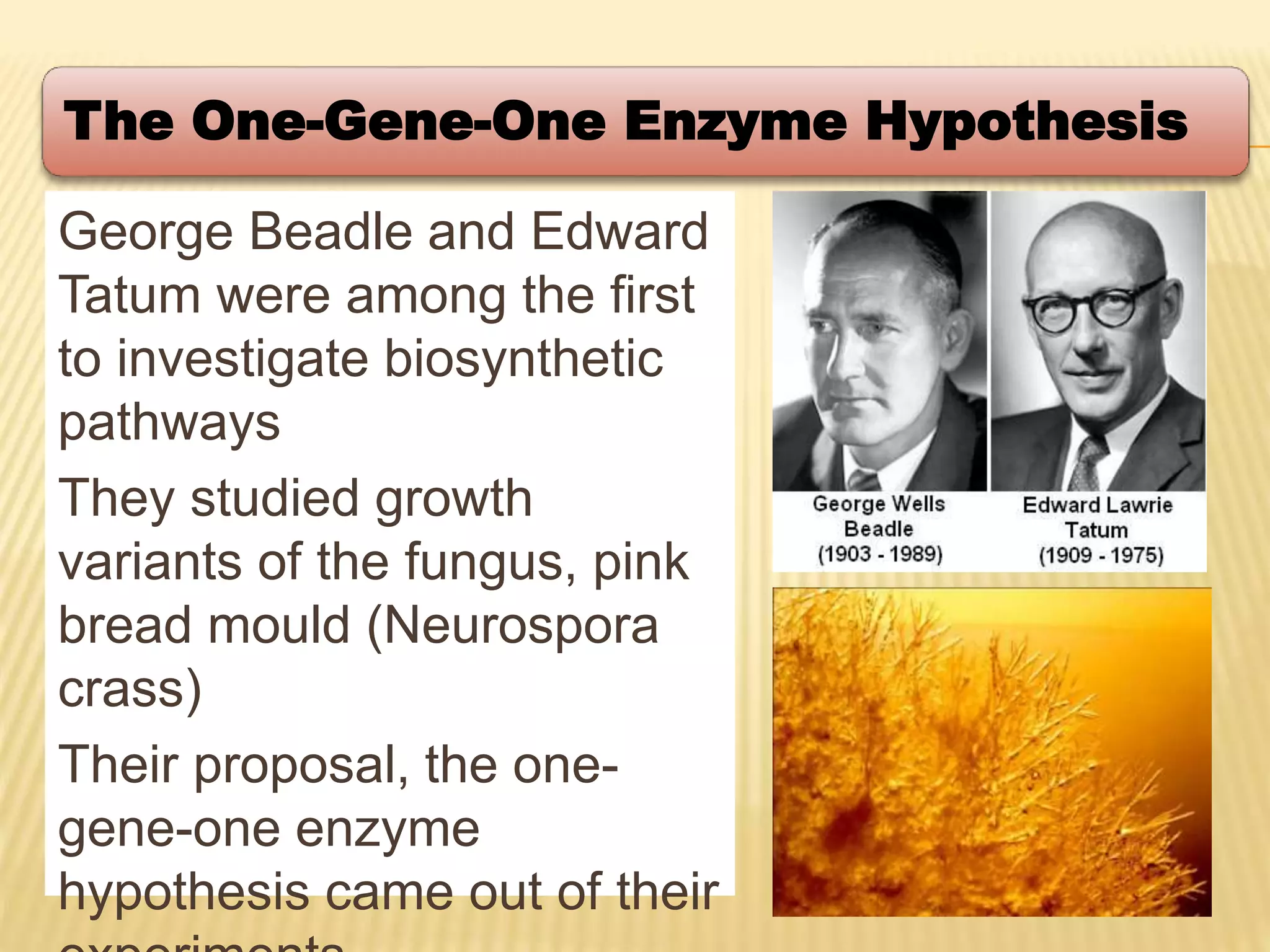
The One-Gene-One Enzyme Hypothesis
George Beadle and Edward
Tatum were among the first
to investigate biosynthetic
pathways
They studied growth
variants of the fungus, pink
bread mould (Neurospora
crass)
Their proposal, the one-
gene-one enzyme
hypothesis came out of their
One gene one enzyme
Precursor Product A Product B
Product
C
Product n
BIOCHEMICAL MUTATION/GENETICS

BIOCHEMICAL MUTATION/GENETICS

  • 2.
    Content:  Introduction.  Inbornerrors of metabolism in man.  Phenyketonuriya.  Alkaptonuriya.  Albinism.  Goitrous creatinism.  Eye transplantation in drosophila.  Bio chemical mutation in neurospora.  One gene one enzyme hypothesis.
  • 3.
    Introduction BIO CHEMICAL GENETICSIS A BRANCH OF GENETICS AT A BIOCHEMICAL LEVEL AND IN WHICH THE RELATIONSHIP OF GENE AND THEIR CONTROL OVER THE FUNCTION OF AN ENZYME IS OBSERVED. The Foundation bio Chemical Genetics was laid by Sir Archibald Edward Garrod in 1902 was english Physician .he studied Gene action in men. G.W,Beadle and E.L. Tatum [both Nobel Prize winners in1958] was proposed in 1941 a concept called ONE GENE ONE ENZYME HYPOTHESIS. Beadle and Ephrussi in1957 studied metabolic pathway for Eye Colour in Drosophila.
  • 5.
    Phenylketonuria Autosomal recessive metabolicgenetic disorder Mutation in the gene for phenylalanine hydroxylase(PAH). When PAH activity is reduced, phenylalanine accumulates and is converted into phenylpyruvic acid(phenylketone), which can be detected in the urine. Phenyl nine Phenylpyruvic acid PAH (After mutation in
  • 6.
    Overview  This diseasecaused by due to mutation in recessive gene CC.  Located on 12th chromosome.  PKU is rare – it is estimated to affect 1 in every 10,000 babies.
  • 7.
    SYMPTOMS  Most babieswith phenylketonuria appear healthy at birth.  If it isn't treated, damage to the brain and nervous system can lead to: 1. Learning disabilities  2. behavioural difficulties  3. Pale skin colour
  • 9.
    Alkaptonuriya  Also calledblack urine disease  Is an inherited genetic disorder of phenylalanine and tyrosine metabolism.  This condition is rare, affecting 1 in 250,000 to 1 million people worldwide. Alkaptonuriya is more common in certain areas of Slovakia (where it has an incidence of about 1 in 19,000 people) and in the Dominican Republic.  Mutations in the HGD gene
  • 11.
    SYMPTOMS  The urineof person suffering from this disease turns black on exposser to air.  Arthritis (especially of the spine) that gets worse over time.  Darkening of the ear.  Dark spots on the white of the eye (sclera) and cornea.
  • 13.
    ALBINISM  Albinism iscaused by a genetic lack of melanin  Melanin is synthesized from the amino acid tyrosine.  Tyrosine's breaks down tyrosine.  People with albinism have been passed down a nonfunctional tyrosine's allele, which does not allow them to produce melanin.
  • 16.
    GOITRUS CRETINISM 1. Thisdisease is characterized by several mental and physical retardation and hypertrophy of THYROID GLAND. 2. IN normal person tyrosine is converted into thyroid hormone are essential for normal human metabolism and responsible for normal physical and mental growth mutation at gene CC.
  • 17.
    Gene Action inDrosophila | Biochemical Genetics  Beadle and Ephrussi (1937) studied metabolic pathway for eye color in Drosophila.  The transmitted embryonic eye primordial from one flies to other flies at larval stage and result were analyzed in adult (abdomen).  The reciprocal crosses of eye transplanted was done among viz. wild, vermillion and cinnabar.  In all cases transmitted eye were developed into wild eye or normal eye.  But when cinnabar eye was transplanted into vermilion larva to its abdomen which result cinnabar eye color.
  • 18.
    Tryptophan (vermilion) v gene Kynurenine(cinnabar) 3-hydroxy Kynurenine Ptrin Ommocromes (bright red eye) (brown eye color) wild
  • 19.
    Biochemical Pathway inNeurospora Beadle and Tatum studied biosynthetic pathway of arginine in Neurospora. They reported that biosynthesis of arginine involves several sequential steps and each step is controlled by specific enzyme. The end product of one biochemical reaction serves as a precursor for the next.
  • 20.
  • 21.
    The One-Gene-One EnzymeHypothesis George Beadle and Edward Tatum were among the first to investigate biosynthetic pathways They studied growth variants of the fungus, pink bread mould (Neurospora crass) Their proposal, the one- gene-one enzyme hypothesis came out of their
  • 22.
    One gene oneenzyme Precursor Product A Product B Product C Product n