John Stewart
12.8.2016
 As an introduction to the workplace, our company wants to assure
that you achieve the most out of this learning experience. We offer a
variety of work positions which include:
 Graphic designer
 Web developer
 Web programmer
 Sound engineer
 Assistant Manager
 Art director
 Print Production Manager
 Our equipment safety checklist is defined by performing daily
or weekly risk assessments to identify the underlying hazards
that appear as potential or obvious health risks in the
workplace.
 John Richards, our HSR representative is responsible for
ensuring occupational health and safety in the workplace.
A list of some of the existing and potential work hazards
in the studio include:
 Loose wires obstructing the area
 Monitor glare
 Incorrect height of workbenches
 Injuries from operating advanced equipment without proper training
 Chemical hazards (e.g. ink toners and cleaning product spills”)
 Exposure to excessively loud noises
 Lack of glass protection in reception from aggressive customers
 Fatigue or sickness from humidity of the work space
 Poor ventilation (can be more problematic in areas with fumes)
 Back strains due to heavy lifting and filing in ‘hard-to-reach’ areas
 To create a risk management procedure for controlling the above
risks, we are required to focus on eliminating the risks up front or if
the option is unavailable, attempt to find an alternate method of
managing the troublesome
task.
 Physical hazards can be monitored by enclosing the area off from
the employees until the situation is handled. Injuries caused by the
work environment including poor ventilation and heavy lifting, can
be removed through job rotation and timing the work in order to
reduce exposure.
 An incident reporting procedure is made to ensure that all OHS
incidents are properly investigated and executed in an organised
manner. The incident documentation process involves the following:
 Completion of Incident Report Form (Part A) and Completion of
Incident Report Form (Part B) – This is completed for ‘Major
incidents’ or accidents requiring a doctor or hospital visit.
 Incident Report Form (Part B) must be completed and sent to
‘Organisational Development’ within three days of Incident
Notification (Part A)
 Fax Incident Report Form must be sent to Organisational
Development within 48 hours of accident
 OHS Coordinator could be required in further Risk Assessments
involving incidents with chemicals, operating heavy machinery etc.
 During workplace inspection, the inspection team will evaluate the
environment which includes odour, noise, temperature and
ventilation and the work process which is based on how well
employees interact with work elements during a job. Work
equipment is also investigated.
 The inspection team will likely engage with individual employees
during inspection to receive input on additional health and safety
issues.
 After inspection, they will review the inspection checklist and ensure
control measures are implemented for all hazards, set completion
dates, file the checklist and mark the safety report as complete.
 In the likelihood that an emergency situation arises, our
business provides documentation such as flyers and
newsletters with information on such topics. We also discuss
OH&S issues in committee meetings which are held on a
weekly basis.
 The rights and responsibilities of employers in the workplace
include:
 Providing personal protective equipment (PPE) to ensure employees
complete their work safely, as well as establishing how to properly
use the equipment.
 Training and supervising staff to ensure work safety procedures are
properly understood and adhered to
 Evaluating WHS procedures on a regular basis to ensure safety from
workplace hazards
 Providing suitable work facilities such as toilets, washrooms, dining
areas and first aid
 Monitoring work conditions that are under the employer’s control
(e.g. room temperature and ventilation)
 The rights and responsibilities of employees in the workplace
for work health and safety include:
 Wearing all personal protective equipment provided
 Following the safe work procedures
 Providing assistance or first aid if a worker is injured
 Contributing to anything the employer does which adheres to
OH&S
 Avoiding placing themselves or other workers at risk
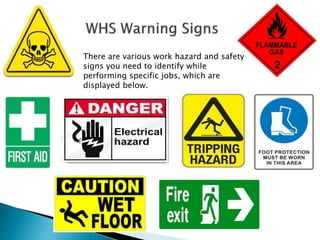
There are various work hazard and safety
signs you need to identify while
performing specific jobs, which are
displayed below.
 Below are a list of resources regarding occupational health and safety
guidelines and policies:
 http://www.safeworkaustralia.gov.au/sites/swa/model-whs-
laws/ncep/pages/ncep
 https://www.business.gov.au/info/run/workplace-health-and-
safety/whs-oh-and-s-acts-regulations-and-codes-of-practice
 http://workplaceohs.com.au/legislation
 http://www.australia.gov.au/information-and-services/jobs-and-
workplace/whs-workplace-health-and-safety
 http://www.safework.sa.gov.au/show_page.jsp?id=113072

OH&S Induction

  • 1.
  • 2.
     As anintroduction to the workplace, our company wants to assure that you achieve the most out of this learning experience. We offer a variety of work positions which include:  Graphic designer  Web developer  Web programmer  Sound engineer  Assistant Manager  Art director  Print Production Manager
  • 3.
     Our equipmentsafety checklist is defined by performing daily or weekly risk assessments to identify the underlying hazards that appear as potential or obvious health risks in the workplace.  John Richards, our HSR representative is responsible for ensuring occupational health and safety in the workplace.
  • 4.
    A list ofsome of the existing and potential work hazards in the studio include:  Loose wires obstructing the area  Monitor glare  Incorrect height of workbenches  Injuries from operating advanced equipment without proper training  Chemical hazards (e.g. ink toners and cleaning product spills”)  Exposure to excessively loud noises  Lack of glass protection in reception from aggressive customers  Fatigue or sickness from humidity of the work space  Poor ventilation (can be more problematic in areas with fumes)  Back strains due to heavy lifting and filing in ‘hard-to-reach’ areas
  • 5.
     To createa risk management procedure for controlling the above risks, we are required to focus on eliminating the risks up front or if the option is unavailable, attempt to find an alternate method of managing the troublesome task.  Physical hazards can be monitored by enclosing the area off from the employees until the situation is handled. Injuries caused by the work environment including poor ventilation and heavy lifting, can be removed through job rotation and timing the work in order to reduce exposure.
  • 6.
     An incidentreporting procedure is made to ensure that all OHS incidents are properly investigated and executed in an organised manner. The incident documentation process involves the following:  Completion of Incident Report Form (Part A) and Completion of Incident Report Form (Part B) – This is completed for ‘Major incidents’ or accidents requiring a doctor or hospital visit.  Incident Report Form (Part B) must be completed and sent to ‘Organisational Development’ within three days of Incident Notification (Part A)  Fax Incident Report Form must be sent to Organisational Development within 48 hours of accident  OHS Coordinator could be required in further Risk Assessments involving incidents with chemicals, operating heavy machinery etc.
  • 7.
     During workplaceinspection, the inspection team will evaluate the environment which includes odour, noise, temperature and ventilation and the work process which is based on how well employees interact with work elements during a job. Work equipment is also investigated.  The inspection team will likely engage with individual employees during inspection to receive input on additional health and safety issues.  After inspection, they will review the inspection checklist and ensure control measures are implemented for all hazards, set completion dates, file the checklist and mark the safety report as complete.
  • 8.
     In thelikelihood that an emergency situation arises, our business provides documentation such as flyers and newsletters with information on such topics. We also discuss OH&S issues in committee meetings which are held on a weekly basis.
  • 9.
     The rightsand responsibilities of employers in the workplace include:  Providing personal protective equipment (PPE) to ensure employees complete their work safely, as well as establishing how to properly use the equipment.  Training and supervising staff to ensure work safety procedures are properly understood and adhered to  Evaluating WHS procedures on a regular basis to ensure safety from workplace hazards  Providing suitable work facilities such as toilets, washrooms, dining areas and first aid  Monitoring work conditions that are under the employer’s control (e.g. room temperature and ventilation)
  • 10.
     The rightsand responsibilities of employees in the workplace for work health and safety include:  Wearing all personal protective equipment provided  Following the safe work procedures  Providing assistance or first aid if a worker is injured  Contributing to anything the employer does which adheres to OH&S  Avoiding placing themselves or other workers at risk
  • 11.
    There are variouswork hazard and safety signs you need to identify while performing specific jobs, which are displayed below.
  • 12.
     Below area list of resources regarding occupational health and safety guidelines and policies:  http://www.safeworkaustralia.gov.au/sites/swa/model-whs- laws/ncep/pages/ncep  https://www.business.gov.au/info/run/workplace-health-and- safety/whs-oh-and-s-acts-regulations-and-codes-of-practice  http://workplaceohs.com.au/legislation  http://www.australia.gov.au/information-and-services/jobs-and- workplace/whs-workplace-health-and-safety  http://www.safework.sa.gov.au/show_page.jsp?id=113072