OH&S PROCEDURES
IN WM DESIGNS
OVERVIEW
 Induction for New Employees
 Equipment Safety Check and Process
 Designated Safety Representatives
 Existing and Potential Hazards in the Studio
 Procedure to Control the Risks
 Reporting Risks and Incidents
 Meetings and Consultative Process for OH&S Issues
 Procedure for Managing Emergencies
 Responsibilities of Employers and Employees under Relevant Health and
Safety Legislation
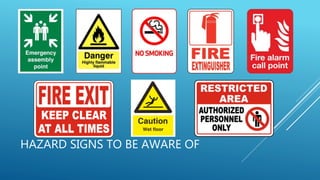
 8 Commonly Used Hazard Signs and Safety Symbols
 Resources Related to OH&S National Policies
OUR VISION & MISSION
Mission Statement
We are committed to:
Provide the ever-increasing fast paced technology demands in design
works to surpass the expectations of our clients.
Vision Statement
To be the trusted brand and preferred partner to our customers in the
global market place.
MEET THE TEAM WINCHELLI MONET
DESIGNER / FOUNDER
Additional Team Members:
3 Product Manager
1 UX/ Design
2 Sales
Customer Support
Yuki the
Labradoodle
Project Manager
COMPANY EXPECTATIONS
 Treat others with dignity and respect at all times.
 Conduct themselves in an ethical manner at all times.
 Report to work as scheduled and seek approval from their
supervisors in advance for any changes to the established work
schedule, including the use of leave and late or early arrivals and
departures. Review the attendance policy.
 Perform assigned duties and responsibilities with the highest degree
of public trust.
 Devote full effort to job responsibilities during work hours.
 Maintain the qualifications, certification, licensure, and/or training
requirements identified for their positions.
TEAM ROLES & RESPONSIBILITIES
The Belbin test identifies the following roles that
individuals adopt when working in teams:
Shaper
Plant
Co-ordinator
Team Worker
TEAM ROLES & RESPONSIBILITIES
 Shaper
Shapers attempt to apply a shape to the team and are very
focused on taking positive action.
 Plant
Plants are individuals who originate new ideas and provide
unique solutions to problems.
 Co-ordinator
Co-ordinators like to consult with their colleagues when
making decisions and encourage co-operative team work.
 Team Worker
Team Workers are the team diplomats. They encourage team
unity and attempt to diffuse potentially damaging interpersonal
conflicts.
WORK TIMES
Casual work offers more flexible work hours than other forms of employment,
but the permanency of your job is less certain.
Not all casual employees can choose their own hours. Your employer will
probably offer you hours to suit their business opening hours and the demands
of their busiest times.
You can turn down a shift, but if you do it too often it might mean your employer
offers you less shifts in the future.
If you're worried about your employer not letting you change shifts, or you're
worried about your employer taking shifts away from you, you can
call JobWatch (new window) on 9662 1933 (metro) or 1800 331 617 (non-
metro) to ask for advice.
STUDIO EQUIPMENT & SAFETY
 Any computer maintenance / faults need to be
reported to your manager
 An electrician will maintain and check all the
electricals
 The safety manager checks all equipment a few
times a year to be sure its safe to use
 First Aid kits are in date
 Fire extinguishes are in date
WHO TO SEE ABOUT OH&S
Your team leader
Your manager
Safety committee
Human resources
Organizational department
Mr. Tom Hardyhat
Safety Representative
0438 654 321
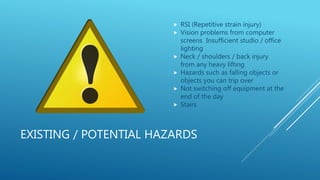
EXISTING / POTENTIAL HAZARDS
 RSI (Repetitive strain injury)
 Vision problems from computer
screens Insufficient studio / office
lighting
 Neck / shoulders / back injury
from any heavy lifting
 Hazards such as falling objects or
objects you can trip over
 Not switching off equipment at the
end of the day
 Stairs
EXISTING / POTENTIAL HAZARDS
 Excessive noise in the studio from
equipment
 Awkward seating position
 Getting hair / clothing / fingers
caught
 Open cabinet / desk drawers
 Slippery floors
CONTROLLING RISKS
 Take a ten minute break every 30 minutes
 Ensure employees know how to adjust screen glare
 Ensure sufficient lighting, ensure lighting repairs
 Ensure correct lifting procedures
 Report any hazards or action them immediately
 Switch off all electrical appliances at the end of the working day
 Loud equipment needs to be moved to appropriate area
 Ensure correct posture in sitting position, straight back
 Have long hair tied back and no loose clothing
 Always be aware of what’s around you
 Ensure awareness and walk calmly / steadily
REPORTING RISKS & INCIDENTS
What should I do if I notice a hazard?
 You should report it immediately to your team leader. You do
not need to wait for an inspection team to come by. In fact,
health and safety legislation requires employees to report
hazards to their team leader.
 The immediate hazard reporting process allows employees to
report hazardous conditions or practices as they notice them.
This procedure allows for prompt reporting and subsequent
corrective action without waiting for the next round of regular
inspections.
REPORTING RISKS & INCIDENTS
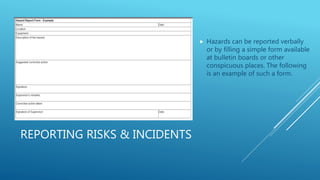
 Hazards can be reported verbally
or by filling a simple form available
at bulletin boards or other
conspicuous places. The following
is an example of such a form.
INSPECTION & CONSULTATIVE PROCESS
FOR OH&S ISSUES
 Managers are responsible for ensuring consultation is a
fundamental element of health and safety management within
their workplace.
 Consultation provides the opportunity for cooperative problem
solving and improved outcomes for health and safety.
INSPECTION & CONSULTATIVE PROCESS
FOR OH&S ISSUES
 There should be an inspection by the OH&S safety officer
monthly.
 Any defects found would be assessed for risk and dealt with as
soon as possible.
 If necessary refer to management.
 He would have to fill out a risk assessment form and a
maintenance form as previously described.
 When the problem is fixed complete the outcome section on the
form and log in the OH&S file.
EMERGENCY PROCEDURE
 In the emergency procedure manual instructions for varying
codes of emergency will be documented.
 Staff should have a mandatory 12 month revision of the
procedures including those in particular roles such as chief
wardens and wardens.
 It is the responsibility of the OH&S safety officer to oversee all
training and insure that members of staff attend training.
 Regular reviews of the procedures (12 monthly) is essential to
continually update the changing work environment.
EMPLOYEE RESPONSIBILITIES
 As an employee, you have responsibilities under work health and safety law.
 You must act responsibly, take care of yourself and others and cooperate with
your employer in matters of health and safety.
 This applies to all workers, whether they have a disability or not.
 If you don’t do these things, you could be disciplined by your employer under
your conditions of employment.
 You could be prosecuted under the work health and safety laws in your state or
territory.
 In addition, under the Commonwealth Disability Discrimination Act 1992 your
ability to work safely is an inherent or essential requirement of any job.
 If your disability could reasonably be seen to cause a health and safety risk for
other people at work, then failing to disclose that risk could be a breach of your
obligations under work health and safety legislation.
EMPLOYER RESPONSIBILITIES
 Employers are required to provide a safe and healthy workplace to
protect employees against potential health and safety risks.
 Your employer has a responsibility to ensure that all employees are
covered by workers compensation insurance and, in the event of a
workplace injury they must assist an injured employee return to work
safely.
HAZARD SIGNS TO BE AWARE OF
RESOURCES RELATED TO OH&S
NATIONAL POLICIES
 Safe work Australia
(http://www.safeworkaustralia.gov.au/sites/SWA)
 Safety Culture (http://www.safetyculture.com.au/)
 WST (http://worksafe.tas.gov.au/home)
 Safe at work (http://www.safeatwork.org.au/)
 ASSA (OHS.net)
 Health & Safety handbook
(http://www.healthandsafetyhandbook.com.au/)
 Com Care (http://www.comcare.gov.au/)
 Workplace | OHS (http://workplaceohs.com.au/)
 Talking Safety (http://www.talkingsafety.org/)

Assessment Task | OH&S | Role Play | Induction Powerpoint

  • 1.
  • 2.
    OVERVIEW  Induction forNew Employees  Equipment Safety Check and Process  Designated Safety Representatives  Existing and Potential Hazards in the Studio  Procedure to Control the Risks  Reporting Risks and Incidents  Meetings and Consultative Process for OH&S Issues  Procedure for Managing Emergencies  Responsibilities of Employers and Employees under Relevant Health and Safety Legislation  8 Commonly Used Hazard Signs and Safety Symbols  Resources Related to OH&S National Policies
  • 3.
    OUR VISION &MISSION Mission Statement We are committed to: Provide the ever-increasing fast paced technology demands in design works to surpass the expectations of our clients. Vision Statement To be the trusted brand and preferred partner to our customers in the global market place.
  • 4.
    MEET THE TEAMWINCHELLI MONET DESIGNER / FOUNDER Additional Team Members: 3 Product Manager 1 UX/ Design 2 Sales Customer Support Yuki the Labradoodle Project Manager
  • 5.
    COMPANY EXPECTATIONS  Treatothers with dignity and respect at all times.  Conduct themselves in an ethical manner at all times.  Report to work as scheduled and seek approval from their supervisors in advance for any changes to the established work schedule, including the use of leave and late or early arrivals and departures. Review the attendance policy.  Perform assigned duties and responsibilities with the highest degree of public trust.  Devote full effort to job responsibilities during work hours.  Maintain the qualifications, certification, licensure, and/or training requirements identified for their positions.
  • 6.
    TEAM ROLES &RESPONSIBILITIES The Belbin test identifies the following roles that individuals adopt when working in teams: Shaper Plant Co-ordinator Team Worker
  • 7.
    TEAM ROLES &RESPONSIBILITIES  Shaper Shapers attempt to apply a shape to the team and are very focused on taking positive action.  Plant Plants are individuals who originate new ideas and provide unique solutions to problems.  Co-ordinator Co-ordinators like to consult with their colleagues when making decisions and encourage co-operative team work.  Team Worker Team Workers are the team diplomats. They encourage team unity and attempt to diffuse potentially damaging interpersonal conflicts.
  • 8.
    WORK TIMES Casual workoffers more flexible work hours than other forms of employment, but the permanency of your job is less certain. Not all casual employees can choose their own hours. Your employer will probably offer you hours to suit their business opening hours and the demands of their busiest times. You can turn down a shift, but if you do it too often it might mean your employer offers you less shifts in the future. If you're worried about your employer not letting you change shifts, or you're worried about your employer taking shifts away from you, you can call JobWatch (new window) on 9662 1933 (metro) or 1800 331 617 (non- metro) to ask for advice.
  • 9.
    STUDIO EQUIPMENT &SAFETY  Any computer maintenance / faults need to be reported to your manager  An electrician will maintain and check all the electricals  The safety manager checks all equipment a few times a year to be sure its safe to use  First Aid kits are in date  Fire extinguishes are in date
  • 10.
    WHO TO SEEABOUT OH&S Your team leader Your manager Safety committee Human resources Organizational department Mr. Tom Hardyhat Safety Representative 0438 654 321
  • 11.
    EXISTING / POTENTIALHAZARDS  RSI (Repetitive strain injury)  Vision problems from computer screens Insufficient studio / office lighting  Neck / shoulders / back injury from any heavy lifting  Hazards such as falling objects or objects you can trip over  Not switching off equipment at the end of the day  Stairs
  • 12.
    EXISTING / POTENTIALHAZARDS  Excessive noise in the studio from equipment  Awkward seating position  Getting hair / clothing / fingers caught  Open cabinet / desk drawers  Slippery floors
  • 13.
    CONTROLLING RISKS  Takea ten minute break every 30 minutes  Ensure employees know how to adjust screen glare  Ensure sufficient lighting, ensure lighting repairs  Ensure correct lifting procedures  Report any hazards or action them immediately  Switch off all electrical appliances at the end of the working day  Loud equipment needs to be moved to appropriate area  Ensure correct posture in sitting position, straight back  Have long hair tied back and no loose clothing  Always be aware of what’s around you  Ensure awareness and walk calmly / steadily
  • 14.
    REPORTING RISKS &INCIDENTS What should I do if I notice a hazard?  You should report it immediately to your team leader. You do not need to wait for an inspection team to come by. In fact, health and safety legislation requires employees to report hazards to their team leader.  The immediate hazard reporting process allows employees to report hazardous conditions or practices as they notice them. This procedure allows for prompt reporting and subsequent corrective action without waiting for the next round of regular inspections.
  • 15.
    REPORTING RISKS &INCIDENTS  Hazards can be reported verbally or by filling a simple form available at bulletin boards or other conspicuous places. The following is an example of such a form.
  • 16.
    INSPECTION & CONSULTATIVEPROCESS FOR OH&S ISSUES  Managers are responsible for ensuring consultation is a fundamental element of health and safety management within their workplace.  Consultation provides the opportunity for cooperative problem solving and improved outcomes for health and safety.
  • 17.
    INSPECTION & CONSULTATIVEPROCESS FOR OH&S ISSUES  There should be an inspection by the OH&S safety officer monthly.  Any defects found would be assessed for risk and dealt with as soon as possible.  If necessary refer to management.  He would have to fill out a risk assessment form and a maintenance form as previously described.  When the problem is fixed complete the outcome section on the form and log in the OH&S file.
  • 18.
    EMERGENCY PROCEDURE  Inthe emergency procedure manual instructions for varying codes of emergency will be documented.  Staff should have a mandatory 12 month revision of the procedures including those in particular roles such as chief wardens and wardens.  It is the responsibility of the OH&S safety officer to oversee all training and insure that members of staff attend training.  Regular reviews of the procedures (12 monthly) is essential to continually update the changing work environment.
  • 19.
    EMPLOYEE RESPONSIBILITIES  Asan employee, you have responsibilities under work health and safety law.  You must act responsibly, take care of yourself and others and cooperate with your employer in matters of health and safety.  This applies to all workers, whether they have a disability or not.  If you don’t do these things, you could be disciplined by your employer under your conditions of employment.  You could be prosecuted under the work health and safety laws in your state or territory.  In addition, under the Commonwealth Disability Discrimination Act 1992 your ability to work safely is an inherent or essential requirement of any job.  If your disability could reasonably be seen to cause a health and safety risk for other people at work, then failing to disclose that risk could be a breach of your obligations under work health and safety legislation.
  • 20.
    EMPLOYER RESPONSIBILITIES  Employersare required to provide a safe and healthy workplace to protect employees against potential health and safety risks.  Your employer has a responsibility to ensure that all employees are covered by workers compensation insurance and, in the event of a workplace injury they must assist an injured employee return to work safely.
  • 21.
    HAZARD SIGNS TOBE AWARE OF
  • 22.
    RESOURCES RELATED TOOH&S NATIONAL POLICIES  Safe work Australia (http://www.safeworkaustralia.gov.au/sites/SWA)  Safety Culture (http://www.safetyculture.com.au/)  WST (http://worksafe.tas.gov.au/home)  Safe at work (http://www.safeatwork.org.au/)  ASSA (OHS.net)  Health & Safety handbook (http://www.healthandsafetyhandbook.com.au/)  Com Care (http://www.comcare.gov.au/)  Workplace | OHS (http://workplaceohs.com.au/)  Talking Safety (http://www.talkingsafety.org/)