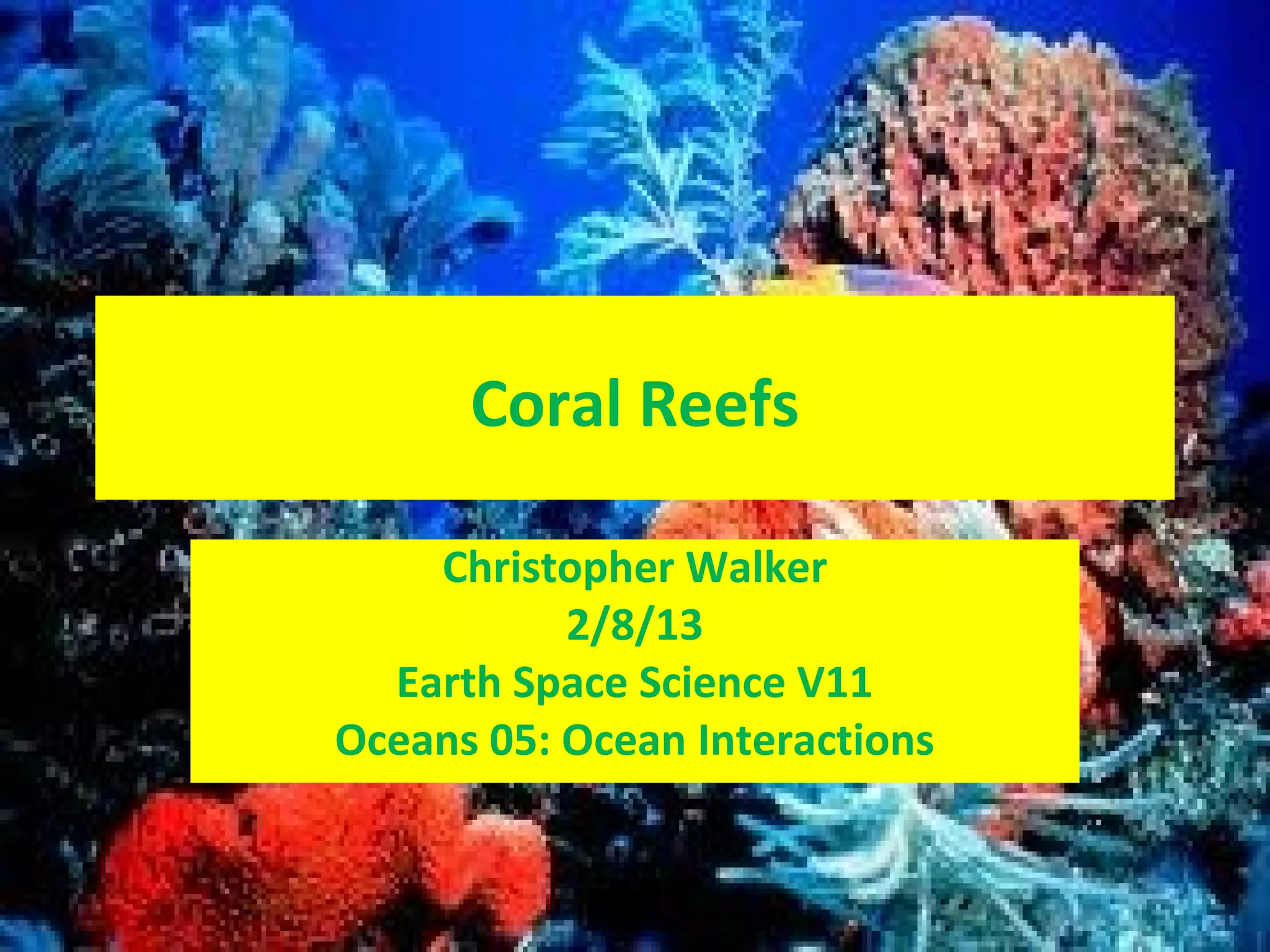
Coral Reefs

    Christopher Walker
           2/8/13
  Earth Space Science V11
Oceans 05: Ocean Interactions
Introduction: Coral Reefs
Coral reefs are known as the "rainforests of the
  oceans.“ because they consist of a collection
  of the most diverse biological communities in
  the world.
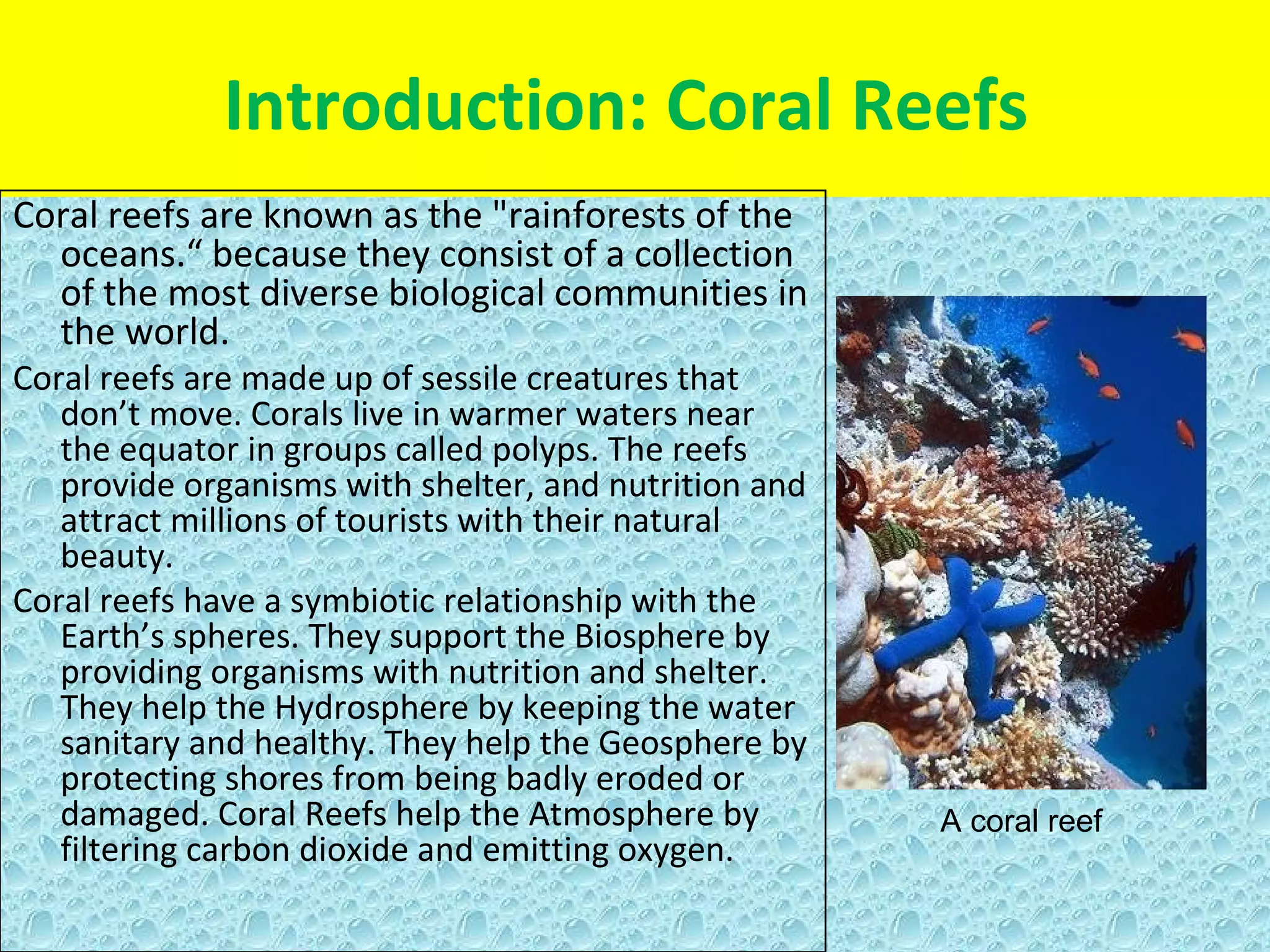
Coral reefs are made up of sessile creatures that
   don’t move. Corals live in warmer waters near
   the equator in groups called polyps. The reefs
   provide organisms with shelter, and nutrition and
   attract millions of tourists with their natural
   beauty.
Coral reefs have a symbiotic relationship with the
   Earth’s spheres. They support the Biosphere by
   providing organisms with nutrition and shelter.
   They help the Hydrosphere by keeping the water
   sanitary and healthy. They help the Geosphere by
   protecting shores from being badly eroded or
   damaged. Coral Reefs help the Atmosphere by         A coral reef
   filtering carbon dioxide and emitting oxygen.
Hydrosphere
The hydrosphere is made up of all the water on
   Earth, which is distributed by the water cycle.
Coral reefs play an important part in the
   hydrosphere by staying healthy and thriving.
Coral gets its nutrition from symbiotic algae,
   plankton, and other substances dissolved in the
   water. They are absorbed from the water,
   helping to filter it.
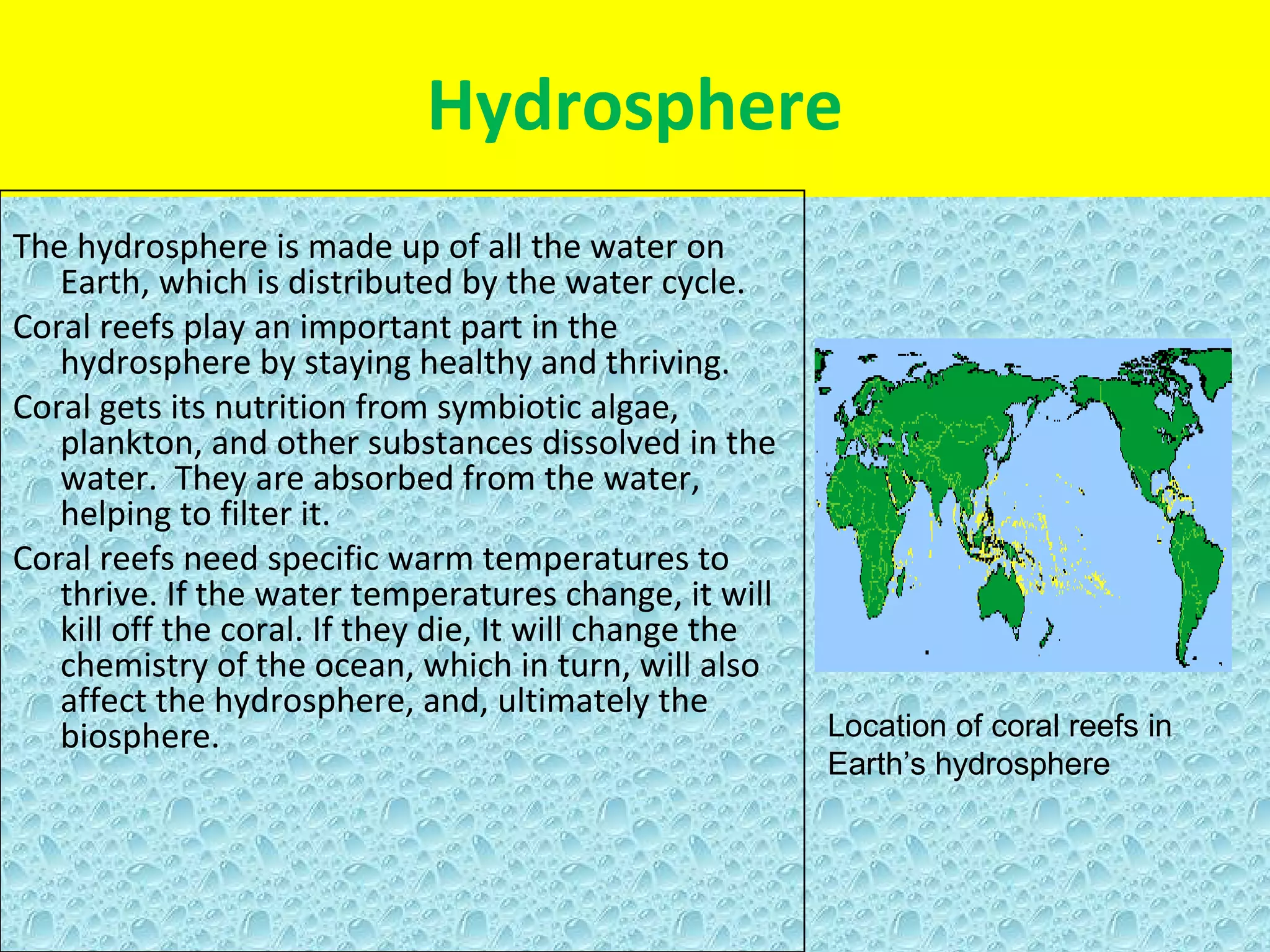
Coral reefs need specific warm temperatures to
   thrive. If the water temperatures change, it will
   kill off the coral. If they die, It will change the
   chemistry of the ocean, which in turn, will also
   affect the hydrosphere, and, ultimately the
   biosphere.                                            Location of coral reefs in
                                                         Earth’s hydrosphere
Geosphere
The geosphere is made up of
  Earth’s layers, crust, and
  rocks. Coral reefs play a
  significant role in the
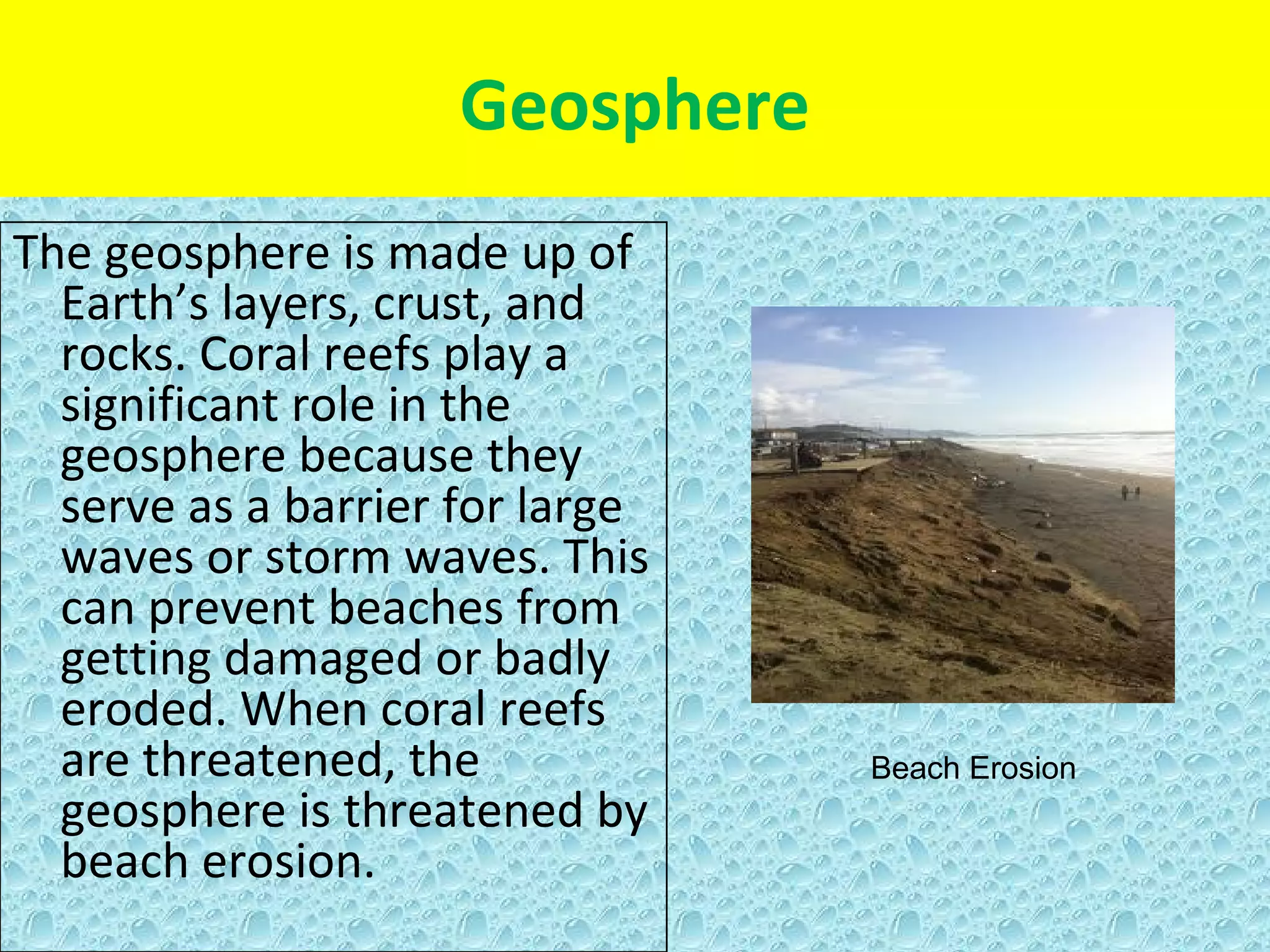
  geosphere because they
  serve as a barrier for large
  waves or storm waves. This
  can prevent beaches from
  getting damaged or badly
  eroded. When coral reefs
  are threatened, the            Beach Erosion
  geosphere is threatened by
  beach erosion.
Cryosphere
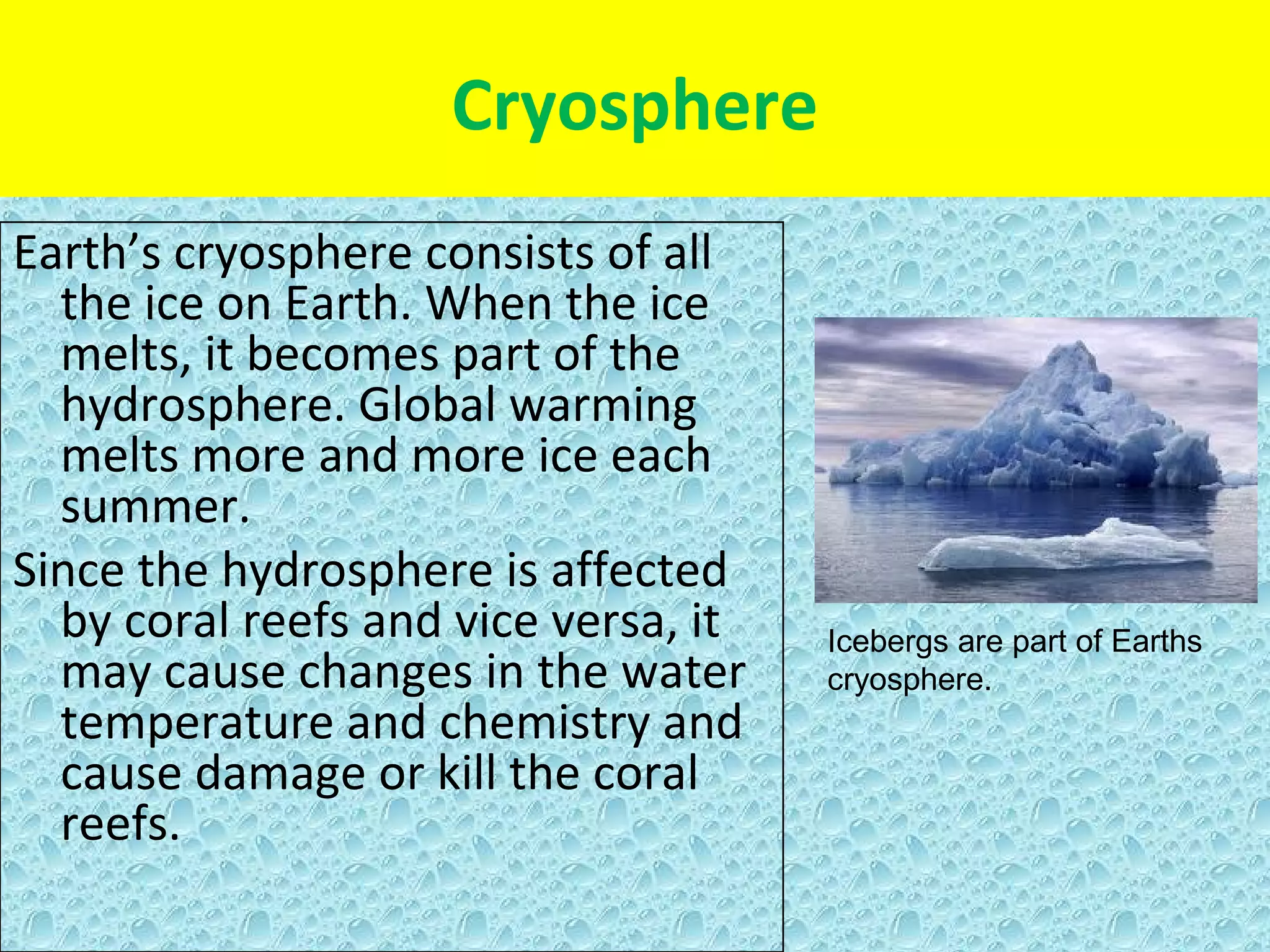
Earth’s cryosphere consists of all
  the ice on Earth. When the ice
  melts, it becomes part of the
  hydrosphere. Global warming
  melts more and more ice each
  summer.
Since the hydrosphere is affected
  by coral reefs and vice versa, it   Icebergs are part of Earths
  may cause changes in the water      cryosphere.
  temperature and chemistry and
  cause damage or kill the coral
  reefs.
Biosphere
Earth’s biosphere is made up of all living
   organisms on Earth.
Coral reefs are very beneficial to the biosphere
   because they provide habitats for many
   organisms such as fish, sponges, oysters,
   clams, crabs, sea turtles, etc.
Coral reefs provide the organisms with food and
   shelter.
The delicate balance between species in a coral
   community can be upset by natural events
   such as decaying spawn, which can kill them.
   Humans can also upset this balance by
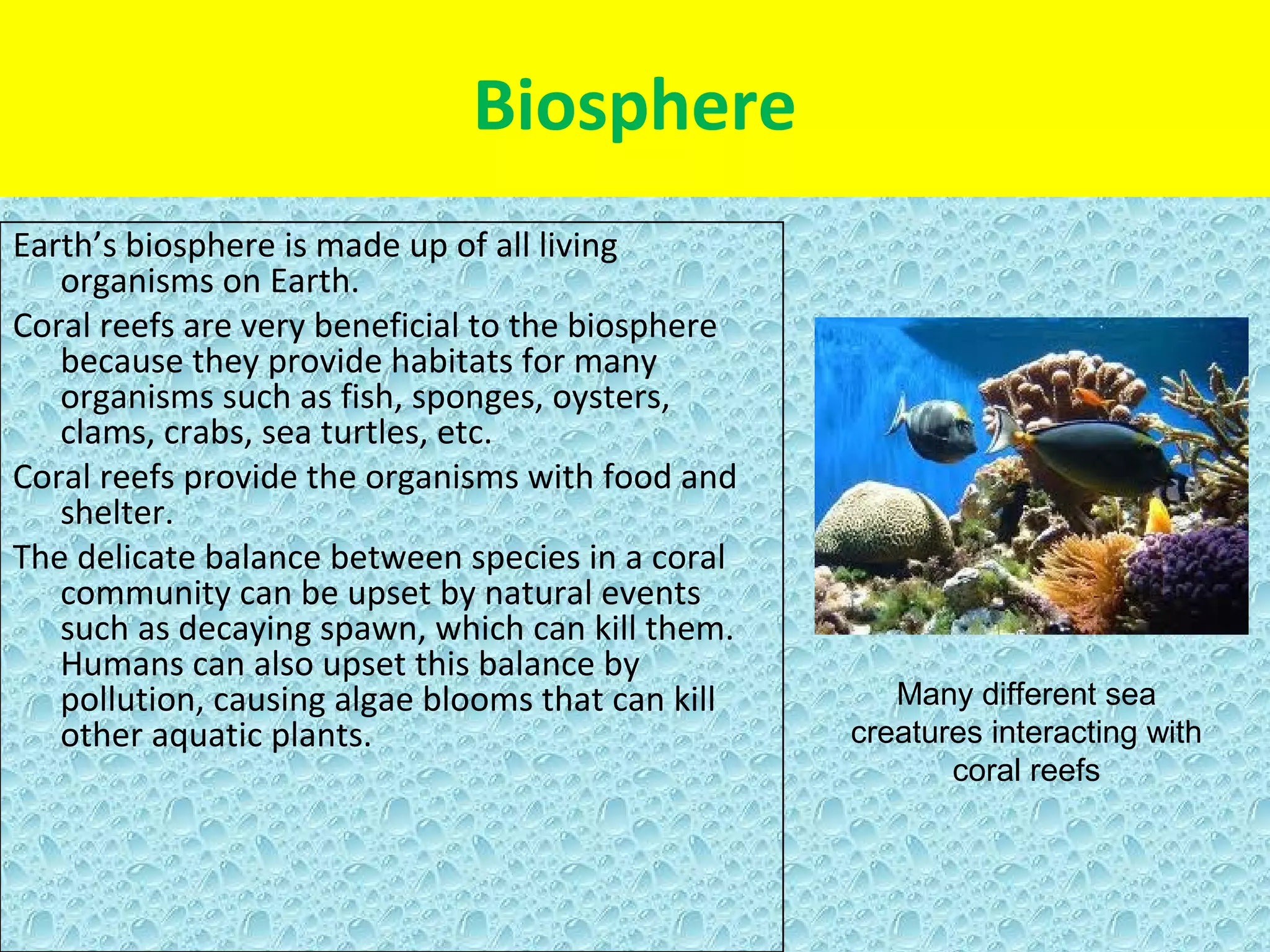
   pollution, causing algae blooms that can kill      Many different sea
   other aquatic plants.                           creatures interacting with
                                                          coral reefs
Atmosphere
Earth’s atmosphere consists of all the gases on Earth.
Coral reefs are benificial to Earth’s atmosphere because
   they help to create oxygen. Coral reefs have a symbiotic
   relationship with Zooxanthellae algae. The algae, like
   any plant, pulls carbon dioxide from the air and pushes
   oxygen into the air through photosynthesis. The carbon
   that is extracted from the air sits on the ocean floor as
   limestone produced by coral polyps. The algae and the
   polyps use oxygen for respiration, thereby releasing
   carbon dioxide into the ocean and the atmosphere;
   however, they remove more carbon dioxide from the
   atmosphere than they add.
Increased carbon dioxide in the atmosphere causes
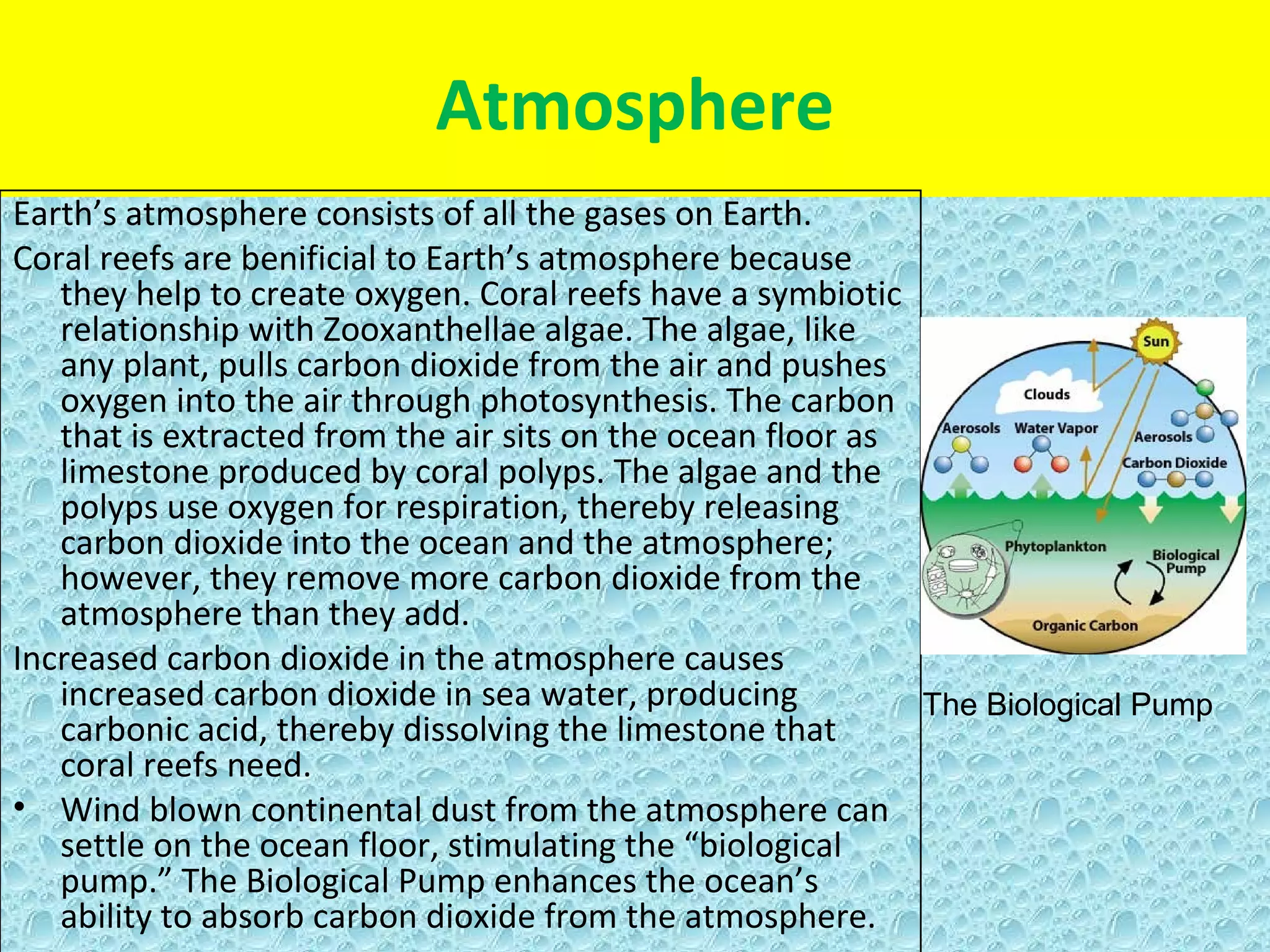
   increased carbon dioxide in sea water, producing          The Biological Pump
   carbonic acid, thereby dissolving the limestone that
   coral reefs need.
• Wind blown continental dust from the atmosphere can
   settle on the ocean floor, stimulating the “biological
   pump.” The Biological Pump enhances the ocean’s
   ability to absorb carbon dioxide from the atmosphere.
Protecting our Coral Reefs
Coral reefs are sensitive to changes in
   temperature, salinity, and chemistry so
   their existence is easily threatened. The
   greatest threat to coral reefs is global
   warming. Global warming heats up the
   water temperatures, which could lead to
   bleaching of the coral, which will
   eventually destroy it. When coral dies, it
   can be harmful to the hydrosphere
   because it will alter the chemistry of the
   water negatively.
Other threats to the reefs that are caused by
   humans include water pollution and
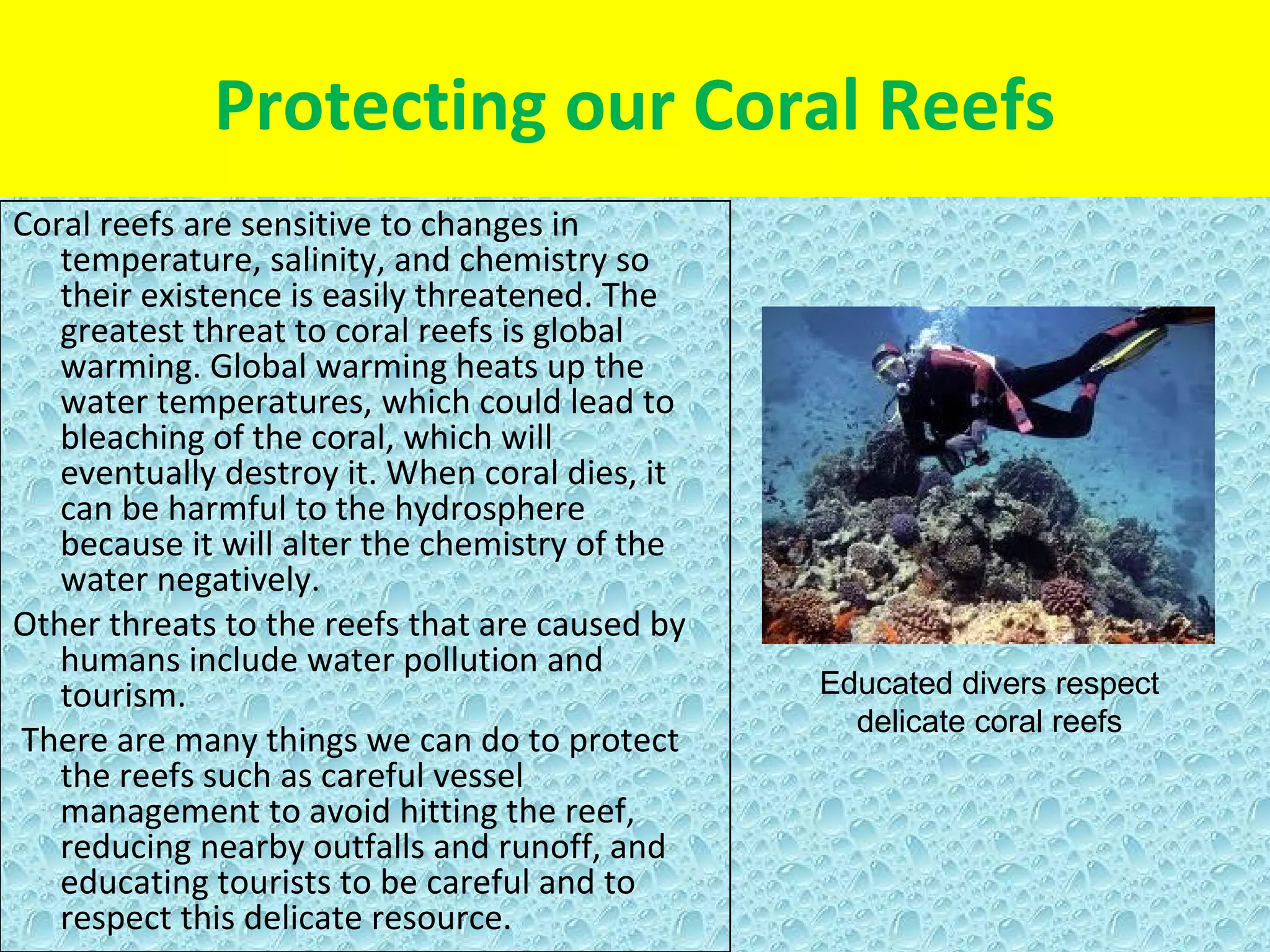
   tourism.                                     Educated divers respect
                                                  delicate coral reefs
There are many things we can do to protect
   the reefs such as careful vessel
   management to avoid hitting the reef,
   reducing nearby outfalls and runoff, and
   educating tourists to be careful and to
   respect this delicate resource.
Conclusion
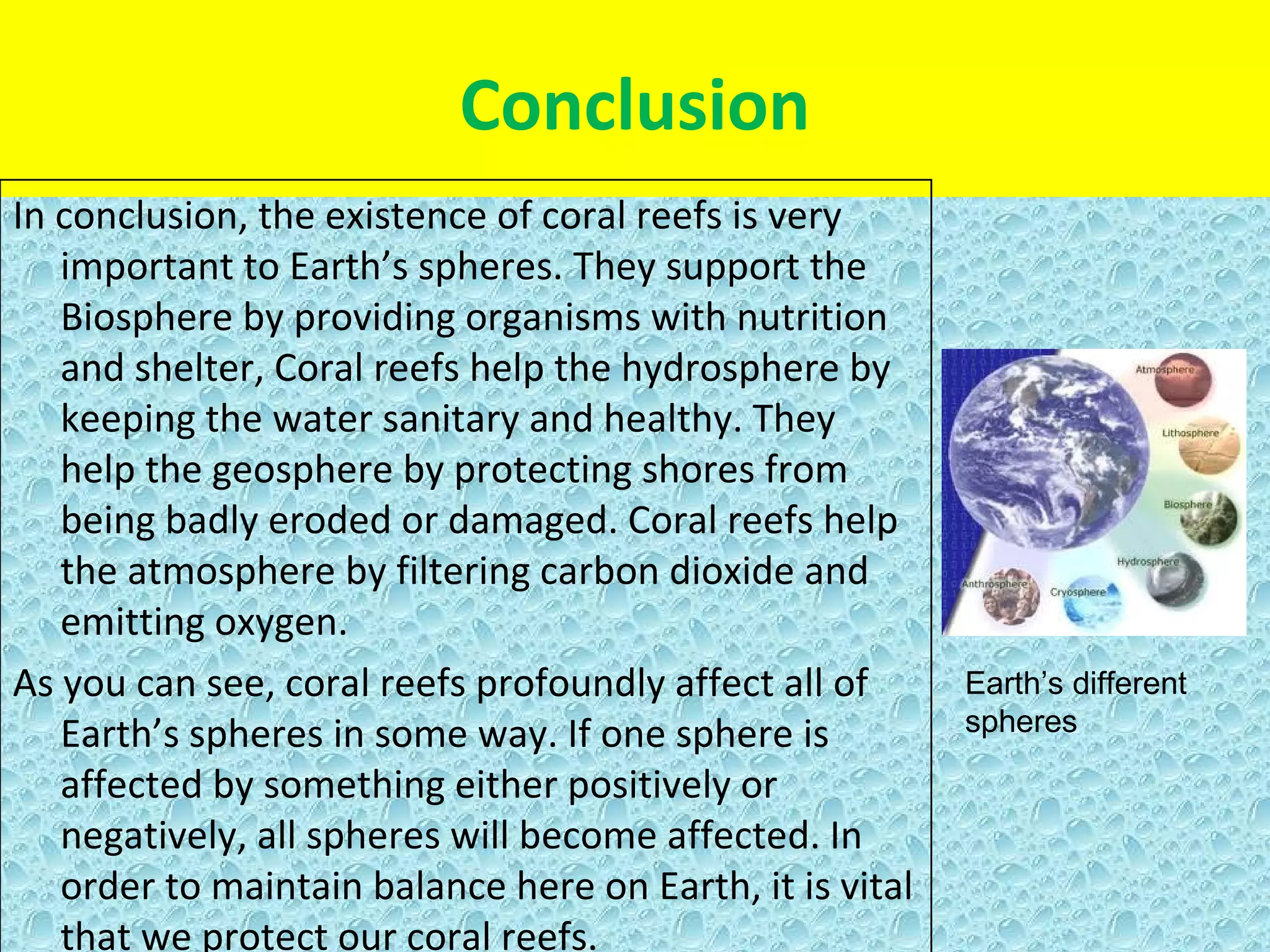
In conclusion, the existence of coral reefs is very
   important to Earth’s spheres. They support the
   Biosphere by providing organisms with nutrition
   and shelter, Coral reefs help the hydrosphere by
   keeping the water sanitary and healthy. They
   help the geosphere by protecting shores from
   being badly eroded or damaged. Coral reefs help
   the atmosphere by filtering carbon dioxide and
   emitting oxygen.
As you can see, coral reefs profoundly affect all of      Earth’s different
   Earth’s spheres in some way. If one sphere is          spheres

   affected by something either positively or
   negatively, all spheres will become affected. In
   order to maintain balance here on Earth, it is vital
   that we protect our coral reefs.
Resources
• http://water.epa.gov/type/oceb/index.c
  fm
• http://www.globalissues.org/article/173
  /coral-
  reefs#CoralReefsEcosystemsofEnvironm
  entalandHumanValue
• http://www.noaa.gov/
• http://www.coralscience.org/main/artic
  les/nutrition-6/how-corals-feed

Oceans 05 ocean interactions

  • 1.
    Coral Reefs Christopher Walker 2/8/13 Earth Space Science V11 Oceans 05: Ocean Interactions
  • 2.
    Introduction: Coral Reefs Coralreefs are known as the "rainforests of the oceans.“ because they consist of a collection of the most diverse biological communities in the world. Coral reefs are made up of sessile creatures that don’t move. Corals live in warmer waters near the equator in groups called polyps. The reefs provide organisms with shelter, and nutrition and attract millions of tourists with their natural beauty. Coral reefs have a symbiotic relationship with the Earth’s spheres. They support the Biosphere by providing organisms with nutrition and shelter. They help the Hydrosphere by keeping the water sanitary and healthy. They help the Geosphere by protecting shores from being badly eroded or damaged. Coral Reefs help the Atmosphere by A coral reef filtering carbon dioxide and emitting oxygen.
  • 3.
    Hydrosphere The hydrosphere ismade up of all the water on Earth, which is distributed by the water cycle. Coral reefs play an important part in the hydrosphere by staying healthy and thriving. Coral gets its nutrition from symbiotic algae, plankton, and other substances dissolved in the water. They are absorbed from the water, helping to filter it. Coral reefs need specific warm temperatures to thrive. If the water temperatures change, it will kill off the coral. If they die, It will change the chemistry of the ocean, which in turn, will also affect the hydrosphere, and, ultimately the biosphere. Location of coral reefs in Earth’s hydrosphere
  • 4.
    Geosphere The geosphere ismade up of Earth’s layers, crust, and rocks. Coral reefs play a significant role in the geosphere because they serve as a barrier for large waves or storm waves. This can prevent beaches from getting damaged or badly eroded. When coral reefs are threatened, the Beach Erosion geosphere is threatened by beach erosion.
  • 5.
    Cryosphere Earth’s cryosphere consistsof all the ice on Earth. When the ice melts, it becomes part of the hydrosphere. Global warming melts more and more ice each summer. Since the hydrosphere is affected by coral reefs and vice versa, it Icebergs are part of Earths may cause changes in the water cryosphere. temperature and chemistry and cause damage or kill the coral reefs.
  • 6.
    Biosphere Earth’s biosphere ismade up of all living organisms on Earth. Coral reefs are very beneficial to the biosphere because they provide habitats for many organisms such as fish, sponges, oysters, clams, crabs, sea turtles, etc. Coral reefs provide the organisms with food and shelter. The delicate balance between species in a coral community can be upset by natural events such as decaying spawn, which can kill them. Humans can also upset this balance by pollution, causing algae blooms that can kill Many different sea other aquatic plants. creatures interacting with coral reefs
  • 7.
    Atmosphere Earth’s atmosphere consistsof all the gases on Earth. Coral reefs are benificial to Earth’s atmosphere because they help to create oxygen. Coral reefs have a symbiotic relationship with Zooxanthellae algae. The algae, like any plant, pulls carbon dioxide from the air and pushes oxygen into the air through photosynthesis. The carbon that is extracted from the air sits on the ocean floor as limestone produced by coral polyps. The algae and the polyps use oxygen for respiration, thereby releasing carbon dioxide into the ocean and the atmosphere; however, they remove more carbon dioxide from the atmosphere than they add. Increased carbon dioxide in the atmosphere causes increased carbon dioxide in sea water, producing The Biological Pump carbonic acid, thereby dissolving the limestone that coral reefs need. • Wind blown continental dust from the atmosphere can settle on the ocean floor, stimulating the “biological pump.” The Biological Pump enhances the ocean’s ability to absorb carbon dioxide from the atmosphere.
  • 8.
    Protecting our CoralReefs Coral reefs are sensitive to changes in temperature, salinity, and chemistry so their existence is easily threatened. The greatest threat to coral reefs is global warming. Global warming heats up the water temperatures, which could lead to bleaching of the coral, which will eventually destroy it. When coral dies, it can be harmful to the hydrosphere because it will alter the chemistry of the water negatively. Other threats to the reefs that are caused by humans include water pollution and tourism. Educated divers respect delicate coral reefs There are many things we can do to protect the reefs such as careful vessel management to avoid hitting the reef, reducing nearby outfalls and runoff, and educating tourists to be careful and to respect this delicate resource.
  • 9.
    Conclusion In conclusion, theexistence of coral reefs is very important to Earth’s spheres. They support the Biosphere by providing organisms with nutrition and shelter, Coral reefs help the hydrosphere by keeping the water sanitary and healthy. They help the geosphere by protecting shores from being badly eroded or damaged. Coral reefs help the atmosphere by filtering carbon dioxide and emitting oxygen. As you can see, coral reefs profoundly affect all of Earth’s different Earth’s spheres in some way. If one sphere is spheres affected by something either positively or negatively, all spheres will become affected. In order to maintain balance here on Earth, it is vital that we protect our coral reefs.
  • 10.
    Resources • http://water.epa.gov/type/oceb/index.c fm • http://www.globalissues.org/article/173 /coral- reefs#CoralReefsEcosystemsofEnvironm entalandHumanValue • http://www.noaa.gov/ • http://www.coralscience.org/main/artic les/nutrition-6/how-corals-feed