MARTA’S CORAL REEFS
CORALS FORMATION A coral reef is a reef consisting of coral consolidated into limestone Coral reefs are the largest structures that have been created by natural activity, as well as the oldest ecosystems.  Corals are small animals (polyps) that have tiny tentacles for the purpose of feeding from microscopic plankton.  Each polyp, lives behind a calcareous skeleton when they die. This elaborates coral reefs through time.   Coral skeletons have various geometric forms: spherical, star shapen and pilar-shaped .
CONDITIONS FOR COASTAL REEFS The ideal conditions for coral growth are: Water up to 100 m deep Clear seas, to allow light penetration Water temperatures: 23-29ºc Strong wave activity
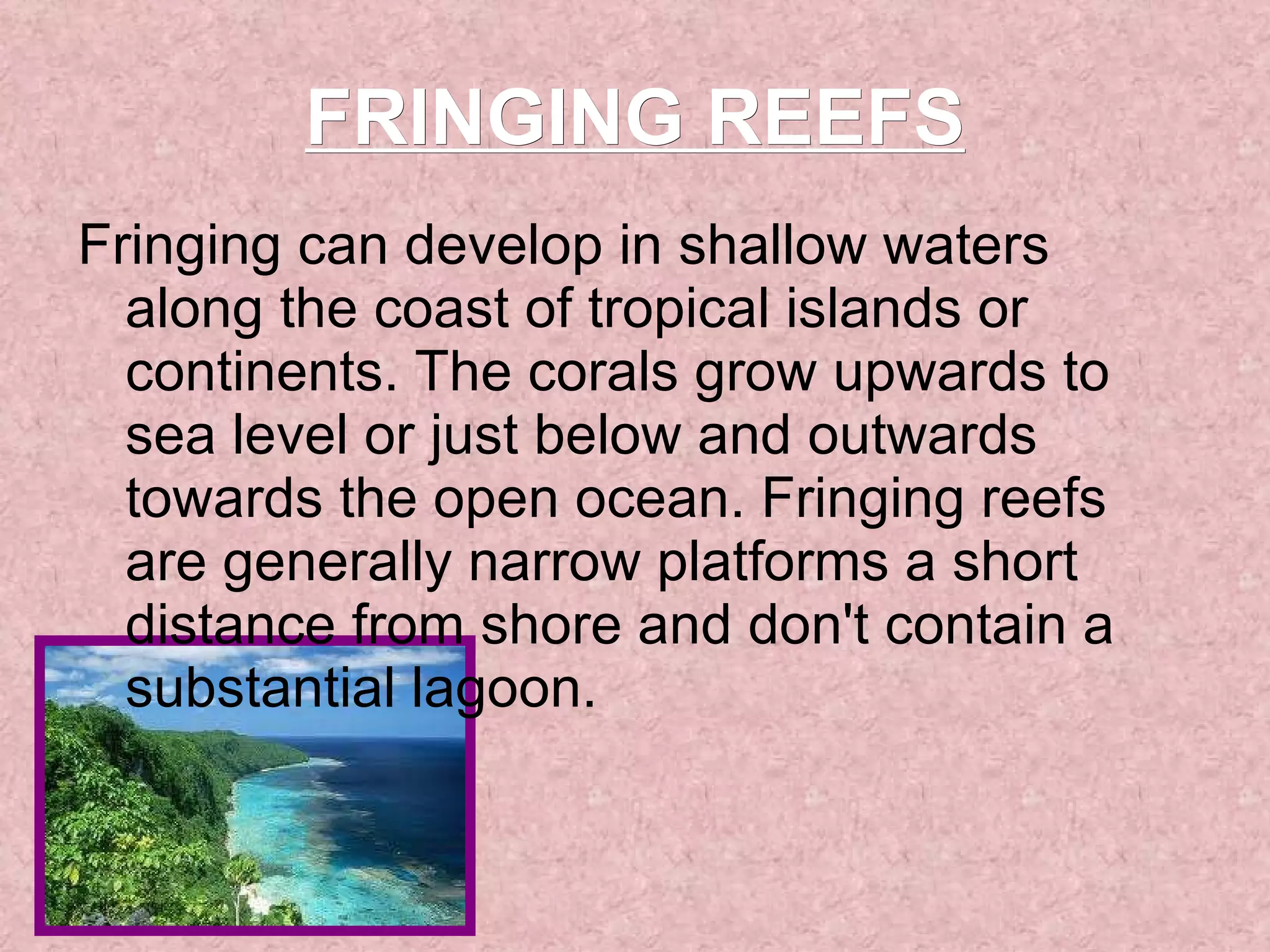
FRINGING REEFS Fringing can develop in shallow waters along the coast of tropical islands or continents. The corals grow upwards to sea level or just below and outwards towards the open ocean. Fringing reefs are generally narrow platforms a short distance from shore and don't contain a substantial lagoon.
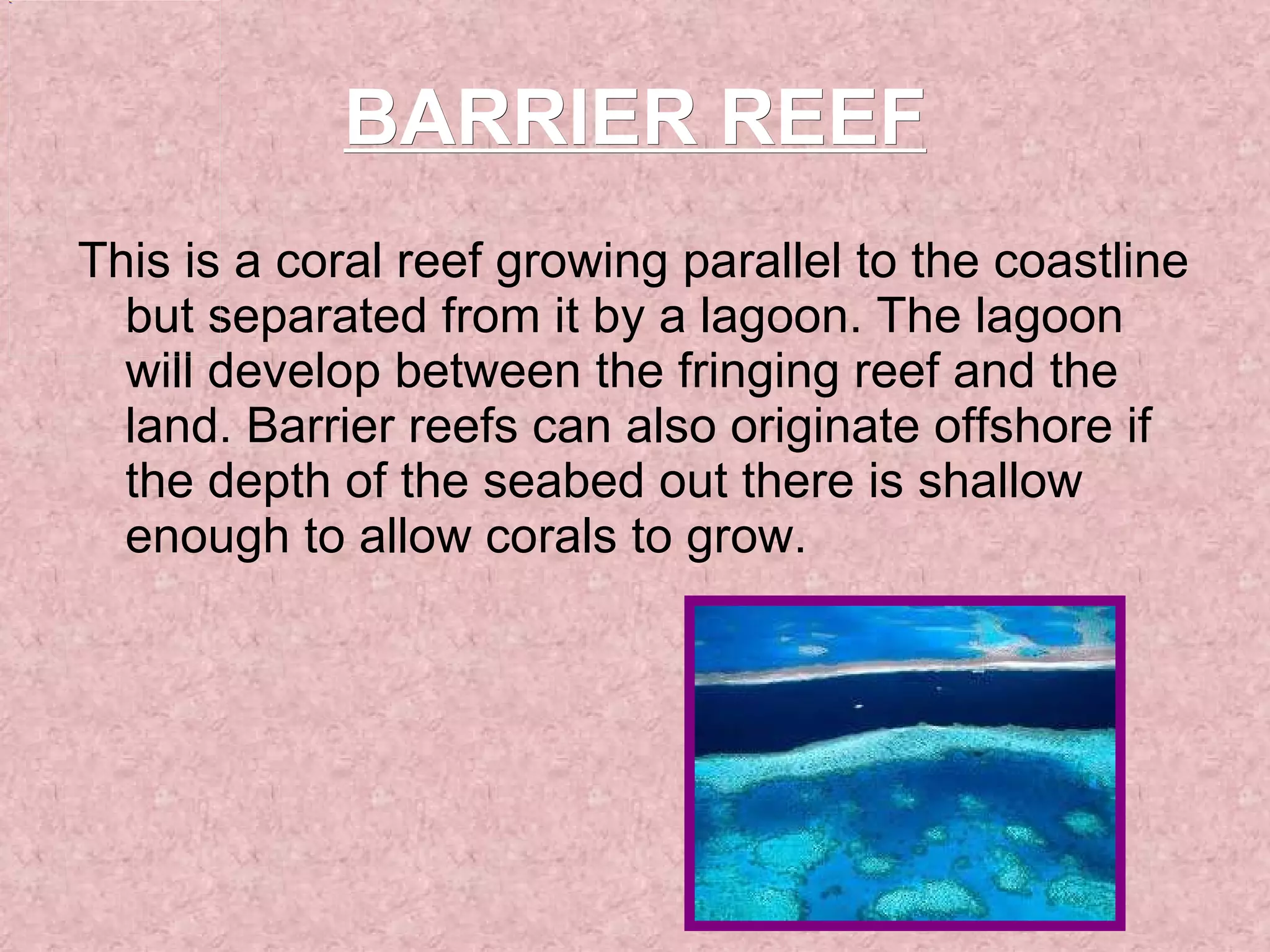
BARRIER REEF This is a coral reef growing parallel to the coastline but separated from it by a lagoon. The lagoon will develop between the fringing reef and the land. Barrier reefs can also originate offshore if the depth of the seabed out there is shallow enough to allow corals to grow.
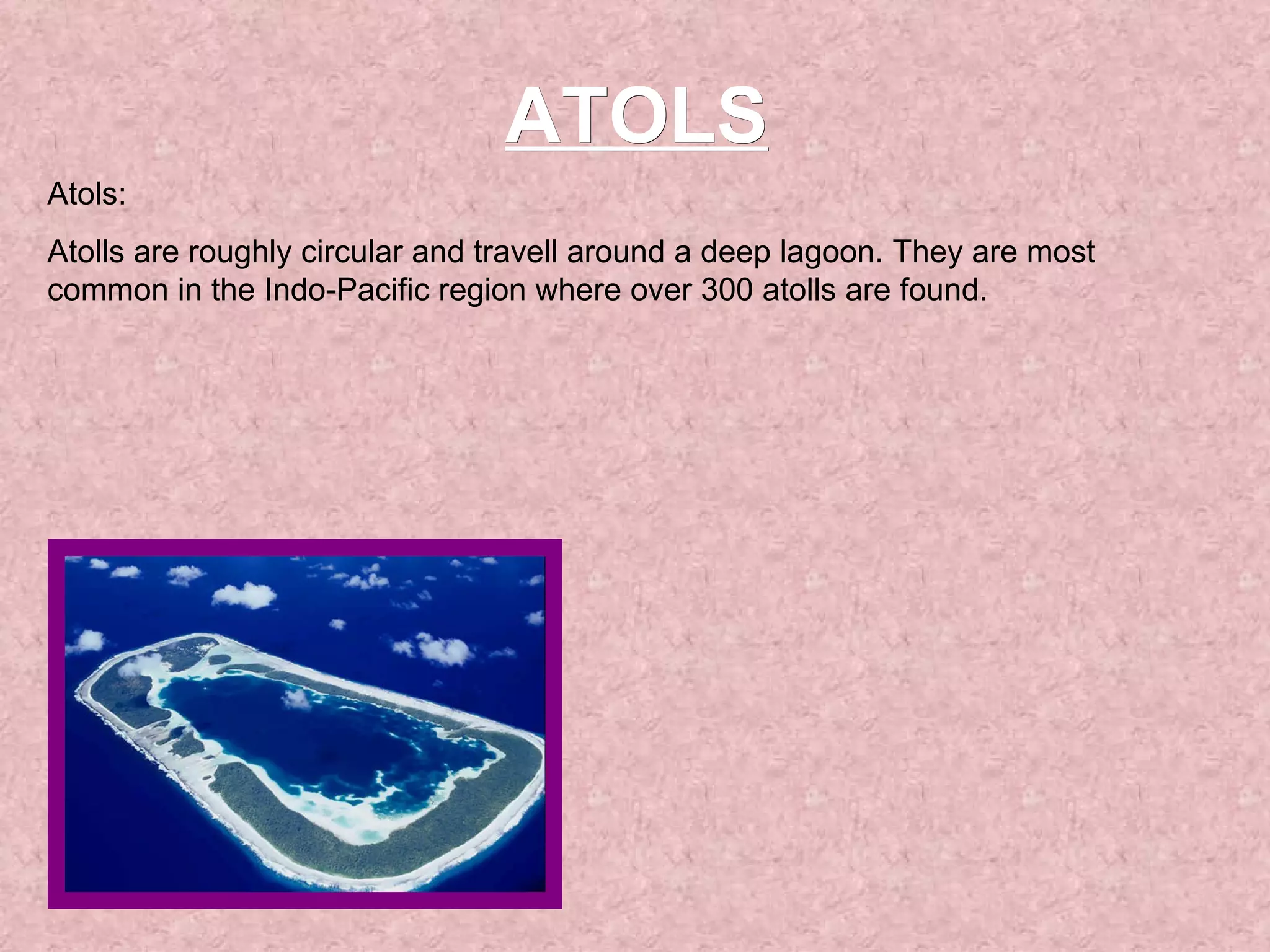
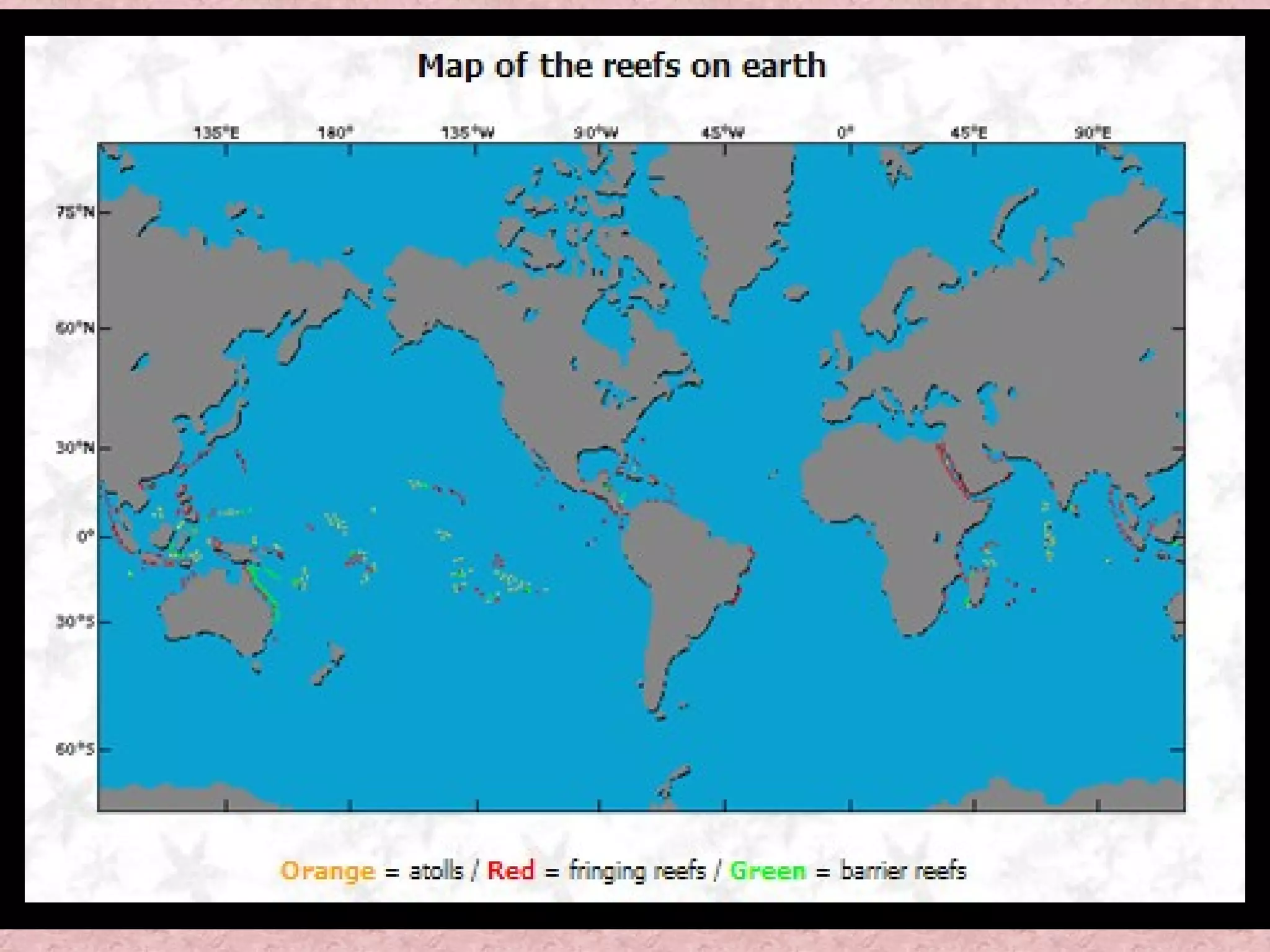
ATOLS Atols: Atolls are roughly circular and travell around a deep lagoon. They are most common in the Indo-Pacific region where over 300 atolls are found.
 
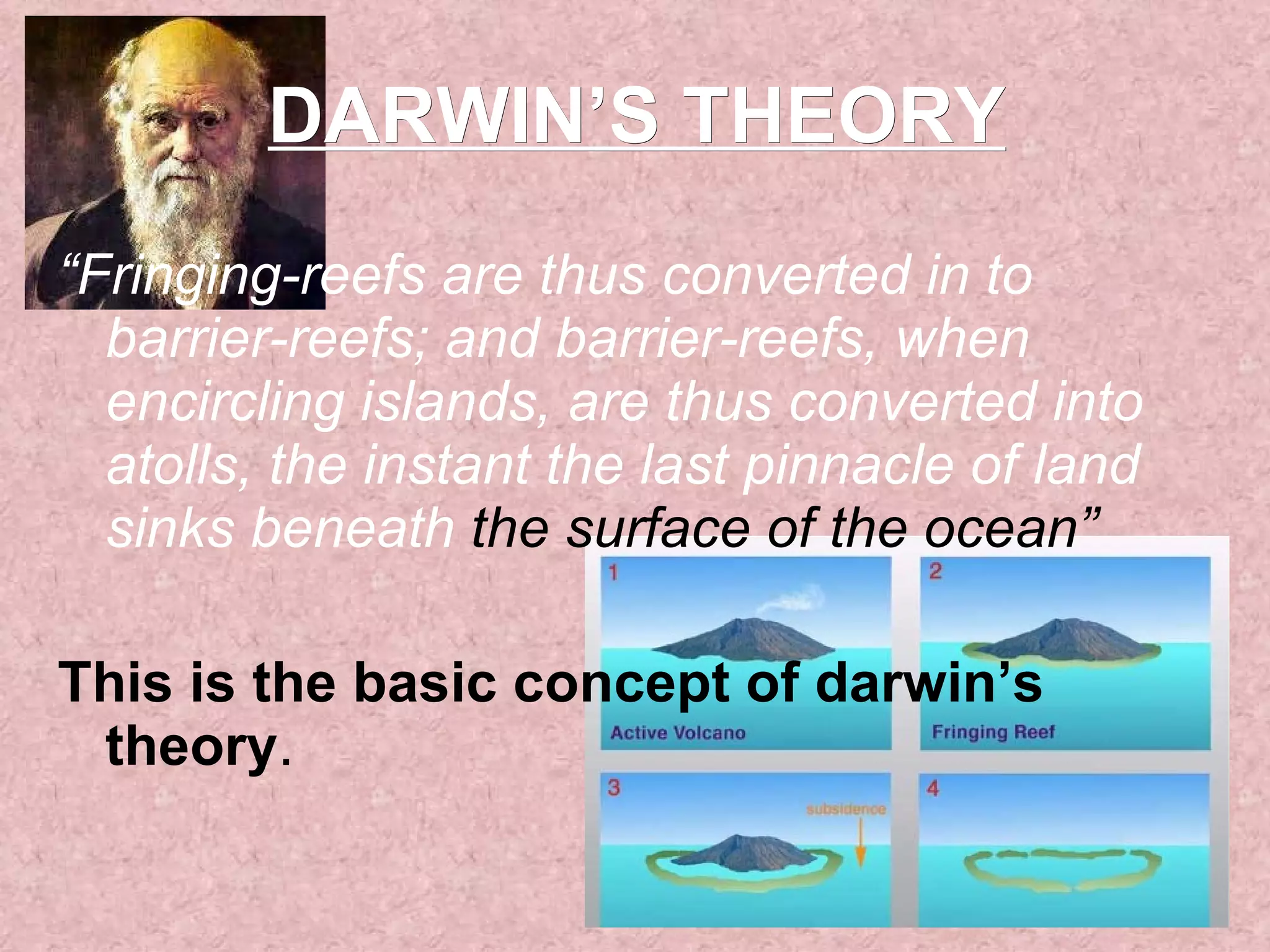
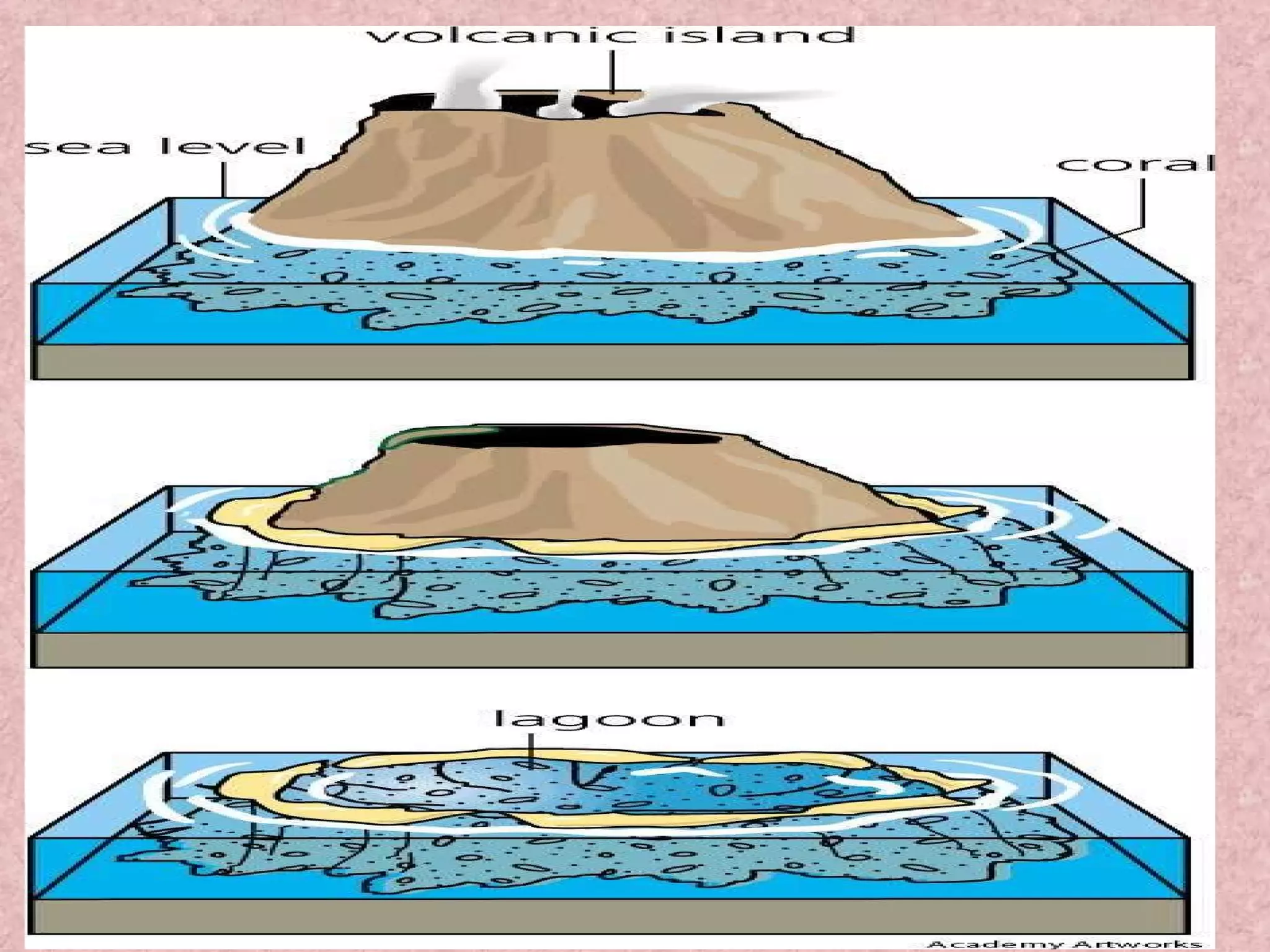
DARWIN’S THEORY “ Fringing-reefs are thus converted in to barrier-reefs; and barrier-reefs, when encircling islands, are thus converted into atolls, the instant the last pinnacle of land sinks beneath  the surface of the ocean” This is the basic concept of darwin’s theory .
 
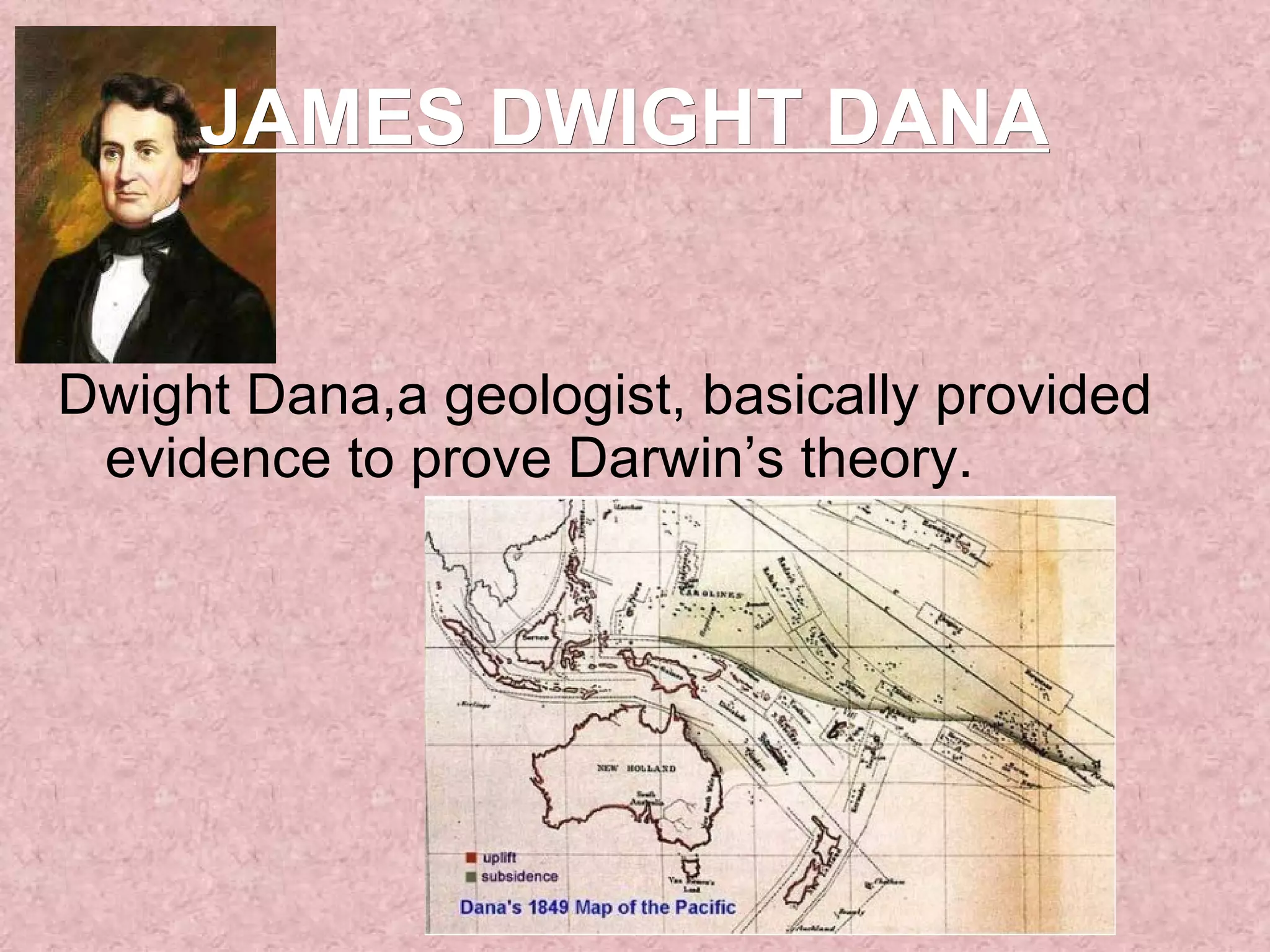
JAMES DWIGHT DANA   Dwight Dana,a geologist, basically provided evidence to prove Darwin’s theory.
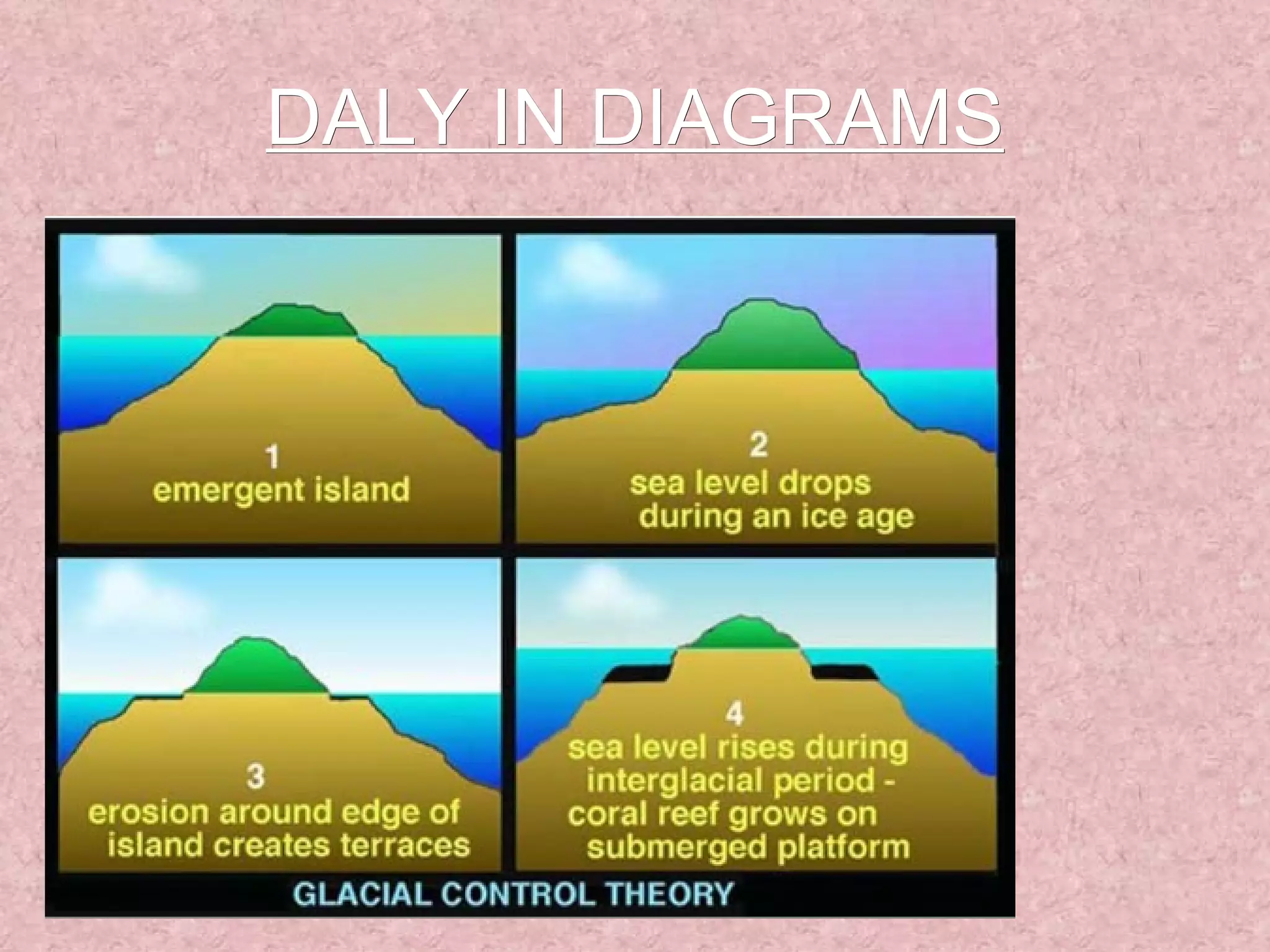
REGINALD DALY An island emerges from the surface of the sea.  Sea levels drop significantly during an Ice Age.  Horizontal terraces and ledges are cut by erosion during the period of low sea level.  As the Ice Age ends the sea level rises.  Coral reef growth subsequently takes place on the newly created submerged platforms
DALY IN DIAGRAMS
THREATS
NATURAL THREATS Hurricanes Tsunamis Volcanoes Earthquakes Predators & competitors Bleaching Pathogens
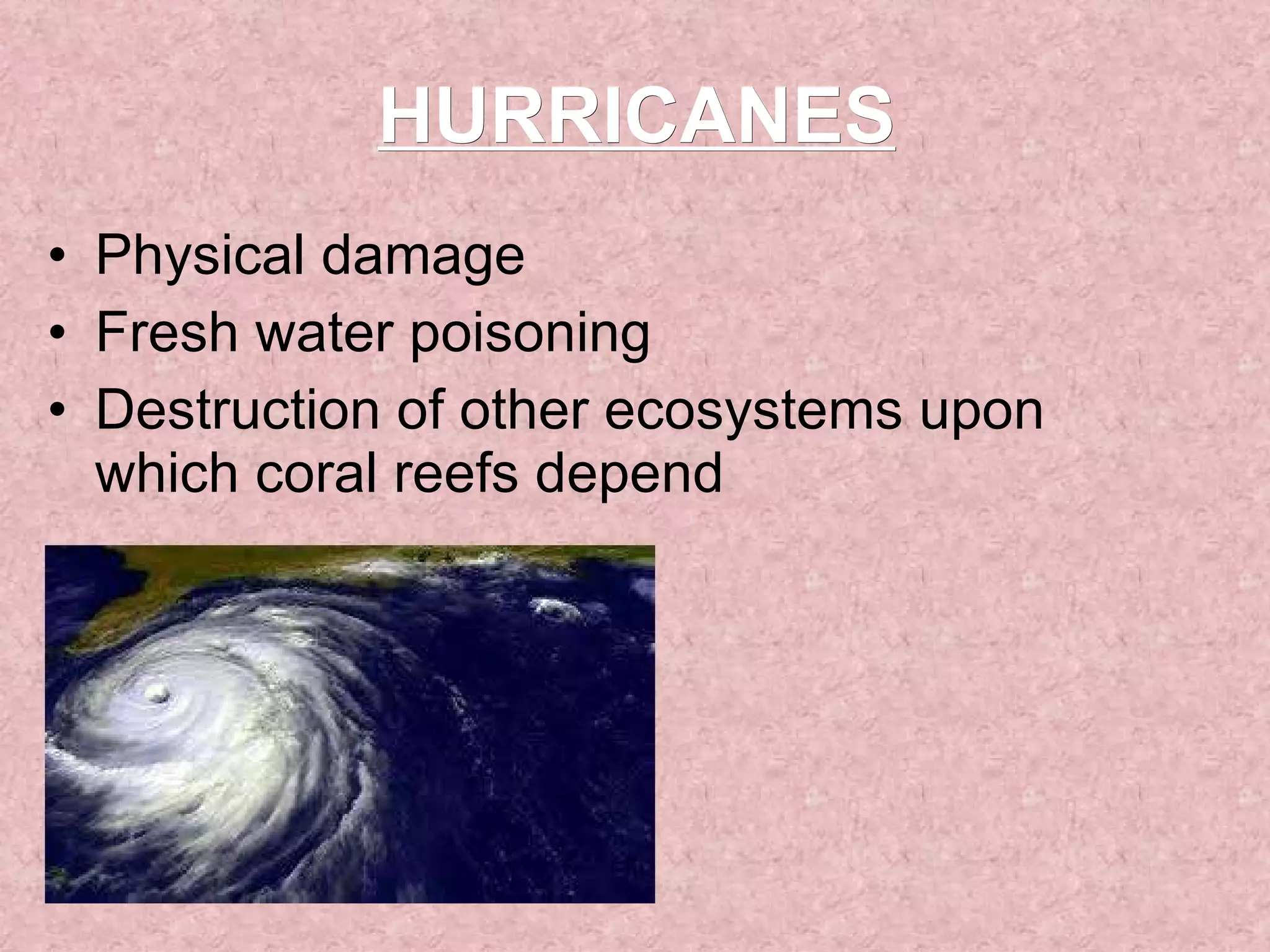
HURRICANES Physical damage Fresh water poisoning  Destruction of other ecosystems upon which coral reefs depend
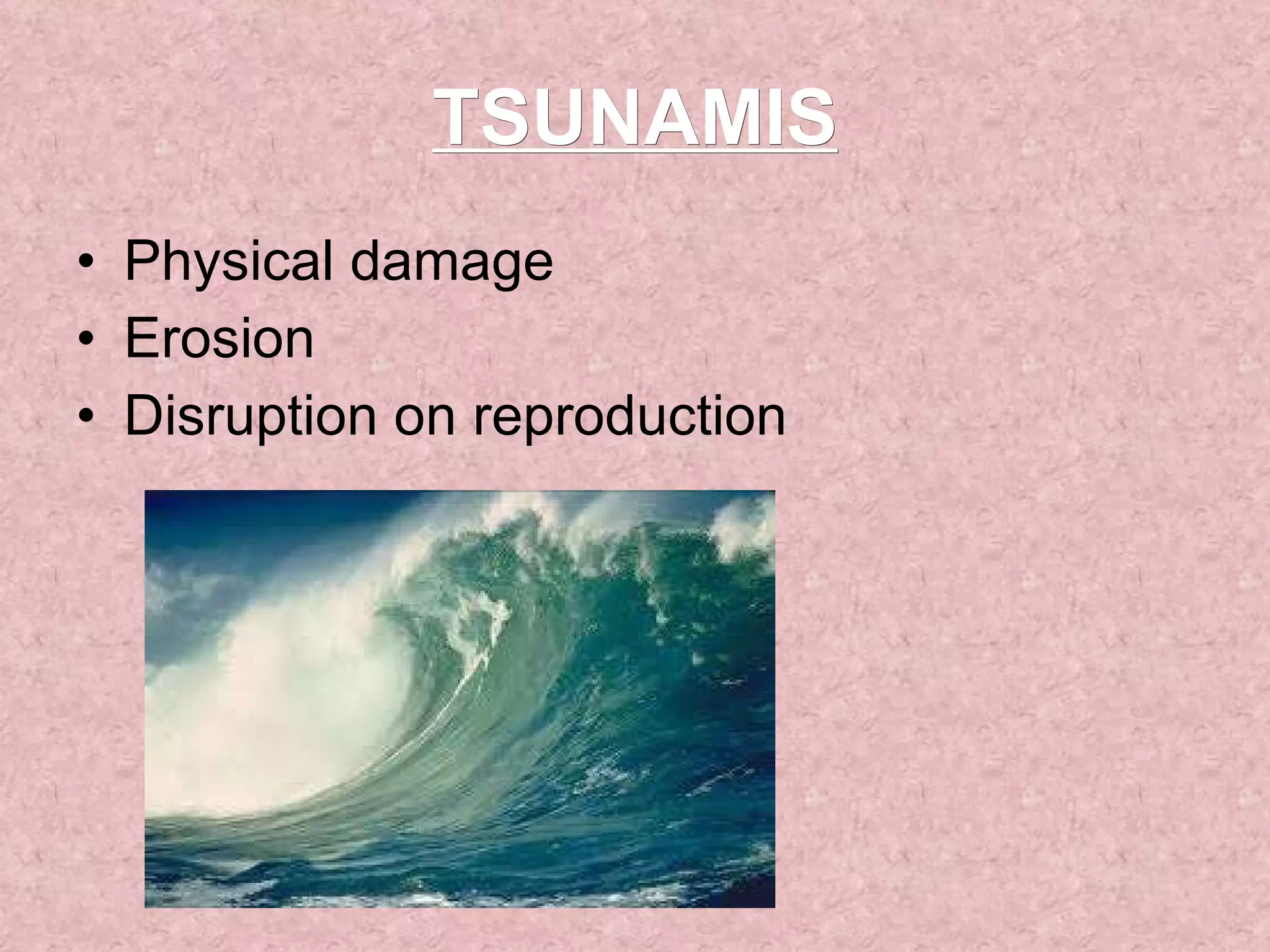
TSUNAMIS Physical damage Erosion Disruption on reproduction
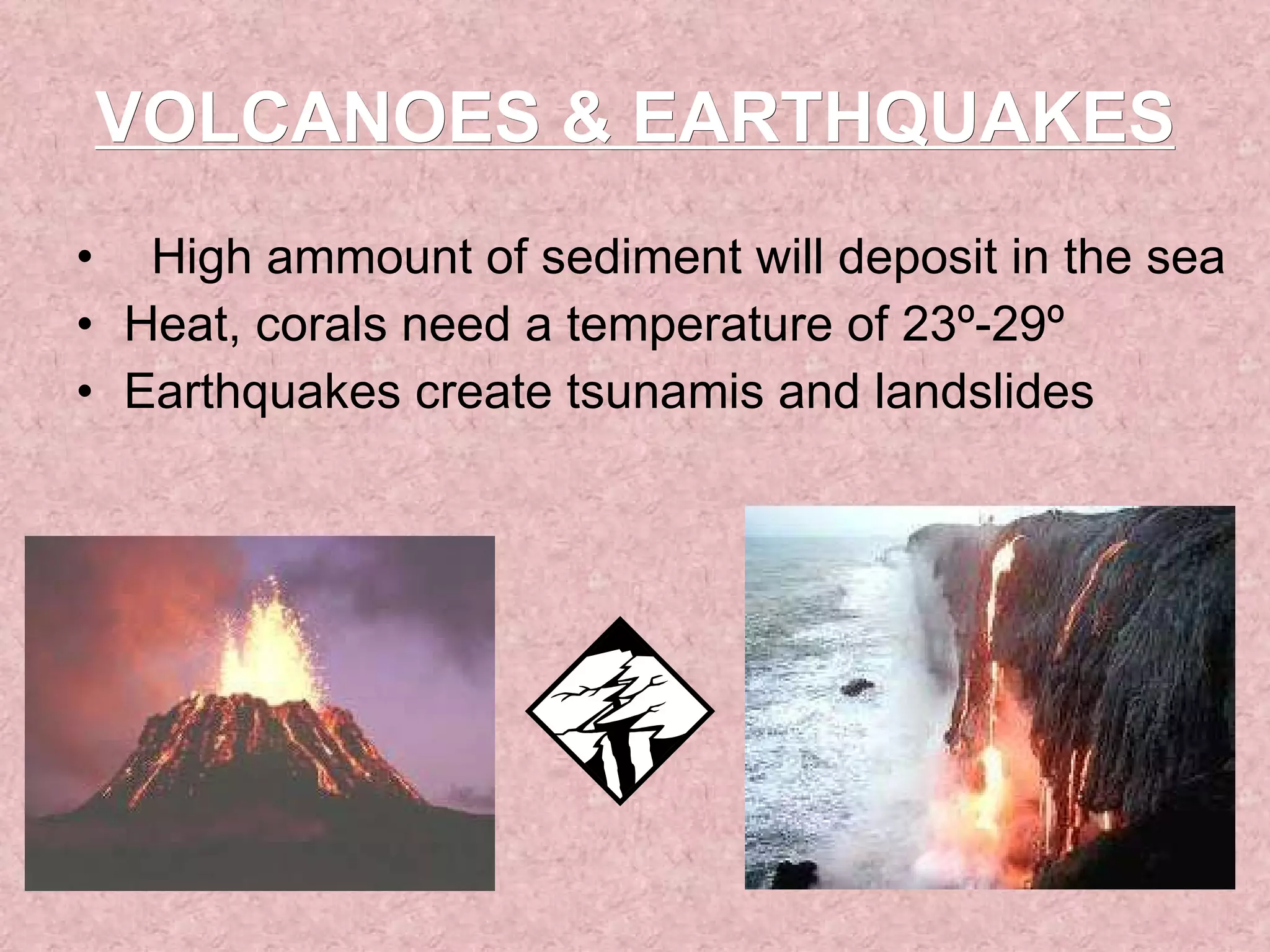
VOLCANOES & EARTHQUAKES High ammount of sediment will deposit in the sea Heat, corals need a temperature of 23º-29º Earthquakes create tsunamis and landslides
Blast fishing Building &housing Tourism Pollution HUMAN THREATS
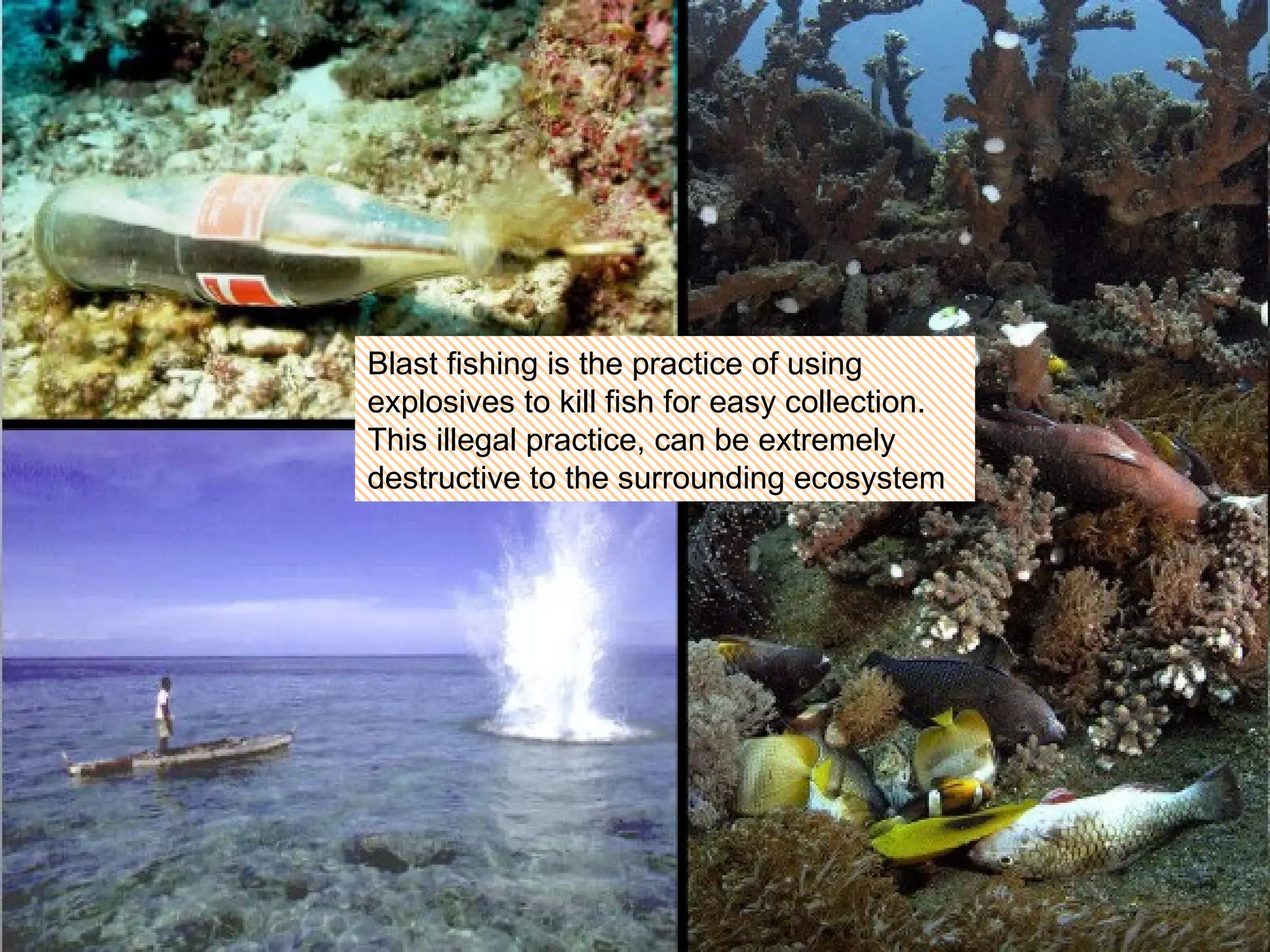
Blast fishing is the practice of using explosives to kill fish for easy collection. This illegal practice, can be extremely destructive to the surrounding ecosystem
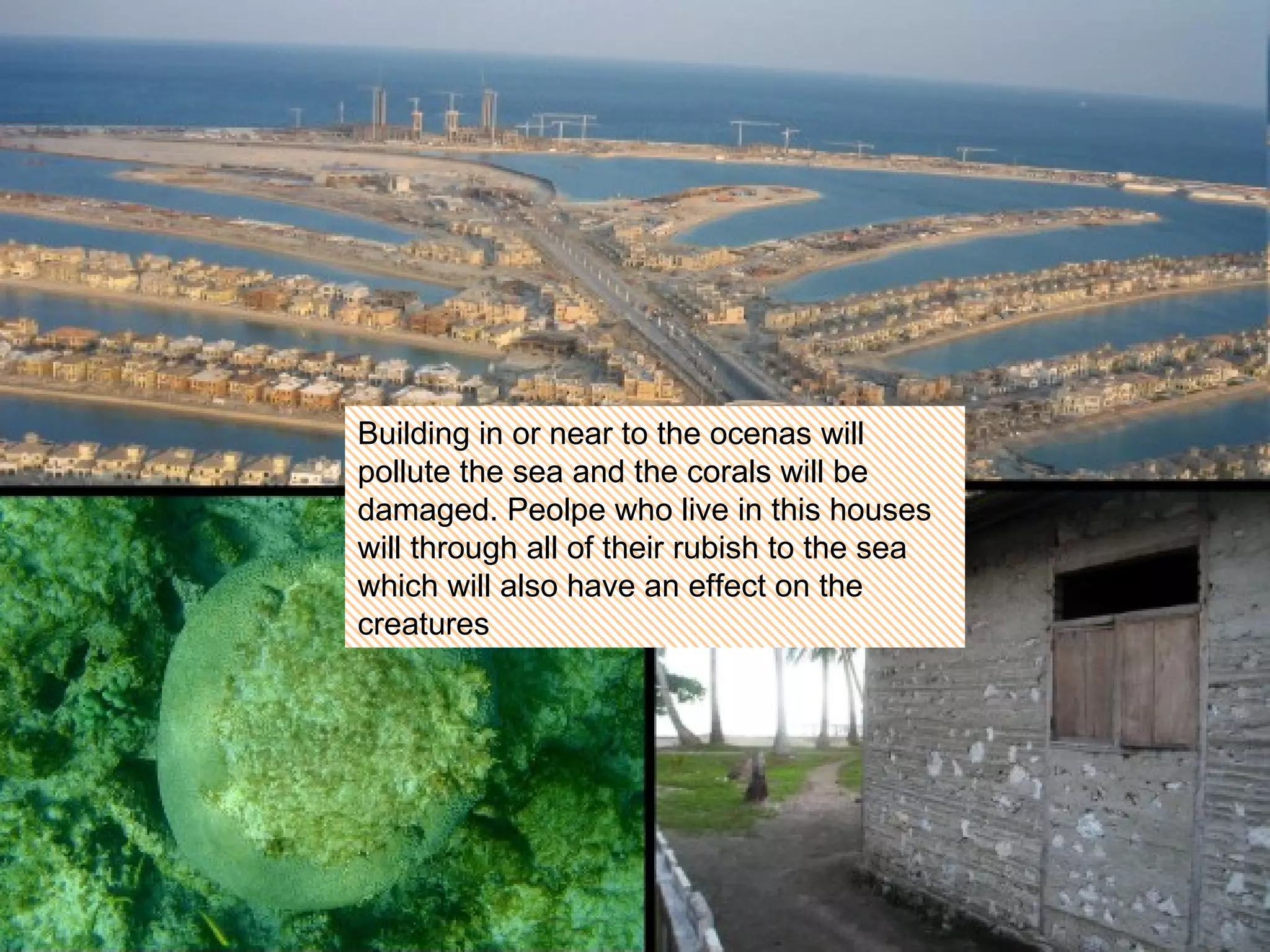
Building in or near to the ocenas will pollute the sea and the corals will be damaged. Peolpe who live in this houses will through all of their rubish to the sea which will also have an effect on the creatures
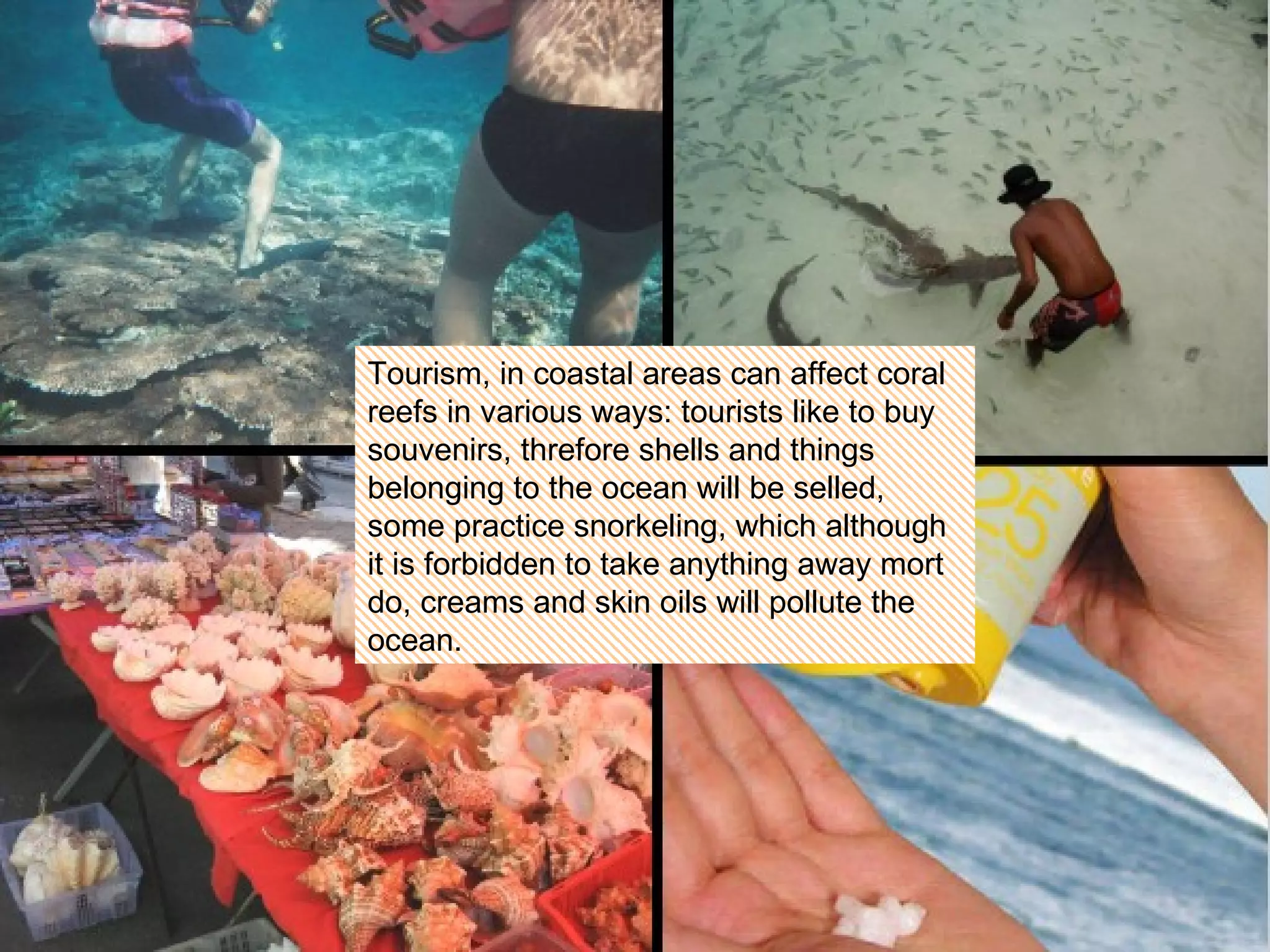
Tourism, in coastal areas can affect coral reefs in various ways: tourists like to buy souvenirs, threfore shells and things belonging to the ocean will be selled, some practice snorkeling, which although it is forbidden to take anything away mort do, creams and skin oils will pollute the ocean.
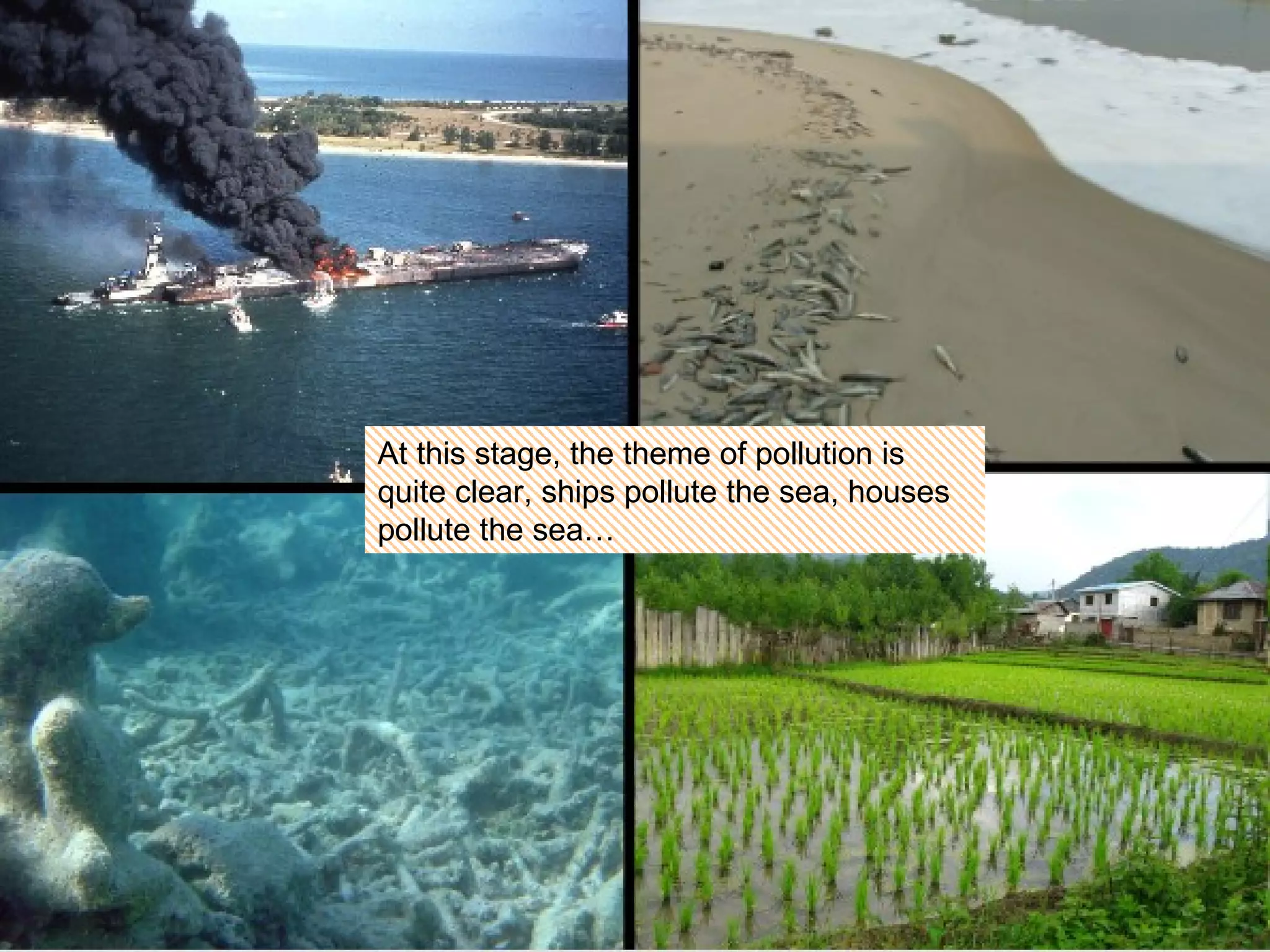
At this stage, the theme of pollution is quite clear, ships pollute the sea, houses pollute the sea…
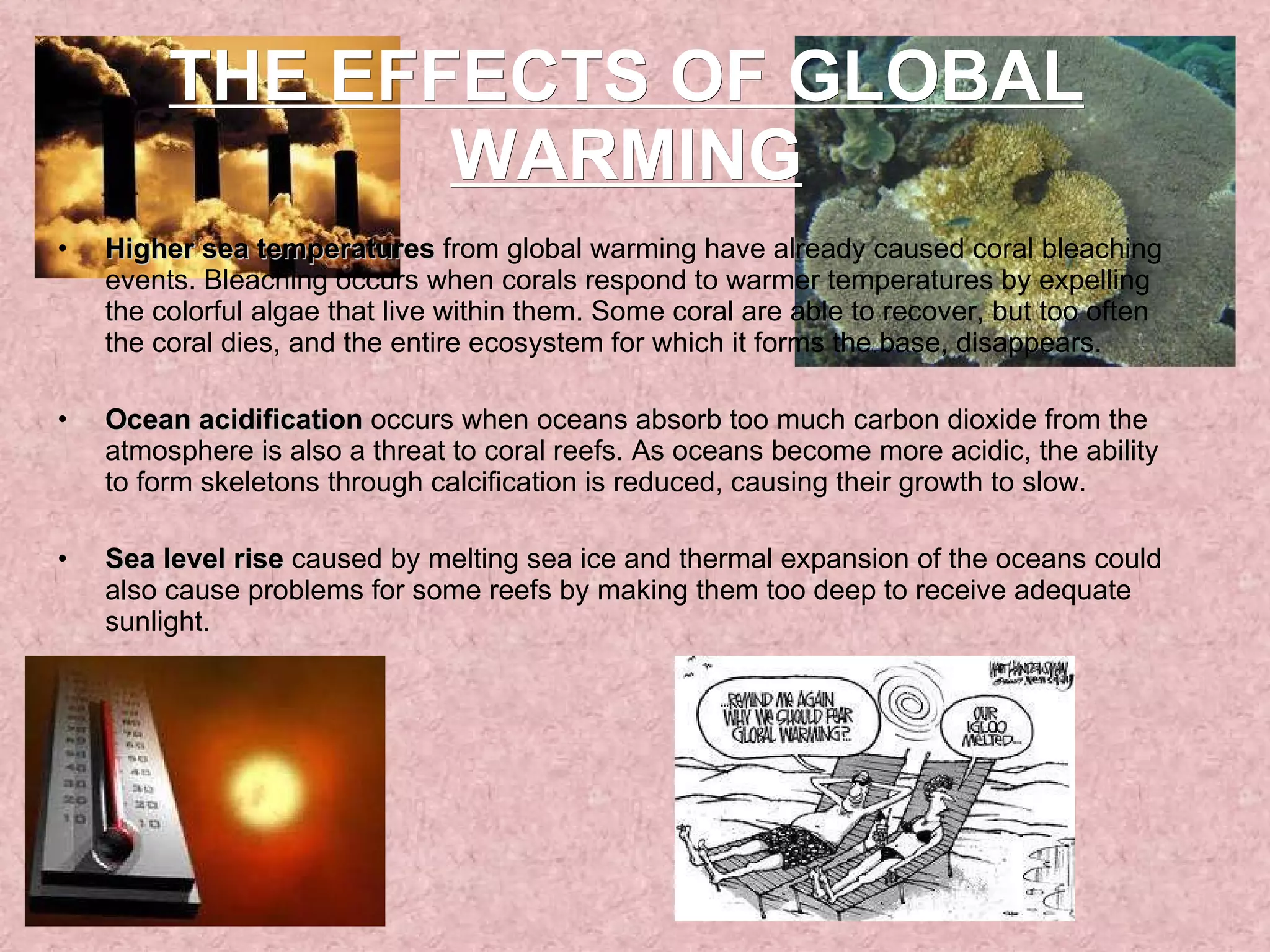
Higher sea temperatures  from global warming have already caused coral bleaching events. Bleaching occurs when corals respond to warmer temperatures by expelling the colorful algae that live within them. Some coral are able to recover, but too often the coral dies, and the entire ecosystem for which it forms the base, disappears. Ocean acidification  occurs when oceans absorb too much carbon dioxide from the atmosphere is also a threat to coral reefs. As oceans become more acidic, the ability to form skeletons through calcification is reduced, causing their growth to slow. Sea level rise  caused by melting sea ice and thermal expansion of the oceans could also cause problems for some reefs by making them too deep to receive adequate sunlight. THE EFFECTS OF GLOBAL WARMING
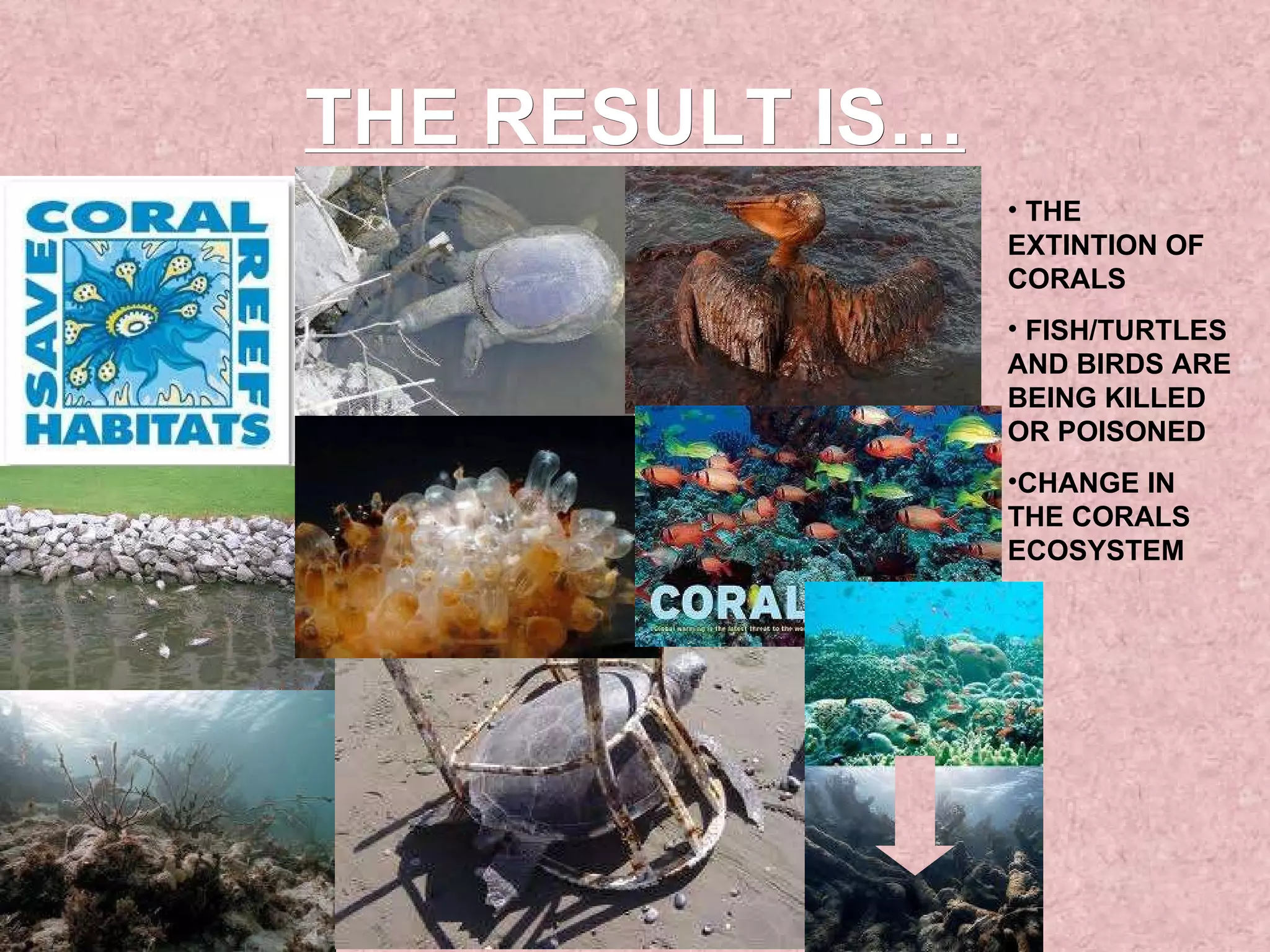
THE RESULT IS… THE EXTINTION OF CORALS FISH/TURTLES AND BIRDS ARE BEING KILLED OR POISONED CHANGE IN THE CORALS ECOSYSTEM
In my opinion to save coral reefs from natural threats, human kind can’t really do anything as nature is responsible, but we are capable of helping corals damaged by human threats, nowadays habitants are reducing CO 2  emitions and been aware about throuing rubish to coasts.  WHAT CAN BE DONE? CORALS NEED HELP!
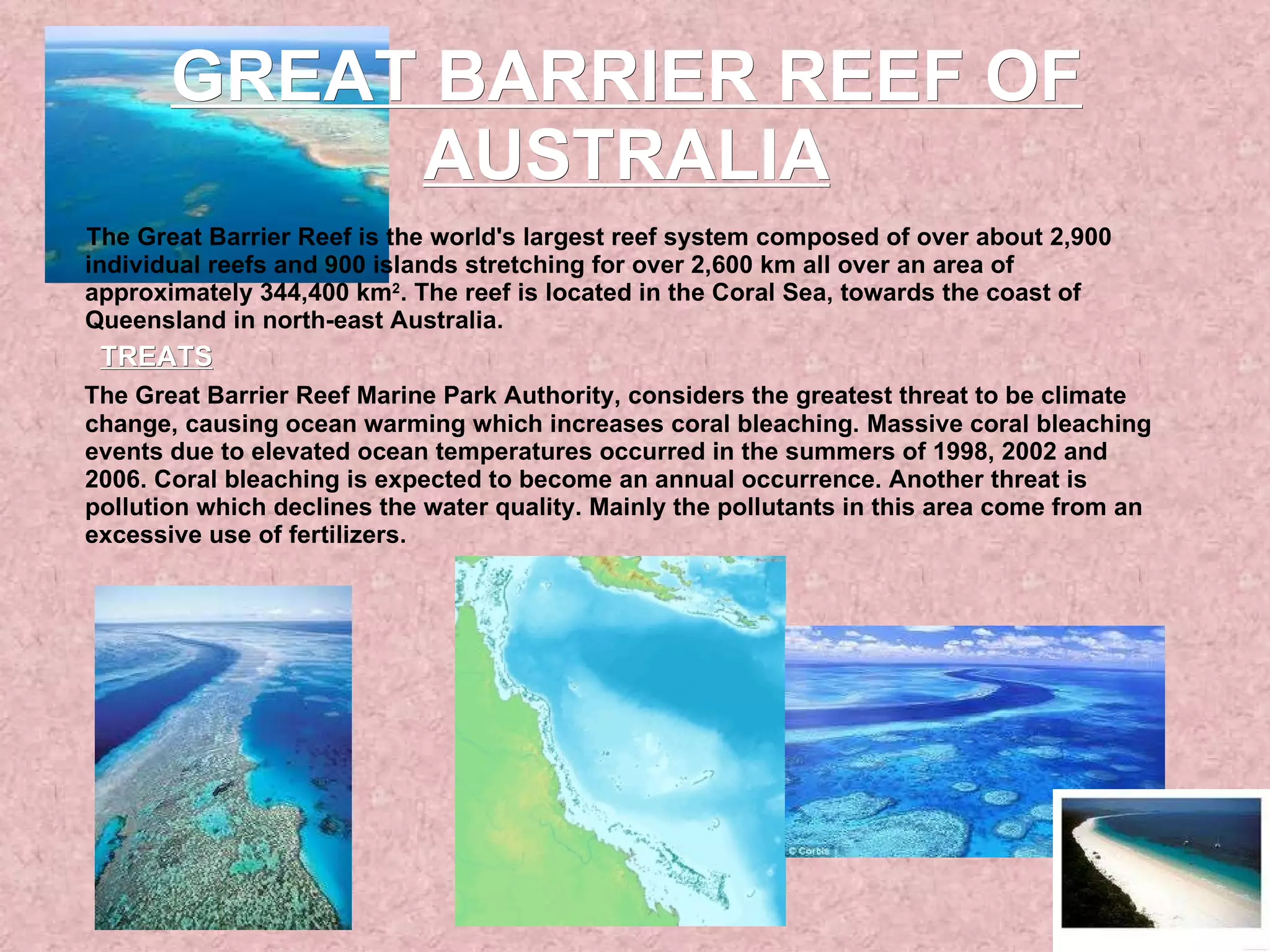
GREAT BARRIER REEF OF AUSTRALIA The Great Barrier Reef is the world's largest reef system composed of over about 2,900 individual reefs and 900 islands stretching for over 2,600 km all over an area of approximately 344,400 km 2 . The reef is located in the Coral Sea, towards the coast of Queensland in north-east Australia. TREATS The Great Barrier Reef Marine Park Authority, considers the greatest threat to be climate change, causing ocean warming which increases coral bleaching. Massive coral bleaching events due to elevated ocean temperatures occurred in the summers of 1998, 2002 and 2006. Coral bleaching is expected to become an annual occurrence. Another threat is pollution which declines the water quality. Mainly the pollutants in this area come from an excessive use of fertilizers.
BYE-BYE

Coral reef presentation

  • 1.
  • 2.
    CORALS FORMATION Acoral reef is a reef consisting of coral consolidated into limestone Coral reefs are the largest structures that have been created by natural activity, as well as the oldest ecosystems. Corals are small animals (polyps) that have tiny tentacles for the purpose of feeding from microscopic plankton. Each polyp, lives behind a calcareous skeleton when they die. This elaborates coral reefs through time. Coral skeletons have various geometric forms: spherical, star shapen and pilar-shaped .
  • 3.
    CONDITIONS FOR COASTALREEFS The ideal conditions for coral growth are: Water up to 100 m deep Clear seas, to allow light penetration Water temperatures: 23-29ºc Strong wave activity
  • 4.
    FRINGING REEFS Fringingcan develop in shallow waters along the coast of tropical islands or continents. The corals grow upwards to sea level or just below and outwards towards the open ocean. Fringing reefs are generally narrow platforms a short distance from shore and don't contain a substantial lagoon.
  • 5.
    BARRIER REEF Thisis a coral reef growing parallel to the coastline but separated from it by a lagoon. The lagoon will develop between the fringing reef and the land. Barrier reefs can also originate offshore if the depth of the seabed out there is shallow enough to allow corals to grow.
  • 6.
    ATOLS Atols: Atollsare roughly circular and travell around a deep lagoon. They are most common in the Indo-Pacific region where over 300 atolls are found.
  • 7.
  • 8.
    DARWIN’S THEORY “Fringing-reefs are thus converted in to barrier-reefs; and barrier-reefs, when encircling islands, are thus converted into atolls, the instant the last pinnacle of land sinks beneath the surface of the ocean” This is the basic concept of darwin’s theory .
  • 9.
  • 10.
    JAMES DWIGHT DANA Dwight Dana,a geologist, basically provided evidence to prove Darwin’s theory.
  • 11.
    REGINALD DALY Anisland emerges from the surface of the sea. Sea levels drop significantly during an Ice Age. Horizontal terraces and ledges are cut by erosion during the period of low sea level. As the Ice Age ends the sea level rises. Coral reef growth subsequently takes place on the newly created submerged platforms
  • 12.
  • 13.
  • 14.
    NATURAL THREATS HurricanesTsunamis Volcanoes Earthquakes Predators & competitors Bleaching Pathogens
  • 15.
    HURRICANES Physical damageFresh water poisoning Destruction of other ecosystems upon which coral reefs depend
  • 16.
    TSUNAMIS Physical damageErosion Disruption on reproduction
  • 17.
    VOLCANOES & EARTHQUAKESHigh ammount of sediment will deposit in the sea Heat, corals need a temperature of 23º-29º Earthquakes create tsunamis and landslides
  • 18.
    Blast fishing Building&housing Tourism Pollution HUMAN THREATS
  • 19.
    Blast fishing isthe practice of using explosives to kill fish for easy collection. This illegal practice, can be extremely destructive to the surrounding ecosystem
  • 20.
    Building in ornear to the ocenas will pollute the sea and the corals will be damaged. Peolpe who live in this houses will through all of their rubish to the sea which will also have an effect on the creatures
  • 21.
    Tourism, in coastalareas can affect coral reefs in various ways: tourists like to buy souvenirs, threfore shells and things belonging to the ocean will be selled, some practice snorkeling, which although it is forbidden to take anything away mort do, creams and skin oils will pollute the ocean.
  • 22.
    At this stage,the theme of pollution is quite clear, ships pollute the sea, houses pollute the sea…
  • 23.
    Higher sea temperatures from global warming have already caused coral bleaching events. Bleaching occurs when corals respond to warmer temperatures by expelling the colorful algae that live within them. Some coral are able to recover, but too often the coral dies, and the entire ecosystem for which it forms the base, disappears. Ocean acidification occurs when oceans absorb too much carbon dioxide from the atmosphere is also a threat to coral reefs. As oceans become more acidic, the ability to form skeletons through calcification is reduced, causing their growth to slow. Sea level rise caused by melting sea ice and thermal expansion of the oceans could also cause problems for some reefs by making them too deep to receive adequate sunlight. THE EFFECTS OF GLOBAL WARMING
  • 24.
    THE RESULT IS…THE EXTINTION OF CORALS FISH/TURTLES AND BIRDS ARE BEING KILLED OR POISONED CHANGE IN THE CORALS ECOSYSTEM
  • 25.
    In my opinionto save coral reefs from natural threats, human kind can’t really do anything as nature is responsible, but we are capable of helping corals damaged by human threats, nowadays habitants are reducing CO 2 emitions and been aware about throuing rubish to coasts. WHAT CAN BE DONE? CORALS NEED HELP!
  • 26.
    GREAT BARRIER REEFOF AUSTRALIA The Great Barrier Reef is the world's largest reef system composed of over about 2,900 individual reefs and 900 islands stretching for over 2,600 km all over an area of approximately 344,400 km 2 . The reef is located in the Coral Sea, towards the coast of Queensland in north-east Australia. TREATS The Great Barrier Reef Marine Park Authority, considers the greatest threat to be climate change, causing ocean warming which increases coral bleaching. Massive coral bleaching events due to elevated ocean temperatures occurred in the summers of 1998, 2002 and 2006. Coral bleaching is expected to become an annual occurrence. Another threat is pollution which declines the water quality. Mainly the pollutants in this area come from an excessive use of fertilizers.
  • 27.