Interactions and
Interdependence
Specific Objectives
At the end of the lesson, the students should
be able to:
1. Describe the principles of the ecosystem.
2. Categorize the different biotic potential and
environmental resistance (e.g., diseases,
availability of food, and predators) that affect
population explosion.
3. Describe how the different terrestrial and
aquatic ecosystems are interlinked with one
another.
Activity 1:
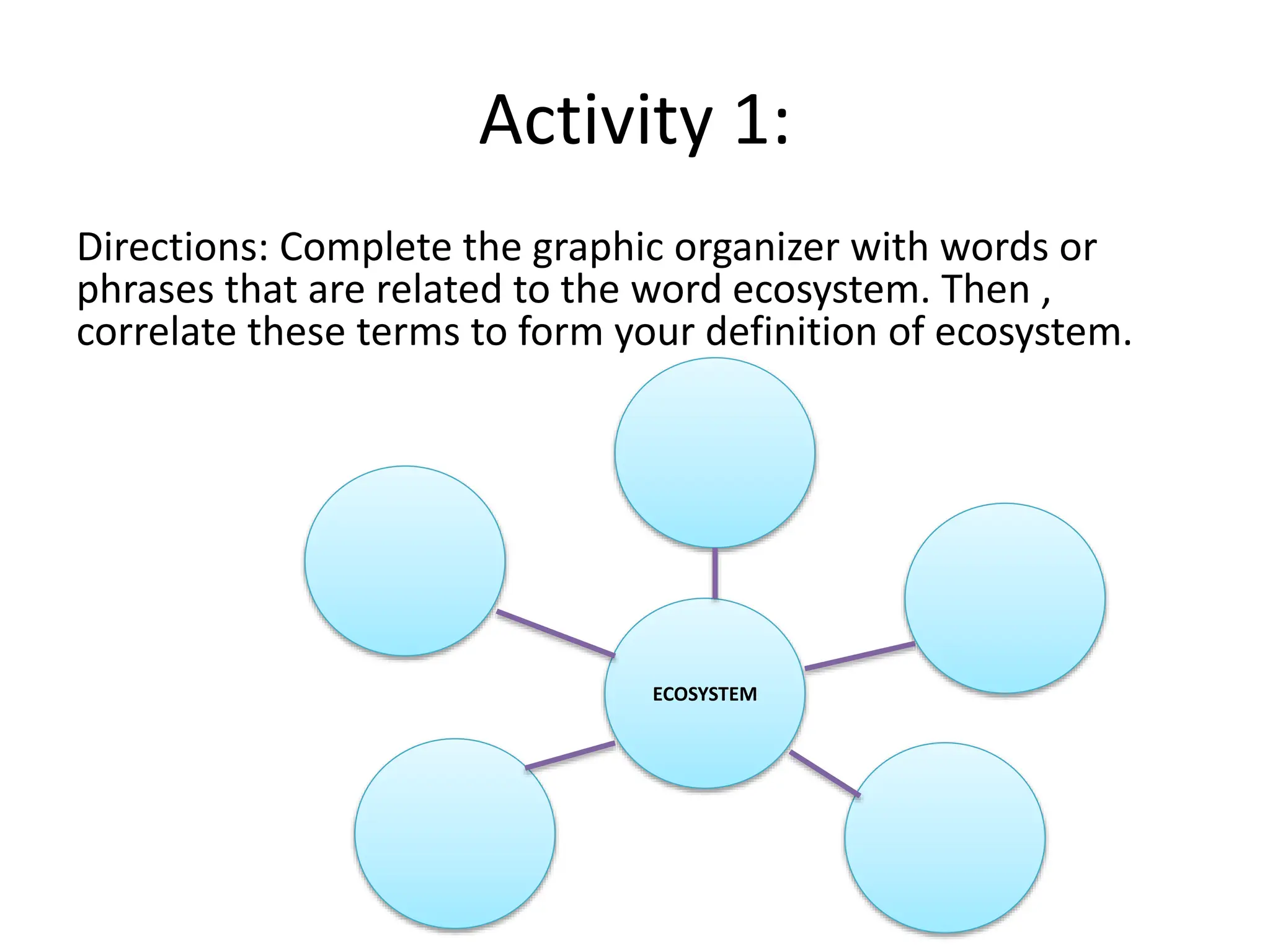
Directions: Complete the graphic organizer with words or
phrases that are related to the word ecosystem. Then ,
correlate these terms to form your definition of ecosystem.
ECOSYSTEM
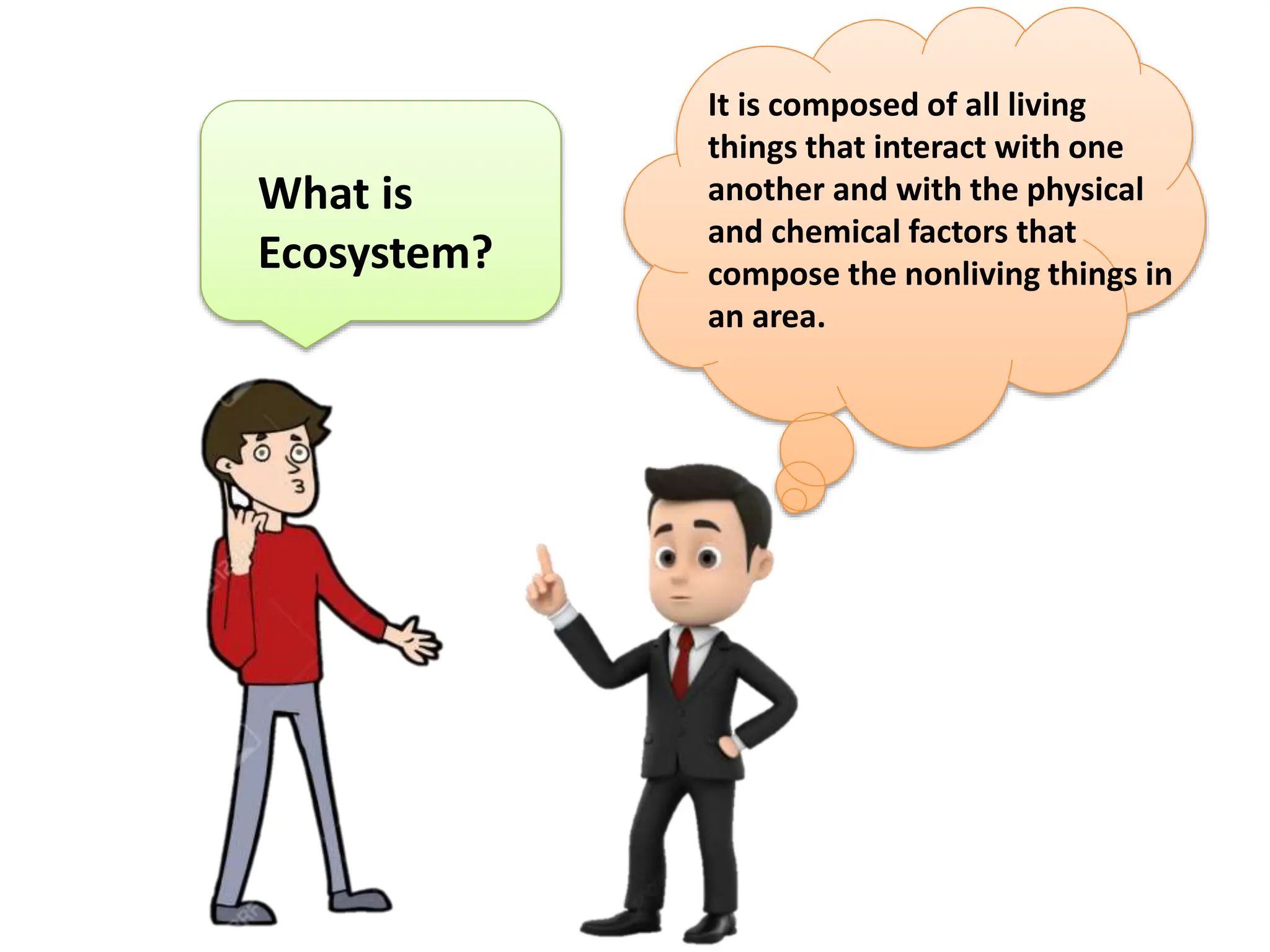
What is
Ecosystem?
It is composed of all living
things that interact with one
another and with the physical
and chemical factors that
compose the nonliving things in
an area.
You have learned that climate, soil, biodiversity of plants and animals, and availability of
food and nutrients affect the ecosystem.
Biotic Abiotic
Living Things Nonliving Things
Levels of Biological Organization
The levels of biological organization cover organisms from species to
population and the interconnection of biotic ( e.g., plants, animals, and
microorganisms) and abiotic (e.g., air, water, and soil) factors.
To understand the need to support ecosystem management, you
must first understand the basic concepts of the ecosystem.
Native, Nonnative, and Invasive
Species
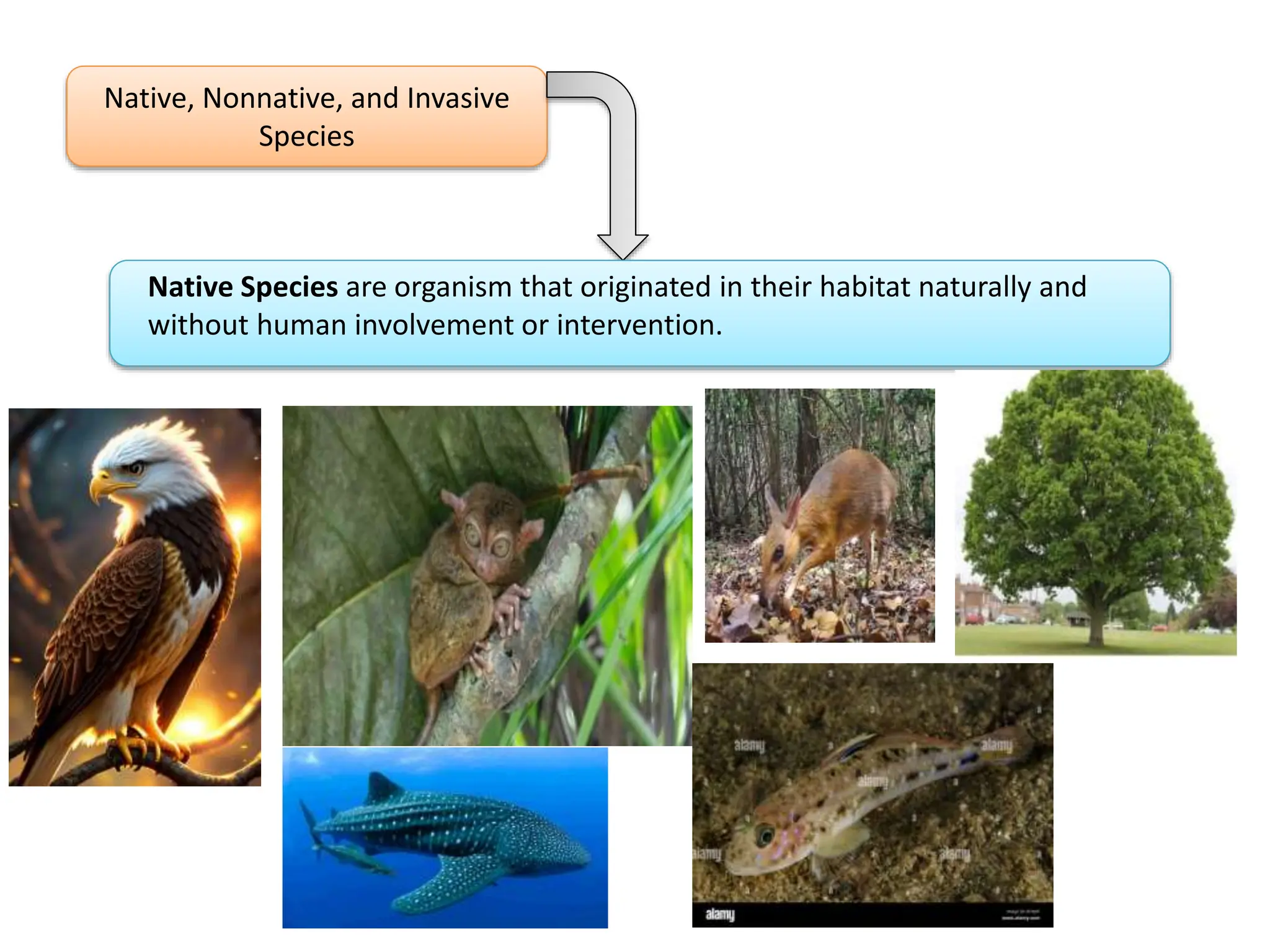
Native Species are organism that originated in their habitat naturally and
without human involvement or intervention.
Native, Nonnative, and Invasive
Species
Nonnative species move out of their natural environment because of
human intervention or natural barrier.
Human intervention includes moving the species from one point to
another.
Natural barrier include fish migration due to a natural disaster.
Native, Nonnative, and Invasive
Species
Invasive species are organism that have the potential to displace the native
species and may threaten the species or the ecosystem.
Keystone species
It is an organism that helps define the entire ecosystem it is in, such that
without it, the ecosystem would be drastically different or even cease to
exist altogether.
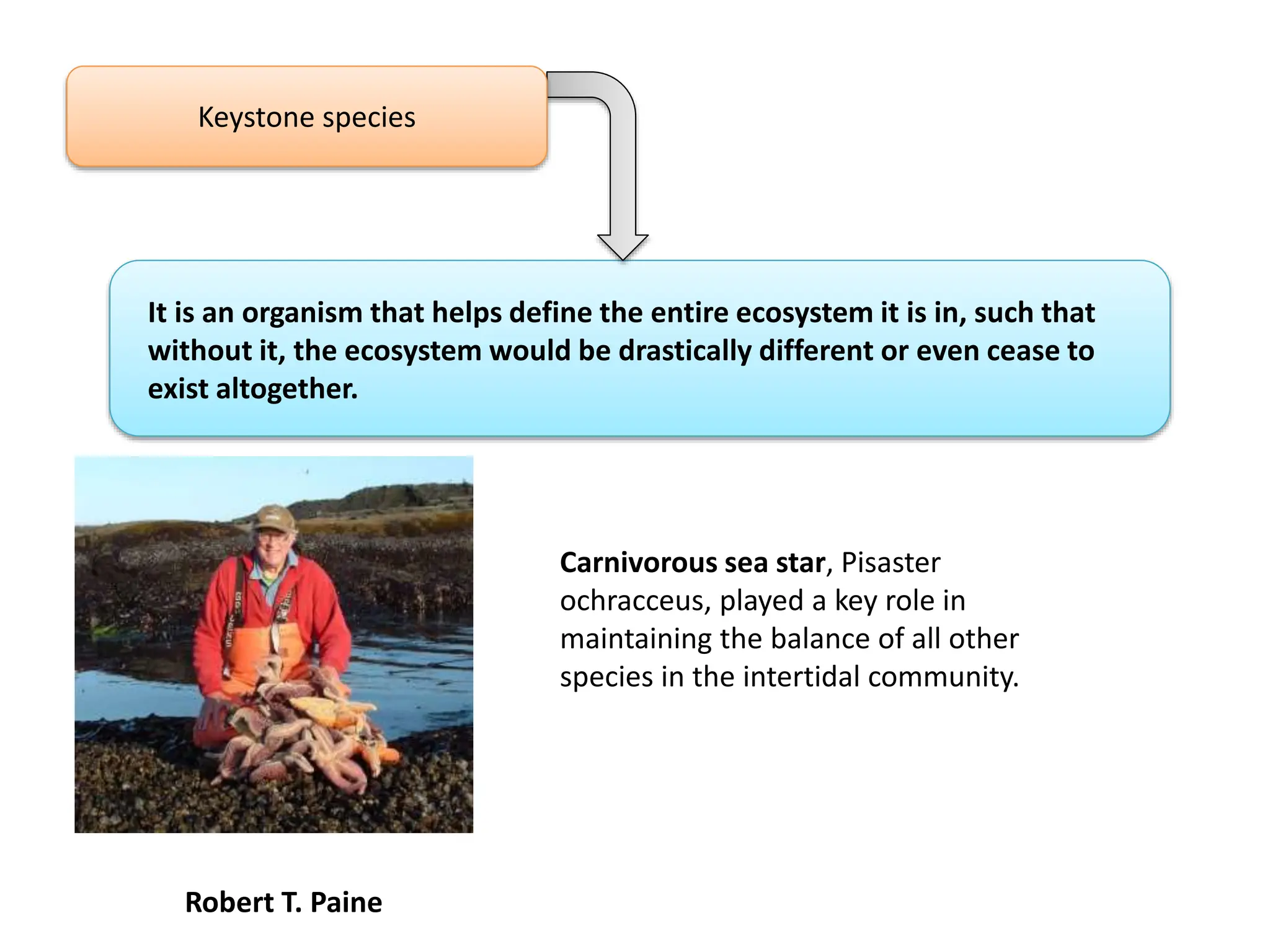
Carnivorous sea star, Pisaster
ochracceus, played a key role in
maintaining the balance of all other
species in the intertidal community.
Robert T. Paine

Interactions and Interdependence.pptx

  • 1.
  • 3.
    Specific Objectives At theend of the lesson, the students should be able to: 1. Describe the principles of the ecosystem. 2. Categorize the different biotic potential and environmental resistance (e.g., diseases, availability of food, and predators) that affect population explosion. 3. Describe how the different terrestrial and aquatic ecosystems are interlinked with one another.
  • 4.
    Activity 1: Directions: Completethe graphic organizer with words or phrases that are related to the word ecosystem. Then , correlate these terms to form your definition of ecosystem. ECOSYSTEM
  • 5.
    What is Ecosystem? It iscomposed of all living things that interact with one another and with the physical and chemical factors that compose the nonliving things in an area.
  • 6.
    You have learnedthat climate, soil, biodiversity of plants and animals, and availability of food and nutrients affect the ecosystem. Biotic Abiotic Living Things Nonliving Things
  • 7.
    Levels of BiologicalOrganization The levels of biological organization cover organisms from species to population and the interconnection of biotic ( e.g., plants, animals, and microorganisms) and abiotic (e.g., air, water, and soil) factors. To understand the need to support ecosystem management, you must first understand the basic concepts of the ecosystem.
  • 8.
    Native, Nonnative, andInvasive Species Native Species are organism that originated in their habitat naturally and without human involvement or intervention.
  • 9.
    Native, Nonnative, andInvasive Species Nonnative species move out of their natural environment because of human intervention or natural barrier. Human intervention includes moving the species from one point to another. Natural barrier include fish migration due to a natural disaster.
  • 10.
    Native, Nonnative, andInvasive Species Invasive species are organism that have the potential to displace the native species and may threaten the species or the ecosystem.
  • 11.
    Keystone species It isan organism that helps define the entire ecosystem it is in, such that without it, the ecosystem would be drastically different or even cease to exist altogether. Carnivorous sea star, Pisaster ochracceus, played a key role in maintaining the balance of all other species in the intertidal community. Robert T. Paine