
WELCOME TO OUR PRESENTATION
PRESENTATION TITLE: TOPOGRAPHY OF THE
OCEAN BOTTOM
Presented By
Name ID No. Regi. No
INTRODUCTION
• Topography is the study of Earth's surface shape and features.
• Ocean topography is the study of the ocean floor and the features of which.
• It starts with the Outer Continental Shelf followed by the Continental Slopes,
and subsequently the Ocean Floor.
CONTINENTAL MARGIN
OCEANIC DIVISIONS
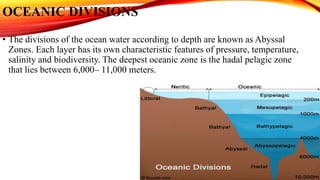
• The divisions of the ocean water according to depth are known as Abyssal
Zones. Each layer has its own characteristic features of pressure, temperature,
salinity and biodiversity. The deepest oceanic zone is the hadal pelagic zone
that lies between 6,000– 11,000 meters.
OCEAN BASIN
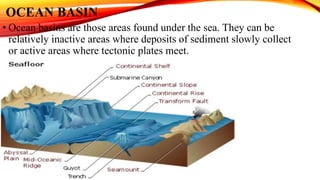
• Ocean basins are those areas found under the sea. They can be
relatively inactive areas where deposits of sediment slowly collect
or active areas where tectonic plates meet.
CONTINENTAL SHELF
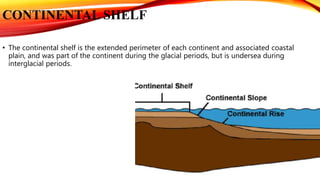
• The continental shelf is the extended perimeter of each continent and associated coastal
plain, and was part of the continent during the glacial periods, but is undersea during
interglacial periods.
CONTINENTAL SLOPE
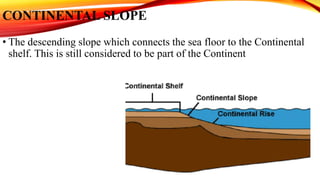
• The descending slope which connects the sea floor to the Continental
shelf. This is still considered to be part of the Continent
CONTINENTAL RISE
• A gentle slope with a generally smooth surface, built up by the shedding
of sediments from the continental block, and located between the
continental slope and the abyssal plain.
ABYSSAL HILLS
• Hills along the ocean floor. Ranging in height and diameter, these hills are
much larger than the hills we see on land. 100-2000 meters high and several
KM across
ABYSSAL PLAINS
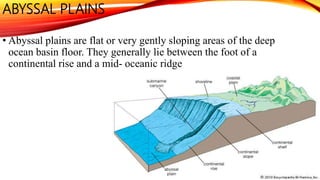
• Abyssal plains are flat or very gently sloping areas of the deep
ocean basin floor. They generally lie between the foot of a
continental rise and a mid- oceanic ridge
TRENCH
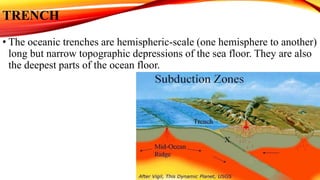
• The oceanic trenches are hemispheric-scale (one hemisphere to another)
long but narrow topographic depressions of the sea floor. They are also
the deepest parts of the ocean floor.
MARIANA TRENCH
• Is the deepest part of the world's oceans, and the deepest location on the
surface of the Earth's crust. It has a maximum depth of about
10,911meters, or 11 kilometers.
SEA MOUNT
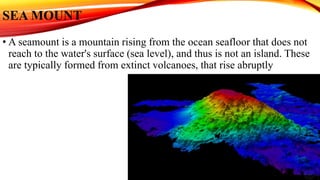
• A seamount is a mountain rising from the ocean seafloor that does not
reach to the water's surface (sea level), and thus is not an island. These
are typically formed from extinct volcanoes, that rise abruptly
OCEANIC ISLAND
• One type of oceanic island is found in a volcanic island arc. These
islands arise from volcanoes where the subduction of one plate under
another is occurring
THANKS TO ALL

Ocean Bottom Topography

  • 1.
    WELCOME TO OURPRESENTATION
  • 2.
    PRESENTATION TITLE: TOPOGRAPHYOF THE OCEAN BOTTOM Presented By Name ID No. Regi. No
  • 3.
    INTRODUCTION • Topography isthe study of Earth's surface shape and features. • Ocean topography is the study of the ocean floor and the features of which. • It starts with the Outer Continental Shelf followed by the Continental Slopes, and subsequently the Ocean Floor.
  • 4.
  • 5.
    OCEANIC DIVISIONS • Thedivisions of the ocean water according to depth are known as Abyssal Zones. Each layer has its own characteristic features of pressure, temperature, salinity and biodiversity. The deepest oceanic zone is the hadal pelagic zone that lies between 6,000– 11,000 meters.
  • 6.
    OCEAN BASIN • Oceanbasins are those areas found under the sea. They can be relatively inactive areas where deposits of sediment slowly collect or active areas where tectonic plates meet.
  • 7.
    CONTINENTAL SHELF • Thecontinental shelf is the extended perimeter of each continent and associated coastal plain, and was part of the continent during the glacial periods, but is undersea during interglacial periods.
  • 8.
    CONTINENTAL SLOPE • Thedescending slope which connects the sea floor to the Continental shelf. This is still considered to be part of the Continent
  • 9.
    CONTINENTAL RISE • Agentle slope with a generally smooth surface, built up by the shedding of sediments from the continental block, and located between the continental slope and the abyssal plain.
  • 10.
    ABYSSAL HILLS • Hillsalong the ocean floor. Ranging in height and diameter, these hills are much larger than the hills we see on land. 100-2000 meters high and several KM across
  • 11.
    ABYSSAL PLAINS • Abyssalplains are flat or very gently sloping areas of the deep ocean basin floor. They generally lie between the foot of a continental rise and a mid- oceanic ridge
  • 12.
    TRENCH • The oceanictrenches are hemispheric-scale (one hemisphere to another) long but narrow topographic depressions of the sea floor. They are also the deepest parts of the ocean floor.
  • 13.
    MARIANA TRENCH • Isthe deepest part of the world's oceans, and the deepest location on the surface of the Earth's crust. It has a maximum depth of about 10,911meters, or 11 kilometers.
  • 14.
    SEA MOUNT • Aseamount is a mountain rising from the ocean seafloor that does not reach to the water's surface (sea level), and thus is not an island. These are typically formed from extinct volcanoes, that rise abruptly
  • 15.
    OCEANIC ISLAND • Onetype of oceanic island is found in a volcanic island arc. These islands arise from volcanoes where the subduction of one plate under another is occurring
  • 16.