Basic concepts of
geomorphology
Introduction
• Fundamental concepts are used in the
interpretation of landscapes.
• Worcester (1939) defined geomorphology ,It is
a description and interpretation of the earth
relief features.
• Geomorphology come about as a result of
dissatisfaction with the term physiography.
• It discuss upon the man adjustments to and
uses of landforms.
Concept 1
• “The same physical processes and laws that
operate today operated throughout geological
time , although not necessarily always with the
same intensity as now”.
• Underlying principle is known as Principle of
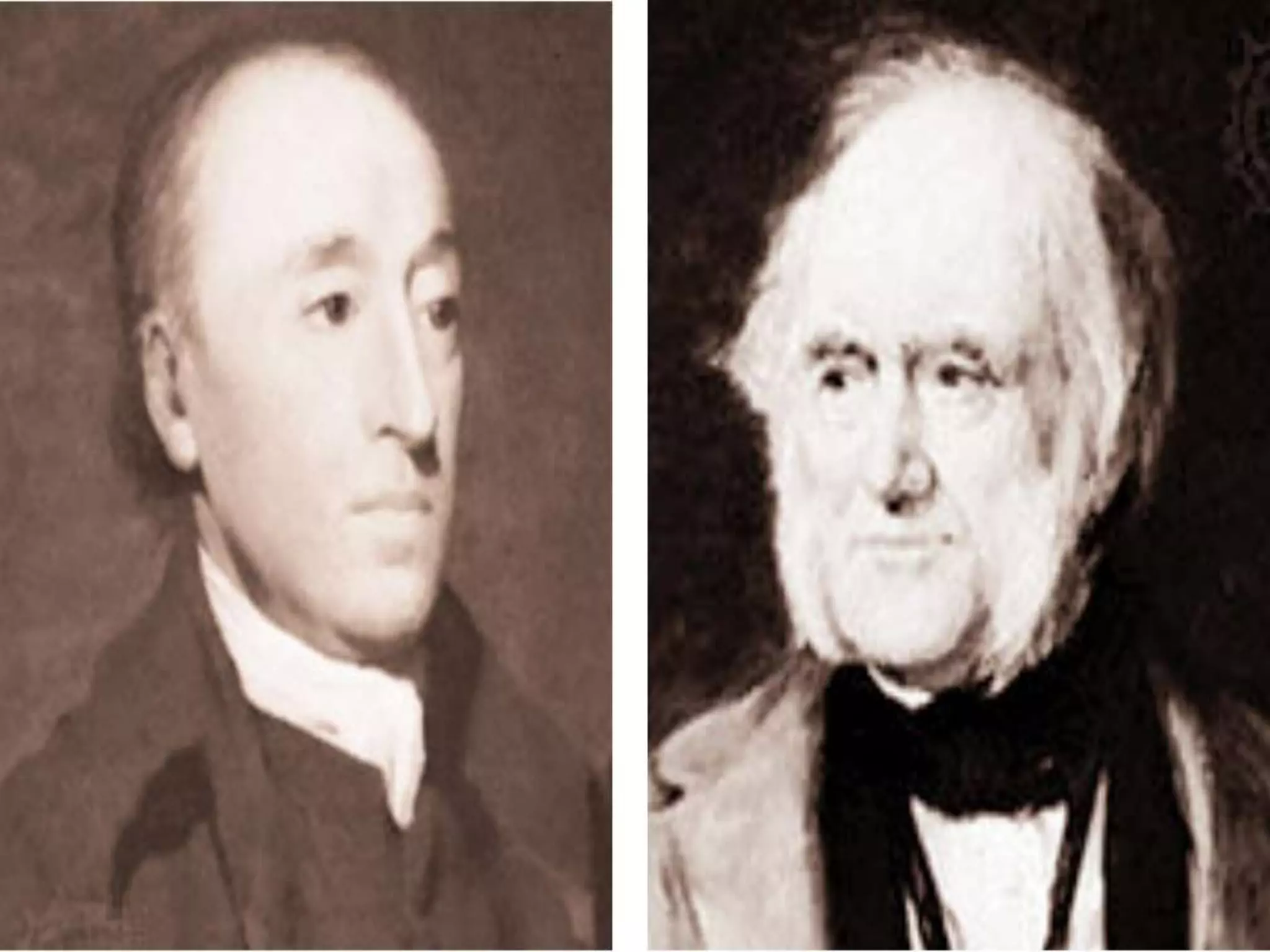
uniformitarianism .Proposed by Hutton &
popularized by Lyell .
• Intensity of various geological processes has
varied through geological time .”Present is the
key to past”.
Example
• The wind deposits deposited the Navajo
sandstone during Jurassic times obeyed
different laws in wind flow.
• Karsts topography of Permian period is same
as occur today.
• Volcanism is predicted mostly by this
principle.
Concept 2
• “Geological structure is a dominant control factor
in the evolution of land forms and is reflected in
them”.
• The term structure include phenomena as roc
attributes; the absence or presence of structures
;rock massiveness; permeability of rocks; and
various other ways.
• Structural features of rock Features are much
older than the geomorphic forms developed
upon them .
Examples
• The effect of structures are there but we may
lack of ability to see them.
• The increasing application of geomorphic
interpretation of aerial photographs are done
by the help of this principle.
Concept 3
• “Geomorphic processes leave their distinctive
imprint upon landforms and each geomorphic
process develops its own characteristic
assemblage of landforms”.
• It is applied to both
Endogen -Volcanism & earthquake
Exogenic -Weathering ,mass wasting &
erosion. (designated by pencks).
Example
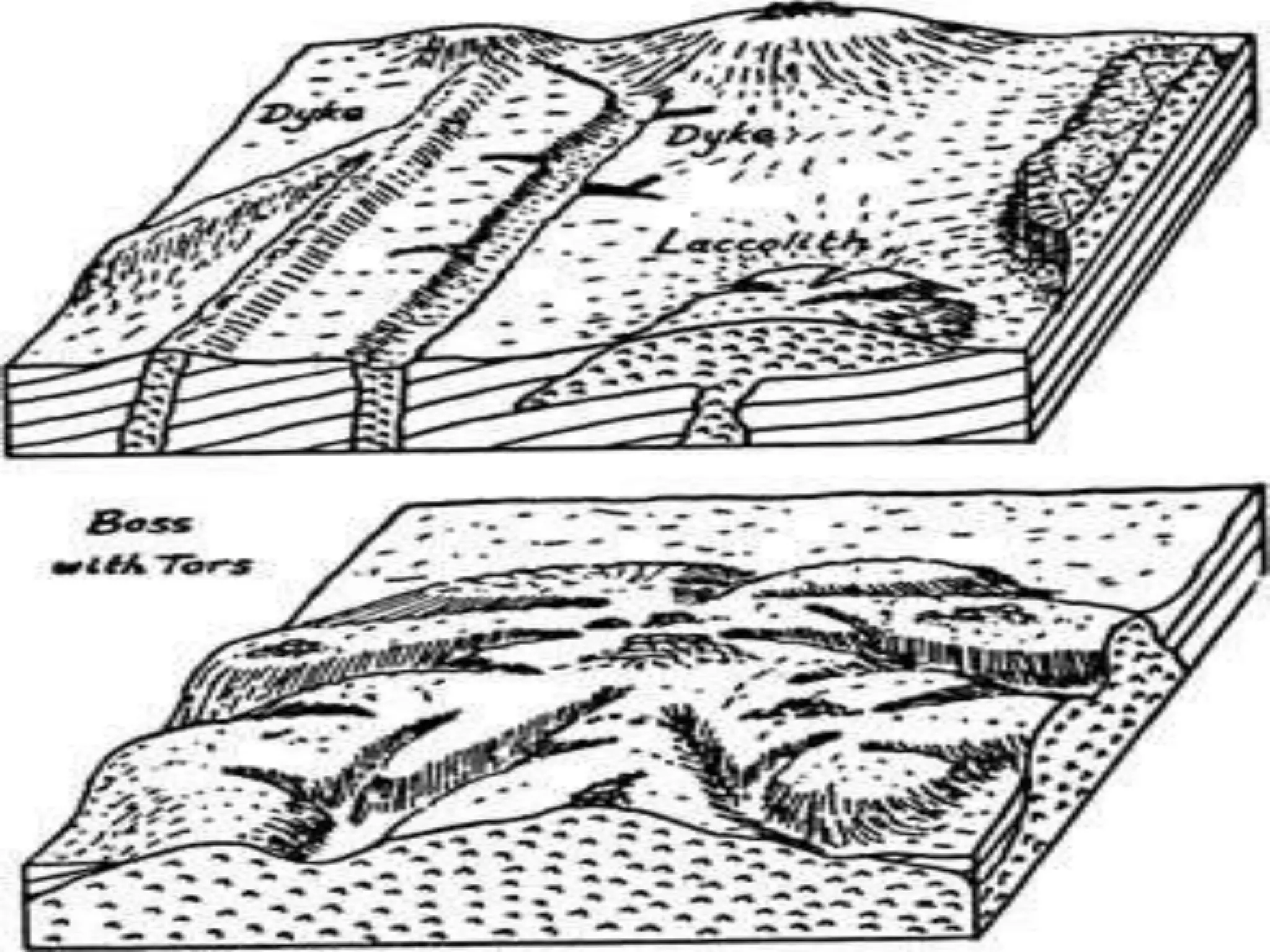
• Individual process responsible leave their
stamp upon the earth surfaces.
• Geomorphic processes do produce distinctive
landforms mae possible for genetic
classification.
• Landforms are classified based on the genetic
classification. It also emphasis the genetic
relationships of landform assemblages.
Concept 4
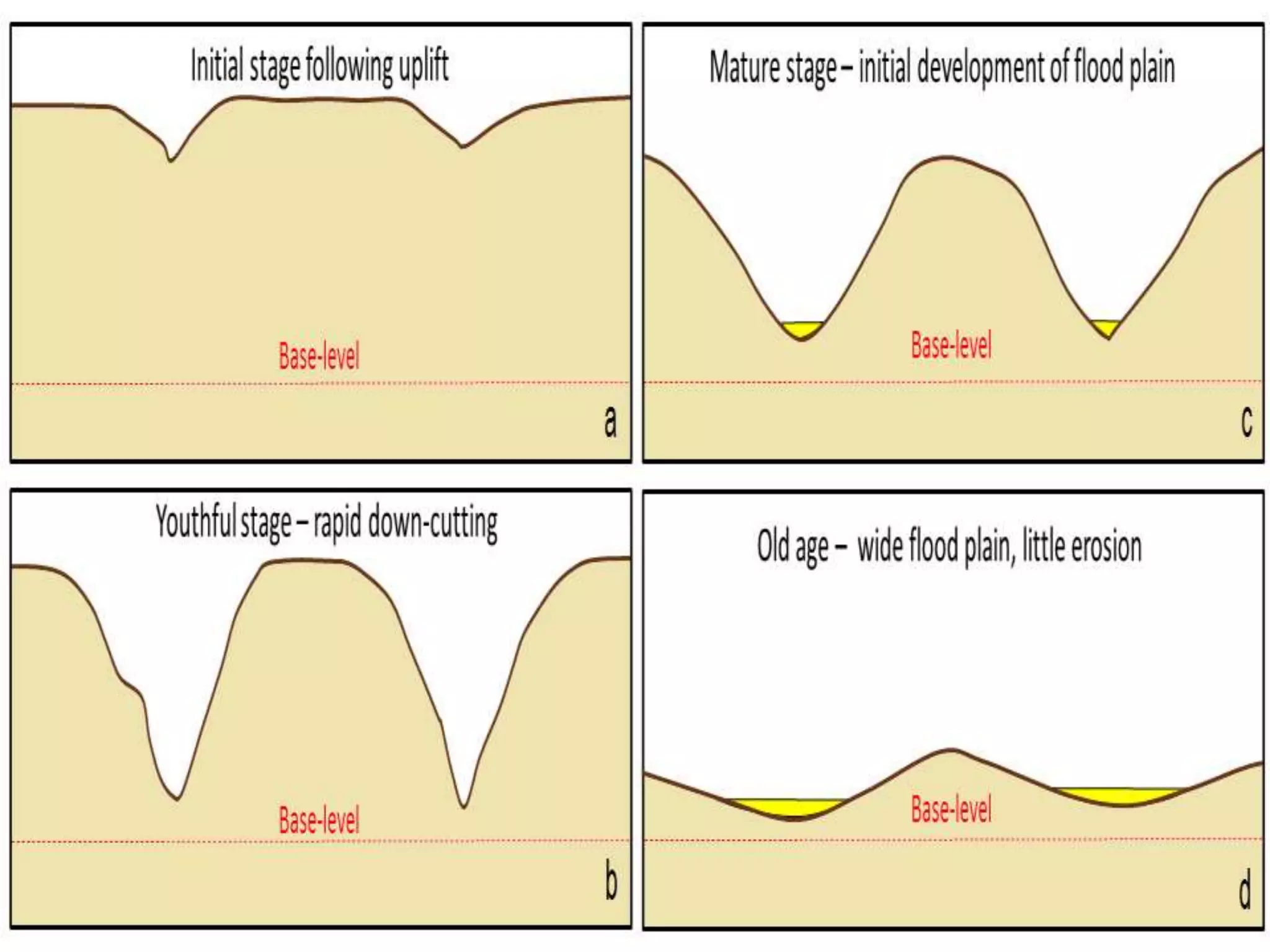
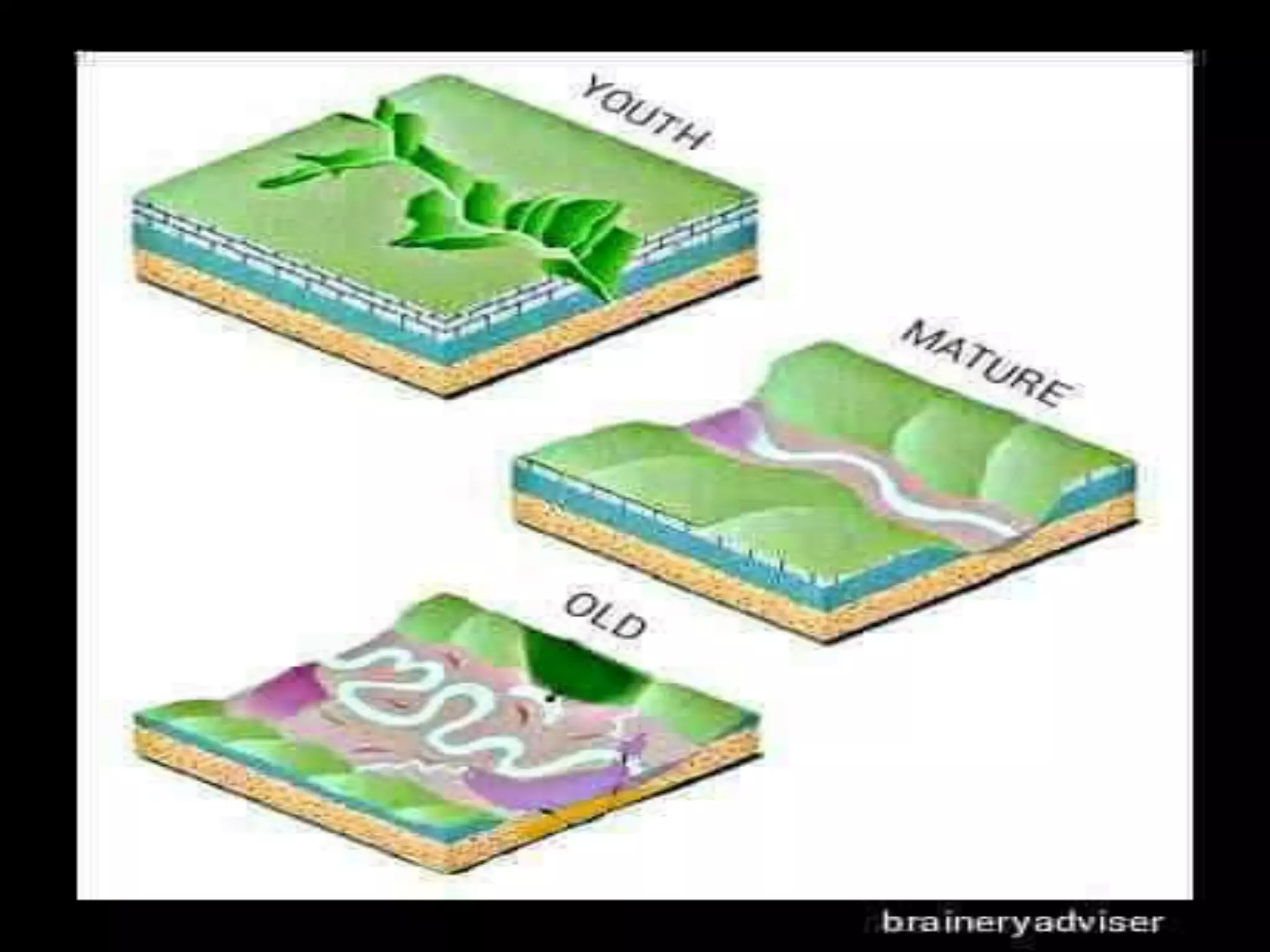
• “As the different erosional agencies act upon
the earth surface there is produced a
sequence of landforms having distinctive
characteristics at the successive stages of their
development”.
• Talks about the geomorphic cycles.
• By Davis an metaphorical terms youth,
mature, old are commonly used to designate
the stages of development.
Example
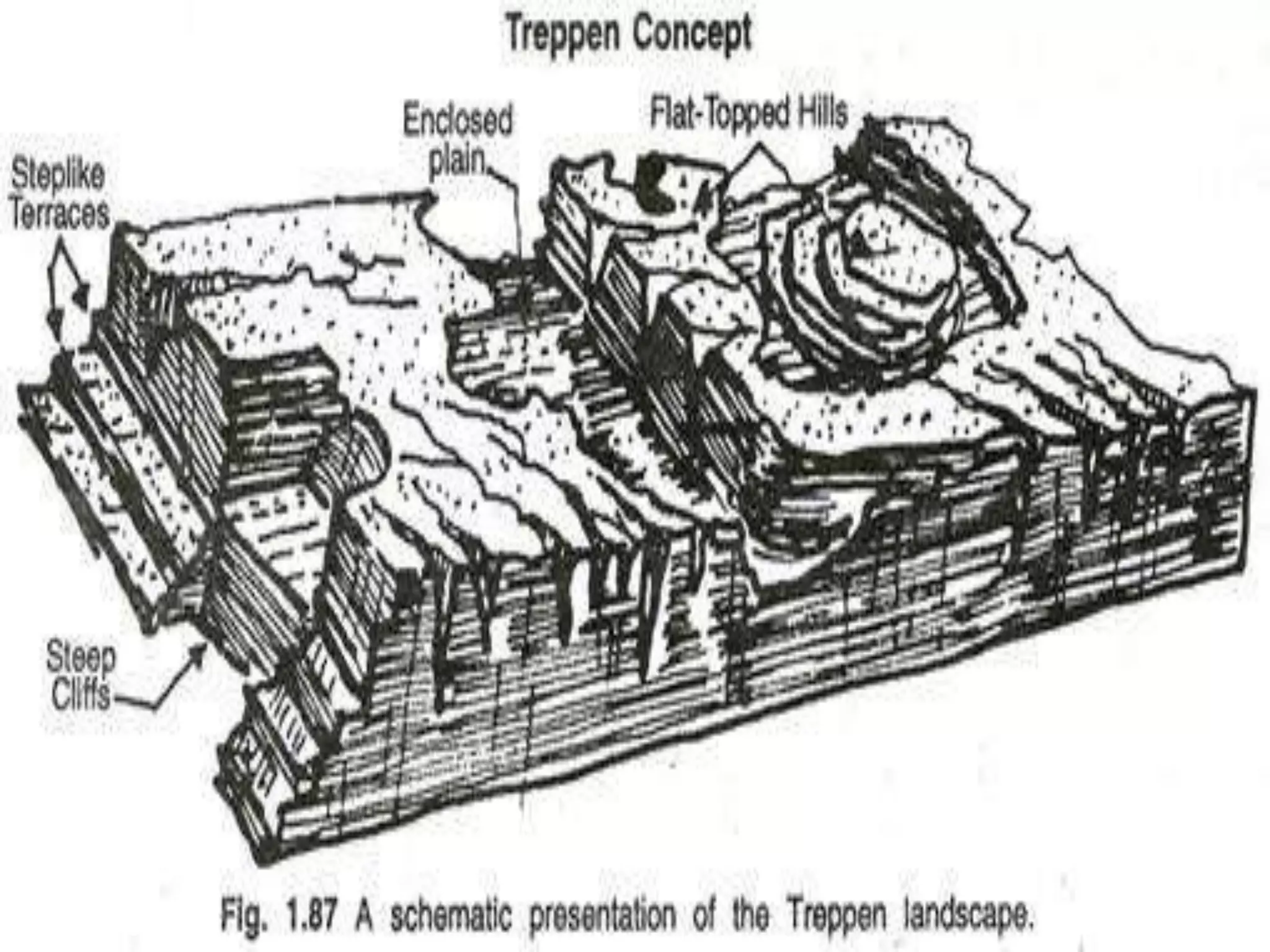
• This principle is applied to every cycle of
different geological processes
• Partial cycle is more than a completed cycle
and they also leave the imprint on the surface.
Concept 5
• “Complexity is more than the simplicity in
geomorphic evolution”.
• Rare to find an landscape that influenced b y
single geomorphic process.
• More multicyclic than monocyclic landscapes.
• Older topography also seen on the new
landscapes is called exhumed or resurrected
landscapes also seen.
Concept 6
• “Little of the earth topography is older than
tertiary and most of it no older than
Pleistocene”.
• Topographic features so ancient are rare , and
they do exist ,are more likely exhumed forms
due to degradation through geological time.
• Ashley (1931) believed that most of the
geomorphic landforms are formed in post
Miocene.
Example
• Most of the topographical features on the
Himalayan range is attained in Pleistocene
age.
• Longwell came to conclusion that it started in
early Pliocene.
Concept 7
• “Proper interpretation of present day
landscapes is impossible without a full
appreciation of the mainfold influences of the
geologic and climatic changes during the
Pleistocene”.
• Most of the world topography is the
recognition that the geologic and climatic
changes during the Pleistocene have the far-
reaching effects upon present day topography.
Example
• Glacial outwash and wind-blown materials of
glacial origin extended all over the world.
• Certainly in the middle latitudes the climatic
effects are profound.
• Pleistocene diastrophism played important
role in Himalayan formation and grand
canyon.
Concept 8
• “an appreciation of the world climates is
necessary to a proper understanding of the
varying importance of the different geomorphic
processes”.
• Climatic factors such as temperature precipitation
should influence the operation of the different
geomorphic processes.
• High altitude within climatic condition should be
concerned which impose modifications.
• Human activities influence also concerned more.
Concept 9
• “Geomorphology, although concerned primarily
with present day landscapes , attains its
maximum usefulness by historic extension”.
• Historical approach on the geomorphic landscape
is needed for proper interpretation.
• Application of uniformitarian's principle is
needed for this approach.
• This aspect is also called as paleo geomorphology
which includes stratigraphy and sedimentology.
Thank you

Fundamental concepts of geomorphology

  • 1.
  • 2.
    Introduction • Fundamental conceptsare used in the interpretation of landscapes. • Worcester (1939) defined geomorphology ,It is a description and interpretation of the earth relief features. • Geomorphology come about as a result of dissatisfaction with the term physiography. • It discuss upon the man adjustments to and uses of landforms.
  • 4.
    Concept 1 • “Thesame physical processes and laws that operate today operated throughout geological time , although not necessarily always with the same intensity as now”. • Underlying principle is known as Principle of uniformitarianism .Proposed by Hutton & popularized by Lyell . • Intensity of various geological processes has varied through geological time .”Present is the key to past”.
  • 6.
    Example • The winddeposits deposited the Navajo sandstone during Jurassic times obeyed different laws in wind flow. • Karsts topography of Permian period is same as occur today. • Volcanism is predicted mostly by this principle.
  • 7.
    Concept 2 • “Geologicalstructure is a dominant control factor in the evolution of land forms and is reflected in them”. • The term structure include phenomena as roc attributes; the absence or presence of structures ;rock massiveness; permeability of rocks; and various other ways. • Structural features of rock Features are much older than the geomorphic forms developed upon them .
  • 10.
    Examples • The effectof structures are there but we may lack of ability to see them. • The increasing application of geomorphic interpretation of aerial photographs are done by the help of this principle.
  • 11.
    Concept 3 • “Geomorphicprocesses leave their distinctive imprint upon landforms and each geomorphic process develops its own characteristic assemblage of landforms”. • It is applied to both Endogen -Volcanism & earthquake Exogenic -Weathering ,mass wasting & erosion. (designated by pencks).
  • 13.
    Example • Individual processresponsible leave their stamp upon the earth surfaces. • Geomorphic processes do produce distinctive landforms mae possible for genetic classification. • Landforms are classified based on the genetic classification. It also emphasis the genetic relationships of landform assemblages.
  • 14.
    Concept 4 • “Asthe different erosional agencies act upon the earth surface there is produced a sequence of landforms having distinctive characteristics at the successive stages of their development”. • Talks about the geomorphic cycles. • By Davis an metaphorical terms youth, mature, old are commonly used to designate the stages of development.
  • 17.
    Example • This principleis applied to every cycle of different geological processes • Partial cycle is more than a completed cycle and they also leave the imprint on the surface.
  • 18.
    Concept 5 • “Complexityis more than the simplicity in geomorphic evolution”. • Rare to find an landscape that influenced b y single geomorphic process. • More multicyclic than monocyclic landscapes. • Older topography also seen on the new landscapes is called exhumed or resurrected landscapes also seen.
  • 21.
    Concept 6 • “Littleof the earth topography is older than tertiary and most of it no older than Pleistocene”. • Topographic features so ancient are rare , and they do exist ,are more likely exhumed forms due to degradation through geological time. • Ashley (1931) believed that most of the geomorphic landforms are formed in post Miocene.
  • 23.
    Example • Most ofthe topographical features on the Himalayan range is attained in Pleistocene age. • Longwell came to conclusion that it started in early Pliocene.
  • 24.
    Concept 7 • “Properinterpretation of present day landscapes is impossible without a full appreciation of the mainfold influences of the geologic and climatic changes during the Pleistocene”. • Most of the world topography is the recognition that the geologic and climatic changes during the Pleistocene have the far- reaching effects upon present day topography.
  • 26.
    Example • Glacial outwashand wind-blown materials of glacial origin extended all over the world. • Certainly in the middle latitudes the climatic effects are profound. • Pleistocene diastrophism played important role in Himalayan formation and grand canyon.
  • 27.
    Concept 8 • “anappreciation of the world climates is necessary to a proper understanding of the varying importance of the different geomorphic processes”. • Climatic factors such as temperature precipitation should influence the operation of the different geomorphic processes. • High altitude within climatic condition should be concerned which impose modifications. • Human activities influence also concerned more.
  • 29.
    Concept 9 • “Geomorphology,although concerned primarily with present day landscapes , attains its maximum usefulness by historic extension”. • Historical approach on the geomorphic landscape is needed for proper interpretation. • Application of uniformitarian's principle is needed for this approach. • This aspect is also called as paleo geomorphology which includes stratigraphy and sedimentology.
  • 31.