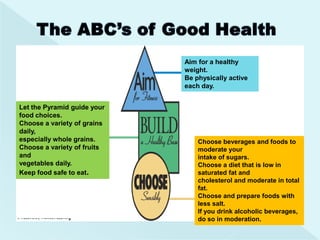
Aim for a healthy
                             weight.
                             Be physically active
                             each day.


Let the Pyramid guide your
food choices.
Choose a variety of grains
daily,
especially whole grains.         Choose beverages and foods to
Choose a variety of fruits       moderate your
and                              intake of sugars.
vegetables daily.                Choose a diet that is low in
Keep food safe to eat.           saturated fat and
                                 cholesterol and moderate in total
                                 fat.
                                 Choose and prepare foods with
                                 less salt.
                                 If you drink alcoholic beverages,
                                 do so in moderation.
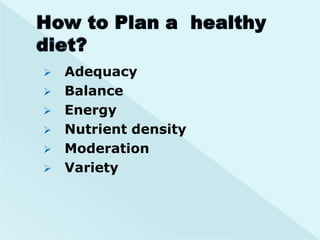
   Adequacy
   Balance
   Energy
   Nutrient density
   Moderation
   Variety
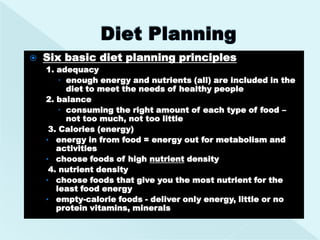
   Six basic diet planning principles
    1. adequacy
         enough energy and nutrients (all) are included in the
          diet to meet the needs of healthy people
    2. balance
         consuming the right amount of each type of food –
          not too much, not too little
     3. Calories (energy)
    • energy in from food = energy out for metabolism and
       activities
    • choose foods of high nutrient density
     4. nutrient density
    • choose foods that give you the most nutrient for the
       least food energy
    • empty-calorie foods - deliver only energy, little or no
       protein vitamins, minerals
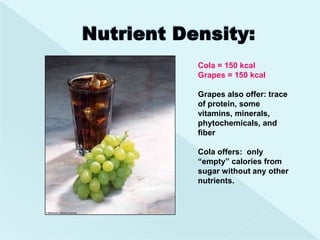
Cola = 150 kcal
Grapes = 150 kcal

Grapes also offer: trace
of protein, some
vitamins, minerals,
phytochemicals, and
fiber

Cola offers: only
“empty” calories from
sugar without any other
nutrients.
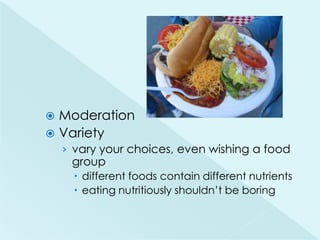
 Moderation
 Variety
    › vary your choices, even wishing a food
     group
       different foods contain different nutrients
       eating nutritiously shouldn’t be boring
   food group plans
    › sort foods of similar origin and nutrient
     content into groups
   exchange lists
    › organizes food by proportions of carbs,
     fats, proteins
   easy way to create a balanced diet

    › just select foods from the 5
     groups, according to the rules

      number of recommended serving is listed

      lists the foods according to their nutrient
       density
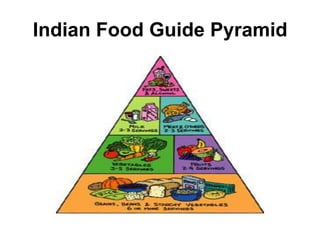
Indian Food Guide Pyramid
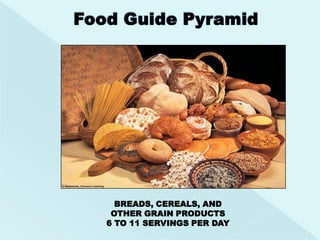
BREADS, CEREALS, AND
 OTHER GRAIN PRODUCTS
6 TO 11 SERVINGS PER DAY
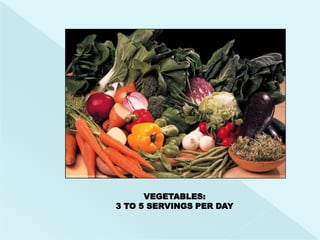
VEGETABLES:
3 TO 5 SERVINGS PER DAY
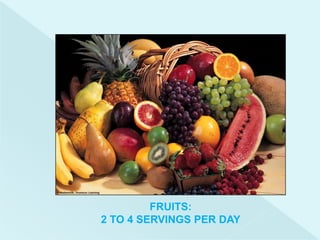
FRUITS:
2 TO 4 SERVINGS PER DAY
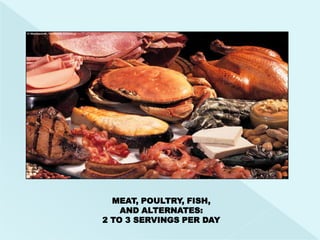
MEAT, POULTRY, FISH,
    AND ALTERNATES:
2 TO 3 SERVINGS PER DAY
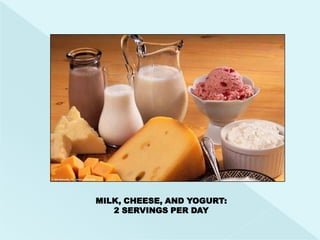
MILK, CHEESE, AND YOGURT:
   2 SERVINGS PER DAY
FATS, SWEETS, AND
ALCOHOLIC BEVERAGES:
    USE SPARINGLY
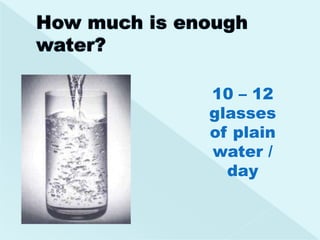
10 – 12
glasses
of plain
water /
  day
 Decreased muscle strength &
  control
 Decreased ability to sweat
 Increased body core temperature
 Eventually, heat stroke.
Another source for planning a good diet
    foods are sorted according to
    energy nutrient contents
   cheeses and meats: both provide
    energy from protein
 carb group: starch, fruit, milk,
  others, veggies (non-starchy)
 meat/meat substitute group: very
  lean, lean, medium-fat, high fat
 fat group
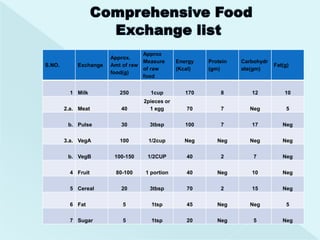
Approx
                       Approx.
                                  Measure      Energy   Protein   Carbohydr
S.NO.       Exchange   Amt of raw                                             Fat(g)
                                  of raw       (Kcal)   (gm)      ate(gm)
                       food(g)
                                  food


          1 Milk          250       1cup          170       8        12           10
                                  2pieces or
        2.a. Meat         40        1 egg         70        7       Neg            5

         b. Pulse         30        3tbsp         100       7        17          Neg

        3.a. VegA         100      1/2cup        Neg       Neg      Neg          Neg

         b. VegB        100-150    1/2CUP         40        2         7          Neg

          4 Fruit       80-100    1 portion       40       Neg       10          Neg

          5 Cereal        20        3tbsp         70        2        15          Neg

          6 Fat            5        1tsp          45       Neg      Neg            5

          7 Sugar          5        1tsp          20       Neg        5          Neg
   A food exchange list consists of
    similar foods grouped together so that
    specified amounts of each food listed
    in that group have approximately the
    same energy, carbohydrate, protein
    and fat content.
   Food exchange are food equivalents designed to
    facilitate easy variation in diet.
   One can make the diet more flexible and exciting
    to match one’s taste and needs, by understanding
    the concept of Exchanges.
   For e.g In a cereal exchange, one chappati is
    equivalent to 3/4 katori cooked rice or one idli or
    two medium slices of bread. One cannot substitute
    chappati with milk or dal because of different
    nutritional quality.
   Similarly, the chart on vegetable exchange gives
    you a list of vegetables that can be exchanged
    with each other.
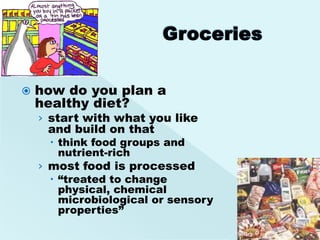
   how do you plan a
    healthy diet?
    › start with what you like
     and build on that
       think food groups and
        nutrient-rich
    › most food is processed
       “treated to change
        physical, chemical
        microbiological or sensory
        properties”
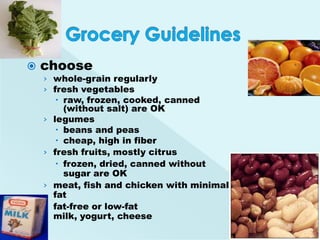
   choose
    › whole-grain regularly
    › fresh vegetables
          raw, frozen, cooked, canned
           (without salt) are OK
    ›   legumes
          beans and peas
          cheap, high in fiber
    ›   fresh fruits, mostly citrus
          frozen, dried, canned without
           sugar are OK
    ›   meat, fish and chicken with minimal
        fat
    ›   fat-free or low-fat
        milk, yogurt, cheese
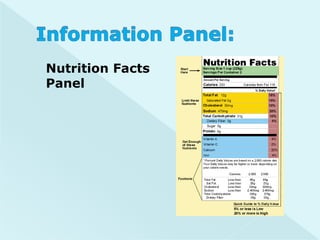
Nutrition Facts
Panel
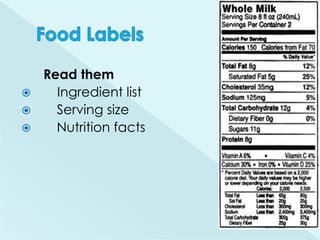
Read them
   Ingredient list
   Serving size
   Nutrition facts
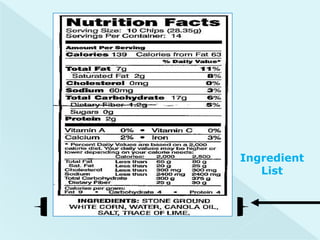
Ingredient
   List
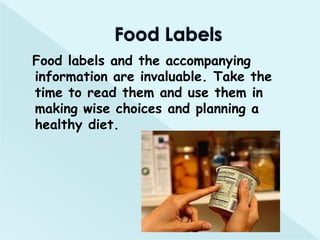
Food labels and the accompanying
information are invaluable. Take the
time to read them and use them in
making wise choices and planning a
healthy diet.

Planning a Healthy balanced diet

  • 2.
    Aim for ahealthy weight. Be physically active each day. Let the Pyramid guide your food choices. Choose a variety of grains daily, especially whole grains. Choose beverages and foods to Choose a variety of fruits moderate your and intake of sugars. vegetables daily. Choose a diet that is low in Keep food safe to eat. saturated fat and cholesterol and moderate in total fat. Choose and prepare foods with less salt. If you drink alcoholic beverages, do so in moderation.
  • 3.
    Adequacy  Balance  Energy  Nutrient density  Moderation  Variety
  • 4.
    Six basic diet planning principles 1. adequacy  enough energy and nutrients (all) are included in the diet to meet the needs of healthy people 2. balance  consuming the right amount of each type of food – not too much, not too little 3. Calories (energy) • energy in from food = energy out for metabolism and activities • choose foods of high nutrient density 4. nutrient density • choose foods that give you the most nutrient for the least food energy • empty-calorie foods - deliver only energy, little or no protein vitamins, minerals
  • 5.
    Cola = 150kcal Grapes = 150 kcal Grapes also offer: trace of protein, some vitamins, minerals, phytochemicals, and fiber Cola offers: only “empty” calories from sugar without any other nutrients.
  • 6.
     Moderation  Variety › vary your choices, even wishing a food group  different foods contain different nutrients  eating nutritiously shouldn’t be boring
  • 7.
    food group plans › sort foods of similar origin and nutrient content into groups  exchange lists › organizes food by proportions of carbs, fats, proteins
  • 8.
    easy way to create a balanced diet › just select foods from the 5 groups, according to the rules  number of recommended serving is listed  lists the foods according to their nutrient density
  • 9.
  • 10.
    BREADS, CEREALS, AND OTHER GRAIN PRODUCTS 6 TO 11 SERVINGS PER DAY
  • 11.
    VEGETABLES: 3 TO 5SERVINGS PER DAY
  • 12.
    FRUITS: 2 TO 4SERVINGS PER DAY
  • 13.
    MEAT, POULTRY, FISH, AND ALTERNATES: 2 TO 3 SERVINGS PER DAY
  • 14.
    MILK, CHEESE, ANDYOGURT: 2 SERVINGS PER DAY
  • 15.
    FATS, SWEETS, AND ALCOHOLICBEVERAGES: USE SPARINGLY
  • 16.
    10 – 12 glasses ofplain water / day
  • 17.
     Decreased musclestrength & control  Decreased ability to sweat  Increased body core temperature  Eventually, heat stroke.
  • 18.
    Another source forplanning a good diet foods are sorted according to energy nutrient contents  cheeses and meats: both provide energy from protein  carb group: starch, fruit, milk, others, veggies (non-starchy)  meat/meat substitute group: very lean, lean, medium-fat, high fat  fat group
  • 19.
    Approx Approx. Measure Energy Protein Carbohydr S.NO. Exchange Amt of raw Fat(g) of raw (Kcal) (gm) ate(gm) food(g) food 1 Milk 250 1cup 170 8 12 10 2pieces or 2.a. Meat 40 1 egg 70 7 Neg 5 b. Pulse 30 3tbsp 100 7 17 Neg 3.a. VegA 100 1/2cup Neg Neg Neg Neg b. VegB 100-150 1/2CUP 40 2 7 Neg 4 Fruit 80-100 1 portion 40 Neg 10 Neg 5 Cereal 20 3tbsp 70 2 15 Neg 6 Fat 5 1tsp 45 Neg Neg 5 7 Sugar 5 1tsp 20 Neg 5 Neg
  • 20.
    A food exchange list consists of similar foods grouped together so that specified amounts of each food listed in that group have approximately the same energy, carbohydrate, protein and fat content.
  • 21.
    Food exchange are food equivalents designed to facilitate easy variation in diet.  One can make the diet more flexible and exciting to match one’s taste and needs, by understanding the concept of Exchanges.  For e.g In a cereal exchange, one chappati is equivalent to 3/4 katori cooked rice or one idli or two medium slices of bread. One cannot substitute chappati with milk or dal because of different nutritional quality.  Similarly, the chart on vegetable exchange gives you a list of vegetables that can be exchanged with each other.
  • 22.
    how do you plan a healthy diet? › start with what you like and build on that  think food groups and nutrient-rich › most food is processed  “treated to change physical, chemical microbiological or sensory properties”
  • 23.
    choose › whole-grain regularly › fresh vegetables  raw, frozen, cooked, canned (without salt) are OK › legumes  beans and peas  cheap, high in fiber › fresh fruits, mostly citrus  frozen, dried, canned without sugar are OK › meat, fish and chicken with minimal fat › fat-free or low-fat milk, yogurt, cheese
  • 24.
  • 25.
    Read them  Ingredient list  Serving size  Nutrition facts
  • 26.
  • 27.
    Food labels andthe accompanying information are invaluable. Take the time to read them and use them in making wise choices and planning a healthy diet.