FOOD
Constituents, Importance and deficiency disorders
Developed by:
Dr Savita Deshmukh
Govt Junior College, Nandagudi
Tq-Hoskote, B’luru Rural
Mob: 7026004948
Chap 2 FOOD
 What is food?
 Uses of Food?
 Why do we consume food?
 Which are the constituents present in the food?
 List the constituents of food and their food source.
FOOD
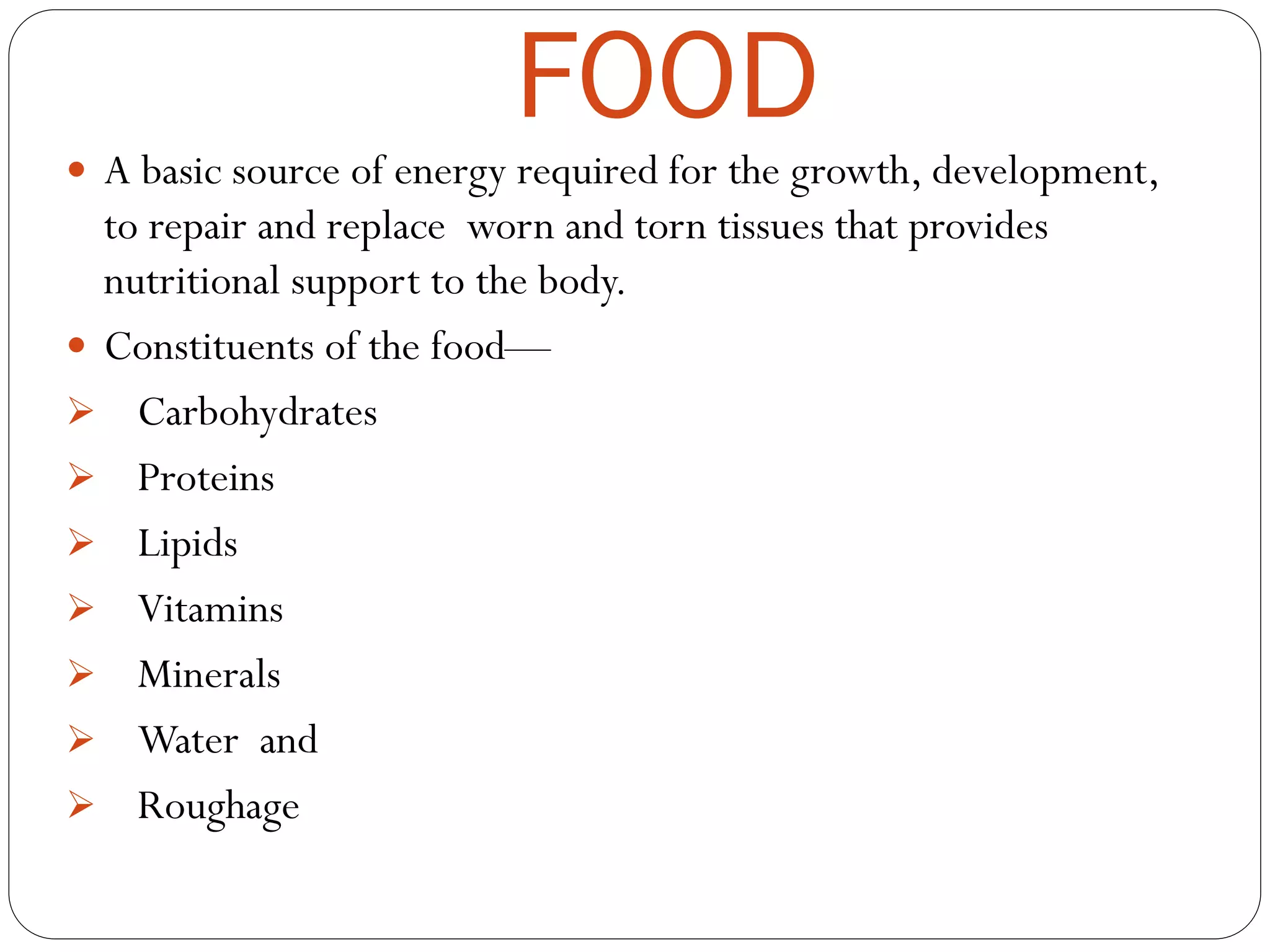
 A basic source of energy required for the growth, development,
to repair and replace worn and torn tissues that provides
nutritional support to the body.
 Constituents of the food—
 Carbohydrates
 Proteins
 Lipids
 Vitamins
 Minerals
 Water and
 Roughage
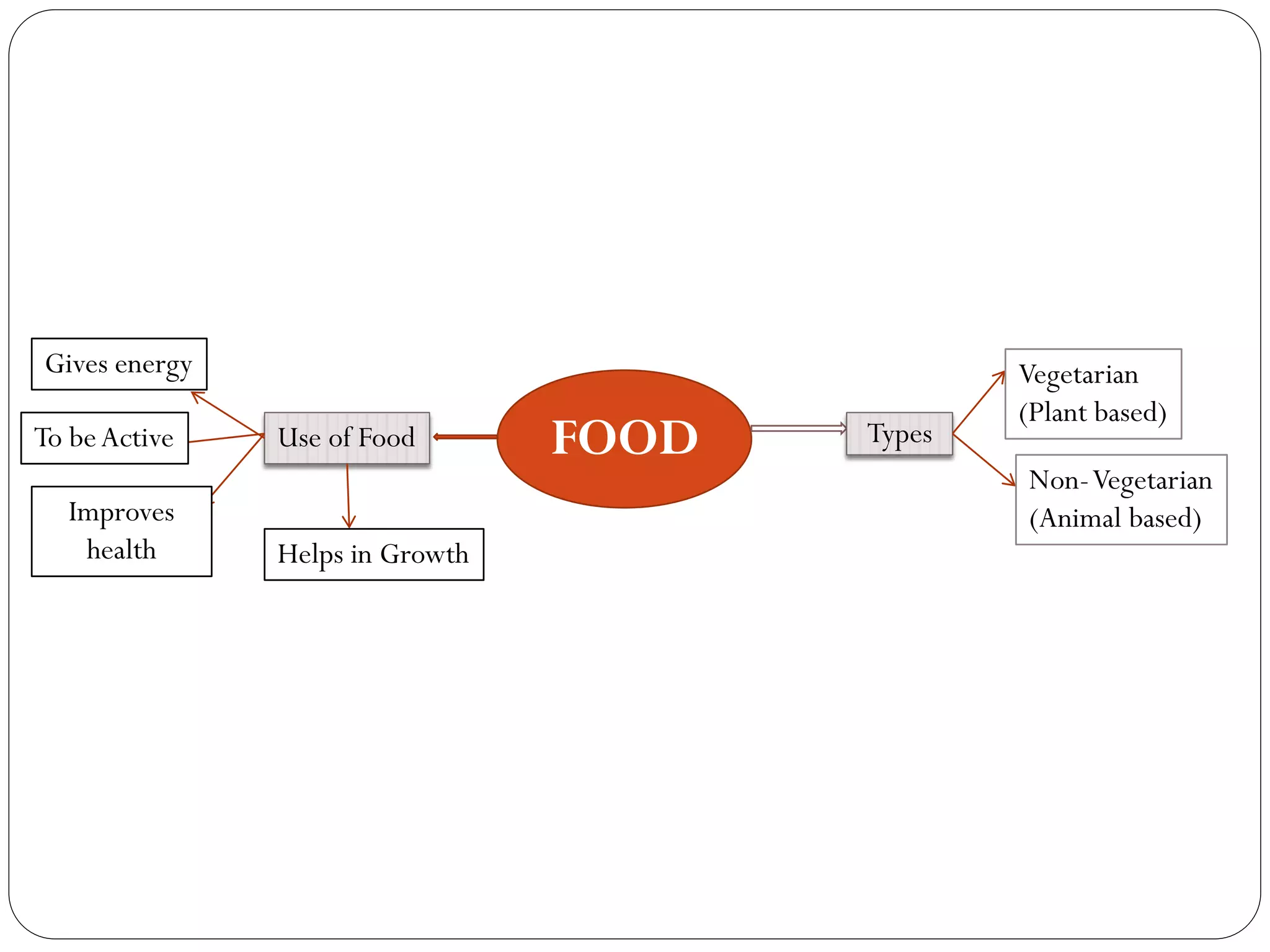
FOOD Types
Vegetarian
(Plant based)
Non-Vegetarian
(Animal based)
Use of Food
Gives energy
To beActive
Improves
health Helps in Growth
© Food – a fact of life 2007
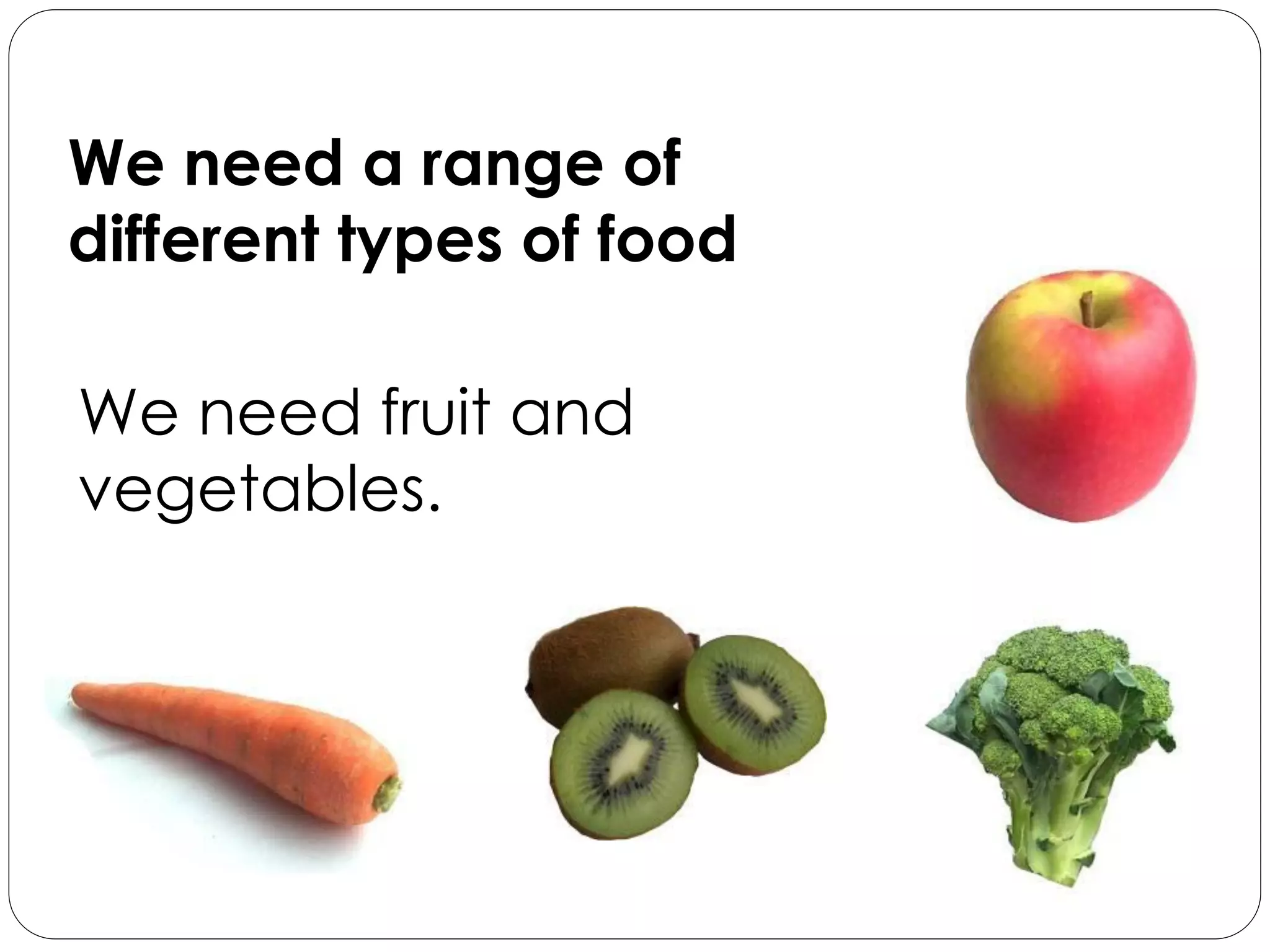
We need a range of
different types of food
We need fruit and
vegetables.
© Food – a fact of life 2007
We need a range of
different types of food
We need bread,
breakfast cereals
and potatoes.
© Food – a fact of life 2007
We need a range of
different types of food
We need milk, cheese
and yogurt.
© Food – a fact of life 2007
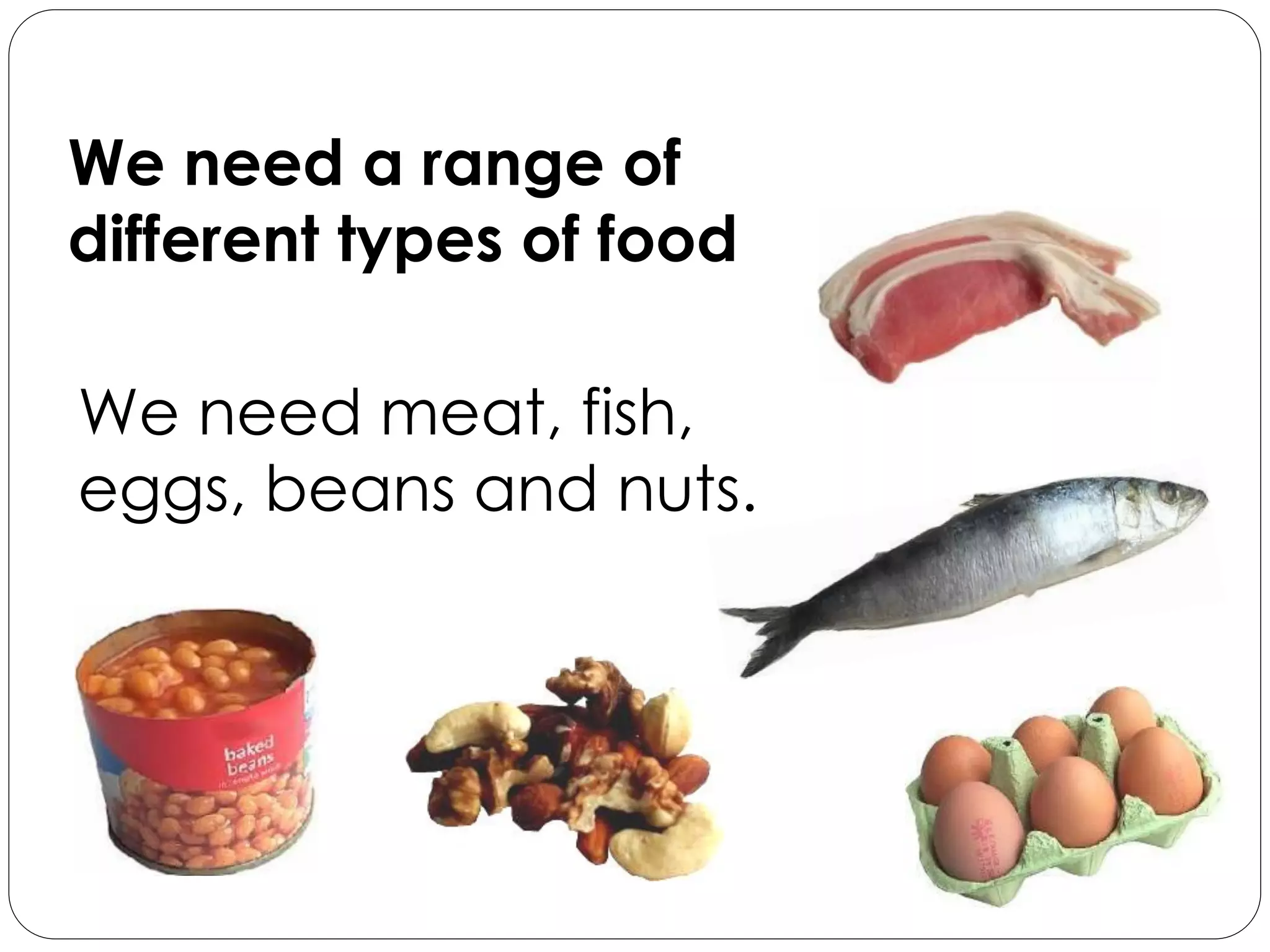
We need a range of
different types of food
We need meat, fish,
eggs, beans and nuts.
© Food – a fact of life 2007
Food – a fact of life
We need lots of
different foods to:
be active be healthygrow
When diet is wrong, medicine is of no use.
When diet is correct, medicine is of no
need.
Activity 1: Collect some proverbs on food
or diet.
World Food Problems
 Under nutrition -Consuming insufficient food to meet
one’s minimum daily energy requirement for a long enough
time to cause harmful effects
 Malnutrition -Faulty nutrition. Caused by a diet that does
not supply a persons with enough protein, essential fats,
vitamins, minerals, and other nutrients.
 Overnutrition-an excessive intake of food, especially fats
Obesity
7/12/2016NUTRITIONAL DISORDERS12
 Obesity is defined as an excess of adipose tissue that imparts health
risk.
Etiology
 genetic predisposition
 diets largely derived from carbohydrates and fats than protein rich
food.
 hypothyroidism, cushings syndrome, insulinoma, and hypothalamic
disorders
Starvation
7/12/2016NUTRITIONAL DISORDERS13
 Starvation is a state of overall deprivation of nutrients.
 Reason -
 deliberate fasting
 famine conditions in a country or community.
 secondary under nutrition such as chronic
wasting diseases, cancers etc.
Protein Deficiency Disorders
Sl no Deficient
Componen
t
Deficiency
Disorder
Symptoms Functions Foods Sources
1 Proteins Kwashiorkor Enlarged fatty
liver,
Atrophy of
different tissues
and organs but
subcutaneous fat
preserved
Provide structure and
support for cells,
For growth and
maintenance,
Protect against diseases
as antibodies,
Carry out thousands of
chemical reactions that
take place in cells,
Transmit signals to
coordinate biological
processes between
different cells, tissues,
and organs,
Carry atoms and small
molecules within cells
and throughout the
body
Eggs, Cow’s
milk, Cheese,
Meat cooked,
Fish cooked,
Rice , cooked,
Soy beans ,
White potato,
wheat , germ,
Nuts
Marasmus No fatty liver,
Atrophy of
different tissues
and organs
including
subcutaneous fat
Marasmus case
7/12/2016NUTRITIONAL DISORDERS16
kwashiorkor
Sl no Deficient
Compone
nt
Deficiency
Disorder
Symptoms Functions Foods
Sources
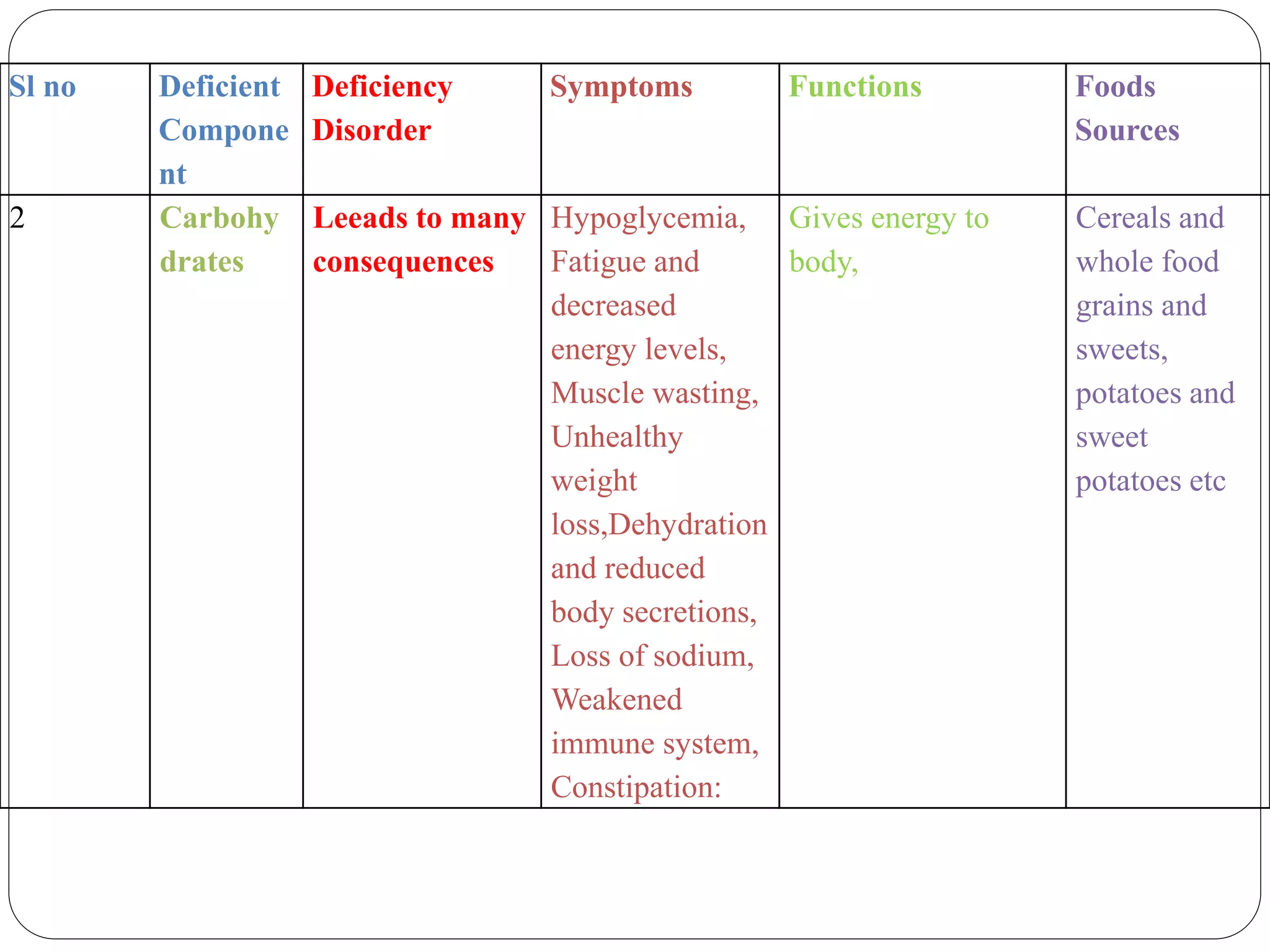
2 Carbohy
drates
Leeads to many
consequences
Hypoglycemia,
Fatigue and
decreased
energy levels,
Muscle wasting,
Unhealthy
weight
loss,Dehydration
and reduced
body secretions,
Loss of sodium,
Weakened
immune system,
Constipation:
Gives energy to
body,
Cereals and
whole food
grains and
sweets,
potatoes and
sweet
potatoes etc
Sl no Deficient
Compon
ent
Deficiency
Disorder
Symptoms Functions Foods
Sources
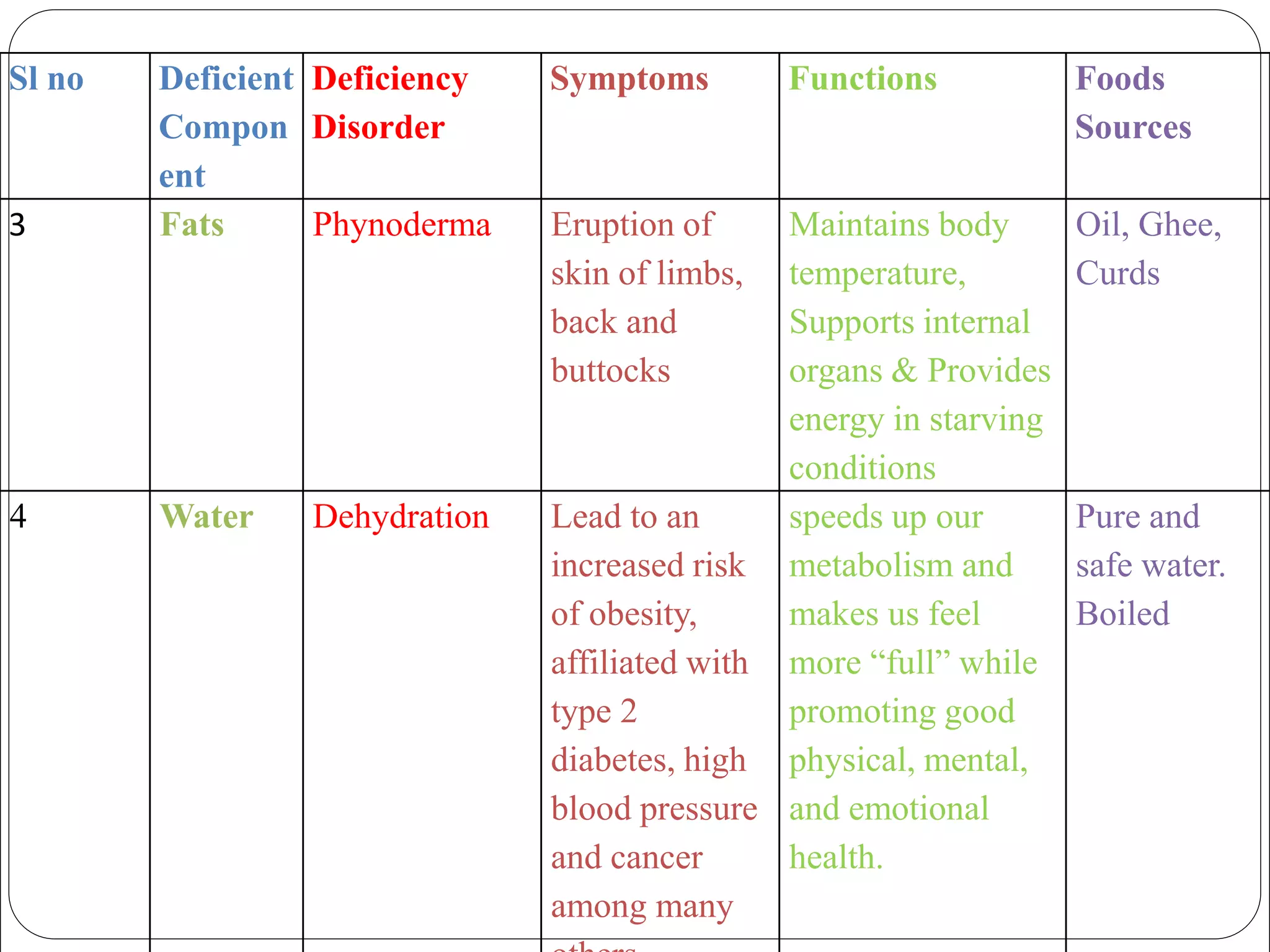
3 Fats Phynoderma Eruption of
skin of limbs,
back and
buttocks
Maintains body
temperature,
Supports internal
organs & Provides
energy in starving
conditions
Oil, Ghee,
Curds
4 Water Dehydration Lead to an
increased risk
of obesity,
affiliated with
type 2
diabetes, high
blood pressure
and cancer
among many
speeds up our
metabolism and
makes us feel
more “full” while
promoting good
physical, mental,
and emotional
health.
Pure and
safe water.
Boiled
Sl
no
Deficient
Compone
nt
Deficiency
Disorder
Symptoms Functions Foods Sources
5 Roughage Constipatio
n,
Leads to
indigestion &
motion problem
Increased blood
sugar and
cholesterol
level, gain of
weight and low
immunity.
Regulates
Digestion,
Maintains
Cholesterol and
Blood Sugar, Helps
in Weight
Management,
Disease Prevention
Carrots,
cucumbers,
Apples, citrus
fruits, such as
oranges and
grapefruit, pears
and berries,
lentils, split peas
and beans such
as lima,
garbanzo,
kidney, black,
Oat bran,
oatmeal, whole-
grain bread and
Vitamins
7/12/2016NUTRITIONAL DISORDERS20
 Fat soluble vitamins
a) vitA
b) vit D
c) vit E
d) vit K
 water soluble vitamins
a) vit C
b) vit B (B1-B12) complex
Sl
no
Deficient
Component
Deficiency
Disorder
Symptoms Functions Foods Sources
4 Vitamins
Vitamin A
(Retinol)
Night
Blindness
Unable to see in
Dim light,
Dryness of eyes
Maintain health and
vigour of epithelial
cells
Milk, Tomato,
egg-yolk, palm
oils, green
vegetables (Carrot,
pumpkin) and
yellow fruits
(mango, papaya).
Vitamin D Rickets
(children)
Poor growth,
Bow legs,
defective ribs ,
teeth and skull
Helps in intestinal
absorption of
calcium, and
phosphorus. Also
involved in calcium
metabolism and bone
formation
Fish products,
milk, curds, egg
yolk, butter,
Osteomalacia
(adult)
Brittle bones,
Enlarged joints
and jaws,
Deformation of
Bones
Sl
no
Deficient
Compone
nt
Deficiency
Disorder
Symptoms Functions Foods Sources
Vitamin E
(Tocopher
ol)
Hemolytic
anemia
Abnormal
structure of
mitochondria
and lysosomes
and Plsma
membrane of
cells, Hemolysis
, Anemia,
Inhibit oxidation of
certain fatty acids
of cellular
membranes.
normal stability of
red blood cells,
reproduction and
for integrity and
muscle and for
nerves.
Veg oils (poly
saturated fatty
acids), wheat
germ oil, egg
yolk, green leafy
vegs, tomato,
milk and butter.
Vitamin K Haemorrha
ge or
Bleeding
Blood takes
longer to clot
Required for the
formation of pro-
thrombin an
essential
component for
blood clotting
Liver, fresh
green vegs,
spinach,
Cabbage and
Cauliflower
Sl
no
Deficient
Component
Deficiency
Disorder
Symptoms Functions Foods Sources
Vitamin C Scurvy Bleeding in
gums and
internal
organs,
General
weakness,
Anemia and
swollen legs
Promotes wound
healing, iron
absorption
Protects against
infections
Citrus fruits like,
lemon, Sweet
lime (mosambi),
orange etc
Vitamin B1
(Thiamin)
Beri Beri Muscle
cramps,
Retarded
growth in
children,
May lead to
paralysis
Essential for
formation of nerve
impulses and
carbohydrate
metabolism
Whole cereals
(unpolished
rice), pulses, oils
seeds, soyabean,
nuts (ground
nut), liver, pork
sea food, green
leafy veges
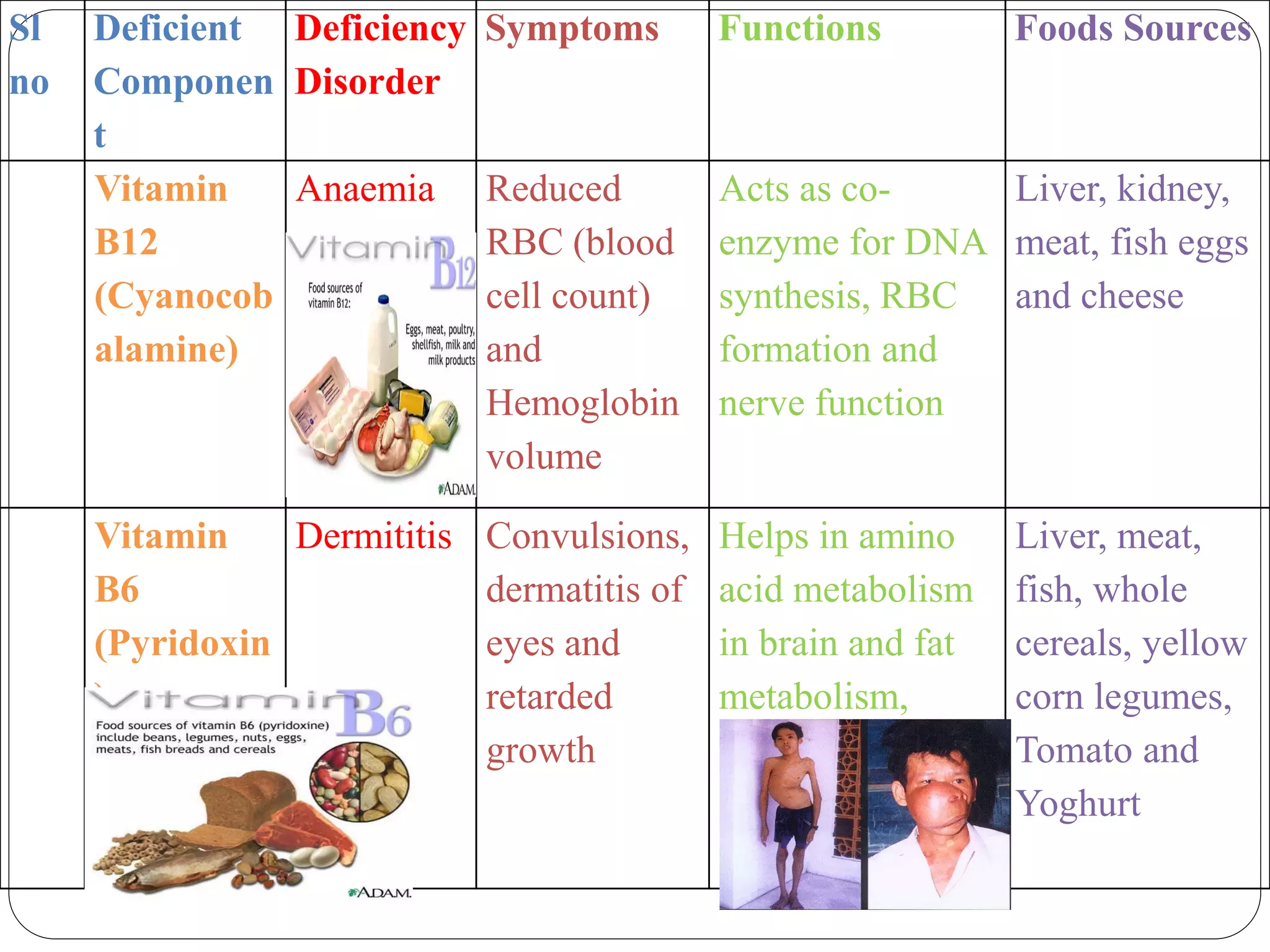
7/12/2016NUTRITIONAL DISORDERS24
Sl
no
Deficient
Componen
t
Deficiency
Disorder
Symptoms Functions Foods Sources
Vitamin
B12
(Cyanocob
alamine)
Anaemia Reduced
RBC (blood
cell count)
and
Hemoglobin
volume
Acts as co-
enzyme for DNA
synthesis, RBC
formation and
nerve function
Liver, kidney,
meat, fish eggs
and cheese
Vitamin
B6
(Pyridoxin
)
Dermititis Convulsions,
dermatitis of
eyes and
retarded
growth
Helps in amino
acid metabolism
in brain and fat
metabolism,
Liver, meat,
fish, whole
cereals, yellow
corn legumes,
Tomato and
Yoghurt
Minerals
7/12/2016NUTRITIONAL DISORDERS27
 TRACE ELEMENTS DEFICIENCIES
Several minerals in trace amounts are essential
for health since they form components of enzymes
and cofactors for metabolic function besides calcium
and phosphorus required for vitamin D manufacture,
others include iron, copper, iodine, zinc, selenium,
manganese nickel chromium, molybdenum, fluorine
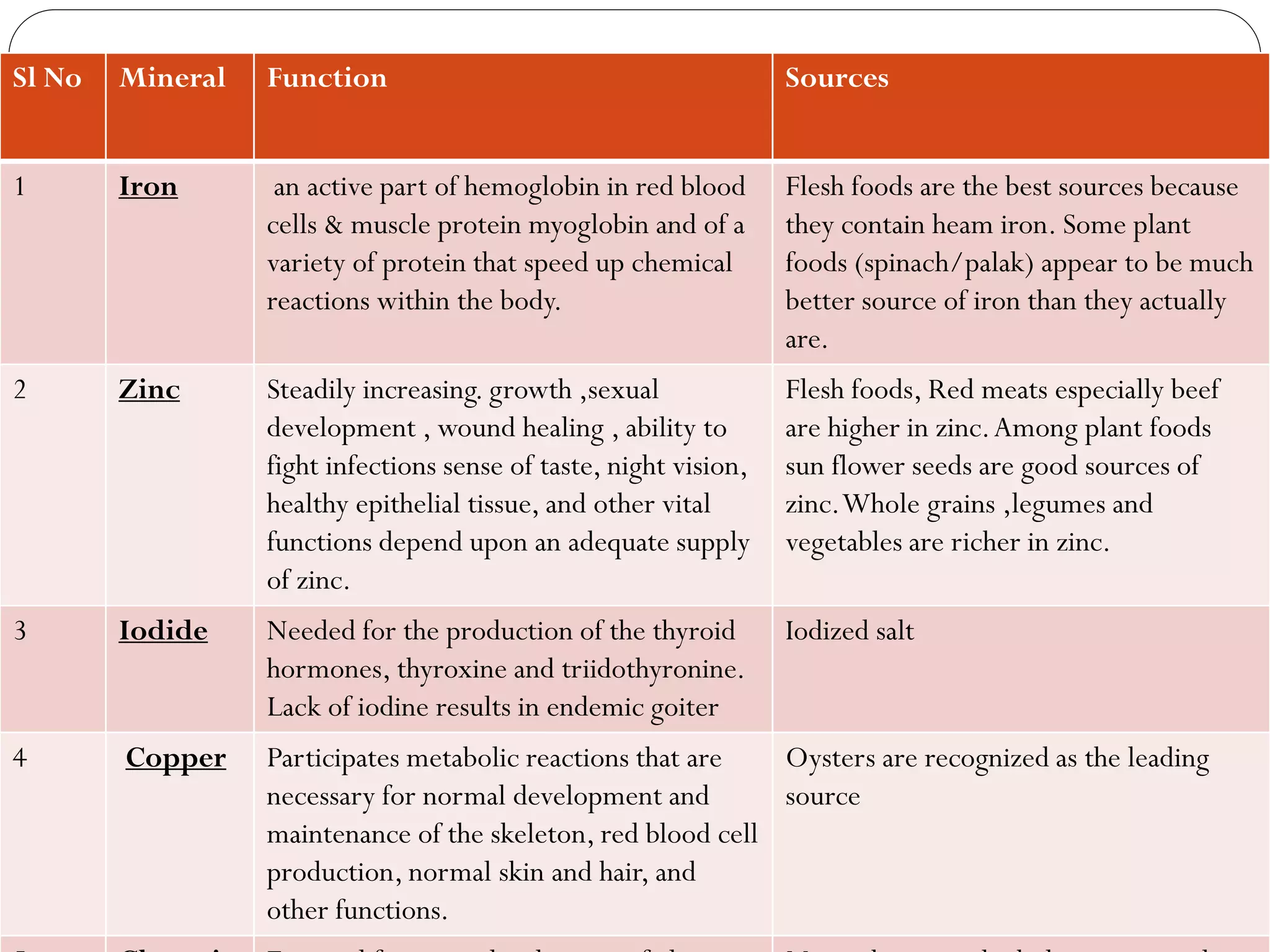
Sl No Mineral Function Sources
1 Iron an active part of hemoglobin in red blood
cells & muscle protein myoglobin and of a
variety of protein that speed up chemical
reactions within the body.
Flesh foods are the best sources because
they contain heam iron. Some plant
foods (spinach/palak) appear to be much
better source of iron than they actually
are.
2 Zinc Steadily increasing. growth ,sexual
development , wound healing , ability to
fight infections sense of taste, night vision,
healthy epithelial tissue, and other vital
functions depend upon an adequate supply
of zinc.
Flesh foods, Red meats especially beef
are higher in zinc.Among plant foods
sun flower seeds are good sources of
zinc.Whole grains ,legumes and
vegetables are richer in zinc.
3 Iodide Needed for the production of the thyroid
hormones, thyroxine and triidothyronine.
Lack of iodine results in endemic goiter
Iodized salt
4 Copper Participates metabolic reactions that are
necessary for normal development and
maintenance of the skeleton, red blood cell
production, normal skin and hair, and
other functions.
Oysters are recognized as the leading
source
Deficiency disorders of trace elements
7/12/2016NUTRITIONAL DISORDERS29
 Iron:- Microcytic ,hypochronic anemia
 Copper:- Muscle weakness, neurologic defect
 Iodine:- Goiter and hyperthyroidism
 Zinc:- Growth retardation, infertility
 Selenium:- Myopathy, cardiomyopathy
GOITER- Iodine Deficiency
7/12/2016NUTRITIONAL DISORDERS30
Goiter
7/12/2016NUTRITIONAL DISORDERS31
Growth retardation
7/12/2016NUTRITIONAL DISORDERS32
7/12/2016NUTRITIONAL DISORDERS33
THANKYOU

Nutritional disorders

  • 1.
    FOOD Constituents, Importance anddeficiency disorders Developed by: Dr Savita Deshmukh Govt Junior College, Nandagudi Tq-Hoskote, B’luru Rural Mob: 7026004948
  • 2.
    Chap 2 FOOD What is food?  Uses of Food?  Why do we consume food?  Which are the constituents present in the food?  List the constituents of food and their food source.
  • 3.
    FOOD  A basicsource of energy required for the growth, development, to repair and replace worn and torn tissues that provides nutritional support to the body.  Constituents of the food—  Carbohydrates  Proteins  Lipids  Vitamins  Minerals  Water and  Roughage
  • 4.
    FOOD Types Vegetarian (Plant based) Non-Vegetarian (Animalbased) Use of Food Gives energy To beActive Improves health Helps in Growth
  • 5.
    © Food –a fact of life 2007 We need a range of different types of food We need fruit and vegetables.
  • 6.
    © Food –a fact of life 2007 We need a range of different types of food We need bread, breakfast cereals and potatoes.
  • 7.
    © Food –a fact of life 2007 We need a range of different types of food We need milk, cheese and yogurt.
  • 8.
    © Food –a fact of life 2007 We need a range of different types of food We need meat, fish, eggs, beans and nuts.
  • 9.
    © Food –a fact of life 2007 Food – a fact of life We need lots of different foods to: be active be healthygrow
  • 10.
    When diet iswrong, medicine is of no use. When diet is correct, medicine is of no need. Activity 1: Collect some proverbs on food or diet.
  • 11.
    World Food Problems Under nutrition -Consuming insufficient food to meet one’s minimum daily energy requirement for a long enough time to cause harmful effects  Malnutrition -Faulty nutrition. Caused by a diet that does not supply a persons with enough protein, essential fats, vitamins, minerals, and other nutrients.  Overnutrition-an excessive intake of food, especially fats
  • 12.
    Obesity 7/12/2016NUTRITIONAL DISORDERS12  Obesityis defined as an excess of adipose tissue that imparts health risk. Etiology  genetic predisposition  diets largely derived from carbohydrates and fats than protein rich food.  hypothyroidism, cushings syndrome, insulinoma, and hypothalamic disorders
  • 13.
    Starvation 7/12/2016NUTRITIONAL DISORDERS13  Starvationis a state of overall deprivation of nutrients.  Reason -  deliberate fasting  famine conditions in a country or community.  secondary under nutrition such as chronic wasting diseases, cancers etc.
  • 14.
  • 15.
    Sl no Deficient Componen t Deficiency Disorder SymptomsFunctions Foods Sources 1 Proteins Kwashiorkor Enlarged fatty liver, Atrophy of different tissues and organs but subcutaneous fat preserved Provide structure and support for cells, For growth and maintenance, Protect against diseases as antibodies, Carry out thousands of chemical reactions that take place in cells, Transmit signals to coordinate biological processes between different cells, tissues, and organs, Carry atoms and small molecules within cells and throughout the body Eggs, Cow’s milk, Cheese, Meat cooked, Fish cooked, Rice , cooked, Soy beans , White potato, wheat , germ, Nuts Marasmus No fatty liver, Atrophy of different tissues and organs including subcutaneous fat
  • 16.
  • 17.
    Sl no Deficient Compone nt Deficiency Disorder SymptomsFunctions Foods Sources 2 Carbohy drates Leeads to many consequences Hypoglycemia, Fatigue and decreased energy levels, Muscle wasting, Unhealthy weight loss,Dehydration and reduced body secretions, Loss of sodium, Weakened immune system, Constipation: Gives energy to body, Cereals and whole food grains and sweets, potatoes and sweet potatoes etc
  • 18.
    Sl no Deficient Compon ent Deficiency Disorder SymptomsFunctions Foods Sources 3 Fats Phynoderma Eruption of skin of limbs, back and buttocks Maintains body temperature, Supports internal organs & Provides energy in starving conditions Oil, Ghee, Curds 4 Water Dehydration Lead to an increased risk of obesity, affiliated with type 2 diabetes, high blood pressure and cancer among many speeds up our metabolism and makes us feel more “full” while promoting good physical, mental, and emotional health. Pure and safe water. Boiled
  • 19.
    Sl no Deficient Compone nt Deficiency Disorder Symptoms Functions FoodsSources 5 Roughage Constipatio n, Leads to indigestion & motion problem Increased blood sugar and cholesterol level, gain of weight and low immunity. Regulates Digestion, Maintains Cholesterol and Blood Sugar, Helps in Weight Management, Disease Prevention Carrots, cucumbers, Apples, citrus fruits, such as oranges and grapefruit, pears and berries, lentils, split peas and beans such as lima, garbanzo, kidney, black, Oat bran, oatmeal, whole- grain bread and
  • 20.
    Vitamins 7/12/2016NUTRITIONAL DISORDERS20  Fatsoluble vitamins a) vitA b) vit D c) vit E d) vit K  water soluble vitamins a) vit C b) vit B (B1-B12) complex
  • 21.
    Sl no Deficient Component Deficiency Disorder Symptoms Functions FoodsSources 4 Vitamins Vitamin A (Retinol) Night Blindness Unable to see in Dim light, Dryness of eyes Maintain health and vigour of epithelial cells Milk, Tomato, egg-yolk, palm oils, green vegetables (Carrot, pumpkin) and yellow fruits (mango, papaya). Vitamin D Rickets (children) Poor growth, Bow legs, defective ribs , teeth and skull Helps in intestinal absorption of calcium, and phosphorus. Also involved in calcium metabolism and bone formation Fish products, milk, curds, egg yolk, butter, Osteomalacia (adult) Brittle bones, Enlarged joints and jaws, Deformation of Bones
  • 22.
    Sl no Deficient Compone nt Deficiency Disorder Symptoms Functions FoodsSources Vitamin E (Tocopher ol) Hemolytic anemia Abnormal structure of mitochondria and lysosomes and Plsma membrane of cells, Hemolysis , Anemia, Inhibit oxidation of certain fatty acids of cellular membranes. normal stability of red blood cells, reproduction and for integrity and muscle and for nerves. Veg oils (poly saturated fatty acids), wheat germ oil, egg yolk, green leafy vegs, tomato, milk and butter. Vitamin K Haemorrha ge or Bleeding Blood takes longer to clot Required for the formation of pro- thrombin an essential component for blood clotting Liver, fresh green vegs, spinach, Cabbage and Cauliflower
  • 23.
    Sl no Deficient Component Deficiency Disorder Symptoms Functions FoodsSources Vitamin C Scurvy Bleeding in gums and internal organs, General weakness, Anemia and swollen legs Promotes wound healing, iron absorption Protects against infections Citrus fruits like, lemon, Sweet lime (mosambi), orange etc Vitamin B1 (Thiamin) Beri Beri Muscle cramps, Retarded growth in children, May lead to paralysis Essential for formation of nerve impulses and carbohydrate metabolism Whole cereals (unpolished rice), pulses, oils seeds, soyabean, nuts (ground nut), liver, pork sea food, green leafy veges
  • 24.
  • 25.
    Sl no Deficient Componen t Deficiency Disorder Symptoms Functions FoodsSources Vitamin B12 (Cyanocob alamine) Anaemia Reduced RBC (blood cell count) and Hemoglobin volume Acts as co- enzyme for DNA synthesis, RBC formation and nerve function Liver, kidney, meat, fish eggs and cheese Vitamin B6 (Pyridoxin ) Dermititis Convulsions, dermatitis of eyes and retarded growth Helps in amino acid metabolism in brain and fat metabolism, Liver, meat, fish, whole cereals, yellow corn legumes, Tomato and Yoghurt
  • 26.
  • 27.
    7/12/2016NUTRITIONAL DISORDERS27  TRACEELEMENTS DEFICIENCIES Several minerals in trace amounts are essential for health since they form components of enzymes and cofactors for metabolic function besides calcium and phosphorus required for vitamin D manufacture, others include iron, copper, iodine, zinc, selenium, manganese nickel chromium, molybdenum, fluorine
  • 28.
    Sl No MineralFunction Sources 1 Iron an active part of hemoglobin in red blood cells & muscle protein myoglobin and of a variety of protein that speed up chemical reactions within the body. Flesh foods are the best sources because they contain heam iron. Some plant foods (spinach/palak) appear to be much better source of iron than they actually are. 2 Zinc Steadily increasing. growth ,sexual development , wound healing , ability to fight infections sense of taste, night vision, healthy epithelial tissue, and other vital functions depend upon an adequate supply of zinc. Flesh foods, Red meats especially beef are higher in zinc.Among plant foods sun flower seeds are good sources of zinc.Whole grains ,legumes and vegetables are richer in zinc. 3 Iodide Needed for the production of the thyroid hormones, thyroxine and triidothyronine. Lack of iodine results in endemic goiter Iodized salt 4 Copper Participates metabolic reactions that are necessary for normal development and maintenance of the skeleton, red blood cell production, normal skin and hair, and other functions. Oysters are recognized as the leading source
  • 29.
    Deficiency disorders oftrace elements 7/12/2016NUTRITIONAL DISORDERS29  Iron:- Microcytic ,hypochronic anemia  Copper:- Muscle weakness, neurologic defect  Iodine:- Goiter and hyperthyroidism  Zinc:- Growth retardation, infertility  Selenium:- Myopathy, cardiomyopathy
  • 30.
  • 31.
  • 32.
  • 33.