How Nuclear Energy is Produced
Energy produced during a nuclear reaction is called Nuclear
Energy
Nuclear Fission and Nuclear Fusion are the two ways from which nuclear
energy is produced
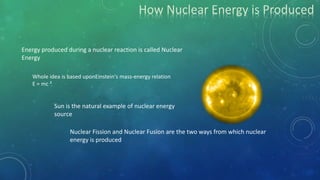
Sun is the natural example of nuclear energy
source
Whole idea is based uponEinstein's mass-energy relation
E = mc ²
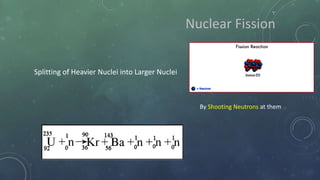
Nuclear Fission
Splitting of Heavier Nuclei into Larger Nuclei
By Shooting Neutrons at them
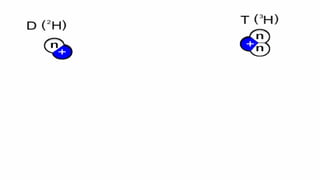
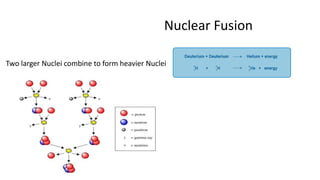
Nuclear Fusion
Two larger Nuclei combine to form heavier Nuclei
 Basic principle of nuclear powerplant is to obtain
extreme heat energy which is used to boil water
and convert it into vapour.
 Vapour is then used to rotate the turbine , finally
mechanical energy of turbine is converted into
electrical energy.
Basic Principle
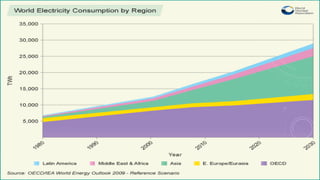
 Electricity demand is increasing twice as
fast as overall energy use and is likely to
rise by more than two-thirds 2011 to 2035.
 Only environmental friendly way to
produce electricity in large scale
 Best alternate of fossil fule
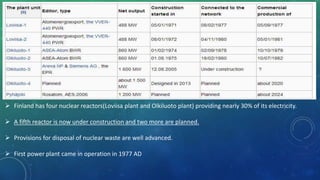
 Finland has four nuclear reactors(Loviisa plant and Olkiluoto plant) providing nearly 30% of its electricity.
 A fifth reactor is now under construction and two more are planned.
 Provisions for disposal of nuclear waste are well advanced.
 First power plant came in operation in 1977 AD
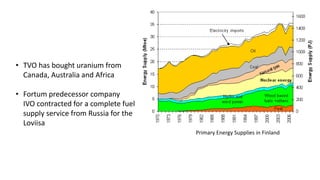
Primary Energy Supplies in Finland
• TVO has bought uranium from
Canada, Australia and Africa
• Fortum predecessor company
IVO contracted for a complete fuel
supply service from Russia for the
Loviisa
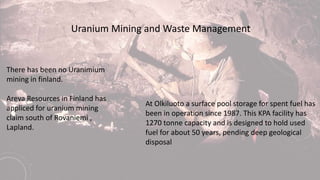
Uranium Mining and Waste Management
There has been no Uranimium
mining in finland.
Areva Resources in Finland has
appliced for uranium mining
claim south of Rovaniemi ,
Lapland.
At Olkiluoto a surface pool storage for spent fuel has
been in operation since 1987. This KPA facility has
1270 tonne capacity and is designed to hold used
fuel for about 50 years, pending deep geological
disposal
Advantages
Produces large amount of energy
Green Energy
No Air Pollution
Fuel Independence
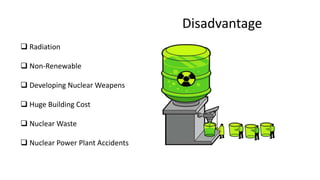
Disadvantage
 Radiation
 Non-Renewable
 Developing Nuclear Weapens
 Huge Building Cost
 Nuclear Waste
 Nuclear Power Plant Accidents
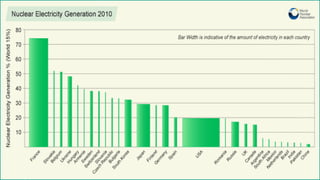
ɕ Nuclear energy is used to generate around 11% of the world's electricity,
with almost no greenhouse gas emissions.
ɕ A single uranium fuel pellet contains as much energy as 480 cubic metres
of natural gas, 807 kilos of coal or 149 gallons of oil.
ɕ Nuclear energy is used by more than 30 countries around the world.
Nuclear technologies have many uses, including powering Mars rovers
ɕ Nuclear power plants can generate electricity continuously for many
months at a time, without interruption.
 http://www.world-nuclear.org/info/Country-Profiles/Countries-A-F/Finland/
 http://www.pub.iaea.org/MTCD/publications/PDF/cnpp2009/countryprofiles/F
inland/Finland2004.htm
 http://www.buzzle.com/articles/advantages-and-disadvantages-of-nuclear-
energy.html
 www.wikipedia.com
References

Nuclear Power Presentation

  • 3.
    How Nuclear Energyis Produced Energy produced during a nuclear reaction is called Nuclear Energy Nuclear Fission and Nuclear Fusion are the two ways from which nuclear energy is produced Sun is the natural example of nuclear energy source Whole idea is based uponEinstein's mass-energy relation E = mc ²
  • 4.
    Nuclear Fission Splitting ofHeavier Nuclei into Larger Nuclei By Shooting Neutrons at them
  • 5.
    Nuclear Fusion Two largerNuclei combine to form heavier Nuclei
  • 6.
     Basic principleof nuclear powerplant is to obtain extreme heat energy which is used to boil water and convert it into vapour.  Vapour is then used to rotate the turbine , finally mechanical energy of turbine is converted into electrical energy. Basic Principle
  • 8.
     Electricity demandis increasing twice as fast as overall energy use and is likely to rise by more than two-thirds 2011 to 2035.  Only environmental friendly way to produce electricity in large scale  Best alternate of fossil fule
  • 12.
     Finland hasfour nuclear reactors(Loviisa plant and Olkiluoto plant) providing nearly 30% of its electricity.  A fifth reactor is now under construction and two more are planned.  Provisions for disposal of nuclear waste are well advanced.  First power plant came in operation in 1977 AD
  • 13.
    Primary Energy Suppliesin Finland • TVO has bought uranium from Canada, Australia and Africa • Fortum predecessor company IVO contracted for a complete fuel supply service from Russia for the Loviisa
  • 14.
    Uranium Mining andWaste Management There has been no Uranimium mining in finland. Areva Resources in Finland has appliced for uranium mining claim south of Rovaniemi , Lapland. At Olkiluoto a surface pool storage for spent fuel has been in operation since 1987. This KPA facility has 1270 tonne capacity and is designed to hold used fuel for about 50 years, pending deep geological disposal
  • 15.
    Advantages Produces large amountof energy Green Energy No Air Pollution Fuel Independence
  • 16.
    Disadvantage  Radiation  Non-Renewable Developing Nuclear Weapens  Huge Building Cost  Nuclear Waste  Nuclear Power Plant Accidents
  • 17.
    ɕ Nuclear energyis used to generate around 11% of the world's electricity, with almost no greenhouse gas emissions. ɕ A single uranium fuel pellet contains as much energy as 480 cubic metres of natural gas, 807 kilos of coal or 149 gallons of oil. ɕ Nuclear energy is used by more than 30 countries around the world. Nuclear technologies have many uses, including powering Mars rovers ɕ Nuclear power plants can generate electricity continuously for many months at a time, without interruption.
  • 18.