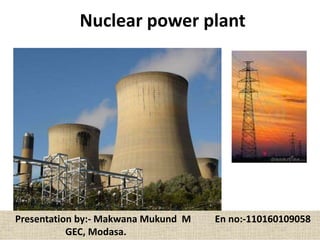
Nuclear power plant
Presentation by:- Makwana Mukund M En no:-110160109058
GEC, Modasa.
* Availability of water
* Disposal of water
* Distance from populated areas
* Transportation facilities
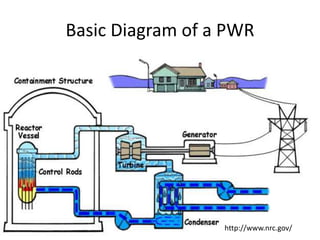
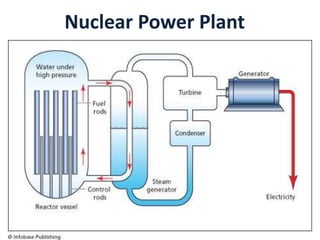
Basic Diagram of a PWR
http://www.nrc.gov/
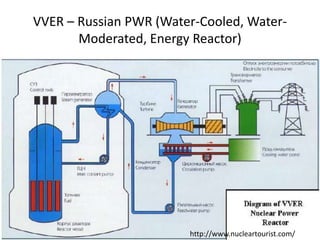
VVER – Russian PWR (Water-Cooled, Water-
Moderated, Energy Reactor)
http://www.nucleartourist.com/
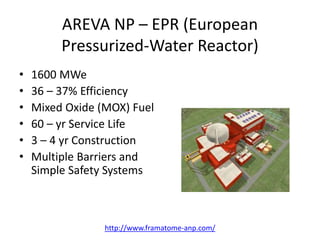
AREVA NP – EPR (European
Pressurized-Water Reactor)
• 1600 MWe
• 36 – 37% Efficiency
• Mixed Oxide (MOX) Fuel
• 60 – yr Service Life
• 3 – 4 yr Construction
• Multiple Barriers and
Simple Safety Systems
http://www.framatome-anp.com/
Nuclear Power Plant
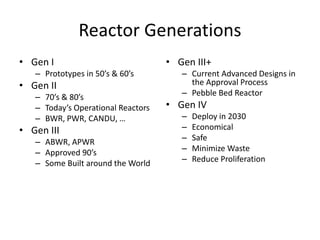
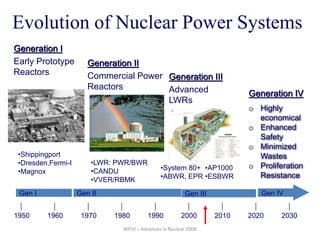
Reactor Generations
• Gen I
– Prototypes in 50’s & 60’s
• Gen II
– 70’s & 80’s
– Today’s Operational Reactors
– BWR, PWR, CANDU, …
• Gen III
– ABWR, APWR
– Approved 90’s
– Some Built around the World
• Gen III+
– Current Advanced Designs in
the Approval Process
– Pebble Bed Reactor
• Gen IV
– Deploy in 2030
– Economical
– Safe
– Minimize Waste
– Reduce Proliferation
WPUI – Advances in Nuclear 2008
Evolution of Nuclear Power Systems
1950 1960 1970 1980 1990 2000 2010 2020 2030
Gen IV
Generation IV
o Highly
economical
o Enhanced
Safety
o Minimized
Wastes
o Proliferation
Resistance
Gen I
Generation I
Early Prototype
Reactors
•Shippingport
•Dresden,Fermi-I
•Magnox
Gen II
Generation II
Commercial Power
Reactors
•LWR: PWR/BWR
•CANDU
•VVER/RBMK
Gen III
Generation III
Advanced
LWRs
•System 80+
•ABWR, EPR
•AP1000
•ESBWR
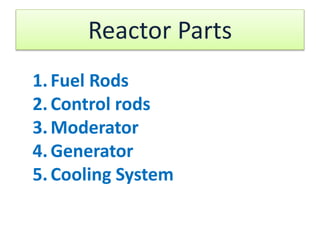
Reactor Parts
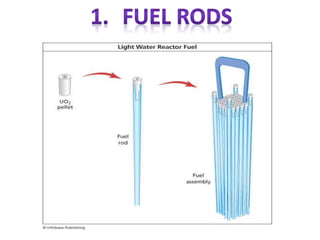
1.Fuel Rods
2.Control rods
3.Moderator
4.Generator
5.Cooling System
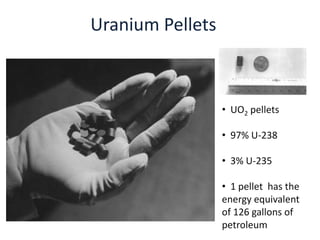
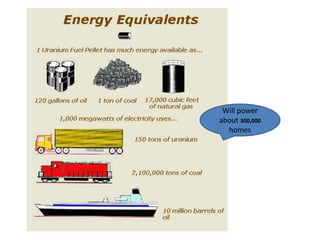
Uranium Pellets
• UO2 pellets
• 97% U-238
• 3% U-235
• 1 pellet has the
energy equivalent
of 126 gallons of
petroleum
Will power
about 300,000
homes
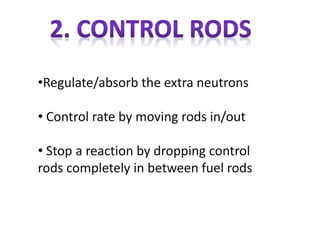
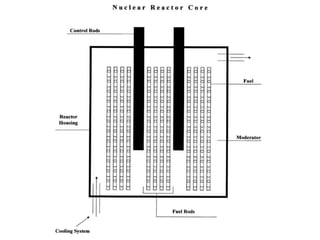
•Regulate/absorb the extra neutrons
• Control rate by moving rods in/out
• Stop a reaction by dropping control
rods completely in between fuel rods
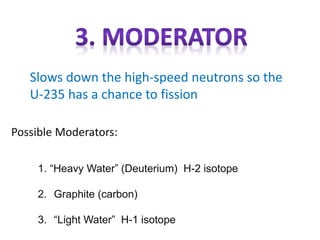
Possible Moderators:
Slows down the high-speed neutrons so the
U-235 has a chance to fission
1. “Heavy Water” (Deuterium) H-2 isotope
2. Graphite (carbon)
3. “Light Water” H-1 isotope
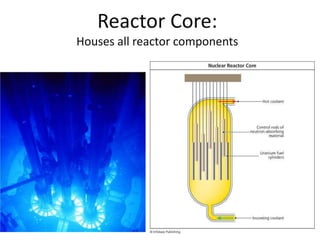
Reactor Core:
Houses all reactor components
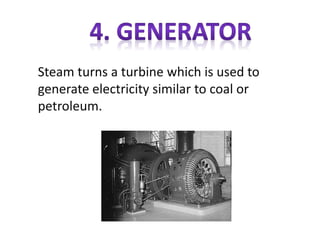
Steam turns a turbine which is used to
generate electricity similar to coal or
petroleum.
• Water from a nearby lake or pond is
used to cool/condense the steam which
can be recycled back into the reactor.
• Steam must be cooled and condensed
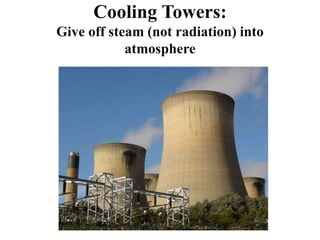
Cooling Towers:
Give off steam (not radiation) into
atmosphere
Safety Precautions
• Control rods regulate the rate of the reaction.
• Redundant, automatic backup systems
• Preventing the escape of radioactive material in the
event of an accident (containment)
– 2-4m concrete walls around the reactor
– Steel-reinforced concrete walls in the building
built to withstand chemical explosions and
earthquakes
– Domed roof able to withstand significant internal
pressure
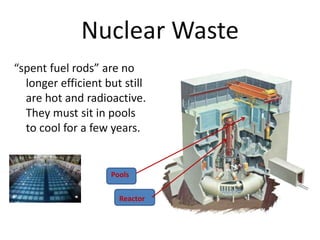
Nuclear Waste
“spent fuel rods” are no
longer efficient but still
are hot and radioactive.
They must sit in pools
to cool for a few years.
Pools
Reactor
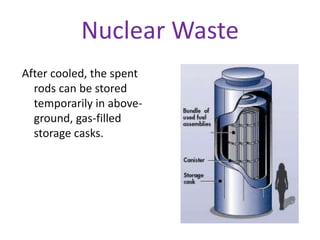
Nuclear Waste
After cooled, the spent
rods can be stored
temporarily in above-
ground, gas-filled
storage casks.
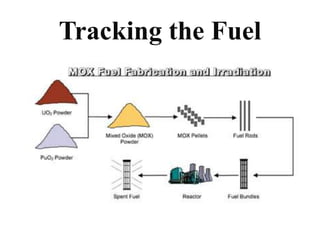
Tracking the Fuel
Permanent Storage?
• Make the temporary storage casks,
permanent?
• Burying it under the ocean floor?
• Burying it in polar ice?
• Send it into space?
• Burying it in a stable “geologic repository”
such as Yucca Mountain Nevada?
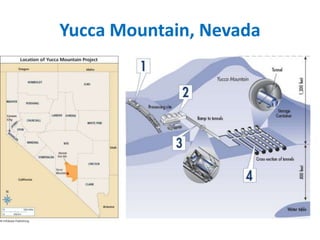
Yucca Mountain, Nevada
Recycling Nuclear Waste
• Argonne National Laboratory researchers have
developed a technology that can remove uranium
from spent fuel to be reused in the next generation
of power plants.
• Amount of fuel required is quit small, saving in the
cost of fuel transportation
• Requires less space as compared to any other of
same size
• Low running charges
• Very economical for producing bulk electric power
• Ensures reliability of operation
• Fuel used is expensive & is difficult to recover.
• Capital cost is very high as compared to other
types of plants.
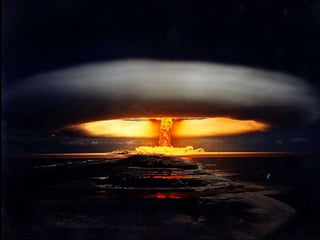
• The fission by-products are generally
radioactive & may cause a dangerous amount
of radioactive pollution.
Nuclear power plant mmm

Nuclear power plant mmm

  • 1.
    Nuclear power plant Presentationby:- Makwana Mukund M En no:-110160109058 GEC, Modasa.
  • 2.
    * Availability ofwater * Disposal of water * Distance from populated areas * Transportation facilities
  • 3.
    Basic Diagram ofa PWR http://www.nrc.gov/
  • 4.
    VVER – RussianPWR (Water-Cooled, Water- Moderated, Energy Reactor) http://www.nucleartourist.com/
  • 5.
    AREVA NP –EPR (European Pressurized-Water Reactor) • 1600 MWe • 36 – 37% Efficiency • Mixed Oxide (MOX) Fuel • 60 – yr Service Life • 3 – 4 yr Construction • Multiple Barriers and Simple Safety Systems http://www.framatome-anp.com/
  • 6.
  • 8.
    Reactor Generations • GenI – Prototypes in 50’s & 60’s • Gen II – 70’s & 80’s – Today’s Operational Reactors – BWR, PWR, CANDU, … • Gen III – ABWR, APWR – Approved 90’s – Some Built around the World • Gen III+ – Current Advanced Designs in the Approval Process – Pebble Bed Reactor • Gen IV – Deploy in 2030 – Economical – Safe – Minimize Waste – Reduce Proliferation
  • 9.
    WPUI – Advancesin Nuclear 2008 Evolution of Nuclear Power Systems 1950 1960 1970 1980 1990 2000 2010 2020 2030 Gen IV Generation IV o Highly economical o Enhanced Safety o Minimized Wastes o Proliferation Resistance Gen I Generation I Early Prototype Reactors •Shippingport •Dresden,Fermi-I •Magnox Gen II Generation II Commercial Power Reactors •LWR: PWR/BWR •CANDU •VVER/RBMK Gen III Generation III Advanced LWRs •System 80+ •ABWR, EPR •AP1000 •ESBWR
  • 10.
    Reactor Parts 1.Fuel Rods 2.Controlrods 3.Moderator 4.Generator 5.Cooling System
  • 12.
    Uranium Pellets • UO2pellets • 97% U-238 • 3% U-235 • 1 pellet has the energy equivalent of 126 gallons of petroleum
  • 13.
  • 14.
    •Regulate/absorb the extraneutrons • Control rate by moving rods in/out • Stop a reaction by dropping control rods completely in between fuel rods
  • 16.
    Possible Moderators: Slows downthe high-speed neutrons so the U-235 has a chance to fission 1. “Heavy Water” (Deuterium) H-2 isotope 2. Graphite (carbon) 3. “Light Water” H-1 isotope
  • 17.
    Reactor Core: Houses allreactor components
  • 18.
    Steam turns aturbine which is used to generate electricity similar to coal or petroleum.
  • 19.
    • Water froma nearby lake or pond is used to cool/condense the steam which can be recycled back into the reactor. • Steam must be cooled and condensed
  • 20.
    Cooling Towers: Give offsteam (not radiation) into atmosphere
  • 21.
    Safety Precautions • Controlrods regulate the rate of the reaction. • Redundant, automatic backup systems • Preventing the escape of radioactive material in the event of an accident (containment) – 2-4m concrete walls around the reactor – Steel-reinforced concrete walls in the building built to withstand chemical explosions and earthquakes – Domed roof able to withstand significant internal pressure
  • 22.
    Nuclear Waste “spent fuelrods” are no longer efficient but still are hot and radioactive. They must sit in pools to cool for a few years. Pools Reactor
  • 23.
    Nuclear Waste After cooled,the spent rods can be stored temporarily in above- ground, gas-filled storage casks.
  • 24.
  • 25.
    Permanent Storage? • Makethe temporary storage casks, permanent? • Burying it under the ocean floor? • Burying it in polar ice? • Send it into space? • Burying it in a stable “geologic repository” such as Yucca Mountain Nevada?
  • 26.
  • 27.
    Recycling Nuclear Waste •Argonne National Laboratory researchers have developed a technology that can remove uranium from spent fuel to be reused in the next generation of power plants.
  • 28.
    • Amount offuel required is quit small, saving in the cost of fuel transportation • Requires less space as compared to any other of same size • Low running charges • Very economical for producing bulk electric power • Ensures reliability of operation
  • 29.
    • Fuel usedis expensive & is difficult to recover. • Capital cost is very high as compared to other types of plants. • The fission by-products are generally radioactive & may cause a dangerous amount of radioactive pollution.

Editor's Notes