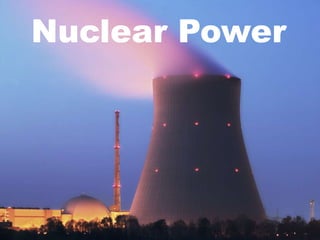
Nuclear Power
You should know how nuclear
power is generated
You should know the benefits
and risks of nuclear power
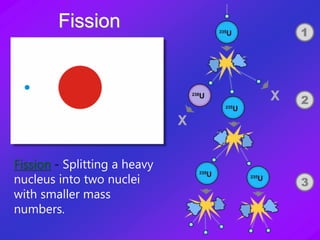
Fission
Fission - Splitting a heavy
nucleus into two nuclei
with smaller mass
numbers.
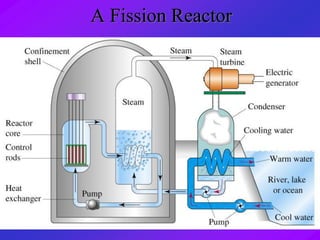
A Fission Reactor
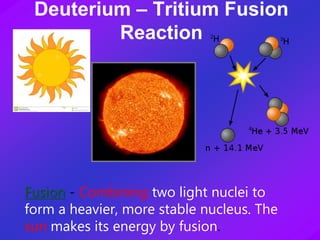
Deuterium – Tritium Fusion
Reaction
Fusion - Combining two light nuclei to
form a heavier, more stable nucleus. The
sun makes its energy by fusion.
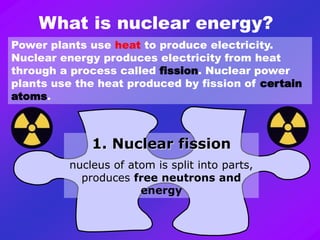
What is nuclear energy?
Power plants use heat to produce electricity.
Nuclear energy produces electricity from heat
through a process called fission. Nuclear power
plants use the heat produced by fission of certain
atoms.
1. Nuclear fission
nucleus of atom is split into parts,
produces free neutrons and
energy
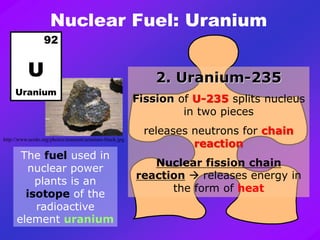
Nuclear Fuel: Uranium
2. Uranium-235
Fission of U-235 splits nucleus
in two pieces
releases neutrons for chain
reaction
Nuclear fission chain
reaction  releases energy in
the form of heat
The fuel used in
nuclear power
plants is an
isotope of the
radioactive
element uranium
http://www.ecolo.org/photos/uranium/uranium-black.jpg
92
U
Uranium
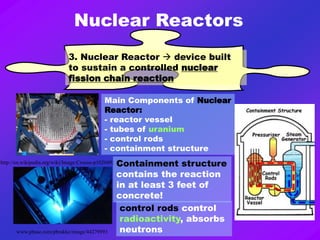
Nuclear Reactors
3. Nuclear Reactor  device built
to sustain a controlled nuclear
fission chain reaction
www.pbase.com/pbrakke/image/44279993
http://en.wikipedia.org/wiki/Image:Crocus-p1020491.jpg
Main Components of Nuclear
Reactor:
- reactor vessel
- tubes of uranium
- control rods
- containment structure
control rods control
radioactivity, absorbs
neutrons
Containment structure
contains the reaction
in at least 3 feet of
concrete!
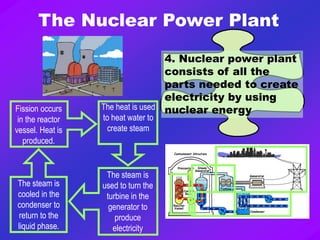
The Nuclear Power Plant
Fission occurs
in the reactor
vessel. Heat is
produced.
The heat is used
to heat water to
create steam
The steam is
used to turn the
turbine in the
generator to
produce
electricity
The steam is
cooled in the
condenser to
return to the
liquid phase.
4. Nuclear power plant
consists of all the
parts needed to create
electricity by using
nuclear energy
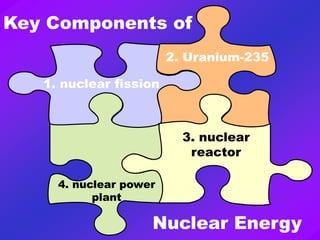
1. nuclear fission
2. Uranium-235
3. nuclear
reactor
4. nuclear power
plant
Key Components of
Nuclear Energy
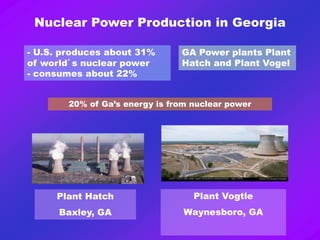
- U.S. produces about 31%
of world’s nuclear power
- consumes about 22%
GA Power plants Plant
Hatch and Plant Vogel
20% of Ga’s energy is from nuclear power
Plant Hatch
Baxley, GA
Plant Vogtle
Waynesboro, GA
Nuclear Power Production in Georgia
 Efficient – 91%!
 High energy production from a small
amount of fuel
 Low greenhouse gas emissions so it
doesn’t contribute to global warming
or acid rain
 Low pollution
 Reliable 24/7
 Cheaper than other energy sources
except Hydroelectric
 We don’t have to rely on other
countries for our fuel
 Storage and disposal of hazardous
wastes. The half-life of 239 Pu (the
radioactive waste from nuclear power
plants is 24,000 years!)
 Proliferation (rapid growth) of nuclear
materials
 Potential terrorist applications
 High startup costs and expenses to close
down
 Danger of meltdown
Three Mile Island- Harrisburg, PA
Chernobyl – Russia
Fukushima- Japan
Three Major Nuclear
Disasters
• Three Mile Island- Harrisburg, PA
• Chernobyl – Russia
• Fukushima- Japan
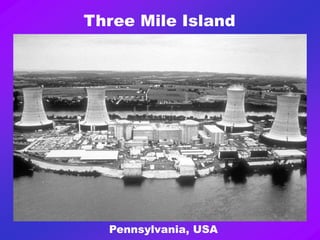
Three Mile Island
Pennsylvania, USA
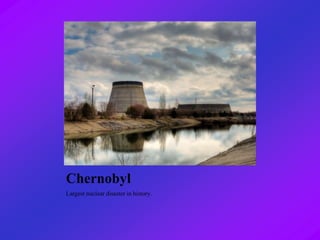
Chernobyl
Largest nuclear disaster in history.
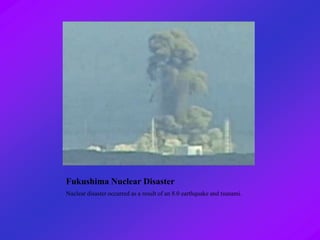
Fukushima Nuclear Disaster
Nuclear disaster occurred as a result of an 8.0 earthquake and tsunami.
NUCLEAR DISASTER VIDEOS
https://www.youtube.com/watch?v=eLPAigMuBk0
https://www.youtube.com/watch?v=kZFKuRY7dx0
http://www.youtube.com/watch?v=vbBk0Y6cQZQ

nuclear power ps (1).pptx

  • 1.
  • 2.
    You should knowhow nuclear power is generated You should know the benefits and risks of nuclear power
  • 3.
    Fission Fission - Splittinga heavy nucleus into two nuclei with smaller mass numbers.
  • 4.
  • 5.
    Deuterium – TritiumFusion Reaction Fusion - Combining two light nuclei to form a heavier, more stable nucleus. The sun makes its energy by fusion.
  • 6.
    What is nuclearenergy? Power plants use heat to produce electricity. Nuclear energy produces electricity from heat through a process called fission. Nuclear power plants use the heat produced by fission of certain atoms. 1. Nuclear fission nucleus of atom is split into parts, produces free neutrons and energy
  • 7.
    Nuclear Fuel: Uranium 2.Uranium-235 Fission of U-235 splits nucleus in two pieces releases neutrons for chain reaction Nuclear fission chain reaction  releases energy in the form of heat The fuel used in nuclear power plants is an isotope of the radioactive element uranium http://www.ecolo.org/photos/uranium/uranium-black.jpg 92 U Uranium
  • 8.
    Nuclear Reactors 3. NuclearReactor  device built to sustain a controlled nuclear fission chain reaction www.pbase.com/pbrakke/image/44279993 http://en.wikipedia.org/wiki/Image:Crocus-p1020491.jpg Main Components of Nuclear Reactor: - reactor vessel - tubes of uranium - control rods - containment structure control rods control radioactivity, absorbs neutrons Containment structure contains the reaction in at least 3 feet of concrete!
  • 9.
    The Nuclear PowerPlant Fission occurs in the reactor vessel. Heat is produced. The heat is used to heat water to create steam The steam is used to turn the turbine in the generator to produce electricity The steam is cooled in the condenser to return to the liquid phase. 4. Nuclear power plant consists of all the parts needed to create electricity by using nuclear energy
  • 10.
    1. nuclear fission 2.Uranium-235 3. nuclear reactor 4. nuclear power plant Key Components of Nuclear Energy
  • 11.
    - U.S. producesabout 31% of world’s nuclear power - consumes about 22% GA Power plants Plant Hatch and Plant Vogel 20% of Ga’s energy is from nuclear power Plant Hatch Baxley, GA Plant Vogtle Waynesboro, GA Nuclear Power Production in Georgia
  • 12.
     Efficient –91%!  High energy production from a small amount of fuel  Low greenhouse gas emissions so it doesn’t contribute to global warming or acid rain  Low pollution  Reliable 24/7  Cheaper than other energy sources except Hydroelectric  We don’t have to rely on other countries for our fuel
  • 13.
     Storage anddisposal of hazardous wastes. The half-life of 239 Pu (the radioactive waste from nuclear power plants is 24,000 years!)  Proliferation (rapid growth) of nuclear materials  Potential terrorist applications  High startup costs and expenses to close down  Danger of meltdown
  • 14.
    Three Mile Island-Harrisburg, PA Chernobyl – Russia Fukushima- Japan
  • 15.
    Three Major Nuclear Disasters •Three Mile Island- Harrisburg, PA • Chernobyl – Russia • Fukushima- Japan
  • 16.
  • 17.
  • 18.
    Fukushima Nuclear Disaster Nucleardisaster occurred as a result of an 8.0 earthquake and tsunami.
  • 19.