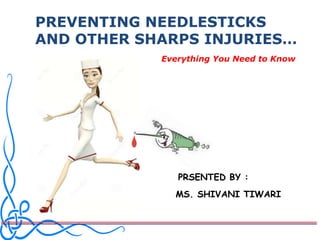
PREVENTING NEEDLESTICKS
AND OTHER SHARPS INJURIES…
Everything You Need to Know
PRSENTED BY :
MS. SHIVANI TIWARI
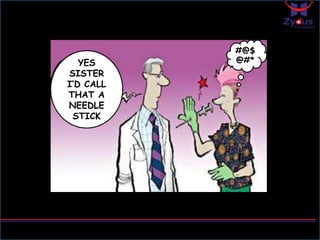
YES
SISTER
I’D CALL
THAT A
NEEDLE
STICK
#@$
@#*
INTRODUCTION
The needle stick injury is defined as a penetrating injury wound from a needle
(or other sharp objects like scalpel, broken glass vial etc) that may result in
exposure to blood or other body fluids.
It is considered as an occupational hazard. These injuries can lead to
transmission of blood-borne diseases, placing those exposed at increased risk of
contracting infectious diseases such as Hepatitis B (HBV), Hepatitis C (HCV),
and the Human Immunodeficiency Virus (HIV). Nurses have the highest rate of
needle stick injuries among the health care workers . A nurse's risk of infection
from injury depends on the pathogen involved, the immune status of the worker
and severity of the needle stick injury.
6/22/2023
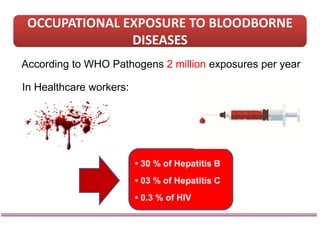
According to WHO Pathogens 2 million exposures per year
In Healthcare workers:
• 30 % of Hepatitis B
• 03 % of Hepatitis C
• 0.3 % of HIV
OCCUPATIONAL EXPOSURE TO BLOODBORNE
DISEASES
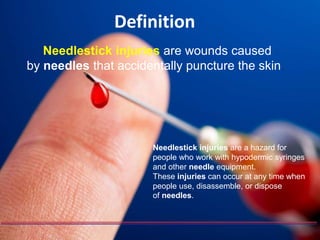
Definition
Needlestick injuries are wounds caused
by needles that accidentally puncture the skin.
Needlestick injuries are a hazard for
people who work with hypodermic syringes
and other needle equipment.
These injuries can occur at any time when
people use, disassemble, or dispose
of needles.
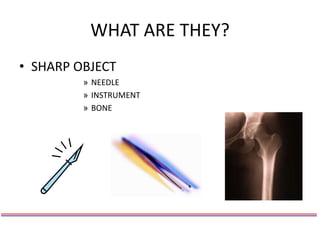
WHAT ARE THEY?
• SHARP OBJECT
» NEEDLE
» INSTRUMENT
» BONE
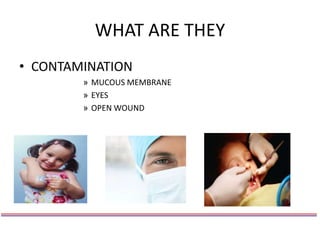
WHAT ARE THEY
• CONTAMINATION
» MUCOUS MEMBRANE
» EYES
» OPEN WOUND
CAUSES
The majority of needle stick injuries
occur when health care workers:
Dispose of needles
Administer injections
Draw blood
Recap needles
Negligence in handling needles
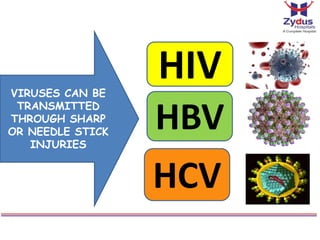
VIRUSES CAN BE
TRANSMITTED
THROUGH SHARP
OR NEEDLE STICK
INJURIES
HIV
HCV
HBV
HBV and HCV
Pose an Even
Greater Risk Then
HIV
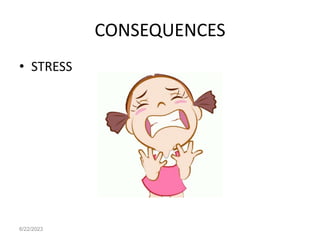
CONSEQUENCES
• STRESS
6/22/2023
DEPRESSION
6/22/2023
Needlestick Injuries Are Costly:
Time and money to investigated the source
Post-exposure care
Lost work time and productivity
Treatment of resulting illnesses
Workers’ lives
HOW WE
CAN
PREVENT?T
HESE………
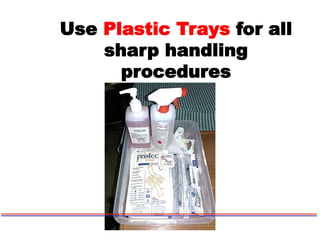
Use Plastic Trays for all
sharp handling
procedures
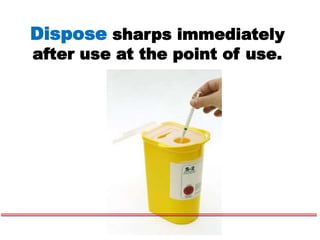
Dispose sharps immediately
after use at the point of use.
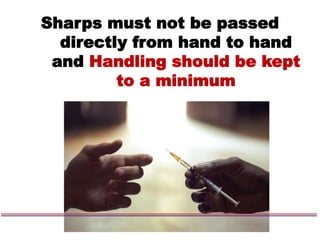
Sharps must not be passed
directly from hand to hand
and Handling should be kept
to a minimum
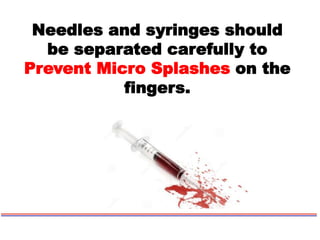
Needles and syringes should
be separated carefully to
Prevent Micro Splashes on the
fingers.
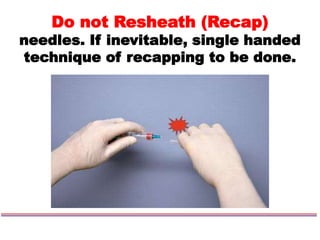
Do not Resheath (Recap)
needles. If inevitable, single handed
technique of recapping to be done.
WHO IS THE RESPONSIBLE FOR
DISCARDING SHARPS?
Housekeeping
Allocated Staffs
NO!!!
Then Who?????
It is the responsibility of the healthcare worker carrying
out a procedure involving a sharp item to ensure that the
sharp is disposed of correctly. An approved sharps
disposal container must be used.
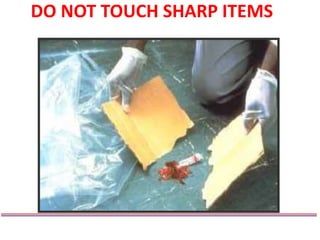
DO NOT TOUCH SHARP ITEMS
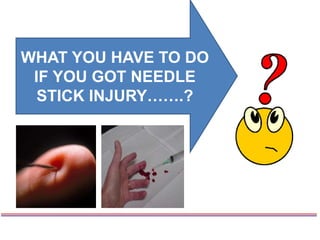
WHAT YOU HAVE TO DO
IF YOU GOT NEEDLE
STICK INJURY…….?
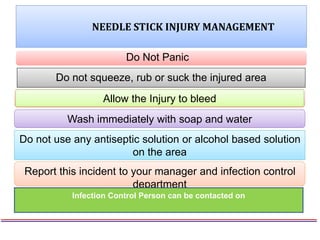
NEEDLE STICK INJURY MANAGEMENT
Do not squeeze, rub or suck the injured area
Do not use any antiseptic solution or alcohol based solution
on the area
Allow the Injury to bleed
Wash immediately with soap and water
Do Not Panic
Report this incident to your manager and infection control
department
Infection Control Person can be contacted on
POST EXPOSURE
PROPHYLAXIS
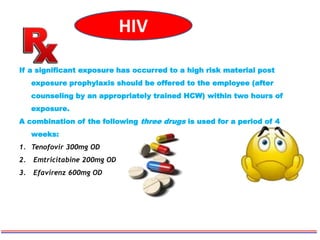
HIV
If a significant exposure has occurred to a high risk material post
exposure prophylaxis should be offered to the employee (after
counseling by an appropriately trained HCW) within two hours of
exposure.
A combination of the following three drugs is used for a period of 4
weeks:
1. Tenofovir 300mg OD
2. Emtricitabine 200mg OD
3. Efavirenz 600mg OD
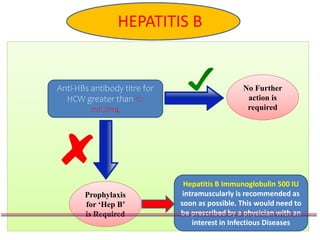
HEPATITIS B
Anti-HBs antibody titre for
HCW greater than 10
mIU/mL
No Further
action is
required
Prophylaxis
for ‘Hep B’
is Required
Hepatitis B Immunoglobulin 500 IU
intramuscularly is recommended as
soon as possible. This would need to
be prescribed by a physician with an
interest in Infectious Diseases
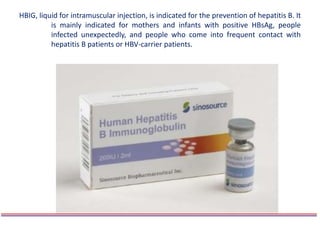
HBIG, liquid for intramuscular injection, is indicated for the prevention of hepatitis B. It
is mainly indicated for mothers and infants with positive HBsAg, people
infected unexpectedly, and people who come into frequent contact with
hepatitis B patients or HBV-carrier patients.
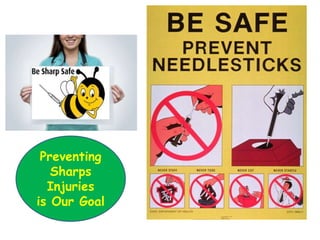
Preventing
Sharps
Injuries
is Our Goal
6/22/2023

NSI-STP.ppt

  • 1.
    PREVENTING NEEDLESTICKS AND OTHERSHARPS INJURIES… Everything You Need to Know PRSENTED BY : MS. SHIVANI TIWARI
  • 2.
  • 3.
    INTRODUCTION The needle stickinjury is defined as a penetrating injury wound from a needle (or other sharp objects like scalpel, broken glass vial etc) that may result in exposure to blood or other body fluids. It is considered as an occupational hazard. These injuries can lead to transmission of blood-borne diseases, placing those exposed at increased risk of contracting infectious diseases such as Hepatitis B (HBV), Hepatitis C (HCV), and the Human Immunodeficiency Virus (HIV). Nurses have the highest rate of needle stick injuries among the health care workers . A nurse's risk of infection from injury depends on the pathogen involved, the immune status of the worker and severity of the needle stick injury. 6/22/2023
  • 4.
    According to WHOPathogens 2 million exposures per year In Healthcare workers: • 30 % of Hepatitis B • 03 % of Hepatitis C • 0.3 % of HIV OCCUPATIONAL EXPOSURE TO BLOODBORNE DISEASES
  • 5.
    Definition Needlestick injuries arewounds caused by needles that accidentally puncture the skin. Needlestick injuries are a hazard for people who work with hypodermic syringes and other needle equipment. These injuries can occur at any time when people use, disassemble, or dispose of needles.
  • 6.
    WHAT ARE THEY? •SHARP OBJECT » NEEDLE » INSTRUMENT » BONE
  • 7.
    WHAT ARE THEY •CONTAMINATION » MUCOUS MEMBRANE » EYES » OPEN WOUND
  • 8.
  • 9.
    The majority ofneedle stick injuries occur when health care workers: Dispose of needles Administer injections Draw blood Recap needles Negligence in handling needles
  • 10.
    VIRUSES CAN BE TRANSMITTED THROUGHSHARP OR NEEDLE STICK INJURIES HIV HCV HBV
  • 11.
    HBV and HCV Posean Even Greater Risk Then HIV
  • 12.
  • 13.
  • 14.
    Needlestick Injuries AreCostly: Time and money to investigated the source Post-exposure care Lost work time and productivity Treatment of resulting illnesses Workers’ lives
  • 15.
  • 16.
    Use Plastic Traysfor all sharp handling procedures
  • 17.
    Dispose sharps immediately afteruse at the point of use.
  • 18.
    Sharps must notbe passed directly from hand to hand and Handling should be kept to a minimum
  • 19.
    Needles and syringesshould be separated carefully to Prevent Micro Splashes on the fingers.
  • 20.
    Do not Resheath(Recap) needles. If inevitable, single handed technique of recapping to be done.
  • 21.
    WHO IS THERESPONSIBLE FOR DISCARDING SHARPS? Housekeeping Allocated Staffs NO!!! Then Who????? It is the responsibility of the healthcare worker carrying out a procedure involving a sharp item to ensure that the sharp is disposed of correctly. An approved sharps disposal container must be used.
  • 22.
    DO NOT TOUCHSHARP ITEMS
  • 23.
    WHAT YOU HAVETO DO IF YOU GOT NEEDLE STICK INJURY…….?
  • 24.
    NEEDLE STICK INJURYMANAGEMENT Do not squeeze, rub or suck the injured area Do not use any antiseptic solution or alcohol based solution on the area Allow the Injury to bleed Wash immediately with soap and water Do Not Panic Report this incident to your manager and infection control department Infection Control Person can be contacted on
  • 25.
  • 26.
    HIV If a significantexposure has occurred to a high risk material post exposure prophylaxis should be offered to the employee (after counseling by an appropriately trained HCW) within two hours of exposure. A combination of the following three drugs is used for a period of 4 weeks: 1. Tenofovir 300mg OD 2. Emtricitabine 200mg OD 3. Efavirenz 600mg OD
  • 27.
    HEPATITIS B Anti-HBs antibodytitre for HCW greater than 10 mIU/mL No Further action is required Prophylaxis for ‘Hep B’ is Required Hepatitis B Immunoglobulin 500 IU intramuscularly is recommended as soon as possible. This would need to be prescribed by a physician with an interest in Infectious Diseases
  • 28.
    HBIG, liquid forintramuscular injection, is indicated for the prevention of hepatitis B. It is mainly indicated for mothers and infants with positive HBsAg, people infected unexpectedly, and people who come into frequent contact with hepatitis B patients or HBV-carrier patients.
  • 29.
  • 31.