NEEDLE STICK
&
SHARPS EXPOSURE
PREVENTION Dr.Mustafa Khan
(MHA,MPH,CPHQ.CHDM)
Quality and patient safety officer
Padiyath Medicity Kinshasa,
D.R.Congo
HOW MANY NEEDLE STICK INJURIES
OCCUR IN THE U.S.A.?
• The Department of Health Services
reported that 600,000 to 800,000 needle stick
injuries occur each year
• A CDC study estimated that 385,000
occur in the hospital (>1,000/day)
• ~5% of these were technologists
That is 52 injuries a day!
www.hhs.gov/asl/testify/t000622a.html and NaSH 1995-Dec 2003
https://www.cdc.gov/sharpssafety/ppt/2preventingneedlesticksparti.ppt
WHAT INFECTIONS CAN BE CAUSED
BY SHARPS INJURIES?
• More than 20 bloodborne pathogens
• The pathogens that pose the most serious health risks
are:
-Hepatitis B virus (HBV) –
-Hepatitis C virus (HCV) –
-Human immunodeficiency virus (HIV)
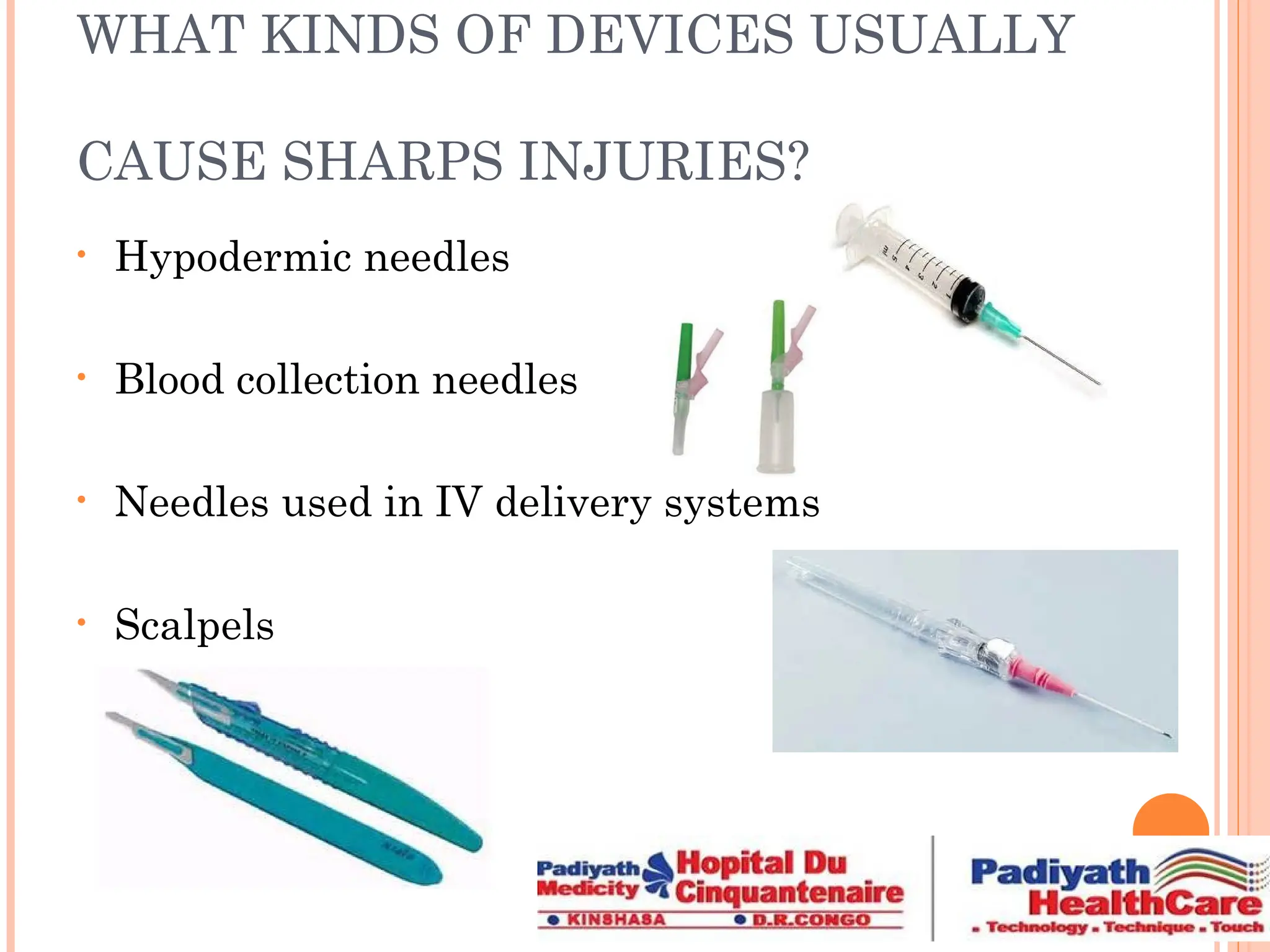
WHAT KINDS OF DEVICES USUALLY
CAUSE SHARPS INJURIES?
• Hypodermic needles
• Blood collection needles
• Needles used in IV delivery systems
• Scalpels
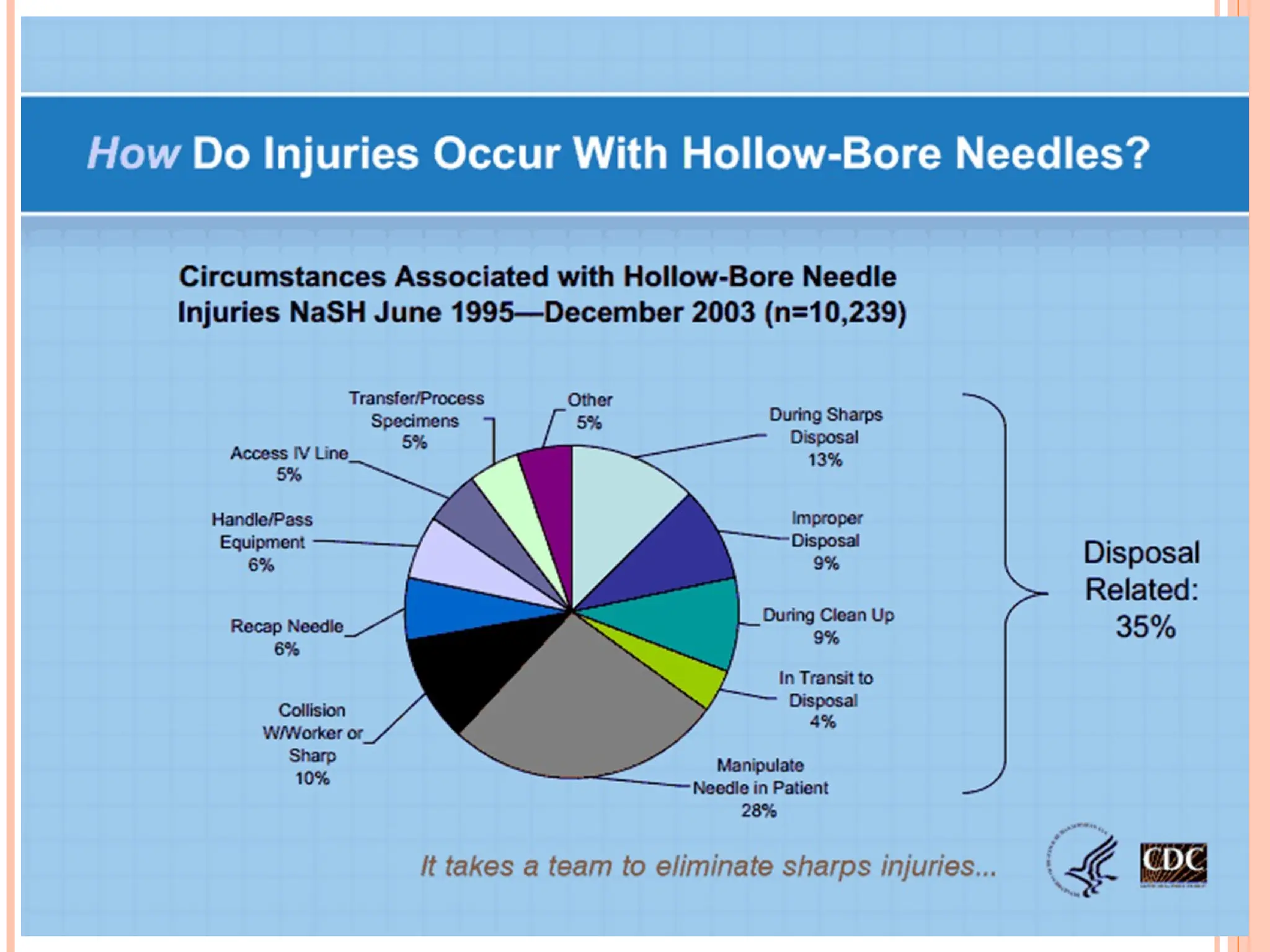
BASED ON THE PRIOR CDC SLIDE
NEEDLE INJURIES OCCUR….
• 35% During sharps clean up and disposal
• 28% Manipulating needle in patient
• 10% Colliding with co-worker
• 0.6% Recapping needle
Did you notice?
35% happens AFTER the procedure during clean
up and disposal
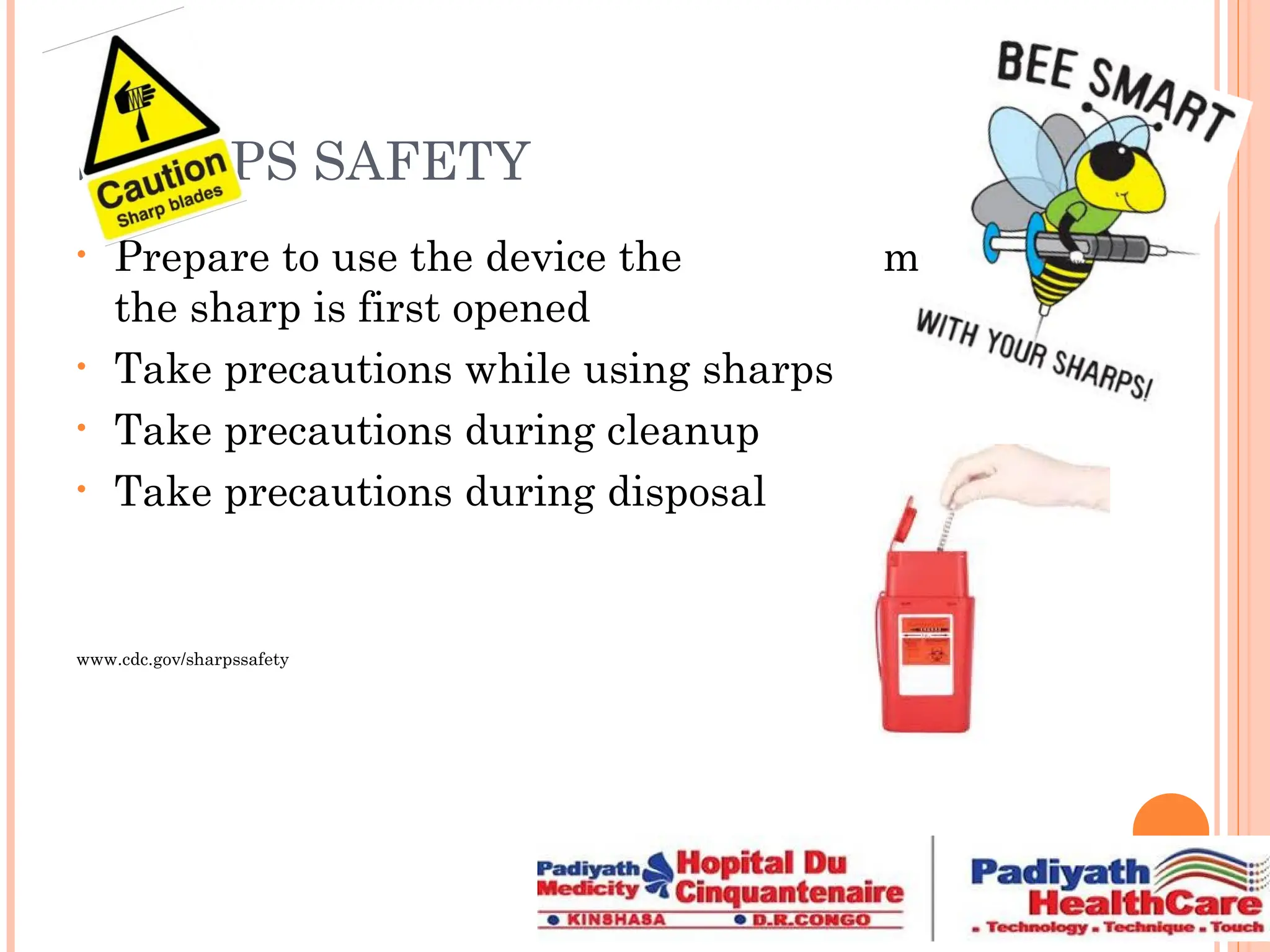
SHARPS SAFETY
• Prepare to use the device the moment
the sharp is first opened
• Take precautions while using sharps
• Take precautions during cleanup
• Take precautions during disposal
www.cdc.gov/sharpssafety
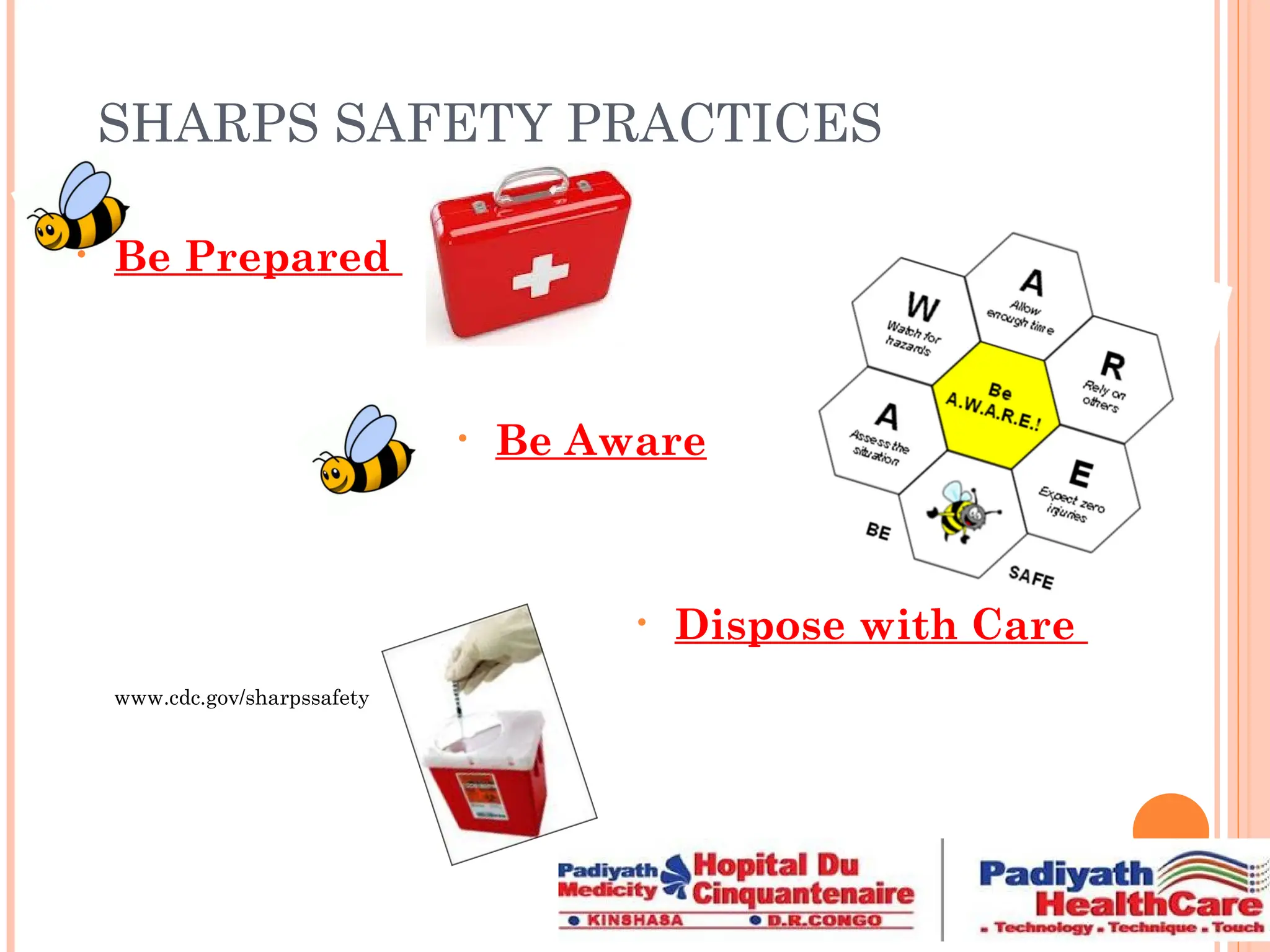
SHARPS SAFETY PRACTICES
• Be Prepared
• Be Aware
• Dispose with Care
www.cdc.gov/sharpssafety
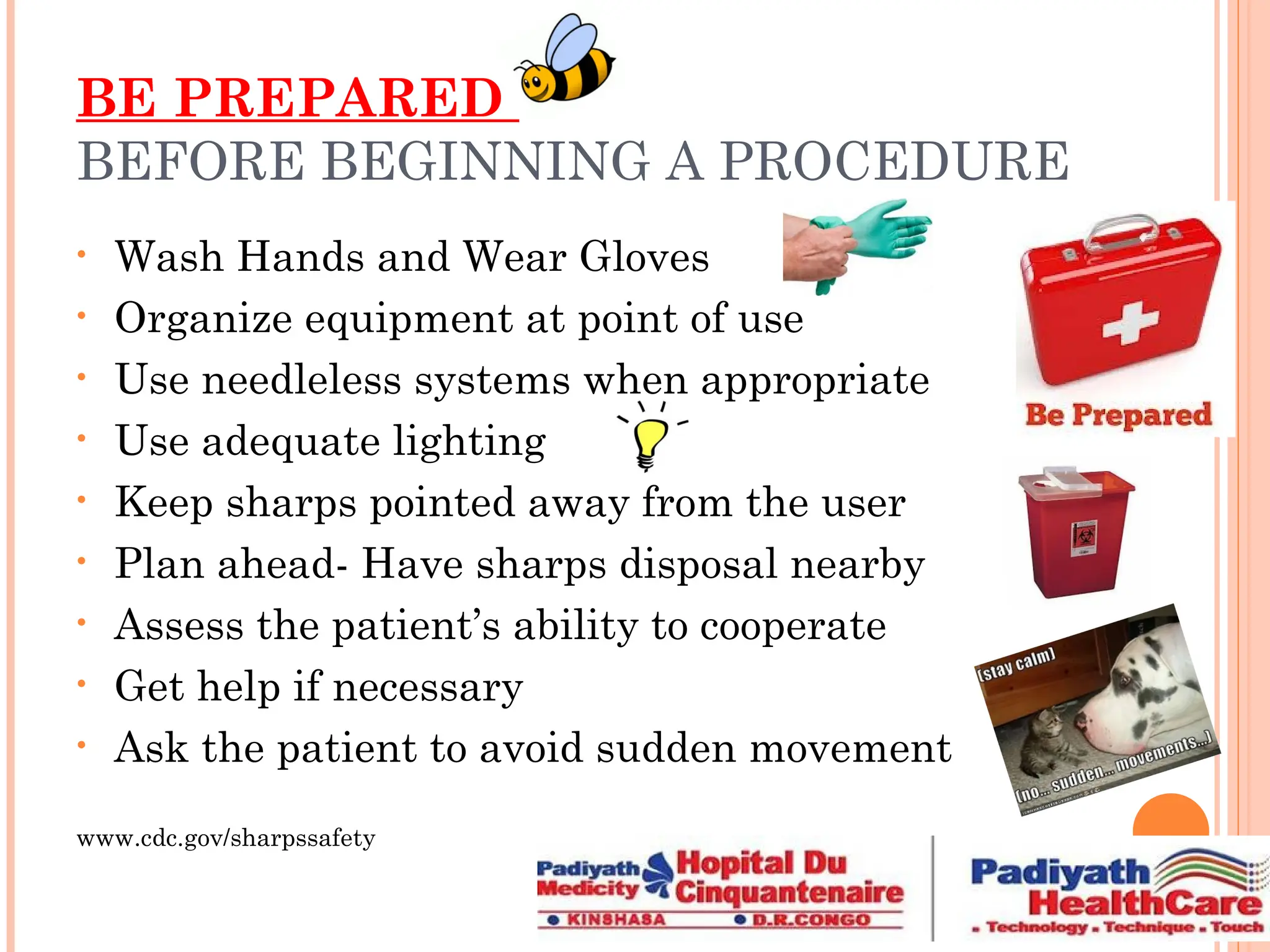
BE PREPARED
BEFORE BEGINNING A PROCEDURE
• Wash Hands and Wear Gloves
• Organize equipment at point of use
• Use needleless systems when appropriate
• Use adequate lighting
• Keep sharps pointed away from the user
• Plan ahead- Have sharps disposal nearby
• Assess the patient’s ability to cooperate
• Get help if necessary
• Ask the patient to avoid sudden movement
www.cdc.gov/sharpssafety
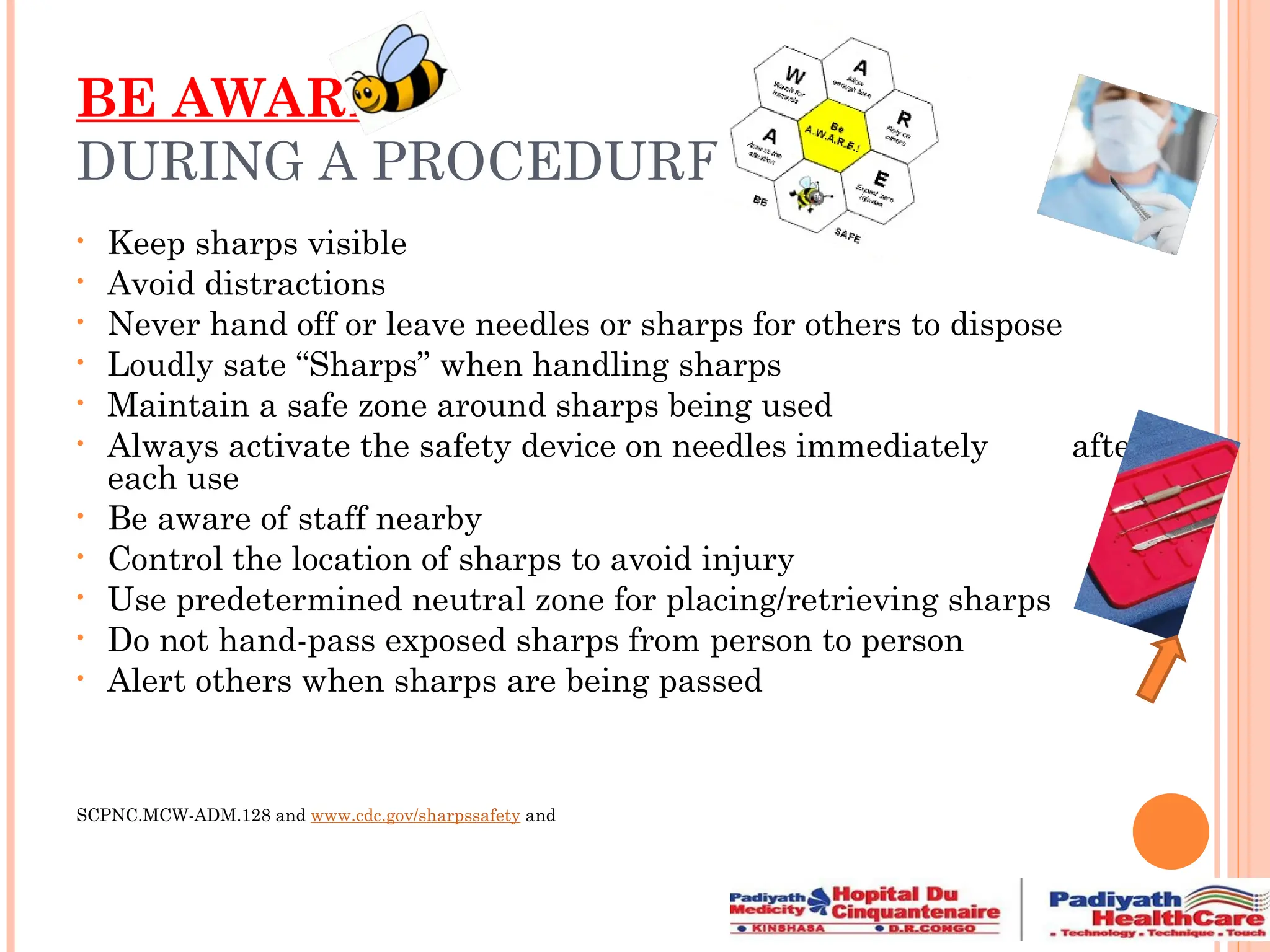
BE AWARE
DURING A PROCEDURE
• Keep sharps visible
• Avoid distractions
• Never hand off or leave needles or sharps for others to dispose
• Loudly sate “Sharps” when handling sharps
• Maintain a safe zone around sharps being used
• Always activate the safety device on needles immediately after
each use
• Be aware of staff nearby
• Control the location of sharps to avoid injury
• Use predetermined neutral zone for placing/retrieving sharps
• Do not hand-pass exposed sharps from person to person
• Alert others when sharps are being passed
SCPNC.MCW-ADM.128 and www.cdc.gov/sharpssafety and
BE AWARE
DURING A PROCEDURE
CONTINUED….
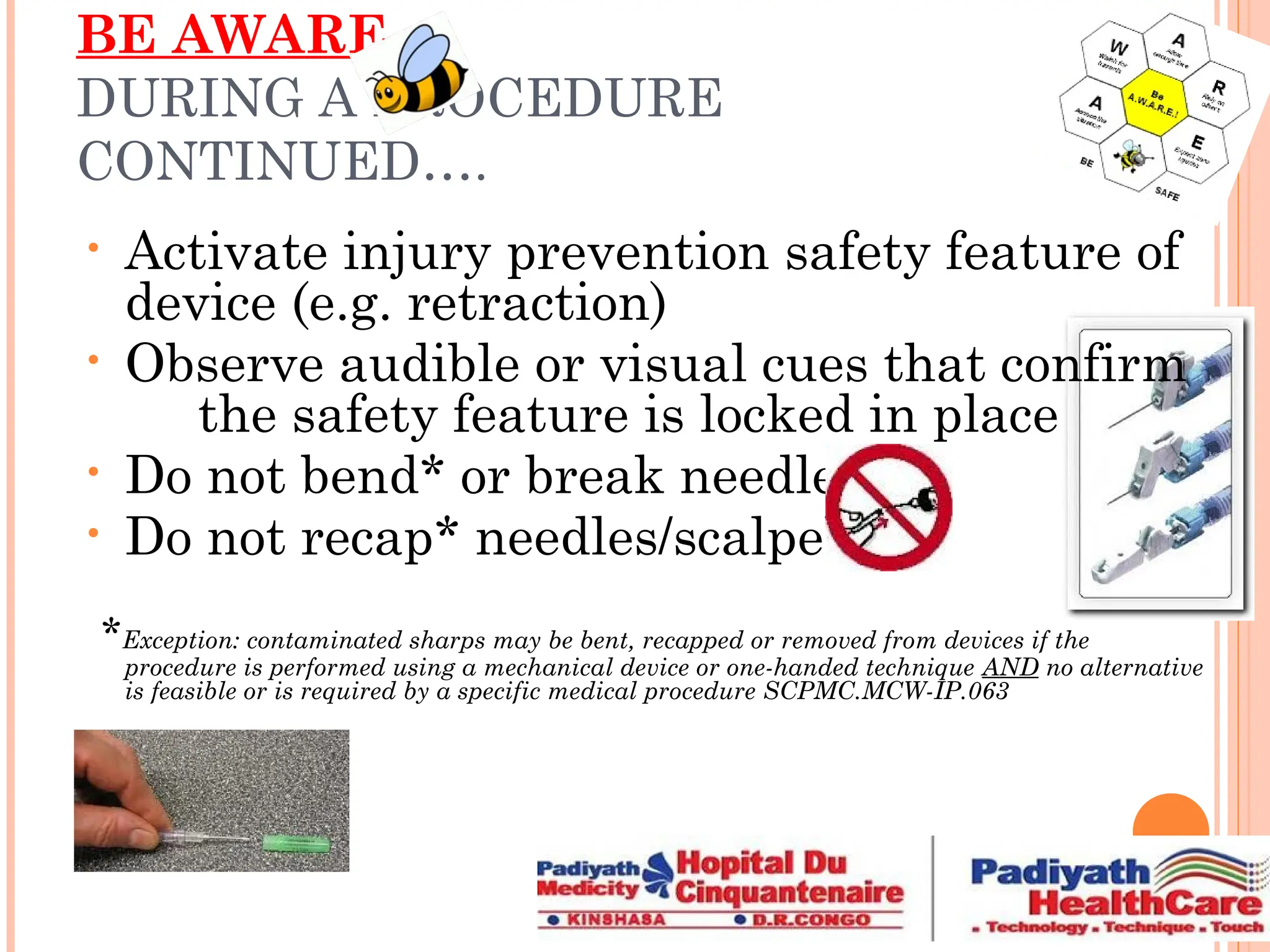
• Activate injury prevention safety feature of
device (e.g. retraction)
• Observe audible or visual cues that confirm
the safety feature is locked in place
• Do not bend* or break needles
• Do not recap* needles/scalpels
*Exception: contaminated sharps may be bent, recapped or removed from devices if the
procedure is performed using a mechanical device or one-handed technique AND no alternative
is feasible or is required by a specific medical procedure SCPMC.MCW-IP.063
BE AWARE
DURING A PROCEDURE
CONTINUED….
• A stationary needle cap holder must be used for
incremental doses of medication to the same patient
MCW-IP.063
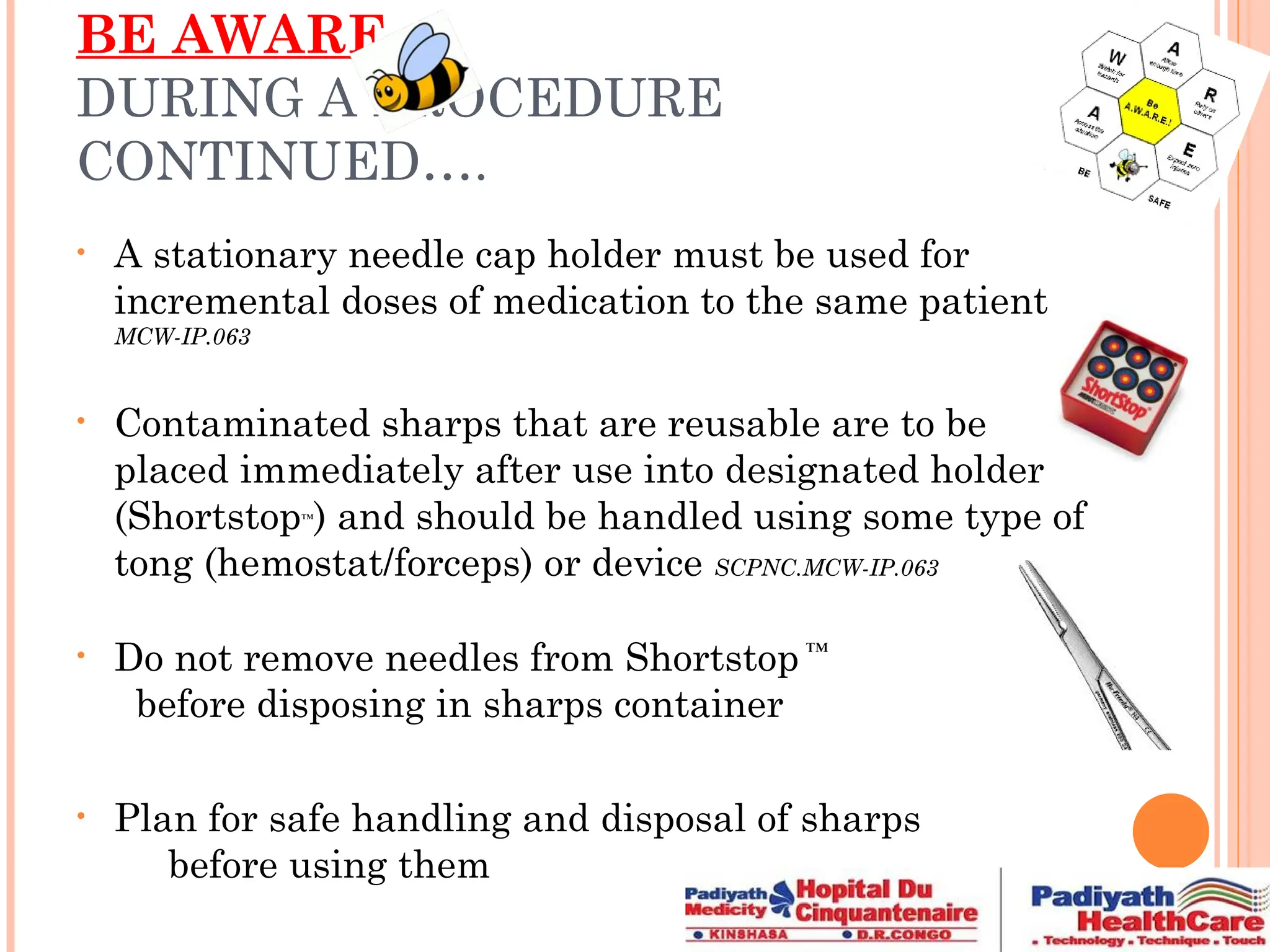
• Contaminated sharps that are reusable are to be
placed immediately after use into designated holder
(Shortstop™
) and should be handled using some type of
tong (hemostat/forceps) or device SCPNC.MCW-IP.063
• Do not remove needles from Shortstop ™
before disposing in sharps container
• Plan for safe handling and disposal of sharps
before using them
CLEAN UP AND DISPOSE WITH
CARE
DURING CLEANUP
• Be accountable for sharps you use
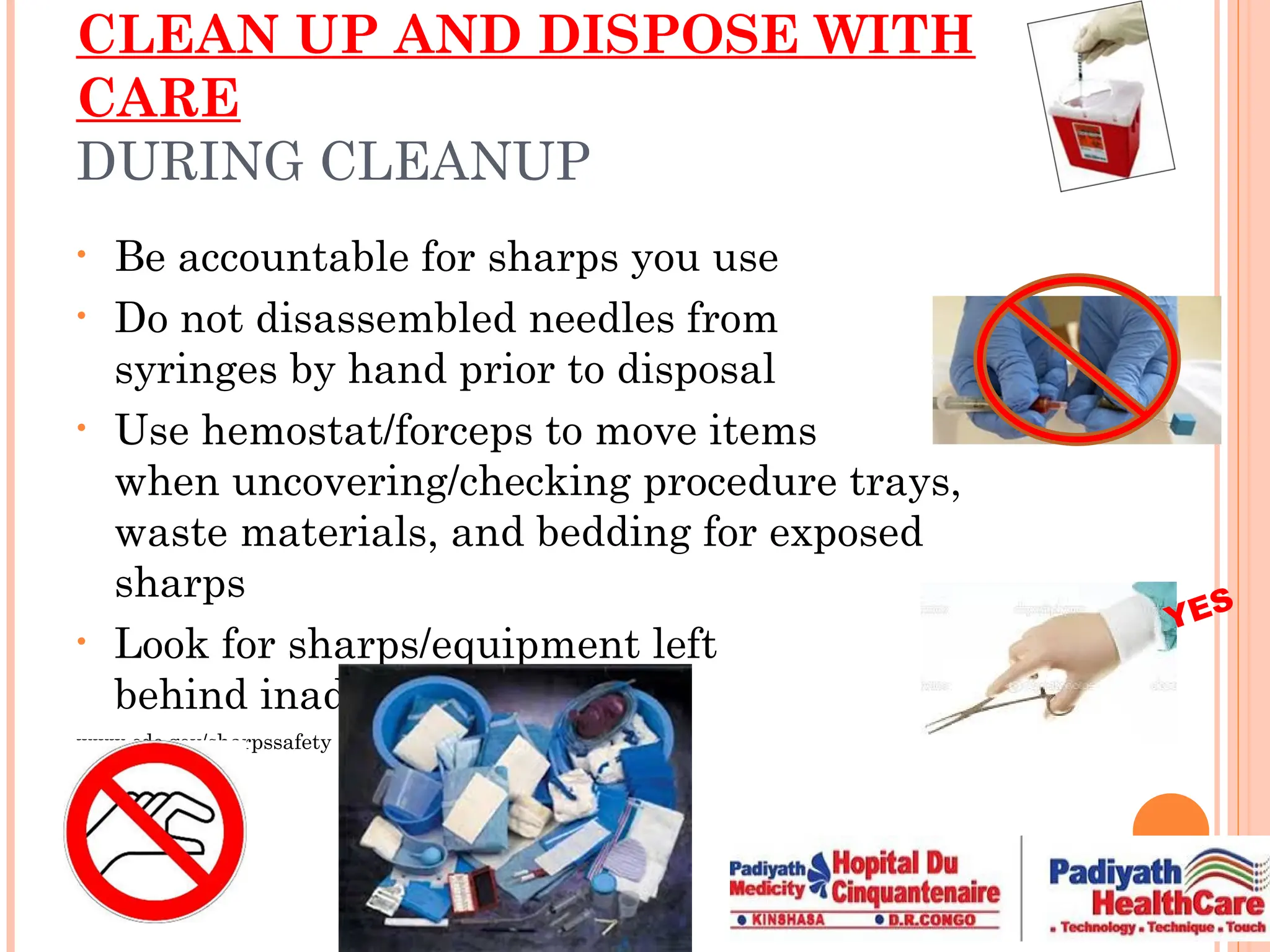
• Do not disassembled needles from
syringes by hand prior to disposal
• Use hemostat/forceps to move items
when uncovering/checking procedure trays,
waste materials, and bedding for exposed
sharps
• Look for sharps/equipment left
behind inadvertently
www.cdc.gov/sharpssafety
YES
CLEAN UP AND DISPOSE WITH
CARE
WHILE DISPOSING OF SHARPS
• Inspect container
• Keep hands behind sharps
• Never put hands or fingers into sharps container
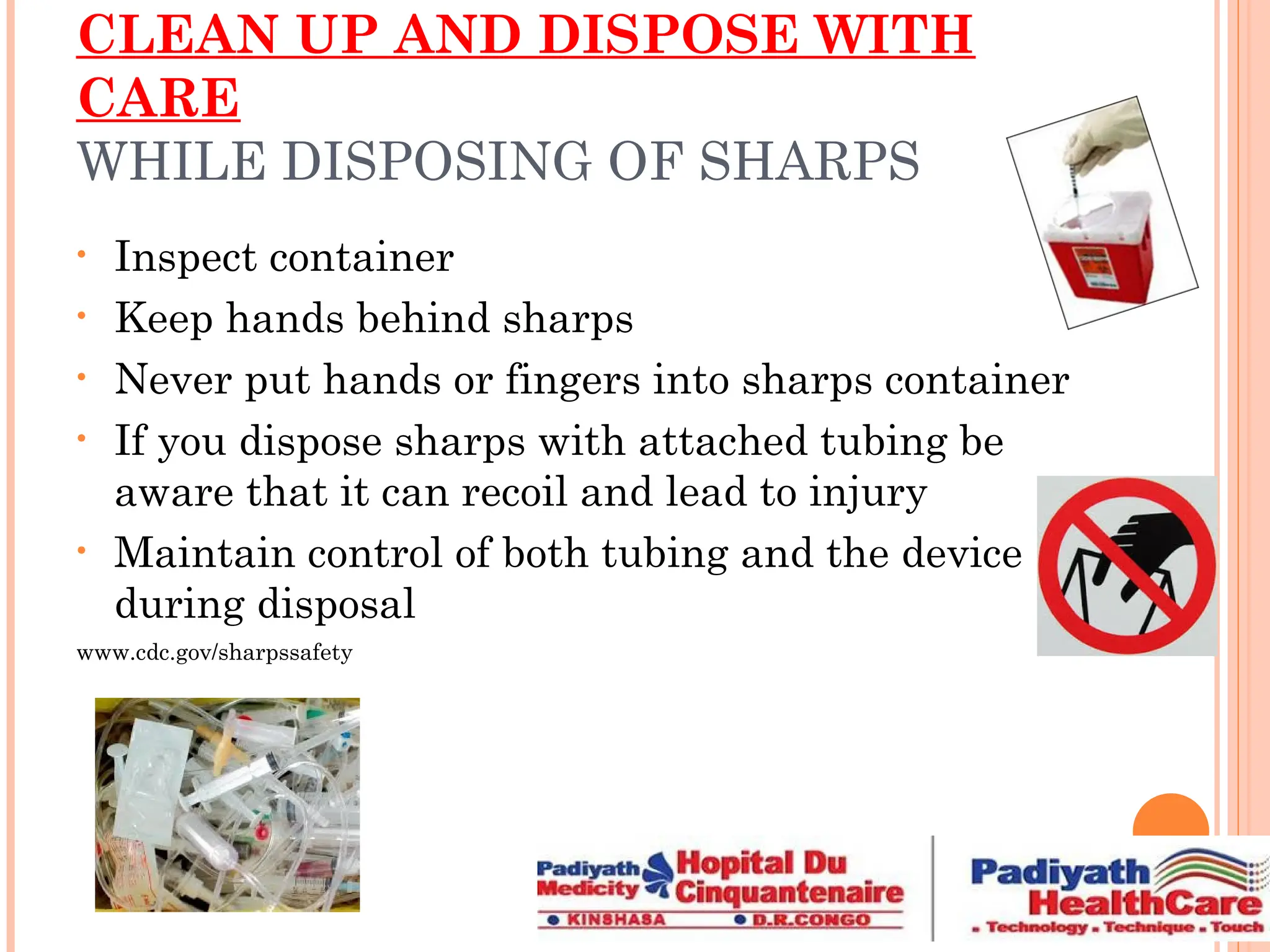
• If you dispose sharps with attached tubing be
aware that it can recoil and lead to injury
• Maintain control of both tubing and the device
during disposal
www.cdc.gov/sharpssafety
CLEAN UP AND DISPOSE WITH
CARE
AFTER DISPOSING OF SHARPS
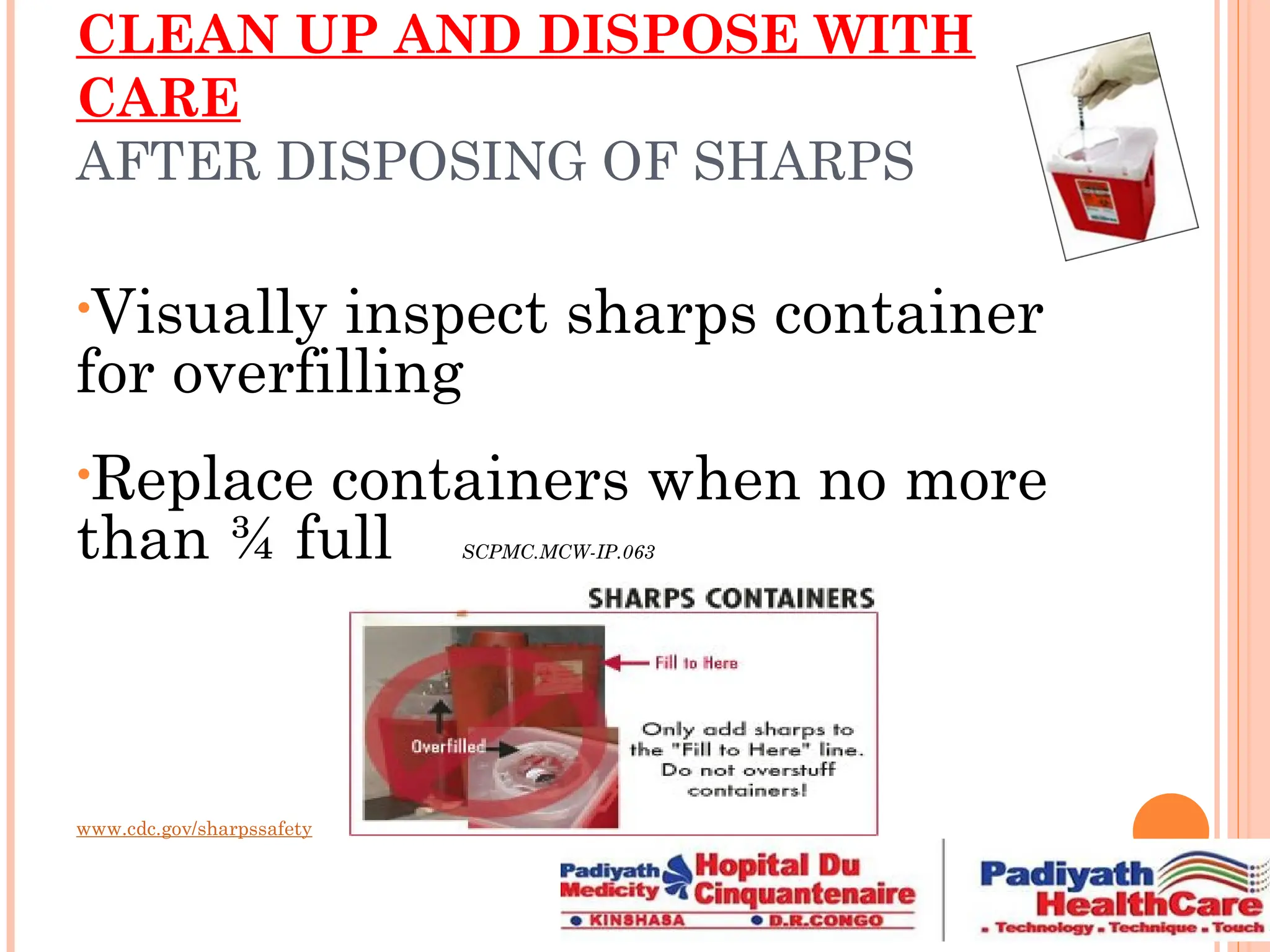
•Visually inspect sharps container
for overfilling
•Replace containers when no more
than ¾ full SCPMC.MCW-IP.063
www.cdc.gov/sharpssafety
CLEAN UP AND DISPOSE WITH CARE
IF YOU FIND IMPROPERLY DISPOSED
SHARPS IN WORK ENVIRONMENT
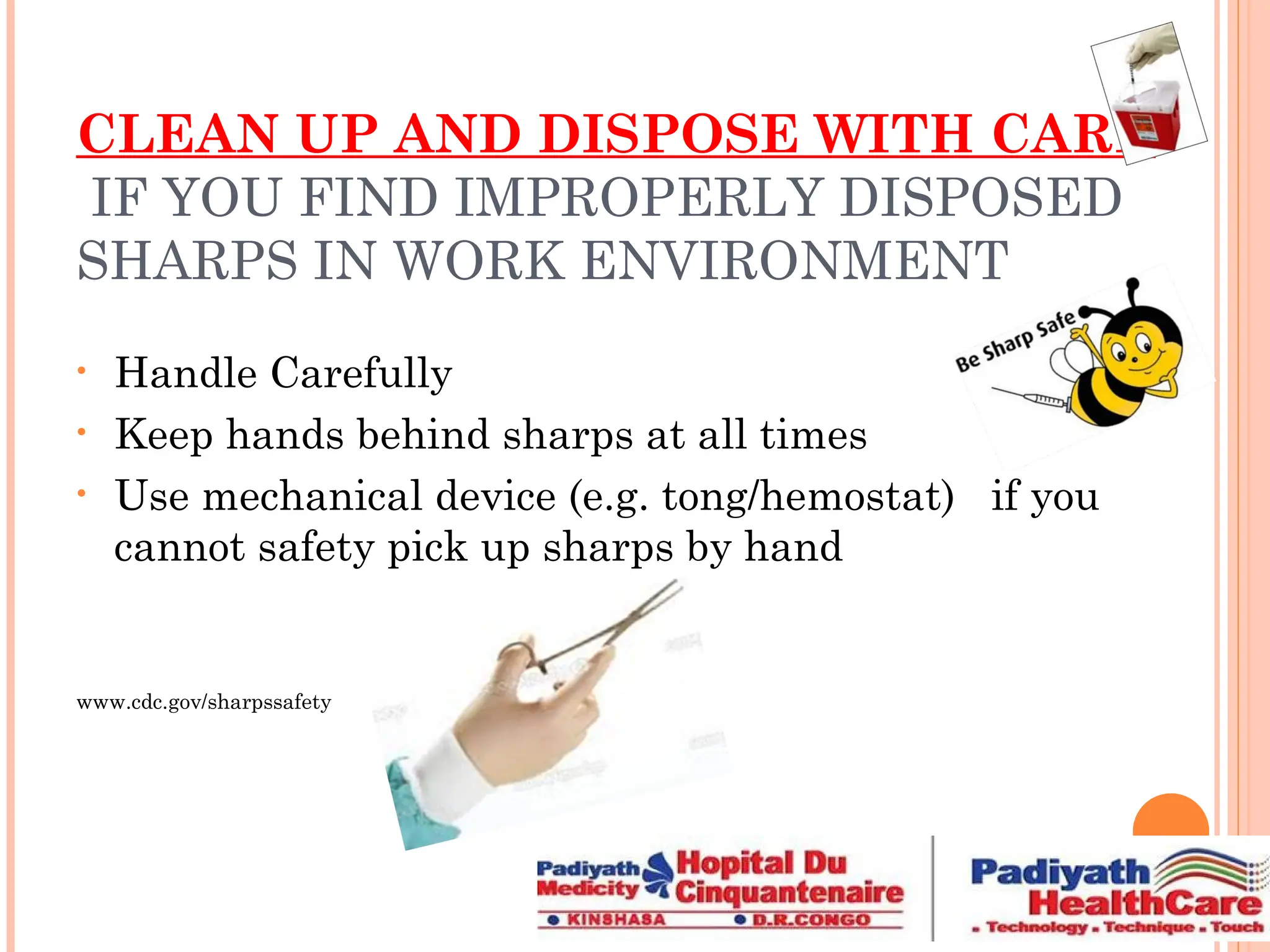
• Handle Carefully
• Keep hands behind sharps at all times
• Use mechanical device (e.g. tong/hemostat) if you
cannot safety pick up sharps by hand
www.cdc.gov/sharpssafety
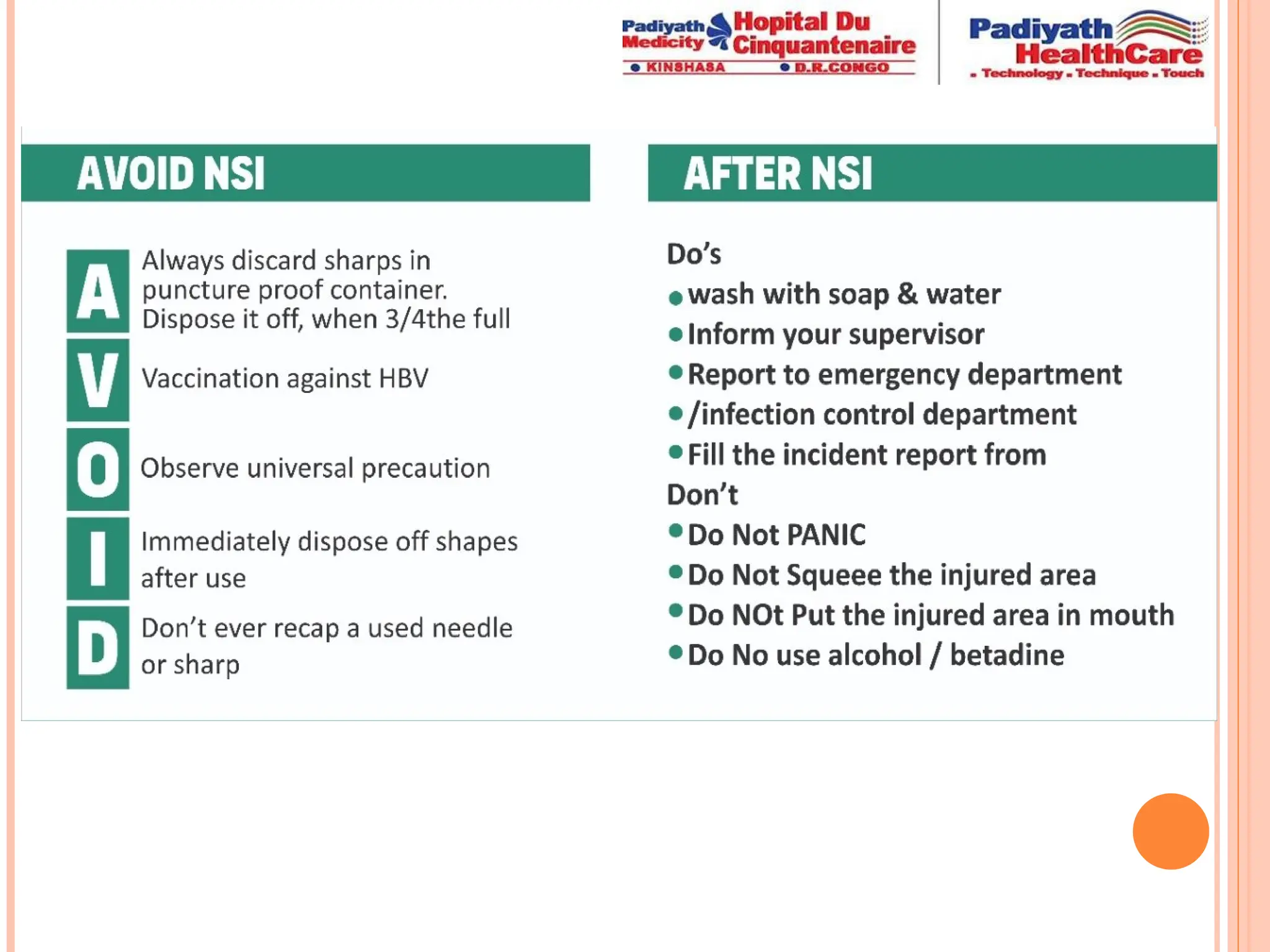
YOUR PART IN PREVENTION
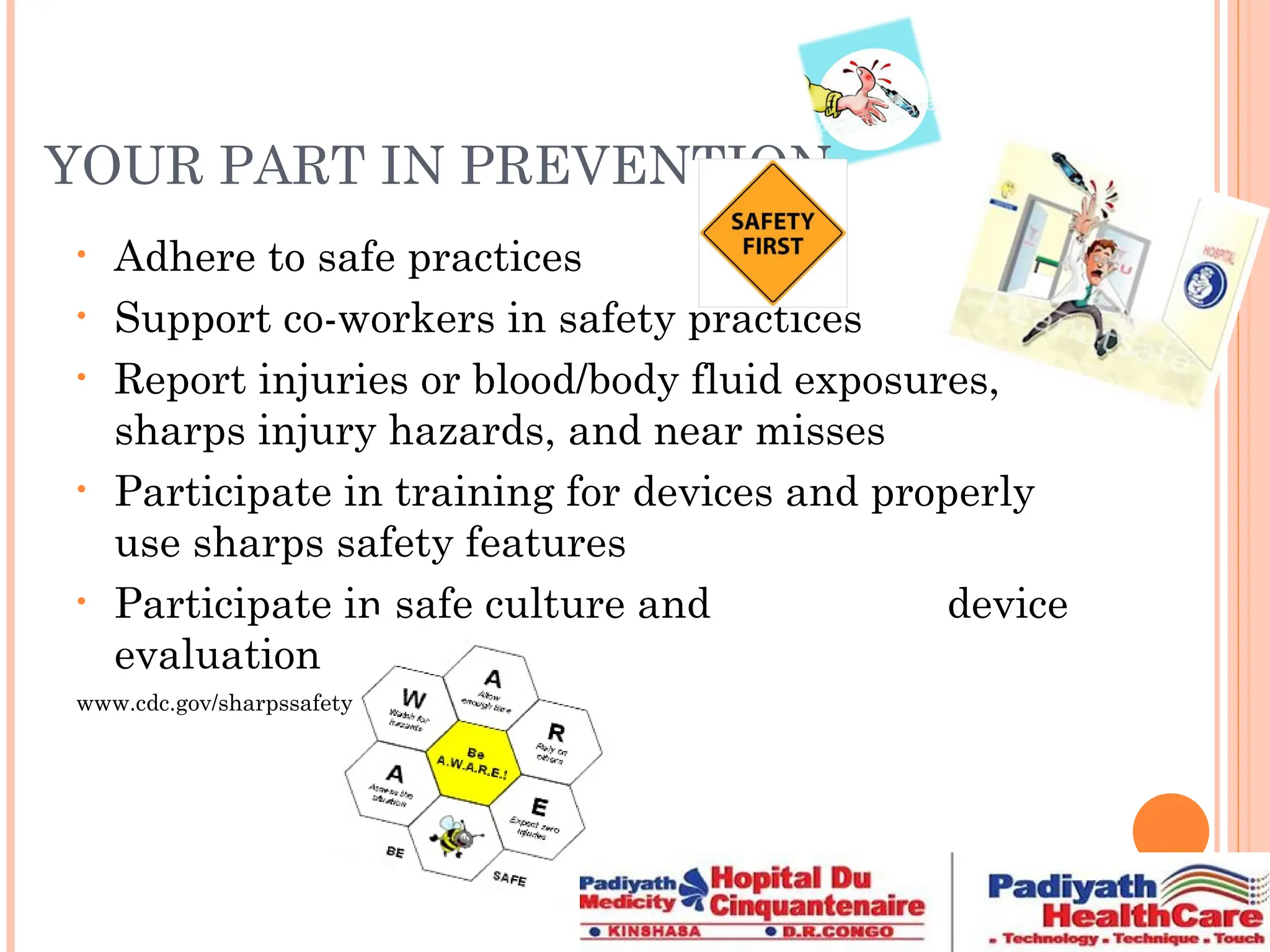
• Adhere to safe practices
• Support co-workers in safety practices
• Report injuries or blood/body fluid exposures,
sharps injury hazards, and near misses
• Participate in training for devices and properly
use sharps safety features
• Participate in safe culture and device
evaluation
www.cdc.gov/sharpssafety
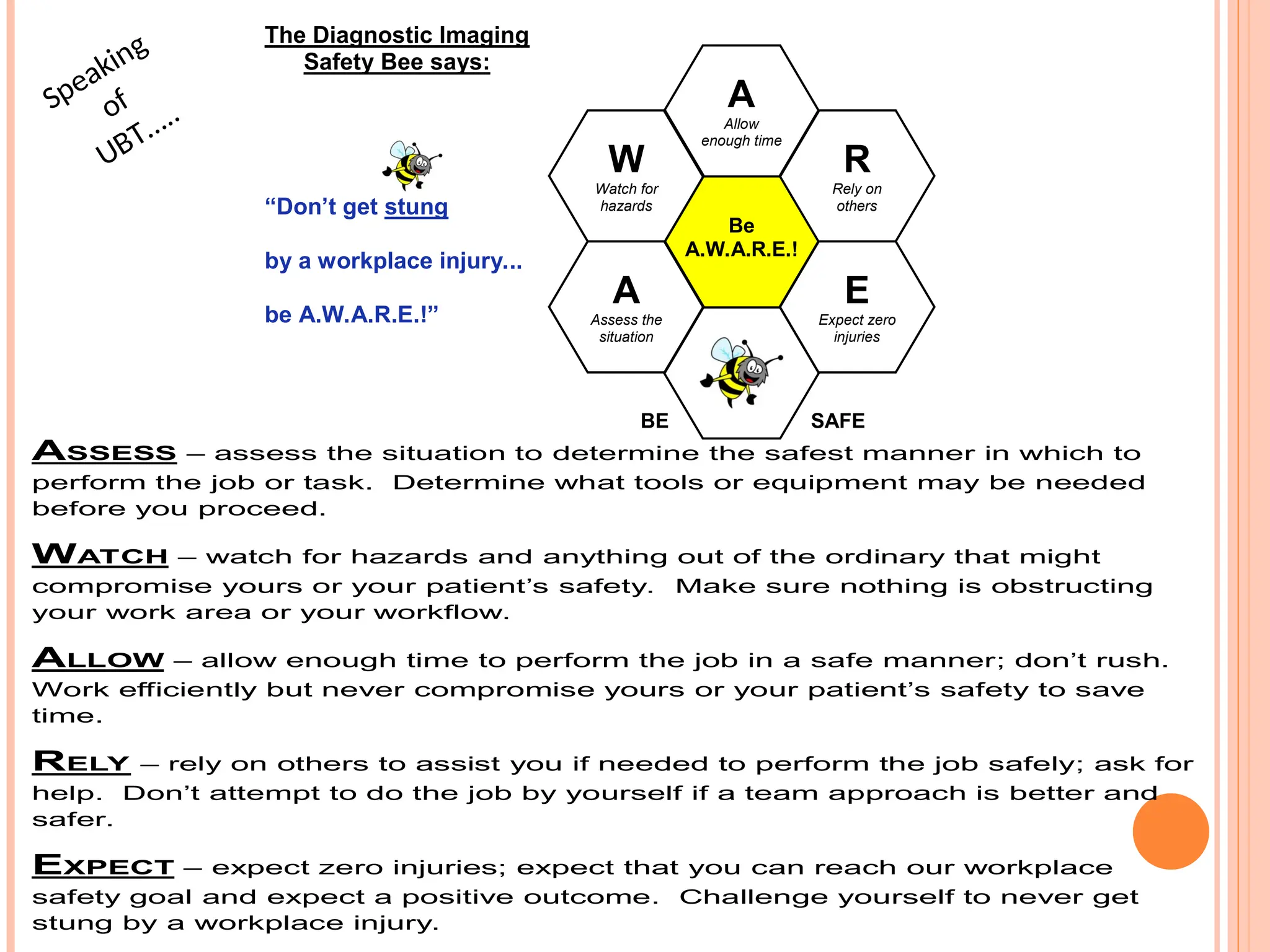
The Diagnostic Imaging
Safety Bee says:
“Don’t get stung
by a workplace injury...
be A.W.A.R.E.!”
BE SAFE
E
Expect zero
injuries
A
Allow
enough time
A
Assess the
situation
W
Watch for
hazards
R
Rely on
others
Be
A.W.A.R.E.!
ASSESS – assess the situation to determine the safest manner in which to
perform the job or task. Determine what tools or equipment may be needed
before you proceed.
WATCH – watch for hazards and anything out of the ordinary that might
compromise yours or your patient’s safety. Make sure nothing is obstructing
your work area or your workflow.
ALLOW – allow enough time to perform the job in a safe manner; don’t rush.
Work efficiently but never compromise yours or your patient’s safety to save
time.
RELY – rely on others to assist you if needed to perform the job safely; ask for
help. Don’t attempt to do the job by yourself if a team approach is better and
safer.
EXPECT – expect zero injuries; expect that you can reach our workplace
safety goal and expect a positive outcome. Challenge yourself to never get
stung by a workplace injury.
Speaking
of
UBT…..
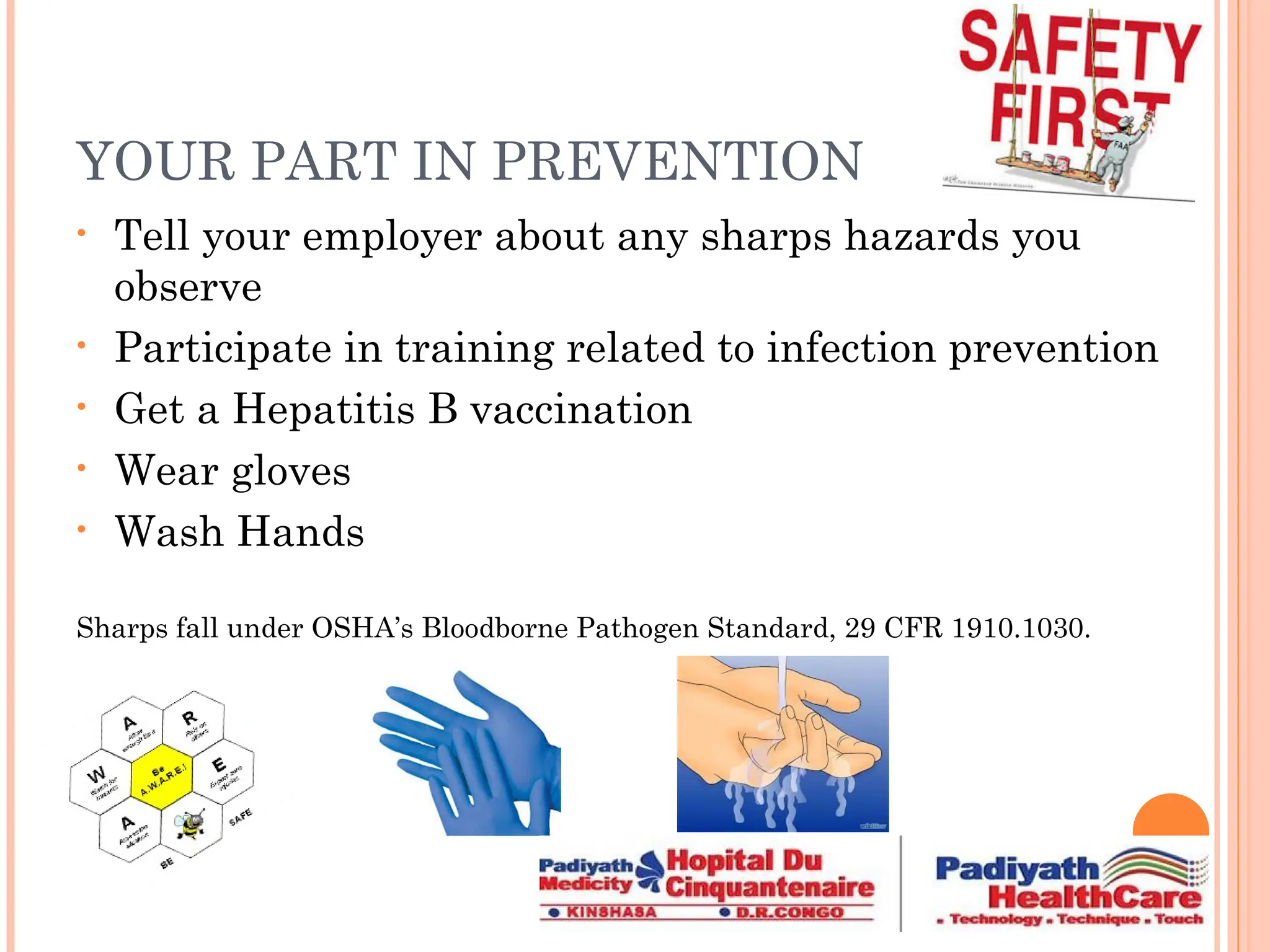
YOUR PART IN PREVENTION
• Tell your employer about any sharps hazards you
observe
• Participate in training related to infection prevention
• Get a Hepatitis B vaccination
• Wear gloves
• Wash Hands
Sharps fall under OSHA’s Bloodborne Pathogen Standard, 29 CFR 1910.1030.
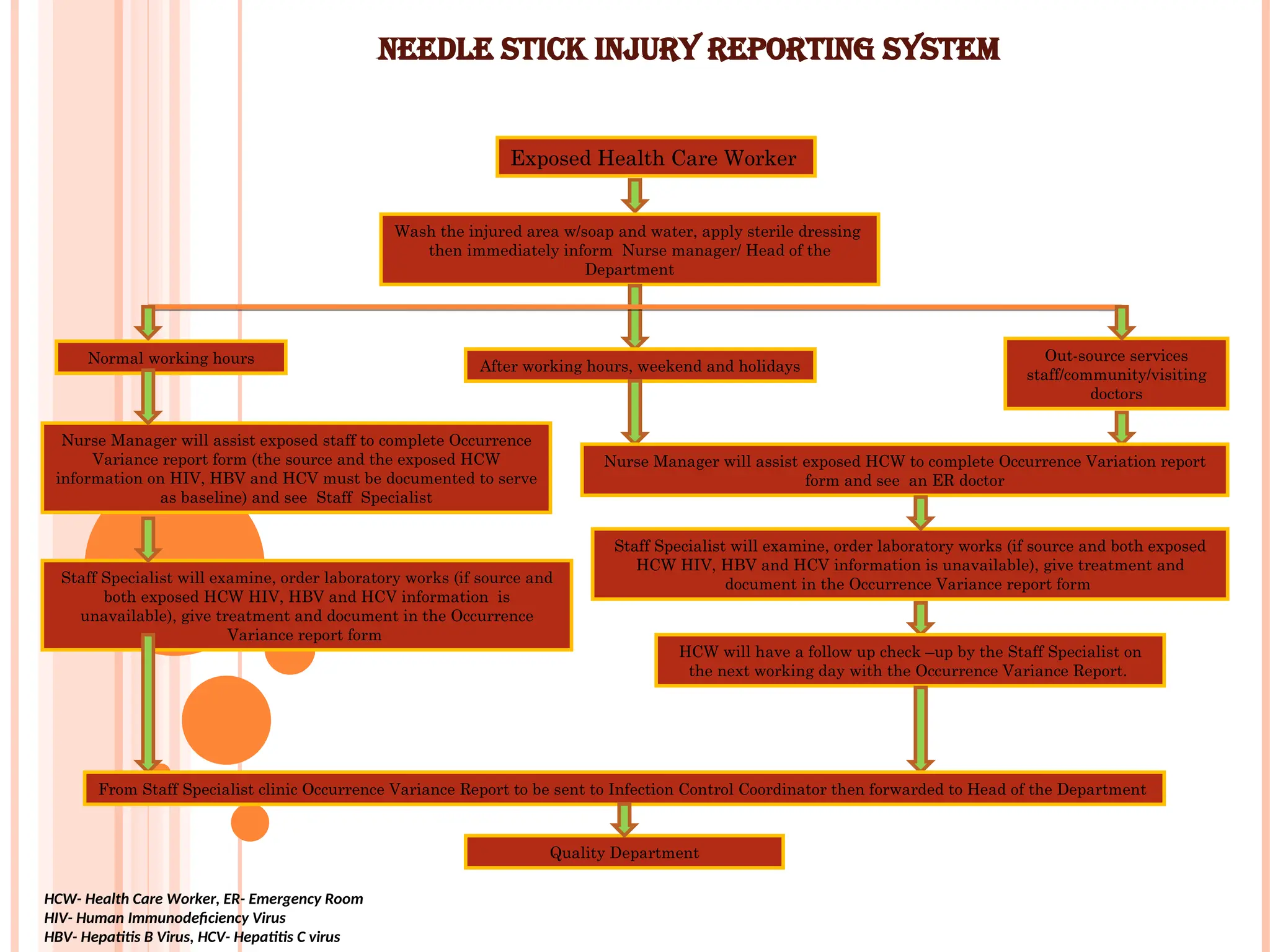
NEEDLE STICK INJURY REPORTING SYSTEM
Exposed Health Care Worker
Wash the injured area w/soap and water, apply sterile dressing
then immediately inform Nurse manager/ Head of the
Department
Normal working hours
After working hours, weekend and holidays
Out-source services
staff/community/visiting
doctors
Nurse Manager will assist exposed staff to complete Occurrence
Variance report form (the source and the exposed HCW
information on HIV, HBV and HCV must be documented to serve
as baseline) and see Staff Specialist
Nurse Manager will assist exposed HCW to complete Occurrence Variation report
form and see an ER doctor
Staff Specialist will examine, order laboratory works (if source and
both exposed HCW HIV, HBV and HCV information is
unavailable), give treatment and document in the Occurrence
Variance report form
Staff Specialist will examine, order laboratory works (if source and both exposed
HCW HIV, HBV and HCV information is unavailable), give treatment and
document in the Occurrence Variance report form
HCW will have a follow up check –up by the Staff Specialist on
the next working day with the Occurrence Variance Report.
From Staff Specialist clinic Occurrence Variance Report to be sent to Infection Control Coordinator then forwarded to Head of the Department
Quality Department
HCW- Health Care Worker, ER- Emergency Room
HIV- Human Immunodeficiency Virus
HBV- Hepatitis B Virus, HCV- Hepatitis C virus
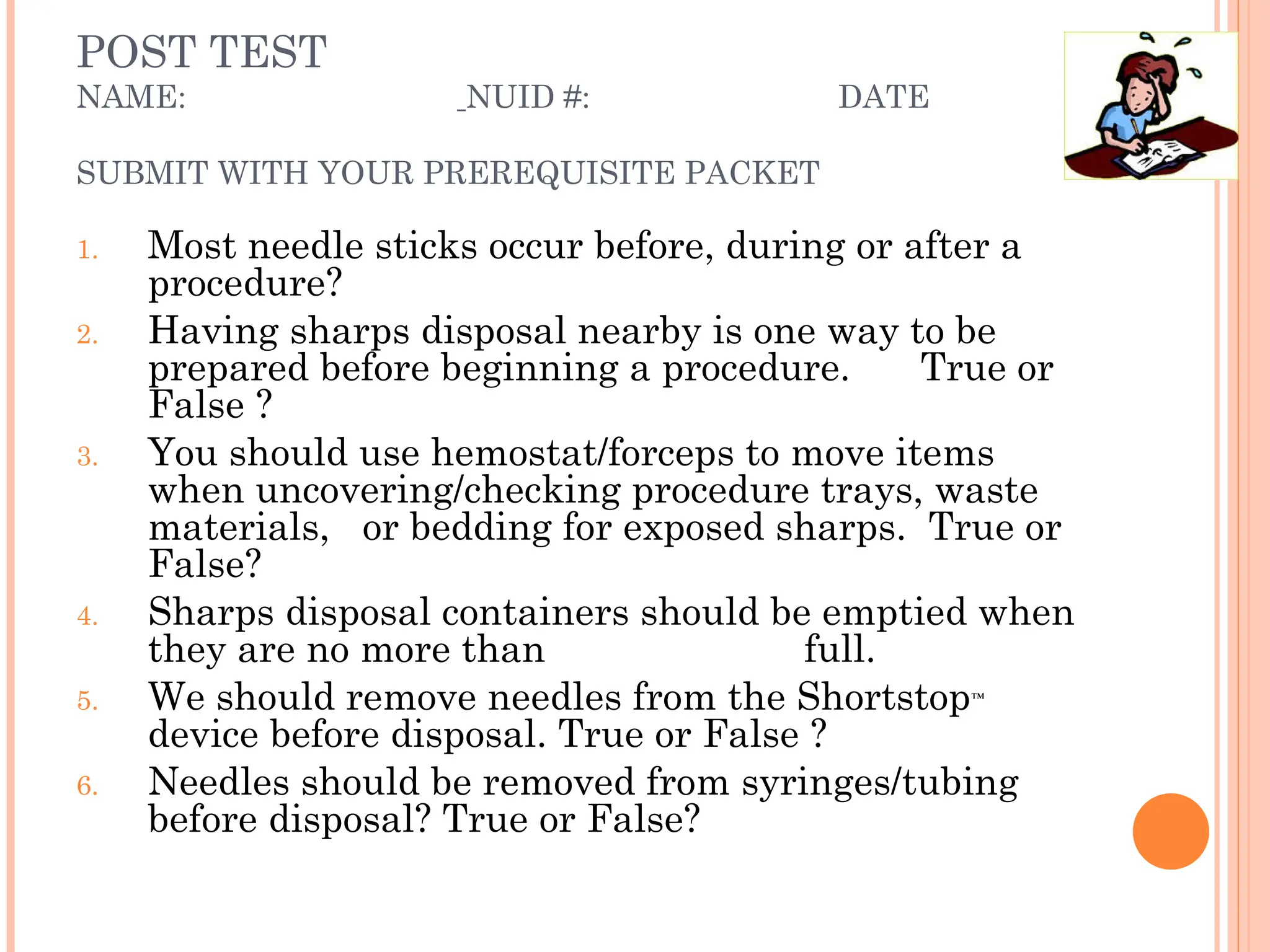
POST TEST
NAME: NUID #: DATE
SUBMIT WITH YOUR PREREQUISITE PACKET
1. Most needle sticks occur before, during or after a
procedure?
2. Having sharps disposal nearby is one way to be
prepared before beginning a procedure. True or
False ?
3. You should use hemostat/forceps to move items
when uncovering/checking procedure trays, waste
materials, or bedding for exposed sharps. True or
False?
4. Sharps disposal containers should be emptied when
they are no more than full.
5. We should remove needles from the Shortstop™
device before disposal. True or False ?
6. Needles should be removed from syringes/tubing
before disposal? True or False?
1-PMC Needle Stick and Sharps Exposure Prevention.ppt

  • 1.
    NEEDLE STICK & SHARPS EXPOSURE PREVENTIONDr.Mustafa Khan (MHA,MPH,CPHQ.CHDM) Quality and patient safety officer Padiyath Medicity Kinshasa, D.R.Congo
  • 2.
    HOW MANY NEEDLESTICK INJURIES OCCUR IN THE U.S.A.? • The Department of Health Services reported that 600,000 to 800,000 needle stick injuries occur each year • A CDC study estimated that 385,000 occur in the hospital (>1,000/day) • ~5% of these were technologists That is 52 injuries a day! www.hhs.gov/asl/testify/t000622a.html and NaSH 1995-Dec 2003 https://www.cdc.gov/sharpssafety/ppt/2preventingneedlesticksparti.ppt
  • 3.
    WHAT INFECTIONS CANBE CAUSED BY SHARPS INJURIES? • More than 20 bloodborne pathogens • The pathogens that pose the most serious health risks are: -Hepatitis B virus (HBV) – -Hepatitis C virus (HCV) – -Human immunodeficiency virus (HIV)
  • 4.
    WHAT KINDS OFDEVICES USUALLY CAUSE SHARPS INJURIES? • Hypodermic needles • Blood collection needles • Needles used in IV delivery systems • Scalpels
  • 6.
    BASED ON THEPRIOR CDC SLIDE NEEDLE INJURIES OCCUR…. • 35% During sharps clean up and disposal • 28% Manipulating needle in patient • 10% Colliding with co-worker • 0.6% Recapping needle Did you notice? 35% happens AFTER the procedure during clean up and disposal
  • 7.
    SHARPS SAFETY • Prepareto use the device the moment the sharp is first opened • Take precautions while using sharps • Take precautions during cleanup • Take precautions during disposal www.cdc.gov/sharpssafety
  • 8.
    SHARPS SAFETY PRACTICES •Be Prepared • Be Aware • Dispose with Care www.cdc.gov/sharpssafety
  • 9.
    BE PREPARED BEFORE BEGINNINGA PROCEDURE • Wash Hands and Wear Gloves • Organize equipment at point of use • Use needleless systems when appropriate • Use adequate lighting • Keep sharps pointed away from the user • Plan ahead- Have sharps disposal nearby • Assess the patient’s ability to cooperate • Get help if necessary • Ask the patient to avoid sudden movement www.cdc.gov/sharpssafety
  • 10.
    BE AWARE DURING APROCEDURE • Keep sharps visible • Avoid distractions • Never hand off or leave needles or sharps for others to dispose • Loudly sate “Sharps” when handling sharps • Maintain a safe zone around sharps being used • Always activate the safety device on needles immediately after each use • Be aware of staff nearby • Control the location of sharps to avoid injury • Use predetermined neutral zone for placing/retrieving sharps • Do not hand-pass exposed sharps from person to person • Alert others when sharps are being passed SCPNC.MCW-ADM.128 and www.cdc.gov/sharpssafety and
  • 11.
    BE AWARE DURING APROCEDURE CONTINUED…. • Activate injury prevention safety feature of device (e.g. retraction) • Observe audible or visual cues that confirm the safety feature is locked in place • Do not bend* or break needles • Do not recap* needles/scalpels *Exception: contaminated sharps may be bent, recapped or removed from devices if the procedure is performed using a mechanical device or one-handed technique AND no alternative is feasible or is required by a specific medical procedure SCPMC.MCW-IP.063
  • 12.
    BE AWARE DURING APROCEDURE CONTINUED…. • A stationary needle cap holder must be used for incremental doses of medication to the same patient MCW-IP.063 • Contaminated sharps that are reusable are to be placed immediately after use into designated holder (Shortstop™ ) and should be handled using some type of tong (hemostat/forceps) or device SCPNC.MCW-IP.063 • Do not remove needles from Shortstop ™ before disposing in sharps container • Plan for safe handling and disposal of sharps before using them
  • 13.
    CLEAN UP ANDDISPOSE WITH CARE DURING CLEANUP • Be accountable for sharps you use • Do not disassembled needles from syringes by hand prior to disposal • Use hemostat/forceps to move items when uncovering/checking procedure trays, waste materials, and bedding for exposed sharps • Look for sharps/equipment left behind inadvertently www.cdc.gov/sharpssafety YES
  • 14.
    CLEAN UP ANDDISPOSE WITH CARE WHILE DISPOSING OF SHARPS • Inspect container • Keep hands behind sharps • Never put hands or fingers into sharps container • If you dispose sharps with attached tubing be aware that it can recoil and lead to injury • Maintain control of both tubing and the device during disposal www.cdc.gov/sharpssafety
  • 15.
    CLEAN UP ANDDISPOSE WITH CARE AFTER DISPOSING OF SHARPS •Visually inspect sharps container for overfilling •Replace containers when no more than ¾ full SCPMC.MCW-IP.063 www.cdc.gov/sharpssafety
  • 16.
    CLEAN UP ANDDISPOSE WITH CARE IF YOU FIND IMPROPERLY DISPOSED SHARPS IN WORK ENVIRONMENT • Handle Carefully • Keep hands behind sharps at all times • Use mechanical device (e.g. tong/hemostat) if you cannot safety pick up sharps by hand www.cdc.gov/sharpssafety
  • 17.
    YOUR PART INPREVENTION • Adhere to safe practices • Support co-workers in safety practices • Report injuries or blood/body fluid exposures, sharps injury hazards, and near misses • Participate in training for devices and properly use sharps safety features • Participate in safe culture and device evaluation www.cdc.gov/sharpssafety
  • 18.
    The Diagnostic Imaging SafetyBee says: “Don’t get stung by a workplace injury... be A.W.A.R.E.!” BE SAFE E Expect zero injuries A Allow enough time A Assess the situation W Watch for hazards R Rely on others Be A.W.A.R.E.! ASSESS – assess the situation to determine the safest manner in which to perform the job or task. Determine what tools or equipment may be needed before you proceed. WATCH – watch for hazards and anything out of the ordinary that might compromise yours or your patient’s safety. Make sure nothing is obstructing your work area or your workflow. ALLOW – allow enough time to perform the job in a safe manner; don’t rush. Work efficiently but never compromise yours or your patient’s safety to save time. RELY – rely on others to assist you if needed to perform the job safely; ask for help. Don’t attempt to do the job by yourself if a team approach is better and safer. EXPECT – expect zero injuries; expect that you can reach our workplace safety goal and expect a positive outcome. Challenge yourself to never get stung by a workplace injury. Speaking of UBT…..
  • 19.
    YOUR PART INPREVENTION • Tell your employer about any sharps hazards you observe • Participate in training related to infection prevention • Get a Hepatitis B vaccination • Wear gloves • Wash Hands Sharps fall under OSHA’s Bloodborne Pathogen Standard, 29 CFR 1910.1030.
  • 21.
    NEEDLE STICK INJURYREPORTING SYSTEM Exposed Health Care Worker Wash the injured area w/soap and water, apply sterile dressing then immediately inform Nurse manager/ Head of the Department Normal working hours After working hours, weekend and holidays Out-source services staff/community/visiting doctors Nurse Manager will assist exposed staff to complete Occurrence Variance report form (the source and the exposed HCW information on HIV, HBV and HCV must be documented to serve as baseline) and see Staff Specialist Nurse Manager will assist exposed HCW to complete Occurrence Variation report form and see an ER doctor Staff Specialist will examine, order laboratory works (if source and both exposed HCW HIV, HBV and HCV information is unavailable), give treatment and document in the Occurrence Variance report form Staff Specialist will examine, order laboratory works (if source and both exposed HCW HIV, HBV and HCV information is unavailable), give treatment and document in the Occurrence Variance report form HCW will have a follow up check –up by the Staff Specialist on the next working day with the Occurrence Variance Report. From Staff Specialist clinic Occurrence Variance Report to be sent to Infection Control Coordinator then forwarded to Head of the Department Quality Department HCW- Health Care Worker, ER- Emergency Room HIV- Human Immunodeficiency Virus HBV- Hepatitis B Virus, HCV- Hepatitis C virus
  • 23.
    POST TEST NAME: NUID#: DATE SUBMIT WITH YOUR PREREQUISITE PACKET 1. Most needle sticks occur before, during or after a procedure? 2. Having sharps disposal nearby is one way to be prepared before beginning a procedure. True or False ? 3. You should use hemostat/forceps to move items when uncovering/checking procedure trays, waste materials, or bedding for exposed sharps. True or False? 4. Sharps disposal containers should be emptied when they are no more than full. 5. We should remove needles from the Shortstop™ device before disposal. True or False ? 6. Needles should be removed from syringes/tubing before disposal? True or False?