Sharps Management
Presenter : Yvonne Mutia
Definition
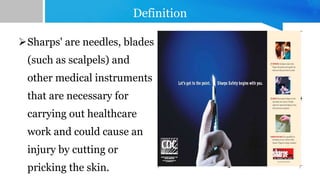
Sharps' are needles, blades
(such as scalpels) and
other medical instruments
that are necessary for
carrying out healthcare
work and could cause an
injury by cutting or
pricking the skin.
Injuries Related to Work Place Practices
Injuries occur because of the following:
Passing or transferring equipment
Recapping contaminated needles
Colliding with coworkers
Decontaminating/processing used equipment
Injuries occur from sharps left in unusual places:
Laundry
Mattresses
Tables, trays, or other surfaces
What Strategies Exist to Eliminate
Sharps Injuries?
 Eliminate or reduce the use of needles and other sharps
 Use devices with safety features to isolate sharps
 Use safe practices to minimize risk for hazards
Safe Injection
 An injection that
does not harm the recipient,
does not expose the provider to any avoidable risk,
 and does not result in any waste that is dangerous for other people.
 WHO estimates that at least 50 percent of all injections are unsafe.
 This poses serious health risks to recipients, HCWs, and the public
Sharps Safety Continum
Prepare to use the device the moment the sharps are
first exposed
Take precautions while using sharps
Take precautions during cleanup
Take precautions during disposal
Contd’
• Be prepared
• Be aware
• Dispose with care
Be Prepared
Before beginning a procedure
Organize equipment at the point of use
Make sure work space has adequate lighting
Keep sharps pointed away from the user
Locate a sharps disposal container, or have one nearby
Assess the patient’s ability to cooperate
Get help if necessary
Ask the patient to avoid sudden movement
Be aware
During the procedure
Maintain visual contact with sharps during use
Be aware of staff nearby
Control the location of sharps to avoid injury to yourself and others
Activate safety feature of devices with engineered sharps injury
prevention features as soon as procedure is completed
Observe audible or visual cues that confirm the feature is locked in
place
Clean up and Dispose With Care
During clean up
Be accountable for sharps you use
Check procedure trays, waste materials, and bedding for exposed
sharps before handling
Look for sharps/equipment left behind inadvertently
Transport reusable sharps in a closed container
Secure the container to prevent spillage
Clean up and Dispose With Care
While disposing sharps
Inspect container
Keep hands behind sharps
Never put hands or fingers into sharps container
If you are disposing sharps with attached tubing
Be aware that tubing attached to sharps can recoil and lead to
injury Maintain control of both tubing and the device during
disposal
Clean up and Dispose With Care
• After disposing sharps
Visually inspect sharps container for overfilling
Replace containers before they become overfilled
Keep filled containers for disposal in a secure area
If you find improperly disposed sharps
Handle carefully
Keep hands behind sharps at all times
Use mechanical device if you cannot safely pick up sharps by hand
Conclusion
Preventing Sharps Injuries
Your Role
• Adhere to safe practices and assist and support coworkers
in safer practices
• Report injuries or blood/body fluid exposures, sharps
injury hazards, and near misses
• Participate in training for devices and properly use sharps
safety features
• Participate in surveys (e.g., safety culture) and device
evaluations
You are Part of the Prevention Process when
you
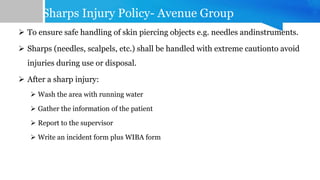
Sharps Injury Policy- Avenue Group
 To ensure safe handling of skin piercing objects e.g. needles andinstruments.
 Sharps (needles, scalpels, etc.) shall be handled with extreme cautionto avoid
injuries during use or disposal.
 After a sharp injury:
 Wash the area with running water
 Gather the information of the patient
 Report to the supervisor
 Write an incident form plus WIBA form
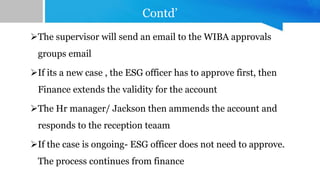
Contd’
The supervisor will send an email to the WIBA approvals
groups email
If its a new case , the ESG officer has to approve first, then
Finance extends the validity for the account
The Hr manager/ Jackson then ammends the account and
responds to the reception teaam
If the case is ongoing- ESG officer does not need to approve.
The process continues from finance
Seek medication attention at the OPD
Perform HIV test, hepatitis B and C
Incase youre starting on PEP- do UECs
Always Handle Sharps With Care
Have a safe day

Sharps Management.pptx

  • 1.
  • 2.
    Definition Sharps' are needles,blades (such as scalpels) and other medical instruments that are necessary for carrying out healthcare work and could cause an injury by cutting or pricking the skin.
  • 3.
    Injuries Related toWork Place Practices Injuries occur because of the following: Passing or transferring equipment Recapping contaminated needles Colliding with coworkers Decontaminating/processing used equipment Injuries occur from sharps left in unusual places: Laundry Mattresses Tables, trays, or other surfaces
  • 4.
    What Strategies Existto Eliminate Sharps Injuries?  Eliminate or reduce the use of needles and other sharps  Use devices with safety features to isolate sharps  Use safe practices to minimize risk for hazards
  • 5.
    Safe Injection  Aninjection that does not harm the recipient, does not expose the provider to any avoidable risk,  and does not result in any waste that is dangerous for other people.  WHO estimates that at least 50 percent of all injections are unsafe.  This poses serious health risks to recipients, HCWs, and the public
  • 6.
    Sharps Safety Continum Prepareto use the device the moment the sharps are first exposed Take precautions while using sharps Take precautions during cleanup Take precautions during disposal
  • 7.
    Contd’ • Be prepared •Be aware • Dispose with care
  • 8.
    Be Prepared Before beginninga procedure Organize equipment at the point of use Make sure work space has adequate lighting Keep sharps pointed away from the user Locate a sharps disposal container, or have one nearby Assess the patient’s ability to cooperate Get help if necessary Ask the patient to avoid sudden movement
  • 9.
    Be aware During theprocedure Maintain visual contact with sharps during use Be aware of staff nearby Control the location of sharps to avoid injury to yourself and others Activate safety feature of devices with engineered sharps injury prevention features as soon as procedure is completed Observe audible or visual cues that confirm the feature is locked in place
  • 10.
    Clean up andDispose With Care During clean up Be accountable for sharps you use Check procedure trays, waste materials, and bedding for exposed sharps before handling Look for sharps/equipment left behind inadvertently Transport reusable sharps in a closed container Secure the container to prevent spillage
  • 11.
    Clean up andDispose With Care While disposing sharps Inspect container Keep hands behind sharps Never put hands or fingers into sharps container If you are disposing sharps with attached tubing Be aware that tubing attached to sharps can recoil and lead to injury Maintain control of both tubing and the device during disposal
  • 12.
    Clean up andDispose With Care • After disposing sharps Visually inspect sharps container for overfilling Replace containers before they become overfilled Keep filled containers for disposal in a secure area If you find improperly disposed sharps Handle carefully Keep hands behind sharps at all times Use mechanical device if you cannot safely pick up sharps by hand
  • 13.
  • 14.
    • Adhere tosafe practices and assist and support coworkers in safer practices • Report injuries or blood/body fluid exposures, sharps injury hazards, and near misses • Participate in training for devices and properly use sharps safety features • Participate in surveys (e.g., safety culture) and device evaluations You are Part of the Prevention Process when you
  • 15.
    Sharps Injury Policy-Avenue Group  To ensure safe handling of skin piercing objects e.g. needles andinstruments.  Sharps (needles, scalpels, etc.) shall be handled with extreme cautionto avoid injuries during use or disposal.  After a sharp injury:  Wash the area with running water  Gather the information of the patient  Report to the supervisor  Write an incident form plus WIBA form
  • 16.
    Contd’ The supervisor willsend an email to the WIBA approvals groups email If its a new case , the ESG officer has to approve first, then Finance extends the validity for the account The Hr manager/ Jackson then ammends the account and responds to the reception teaam If the case is ongoing- ESG officer does not need to approve. The process continues from finance
  • 17.
    Seek medication attentionat the OPD Perform HIV test, hepatitis B and C Incase youre starting on PEP- do UECs
  • 18.
    Always Handle SharpsWith Care Have a safe day