Presentation
Topic:
p-n-p and n-p-n Transistors:
Structure and Function
What is a p-n-p Transistor?
A p-n-p transistor is a semiconductor piece in
which a thin section of n-type is sandwiched
between two p-type layers.
What is a n-p-n Transistor?
A n-p-n transistor is a semiconductor piece in
which a thin section of p-type is sandwiched
between two n-type layers.
The terminals of
a transistor
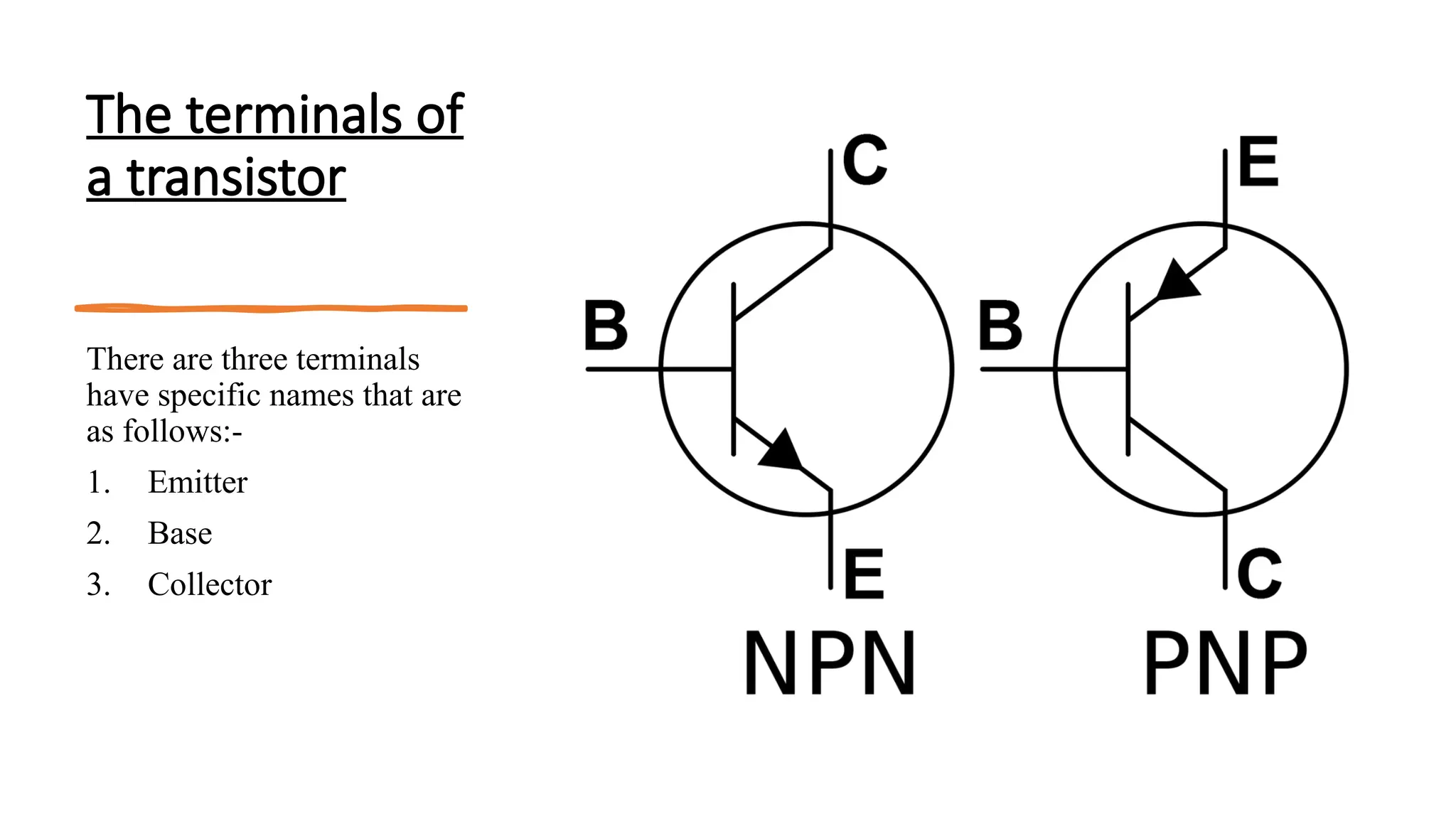
There are three terminals
have specific names that are
as follows:-
1. Emitter
2. Base
3. Collector
Some fact
about
transistor:
More then 95% of current flow through collector.
Less then 5% of current flow through base.
The emitter is highly doped.
Emitter diode is always Forward biased.
Collector diode is always Reverse Biased.
In n-p-n: Current leave the system by emitter.
In p-n-p: Current enter the system by emitter.
Working of NPN Transistor
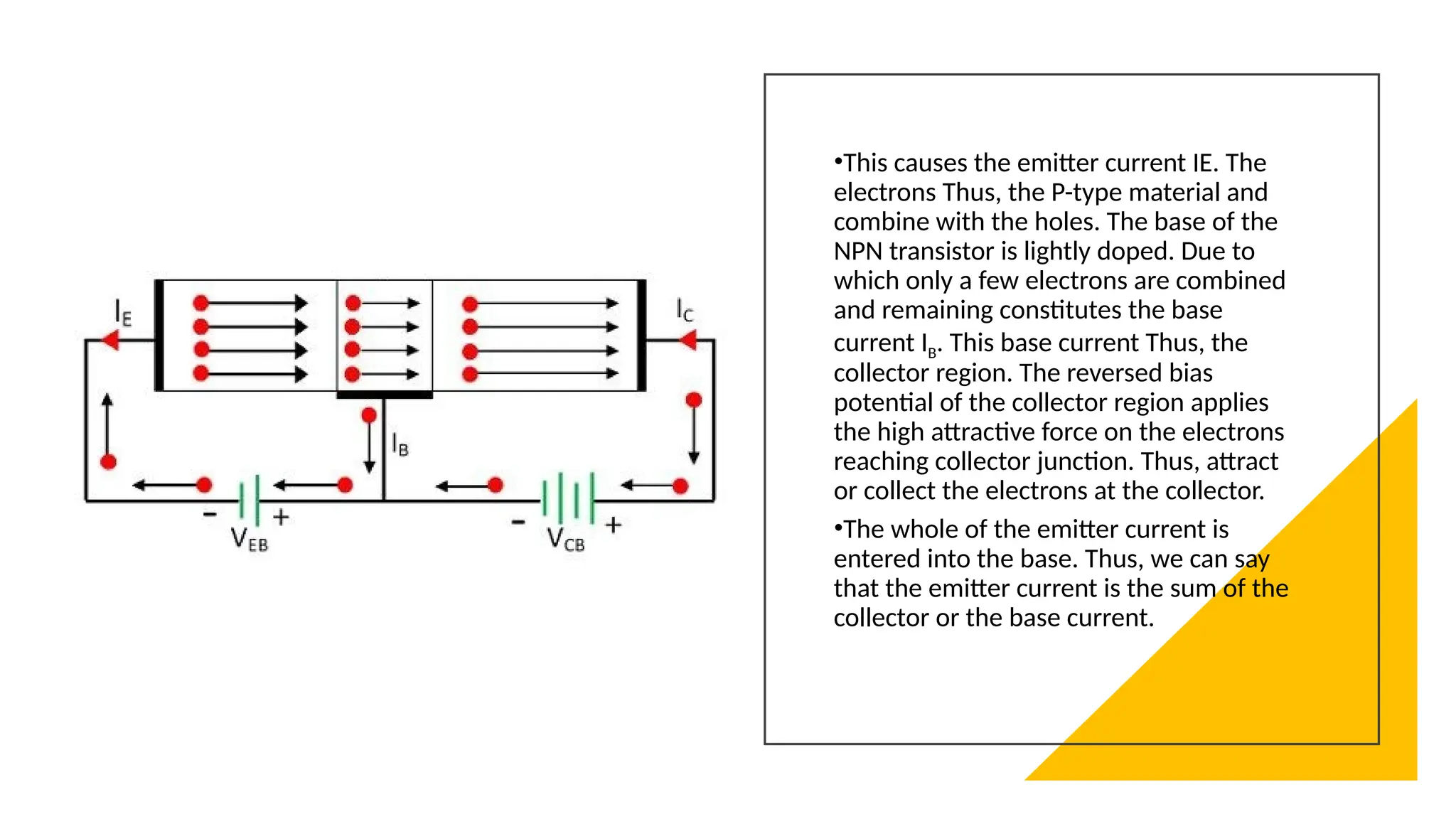
The circuit diagram of the NPN transistor is shown in
the figure below. The forward biased is applied
across the emitter-base junction, and the reversed
biased is applied across the collector-base junction.
The forward biased voltage VEB is small as compared
to the reverse bias voltage VCB. The emitter of the
NPN transistor is heavily doped. When the forward
bias is applied across the emitter, the majority
charge carriers move towards the base.
•This causes the emitter current IE. The
electrons Thus, the P-type material and
combine with the holes. The base of the
NPN transistor is lightly doped. Due to
which only a few electrons are combined
and remaining constitutes the base
current IB. This base current Thus, the
collector region. The reversed bias
potential of the collector region applies
the high attractive force on the electrons
reaching collector junction. Thus, attract
or collect the electrons at the collector.
•The whole of the emitter current is
entered into the base. Thus, we can say
that the emitter current is the sum of the
collector or the base current.
Working of PNP Transistor:
The emitter-base junction is connected in forward
biased due to which the emitter pushes the holes in
the base region. These holes constitute the emitter
current. When these electrons move into the N-type
semiconductor material or base, they combined with
the electrons. The base of the transistor is thin and
very lightly doped. Hence only a few holes combined
with the electrons and the remaining are moved
towards the collector space charge layer. Hence
develops the base current.
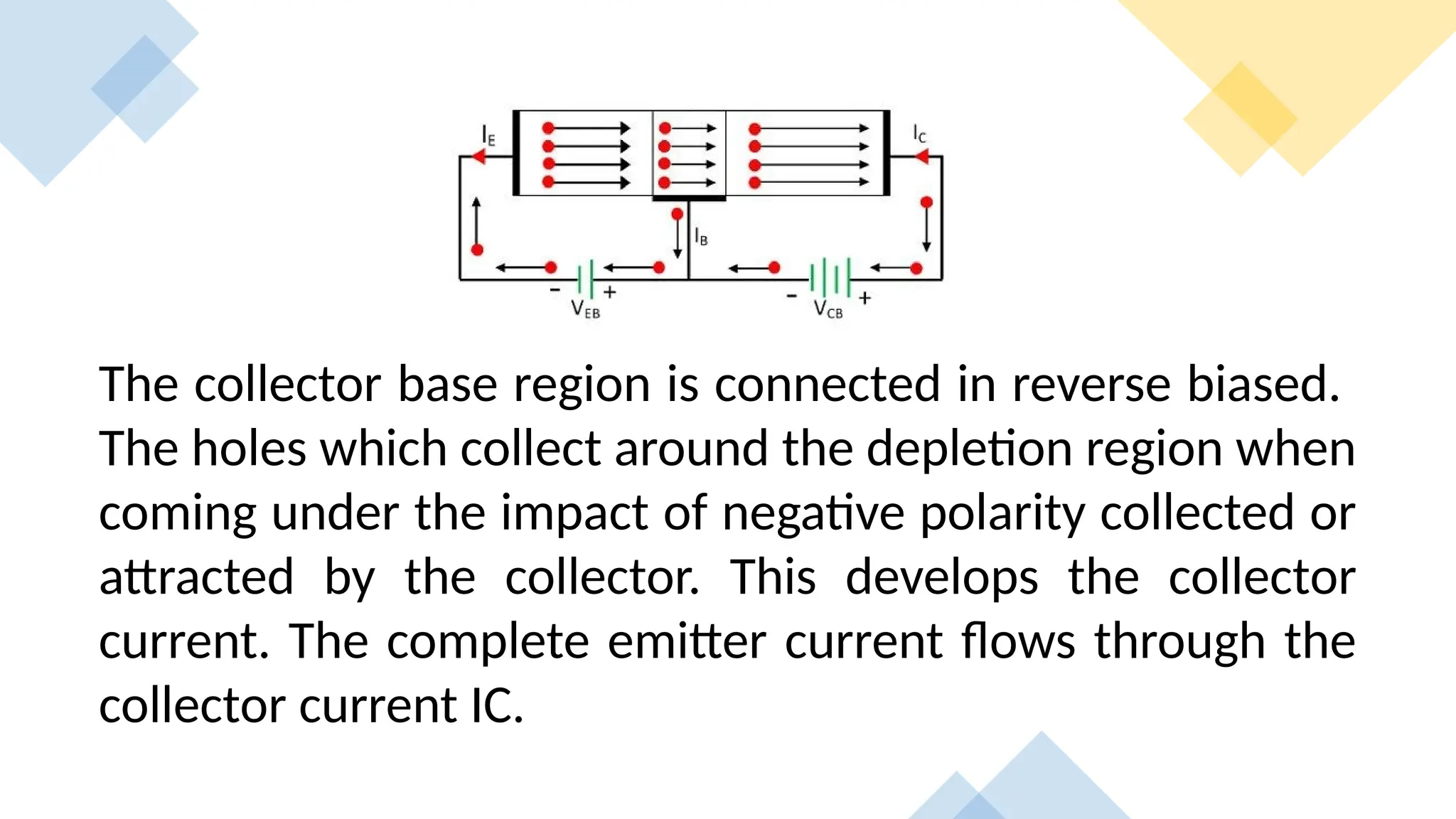
The collector base region is connected in reverse biased.
The holes which collect around the depletion region when
coming under the impact of negative polarity collected or
attracted by the collector. This develops the collector
current. The complete emitter current flows through the
collector current IC.
NPN and PNP Transistors: Structure and Function

NPN and PNP Transistors: Structure and Function

  • 1.
    Presentation Topic: p-n-p and n-p-nTransistors: Structure and Function
  • 2.
    What is ap-n-p Transistor? A p-n-p transistor is a semiconductor piece in which a thin section of n-type is sandwiched between two p-type layers. What is a n-p-n Transistor? A n-p-n transistor is a semiconductor piece in which a thin section of p-type is sandwiched between two n-type layers.
  • 3.
    The terminals of atransistor There are three terminals have specific names that are as follows:- 1. Emitter 2. Base 3. Collector
  • 4.
    Some fact about transistor: More then95% of current flow through collector. Less then 5% of current flow through base. The emitter is highly doped. Emitter diode is always Forward biased. Collector diode is always Reverse Biased. In n-p-n: Current leave the system by emitter. In p-n-p: Current enter the system by emitter.
  • 5.
    Working of NPNTransistor The circuit diagram of the NPN transistor is shown in the figure below. The forward biased is applied across the emitter-base junction, and the reversed biased is applied across the collector-base junction. The forward biased voltage VEB is small as compared to the reverse bias voltage VCB. The emitter of the NPN transistor is heavily doped. When the forward bias is applied across the emitter, the majority charge carriers move towards the base.
  • 6.
    •This causes theemitter current IE. The electrons Thus, the P-type material and combine with the holes. The base of the NPN transistor is lightly doped. Due to which only a few electrons are combined and remaining constitutes the base current IB. This base current Thus, the collector region. The reversed bias potential of the collector region applies the high attractive force on the electrons reaching collector junction. Thus, attract or collect the electrons at the collector. •The whole of the emitter current is entered into the base. Thus, we can say that the emitter current is the sum of the collector or the base current.
  • 7.
    Working of PNPTransistor: The emitter-base junction is connected in forward biased due to which the emitter pushes the holes in the base region. These holes constitute the emitter current. When these electrons move into the N-type semiconductor material or base, they combined with the electrons. The base of the transistor is thin and very lightly doped. Hence only a few holes combined with the electrons and the remaining are moved towards the collector space charge layer. Hence develops the base current.
  • 8.
    The collector baseregion is connected in reverse biased. The holes which collect around the depletion region when coming under the impact of negative polarity collected or attracted by the collector. This develops the collector current. The complete emitter current flows through the collector current IC.