Transistor
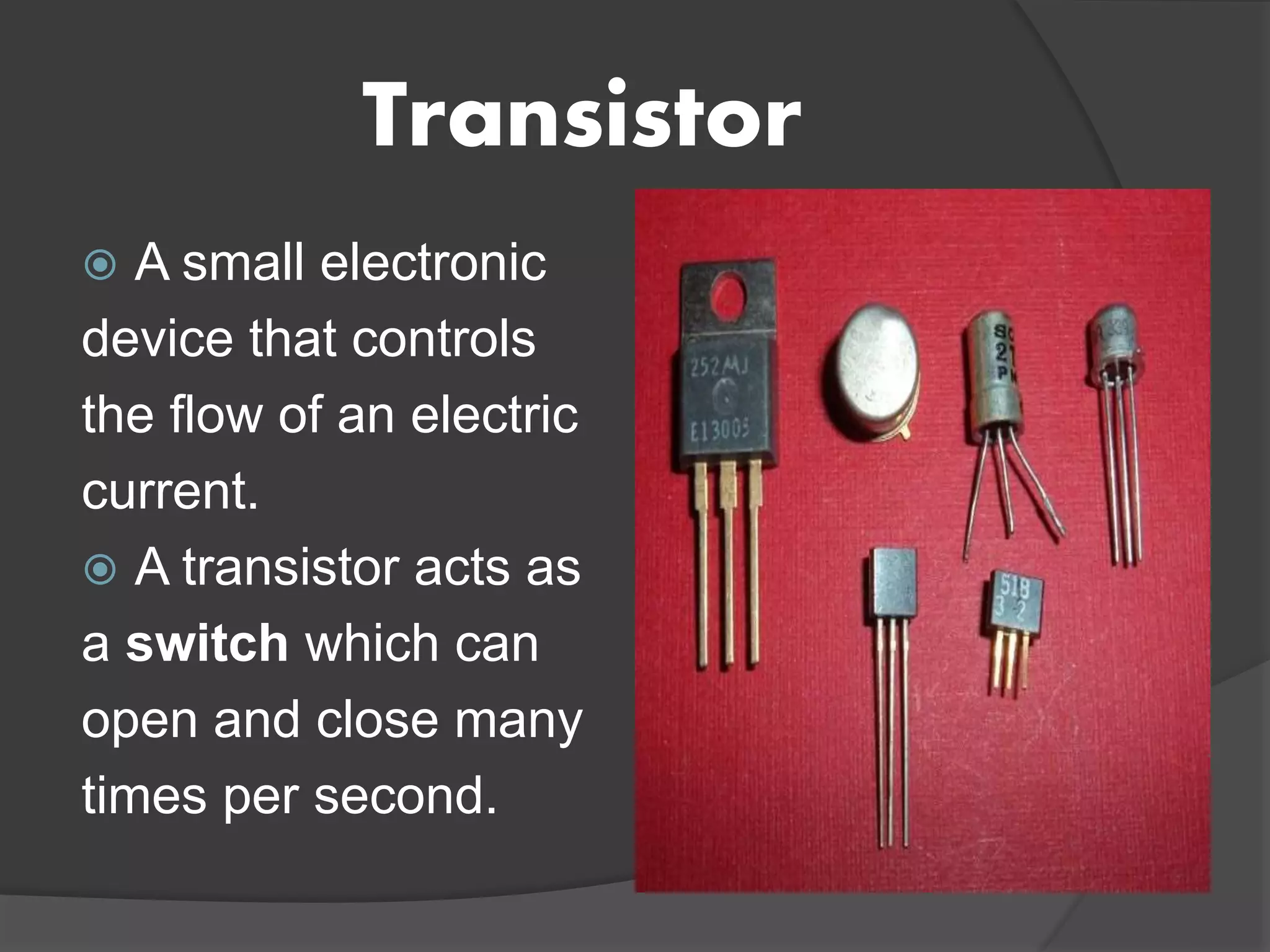
 A small electronic
device that controls
the flow of an electric
current.
 A transistor acts as
a switch which can
open and close many
times per second.
Transistor
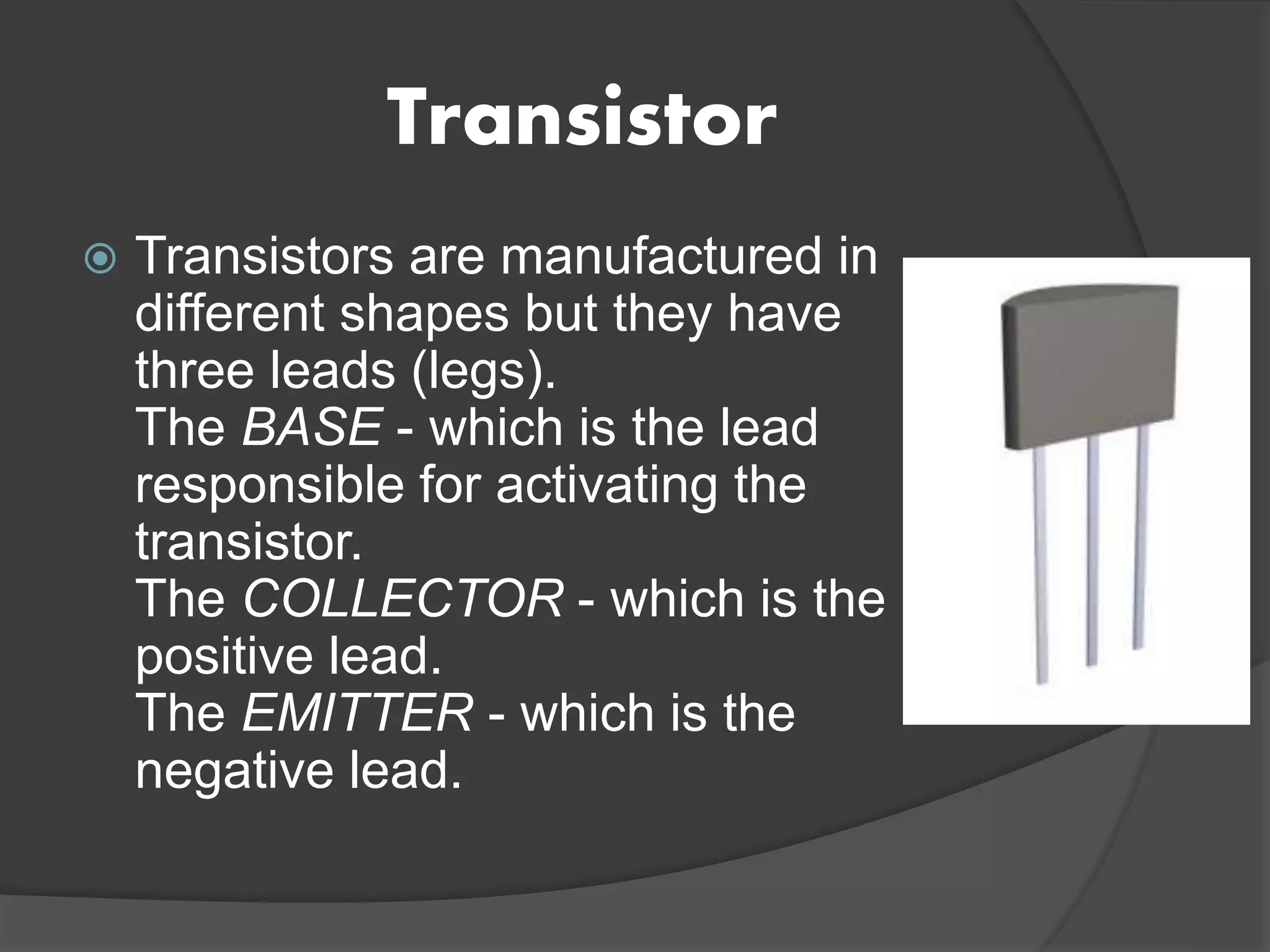
 Transistors are manufactured in
different shapes but they have
three leads (legs).
The BASE - which is the lead
responsible for activating the
transistor.
The COLLECTOR - which is the
positive lead.
The EMITTER - which is the
negative lead.
How does a transistor
work?
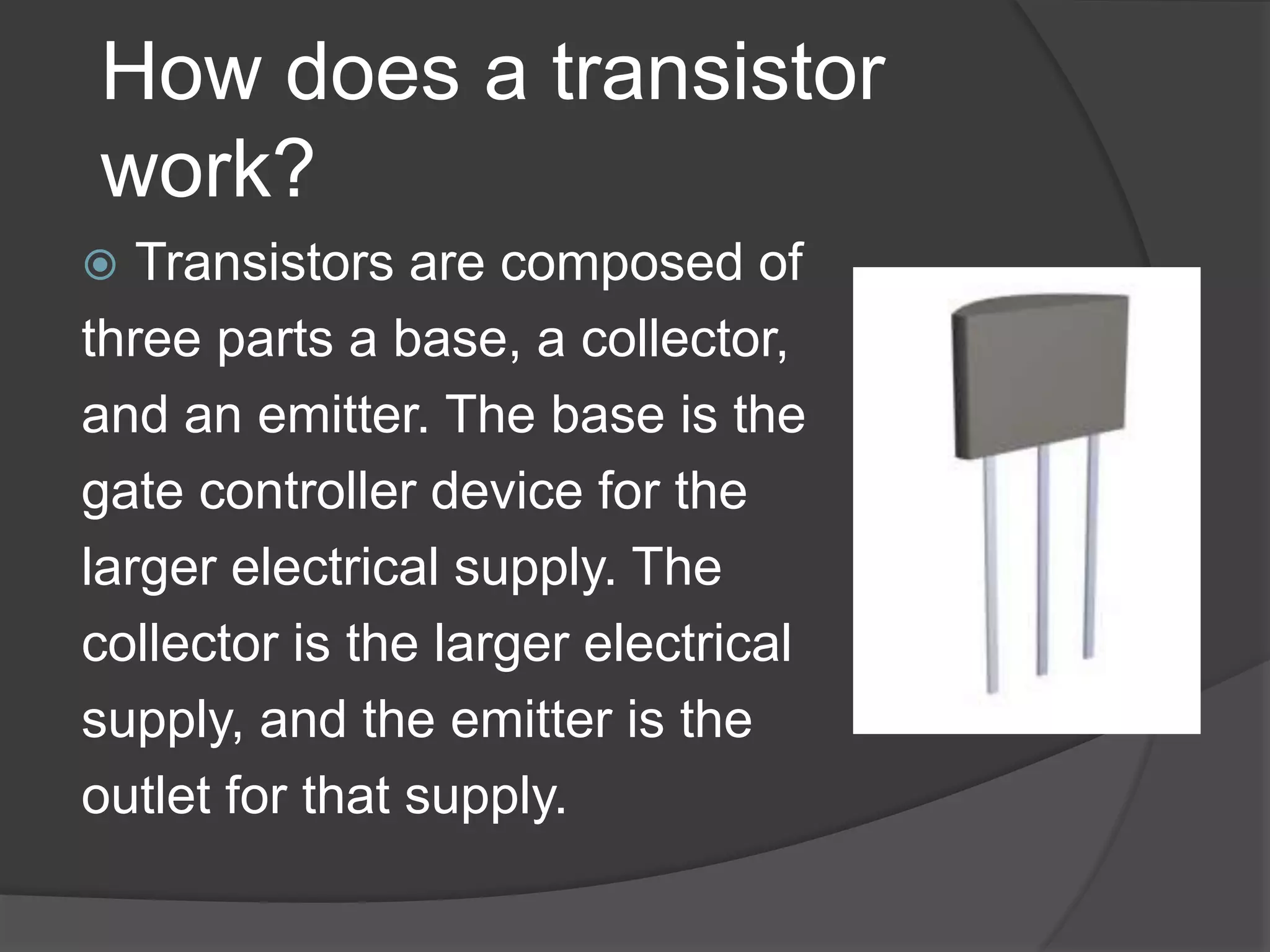
 Transistors are composed of
three parts a base, a collector,
and an emitter. The base is the
gate controller device for the
larger electrical supply. The
collector is the larger electrical
supply, and the emitter is the
outlet for that supply.
Types of Transistor
 There are two types of
standard transistors
NPN
PNP
NPN Transistor
 NPN transistors may serve as
amplifiers. Different levels of electrical
current are sent from the base lead,
which may be used to control a larger
amount of current to amplify electrical
power.
 NPN transistors may also serve as
switches, turning currents on or off.
PNP Transistor
 A small electrical current flowing to the
transistor's base and emitter leads
controls a larger current from the emitter
to the collector. A PNP transistor turns
on its emitter-collector connection if the
voltage at the base is lower than that at
the emitter.
Transistor , NPN & PNP Transistor

Transistor , NPN & PNP Transistor

  • 4.
    Transistor  A smallelectronic device that controls the flow of an electric current.  A transistor acts as a switch which can open and close many times per second.
  • 5.
    Transistor  Transistors aremanufactured in different shapes but they have three leads (legs). The BASE - which is the lead responsible for activating the transistor. The COLLECTOR - which is the positive lead. The EMITTER - which is the negative lead.
  • 6.
    How does atransistor work?  Transistors are composed of three parts a base, a collector, and an emitter. The base is the gate controller device for the larger electrical supply. The collector is the larger electrical supply, and the emitter is the outlet for that supply.
  • 7.
    Types of Transistor There are two types of standard transistors NPN PNP
  • 8.
    NPN Transistor  NPNtransistors may serve as amplifiers. Different levels of electrical current are sent from the base lead, which may be used to control a larger amount of current to amplify electrical power.  NPN transistors may also serve as switches, turning currents on or off.
  • 9.
    PNP Transistor  Asmall electrical current flowing to the transistor's base and emitter leads controls a larger current from the emitter to the collector. A PNP transistor turns on its emitter-collector connection if the voltage at the base is lower than that at the emitter.