
 Fatalities:
 About 5,700 (as of 16 July 2013)
 Damages:
 365 houses destroyed, 275 houses partially
damaged [in Uttrakand]
 4,200 villages affected
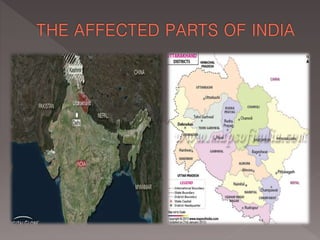
 Areas affected:
 India (Uttarakhand, Himachal Pradesh, Uttar
Pradesh)
Nepal (Far Western Region, Mid Western
Region)
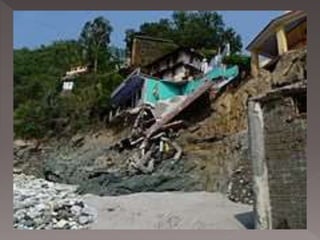
 The above image is showing flooded part in
Darchula district of Nepal.
 Broken end of footbridge over the Mandakini
River at Rudraprayag Sangam.
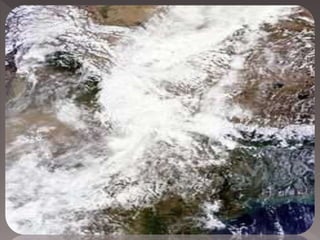
 In June 2013, a multi-day cloudburst centered
on the North Indian state of Uttarakhand
caused devastating floods and landslides in
the country's worst natural disaster since the
2004 tsunami.
 The flooded water came and destroyed
everything.
 As of 16 July 2013, according to figures
provided by the Uttarakhand government,
more than 5,700 people were "presumed
dead.” This total included 934 local residents.
 Destruction of bridges and roads left about
100,000 pilgrims and tourists trapped in the
valleys leading to three of the four Hindu Chota
Char Dham pilgrimage sites.
 The Indian Air Force, the Army and paramilitary
troops evacuated more than 110,000 people
from the flood ravaged area.
 From 14 to 17 June 2013, the Indian state of
Uttarakhand and adjoining area received
heavy rainfall, which was about 375 percent
more than the benchmark rainfall during a
normal monsoon.
 This caused the melting of Chorabari Glacier
at the height of 3800 metres, and eruption of
the Mandakini River which led to heavy floods
near Gobindghat, Kedar Dome, Rudraprayag
district, Uttarakhand, Himachal Pradesh and
Western Nepal, and acute rainfall in other
nearby regions of Delhi, Haryana, Uttar Pradesh
and some parts of Tibet.
 The upper Himalayan territories of Himachal
Pradesh and Uttarakhand are full of forests and
snow-covered mountains and thus remain
relatively inaccessible.
 They are home to several major and historic
Hindu and Sikh pilgrimage sites besides several
tourist.
 Heavy rainfall for four consecutive days as
well as melting snow aggravated the floods
Warnings by the India Meteorological
Department predicting heavy rains were
not given wide publicity beforehand,
causing thousands of people to be caught
unaware, resulting in huge loss of life and
property pots and trekking trails.
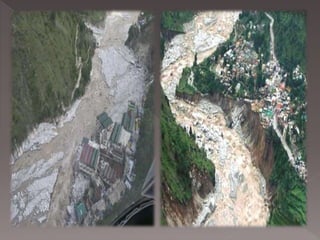
 Landslides, due to the floods, damaged
several houses and structures, killing those who
were trapped.The heavy rains resulted in large
flashfloods and massive landslides.
 Entire villages and settlements such as
Gaurikund and the market town of Ram Bada,
a transition point to Kedarnath, have been
obliterated, while the market town of
Sonprayag suffered heavy damage and loss of
lives.
 Pilgrimage centres in the region, including
Gangotri, Yamunotri, Kedarnath and
Badrinath, the hallowed Hindu Chardham (four
sites) pilgrimage centers, are visited by
thousands of devotees, especially after the
month of May onwards.
 Over 70,000 people were stuck in various
regions because of damaged or blocked
roads.
 People in other important locations like the
Valley of flowers, Roopkund and the Sikh
pilgrimage centre Hemkund were stranded for
more than three days.
 National Highway 58, an important artery
connecting the region was also washed away
near Jyotirmath and in many other places.
 Because summers have more number of tourists,
the number of people impacted is substantial.
 For more than three days, stranded pilgrims and
tourists were without rations or survived on little
food.
 The roads were seriously damaged at more than
450 places, resulting in huge traffic jams, and the
floods caused many cars and other vehicles to be
washed away.
 On June 18, more than 12,000 pilgrims were
stranded at Badrinath, the popular pilgrimage
center located on the banks of the Alaknanda
River.
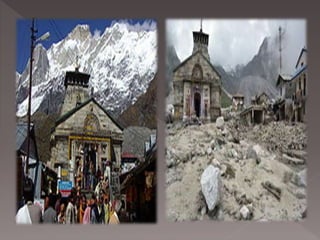
 Kedarnath town Situated in the Himalayan
ranges, the town that grew around the
Kedarnath Temple one of the famous temples
of Shiva in India and part of the Char Dham
yatra, was damaged by the floods and
landslides caused by heavy rain.
 Although the Kedarnath Temple itself had
not been damaged, its base was inundated
with water, mud and boulders from the
landslide, damaging its perimeter.
Many hotels, rest houses and shops around
the temple in Kedarnath township were
destroyed, resulting in several casualties.
 Most of the destruction at Kedarnath was
caused by a sudden rapid melting of ice and
snow on the Kedarnath Mountain, 6 km (3.7 mi)
from the temple, which flooded the Charbari
lake (upstream) and then Kedarnath.
 Temple was flooded with water resulting in
several deaths due to drowning and panic-
driven stampede.
 The Uttarakhand Government announced
that due to the extensive damage to the
infrastructure, the temple will be temporarily
closed to regular pilgrims and tourists for a year
or two, but the temple rituals will still be
maintained by priests.
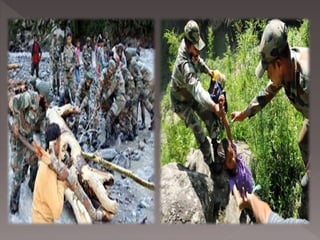
 The Army, Air Force, Navy, Indo-Tibetan Border
Police (ITBP), Border Security Force, National
Disaster Response Force (NDRF), Public Works
Department and local administrations worked
together for quick rescue operations.
 Several thousand soldiers were deployed for
the rescue missions. Activists of political and
social organizations are also involved in the
rescue and management of relief centre.
 The national highway and other important
roads were closed to regular traffic.
 Helicopters were used to rescue people, but
due to the rough terrain, heavy fog and
rainfall, maneuvering them was a challenge.
 By 21 June 2013, the Army had deployed
10,000 soldiers and 11 helicopters, the Navy
had sent 45 naval divers, and the Air force had
deployed 43 aircraft including 36 helicopters.
 From 17 June to 30 June 2013, the IAF airlifted
a total of 18,424 people - flying a total of 2,137
sorties and dropping/landing a total of
3,36,930 kg of relief material and equipment.
 On June 25, one of 3 IAF Mil Mi-17 rescue
helicopters returning from Kedarnath, carrying
5 Air Force Officers, 9 of the NDRF, and 6 of the
ITBP crashed on a mountainous slope near
Gauri Kund, killing all on board.
 Delhi, Gurgaon and surrounding areas
received a high amount of rainfall on 16 June
2013, leading to flooding of the low lying areas
of the cities. The Yamuna River swelled to a
new high of 207.75 meters submerging the low
lying flood plains along the banks.
 Uttar Pradesh
 608 villages, covering a population of 7 lakhs, in
23 districts of Uttar Pradesh were affected by
the flood and As of 11 July 2013 more than 120
deaths were reported from the state.
 Himachal Pradesh
 In Himachal Pradesh, floods caused loss of life
and property and death toll in the state was
20.
 Nepal
 About 6000 citizens of Nepal were visiting the
Indian region, of which 1,000 were rescued as
of June 22, 2013.
 Flooding of the Dhauliganga and the
Mahakali rivers had caused extensive
damage, with reports of 128 houses and 13
government offices swept away and over 1000
people homeless.
 A bridge that joins the India-Nepal border is
highly damaged.
 Unprecedented destruction by the rainfall
witnessed in Uttarakhand state was attributed,
by environmentalists, to unscientific
developmental activities undertaken in recent
decades contributing to high level of loss of
property and lives.
 Roads constructed in haphazard style, new
resorts and hotels built on fragile river banks
and more than 70 hydroelectric projects in the
watersheds of the state led to a "disaster
waiting to happen" as termed by certain
environmentalists.
 Recent severe floods in northern India have
claimed at least 822 lives while efforts to rescue
thousands of stranded survivors have been
made increasingly difficult because of the
ongoing bad weather.
 Throughout the week, rescue missions have
been repeatedly grounded due to heavy rains
and fog and on Tuesday a rescue helicopter
crashed during a medical mission, killing all 20
people on board.
 Mass cremations of the recovered bodies have
begun, after concerns grew about the spread
of diseases. DNA samples, belongings and
photographs are being retrieved so that
families can be informed.
 Zubin Zaman, Humanitarian Manager for Oxfam
India said he was worried about outbreaks of
water-borne diseases, “We are getting reports
from the field that there are rotting bodies lying
around…There are also carcasses of livestock in
rivers and streams and this has, of course,
contaminated so many of their water sources.
 But people are desperate and are being forced
to consume water they wouldn’t otherwise.”
 Although the official death toll now stands at
822, the final number is expected to rise with
hundreds still missing.
 It is believed that some 96,000 people have
been rescued by a 10,000-strong armed forces
team in a disaster dubbed a “Himalayan
tsunami” by media.
North India Floods

North India Floods

  • 4.
     Fatalities:  About5,700 (as of 16 July 2013)  Damages:  365 houses destroyed, 275 houses partially damaged [in Uttrakand]  4,200 villages affected  Areas affected:  India (Uttarakhand, Himachal Pradesh, Uttar Pradesh) Nepal (Far Western Region, Mid Western Region)
  • 6.
     The aboveimage is showing flooded part in Darchula district of Nepal.  Broken end of footbridge over the Mandakini River at Rudraprayag Sangam.  In June 2013, a multi-day cloudburst centered on the North Indian state of Uttarakhand caused devastating floods and landslides in the country's worst natural disaster since the 2004 tsunami.  The flooded water came and destroyed everything.
  • 7.
     As of16 July 2013, according to figures provided by the Uttarakhand government, more than 5,700 people were "presumed dead.” This total included 934 local residents.  Destruction of bridges and roads left about 100,000 pilgrims and tourists trapped in the valleys leading to three of the four Hindu Chota Char Dham pilgrimage sites.  The Indian Air Force, the Army and paramilitary troops evacuated more than 110,000 people from the flood ravaged area.
  • 8.
     From 14to 17 June 2013, the Indian state of Uttarakhand and adjoining area received heavy rainfall, which was about 375 percent more than the benchmark rainfall during a normal monsoon.  This caused the melting of Chorabari Glacier at the height of 3800 metres, and eruption of the Mandakini River which led to heavy floods near Gobindghat, Kedar Dome, Rudraprayag district, Uttarakhand, Himachal Pradesh and Western Nepal, and acute rainfall in other nearby regions of Delhi, Haryana, Uttar Pradesh and some parts of Tibet.
  • 9.
     The upperHimalayan territories of Himachal Pradesh and Uttarakhand are full of forests and snow-covered mountains and thus remain relatively inaccessible.  They are home to several major and historic Hindu and Sikh pilgrimage sites besides several tourist.  Heavy rainfall for four consecutive days as well as melting snow aggravated the floods Warnings by the India Meteorological Department predicting heavy rains were not given wide publicity beforehand, causing thousands of people to be caught unaware, resulting in huge loss of life and property pots and trekking trails.
  • 11.
     Landslides, dueto the floods, damaged several houses and structures, killing those who were trapped.The heavy rains resulted in large flashfloods and massive landslides.  Entire villages and settlements such as Gaurikund and the market town of Ram Bada, a transition point to Kedarnath, have been obliterated, while the market town of Sonprayag suffered heavy damage and loss of lives.
  • 12.
     Pilgrimage centresin the region, including Gangotri, Yamunotri, Kedarnath and Badrinath, the hallowed Hindu Chardham (four sites) pilgrimage centers, are visited by thousands of devotees, especially after the month of May onwards.  Over 70,000 people were stuck in various regions because of damaged or blocked roads.  People in other important locations like the Valley of flowers, Roopkund and the Sikh pilgrimage centre Hemkund were stranded for more than three days.
  • 13.
     National Highway58, an important artery connecting the region was also washed away near Jyotirmath and in many other places.  Because summers have more number of tourists, the number of people impacted is substantial.  For more than three days, stranded pilgrims and tourists were without rations or survived on little food.  The roads were seriously damaged at more than 450 places, resulting in huge traffic jams, and the floods caused many cars and other vehicles to be washed away.  On June 18, more than 12,000 pilgrims were stranded at Badrinath, the popular pilgrimage center located on the banks of the Alaknanda River.
  • 15.
     Kedarnath townSituated in the Himalayan ranges, the town that grew around the Kedarnath Temple one of the famous temples of Shiva in India and part of the Char Dham yatra, was damaged by the floods and landslides caused by heavy rain.  Although the Kedarnath Temple itself had not been damaged, its base was inundated with water, mud and boulders from the landslide, damaging its perimeter. Many hotels, rest houses and shops around the temple in Kedarnath township were destroyed, resulting in several casualties.
  • 16.
     Most ofthe destruction at Kedarnath was caused by a sudden rapid melting of ice and snow on the Kedarnath Mountain, 6 km (3.7 mi) from the temple, which flooded the Charbari lake (upstream) and then Kedarnath.  Temple was flooded with water resulting in several deaths due to drowning and panic- driven stampede.  The Uttarakhand Government announced that due to the extensive damage to the infrastructure, the temple will be temporarily closed to regular pilgrims and tourists for a year or two, but the temple rituals will still be maintained by priests.
  • 18.
     The Army,Air Force, Navy, Indo-Tibetan Border Police (ITBP), Border Security Force, National Disaster Response Force (NDRF), Public Works Department and local administrations worked together for quick rescue operations.  Several thousand soldiers were deployed for the rescue missions. Activists of political and social organizations are also involved in the rescue and management of relief centre.  The national highway and other important roads were closed to regular traffic.
  • 19.
     Helicopters wereused to rescue people, but due to the rough terrain, heavy fog and rainfall, maneuvering them was a challenge.  By 21 June 2013, the Army had deployed 10,000 soldiers and 11 helicopters, the Navy had sent 45 naval divers, and the Air force had deployed 43 aircraft including 36 helicopters.  From 17 June to 30 June 2013, the IAF airlifted a total of 18,424 people - flying a total of 2,137 sorties and dropping/landing a total of 3,36,930 kg of relief material and equipment.  On June 25, one of 3 IAF Mil Mi-17 rescue helicopters returning from Kedarnath, carrying 5 Air Force Officers, 9 of the NDRF, and 6 of the ITBP crashed on a mountainous slope near Gauri Kund, killing all on board.
  • 21.
     Delhi, Gurgaonand surrounding areas received a high amount of rainfall on 16 June 2013, leading to flooding of the low lying areas of the cities. The Yamuna River swelled to a new high of 207.75 meters submerging the low lying flood plains along the banks.  Uttar Pradesh  608 villages, covering a population of 7 lakhs, in 23 districts of Uttar Pradesh were affected by the flood and As of 11 July 2013 more than 120 deaths were reported from the state.
  • 22.
     Himachal Pradesh In Himachal Pradesh, floods caused loss of life and property and death toll in the state was 20.  Nepal  About 6000 citizens of Nepal were visiting the Indian region, of which 1,000 were rescued as of June 22, 2013.  Flooding of the Dhauliganga and the Mahakali rivers had caused extensive damage, with reports of 128 houses and 13 government offices swept away and over 1000 people homeless.  A bridge that joins the India-Nepal border is highly damaged.
  • 24.
     Unprecedented destructionby the rainfall witnessed in Uttarakhand state was attributed, by environmentalists, to unscientific developmental activities undertaken in recent decades contributing to high level of loss of property and lives.  Roads constructed in haphazard style, new resorts and hotels built on fragile river banks and more than 70 hydroelectric projects in the watersheds of the state led to a "disaster waiting to happen" as termed by certain environmentalists.
  • 25.
     Recent severefloods in northern India have claimed at least 822 lives while efforts to rescue thousands of stranded survivors have been made increasingly difficult because of the ongoing bad weather.  Throughout the week, rescue missions have been repeatedly grounded due to heavy rains and fog and on Tuesday a rescue helicopter crashed during a medical mission, killing all 20 people on board.  Mass cremations of the recovered bodies have begun, after concerns grew about the spread of diseases. DNA samples, belongings and photographs are being retrieved so that families can be informed.
  • 26.
     Zubin Zaman,Humanitarian Manager for Oxfam India said he was worried about outbreaks of water-borne diseases, “We are getting reports from the field that there are rotting bodies lying around…There are also carcasses of livestock in rivers and streams and this has, of course, contaminated so many of their water sources.  But people are desperate and are being forced to consume water they wouldn’t otherwise.”  Although the official death toll now stands at 822, the final number is expected to rise with hundreds still missing.  It is believed that some 96,000 people have been rescued by a 10,000-strong armed forces team in a disaster dubbed a “Himalayan tsunami” by media.