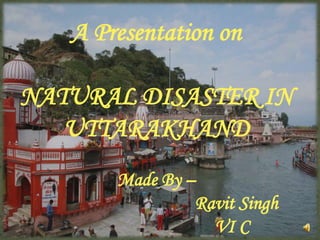
A Presentation on
NATURAL DISASTER IN
UTTARAKHAND
Made By –
Ravit Singh
VI C

1
 Overview of Uttarakhand

 Flooding in Uttrakhand

 Uttarakhand flood: Disaster natural but

damage man-made?
 Consequences
 Rescue and relief operations.

 Causes of the disaster
2
Overview of Uttarakhand
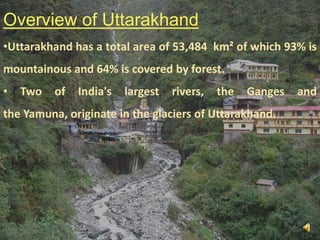
•Uttarakhand has a total area of 53,484 km² of which 93% is
mountainous and 64% is covered by forest.

•

Two

of

India's

largest

rivers,

the

Ganges

and

the Yamuna, originate in the glaciers of Uttarakhand.

3
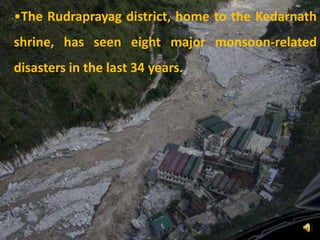
•The Rudraprayag district, home to the Kedarnath
shrine, has seen eight major monsoon-related
disasters in the last 34 years.

4
• It is well know as the "Land of the Gods“.
•Uttrakhand is well known for its chota char dham.

5
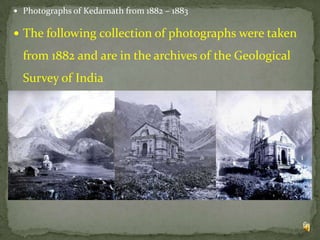
 Photographs of Kedarnath from 1882 – 1883

 The following collection of photographs were taken

from 1882 and are in the archives of the Geological
Survey of India

6
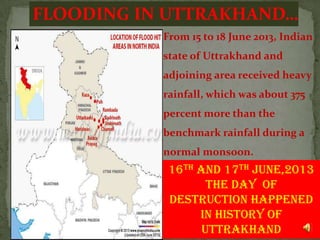
FLOODING IN UTTRAKHAND…
From 15 to 18 June 2013, Indian
state of Uttrakhand and
adjoining area received heavy
rainfall, which was about 375
percent more than the
benchmark rainfall during a
normal monsoon.

16th and 17th June,2013
The Day of
Destruction happened
in history of
7
UTTRAKHAND
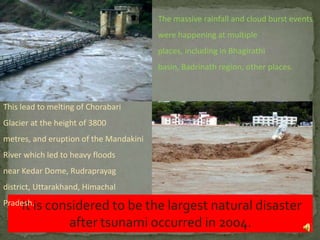
The massive rainfall and cloud burst events
were happening at multiple
places, including in Bhagirathi
basin, Badrinath region, other places.

This lead to melting of Chorabari
Glacier at the height of 3800

metres, and eruption of the Mandakini
River which led to heavy floods
near Kedar Dome, Rudraprayag
district, Uttarakhand, Himachal
Pradesh.is
It

considered to be the largest natural disaster
after tsunami occurred in 2004.
8
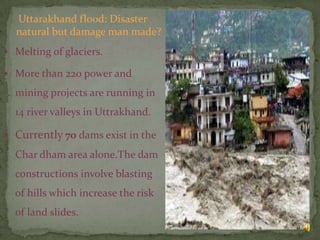
Uttarakhand flood: Disaster
natural but damage man made?
 Melting of glaciers.
 More than 220 power and

mining projects are running in
14 river valleys in Uttrakhand.
 Currently 70 dams exist in the

Char dham area alone.The dam
constructions involve blasting

of hills which increase the risk
of land slides.
9
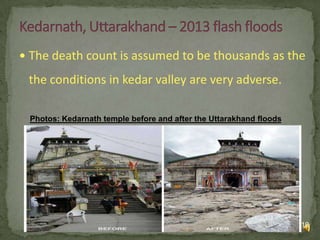
 The death count is assumed to be thousands as the

the conditions in kedar valley are very adverse.
Photos: Kedarnath temple before and after the Uttarakhand floods

10
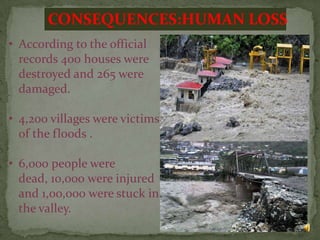
CONSEQUENCES:HUMAN LOSS
• According to the official
records 400 houses were
destroyed and 265 were
damaged.
• 4,200 villages were victims
of the floods .
• 6,000 people were
dead, 10,000 were injured
and 1,00,000 were stuck in
the valley.
11
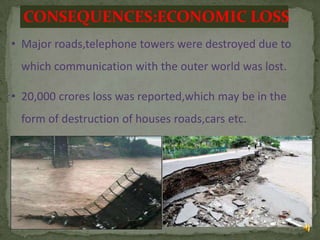
CONSEQUENCES:ECONOMIC LOSS
• Major roads,telephone towers were destroyed due to
which communication with the outer world was lost.
• 20,000 crores loss was reported,which may be in the
form of destruction of houses roads,cars etc.

12
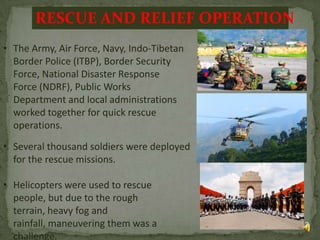
RESCUE AND RELIEF OPERATION
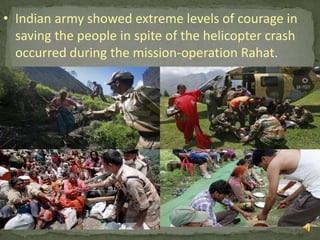
• The Army, Air Force, Navy, Indo-Tibetan
Border Police (ITBP), Border Security
Force, National Disaster Response
Force (NDRF), Public Works
Department and local administrations
worked together for quick rescue
operations.
• Several thousand soldiers were deployed
for the rescue missions.
• Helicopters were used to rescue
people, but due to the rough
terrain, heavy fog and
rainfall, maneuvering them was a
challenge.

13
• Indian army showed extreme levels of courage in
saving the people in spite of the helicopter crash
occurred during the mission-operation Rahat.

14
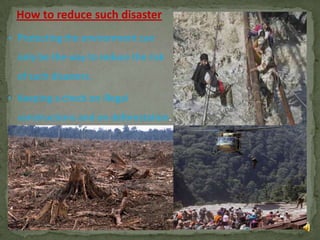
How to reduce such disaster
• Protecting the environment can

only be the way to reduce the risk
of such disasters.
• Keeping a check on illegal

constructions and on deforestation.

15
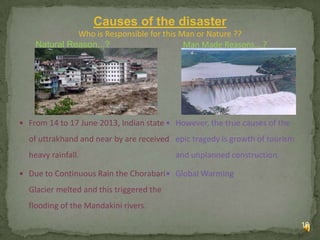
Causes of the disaster
Who is Responsible for this Man or Nature ??
Natural Reason...?
Man Made Reasons….?

 From 14 to 17 June 2013, Indian state  However, the true causes of the

of uttrakhand and near by are received epic tragedy is growth of tourism
heavy rainfall.

and unplanned construction.

 Due to Continuous Rain the Chorabari  Global Warming

Glacier melted and this triggered the
flooding of the Mandakini rivers.
16
Isn’t man faulty?
17
• Thanks to the Indian Army

Officers who helped in

conducting the rescue
missions.
18
19

Natural Disaster in Uttarakhand

  • 1.
    A Presentation on NATURALDISASTER IN UTTARAKHAND Made By – Ravit Singh VI C 1
  • 2.
     Overview ofUttarakhand  Flooding in Uttrakhand  Uttarakhand flood: Disaster natural but damage man-made?  Consequences  Rescue and relief operations.  Causes of the disaster 2
  • 3.
    Overview of Uttarakhand •Uttarakhandhas a total area of 53,484 km² of which 93% is mountainous and 64% is covered by forest. • Two of India's largest rivers, the Ganges and the Yamuna, originate in the glaciers of Uttarakhand. 3
  • 4.
    •The Rudraprayag district,home to the Kedarnath shrine, has seen eight major monsoon-related disasters in the last 34 years. 4
  • 5.
    • It iswell know as the "Land of the Gods“. •Uttrakhand is well known for its chota char dham. 5
  • 6.
     Photographs ofKedarnath from 1882 – 1883  The following collection of photographs were taken from 1882 and are in the archives of the Geological Survey of India 6
  • 7.
    FLOODING IN UTTRAKHAND… From15 to 18 June 2013, Indian state of Uttrakhand and adjoining area received heavy rainfall, which was about 375 percent more than the benchmark rainfall during a normal monsoon. 16th and 17th June,2013 The Day of Destruction happened in history of 7 UTTRAKHAND
  • 8.
    The massive rainfalland cloud burst events were happening at multiple places, including in Bhagirathi basin, Badrinath region, other places. This lead to melting of Chorabari Glacier at the height of 3800 metres, and eruption of the Mandakini River which led to heavy floods near Kedar Dome, Rudraprayag district, Uttarakhand, Himachal Pradesh.is It considered to be the largest natural disaster after tsunami occurred in 2004. 8
  • 9.
    Uttarakhand flood: Disaster naturalbut damage man made?  Melting of glaciers.  More than 220 power and mining projects are running in 14 river valleys in Uttrakhand.  Currently 70 dams exist in the Char dham area alone.The dam constructions involve blasting of hills which increase the risk of land slides. 9
  • 10.
     The deathcount is assumed to be thousands as the the conditions in kedar valley are very adverse. Photos: Kedarnath temple before and after the Uttarakhand floods 10
  • 11.
    CONSEQUENCES:HUMAN LOSS • Accordingto the official records 400 houses were destroyed and 265 were damaged. • 4,200 villages were victims of the floods . • 6,000 people were dead, 10,000 were injured and 1,00,000 were stuck in the valley. 11
  • 12.
    CONSEQUENCES:ECONOMIC LOSS • Majorroads,telephone towers were destroyed due to which communication with the outer world was lost. • 20,000 crores loss was reported,which may be in the form of destruction of houses roads,cars etc. 12
  • 13.
    RESCUE AND RELIEFOPERATION • The Army, Air Force, Navy, Indo-Tibetan Border Police (ITBP), Border Security Force, National Disaster Response Force (NDRF), Public Works Department and local administrations worked together for quick rescue operations. • Several thousand soldiers were deployed for the rescue missions. • Helicopters were used to rescue people, but due to the rough terrain, heavy fog and rainfall, maneuvering them was a challenge. 13
  • 14.
    • Indian armyshowed extreme levels of courage in saving the people in spite of the helicopter crash occurred during the mission-operation Rahat. 14
  • 15.
    How to reducesuch disaster • Protecting the environment can only be the way to reduce the risk of such disasters. • Keeping a check on illegal constructions and on deforestation. 15
  • 16.
    Causes of thedisaster Who is Responsible for this Man or Nature ?? Natural Reason...? Man Made Reasons….?  From 14 to 17 June 2013, Indian state  However, the true causes of the of uttrakhand and near by are received epic tragedy is growth of tourism heavy rainfall. and unplanned construction.  Due to Continuous Rain the Chorabari  Global Warming Glacier melted and this triggered the flooding of the Mandakini rivers. 16
  • 17.
  • 18.
    • Thanks tothe Indian Army Officers who helped in conducting the rescue missions. 18
  • 19.