
CASE STUDY ON 
UTTARAKHAND DISASTER 
DISASTER MANAGEMENT
PRINCIPLES OF MANAGEMENT 
 Group no: 8 
Name Roll No. 
Amit soni 99 
Charudatt Sharma 87 
Harpreet 75 
Mohini Patil 64 
Ravi Yadav 119 
Roshan Shanbhag 85
OVERVIEW 
 Introduction 
 Before Disaster 
 After disaster 
 Reason for disaster 
 Disaster management 
 PEST analysis 
 Suggestions and recommendation.
INTRODUCTION 
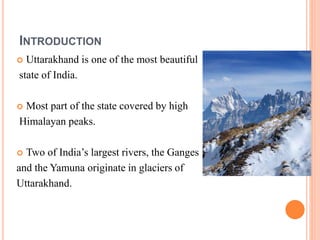
 Uttarakhand is one of the most beautiful 
state of India. 
 Most part of the state covered by high 
Himalayan peaks. 
 Two of India’s largest rivers, the Ganges 
and the Yamuna originate in glaciers of 
Uttarakhand.
INTRODUCTION 
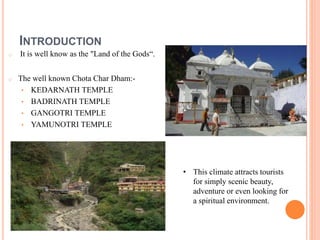
o It is well know as the "Land of the Gods“. 
o The well known Chota Char Dham:- 
• KEDARNATH TEMPLE 
• BADRINATH TEMPLE 
• GANGOTRI TEMPLE 
• YAMUNOTRI TEMPLE 
• This climate attracts tourists 
for simply scenic beauty, 
adventure or even looking for 
a spiritual environment.
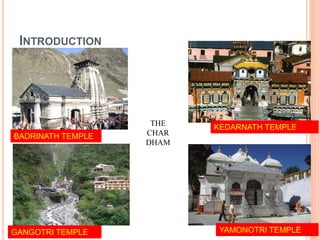
INTRODUCTION 
BADRINATH TEMPLE 
KEDARNATH TEMPLE 
THE 
CHAR 
DHAM 
GANGOTRI TEMPLE YAMONOTRI TEMPLE
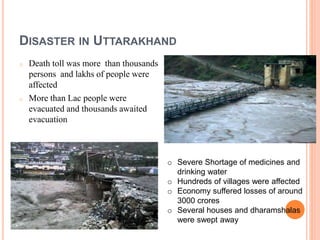
DISASTER IN UTTARAKHAND 
o Death toll was more than thousands 
persons and lakhs of people were 
affected 
o More than Lac people were 
evacuated and thousands awaited 
evacuation 
o Severe Shortage of medicines and 
drinking water 
o Hundreds of villages were affected 
o Economy suffered losses of around 
3000 crores 
o Several houses and dharamshalas 
were swept away
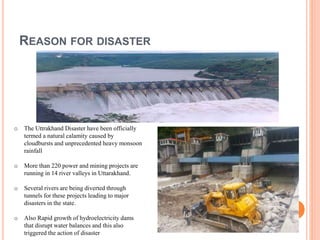
REASON FOR DISASTER 
o The Uttrakhand Disaster have been officially 
termed a natural calamity caused by 
cloudbursts and unprecedented heavy monsoon 
rainfall 
o More than 220 power and mining projects are 
running in 14 river valleys in Uttarakhand. 
o Several rivers are being diverted through 
tunnels for these projects leading to major 
disasters in the state. 
o Also Rapid growth of hydroelectricity dams 
that disrupt water balances and this also 
triggered the action of disaster
REASON FOR DISASTER 
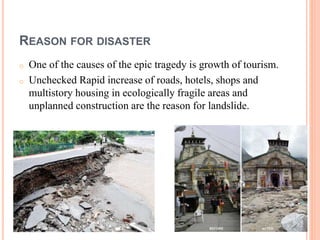
o One of the causes of the epic tragedy is growth of tourism. 
o Unchecked Rapid increase of roads, hotels, shops and 
multistory housing in ecologically fragile areas and 
unplanned construction are the reason for landslide.
DISASTER MANAGEMENT 
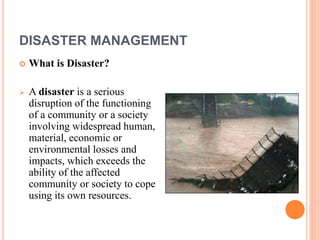
 What is Disaster? 
 A disaster is a serious 
disruption of the functioning 
of a community or a society 
involving widespread human, 
material, economic or 
environmental losses and 
impacts, which exceeds the 
ability of the affected 
community or society to cope 
using its own resources.
DISASTER MANAGEMENT 
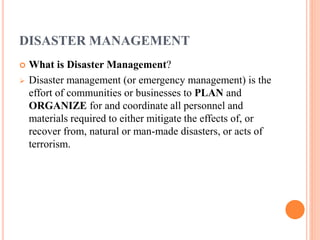
 What is Disaster Management? 
 Disaster management (or emergency management) is the 
effort of communities or businesses to PLAN and 
ORGANIZE for and coordinate all personnel and 
materials required to either mitigate the effects of, or 
recover from, natural or man-made disasters, or acts of 
terrorism.
DISASTER MANAGEMENT 
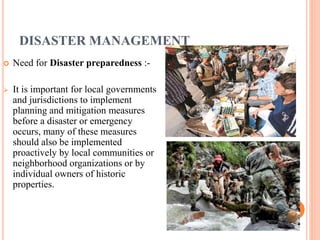
 Need for Disaster preparedness :- 
 It is important for local governments 
and jurisdictions to implement 
planning and mitigation measures 
before a disaster or emergency 
occurs, many of these measures 
should also be implemented 
proactively by local communities or 
neighborhood organizations or by 
individual owners of historic 
properties.
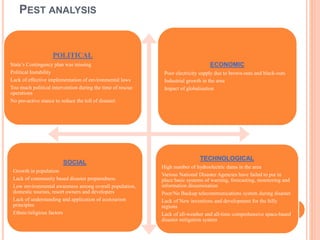
PEST ANALYSIS 
POLITICAL 
State’s Contingency plan was missing 
Political Instability 
Lack of effective implementation of environmental laws 
Too much political intervention during the time of rescue 
operations 
No pro-active stance to reduce the toll of disaster. 
ECONOMIC 
Poor electricity supply due to brown-outs and black-outs 
Industrial growth in the area 
Impact of globalisation 
SOCIAL 
Growth in population 
Lack of community based disaster preparedness 
Low environmental awareness among overall population, 
domestic tourists, resort owners and developers 
Lack of understanding and application of ecotourism 
principles 
Ethnic/religious factors 
TECHNOLOGICAL 
High number of hydroelectric dams in the area 
Various National Disaster Agencies have failed to put in 
place basic systems of warning, forecasting, monitoring and 
information dissemination 
Poor/No Backup telecommunications system during disaster 
Lack of New inventions and development for the hilly 
regions 
Lack of all-weather and all-time comprehensive space-based 
disaster mitigation system
SUGGESTIONS AND RECOMMENDATIONS 
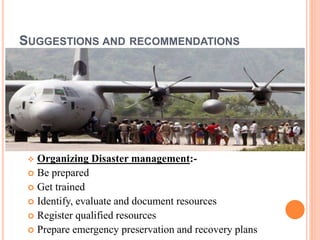
 Organizing Disaster management:- 
 Be prepared 
 Get trained 
 Identify, evaluate and document resources 
 Register qualified resources 
 Prepare emergency preservation and recovery plans
SUGGESTIONS AND RECOMMENDATIONS 
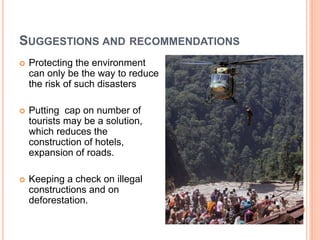
 Protecting the environment 
can only be the way to reduce 
the risk of such disasters 
 Putting cap on number of 
tourists may be a solution, 
which reduces the 
construction of hotels, 
expansion of roads. 
 Keeping a check on illegal 
constructions and on 
deforestation.
SUGGESTIONS AND RECOMMENDATIONS 
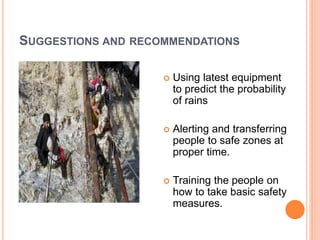
 Using latest equipment 
to predict the probability 
of rains 
 Alerting and transferring 
people to safe zones at 
proper time. 
 Training the people on 
how to take basic safety 
measures.
Case Study on Uttarkhand Disaster(Organising)

Case Study on Uttarkhand Disaster(Organising)

  • 1.
    CASE STUDY ON UTTARAKHAND DISASTER DISASTER MANAGEMENT
  • 2.
    PRINCIPLES OF MANAGEMENT  Group no: 8 Name Roll No. Amit soni 99 Charudatt Sharma 87 Harpreet 75 Mohini Patil 64 Ravi Yadav 119 Roshan Shanbhag 85
  • 3.
    OVERVIEW  Introduction  Before Disaster  After disaster  Reason for disaster  Disaster management  PEST analysis  Suggestions and recommendation.
  • 4.
    INTRODUCTION  Uttarakhandis one of the most beautiful state of India.  Most part of the state covered by high Himalayan peaks.  Two of India’s largest rivers, the Ganges and the Yamuna originate in glaciers of Uttarakhand.
  • 5.
    INTRODUCTION o Itis well know as the "Land of the Gods“. o The well known Chota Char Dham:- • KEDARNATH TEMPLE • BADRINATH TEMPLE • GANGOTRI TEMPLE • YAMUNOTRI TEMPLE • This climate attracts tourists for simply scenic beauty, adventure or even looking for a spiritual environment.
  • 6.
    INTRODUCTION BADRINATH TEMPLE KEDARNATH TEMPLE THE CHAR DHAM GANGOTRI TEMPLE YAMONOTRI TEMPLE
  • 7.
    DISASTER IN UTTARAKHAND o Death toll was more than thousands persons and lakhs of people were affected o More than Lac people were evacuated and thousands awaited evacuation o Severe Shortage of medicines and drinking water o Hundreds of villages were affected o Economy suffered losses of around 3000 crores o Several houses and dharamshalas were swept away
  • 8.
    REASON FOR DISASTER o The Uttrakhand Disaster have been officially termed a natural calamity caused by cloudbursts and unprecedented heavy monsoon rainfall o More than 220 power and mining projects are running in 14 river valleys in Uttarakhand. o Several rivers are being diverted through tunnels for these projects leading to major disasters in the state. o Also Rapid growth of hydroelectricity dams that disrupt water balances and this also triggered the action of disaster
  • 9.
    REASON FOR DISASTER o One of the causes of the epic tragedy is growth of tourism. o Unchecked Rapid increase of roads, hotels, shops and multistory housing in ecologically fragile areas and unplanned construction are the reason for landslide.
  • 10.
    DISASTER MANAGEMENT What is Disaster?  A disaster is a serious disruption of the functioning of a community or a society involving widespread human, material, economic or environmental losses and impacts, which exceeds the ability of the affected community or society to cope using its own resources.
  • 11.
    DISASTER MANAGEMENT What is Disaster Management?  Disaster management (or emergency management) is the effort of communities or businesses to PLAN and ORGANIZE for and coordinate all personnel and materials required to either mitigate the effects of, or recover from, natural or man-made disasters, or acts of terrorism.
  • 12.
    DISASTER MANAGEMENT Need for Disaster preparedness :-  It is important for local governments and jurisdictions to implement planning and mitigation measures before a disaster or emergency occurs, many of these measures should also be implemented proactively by local communities or neighborhood organizations or by individual owners of historic properties.
  • 13.
    PEST ANALYSIS POLITICAL State’s Contingency plan was missing Political Instability Lack of effective implementation of environmental laws Too much political intervention during the time of rescue operations No pro-active stance to reduce the toll of disaster. ECONOMIC Poor electricity supply due to brown-outs and black-outs Industrial growth in the area Impact of globalisation SOCIAL Growth in population Lack of community based disaster preparedness Low environmental awareness among overall population, domestic tourists, resort owners and developers Lack of understanding and application of ecotourism principles Ethnic/religious factors TECHNOLOGICAL High number of hydroelectric dams in the area Various National Disaster Agencies have failed to put in place basic systems of warning, forecasting, monitoring and information dissemination Poor/No Backup telecommunications system during disaster Lack of New inventions and development for the hilly regions Lack of all-weather and all-time comprehensive space-based disaster mitigation system
  • 14.
    SUGGESTIONS AND RECOMMENDATIONS  Organizing Disaster management:-  Be prepared  Get trained  Identify, evaluate and document resources  Register qualified resources  Prepare emergency preservation and recovery plans
  • 15.
    SUGGESTIONS AND RECOMMENDATIONS  Protecting the environment can only be the way to reduce the risk of such disasters  Putting cap on number of tourists may be a solution, which reduces the construction of hotels, expansion of roads.  Keeping a check on illegal constructions and on deforestation.
  • 16.
    SUGGESTIONS AND RECOMMENDATIONS  Using latest equipment to predict the probability of rains  Alerting and transferring people to safe zones at proper time.  Training the people on how to take basic safety measures.