1
 What is communication?
 What is non-verbal communication?
 Verbal communication with non-verbal
communication
 Difference between verbal & non-verbal
communication
 Importance of non-verbal communication
 Forms of non-verbal communication
2
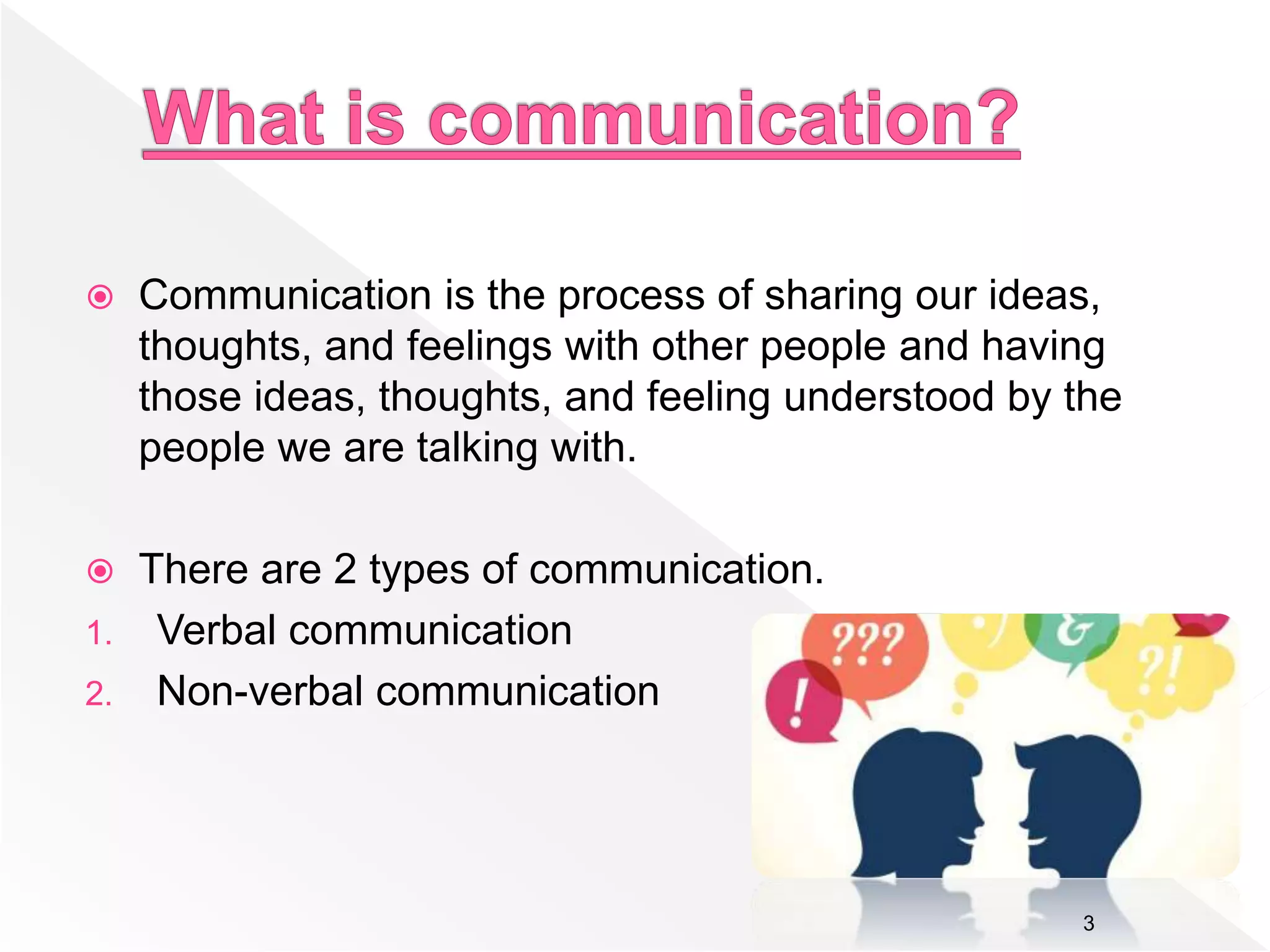
 Communication is the process of sharing our ideas,
thoughts, and feelings with other people and having
those ideas, thoughts, and feeling understood by the
people we are talking with.
 There are 2 types of communication.
1. Verbal communication
2. Non-verbal communication
3
 Non-verbal = communication
communication without words
 Facial expressions, gestures, body language,
paralanguage,
distance, eye contact,
touch, and appearance.
4
 The verbal communication and non-verbal
communication are interconnected and they
operate together in communication.
5
 Verbal and non-verbal are all types of
communication. But the difference between
them is that we use our voice in verbal
communication and we use body signs in
non-verbal communication.
6
 Non-verbal communication plays an
important role in how people interact with
one another. People are using around 35%
verbal communication and
65% non-verbal communication
in daily life.
7
 Eye contact
 Facial expressions
 Posture
 Haptic or Touch
 Gestures
 Personal space
8
 Eye contact, a key
characteristic of
non-verbal
communication.
 Expresses much
without using a
single word.
9
 Facial expressions
are the main
characteristics of
non-verbal
communication.
 Your facial
expression can
communicate
happiness, sadness,
anger or
fear.
10
 Posture and how you carry your self tells a lot
about you.
 How you walk, sit, stand or hold your head not
only indicates your current mood, but also your
personality in general.
11
 Haptic communication is
communicating by touch.
 Touch is the characteristic
of nonverbal
communication and used
when we come into
physical contact with other
people.
12
 A gesture is a characteristic
of non-verbal
communication in which
visible body actions
communicate particular
message.
 Gestures include movement
of the hands, face or other
parts of body.
13
 Personal space is your
“bubble” – the space you
place between yourself and
others.
 This invisible boundary
becomes apparent only
when someone bumps or
tries to enter you
bubble.
14
15
16

Nonverbal communication .

  • 1.
  • 2.
     What iscommunication?  What is non-verbal communication?  Verbal communication with non-verbal communication  Difference between verbal & non-verbal communication  Importance of non-verbal communication  Forms of non-verbal communication 2
  • 3.
     Communication isthe process of sharing our ideas, thoughts, and feelings with other people and having those ideas, thoughts, and feeling understood by the people we are talking with.  There are 2 types of communication. 1. Verbal communication 2. Non-verbal communication 3
  • 4.
     Non-verbal =communication communication without words  Facial expressions, gestures, body language, paralanguage, distance, eye contact, touch, and appearance. 4
  • 5.
     The verbalcommunication and non-verbal communication are interconnected and they operate together in communication. 5
  • 6.
     Verbal andnon-verbal are all types of communication. But the difference between them is that we use our voice in verbal communication and we use body signs in non-verbal communication. 6
  • 7.
     Non-verbal communicationplays an important role in how people interact with one another. People are using around 35% verbal communication and 65% non-verbal communication in daily life. 7
  • 8.
     Eye contact Facial expressions  Posture  Haptic or Touch  Gestures  Personal space 8
  • 9.
     Eye contact,a key characteristic of non-verbal communication.  Expresses much without using a single word. 9
  • 10.
     Facial expressions arethe main characteristics of non-verbal communication.  Your facial expression can communicate happiness, sadness, anger or fear. 10
  • 11.
     Posture andhow you carry your self tells a lot about you.  How you walk, sit, stand or hold your head not only indicates your current mood, but also your personality in general. 11
  • 12.
     Haptic communicationis communicating by touch.  Touch is the characteristic of nonverbal communication and used when we come into physical contact with other people. 12
  • 13.
     A gestureis a characteristic of non-verbal communication in which visible body actions communicate particular message.  Gestures include movement of the hands, face or other parts of body. 13
  • 14.
     Personal spaceis your “bubble” – the space you place between yourself and others.  This invisible boundary becomes apparent only when someone bumps or tries to enter you bubble. 14
  • 15.
  • 16.