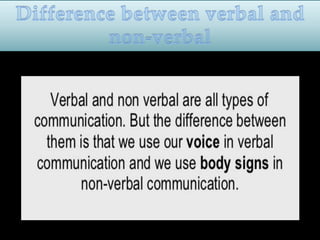
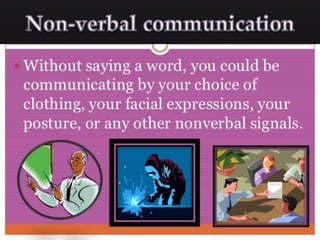
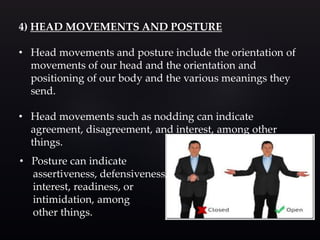
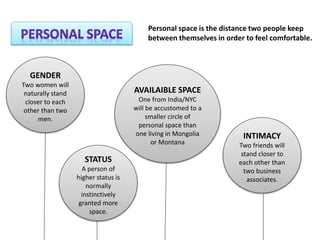
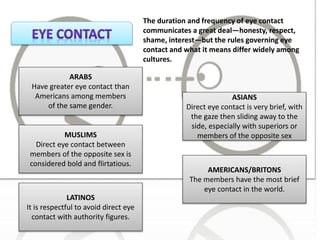
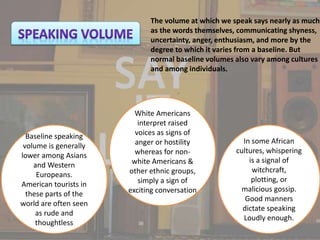
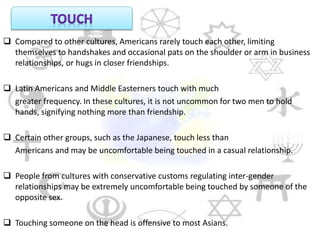
This document discusses nonverbal communication. It begins by defining nonverbal communication as messages transmitted without words through vocal sounds, body language, touch, eye contact, space, time, appearance and objects. It then discusses several key points about nonverbal communication:
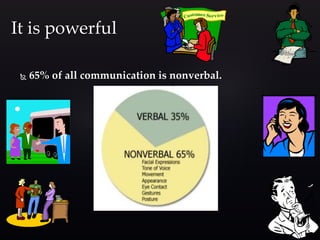
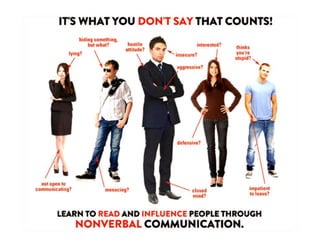
- 65% of communication is nonverbal. Nonverbal cues can reinforce, contradict or substitute verbal messages.
- There are several characteristics of nonverbal communication including that it is often ambiguous, continuous and multichannel.
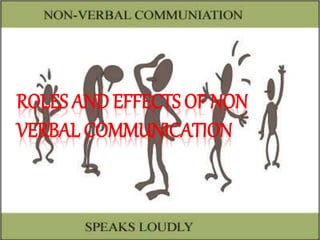
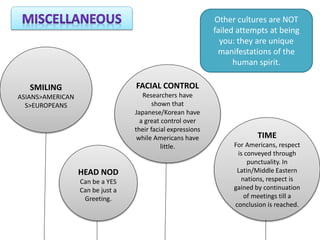
- Nonverbal communication plays important roles in relationships, workplace performance and can cause intercultural friction if misunderstood across cultures.
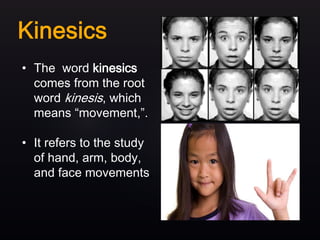
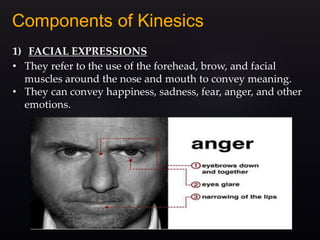
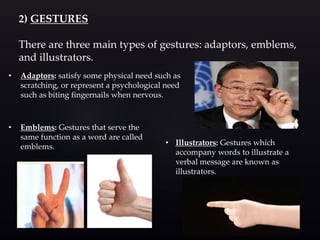
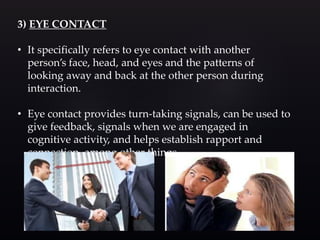
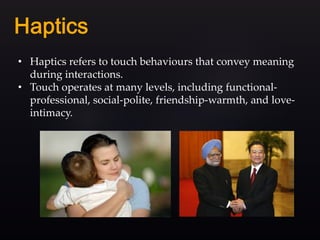
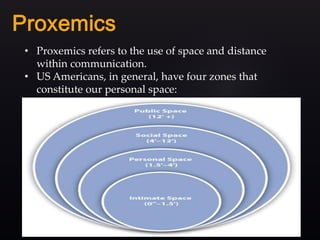
- Specific types of nonverbal cues like kinesics, proxemics, paralanguage and