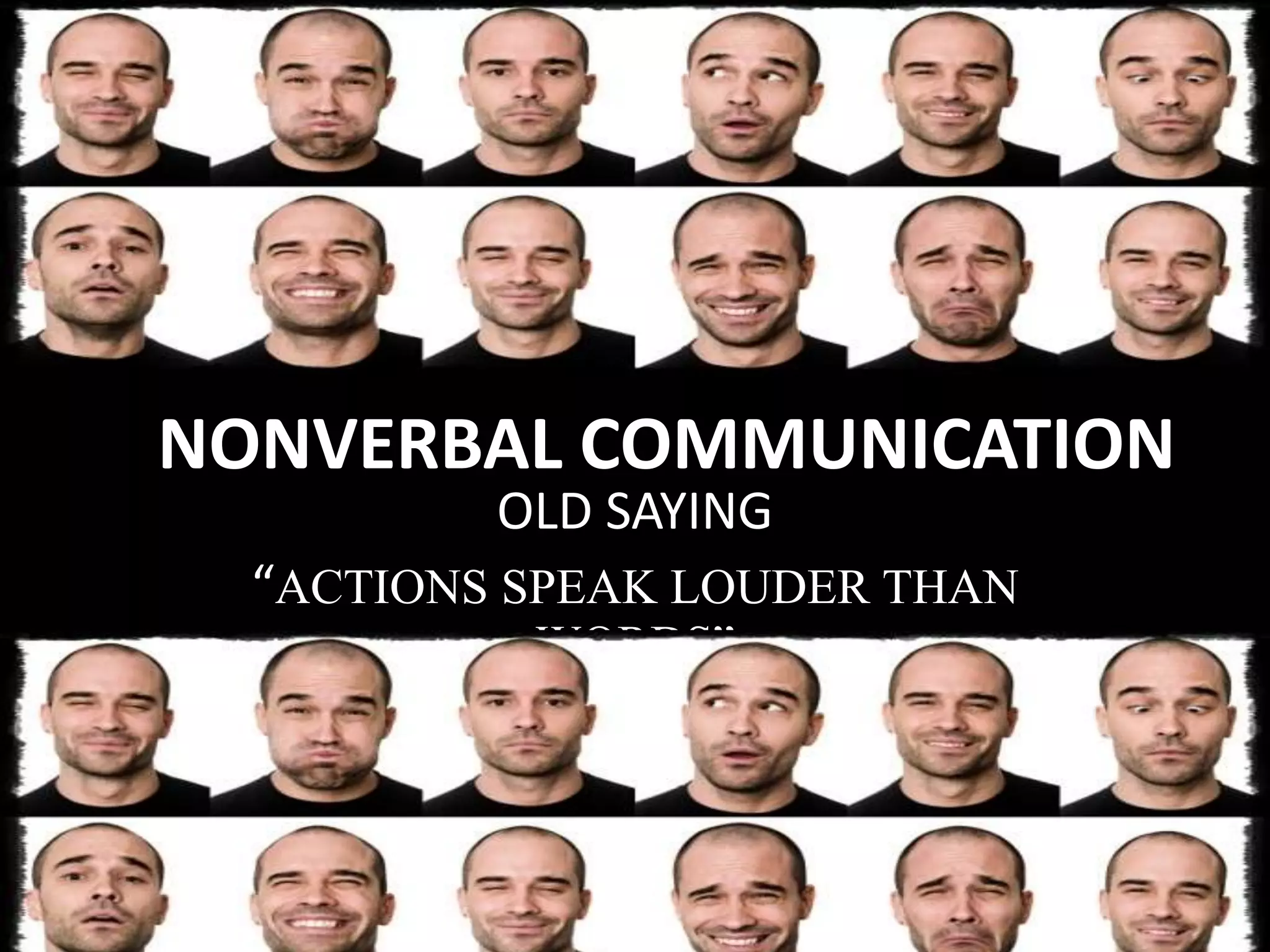


NONVERBAL COMMUNICATION
OLD SAYING
“ACTIONS SPEAK LOUDER THAN
WORDS”
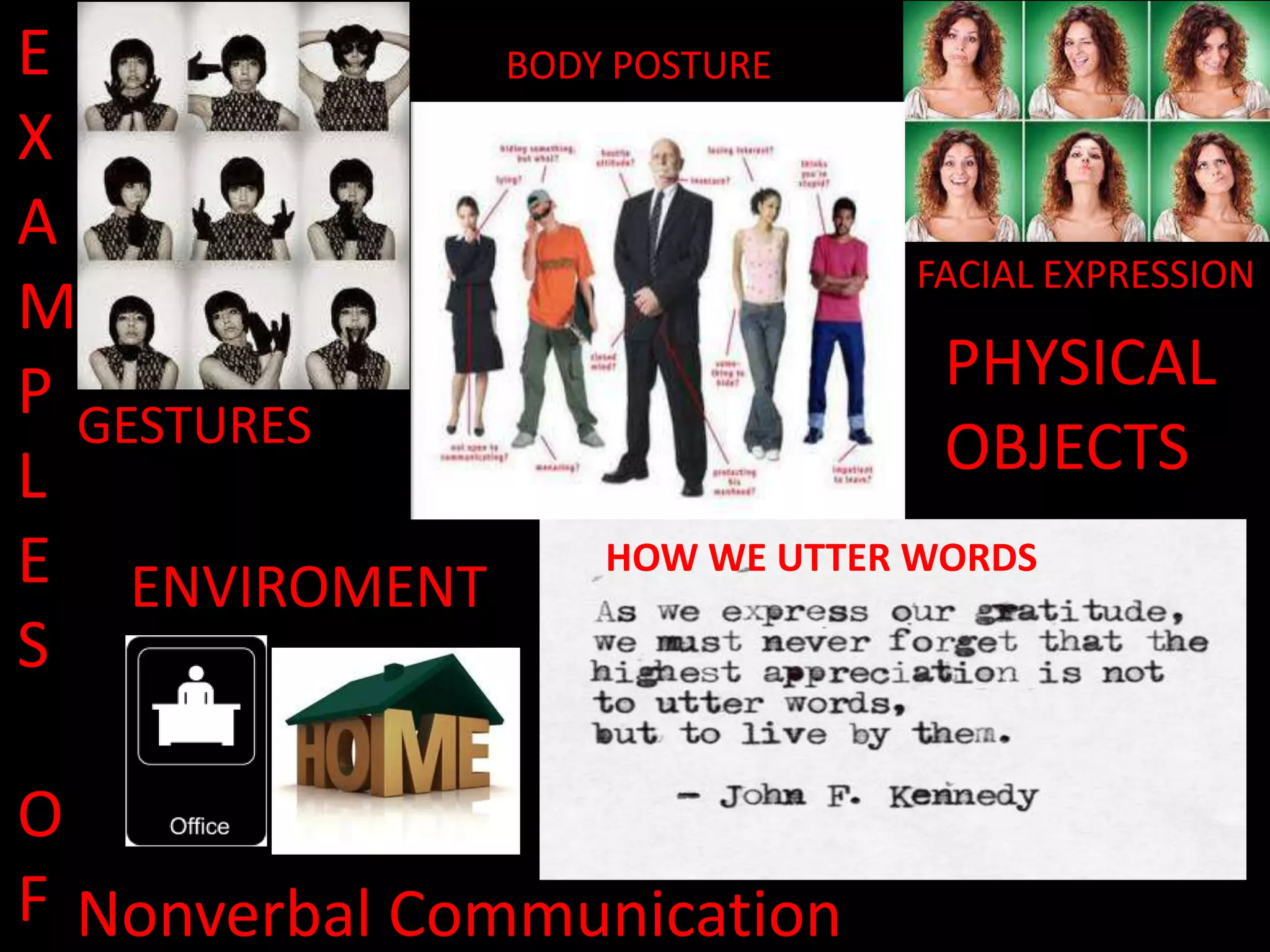
Nonverbal Communication
E
X
A
M
P
L
E
S
O
F
FACIAL EXPRESSION
BODY POSTURE
PHYSICAL
OBJECTSGESTURES
HOW WE UTTER WORDS
ENVIROMENT
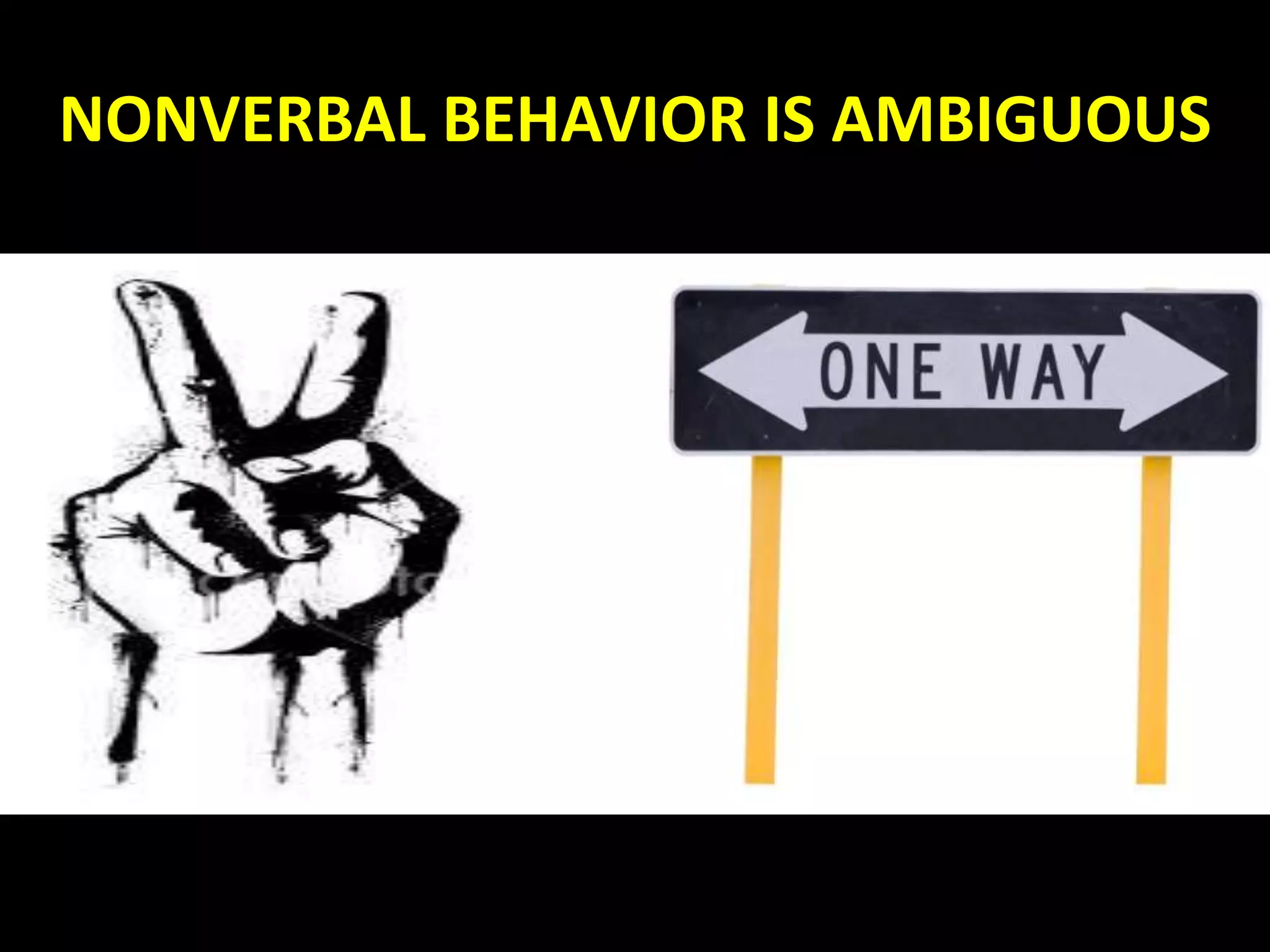
NONVERBAL BEHAVIOR IS AMBIGUOUS
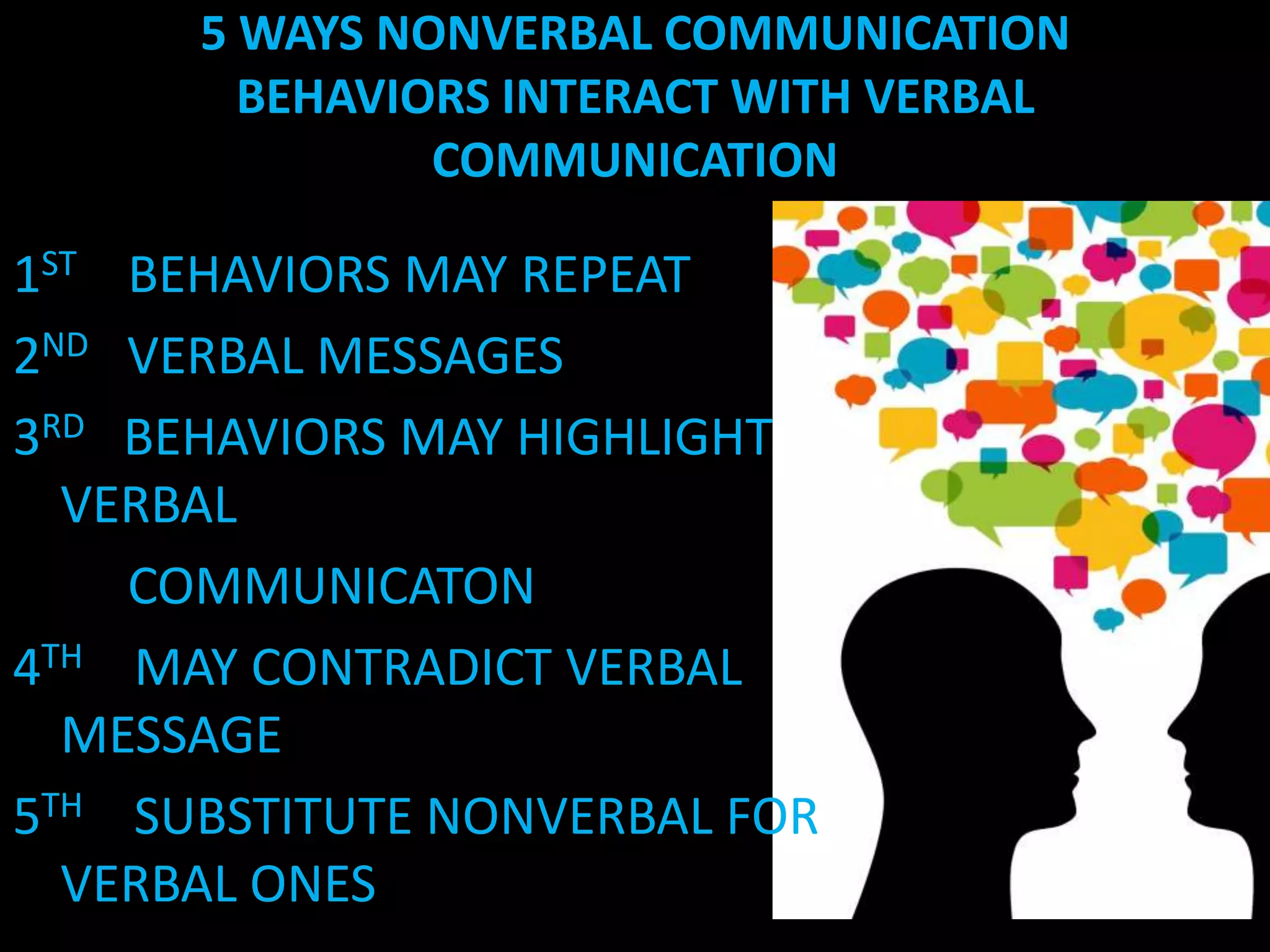
5 WAYS NONVERBAL COMMUNICATION
BEHAVIORS INTERACT WITH VERBAL
COMMUNICATION
1ST BEHAVIORS MAY REPEAT
2ND VERBAL MESSAGES
3RD BEHAVIORS MAY HIGHLIGHT
VERBAL
COMMUNICATON
4TH MAY CONTRADICT VERBAL
MESSAGE
5TH SUBSTITUTE NONVERBAL FOR
VERBAL ONES
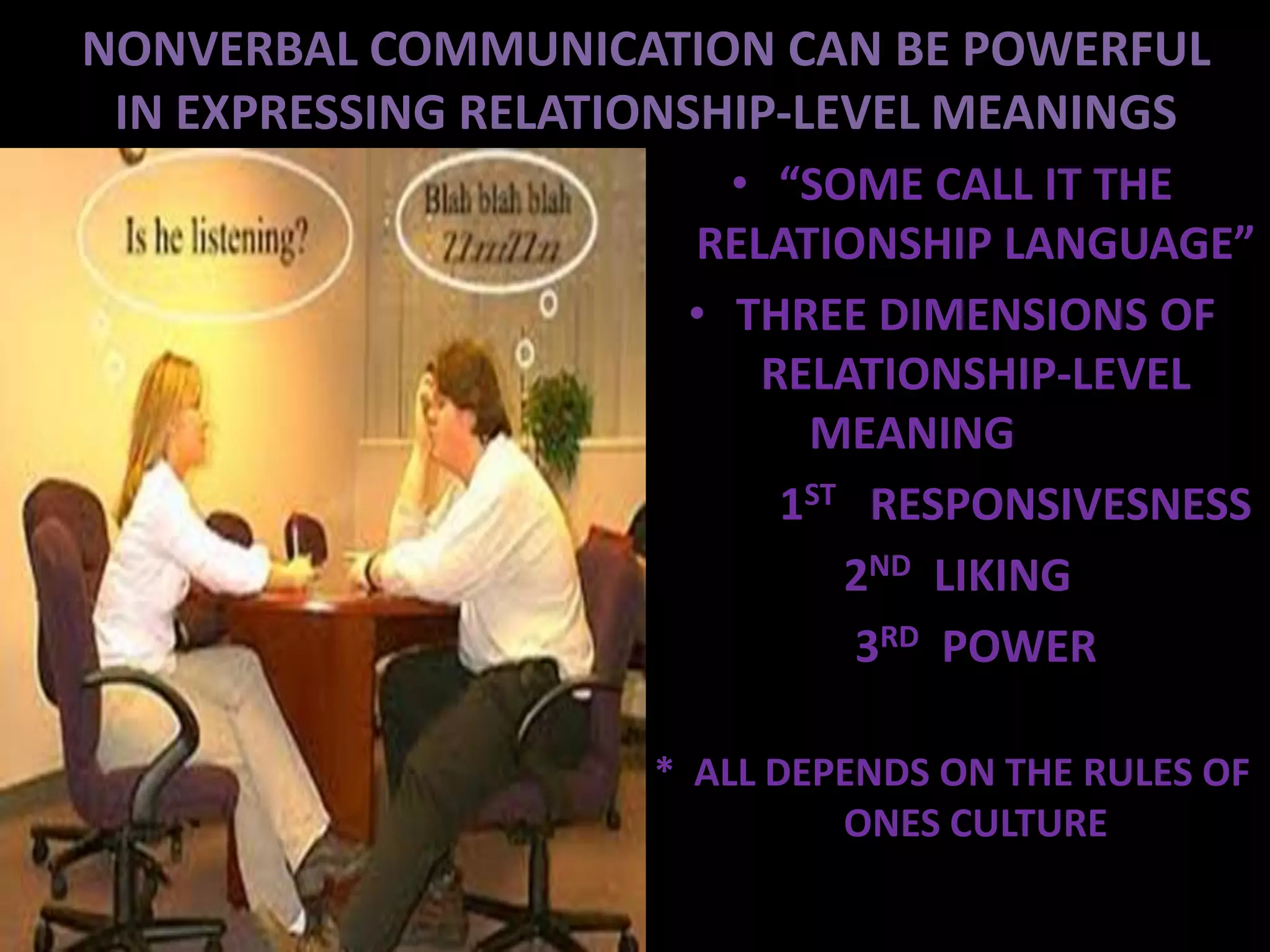
NONVERBAL COMMUNICATION CAN BE POWERFUL
IN EXPRESSING RELATIONSHIP-LEVEL MEANINGS
• “SOME CALL IT THE
RELATIONSHIP LANGUAGE”
• THREE DIMENSIONS OF
RELATIONSHIP-LEVEL
MEANING
1ST RESPONSIVESNESS
2ND LIKING
3RD POWER
* ALL DEPENDS ON THE RULES OF
ONES CULTURE
VIDEO TIME
http://www.youtube.com/watch?v=CQXg-
ng_osM
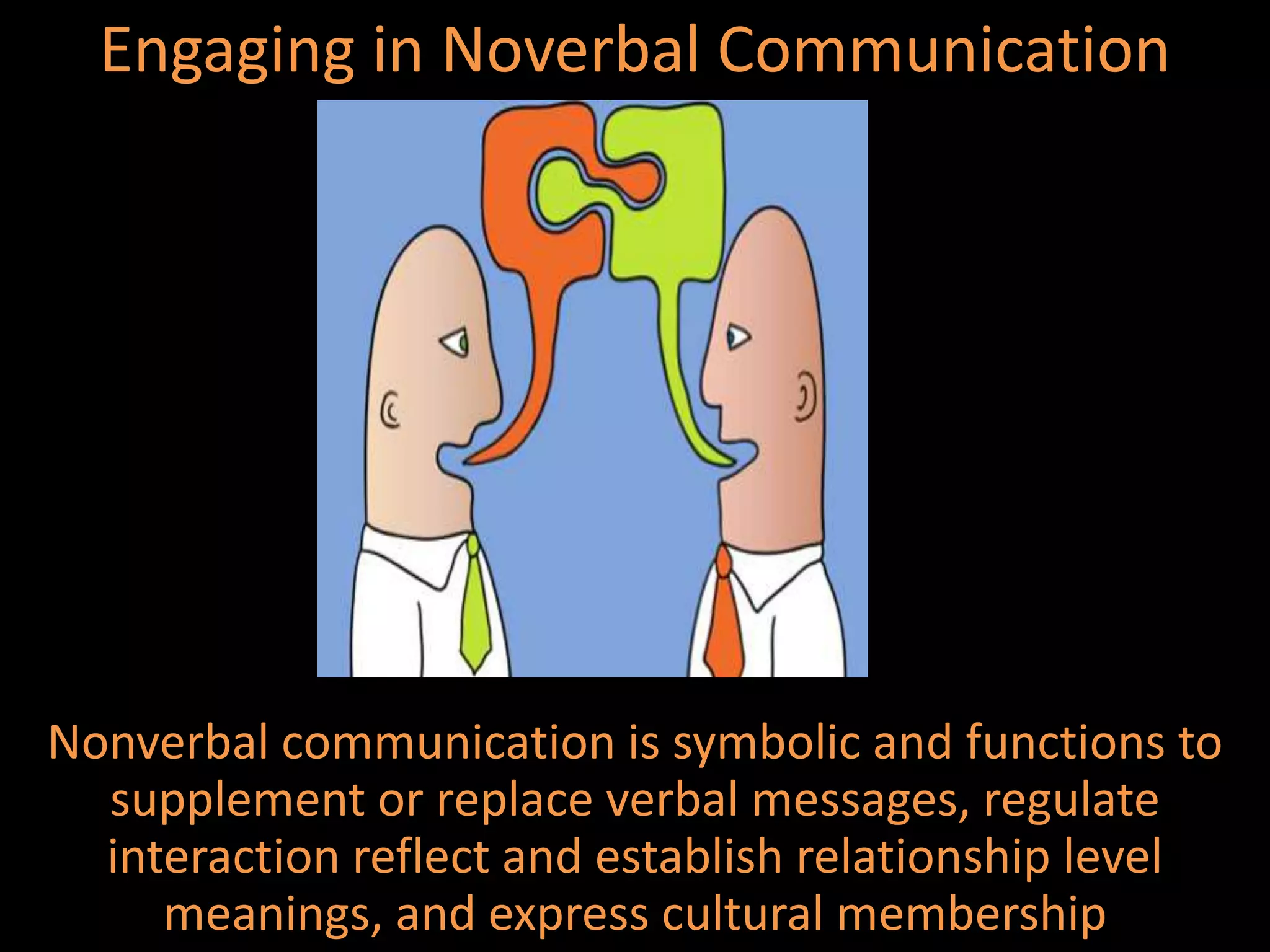
Engaging in Noverbal Communication
Nonverbal communication is symbolic and functions to
supplement or replace verbal messages, regulate
interaction reflect and establish relationship level
meanings, and express cultural membership
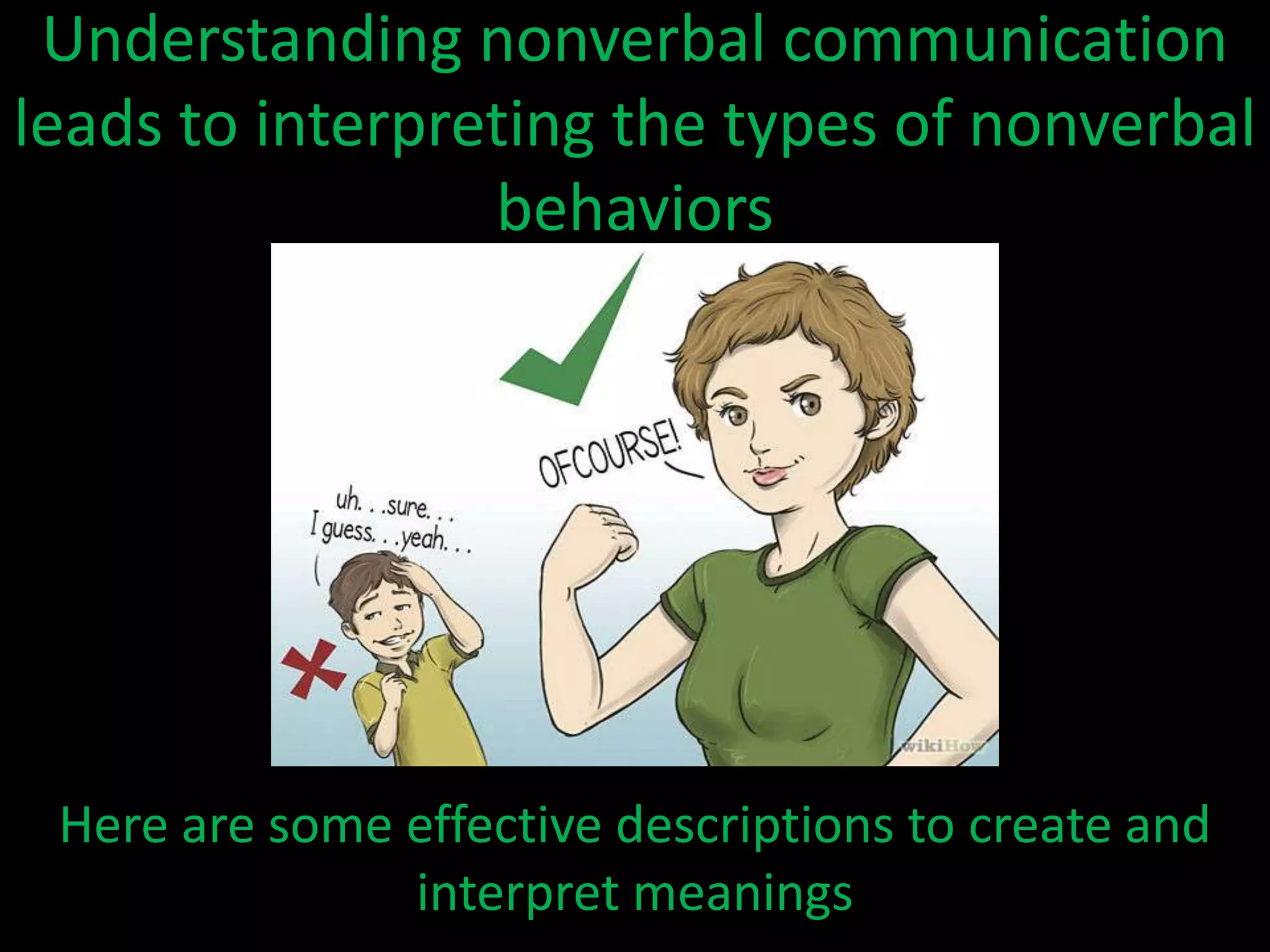
Understanding nonverbal communication
leads to interpreting the types of nonverbal
behaviors
Here are some effective descriptions to create and
interpret meanings
Kinesics
• Refers to the body gestures, body position ad body
motions, including those of face.
• A gestures that reflect feelings and attitudes.
Kinesics Example
• A person who stands
inside a closed glass
phone booth. You can
not hear a word he
says, but you see his
postures.
• Our faces are messengers:
Eyes that shoot
daggers of anger, issue
challenges, express
H
A
P
T
I
C
S
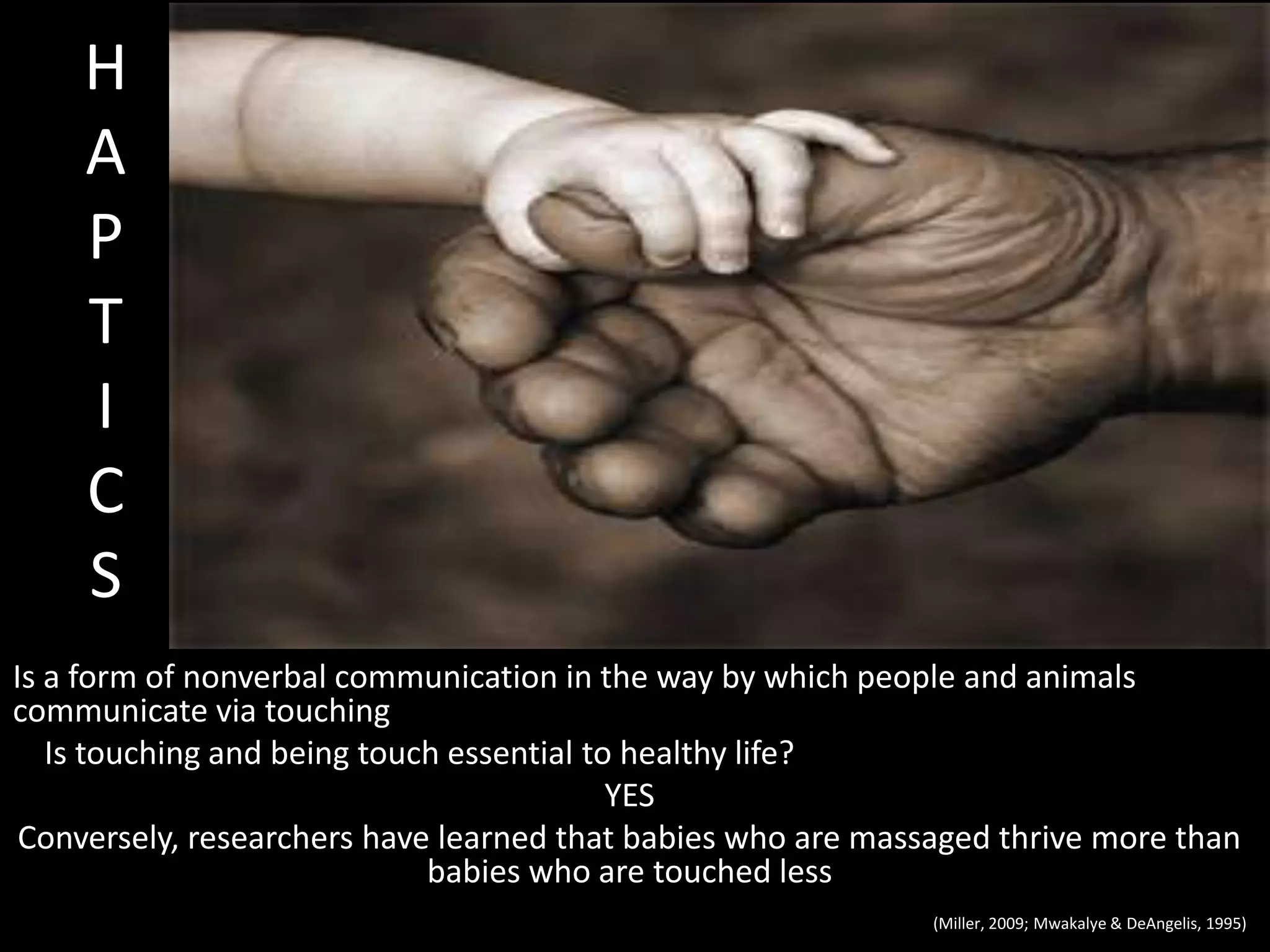
Is a form of nonverbal communication in the way by which people and animals
communicate via touching
Is touching and being touch essential to healthy life?
YES
Conversely, researchers have learned that babies who are massaged thrive more than
babies who are touched less
(Miller, 2009; Mwakalye & DeAngelis, 1995)
P
H
Y
S
I
C
A
L
• The actual way we
look. Physical
qualities such as
sex, skin color, and
size.
• The general cultural
standard for
attractiveness is
modified by
ethnicity and
socioeconomic
class.
• Physical appearance
includes
physiological
characteristics, such
as eye color and
height.APPEARANCE
Do you need to be aware of the effect of
your physical appearance?
YES
Based on physical qualities, we may make inferences about
others personalities
Affects our view of other cultures.
Self esteem-if we feel confident it will cause others to what
to be around us.
Olfactics
• Refers to the sense of smell, is a term for odors and
scents.
• Our perception of them, we tend to react to people
regarding their smell.
Examples
The smell of freshly baked bread or cookies
The sent of perfumes, or body oils we choose to wear can be
personal signatures.
(perception and use of time)
PROXEMICS
(personal space)
ENVIROMENTAL FACTORS
C
H
R
O
N
E
M
I
C
S
Artifacts
SILENCE
P
a
r
a
l
a
n
g
u
a
g
e
MR BEAN
• http://www.youtube.com/watch?v=emZyiKBe
vE4
How to avoid misinterpretation:
We can honestly
never be
completely sure
what people
mean! We all have
different
definitions for the
same body
language.
Miscommunication
is easy!
They’re both
listening.
They’re both
crossing their arms
but meaning two
totally different
things.
As learned last week…
“You’re
staring at
me”
WRONG
“When you look
at me so
intensely, I feel
uncomfortable.”“
RIGHT
Always remember that there are other interpretations besides
your own and that we should all work to understand each
other.

Nonverbal communication powerpoint

  • 1.
  • 2.
    Nonverbal Communication E X A M P L E S O F FACIAL EXPRESSION BODYPOSTURE PHYSICAL OBJECTSGESTURES HOW WE UTTER WORDS ENVIROMENT
  • 3.
  • 4.
    5 WAYS NONVERBALCOMMUNICATION BEHAVIORS INTERACT WITH VERBAL COMMUNICATION 1ST BEHAVIORS MAY REPEAT 2ND VERBAL MESSAGES 3RD BEHAVIORS MAY HIGHLIGHT VERBAL COMMUNICATON 4TH MAY CONTRADICT VERBAL MESSAGE 5TH SUBSTITUTE NONVERBAL FOR VERBAL ONES
  • 5.
    NONVERBAL COMMUNICATION CANBE POWERFUL IN EXPRESSING RELATIONSHIP-LEVEL MEANINGS • “SOME CALL IT THE RELATIONSHIP LANGUAGE” • THREE DIMENSIONS OF RELATIONSHIP-LEVEL MEANING 1ST RESPONSIVESNESS 2ND LIKING 3RD POWER * ALL DEPENDS ON THE RULES OF ONES CULTURE
  • 6.
  • 7.
    Engaging in NoverbalCommunication Nonverbal communication is symbolic and functions to supplement or replace verbal messages, regulate interaction reflect and establish relationship level meanings, and express cultural membership
  • 8.
    Understanding nonverbal communication leadsto interpreting the types of nonverbal behaviors Here are some effective descriptions to create and interpret meanings
  • 9.
    Kinesics • Refers tothe body gestures, body position ad body motions, including those of face. • A gestures that reflect feelings and attitudes.
  • 10.
    Kinesics Example • Aperson who stands inside a closed glass phone booth. You can not hear a word he says, but you see his postures. • Our faces are messengers: Eyes that shoot daggers of anger, issue challenges, express
  • 11.
    H A P T I C S Is a formof nonverbal communication in the way by which people and animals communicate via touching Is touching and being touch essential to healthy life? YES Conversely, researchers have learned that babies who are massaged thrive more than babies who are touched less (Miller, 2009; Mwakalye & DeAngelis, 1995)
  • 12.
    P H Y S I C A L • The actualway we look. Physical qualities such as sex, skin color, and size. • The general cultural standard for attractiveness is modified by ethnicity and socioeconomic class. • Physical appearance includes physiological characteristics, such as eye color and height.APPEARANCE
  • 13.
    Do you needto be aware of the effect of your physical appearance? YES Based on physical qualities, we may make inferences about others personalities Affects our view of other cultures. Self esteem-if we feel confident it will cause others to what to be around us.
  • 14.
    Olfactics • Refers tothe sense of smell, is a term for odors and scents. • Our perception of them, we tend to react to people regarding their smell. Examples The smell of freshly baked bread or cookies The sent of perfumes, or body oils we choose to wear can be personal signatures.
  • 15.
    (perception and useof time) PROXEMICS (personal space) ENVIROMENTAL FACTORS C H R O N E M I C S
  • 16.
  • 17.
  • 18.
  • 19.
  • 20.
    How to avoidmisinterpretation: We can honestly never be completely sure what people mean! We all have different definitions for the same body language. Miscommunication is easy! They’re both listening. They’re both crossing their arms but meaning two totally different things.
  • 21.
    As learned lastweek… “You’re staring at me” WRONG “When you look at me so intensely, I feel uncomfortable.”“ RIGHT Always remember that there are other interpretations besides your own and that we should all work to understand each other.