Nonverbal Communication
BEVERLY MAE S. BRIONES
Discussant
Difference between verbal
&
Nonverbal communication
Verbal and non verbal are all types of
communication. But the difference
between them is that we use our voice in
verbal communication and we use body
signs in non-verbal communication.
What is nonverbal communication?
• “Oral and nonoral messages expressed by
other than linguistic means.”
• Messages transmitted by vocal means that
do not involve language
Nonverbal Communication = Communication
without words
• Nonverbal communication is a process of
communication through sending and
receiving wordless messages.
Importance of Nonverbal Communication
Verbal & nonverbal Communication plays an important role in how
people interact with one another. People are using around 35% verbal
communication and 65% nonverbal communication in daily life.
Nonverbal communication has also cultural meaning.
“The most important thing in communication is to hear what isn't being said.”
Peter F. Drucker
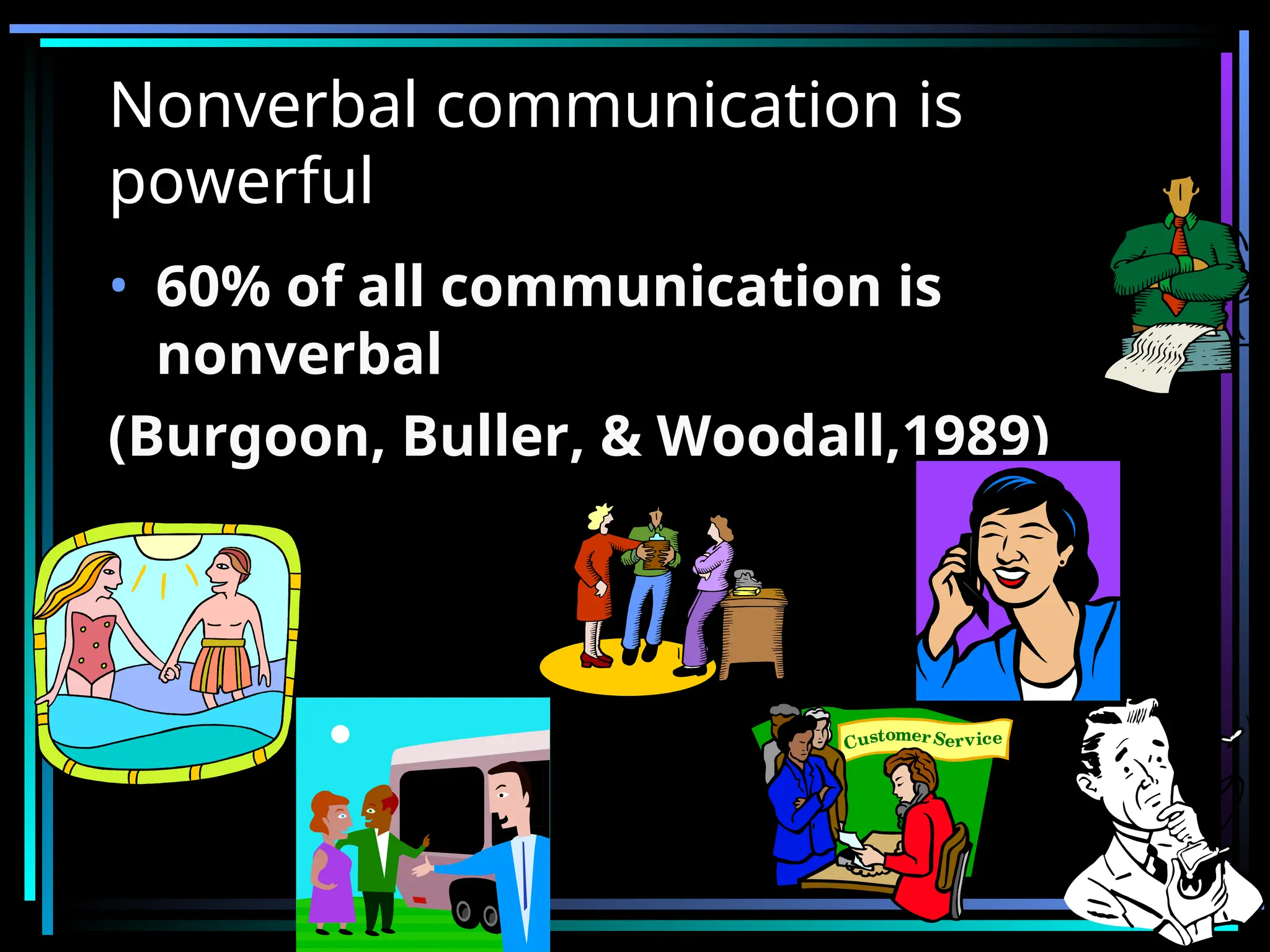
Nonverbal communication is
powerful
• 60% of all communication is
nonverbal
(Burgoon, Buller, & Woodall,1989)
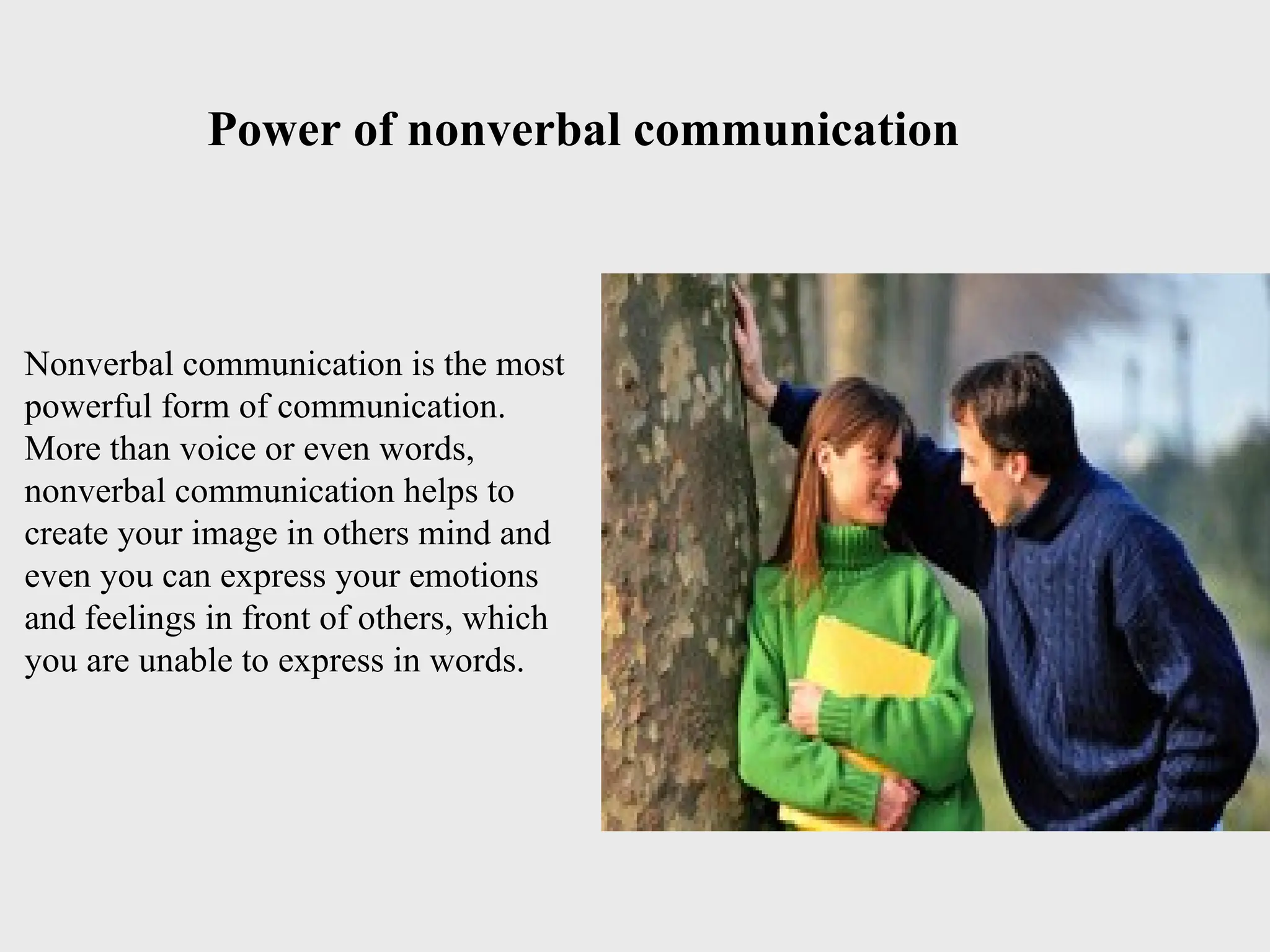
Nonverbal communication is the most
powerful form of communication.
More than voice or even words,
nonverbal communication helps to
create your image in others mind and
even you can express your emotions
and feelings in front of others, which
you are unable to express in words.
Power of nonverbal communication
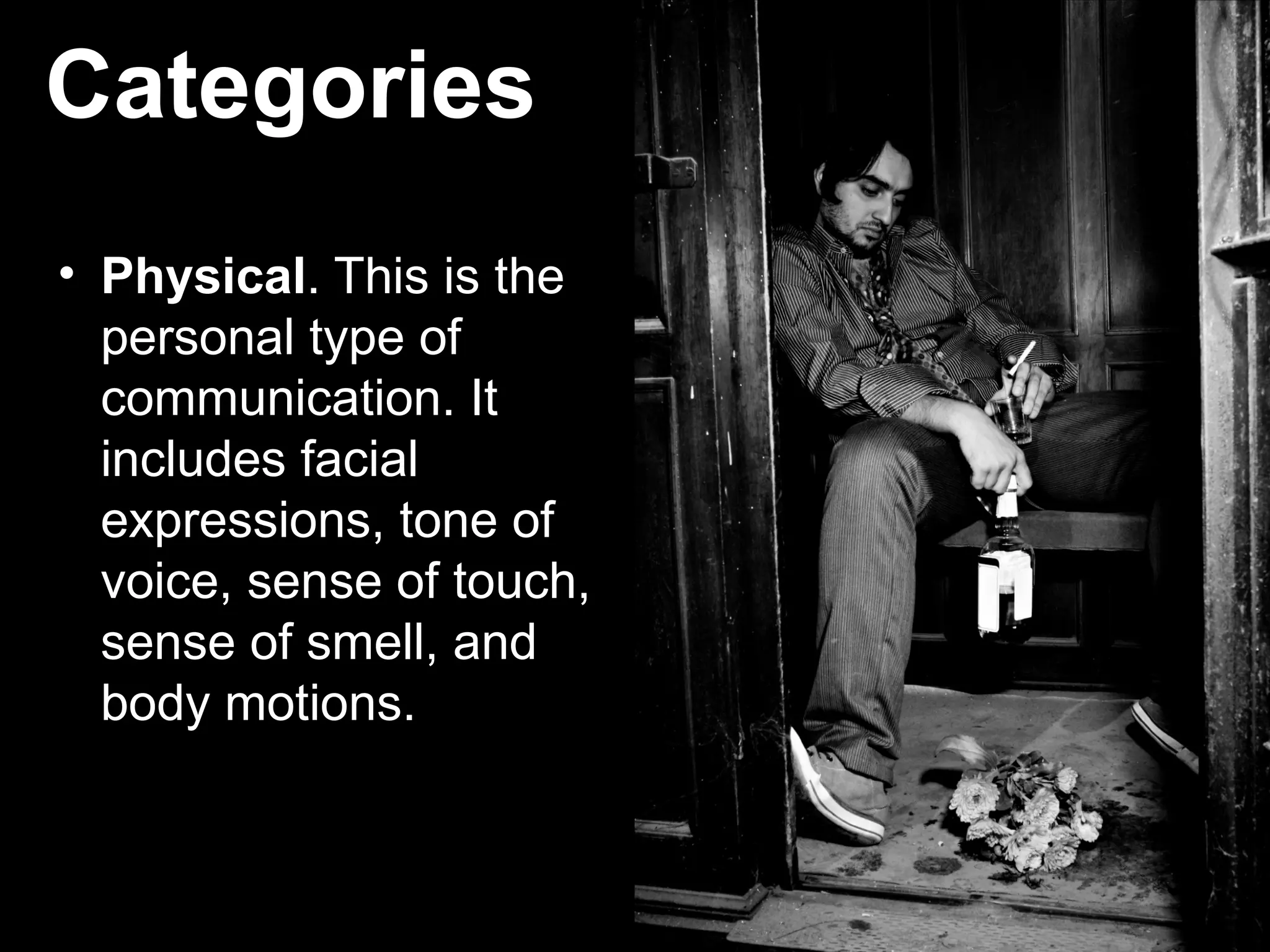
Categories
• Physical. This is the
personal type of
communication. It
includes facial
expressions, tone of
voice, sense of touch,
sense of smell, and
body motions.
• Aesthetic. This is the type of communication that
takes place through creative expressions: playing
instrumental music, dancing, painting and
sculpturing.
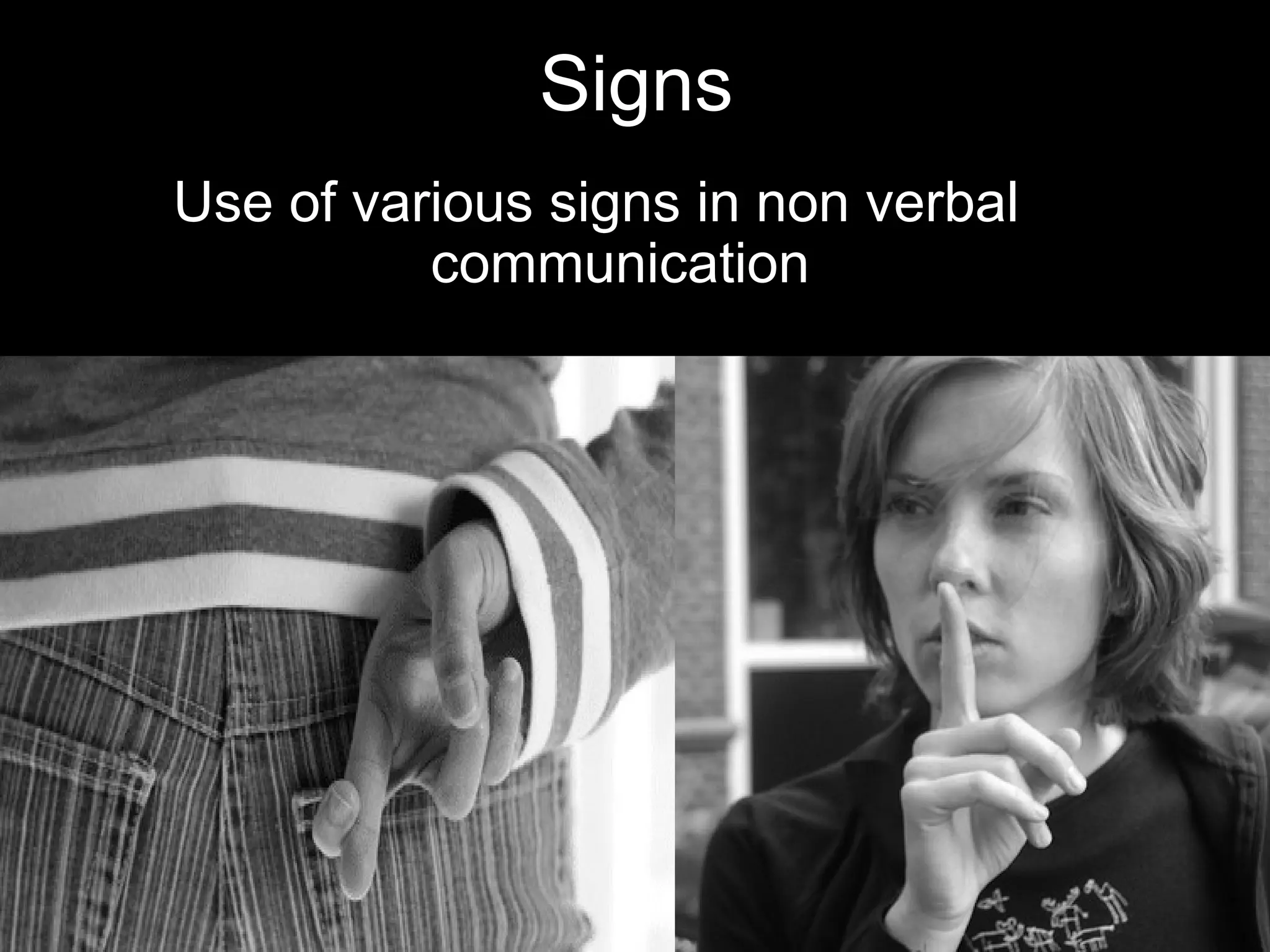
Signs
Use of various signs in non verbal
communication
• Symbolic. This is the type of communication that
makes use of religious, status, or ego-building
symbols.
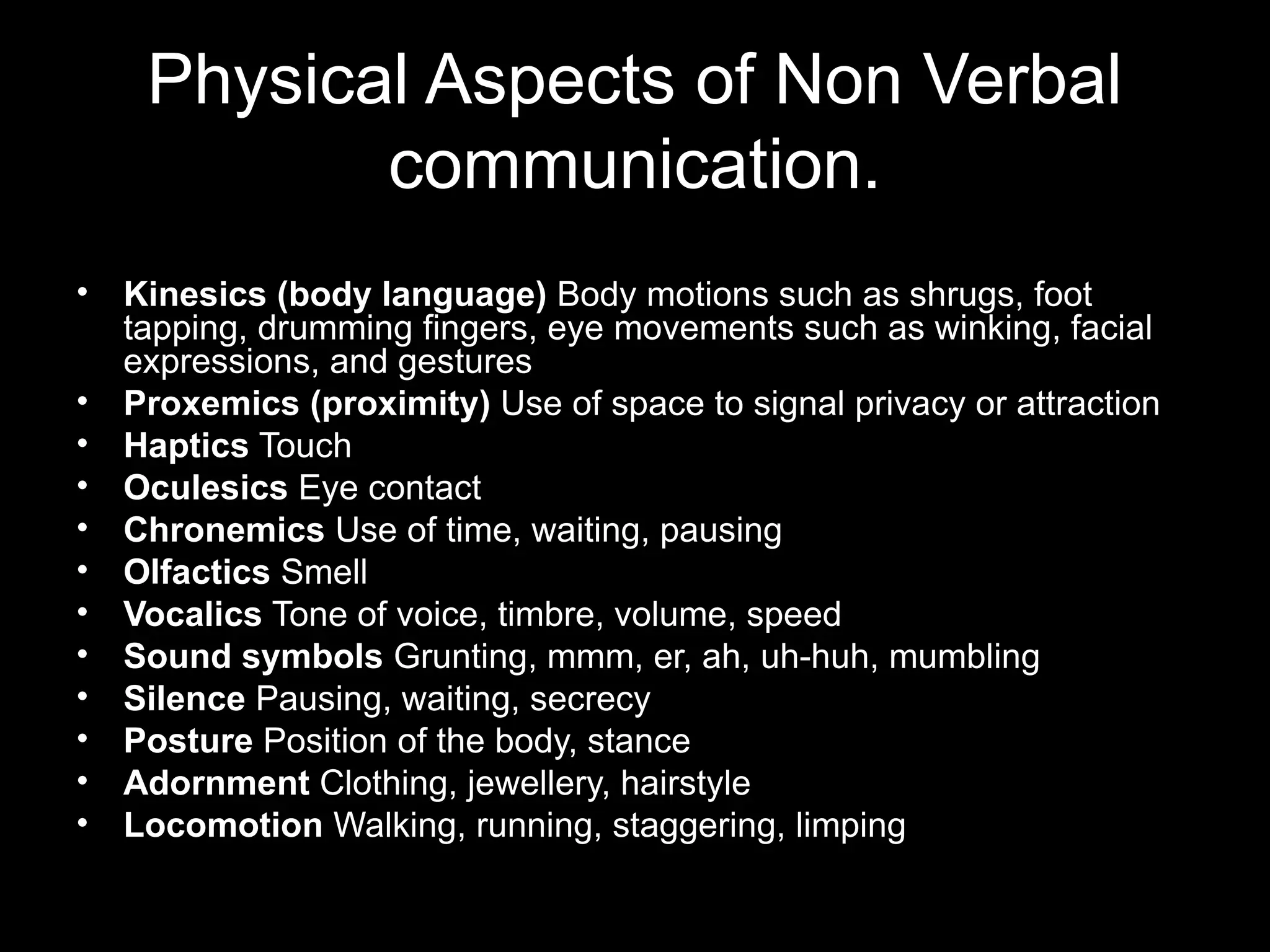
• Kinesics (body language) Body motions such as shrugs, foot
tapping, drumming fingers, eye movements such as winking, facial
expressions, and gestures
• Proxemics (proximity) Use of space to signal privacy or attraction
• Haptics Touch
• Oculesics Eye contact
• Chronemics Use of time, waiting, pausing
• Olfactics Smell
• Vocalics Tone of voice, timbre, volume, speed
• Sound symbols Grunting, mmm, er, ah, uh-huh, mumbling
• Silence Pausing, waiting, secrecy
• Posture Position of the body, stance
• Adornment Clothing, jewellery, hairstyle
• Locomotion Walking, running, staggering, limping
Physical Aspects of Non Verbal
communication.
KINESICS (behavior)
• Facial expressions
• Eye contact
• Body language
• Gestures
• Physical appearance
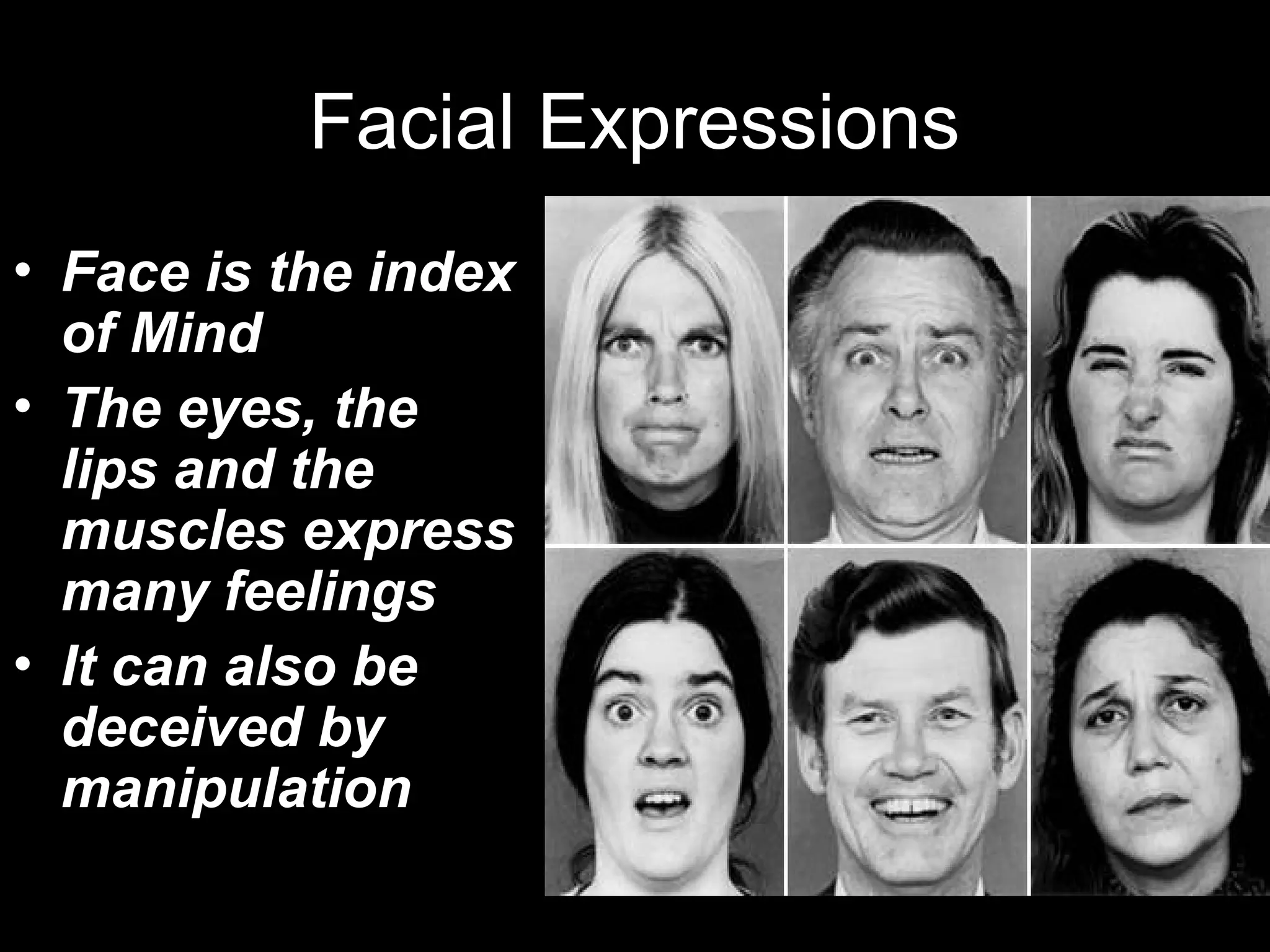
Facial expressions are the
key characteristics of
nonverbal
communication. Your
facial expression can
communicate happiness,
sadness, anger or fear.
Facial Expressions
Facial Expressions
• Face is the index
of Mind
• The eyes, the
lips and the
muscles express
many feelings
• It can also be
deceived by
manipulation
Eye contact, a key
characteristic of nonverbal
communication, expresses
much without using a single
word. In American culture,
maintaining eye contact
shows respect and indicates
interest.
Eye contact also establish
the nature of a
relationship.
Eye Contact
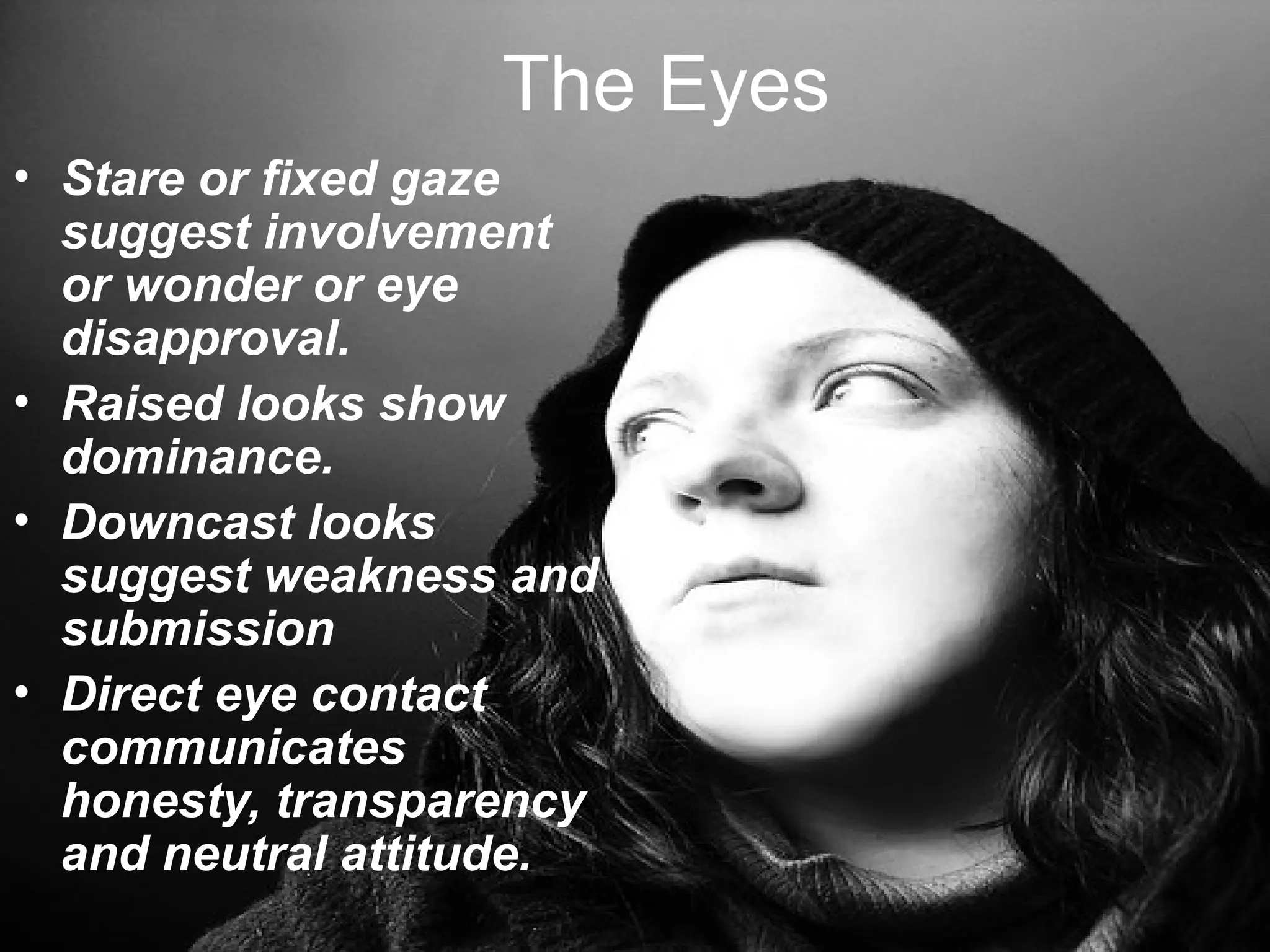
The Eyes
• Stare or fixed gaze
suggest involvement
or wonder or eye
disapproval.
• Raised looks show
dominance.
• Downcast looks
suggest weakness and
submission
• Direct eye contact
communicates
honesty, transparency
and neutral attitude.
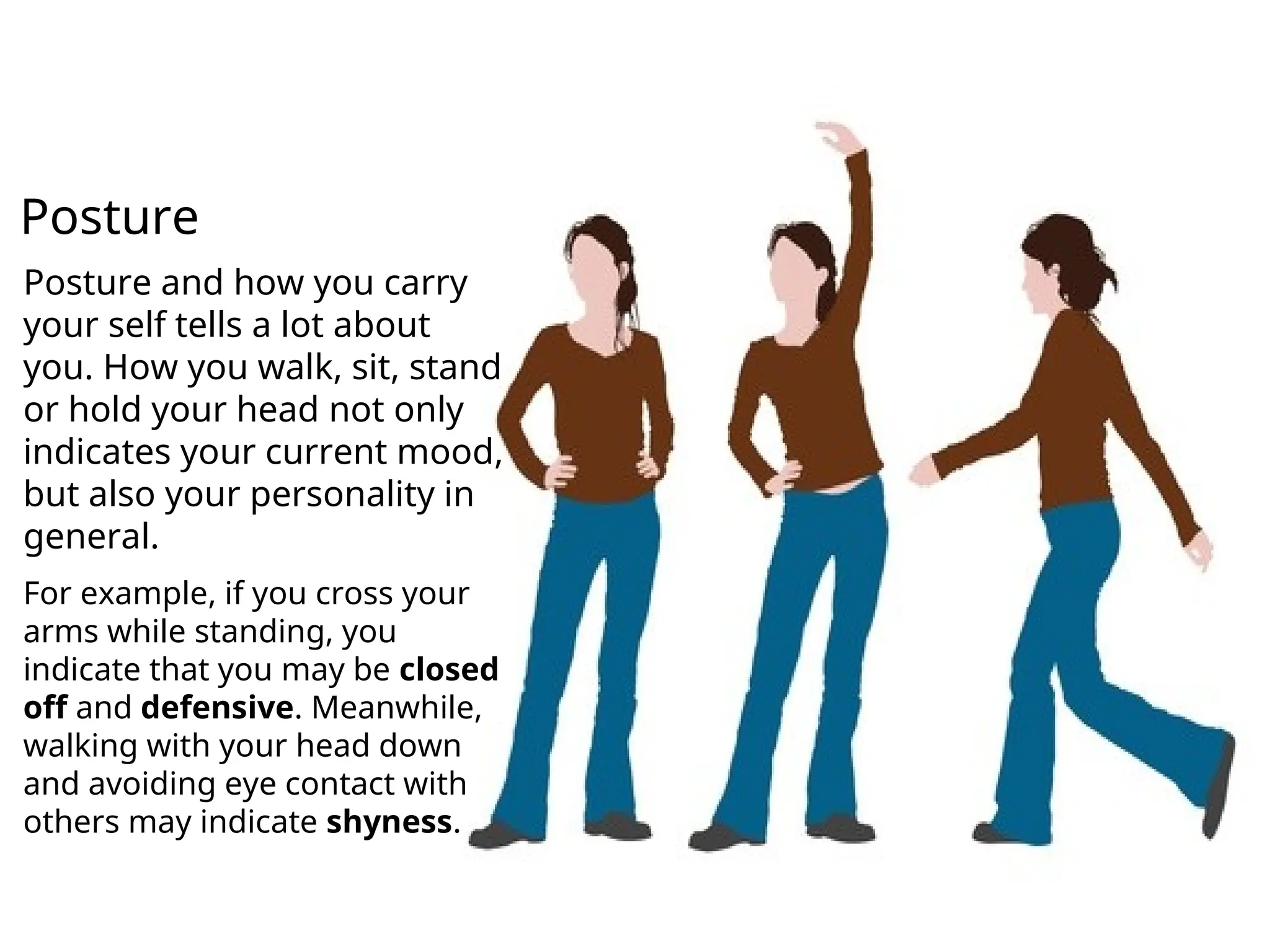
Posture and how you carry
your self tells a lot about
you. How you walk, sit, stand
or hold your head not only
indicates your current mood,
but also your personality in
general.
For example, if you cross your
arms while standing, you
indicate that you may be closed
off and defensive. Meanwhile,
walking with your head down
and avoiding eye contact with
others may indicate shyness.
Posture
A gesture is a characteristic
of nonverbal communication
in which visible body actions
communicate particular
message.
Gestures include movement
of the hands, face, or other
parts of the body.
Gestures
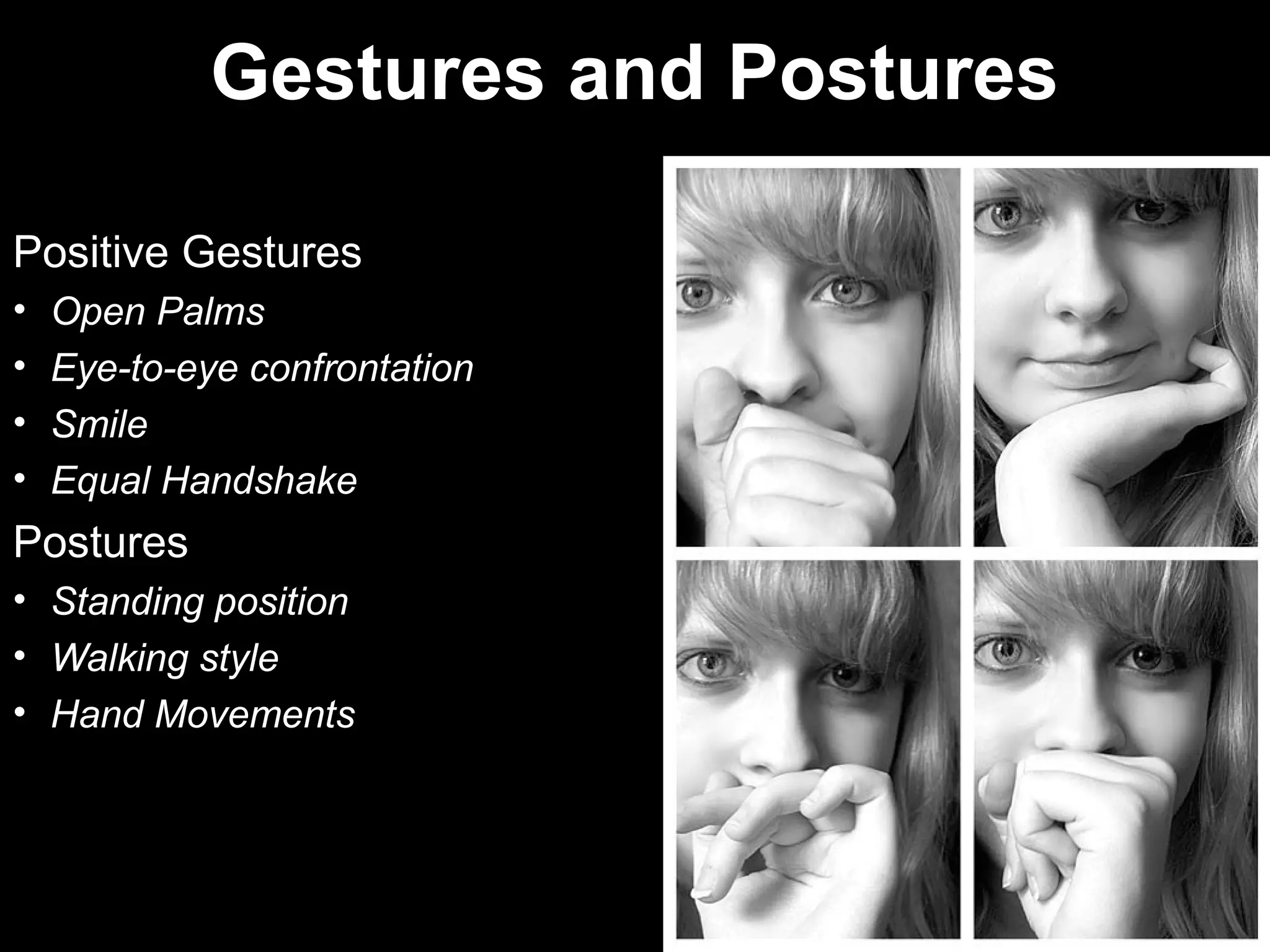
Gestures and Postures
Positive Gestures
• Open Palms
• Eye-to-eye confrontation
• Smile
• Equal Handshake
Postures
• Standing position
• Walking style
• Hand Movements
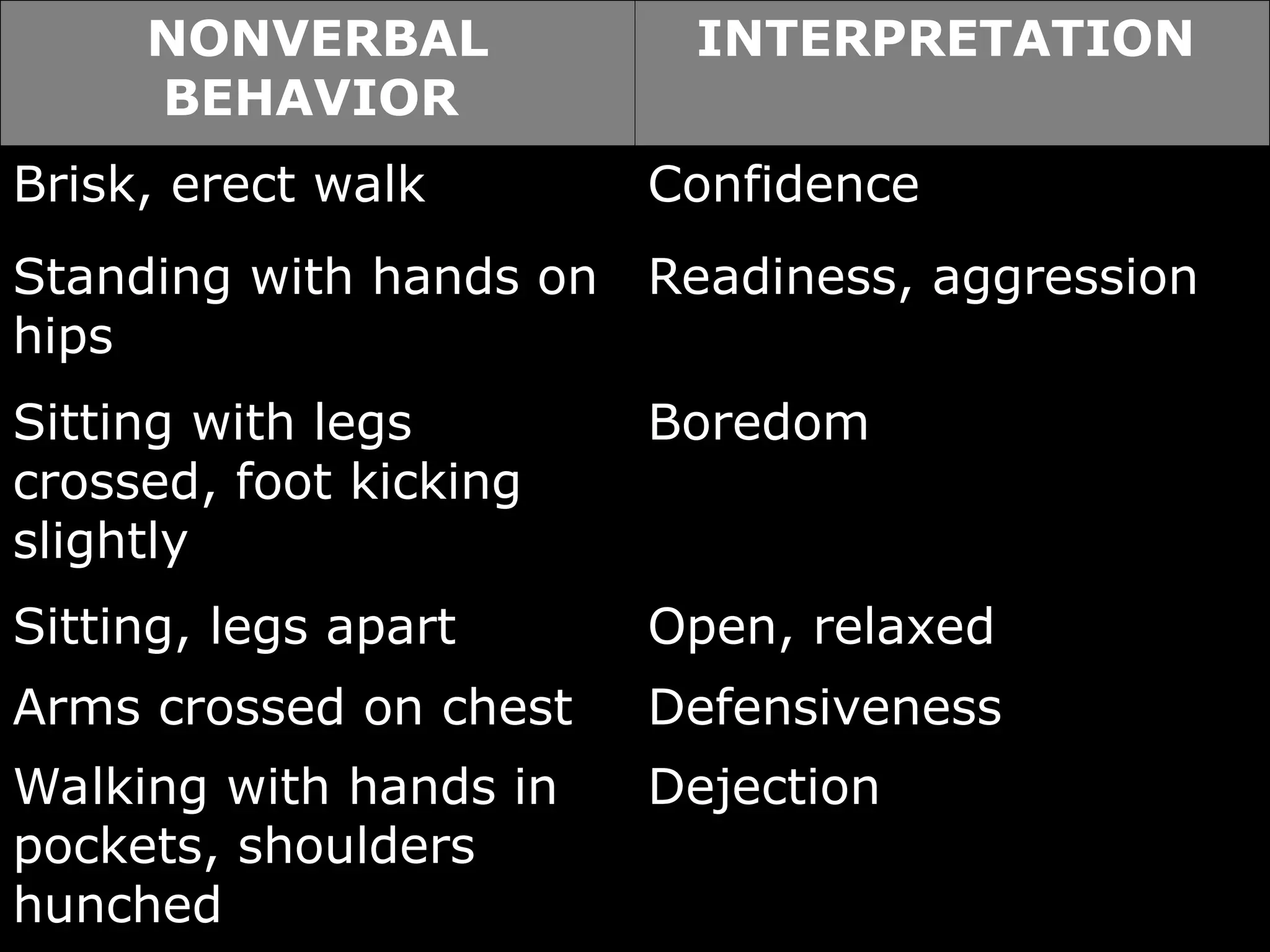
NONVERBAL
BEHAVIOR
INTERPRETATION
Brisk, erect walk Confidence
Standing with hands on
hips
Readiness, aggression
Sitting with legs
crossed, foot kicking
slightly
Boredom
Sitting, legs apart Open, relaxed
Arms crossed on chest Defensiveness
Walking with hands in
pockets, shoulders
hunched
Dejection
NONVERBAL
BEHAVIOR
INTERPRETATION
Hand to cheek Evaluation, thinking
Touching, slightly
rubbing nose
Rejection, doubt, lying
Rubbing the eye Doubt, disbelief
Hands clasped behind
back
Anger, frustration,
apprehension
Locked ankles Apprehension
Head resting in hand,
eyes downcast
Boredom
Rubbing hands Anticipation
 ACTIVITY Work in pairs on a scripted dialogue.
(Practice expressions, gestures, and posture)
• Dialogue:
• A Excuse me. Can you take a picture of me ?
• B Yeah, sure.
• A Just press that button.
• B Hmm, which one ?
• A The one on the top.
• B OK, right. Hmm.... can you move back a bit.
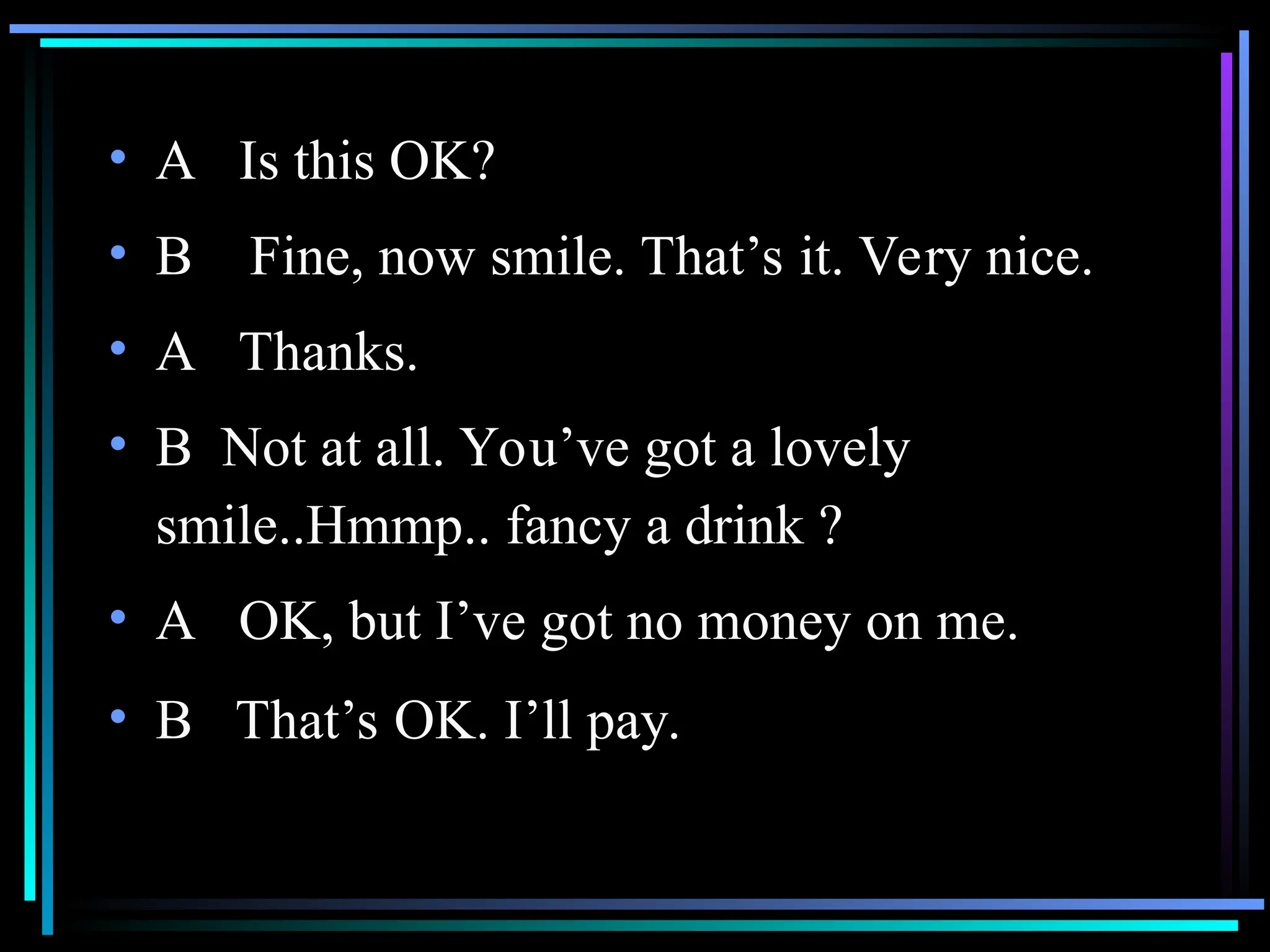
• A Is this OK?
• B Fine, now smile. That’s it. Very nice.
• A Thanks.
• B Not at all. You’ve got a lovely
smile..Hmmp.. fancy a drink ?
• A OK, but I’ve got no money on me.
• B That’s OK. I’ll pay.
ACTIVITY 2
 Students watch one minute clip from an
episode of Mr. Bean, showing Mr. Bean
being chased and interviewed by police at
an airport.
 Write the dialogue for Mr Bean and the
police officers.
 Perform it to the class if desired.
A Class Exercise
So What Does This Mean?
• Can I help!
• Trust me!
• You’re in
good hands!
• Helping Hand
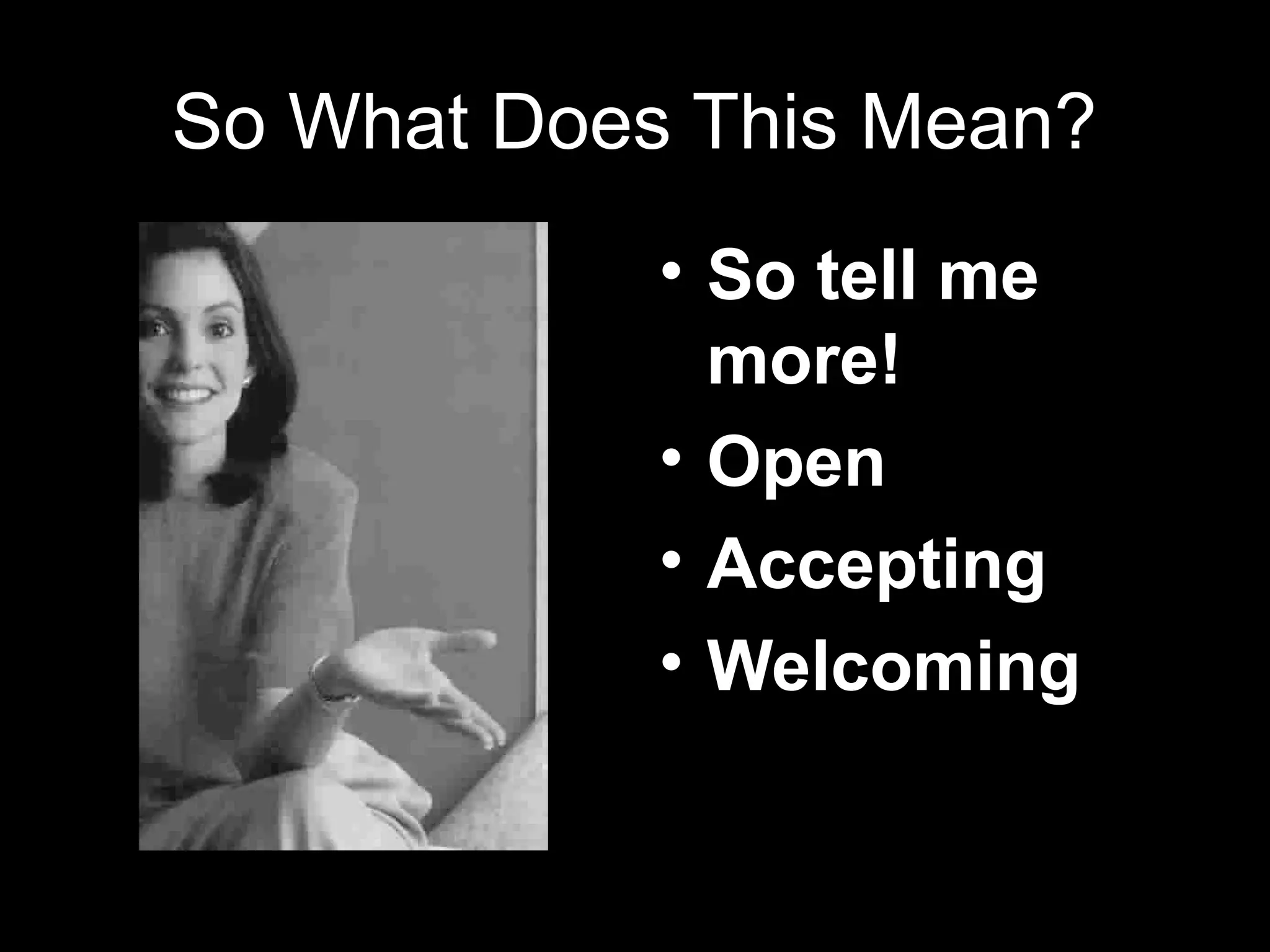
So What Does This Mean?
• So tell me
more!
• Open
• Accepting
• Welcoming
So What Does This Mean?
• Dejected
• Disappointed
• Lost it.
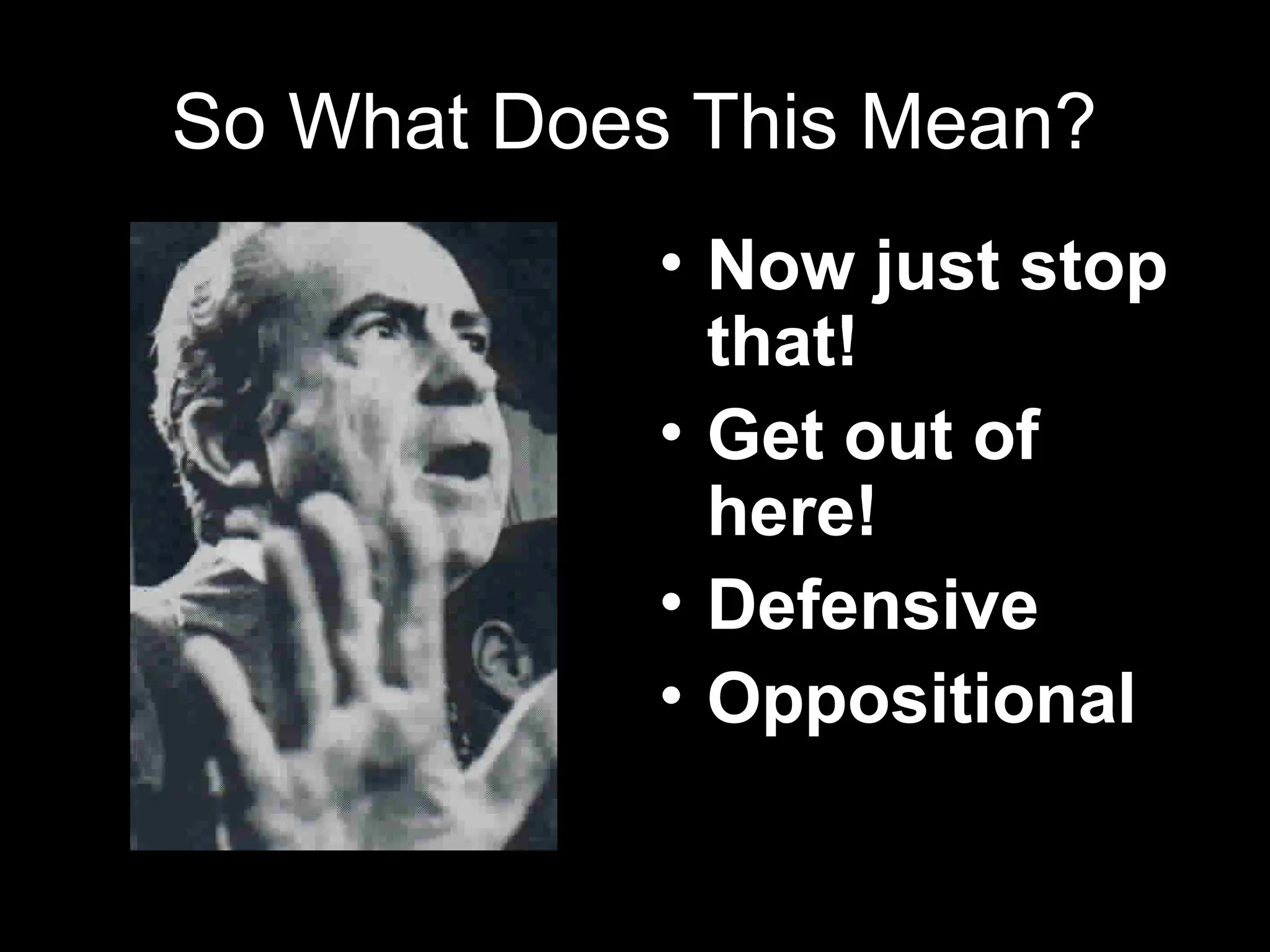
So What Does This Mean?
• Now just stop
that!
• Get out of
here!
• Defensive
• Oppositional
In conclusion
• A knowledge of the several factors
involved with nonverbal
communication, and an awareness of
its power will improve our ability to
communicate with others.

Oral Communication NONVERBAL.PPTtextbooklecture_ary.ppt

  • 1.
  • 2.
    Difference between verbal & Nonverbalcommunication Verbal and non verbal are all types of communication. But the difference between them is that we use our voice in verbal communication and we use body signs in non-verbal communication.
  • 3.
    What is nonverbalcommunication? • “Oral and nonoral messages expressed by other than linguistic means.” • Messages transmitted by vocal means that do not involve language Nonverbal Communication = Communication without words • Nonverbal communication is a process of communication through sending and receiving wordless messages.
  • 4.
    Importance of NonverbalCommunication Verbal & nonverbal Communication plays an important role in how people interact with one another. People are using around 35% verbal communication and 65% nonverbal communication in daily life. Nonverbal communication has also cultural meaning. “The most important thing in communication is to hear what isn't being said.” Peter F. Drucker
  • 5.
    Nonverbal communication is powerful •60% of all communication is nonverbal (Burgoon, Buller, & Woodall,1989)
  • 6.
    Nonverbal communication isthe most powerful form of communication. More than voice or even words, nonverbal communication helps to create your image in others mind and even you can express your emotions and feelings in front of others, which you are unable to express in words. Power of nonverbal communication
  • 7.
    Categories • Physical. Thisis the personal type of communication. It includes facial expressions, tone of voice, sense of touch, sense of smell, and body motions.
  • 8.
    • Aesthetic. Thisis the type of communication that takes place through creative expressions: playing instrumental music, dancing, painting and sculpturing.
  • 9.
    Signs Use of varioussigns in non verbal communication
  • 10.
    • Symbolic. Thisis the type of communication that makes use of religious, status, or ego-building symbols.
  • 11.
    • Kinesics (bodylanguage) Body motions such as shrugs, foot tapping, drumming fingers, eye movements such as winking, facial expressions, and gestures • Proxemics (proximity) Use of space to signal privacy or attraction • Haptics Touch • Oculesics Eye contact • Chronemics Use of time, waiting, pausing • Olfactics Smell • Vocalics Tone of voice, timbre, volume, speed • Sound symbols Grunting, mmm, er, ah, uh-huh, mumbling • Silence Pausing, waiting, secrecy • Posture Position of the body, stance • Adornment Clothing, jewellery, hairstyle • Locomotion Walking, running, staggering, limping Physical Aspects of Non Verbal communication.
  • 12.
    KINESICS (behavior) • Facialexpressions • Eye contact • Body language • Gestures • Physical appearance
  • 13.
    Facial expressions arethe key characteristics of nonverbal communication. Your facial expression can communicate happiness, sadness, anger or fear. Facial Expressions
  • 14.
    Facial Expressions • Faceis the index of Mind • The eyes, the lips and the muscles express many feelings • It can also be deceived by manipulation
  • 15.
    Eye contact, akey characteristic of nonverbal communication, expresses much without using a single word. In American culture, maintaining eye contact shows respect and indicates interest. Eye contact also establish the nature of a relationship. Eye Contact
  • 16.
    The Eyes • Stareor fixed gaze suggest involvement or wonder or eye disapproval. • Raised looks show dominance. • Downcast looks suggest weakness and submission • Direct eye contact communicates honesty, transparency and neutral attitude.
  • 17.
    Posture and howyou carry your self tells a lot about you. How you walk, sit, stand or hold your head not only indicates your current mood, but also your personality in general. For example, if you cross your arms while standing, you indicate that you may be closed off and defensive. Meanwhile, walking with your head down and avoiding eye contact with others may indicate shyness. Posture
  • 18.
    A gesture isa characteristic of nonverbal communication in which visible body actions communicate particular message. Gestures include movement of the hands, face, or other parts of the body. Gestures
  • 19.
    Gestures and Postures PositiveGestures • Open Palms • Eye-to-eye confrontation • Smile • Equal Handshake Postures • Standing position • Walking style • Hand Movements
  • 20.
    NONVERBAL BEHAVIOR INTERPRETATION Brisk, erect walkConfidence Standing with hands on hips Readiness, aggression Sitting with legs crossed, foot kicking slightly Boredom Sitting, legs apart Open, relaxed Arms crossed on chest Defensiveness Walking with hands in pockets, shoulders hunched Dejection
  • 21.
    NONVERBAL BEHAVIOR INTERPRETATION Hand to cheekEvaluation, thinking Touching, slightly rubbing nose Rejection, doubt, lying Rubbing the eye Doubt, disbelief Hands clasped behind back Anger, frustration, apprehension Locked ankles Apprehension Head resting in hand, eyes downcast Boredom Rubbing hands Anticipation
  • 22.
     ACTIVITY Workin pairs on a scripted dialogue. (Practice expressions, gestures, and posture) • Dialogue: • A Excuse me. Can you take a picture of me ? • B Yeah, sure. • A Just press that button. • B Hmm, which one ? • A The one on the top. • B OK, right. Hmm.... can you move back a bit.
  • 23.
    • A Isthis OK? • B Fine, now smile. That’s it. Very nice. • A Thanks. • B Not at all. You’ve got a lovely smile..Hmmp.. fancy a drink ? • A OK, but I’ve got no money on me. • B That’s OK. I’ll pay.
  • 24.
    ACTIVITY 2  Studentswatch one minute clip from an episode of Mr. Bean, showing Mr. Bean being chased and interviewed by police at an airport.  Write the dialogue for Mr Bean and the police officers.  Perform it to the class if desired.
  • 25.
  • 26.
    So What DoesThis Mean? • Can I help! • Trust me! • You’re in good hands! • Helping Hand
  • 27.
    So What DoesThis Mean? • So tell me more! • Open • Accepting • Welcoming
  • 28.
    So What DoesThis Mean? • Dejected • Disappointed • Lost it.
  • 29.
    So What DoesThis Mean? • Now just stop that! • Get out of here! • Defensive • Oppositional
  • 30.
    In conclusion • Aknowledge of the several factors involved with nonverbal communication, and an awareness of its power will improve our ability to communicate with others.