Non-defining
Relative Clauses
Non-defining Relative Clauses
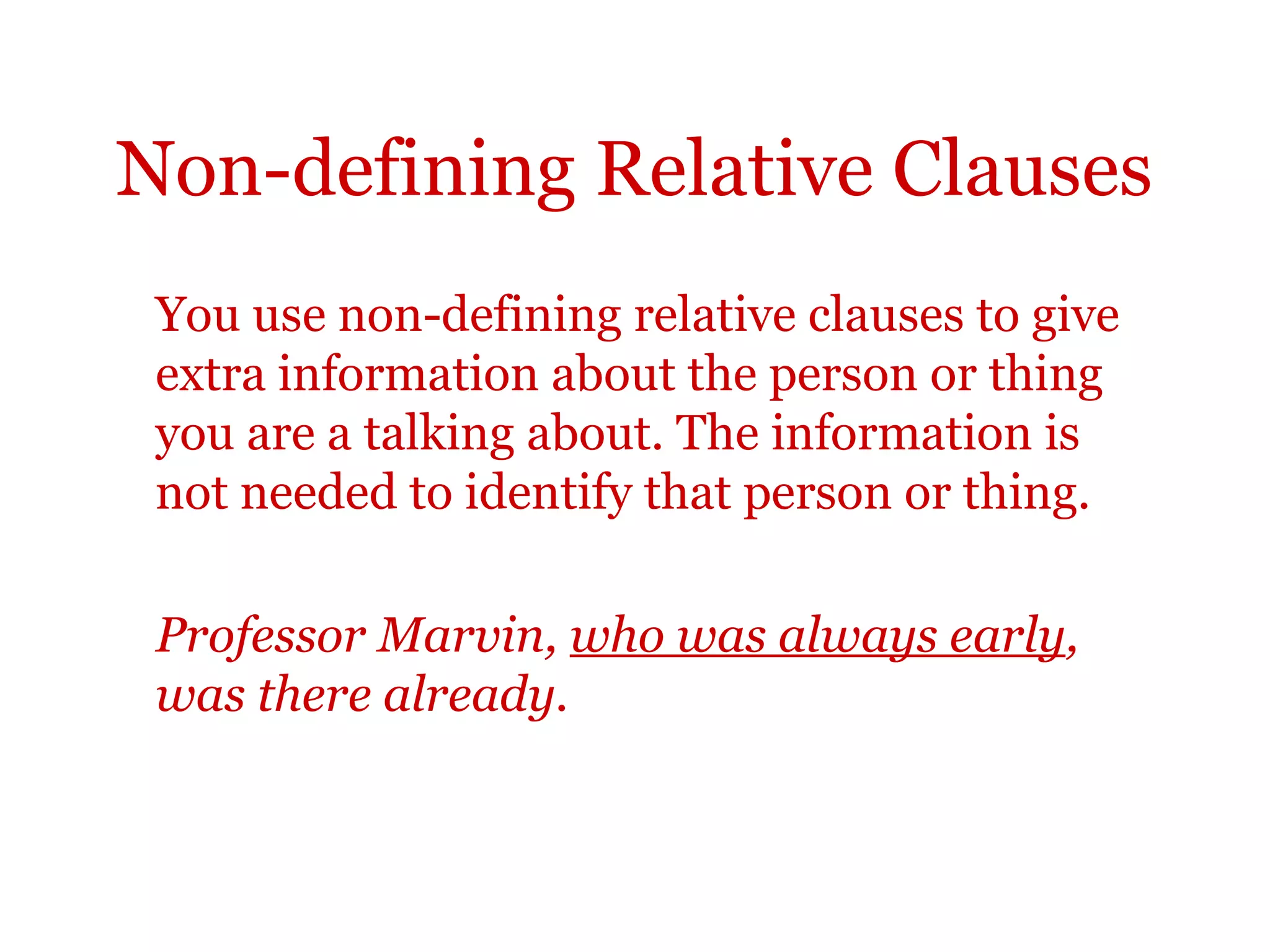
 You use non-defining relative clauses to give
 extra information about the person or thing
 you are a talking about. The information is
 not needed to identify that person or thing.

 Professor Marvin, who was always early,
 was there already.
Non-defining Relative Clauses
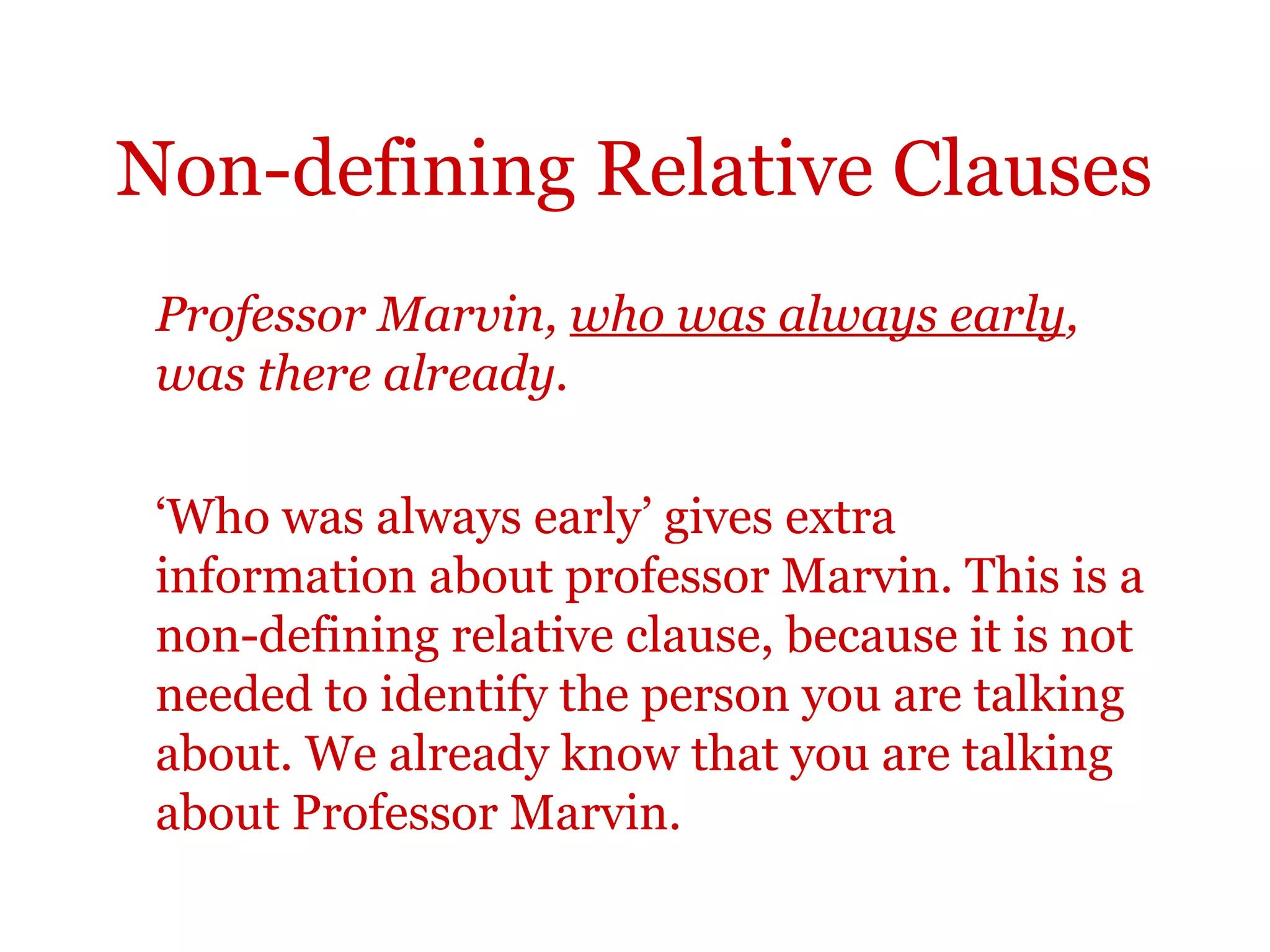
 Professor Marvin, who was always early,
 was there already.

 ‘Who was always early’ gives extra
 information about professor Marvin. This is a
 non-defining relative clause, because it is not
 needed to identify the person you are talking
 about. We already know that you are talking
 about Professor Marvin.
Non-defining Relative Clauses
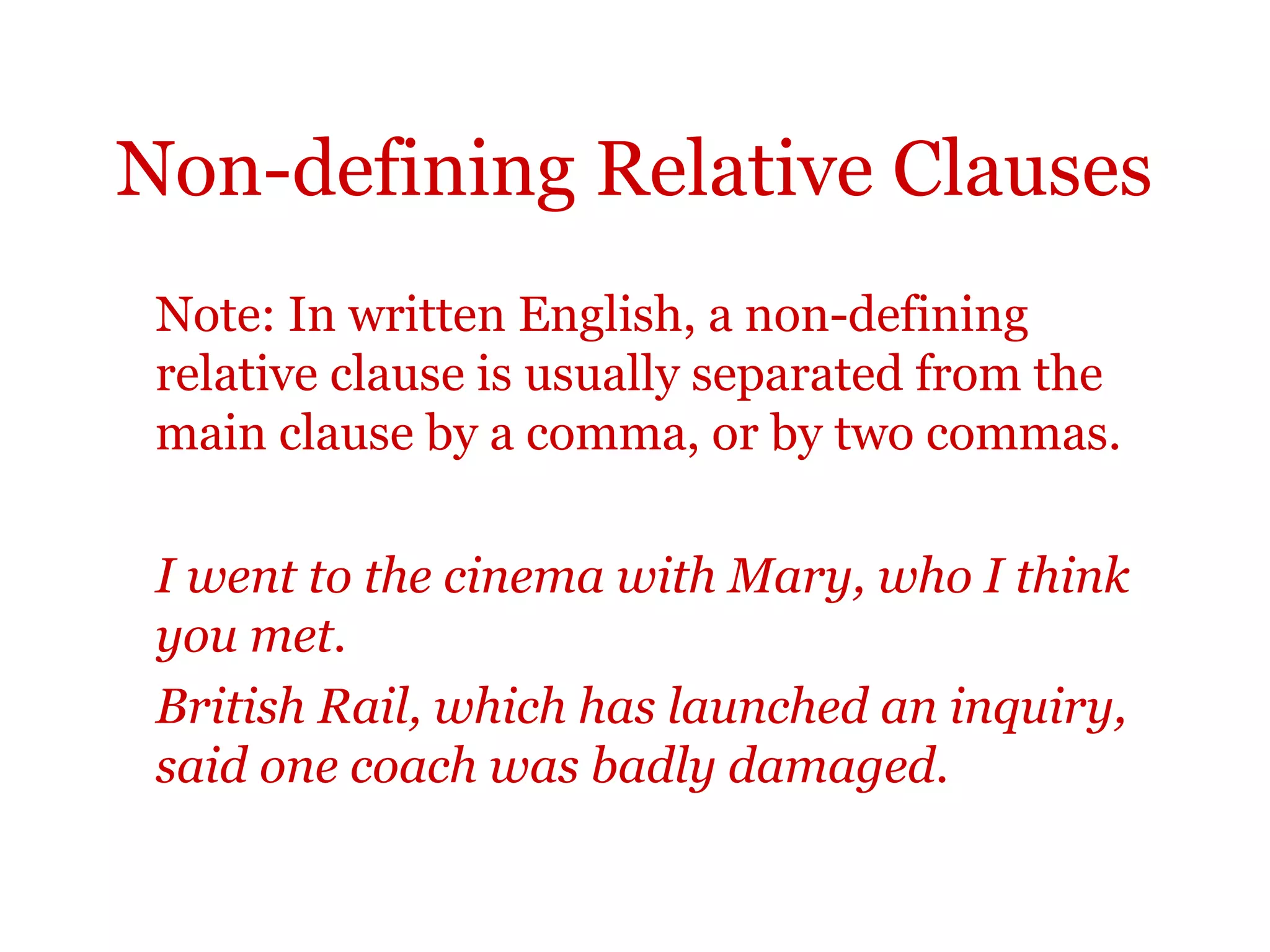
 Note: In written English, a non-defining
 relative clause is usually separated from the
 main clause by a comma, or by two commas.

 I went to the cinema with Mary, who I think
 you met.
 British Rail, which has launched an inquiry,
 said one coach was badly damaged.
Non-defining Relative Clauses
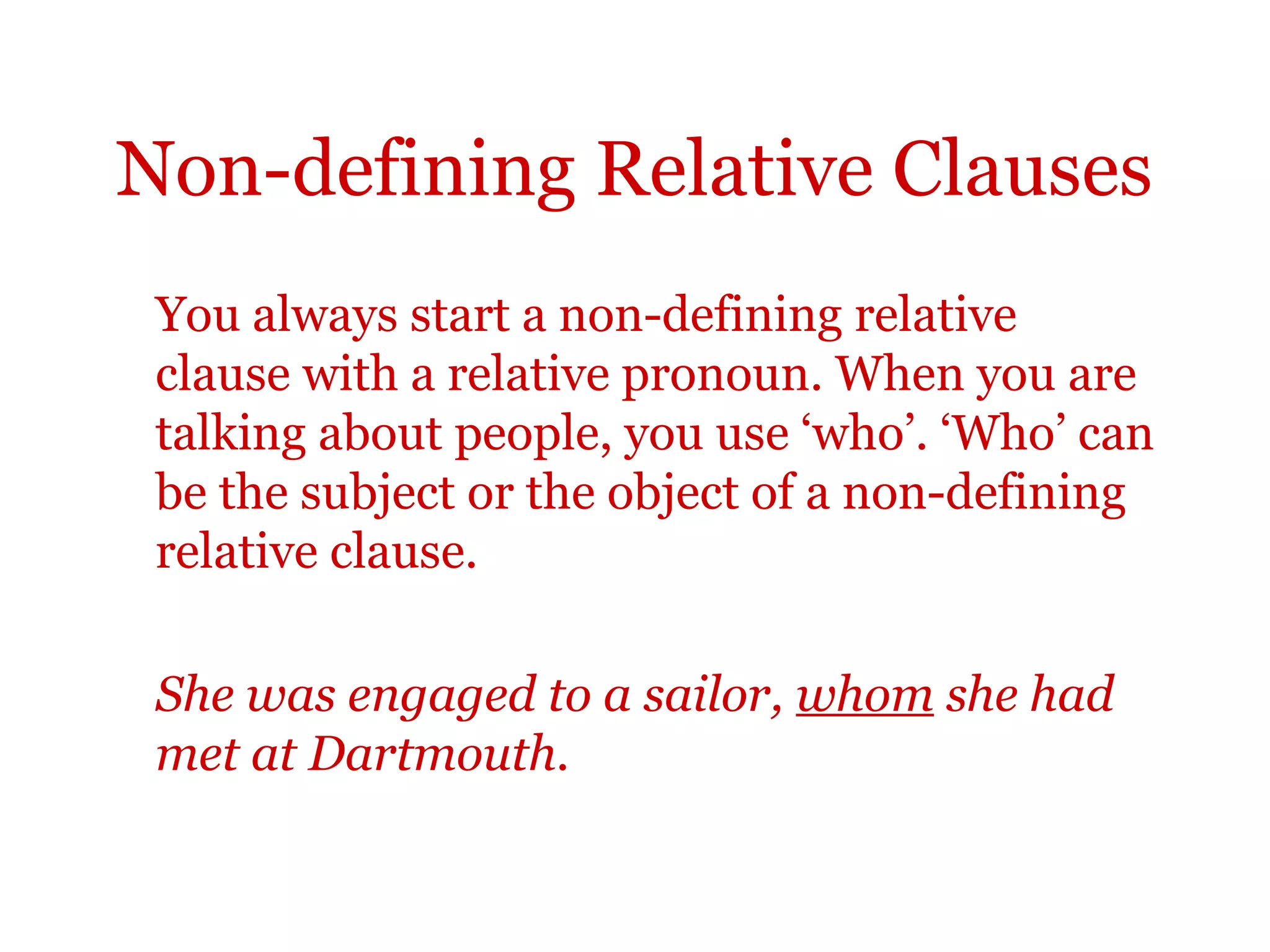
 You always start a non-defining relative
 clause with a relative pronoun. When you are
 talking about people, you use ‘who’. ‘Who’ can
 be the subject or the object of a non-defining
 relative clause.

 She was engaged to a sailor, whom she had
 met at Dartmouth.
Non-defining Relative Clauses
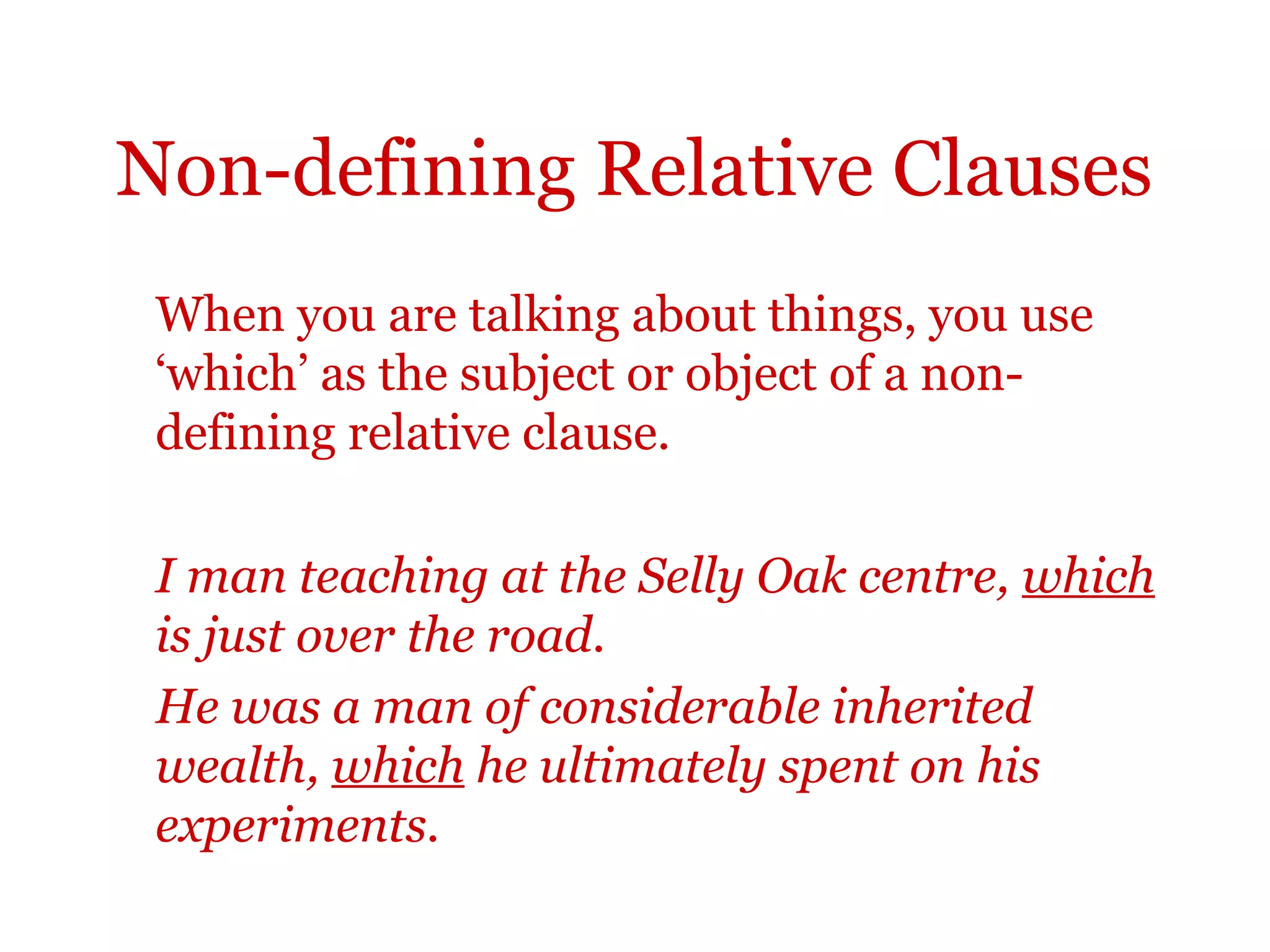
 When you are talking about things, you use
 ‘which’ as the subject or object of a non-
 defining relative clause.

 I man teaching at the Selly Oak centre, which
 is just over the road.
 He was a man of considerable inherited
 wealth, which he ultimately spent on his
 experiments.
Non-defining Relative Clauses
 WARNING: You do not normally use ‘that’ in
 non-defining relative clauses.
Non-defining Relative Clauses
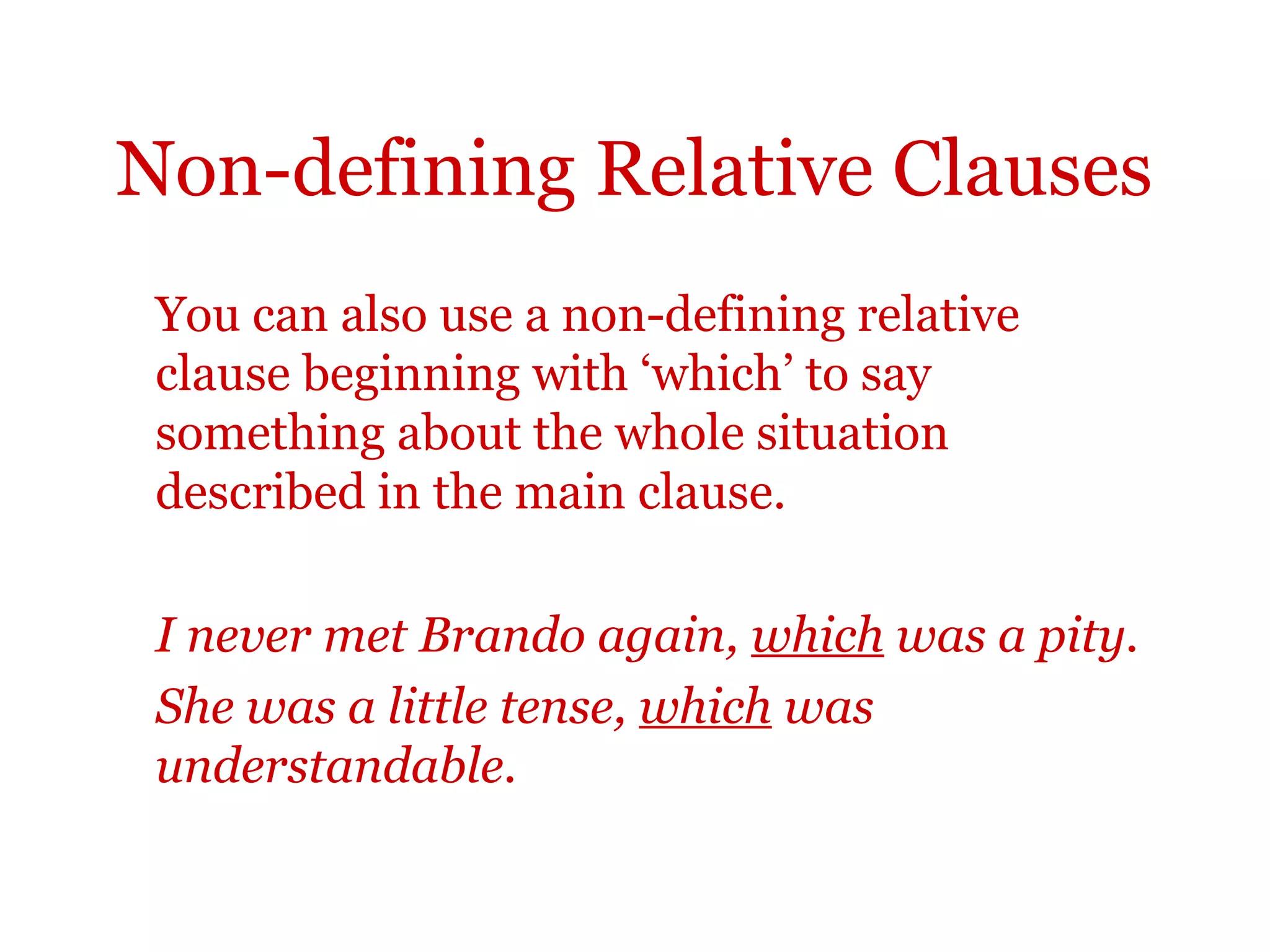
 You can also use a non-defining relative
 clause beginning with ‘which’ to say
 something about the whole situation
 described in the main clause.

 I never met Brando again, which was a pity.
 She was a little tense, which was
 understandable.
Non-defining Relative Clauses
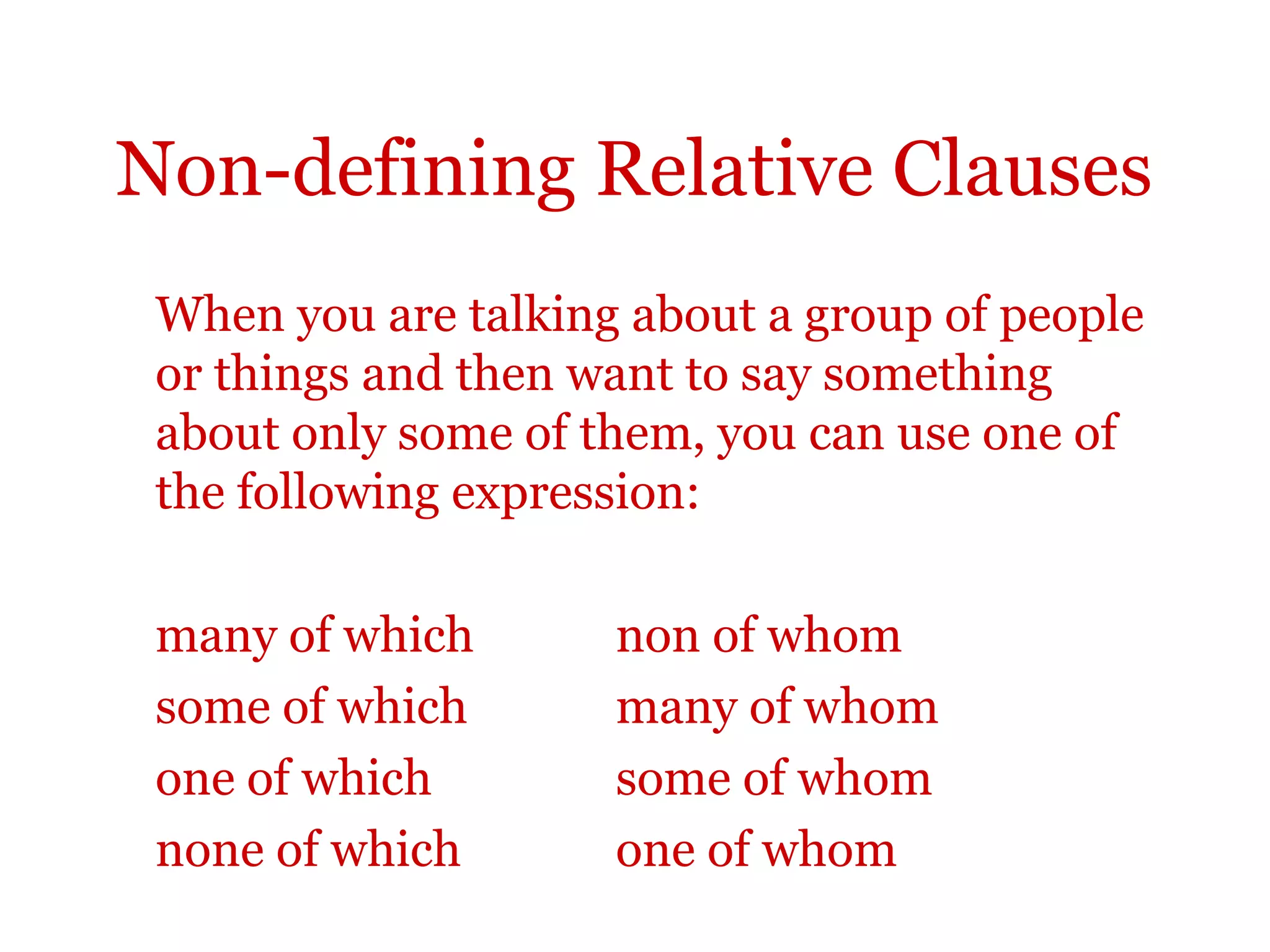
 When you are talking about a group of people
 or things and then want to say something
 about only some of them, you can use one of
 the following expression:

 many of which       non of whom
 some of which       many of whom
 one of which        some of whom
 none of which       one of whom
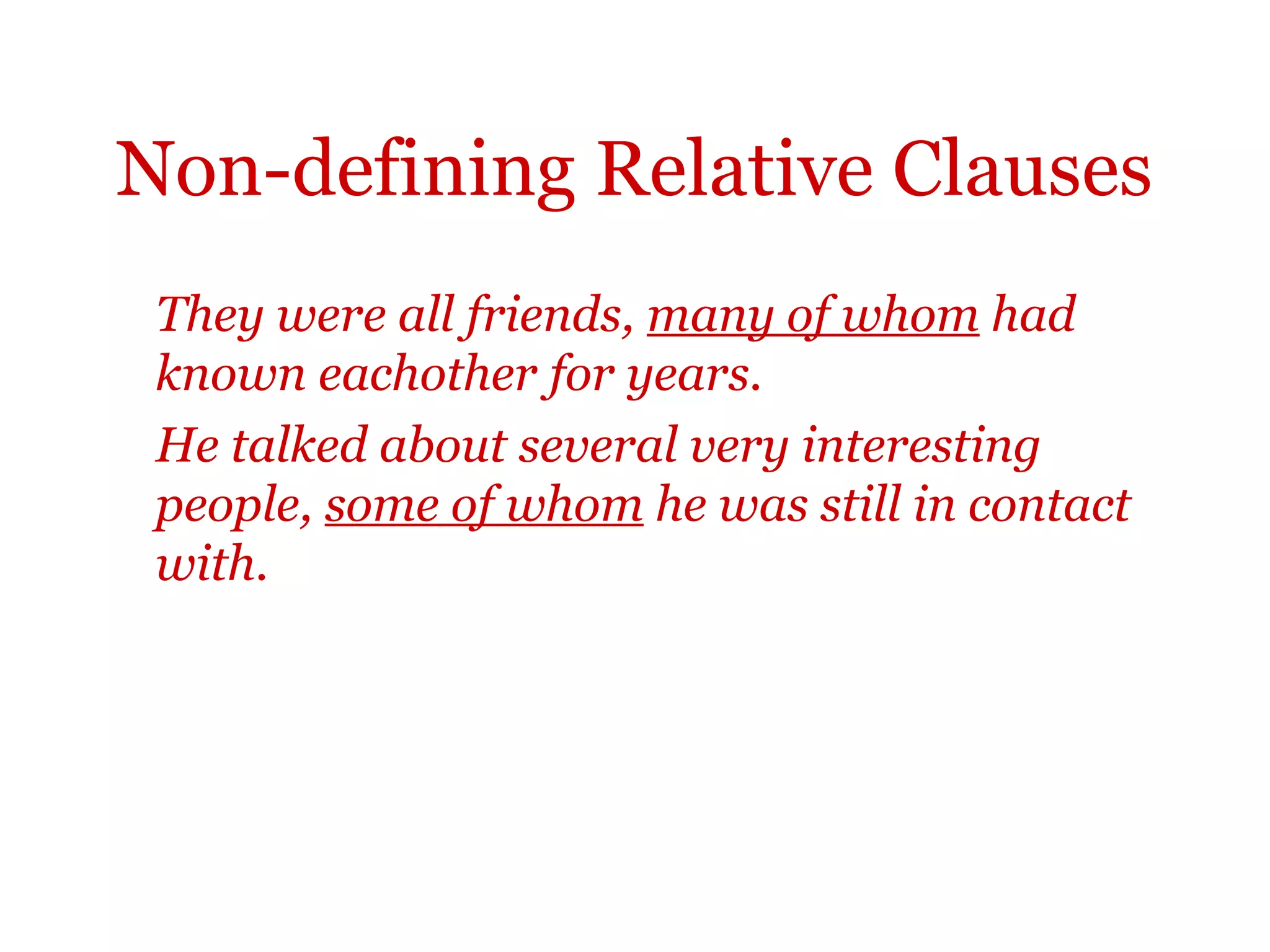
Non-defining Relative Clauses
 They were all friends, many of whom had
 known eachother for years.
 He talked about several very interesting
 people, some of whom he was still in contact
 with.
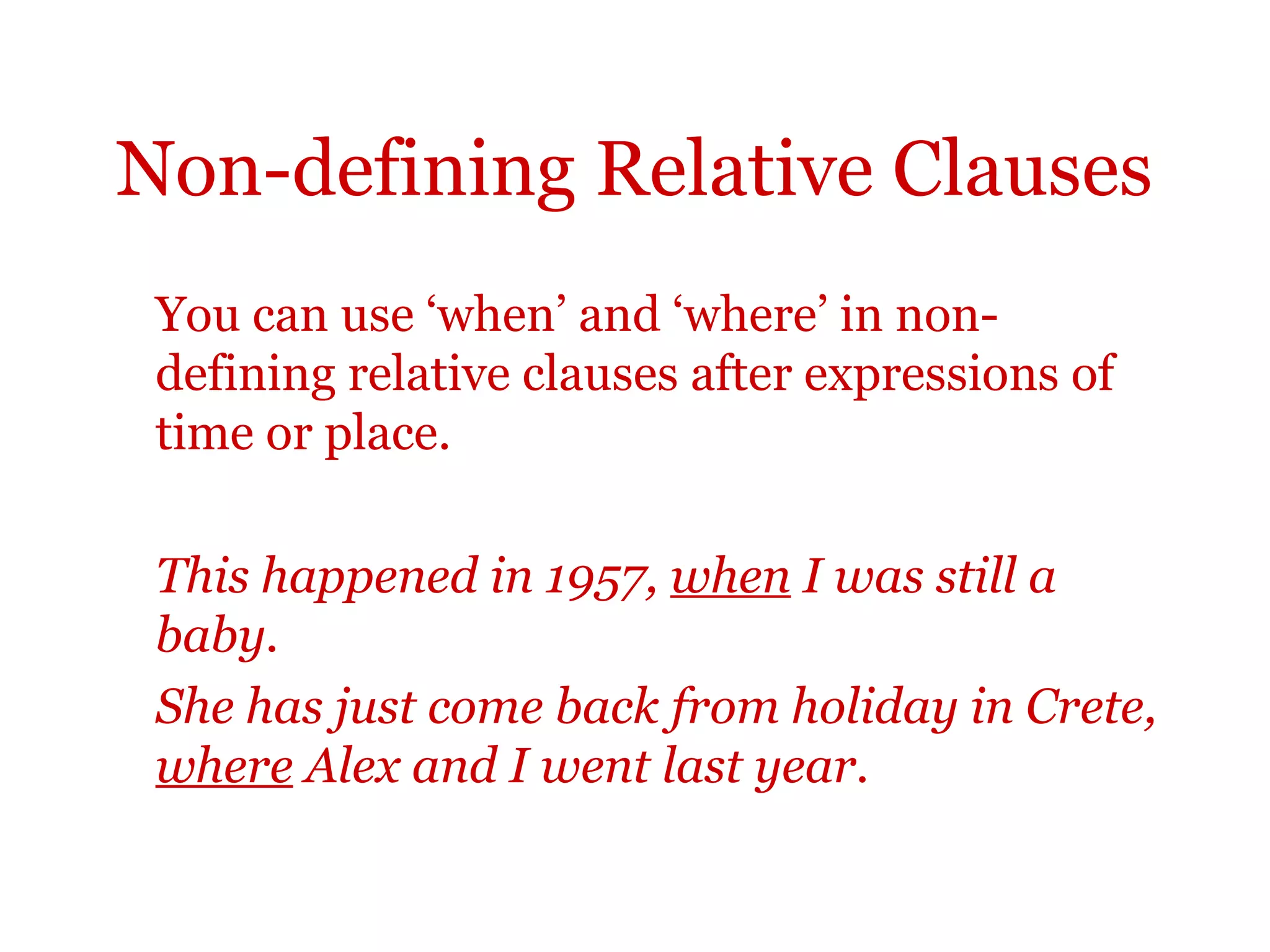
Non-defining Relative Clauses
 You can use ‘when’ and ‘where’ in non-
 defining relative clauses after expressions of
 time or place.

 This happened in 1957, when I was still a
 baby.
 She has just come back from holiday in Crete,
 where Alex and I went last year.

Non-defining relative clauses

  • 1.
  • 2.
    Non-defining Relative Clauses You use non-defining relative clauses to give extra information about the person or thing you are a talking about. The information is not needed to identify that person or thing. Professor Marvin, who was always early, was there already.
  • 3.
    Non-defining Relative Clauses Professor Marvin, who was always early, was there already. ‘Who was always early’ gives extra information about professor Marvin. This is a non-defining relative clause, because it is not needed to identify the person you are talking about. We already know that you are talking about Professor Marvin.
  • 4.
    Non-defining Relative Clauses Note: In written English, a non-defining relative clause is usually separated from the main clause by a comma, or by two commas. I went to the cinema with Mary, who I think you met. British Rail, which has launched an inquiry, said one coach was badly damaged.
  • 5.
    Non-defining Relative Clauses You always start a non-defining relative clause with a relative pronoun. When you are talking about people, you use ‘who’. ‘Who’ can be the subject or the object of a non-defining relative clause. She was engaged to a sailor, whom she had met at Dartmouth.
  • 6.
    Non-defining Relative Clauses When you are talking about things, you use ‘which’ as the subject or object of a non- defining relative clause. I man teaching at the Selly Oak centre, which is just over the road. He was a man of considerable inherited wealth, which he ultimately spent on his experiments.
  • 7.
    Non-defining Relative Clauses WARNING: You do not normally use ‘that’ in non-defining relative clauses.
  • 8.
    Non-defining Relative Clauses You can also use a non-defining relative clause beginning with ‘which’ to say something about the whole situation described in the main clause. I never met Brando again, which was a pity. She was a little tense, which was understandable.
  • 9.
    Non-defining Relative Clauses When you are talking about a group of people or things and then want to say something about only some of them, you can use one of the following expression: many of which non of whom some of which many of whom one of which some of whom none of which one of whom
  • 10.
    Non-defining Relative Clauses They were all friends, many of whom had known eachother for years. He talked about several very interesting people, some of whom he was still in contact with.
  • 11.
    Non-defining Relative Clauses You can use ‘when’ and ‘where’ in non- defining relative clauses after expressions of time or place. This happened in 1957, when I was still a baby. She has just come back from holiday in Crete, where Alex and I went last year.