A djectives with  P repositions
A djectives with  P repositions W hen  you use an adjective after a link verb you can often use the adjective on its own or followed by a prepositional phrase. He was  afraid . He was  afraid of  his enemies.
A djectives with  P repositions S ome adjectives cannot be used alone after a link verb. If they are followed by a prepositional phrase, it must have a particular preposition. aware of unaware of accustomed to unaccustomed to fond of used to
A djectives with  P repositions I’ve always been terribly  fond of  you. He is  unaccustomed to  the heat.
A djectives with  P repositions S ome adjectives can be used alone, or followed by a particular preposition. used alone, or with ‘of’ to specify the cause of a feeling afraid critical jealous suspicious ashamed envious proud terrified convinced frightened scared tired
A djectives with  P repositions They may feel  jealous of  your success. I was  terrified of  her.
A djectives with  P repositions used alone, or with ‘of’ to specify the person who has a quality brave good polite thoughtful careless intelligent sensible unkind clever kind silly unreasonable generous nice stupid wrong
A djectives with  P repositions That was  clever of  you. I turned the job down, which was  stupid of  me.
A djectives with  P repositions used alone with ‘to’, usually referring to: Similarity : close, equal, identical, related, similar Marriage : married, engaged Loyalty : dedicated, devoted, loyal Rank : junior, senior
A djectives with  P repositions My problems are  similar to  yours. He was  dedicated to  his job.
A djectives with  P repositions used alone, or followed by ‘with’ to specify the cause of a feeling bored displeased impatient pleased content dissatisfied impressed satisfied
A djectives with  P repositions I could never be  bored with  football. He was  pleased with  her.
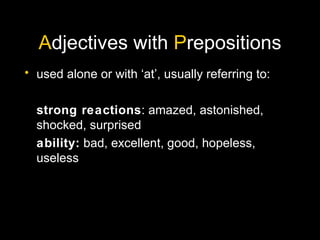
A djectives with  P repositions used alone or with ‘at’, usually referring to: strong reactions : amazed, astonished, shocked, surprised ability:  bad, excellent, good, hopeless, useless
A djectives with  P repositions He was  shocked at  the hatred they had shown. She was always  good at  languages.
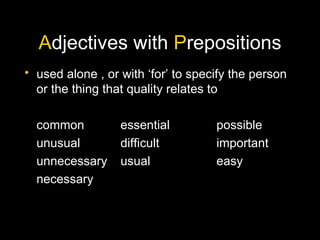
A djectives with  P repositions used alone , or with ‘for’ to specify the person or the thing that quality relates to common essential possible unusual difficult important unnecessary usual easy necessary
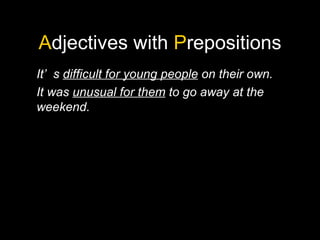
A djectives with  P repositions It’s  difficult for young people  on their own. It was  unusual for them  to go away at the weekend.
A djectives with  P repositions S ome adjectives can be used alone, or used with different prepositions.
A djectives with  P repositions used alone, with an impersonal subject and ‘of’ and the subject of the action, or with a personal subject and ‘to’ and the object of an action. cruel good nasty rude friendly kind nice unfriendly generous mean polite unkind
A djectives with  P repositions It was  rude of him  to leave so suddenly. She was  rude to  him for no reason.
A djectives with  P repositions used alone, with ‘about’ to specify a thing or ‘with’ to specify a person angry delighted fed up happy annoyed disappointed furious upset
A djectives with  P repositions She was still  angry about  the result. They’re getting pretty  fed up with  him.
Q uestions? For more slide presentations visit:

Adjectives with Prepositions

  • 1.
    A djectives with P repositions
  • 2.
    A djectives with P repositions W hen you use an adjective after a link verb you can often use the adjective on its own or followed by a prepositional phrase. He was afraid . He was afraid of his enemies.
  • 3.
    A djectives with P repositions S ome adjectives cannot be used alone after a link verb. If they are followed by a prepositional phrase, it must have a particular preposition. aware of unaware of accustomed to unaccustomed to fond of used to
  • 4.
    A djectives with P repositions I’ve always been terribly fond of you. He is unaccustomed to the heat.
  • 5.
    A djectives with P repositions S ome adjectives can be used alone, or followed by a particular preposition. used alone, or with ‘of’ to specify the cause of a feeling afraid critical jealous suspicious ashamed envious proud terrified convinced frightened scared tired
  • 6.
    A djectives with P repositions They may feel jealous of your success. I was terrified of her.
  • 7.
    A djectives with P repositions used alone, or with ‘of’ to specify the person who has a quality brave good polite thoughtful careless intelligent sensible unkind clever kind silly unreasonable generous nice stupid wrong
  • 8.
    A djectives with P repositions That was clever of you. I turned the job down, which was stupid of me.
  • 9.
    A djectives with P repositions used alone with ‘to’, usually referring to: Similarity : close, equal, identical, related, similar Marriage : married, engaged Loyalty : dedicated, devoted, loyal Rank : junior, senior
  • 10.
    A djectives with P repositions My problems are similar to yours. He was dedicated to his job.
  • 11.
    A djectives with P repositions used alone, or followed by ‘with’ to specify the cause of a feeling bored displeased impatient pleased content dissatisfied impressed satisfied
  • 12.
    A djectives with P repositions I could never be bored with football. He was pleased with her.
  • 13.
    A djectives with P repositions used alone or with ‘at’, usually referring to: strong reactions : amazed, astonished, shocked, surprised ability: bad, excellent, good, hopeless, useless
  • 14.
    A djectives with P repositions He was shocked at the hatred they had shown. She was always good at languages.
  • 15.
    A djectives with P repositions used alone , or with ‘for’ to specify the person or the thing that quality relates to common essential possible unusual difficult important unnecessary usual easy necessary
  • 16.
    A djectives with P repositions It’s difficult for young people on their own. It was unusual for them to go away at the weekend.
  • 17.
    A djectives with P repositions S ome adjectives can be used alone, or used with different prepositions.
  • 18.
    A djectives with P repositions used alone, with an impersonal subject and ‘of’ and the subject of the action, or with a personal subject and ‘to’ and the object of an action. cruel good nasty rude friendly kind nice unfriendly generous mean polite unkind
  • 19.
    A djectives with P repositions It was rude of him to leave so suddenly. She was rude to him for no reason.
  • 20.
    A djectives with P repositions used alone, with ‘about’ to specify a thing or ‘with’ to specify a person angry delighted fed up happy annoyed disappointed furious upset
  • 21.
    A djectives with P repositions She was still angry about the result. They’re getting pretty fed up with him.
  • 22.
    Q uestions? Formore slide presentations visit: