PAST SIMPLE,  PAST CONTINUOUS, PAST PERFECT GRAMMAR UNIT 1B
PAST SIMPLE (Form) Statement: I/you/he/she/it/we/they  played Negative: I/you/he/she/it/we/they  didn’t play Question:  Did  I/you/he/she/it/we/they  play? For regular verbs we add the ending –ED For irregular verbs, we take the past form (2nd column)
PAST SIMPLE (Use) Completed actions :  I  saw  the new James Bond film yesterday. Repeated actions in the past :  I  went  to the theatre four times last month. General truths about the past :  Fifty years ago, people  didn’t spend  as much on entertainment as they do today. Main events in a story :  Josh  pushed  the door open and  looked  inside the room.
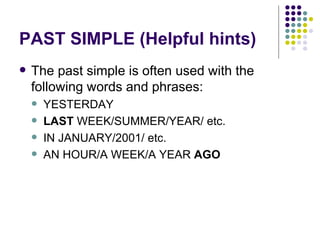
PAST SIMPLE (Helpful hints) The past simple is often used with the following words and phrases: YESTERDAY LAST  WEEK/SUMMER/YEAR/ etc. IN JANUARY/2001/ etc. AN HOUR/A WEEK/A YEAR  AGO
PAST CONTINUOUS (Form) Statement:  I/he/she/it  was playing you/we/they  were playing Negative:  I/he/she/it  wasn’t playing you/we/they  weren’t playing   Question:  Was  I/he/she/it  playing? Were  you/we/they  playing?
PAST CONTINUOUS (Use) Actions happening at a moment in the past:   At nine o’clock last night, I  was watching  TV. Two actions in progress at the same time :  I  was reading  a book while you  were doing  the washing-up. Background information in a story:   It  was raining  so Wendy decided to go to the cinema.
PAST CONTINUOUS (Helpful hints) The Past Continuous is often used with the following words and phrases: AT THAT MOMENT AT ONE/TWO/etc O’CLOCK WHILE
When one action in the past happens in the middle of another, we use the past simple and the past continuous together The phone  rang   while I  was watching  a DVD. We do not use the past continuous for regular or repeated actions in the past. (NOT CORRECT: Last year, I  was going  to the cinema every weekend)
Past Perfect (Form) HAD + PAST PARTICIPLE Statement: I/you/he/she/it/we/they  had written… Negative: I/you/he/she/it/we/they  hadn’t written… Question:  Had  I/you/he/she/it/we/they  written…? For regular verbs we add the ending –ED For irregular verbs, we take the past participle form (3rd column)
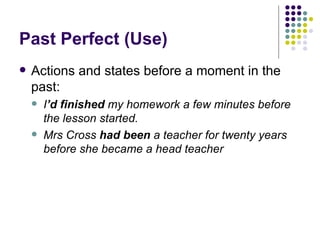
Past Perfect (Use) Actions and states before a moment in the past: I ’d finished  my homework a few minutes before the lesson started. Mrs Cross  had been  a teacher for twenty years before she became a head teacher
Past Perfect (Useful hints) The past perfect is often used with the following words and phrases: BY:  I’d finished my homework  by  eight o’clock. BY THE TIME:  By the time  I got to class, the lesson had started. BEFORE:  The teacher had checked the answers  before  the lesson. AFTER:  I left  after  I’d finished the test. JUST:  Simon had  just  finished the test when the bell rang. ALREADY:  The concert had  already  started when we arrived.
Whether we use the past simple or the past perfect can change the meaning of a sentence: The lesson  started  when I arrived. (= I arrived and then the lesson started) The lesson  had started  when I arrived. (= The lesson started and then I arrived)

Past Simple, Continuous, Perfect

  • 1.
    PAST SIMPLE, PAST CONTINUOUS, PAST PERFECT GRAMMAR UNIT 1B
  • 2.
    PAST SIMPLE (Form)Statement: I/you/he/she/it/we/they played Negative: I/you/he/she/it/we/they didn’t play Question: Did I/you/he/she/it/we/they play? For regular verbs we add the ending –ED For irregular verbs, we take the past form (2nd column)
  • 3.
    PAST SIMPLE (Use)Completed actions : I saw the new James Bond film yesterday. Repeated actions in the past : I went to the theatre four times last month. General truths about the past : Fifty years ago, people didn’t spend as much on entertainment as they do today. Main events in a story : Josh pushed the door open and looked inside the room.
  • 4.
    PAST SIMPLE (Helpfulhints) The past simple is often used with the following words and phrases: YESTERDAY LAST WEEK/SUMMER/YEAR/ etc. IN JANUARY/2001/ etc. AN HOUR/A WEEK/A YEAR AGO
  • 5.
    PAST CONTINUOUS (Form)Statement: I/he/she/it was playing you/we/they were playing Negative: I/he/she/it wasn’t playing you/we/they weren’t playing Question: Was I/he/she/it playing? Were you/we/they playing?
  • 6.
    PAST CONTINUOUS (Use)Actions happening at a moment in the past: At nine o’clock last night, I was watching TV. Two actions in progress at the same time : I was reading a book while you were doing the washing-up. Background information in a story: It was raining so Wendy decided to go to the cinema.
  • 7.
    PAST CONTINUOUS (Helpfulhints) The Past Continuous is often used with the following words and phrases: AT THAT MOMENT AT ONE/TWO/etc O’CLOCK WHILE
  • 8.
    When one actionin the past happens in the middle of another, we use the past simple and the past continuous together The phone rang while I was watching a DVD. We do not use the past continuous for regular or repeated actions in the past. (NOT CORRECT: Last year, I was going to the cinema every weekend)
  • 9.
    Past Perfect (Form)HAD + PAST PARTICIPLE Statement: I/you/he/she/it/we/they had written… Negative: I/you/he/she/it/we/they hadn’t written… Question: Had I/you/he/she/it/we/they written…? For regular verbs we add the ending –ED For irregular verbs, we take the past participle form (3rd column)
  • 10.
    Past Perfect (Use)Actions and states before a moment in the past: I ’d finished my homework a few minutes before the lesson started. Mrs Cross had been a teacher for twenty years before she became a head teacher
  • 11.
    Past Perfect (Usefulhints) The past perfect is often used with the following words and phrases: BY: I’d finished my homework by eight o’clock. BY THE TIME: By the time I got to class, the lesson had started. BEFORE: The teacher had checked the answers before the lesson. AFTER: I left after I’d finished the test. JUST: Simon had just finished the test when the bell rang. ALREADY: The concert had already started when we arrived.
  • 12.
    Whether we usethe past simple or the past perfect can change the meaning of a sentence: The lesson started when I arrived. (= I arrived and then the lesson started) The lesson had started when I arrived. (= The lesson started and then I arrived)