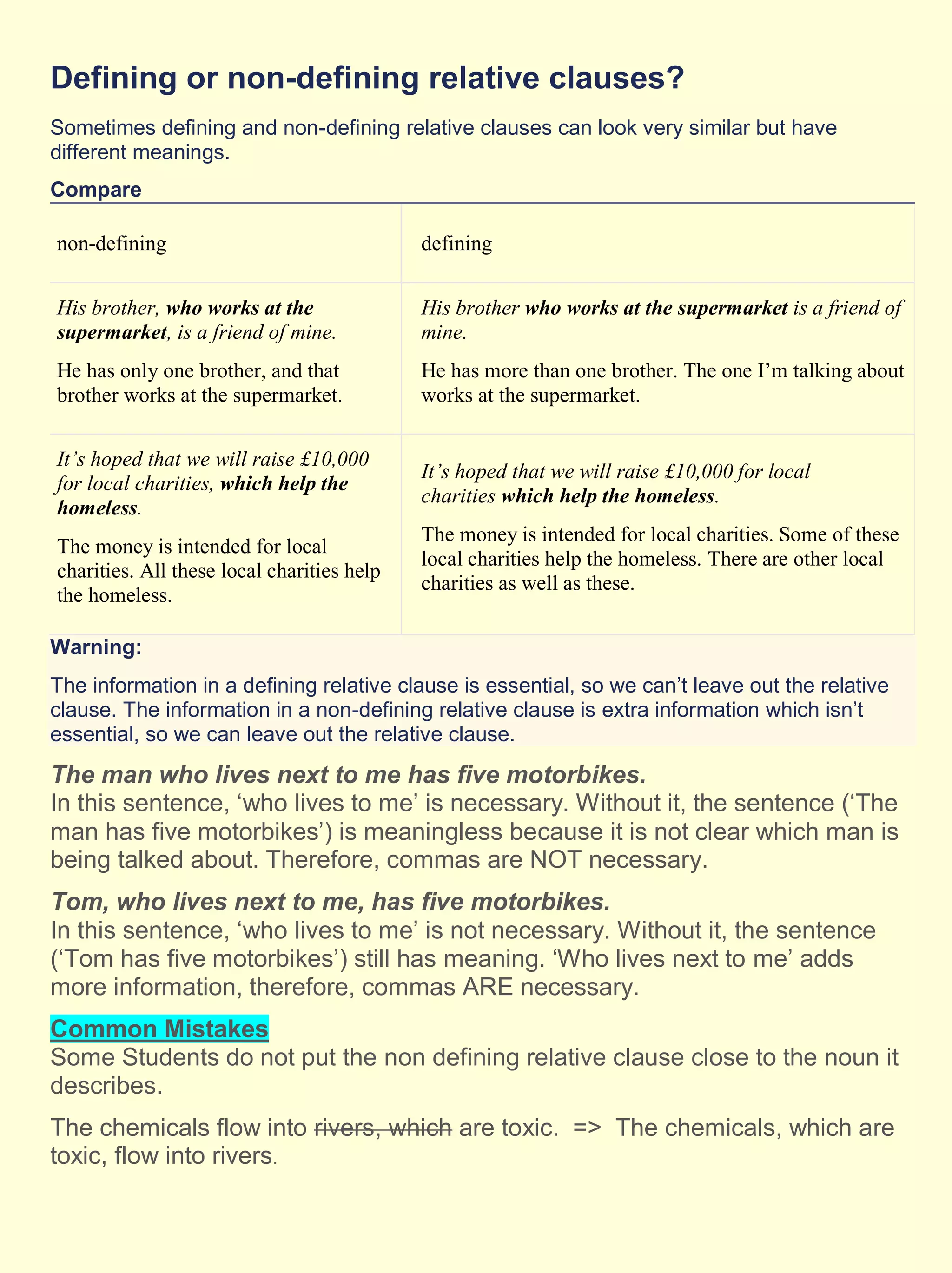
This document discusses the differences between defining and non-defining relative clauses. Defining relative clauses provide essential information to identify the noun being referred to, while non-defining clauses provide extra, non-essential information. Commas are used to set off non-defining clauses but not defining clauses. Examples are given to illustrate the differences and show how the information is essential or extra. A warning is provided that defining clauses cannot be removed without losing the meaning of the sentence, unlike non-defining clauses.