By
Kamanie Wijesuriya
OSLT-Project Manegment
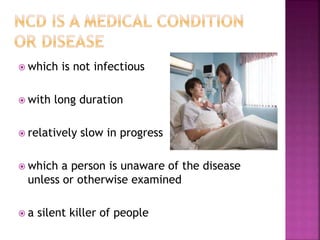
 which is not infectious
 with long duration
 relatively slow in progress
 which a person is unaware of the disease
unless or otherwise examined
 a silent killer of people
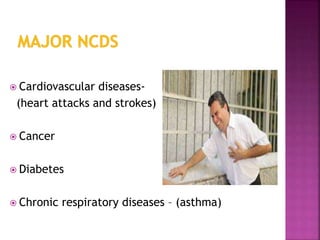
 Cardiovascular diseases-
(heart attacks and strokes)
 Cancer
 Diabetes
 Chronic respiratory diseases – (asthma)
 The number one cause of death in the
world. (more than 36 million people)
 Cardiovascular diseases- 48%
 Cancer- 21%
 Diabetes- 3%
 Chronic respiratory diseases – 12%
 More than 9 million deaths are premature
(under 60 years of age) and could be
prevented
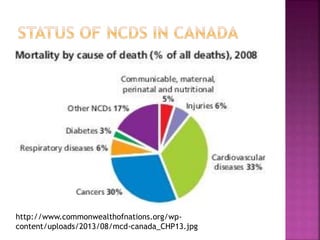
http://www.commonwealthofnations.org/wp-
content/uploads/2013/08/mcd-canada_CHP13.jpg
 Not caused by an acute infection
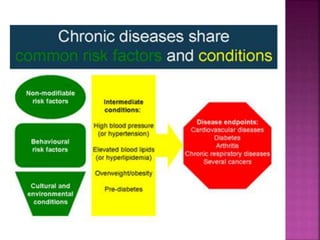
 Have common risk factors
 Cause long-term harm
 Need a long-term (or even life-long) treatment
 Cause both men and women equally
 Sometimes, cause disability
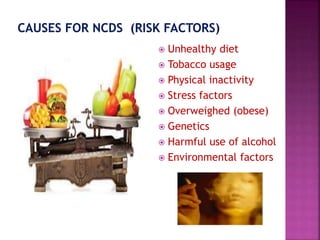
 Unhealthy diet
 Tobacco usage
 Physical inactivity
 Stress factors
 Overweighed (obese)
 Genetics
 Harmful use of alcohol
 Environmental factors
o Have a person in your family ever had one of the NCDs
o Have High blood pressure
o Have High cholesterol level
o Are obese (over weight)
o Are exposed to air pollution
o Have raised blood glucose level
o Are exposed to Environmental factors
o YOU ARE AT RISK !!!!!!!!!
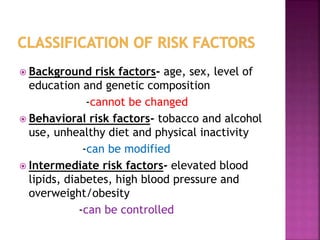
 Background risk factors- age, sex, level of
education and genetic composition
-cannot be changed
 Behavioral risk factors- tobacco and alcohol
use, unhealthy diet and physical inactivity
-can be modified
 Intermediate risk factors- elevated blood
lipids, diabetes, high blood pressure and
overweight/obesity
-can be controlled
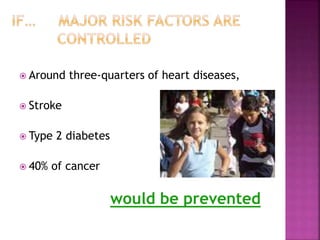
 Around three-quarters of heart diseases,
 Stroke
 Type 2 diabetes
 40% of cancer
would be prevented
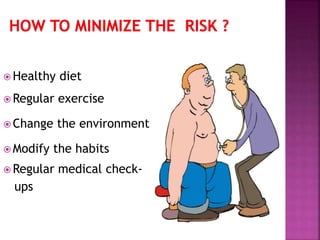
 Healthy diet
 Regular exercise
 Change the environment
 Modify the habits
 Regular medical check-
ups
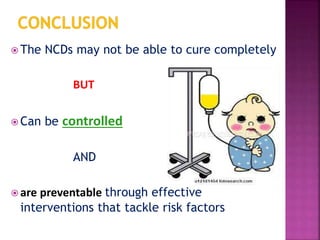
 The NCDs may not be able to cure completely
BUT
 Can be controlled
AND
 are preventable through effective
interventions that tackle risk factors
 Country Profiles2.indd-ncd_profiles_report.pdf
 World Health Report,2010
 www.publichealth.ca
 www.ncdallience.org
 Non-communicable disease (final)
 http://www.commonwealthofnations.org/wp-
content/uploads/2013/08/mcd-
canada_CHP13.jpg
Non Communicable Diseases (NCDs)

Non Communicable Diseases (NCDs)

  • 1.
  • 2.
     which isnot infectious  with long duration  relatively slow in progress  which a person is unaware of the disease unless or otherwise examined  a silent killer of people
  • 3.
     Cardiovascular diseases- (heartattacks and strokes)  Cancer  Diabetes  Chronic respiratory diseases – (asthma)
  • 4.
     The numberone cause of death in the world. (more than 36 million people)  Cardiovascular diseases- 48%  Cancer- 21%  Diabetes- 3%  Chronic respiratory diseases – 12%  More than 9 million deaths are premature (under 60 years of age) and could be prevented
  • 5.
  • 6.
     Not causedby an acute infection  Have common risk factors  Cause long-term harm  Need a long-term (or even life-long) treatment  Cause both men and women equally  Sometimes, cause disability
  • 7.
     Unhealthy diet Tobacco usage  Physical inactivity  Stress factors  Overweighed (obese)  Genetics  Harmful use of alcohol  Environmental factors
  • 8.
    o Have aperson in your family ever had one of the NCDs o Have High blood pressure o Have High cholesterol level o Are obese (over weight) o Are exposed to air pollution o Have raised blood glucose level o Are exposed to Environmental factors o YOU ARE AT RISK !!!!!!!!!
  • 9.
     Background riskfactors- age, sex, level of education and genetic composition -cannot be changed  Behavioral risk factors- tobacco and alcohol use, unhealthy diet and physical inactivity -can be modified  Intermediate risk factors- elevated blood lipids, diabetes, high blood pressure and overweight/obesity -can be controlled
  • 11.
     Around three-quartersof heart diseases,  Stroke  Type 2 diabetes  40% of cancer would be prevented
  • 12.
     Healthy diet Regular exercise  Change the environment  Modify the habits  Regular medical check- ups
  • 13.
     The NCDsmay not be able to cure completely BUT  Can be controlled AND  are preventable through effective interventions that tackle risk factors
  • 14.
     Country Profiles2.indd-ncd_profiles_report.pdf World Health Report,2010  www.publichealth.ca  www.ncdallience.org  Non-communicable disease (final)  http://www.commonwealthofnations.org/wp- content/uploads/2013/08/mcd- canada_CHP13.jpg